


Erhalten Sie Zugang zu diesem und mehr als 300000 Büchern ab EUR 5,99 monatlich.
- Herausgeber: The History Press
- Kategorie: Sachliteratur, Reportagen, Biografien
- Sprache: Englisch
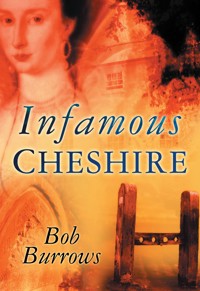
Infamous Cheshire explores the darker side of this idyllic county, where murders in sleepy villages, royal scandals ancient and modern and the antics of showbiz personalities reveal that all is not as tranquil as it may seem. In his new book Bob Burrows digs deep into forgotten tales of villainy and crime, deceit and death, as well as throwing new light on more recent and well-remembered events - including the Great Train Robbery's connections with the county, Britain's biggest financial fraud, the IRA attack in Warrington, the plane that crashed in the centre of Stockport, and even the story behind one of Cheshire's roads - designated the most dangerous in Britain. Infamous Cheshire will enthral and fascinate anyone who would like to discover more about the unexpected history of Cheshire.
Sie lesen das E-Book in den Legimi-Apps auf:
Seitenzahl: 211
Veröffentlichungsjahr: 2006
Das E-Book (TTS) können Sie hören im Abo „Legimi Premium” in Legimi-Apps auf:
Ähnliche



















Infamous
CHESHIRE
Bob Burrows
First published in 2006 by Sutton Publishing Limited
Reprinted in 2009 by
The History Press
The Mill, Brimscombe Port
Stroud, Gloucestershire, GL5 2QG
www.thehistorypress.co.uk
Reprinted 2010, 2011
This ebook edition first published in 2013
All rights reserved
© Bob Burrows, 2011, 2013
The right of Bob Burrows to be identified as the Author of this work has been asserted in accordance with the Copyright, Designs and Patents Act 1988.
This ebook is copyright material and must not be copied, reproduced, transferred, distributed, leased, licensed or publicly performed or used in any way except as specifically permitted in writing by the publishers, as allowed under the terms and conditions under which it was purchased or as strictly permitted by applicable copyright law. Any unauthorised distribution or use of this text may be a direct infringement of the author’s and publisher’s rights, and those responsible may be liable in law accordingly.
EPUBISBN 978 0 7509 5330 6
Original typesetting by The History Press
CONTENTS
Acknowledgements and Sources
Introduction
1.
Historically Infamous
2.
Infamous Cheshire Places
3.
Days of Infamy
4.
Infamous Characters: Men
5.
Infamous Characters: Women
6.
Court Cases and Trials
7.
Callous Beyond Belief
To my Cheshire family: my wife Pat, our son Nik and his wife Lisa, our daughter Penny and her husband David Bates. Not forgetting the major influence in all our lives: our first grandchild, Emily Grace Burrows.
ACKNOWLEDGEMENTS AND SOURCES
I am indebted to the following for their support and generosity in the compilation of this book: Congleton Museum; David Hearn of Crewe Library for his information on the Great Train Robbery; Macclesfield West Park Museum; Mr Methane on www.mrmethane.com; Nicola Priest, editor of the Warrington Guardian, for her recollections and photographs of the IRA attack on Warrington; Timothy and Elizabeth Richards of Gawsworth Hall; Mark Thomas of the Royal Society for the Protection of Birds; Warrington Library and Museum Archives Service.
In addition I would like to thank the following for generously supplying and permitting the use of photographs: Mike Boden, chief photographer, Warrington Guardian; British Library, Derbyshire Evening Telegraph; Eddie Fuller, photographer, Warrington Guardian; Joe Griffiths and John King of the Lymm Local History Society; Hadyn Iball, Chronicle Group Photographic; Knutsford Guardian; Manchester Evening News Photographic; Liz Pearce, Stockport Express Photographic; Runcorn and Widnes Weekly; Greg Smith, Thameside Reporter; Viscount Daventry of Arbury Hall, Warwickshire, and Brenda Newell, administrator.
I must also register my appreciation for the following excellent publications which served as points of reference on the many fascinating aspects of Cheshire life: Peter Bamford, Cheshire Curiosities (Dovecote Press); Norman Ellison, The Wirral Peninsula (London, Robert Hale); Steve Fielding, Cheshire Murders Casebook (Countryside Books); Lawrence Lever, The Barlow Clowes Affair (Macmillan); Jeffrey Pearson, Cheshire Tales of Mystery and Murder (Countryside Books); Raymond Richards, The Manor of Gawsworth (E.J. Morten Ltd); Carole Sexton, Tales of Old Cheshire (Countryside Books); John Stalker, Stalker (Harrap Publishers); David Woodley, Knutsford Prison: The Inside Story (Leonie Press); Derek Yarwood, Outrages Fatal And Other (Didsbury Press).
INTRODUCTION
Present-day Cheshire with a population of around 1 million covering 900 square miles is one of the smallest of Britain’s forty-four counties. However, its contribution to the history of the British Isles, socially, culturally and historically, is outstanding.
Despite its size, Cheshire has for almost 2,000 years been at the heart of the history of the British Isles. The Romans, from about AD 71, following a full-scale occupation of the area much later regarded as Cheshire, recognised its value. Not only strategically when using Chester as the staging post and holding zone for the invasion and suppression of the Welsh tribes, but also for its much needed valuable salt deposits. Chester became a major commercial and military site and Roman artefacts can be found all over the county.
After the Romans left Britain there were centuries of fighting between the Mercians and the Welsh with both sides having successful incursions into each other’s territory before retreating to the established frontier lines of Wat’s Dyke. Proximity to the sea along the Wirral coastline was not only a tremendous asset to the county but was also a liability affording an ideal platform for the Norsemen and later the Irish Norsemen and the Vikings to invade by sea. The Danes also invaded the county and it was towards the end of the first millennium that the name of Cheshire was first used.
In 1066 the Normans conquered England and, after Hastings, moved north and laid waste many parts of Cheshire. It was perhaps this troubled first millennium with its many wars that established Cheshire’s reputation for its fighting men. After all, it was the Cheshire archers who were the dominant force in the English armies fighting the Crusades and fighting the French.
This immensely rich period of history with many of the great characters of the time passing through the county has, I feel, contributed to the legacy which has left Cheshire so involved with the modern world.
In Cheshire’s Famous (Derby, Breedon Books, 2004) I focused on the numerous people either born in the county or who had spent their creative or formative years in Cheshire and had gone on to make their mark nationally and internationally. Explorers, Everest conquerors, sixteen Victoria Cross winners, world champions, Olympic gold medallists, Oscar and Bafta winners, captains of England at cricket, soccer and rugby, Ryder cup golfers, Wimbledon winners, award-winning scientists, Nobel Prize winner, television household names, pop singers, opera singers, literary figures, songwriters, film producers, novelists, artists, sculptors, inventors, politicians and businessmen – all have succeeded at the very highest level. It is an astonishing list of achievers across the disciplines of human endeavour.
The historic county town of Chester. (Bob Burrows)
To ensure that my focus was historically correct I ignored the loss of areas featured in the 1974 boundary changes to include old Cheshire, while recognising the transfer into Cheshire of the new communities, as they are, after all, like it or not, now part of Cheshire. During my research all over the county I came across a number of Cestrians whose contribution to our culture was not always beneficial or indeed desirable. I also discovered places where infamous deeds had occurred and some places and incidents that had attracted national and, in some cases, international headlines.
Several of the Cestrians featured in Cheshire’s Famous are also featured in Infamous Cheshire with the emphasis, this time on their misdeeds. Once again I believe that the reader will be astonished at the way in which Cheshire and its citizens have been involved in so many high-profile events, infamous trials, court cases and tabloid incidents.
Every county sadly has its share of murders and Cheshire is no different. However, Cheshire is home to Britain’s oldest-recorded murder, Britain’s most prolific murderer, and may even have been host to the country’s most notorious killer. In 1712 one of the most unusual events in British history took place in London. Two noblemen fought a duel to the death over lands in Gawsworth, Cheshire. The full story is featured in Chapter One.
In more modern times Cheshire citizens have been at the centre of several high-profile court cases, which have dominated the national press: Britain’s greatest financial fraud; the Parliament cash-for-questions trial; Royal scandal trial which sensationally involved the Queen, Britain’s most infamous police persecution of one of its own; the nanny murder trial in the USA; and a show-business trial with the most damning verdict ever delivered by a judge. A Cestrian even featured in Britain’s greatest ever train robbery.
The county hit the headlines when subjected to an IRA attack, a plane crash in a town centre, the police shooting of an escaped serial killer, a prison rebellion, and when it was reported to have the most dangerous road in Britain.
A number of Cheshire women have also achieved a certain level of infamy. Without doubt Cheshire has produced an outstanding number of characters over the years whose antics and actions have amused, bemused, fascinated and at times disgusted or appalled the British public.
Many of the places mentioned in the book will be familiar to Cheshire people, as will the names of the ‘infamous’ Cestrians featured, many of whom are national figures. I am certain that the incidents recounted, some shocking, some amusing, will be of interest to all and each one made the national headlines.
1
HISTORICALLY INFAMOUS
Cheshire has a colourful past and, as detailed in my previous book Cheshire’s Famous, many of its citizens featured very prominently in the history of the British Isles. For example, the reputation of the Cheshire archers was famous or infamous for several hundreds of years depending from which side you viewed their exploits. The French in particular would regard them as being infamous. They formed the personal bodyguard of several of the early kings and were feared, rightly so, by this country’s enemies.
Cheshire archer. (Bob Burrows)
SIR ROBERTKNOLLYS
Geographically, Cheshire was strategically important between AD 800 and AD 1700 and the many internal wars and battles across the Channel, not to mention the Crusades, afforded great opportunities to soldiers and adventurers not only to establish a reputation, but also to accumulate great wealth.
One man who did just that and at the same time earned for himself an infamous legacy was Cheshire’s Sir Robert Knollys, born around 1317. He was a professional soldier of great repute who was also a ruthless opportunist. His reputation as a knight ensured that he was involved in the French Wars during the period 1340–50. However, he was far from being the idealistic knight spawned by romantic images of historical legend. He could be likened to a typical Mafia-style gangster of more modern times. During his fighting career he sought every opportunity to feather his own nest and to look after his own interests. His activities ensured that he accumulated great wealth largely through murder, rape, hostage taking, pillage and extortion. At one time he controlled most of the French Loire Valley, which contained forty or more castles with small communities. Skilfully he protected his back by informing his king, Edward III, that the towns and castles which he had plundered and retained were at the King’s disposal. Indeed, he did lend Edward money, secured against silver and jewellery. With the King ‘in his pocket’ Knollys continued to build his fortune secure in the knowledge that the King needed him to succeed to sustain his own finances.
In 1381, back in England, Knollys quelled the revolt led by Wat Tyler and again earned the gratitude of the King, which resulted in him receiving massive estates and further enhancing his power base. Infamous and highly successful, Sir Robert Knollys died c. 1407 and was believed to have been the richest man of his time. However, he left no issue to benefit from his ill-gotten gains.
DR RALPH SHAA
An infamous sermon given by Dr Ralph Shaa on 22 June 1483 was so outrageous for its time that it has achieved notoriety as one of the most shocking acts of betrayal in British history. Ralph Shaa was the brother of Stockport’s Sir Edmund Shaa, the founder of Stockport Grammar School, and at the time one of the most powerful men in the country. The highly respected Cheshire family left an indelible mark on British history but sadly, the mark left by Ralph Shaa was not one of which the family could be proud.
At one time he was the chaplain to Edward IV and also to Richard III. However, during this piece of turbulent English history Richard III inspired, coerced or corrupted Ralph Shaa to deliver a sermon designed to discredit and belittle Edward IV and his family. Shaa delivered the obnoxious, fateful sermon at St Paul’s Cross, denouncing Edward IV’s right to rule and questioning his legitimacy and the validity of his marriage. He uttered the infamous statement, ‘Bastards slips shall not take root’. The sermon was regarded by many as shameful, shocking and a betrayal of the family he had known so well. At the end of his preaching, his job presumably done, he was rushed away from the scene. He was seen as nothing more than a puppet of Richard III. A dishonest action by a man of the cloth who had betrayed his principles.
It is not reported whether he formally regretted his action but history tells us that after the sermon and the public reaction, Shaa seldom left his house and was rarely seen in public. Although the sermon assured him of a place in history, it also made life difficult to bear and, in 1484, within twelve months of his sermon, he died.
SIR WILLIAM BRERETONAND SIR PIERS LEIGH
Political intrigue and justice were rarely compatible in medieval England. Two famous Cheshire knights were victims of particularly cruel and rough summary justice. Their only crime was to be in the wrong place at the wrong time having befriended the wrong people.
Sir William Brereton of Malpas Hall, Shocklach, was infamously beheaded on the orders of Henry VIII. At the time Henry was seeking an excuse to rid himself of Anne Boleyn and was trying desperately to establish evidence of her infidelity. The unfortunate Sir William was arrested on highly spurious evidence. One source stated that Queen Anne Boleyn dropped her handkerchief from the royal stand at a tournament in 1536 and Sir William Brereton, in an act becoming of a chivalrous knight, retrieved it for her on the point of his lance. King Henry VIII was far from pleased and, after leaving the tournament in a fit of temper, had Brereton arrested and imprisoned in the Tower of London. His gentlemanly act perhaps gave Henry further fuel for his suspicions. Nevertheless, despite his continual denials that he had ever had an affair with the King’s wife, Brereton was beheaded. Henry needed a scapegoat, Sir William was in the wrong place at the wrong time.
Sir Piers Leigh of Lyme had the misfortune to be a great friend of Richard II. Unfortunately for him Richard was unsuccessful in fighting off his enemy, Henry, Duke of Lancaster who took over his crown. Henry then set about removing potential threats, including Richard’s friends. Sir Piers Leigh was captured and beheaded and his head placed on the end of a pike and displayed on the turrets of Chester Castle. The body was retained by Carmelite monks and 200 years later the remains were moved and buried at the parish church, Macclesfield.
Two highly respected men guilty only of friendship, paying the ultimate price for loyalty. Infamy indeed.
MARY FITTON
One of the most intriguing figures of Cestrian and English history that still arouses interest and debate is Mary Fitton, who was baptised at Gawsworth Hall near Macclesfield on 24 June 1578. Conjecture and speculation are still rife over the question of her being the ‘dark lady’ of Shakespeare’s sonnet. Many experts have pored over historical documents and have examined Shakespeare’s text ad nauseam, to elicit conclusive evidence of the identity of the dark lady.
Mary was the daughter of Sir Edward Fitton who owned the manor and estates of Gawsworth. He was highly influential at the court of Elizabeth I and through his contacts Mary became maid of honour to Elizabeth in about 1595. An old friend, Sir William Knollys, was in charge of the Queen’s household and promised Sir Edward that he would protect and look after the young, innocent Mary. However, Mary, who was by all accounts vivacious, bright, feisty and flirtatious, proved to be far from the innocent little lamb that Sir William had at first supposed her to be.
Very soon, Sir William, a married man in his 50s, found himself bewitched, and fell in love with her. In his excellent book, The Manor of Gawsworth, Raymond Richards gives great insight into the court intrigues surrounding the conduct of Mary during her time there. Although Sir William Knollys was in love with her, she became the mistress of William Herbert, the Earl of Pembroke.
Gawsworth Hall, birthplace of Mary Fitton. (Bob Burrows)
Mary’s behaviour and character had made her the subject of much gossip at court and her attitude, hardly bothering to conduct the affair with discretion, created resentment. One court observer noted that when she was going to meet the Earl of Pembroke outside the court she would remove her head ‘tire’, tuck up her clothes and then don a large white cloak and stride confidently ‘in the manner of a man’, to meet her date. No shy, shrinking violet.
Her affair with Pembroke also of course upset Sir William Knollys who was by now infatuated with her. However, the storm clouds were gathering and, in January 1601, Mary became pregnant and the Earl of Pembroke admitted that the child was his. Despite the shame and the scandal he still refused to marry Mary and an angry Elizabeth I had them both incarcerated in the Tower. Later, Pembroke was committed to Fleet Prison and Mary was banished in disgrace and placed in the charge of Lady Hawkyns for her confinement.
The Fitton family was devastated by the disgrace upon the family name and Sir Edward, after Mary’s child died at birth, secretly brought her home to Gawsworth. The depth of feeling and disgrace caused by Mary’s infamous behaviour can be gauged from the pain expressed in a letter written by Mary’s mother to her daughter Anne who lived in Arbury. It was Anne who agreed to have Mary live with her, perhaps in an attempt to remove some of the pressure which the family were feeling at Gawsworth. The anguished emotions are displayed like an exposed nerve. The mother tells Anne that she receives no joy in hearing about ‘your little sister nor of that boy’ (Mary’s new boyfriend). She goes on to say agonisingly ‘better if I had died with her in childbirth, it would have saved a great deal of sorrow and grief and her from shame and such shame as never had Cheshire woman, worse now than ever. Write no more to me of her.’
Clearly, Lady Fitton had a great sense of duty and responsibility and her reference to ‘Cheshire woman’ underlines the shame and hurt that she felt at being let down by her own daughter. Mary, it would appear, showed little sign of repentance or a change in her moral attitude. It is believed that she bore two illegitimate daughters to Sir Richard Leveson, a friend of her sister Anne.
In about 1606 she married Captain William Polewhele and bore him a son and daughter. After he died in 1610 she married Captain John Lougher and the marriage lasted until his death in 1635. Mary died in 1647, aged 69, and in her will asked to be buried in Gawsworth.
During her time in Elizabeth’s court, Mary was regarded as a great beauty whose personality and vivacity lit up the court and brightened the lives of those around her. Many people were ensnared by her and fell in love with her. But was she Shakespeare’s dark lady?
As outlined in Cheshire’s Famous, Shakespeare had a number of strong connections with the county of Cheshire, but did he ever meet Mary Fitton or know of her?
There are two reasons which strongly indicate that he could have known her, apart from the common knowledge of her disgrace and banishment from the court.
A professional actor, a clown in Shakespeare’s company of players, William Kemp wrote a piece dedicated to Mistress Fitton, royal maid. He called it ‘Nine Dais Wonder’. It seems inconceivable that Shakespeare would not have known of a written work fashioned by one of his own players and not know the object of his affections. If Kemp knew her so well, surely at some stage Shakespeare must have seen her and been in her presence.
The second point is also beguiling. Shakespeare’s sonnet refers to three ‘Wills’ in its opening lines: ‘Whoever hath her wish, thou hast thy will and will to boot and will in overplus.’
Could he be referring to William Herbert, Earl of Pembroke, Sir William Knollys and of course himself, William Shakespeare?
This is of course pure speculation but intriguing. The compelling argument used by those who discount Mary as the dark lady is based on the description of her given by Shakespeare himself. In the sonnet he refers to the dark lady with the raven black eyes and black hair. History records Mary as being fair with brown hair and grey eyes. Nothing like the appearance of the dark lady. Could it be that Shakespeare deliberately used a description totally opposite to that of the lady that he desired in order to disguise his infatuation? After all it would be awkward for him also to write a eulogy to Mary, having been beaten to it by a colleague, William Kemp.
Whatever the truth, and historians continue to speculate and argue the case, Mary Fitton was famous and infamous in her time. Today her conduct would not be greeted with cries of outrage but her affair and the scandal at court would have made her a target of today’s media.
DUELLING DUKES
The small village of Gawsworth once again features spectacularly in English history. Not content with supplying the central figure in one of the great historical court scandals, Gawsworth also featured in the most infamous and notorious personal duel ever fought on English soil. The duel took place in London over the right of ownership of the lands and estates of the manor of Gawsworth.
A dispute over the ownership of the manor of Gawsworth Hall led to a notorious duel in the eighteenth century. (Bob Burrows)
Sir Edward Fitton II, the last Baron of Gawsworth, died in 1643 leaving no heirs to the estate. When his widow died the struggle for possession of the estate began in earnest between Sir Edward’s four sisters. The Fittons and their cousins the Gerards started a dispute, which after almost seventy years finally erupted into a feud.
The struggle had all the components of a modern-day drama or soap: several lawsuits, forgery, periods of open hostility, divorce, plotting and seduction. The years of fighting and argument, the rancour and dispute finally came to an end on a cold, damp, early November morning in 1712 in the most hideous fashion.
The husbands of the two ladies who both claimed to be the rightful heir to the estate, the Duke of Hamilton and Lord Mohun, decided to settle the dispute once and for all. Together with their seconds they met in Hyde Park to fight an illegal duel. The Duke of Hamilton was attended by Colonel John Hamilton; Lord Mohun was seconded by Lieutenant-General George Maccartney. While the dispute between the main protagonists was over a long-standing question of honour, there was also bad blood from the past between the two seconds, which made for a potentially volatile situation.
According to eyewitness accounts of the time, all four men drew their swords at the same time. Hamilton threw off his cloak, Mohun took off his surcoat and they then saluted each other. As the duel commenced the two seconds, swords in hand, attacked each other, but very quickly ceased as the main fight became bloody and then fatal. Lord Mohun had a reputation for duelling and had twice been accused of murder but got away with it. However, this was to be his last duel. The men cut and thrust at each other and in a matter of minutes Mohun collapsed and died on the spot. Hamilton, although wounded, walked around for a while but his wounds were very serious and he died shortly after arriving home.
Some people alleged that Maccartney stabbed the Duke of Hamilton but this was never proven. The Duke did not accuse him and he was not held at the scene. Surgeons later confirmed that Hamilton had not been killed by Maccartney’s sword. He was found to have four wounds but it was a severed artery in his right arm which proved to be fatal. Lord Mohun also had four wounds. One sword thrust had entered his right side and exited through his left, cutting a main artery, while another thrust had entered his groin. He was also found to have three fingers dangling by a thread on his right hand.
The illegal duel concerning two high-ranking men who had slain each other caused an outcry of massive proportions. Queen Anne had a high regard for the Duke of Hamilton but was livid at the contempt which both men had shown for the law. Shortly after the duel Maccartney left the country and the Queen issued a warrant for his arrest. In a proclamation on 2 November 1712 she denounced both men for defying the law by fighting an illegal duel. The verdict that they had murdered each other was duly announced and cited John Hamilton and George Maccartney for aiding and abetting them. Hamilton gave himself up and was acquitted of murder on 12 December 1712 at the Old Bailey. He was convicted of manslaughter and later released. Maccartney had a reward of £500 on his head and eventually returned to England after the death of Queen Anne. He offered himself for trial and on 13 June 1716 was also found guilty of manslaughter and later released.




