


8,49 €
Mehr erfahren.
- Herausgeber: The History Press
- Kategorie: Sachliteratur, Reportagen, Biografien
- Sprache: Englisch
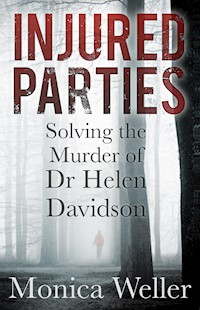
On 9 November 1966, popular GP Dr Helen Davidson was battered to death in dense woodland while birdwatching and exercising her dog a few miles from her Buckinghamshire home. Her body was found the next day, her eyes having been pushed into her skull. 'She had binoculars round her neck, spied illicit lovers, was spotted, and one or both of them killed her,' surmised Detective Chief Superintendent Jack 'Razor' Williams of New Scotland Yard. He had received fifty police commendations in his career, yet not one for a murder enquiry. Unsurprisingly, within weeks the police operation was wound down, Williams retired, and another cold case hit the statistics. Fifty years later, amateur sleuth and author Monica Weller set about solving the murder – without the help of the prohibited files. As she sifted the evidence, a number of suspects and sinister motives began to emerge; it was clear it was not a random killing after all. Weller uncovered secret passions, deep jealousies, unusual relationships and a victim with a dark past. Her persistence and dedication were dramatically rewarded when she uncovered the identity of the murderer – revealed here for the first time.
Das E-Book können Sie in Legimi-Apps oder einer beliebigen App lesen, die das folgende Format unterstützen:
Veröffentlichungsjahr: 2016
Ähnliche



















Acknowledgements
First and foremost I wish to thank Maria Marston for being so trusting when she directed me to the story about Dr Helen Davidson’s unsolved murder. Injured Parties owes much to Maria and to her parents, Bob and Fennis Marston.
I am indebted to many people in and around the Buckinghamshire town of Amersham, who have tirelessly encouraged me to complete this book. To Barbara Webber, an Amersham lady, who ended her career as head of Physiotherapy at the Royal Brompton Hospital and, in retirement, is heavily involved with Amersham Museum where she has had many roles ranging from secretary, cataloguer of photographs, guided walks organiser, to general factotum. Thank you, Barbara for your generosity of time, thoughtfulness, support and for your introductions to many local people who were able to help me. Thanks to Barbara’s friend Natalie Ross, another Amersham lady whose family were patients of Dr Helen Davidson, who has always wanted closure on the matter of Dr Davidson’s tragic death, and whose information about people and places in the town regularly filled my email inbox during the course of my research.
I would like to give a special thank you to medical journalist Tim Albert. From the start of my research he pointed me in the direction of the British Medical Association and the British Medical Journal and I never looked back. More generally, I am grateful to archivists and librarians at The Royal College of Anaesthetists, The Royal Society of Medicine, The Royal College of General Practitioners and St John Ambulance.
In the early stages of my research I visited Professor David Bowen, the forensic pathologist who carried out the post-mortem on the body of Dr Helen Davidson in 1966. I am very grateful for the time he took to share his knowledge and material with me, and for introducing me to the world of the forensic pathologist. For help on specific medical queries my thanks go to Dr Margaret Chilton, Dr Rhona Maclean, Professor Neil McIntyre, Dr Wendy Kelsey and Dr Brenda Sanderson. A huge thanks also to the following: Dr David Howell, Mrs Rosemary Howell, Dr Bryn Neal, Dr Keith Heywood, Mrs Barbara Ogden and Mrs Pauline Argles. And a special thank you to Wright Funeral Directors, for filling in vital details about procedures on 10 November 1966.
I am indebted to Mrs Janice Still, a retired chartered Biomedical scientist, fellow of the Institute for Biomedical Science, a magistrate on the High Wycombe bench, and a former chairman of the Friends of Hodgemoor Wood, for her in-depth knowledge of the wood.
Thank you to the following people for their intimate knowledge about people and places in Amersham, its villages close by and Hodgemoor Wood; I know there are many who have waited patiently as I attempted to uncover the facts. To Pam Appleby MBE, a former chairman of Amersham District Council, who also served as a magistrate on the Amersham Bench, and was a patient of Dr Davidson for over twenty years. Dennis Silcocks who is the former headmaster of Hyde Heath Infant School, Janet Bangay, Ann Honour, Irma Dolphin, David Oxley, Ruth Groves, Derek Swains, Mary Grove, Joyce and Hilary King, Wendy Stevens, Rob and Suzette Stevens, Pat Drew, Michael Baughan, Vera Herriott, Mary Knight, David Mulkern, Pauline Willes, Carol Bain, Barbara Cox, Rosie Woodfall, Elizabeth Sainsbury, Catherine Morton, Trevor Richardson, Rosalind Pearce, Betty Waters, Daphne Lytton, Edward Hance, Mike Brookes, Michael Larcombe, Elizabeth Small, Vaughan Ward, Stephanie Lee, Pat Smith and Pam Joiner.
For help on police matters, thank you to the following: New Scotland Yard, Thames Valley Police, Ms Sara Thornton QPM the Chief Constable of Thames Valley Police, Susan Farmer in the Homicide and Serious Crime Command of the Metropolitan Police, Peter Beirne of the Major Crime Investigations Review Team at Thames Valley Police, the Association of Chief Police Officers (ACPO), National Association of Retired Police Officers (NARPO), Tony Dale, Brian Shirley, Charles Farquhar, former police photographer John Bailey, Jo Millington BSc of Manlove Forensics Ltd, John Young, Daphne Browne, Janet Greenland and Roger Reynolds.
Thank you to archivists and librarians at the following organisations and associations: the Royal Free Hospital Archives whose collection was largely transferred to the City of London, London Metropolitan Archives in 2014. Putney High School, Sherborne Old Girls, Surrey History Centre, Amersham Museum, Chiltern Medical Society, Friends of Hodgemoor Wood, Buckinghamshire County Council, Sherborne Local Studies, Cornish Records Office, Cornish Studies Library, Croydon Library, Bristol Reference Library, Chesham Library, Amersham Library, Janice Talmer, Nick Hide of the Clan Davidson Association, Hanslope History Society, Wimbledon Museum, London Transport Museum, The Amersham Society, Charterhouse School, National Museums of Liverpool, Lee Manor Society and David Plumer, HM Courts and Tribunal Service, Forensic Science Society, the Army School of Education and the Forestry Commission. To Judy Cardnell at Colfe’s School, Adam Green, assistant archivist at Trinity College Library, Cambridge, the Centre for Kentish Studies, Royal Bank of Scotland Group Archives, The National Archives, Chilterns Forest Office, Reading Borough Libraries, Imperial War Museum, British Library, City of Westminster Archives Centre, Dorset History Centre, Institution of Mechanical Engineers, Wandsworth Heritage Service, BT Group Archives, Oxford County Council, Wimbledon Museum of Local History, Merton Historical Society, Croydon Local Studies Library, Friends of East Peckham School. And to Rob Hume and Tim Webb of the RSPB who were able to add to my knowledge of birdwatching in Hodgemoor Wood.
Thank you to Ordnance Survey, G.I. Barnett and Son Ltd, and to Theo De Bray and John Moxon for their expert knowledge about maps. Thank you to the newspapers, editors of publications, online forums, reporters and press photographers that have helped me in many ways: The Cornishman, Cornish Guardian, West Briton, Rebecca Leon of Bois Own community newsletter for Chesham Bois, Oxford Mail, Buckinghamshire Advertiser, Buckinghamshire Examiner, The Bucks Herald, Bucks Free Press, Wiltshire Times, The Times Digital Archive,Newsquest Oxfordshire, NARPO News and Sword Magazine.Special thanks toMike Dewey for delving into the archives at the Bucks Free Press, also to Malcolm Wade, and to Ron Haddock. The following online resource websites provided me with valuable leads: Amersham News, Views and Information,the Hyde Heathwebsiteand RootsChat.
I must also thank the following: Martin Rolf, Reggie Revel, Peter Cook, Richard Anderton, Rena Hume, George Wright, Father Denis Lloyd, John Fox, David and Margaret Larcombe, Felicity and Sophie Garrett, Jocelyn Osborne, Stephen Pratt of B&M Motors in Amersham, Jeremy Preston, Lindy Fleetwood, Michael McDonnell, Tonbridge Parish church, Pat Mortlock, the superintendent of Chiltern Crematorium, Bucks Fire and Rescue Service, Peter Worlidge, Brian Duffey, Vince Latter, Peter Dodgson, Sheila Broomfield, Rosemary Tandy, Enid Hounsell, Ken Rogers, Jennifer Statham, Christine Askew, Maureen Giles, Sherrill Robertson Bland and Maurice Blisson.
To the London Transport enthusiasts who have helped me with their knowledge of buses, bus garages and in particular the London Transport Country Bus network, a huge thank you. Especially Richard Proctor, who has had an interest in Amersham’s buses since childhood, and Jonathan Wilkins, who is not alone in his memories of the London Transport bus that had served the capital and its surrounding countryside for a generation. To Bill Harvey MBE, Audrey Gossedge, Uxbridge Bus Garage, Mary Adlington, Mike Beamish, Robin Reynolds and Sydney Adams.
I would like to thank everyone at The History Press whose faith in Injured Parties means so much to me. For his advice and support, huge thanks to my agent Robert Smith who quietly encouraged me, questioned, edited the manuscript and believed in my story. And to my partner John, who put up with this sleuth during her seven years of research and writing, thank you.
Contents
Title
Acknowledgements
Foreword
Prologue: 1 May 1967
1 Dr Helen Davidson: A Woman of Habit
2 My Cold Case Investigation: Old Amersham 2009
3 A Perfect Place for Murder
4 Forensic Evidence Uncovered
5 The First Forty-eight Hours
6 The Wealthy Davidsons
7 Seeing the Wood for the Trees: November 1966
8 The Housekeeper at Hyde Heath
9 Mr Herbert Charles Baker
10 Injured Parties: 1961–62
11 Countdown: 1962–66
12 Treated as Suspects
13 In the Frame
14 Vicious Circle
Appendix
Plates
Copyright
Foreword
On 26 June 2013 it was reported in Get Reading, the Berkshire online publication, that Thames Valley Police had forty-two unsolved murders on its files. Despite a thorough search I was unable to find a list of victims and dates of their murders. I therefore emailed Peter Beirne of the Major Crime Investigations Review Team at Thames Valley Police whose remit is to review and reinvestigate unresolved homicides. Beirne sent me a list of the cases from 1958 through to 2014, pointing out it is not meant to be definitive as it is continuously under review. The document also stated the crimes, being unsolved, are open investigations and therefore no further information will be released. In an email to me Beirne wrote:
You may not be aware but we were successful in convicting the killer of another 1966 offence back in 2012 [he knew of my literary involvement in the murder that year of Dr Helen Davidson]. That was the murder of a young girl called Yolande Waddington in Beenham near Newbury [Berkshire] and the offence occurred the month before Dr Davidson’s death.
David Burgess was jailed in 2012 for the murder of Yolande Waddington half a century ago, after modern forensic techniques helped prove his guilt. Bloodstains on items still available from the murder scene were reinvestigated. On 20 July 2012, BBC News Berkshire asked: ‘Why, despite blood from Burgess being found at the scene, did it take police more than four decades to bring him to justice? When asked whether mistakes were made in the original inquiry, Peter Beirne, head of the Thames Valley Major Crime Review team, answers a defiant “no”.’ Get Reading,on the same date,reported that Thames Valley Police, who have a dedicated team of detectives and staff, were committed to reviewing and reinvestigating unsolved crimes. A Thames Valley Police spokesperson said, ‘The passage of time is no defence and review teams across the country are carrying out such work daily to ensure our communities are protected.’
In a letter to me, the Chief Constable of Thames Valley Police, Ms Sara Thornton, wrote: ‘Because the case [of Dr Helen Davidson’s murder] is part of a cold case review they are not able to disclose information regarding the case.’ She added, ‘In any request of this nature we have to ask, “How will the disclosure of this information assist in the investigation balanced against any distress that the publication may cause any living relations or friends of the victim?”.’
In the case of Dr Davidson’s murder, despite being fifty years ago, the problem of writing about this unsolved case has brought challenges. There were last-minute hurdles to cross prior to publication. One of my main contributors, having made amendments to the manuscript about his memories and comments surrounding the case, withdrew further assistance. But his earlier help was invaluable and did enable me to investigate the case further and to reach my own conclusion about the unsolved murder.
For legal reasons, some names have had to be changed, some characters must remain unidentifiable, information cannot be attributed to main sources, and sometimes these sources have to be deleted from the story. Identities have to be protected to avoid possible repercussions. However, the story remains true. Seven years have passed since I began writing it. Some people who helped with my investigation have passed away and the case of Dr Davidson’s murder has slipped further into insignificance. But I want to keep this story alive. I want readers to feel what I was up against in my search for the truth.
Prologue:1 May 1967
At around 11 a.m. on Monday morning, Donn Small, the 44-year-old district officer for the Forestry Commission’s branch office in the small Buckinghamshire town of Princes Risborough, sat in his office alone at his desk with a mug of coffee, reading through the morning post. He had been copied in to the latest correspondence between his Forestry Commission boss and the police. One letter dated 27 April 1967, from the Forestry Commission in Cambridge to the inspector in charge at Buckinghamshire County Police, Amersham police station, read:
Dear Sir
During the summer of 1966 the Commission’s clearing and replanting operations at Hodgemoor Wood were suspended pending reconsideration of the future management plan for this woodland. Subsequently, Dr Davidson’s body was discovered in the wood. The Commission’s revised management proposals have now been approved and I am ready to make preparations for a resumption of work. Would you please advise on whether your authority has any objection or comment to make in relation to resumption of our operations in any part of this woodland?
Yours faithfully
for Conservator
The second letter was from Supt Aubrey Smith of Buckinghamshire Constabulary in reply to the Forestry Commission’s letter of 27 April:
Dear Sir
Hodgemoor Wood
Thank you for your letter of the 27th regarding the above. As far as police are concerned there is no objection to the Commission continuing with their operations at Hodgemoor. We feel that it is unlikely that anything will be found in the wood which will help with enquiries. However should any of your staff find anything which may be interesting perhaps you would let me know. In the meantime may I take this opportunity of thanking you for your co-operation and help in this enquiry.
Yours faithfully
Small laid the letters to one side and picked up a large lever-arch file labelled Hodgemoor Wood. It was bulging with bundles of carbon copies of letters from Forestry Commission departments, solicitors, MPs, complaints from private individuals, parish council minutes, official documents penned in the margins with further notes about the future of Hodgemoor Wood, and maps, lists of trees and shrubs. They all dated back to 6 September 1966, when the troubles came to a head, and presented a picture of a woodland war.
Storms of protest had raged over the previous three years as furious local residents, determined to preserve the ancient hardwood plantation of Hodgemoor as an amenity, watched thousands of beech trees close to Hodgemoor being felled by the Forestry Commission and planted with regimented rows of conifers. The Commission was equally as determined to replace depleted stocks of wood following the Second World War with acres of quick growing softwoods for commercial cropping and profit. When this is over, Small thought, this endless paperwork will be preserved in official government files and not see the light of day for years. But it wasn’t over yet.
Small, who had been with the Commission in Princes Risborough since 1963, was devoted to his work, and had to take charge of and administer new unpleasant government policies to make profit from the woodlands in Buckinghamshire. He was regarded as someone who would tread on people’s toes to achieve his goals. The as yet unsolved murder of Dr Davidson six months earlier in Hodgemoor Wood just thirteen miles from his office was all he needed: a manhunt in the area and another interruption to the Forestry Commission’s commercial activities. It was a crime that even amateur sleuths in the area were trying to solve, but couldn’t. Someone in years to come, he mused, will see the wood for the trees. He took a pen, wrote ‘Davidson, Murder Investigation, for filing’across the top of each letter, signed and placed them on top of the Hodgemoor Wood file in his in tray.
Naturally, Small had been taking an intense professional interest in the murder on his patch of the county since reading the dramatic headlines in the Buckinghamshire Advertiser on 17 November 1966: ‘KILLER BEHIND SOMEONE’S DOOR. Police hunt psychopath for Dr Davidson’s murder. Full scale manhunt is being organised in Bucks this week following the discovery in Hodgemoor Wood near Chalfont St Giles of the brutally battered body of Dr Helen Davidson.’ Small could still visualise the photograph of the murdered woman on the front page, lying on her back on a bed of autumn leaves. The photograph had been deliberately cropped to save unnecessary suffering to her family and showed just her legs and the faithful wire-haired terrier sitting next to his mistress.
Sometime around New Year, two months after the murder, he’d begun to hear rumours circulating around the office about a length of charred wood from a bonfire or charcoal kiln, alleged to be the murder weapon. Scientific tests, according to the rumour, had shown it was poplar wood. This concerned Small. Oddly enough, nothing in press reports that had previously filled local newspapers and national media for weeks had even hinted at a length of wood from a poplar tree. In fact, initially it was reported that the doctor had been struck across the head by a heavy metal weapon. The theory that subsequently dominated news reports was that the killer used a lump of wood found close to the scene of the crime to slay his victim. But, he asked himself, where had the rumour about the poplar come from? He had spoken to the police about his doubts of course. Even though he thought he may be of some use to the police authority, being an expert on all aspects of trees, timber research and the management of large areas of forest, they didn’t invite him to view the length of poplar wood which was, in their words, ‘part of a murder investigation and which had been carefully retained as an exhibit’.
Nor were the police interested in what he had to say. He told them it was unlikely in his opinion that the poplar wood, of the species they were describing, actually came from Hodgemoor. It wasn’t native to the woods. To the layman this unmistakable, tall slim tree grows very big, very fast in rows around the edges of agricultural fields to protect against wind erosion and gives off millions of dandelion-like clock seeds in the spring, and on which mistletoe grows easily. It is not the type of tree you see in Hodgemoor’s woodland. But the police weren’t impressed. With the description of that entire woodland etched on his mind, he explained to them that the 282 acres of woodland, which had been leased three years earlier by the Forestry Commission from Buckinghamshire County Council for the next 150 years, had been meticulously documented. It was one of the largest remaining tracts of broad-leaved deciduous woodland in the Buckinghamshire Chilterns, made up of oak standards, beech, sweet chestnut, hornbeam, ash, hazel, birch, dense thorn, scrub and bracken. But not poplar. It was also impenetrable and unproductive as woodland. Small got the feeling that his opinion didn’t fit the police theory about the chance killing in which the supposed attacker picked up the length of wood, which they said had been felled and burnt close by and just happened to be lying around close to the crime scene. They couldn’t see what was obvious to Small: that the poplar had to have been taken to the woods and its origins could be significant in a murder investigation. The police had been prepared to take things at face value. Or they didn’t want to probe.
The bonfires the police talked about puzzled him. The High Court injunction served on the Forestry Commission and Buckinghamshire County Council over two months before the doctor’s murder had halted tree felling and banned bonfires. It seemed somebody who didn’t know about the court order was making them illegally. As far as Small was concerned the police findings were sinister. It was as if they were modifying the facts to fit their theory. What did the police have to gain?
He sat at his desk, elbows resting in front of him, head cupped in his hands, thinking. He looked up and stared through the metal-framed window that gave on to extensive fields tightly packed with rows of experimental, metre-high, sawn-timber stakes simulating fence posting. Beyond the surreal scene of wood soaked in creosote being tested for rot, winding around the distant woodland on the fringes of the security-fenced compound, was a collection of drab, flat-roofed buildings erected for the army during the Second World War. They were now home to the scientific community of the Forest Products Research Laboratory, part of the government’s Ministry of Technology. Scientists, barely aware of the commercial world outside their own, planned the future for moneymaking timber projects.
Small reminded himself he was under pressure to turn the grim woodland at Hodgemoor into a profitable enterprise. Harvesting and marketing is the remit now, not just conservation and wildlife reserves. And they could do without the intrusion of the angry protest group calling itself the Hodgemoor Woods Association under the leadership of a Mr Haylett, which consisted of delegates from local amenity societies, members of local parish councils and the rural district council, who all saw the forest only as a place for picnics, walking their dogs and riding their horses. Small was on his theoretical podium.
They don’t appreciate that unless scrubland is cleared, Hodgemoor won’t provide either the easy access or enjoyment they’re demanding. I’ve never seen more than a dozen or so out of the hundreds of people who supposedly spend time there. Why do they only complain now that the woods are to be put in order and made pleasant and usable? Private woodland owners look to the Forestry Commission in the Chilterns for active support in converting the great Chiltern concentration of unproductive beech woods into a profitable enterprise. We know woodlands like Hodgemoor provide peace to some members of the public, but if it is left in its present state it won’t provide enjoyment or a contribution towards our great national effort in woodland improvement to make money.
All said and done it is an area of outstanding natural beauty and there will have to be compromises. The Forestry Commission will probably need to lean more heavily in the direction of management for amenity. Maybe this controversial government edict of management for profit is a pipe dream.
His thoughts drifted back to Dr Davidson. It was an ideal place to carry out a murder. He picked up the file and leafed through it for a map showing the exact location of the body. He stared down at the pastel-coloured drawing. A body could have lain there in the dense wood for at least a day and not be discovered, which is exactly what had happened. Small did not know the ins and outs of a murder inquiry but was not impressed with what he’d read in the Buckinghamshire newspapers. What hope was there now six months after the crime, and, no doubt, the police investigation petering out, of finding uncontaminated evidence? Who, amongst those police officers involved, knew anything about this woodland or about the effect of the injunction? The puzzle about the poplar fascinated Small. Why had it not been mentioned in police reports in the newspapers? There was something misleading about it.
For six months the murder had dumbfounded the police. They were still no closer to solving it. Someone, thought Small, will eventually dig into old Forestry Commission files, retrieve paperwork spanning the time of the doctor’s murder and apply their logic to the unsolved crime. Someone will see that the police story about the poplar wood was an unhelpful diversion in a murder hunt.
1
Dr Helen Davidson:A Woman of Habit
Dr Davidson made an impression on all of her patients. In the sleepy yet sophisticated market town of Amersham in Buckinghamshire, where she had practised as a GP since the last days of the Second World War, they described her as a highly respected doctor who visited her patients because she wanted to, not because she had to. Patients still recall every detail of this well-to-do, independent lady, married to her profession: every mannerism, her caring nature and the way she walked with a vigorous stride as if on a mission. They remember her heather-mixture tweed suits in a neutral or otherwise unremarkable colour, and the brooch in her lapel. One patient remembers how she drove her good-looking but not upmarket Hillman Minx saloon like a Porsche to reach sick patients quickly, and another how she did not drive it without her finest kid- or sheepskin-lined suede gloves which were part of her. Her hair cut in military style made her look older, not very feminine and distinctly un-Swinging Sixties. Another patient remembers her emerging from her consulting room into the surgery’s waiting room as cool as a cucumber, having dealt with somebody noisy with a grievance. None of her patients could think of Dr Davidson in terms other than being a wonderful doctor. She was, as far as some were concerned, nothing less than a god.
The announcement in The Times on 1 August 1961 of Helen’s forthcoming marriage to Herbert Baker therefore came as a surprise to everyone. The wedding took place the following month on 22 September at St Mary’s church in Wimbledon. Helen was almost 45 and retained her maiden name after the marriage. Herbert, a widower, was thirty-one years her senior and had succeeded in wooing this definitely not-the-marrying-type lady. Uncharacteristically for such a private person, her family life and background being strictly private, late that summer Helen confided in a long-standing patient, Mrs Vera Herriott, about her imminent marriage. Herbert it seems was pushing Helen, saying marriage would be better for her, rather than coming home to an empty house each day, and that she could still do her birdwatching. ‘Dr Davidson told me the one thing in her life, other than her work, was birdwatching and going out for long, solitary walks in woodland with her dog. She admitted she didn’t think she’d ever get married, she had kept clear of all emotional attachments and it never interested her,’ said Mrs Herriott. It was a time when for most professional women, it was still a clear case of either a career or marriage, not both. This was the only occasion Dr Davidson discussed her personal affairs with Mrs Herriott.
Herbert Baker was something of a mystery. In the tight-knit Buckinghamshire village community of Chesham Bois, which lies halfway between Amersham and Chesham, and where the doctor had lived since 1954, some locals knew she had married but never consciously heard the name of her husband, let alone knew his face. Some referred to him as a little old man with white hair, frail-looking, a most unattractive man, or as that old boy who walked with a stoop. Even the doctor’s neighbours in the adjoining semi only vaguely remember the doctor’s modern blue car and Mr Baker’s old black one but were not aware of any comings or goings. The couple were rarely seen out together other than in the early 1960s at the occasional choir practice at Amersham Choral Society. Michael Baughan, a local builder who’d had a run-in one Sunday morning with Herbert for rotovating his front garden in the nearby village of Hyde Heath, said, ‘He was objectionable … the last person anyone would want to marry and started preaching about working on the Sabbath. He said it was the Lord’s Day, the day of rest, and how we have six days to work and what I was doing was against God’s Law.’ It was Baughan’s one and only encounter with Herbert Baker, the elderly man who had grown up in a different era with a strict code of ethics – the difference between right and wrong had been drummed into him. It seemed few in and around Amersham, though, had a good word for him.
According to local magistrate Pam Appleby, the marriage was a disaster, not a happy one. ‘Rumours circulated round Old Amersham that Herbert had persisted in a relationship with his housekeeper of thirty years, Kathleen Cook, since his marriage to Helen,’ said Pam:
When Herbert’s first wife Ruby died the housekeeper thought she’d be in with a chance. He spent half his days back in his previous house in Hyde Heath, which he had assigned to the housekeeper, while Helen was working. I seem to recall there was a problem. Helen was not a pretty woman but when she smiled her face lit up and that after her marriage in 1961 the light went out of her wonderful blue eyes. She lost her smile and sparkle.
Wednesday 9 November 1966
It was Wednesday, her afternoon off, but the day started like any other day for Dr Davidson. Whether it was summer or winter, light or dark, she was out soon after 6 a.m., well before breakfast, exercising Fancy, her yappy, rather anti-social wire-haired fox terrier, on the common in Chesham Bois. It was then a forty-acre sweep of undeveloped land with woods of oak, ash and wild cherry, two ponds, dark hollows and footpaths, all bordered by North Road and South Road. Its outskirts were just a step across the road from the doctor’s three-storey, Tudor-style, semi-detached house called Ashlyn in North Road. She’d bought the house, built in 1906, on land owned by Liberty of London, in 1954. And like larger detached properties in this select residential road it occupied a large plot with open views across the common, perfect for feeding Helen’s lifelong passion for the countryside. She enjoyed the early morning light where she could watch the sky and see the woodland change from green to gold. As usual she heard the cawing of rooks that colonised the treetops opposite her front door.
Helen left her home around mid-morning, driving her Hillman Minx car to the neighbouring village of Hyde Heath via Copperkins Lane, a distance of about two and a half miles from Chesham Bois, where she would be making a house call to a patient in Meadow Way, the council estate off Brays Lane. Hyde Heath then was a village of medium and large houses and the council estate, and suffered from divided class distinction lines. Everyone knew their place and knew each other but did not necessarily mix.
On her way she would have been noticeable driving her pale blue saloon car along Weedon Hill, the main road through the village linking Chesham and Great Missenden, with Fancy on sentry duty on the seat beside her. Despite the 9 million cars on British roads in 1966 they were still a rarity in the village. Eight cars, six motorcycles, two three-wheelers, and numerous bicycles were about average for the village. Standing well back on the left on a large plot of land, a quarter of a mile from the centre of the village and only vaguely visible from the road, was a small, shabby, 1920s bungalow called Rosemead. It was approached by a rickety wooden gate and long, narrow path. A wooden veranda ran along the front of the property, to the side was an assortment of dilapidated outbuildings, a shed, broken-down greenhouses and an old garage. The overgrown front garden ensured no one was welcome. This was the house in which Dr Davidson had attended Herbert Baker’s invalid wife Ruby until her death in 1960, aged 70. When Herbert moved out of Rosemead in September 1961 to live at Ashlyn in Chesham Bois following his sudden marriage to the doctor, he left Rosemead in the hands of his long-standing housekeeper Kathleen Cook until her death. A withdrawn, plain-looking woman who kept herself to herself, and never part of the Hyde Heath community, Kathleen was of small stature, but strong, fit and capable of doing anything physical. What is more, after thirty years in service for the Bakers, and having cared for Ruby over years of her prolonged illness, she had become very attached to Herbert.
The doctor passed Hawthorns, the detached house next door but one to Rosemead, home to local builder Michael Baughan, then almost immediately on the right was Hyde Heath Infant School where two days before the children had returned from half-term holiday. Dennis Silcocks, the school’s head teacher from 1964 to 1970, recalled seeing the doctor drive through the village occasionally, which he described as ‘a welcome novelty, something to punctuate the day. The usual in the traffic sense was nothing very much, there were few cars.’ He remembered conversations with Helen, how he made a point of stopping to chat about their mutual interest in flora on the common next to the school.
Helen and Herbert were regular churchgoers. Every Sunday they attended the tiny St Andrews Church of England church that stood behind the school. The vicar of Little Missenden, the Reverend Francis Roberts, officiated there, and it was where Herbert Baker, a faithful benefactor to the church, had been a lay reader for many years. Helen had a good Christian upbringing, learning as a student at Sherborne School for Girls, the top public school in Dorset at the forefront of women’s education, that there was no place for spite, gossip, slander or petty-mindedness. Girls at Sherborne were brought up remembering their forefathers had crossed oceans and mountains in obedience of the teaching of Christ.
Opposite the church Helen turned left into Brays Lane, passing familiar landmarks at the heart of the village: the Post Office and stores on the corner, run for years by the Murrell family, was the centre of everything, from where local gossip spread quickly; the Memorial Hall; the Baptist Chapel; and the cherished red telephone box, a working lifeline in those days when most people didn’t have a phone in the home. Even the local policeman, armed with pennies, phoned into the police station from there. Brays Lane was a busy thoroughfare, another world, with a constant stream of people either walking or on bicycles. Almost everyone in the lane kept chickens and all had vegetable plots. She passed the small, white pebble-dashed wool shop where in the summer so many house martins nested in the soffits under the roof that windows could not be opened until the young had flown. The turning into Meadow Way where the Swains family lived in a post-war council house was halfway down on the left. Helen Davidson looked in unannounced that morning to check on the Swains’s 2-week-old twin girls. That’s the way she was. This doctor had brought a new kind of caring to the community.
As usual on his wife’s afternoon off, Herbert Baker, who had a substantial private income, left home at 1.35 p.m. precisely, after a light lunch to go to a part-time clerical job in Chesham. Herbert and Helen would be dining out that evening in Hyde Heath with their friends, the Reverend Francis Roberts and his wife Gwenda, at the vicarage in Chalk Lane. Unusually that afternoon Herbert left his black Morris 10 in the garage. Instead he caught the 353 double-decker bus down the road at Anne’s Corner, for the nine-minute journey to Chesham. He would be out till 5.30 p.m. He was over 80 years old, having finally retired in 1954 from Grindley and Co. bank in the City of London, but he liked to keep himself busy.
On Wednesday afternoons when Herbert Baker had left for work Kathleen Cook also had a regular arrangement. She travelled from Rosemead in Hyde Heath to clean and cook for Dr Davidson in Chesham Bois, and to answer the phone. These were the days before answerphones and mobile phones and doctors needed somebody around to take calls when they were out. This was particularly important for Helen who, in addition to her usual duties, was on a list of police doctors and called upon as needed for alleged cases of rape, domestic violence, to assess the mental health of detained persons, and to take blood samples. Sometimes Kathleen cycled to Ashlyn. More often she caught the hourly, single-decker bus which dropped her at the southern end of Copperkins Lane near a large, pebble-dashed detached house called Copperkins, set in a wide gravelled drive. From there she walked to Ashlyn. Against her better judgement, Helen had agreed to Herbert’s suggestion that Kathleen should come once a week to clean the house. She refused his original plan to have her at Ashlyn as a housekeeper living on the top floor. After five years of marriage, Helen was uneasy with his fixed ideas; they intruded on her privacy. She didn’t tolerate having to obey orders.
After Herbert Baker’s departure and Kathleen Cook’s arrival at Ashlyn, Helen left home at about 2.30 p.m. and drove to Amersham on the Hill, three quarters of a mile away. It’s the new part of Amersham, north of the picturesque old town, colloquially termed Top Amersham, which grew up around the station with the arrival of the Metropolitan Railway in 1892. The railway company built new suburban housing estates with a backdrop of woods and fields, which became known as Metroland where commuters could live within easy distance of the railway. By the 1960s, it had acquired a country town feel about it where people shopped locally on foot at thriving independent shops situated mainly in Hill Avenue, Sycamore Road and Oakfield Corner. The streets were virtually clear of cars; parking meters, traffic wardens and yellow lines didn’t exist. There were few car parks – they were just not needed. Women pushed prams full of children and buses were the usual form of transport. The doctor called at the Express Dairy, at 41 Hill Avenue, to buy a bottle of milk. The dairy’s shop, in front of the main milk depot in Elm Close, was wedged between the Regency Restaurant at number 43, haunt of the Amersham teddy boys, and Tuts, the sports and fancy goods shop. The Express hadn’t been in Amersham long and only managed to become a main supplier of milk by buying up milk rounds from small dairymen in the area. In those days milkmen delivered milk to everyone’s doorstep, every day of the week including Sundays, so it was unusual that the doctor needed to call in. But she wanted to make a special purchase of Channel Islands, also known as Gold Top, full-fat milk, and it was the only dairy in Amersham that sold it. Gold Top was considered a luxury and was supplied exclusively to the dairy in Hill Avenue by a local farmer who managed a herd of pedigree Jersey cows.
The next sighting of the doctor that afternoon, just a few minutes after she left the Express Dairy, was by Dr Keith Heywood, a 40-year-old GP in Chesham who had known Helen as an anaesthetist at Chesham Cottage Hospital. That afternoon he was having his car filled with petrol at Fosters garage opposite Dr Challoner’s Grammar School, in Top Amersham, not far from Oakfield Corner, when he noticed her driving past in her car, travelling south towards Old Amersham on the B441. He remembers commenting to the lad filling his car, ‘That was Dr Davidson who has just driven by.’
Helen’s next stop in Top Amersham was 99 Station Road, where she called in to see her mother, Mrs Sybil Davidson. They chatted for nearly an hour. Helen had bought this four-bedroom detached house with a large garden, £500,000 in today’s money, for her recently widowed, elderly mother who had moved there from Wimbledon in order to be nearer to her daughter. The house, exactly opposite Parsonage Wood, also known as Rectory Wood, separated Top Amersham from the old town.




