


Erhalten Sie Zugang zu diesem und mehr als 300000 Büchern ab EUR 5,99 monatlich.
- Herausgeber: Pitkin
- Kategorie: Sachliteratur, Reportagen, Biografien
- Sprache: Englisch
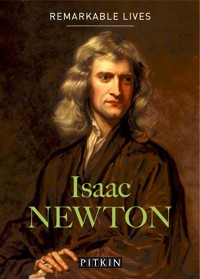
Sir Isaac Newton (1642-1727), mathematician and physicist, is one of the foremost scientific intellects of all time. This fully illustrated, accessible guide to the life and work of Isaac Newton is the perfect introduction to his groundbreaking work on gravity, motion, optics, light, colour and calculus. It also considers his lesser known research into chemistry, theology and alchemy while assessing his continuing legacy. Organised chronologically, this book covers his childhood in rural Lincolnshire, school days in Grantham and undergraduate life at Trinity College, Cambridge. All of his major discoveries, breakthroughs and publications are lucidly described. Entries include: the story of the falling apple, Gravity and the Principia, Newton's laws of motion, Optics, Alchemy and Divinity, as well as his time as Warden of the Royal Mint in London. This is the essential guide to the life, work and legacy of one of the greatest geniuses of all time. Organised chronologically, this book covers his childhood in rural Lincolnshire, school days in Grantham and undergraduate life at Trinity College, Cambridge. All of his major discoveries, breakthroughs and publications are lucidly described. Entries include: the story of the falling apple, Gravity and the Principia, Newtons laws of motion, Optics, Alchemy and Divinity, as well as his time as Warden of the Royal Mint in London. This is the essential guide to the life, work and legacy of one of the greatest geniuses of all time.
Sie lesen das E-Book in den Legimi-Apps auf:
Seitenzahl: 37
Veröffentlichungsjahr: 2020
Das E-Book (TTS) können Sie hören im Abo „Legimi Premium” in Legimi-Apps auf:
Ähnliche



















Life at a Glance
Year
Newton events
Contemporary event
1642
Isaac Newton is born on 25 December at Woolsthorpe Manor, Lincolnshire
Outbreak of Civil War
Galileo dies
1645
Royalists defeated at Naseby
1646
His widowed mother, Hannah Newton, marries again; Isaac remains at Woolsthorpe
1649
King Charles I beheaded
1653
Hannah is widowed and returns to Woolsthorpe
Oliver Cromwell appointed Lord Protector
1655
Isaac enters King’s School, Grantham
1659
Isaac leaves school to manage the estate
1660
Returns to school to prepare for Cambridge
Restoration of monarchy
Charles II ascends throne
Royal Society founded
1661
Enters Trinity College, Cambridge
1665
Graduates with a BA degree
Returns to Lincolnshire during plague
Great Plague
1666
Annus mirabilis of discovery: gravitation, optics, calculus, etc.
Great Fire of London
1667
Returns to Cambridge
Elected Fellow of Trinity College
1669
Elected Lucasian Professor of Mathematics
Writes De Analysi on calculus
1671
Presents reflecting telescope to Royal Society
1672
Elected Fellow of the Royal Society
Writes on light and colour
1675
Publishes discoveries on ‘Newton’s rings’
Royal Observatory founded at Greenwich
1679
Hannah dies
1684
Halley visits Newton to discuss gravitation
Leibniz publishes his calculus
1685
James II ascends throne
1687
Publication of Newton’s Principia Mathematica
1688
The ‘Glorious Revolution’
1689
Elected MP for Cambridge University
William III & Mary II ascend throne
1694
Mary dies
William is sole monarch
1696
Moves to London as Warden of the Royal Mint
1699
Becomes Master of the Mint
1700
Calculus priority dispute develops between Newton and Leibniz
1701
Resigns from Lucasian Chair of Mathematics
1702
Designs Coronation Medal for Queen Anne
Anne ascends throne
1703
Elected President of the Royal Society
1704
Publication of Newton’s Opticks
1705
Knighted by Queen Anne
1707
Union of England and Scotland
1712
Royal Society settles calculus priority dispute in favour of Newton
1714
George I ascends throne
1727
Newton dies on 20 March in London
Buried in Westminster Abbey
Contents
Life at a Glance
Introduction
Early Years
School Life
Cambridge
Newton’s Contemporaries
Plague and Fire
Newton and the Apple
Gravity and the Principia
Optics
Mathematics
Alchemy
Divinity
London
Final Years
Newton’s Legacy
Places to Visit
About the authors
Further reading
Acknowledgements
Introduction
The man of science
Why doesn’t the moon fall from the sky? Why don’t things fall sideways? Why does the tide turn and wash away a sandcastle? Where do the colours in the rainbow come from? A child asks the questions. Isaac Newton gave us the answers.
Newton liked a challenge and refused to be beaten, by a school bully or by a puzzle that nobody else could solve. By the time he was 23, he had found the key to unlock the secrets of the universe. As he said:
If I have seen further it is by standing on the shoulders of Giants.
Newton experimenting with light, from a painting by J.A. Houston.
For this country-bred boy, enjoyment of all things mechanical led him on the road to discovery. When a problem caught his interest, he sought out books to find an answer. This ‘needing to know’ took Newton in to mathematics, astronomy, mechanics and physics, and even into the workings of the universe itself.
Although not at first an outstanding scholar, Newton later became a professor of mathematics at the University of Cambridge. In the meantime he had lived through civil war in England, Charles I’s execution, Cromwell’s rule, the Restoration of Charles II, London’s Great Plague, and the Great Fire of 1666.
Plague in Cambridge had sent Newton home to Lincolnshire in 1665. Here he had time to think, and in just one year he made world-changing discoveries in gravitation, mathematics and optics.
Laws universal
The young scientist’s theory of gravity was his answer to the question of how the universe is held together. His big idea was made known to the outside world in 1687 when Newton published his Principia Mathematica, one of the greatest contributions ever made to science. It showed how a few mathematical laws explain the whole universe, linking what happens on earth to what happens beyond.




