


0,49 €
Mehr erfahren.
- Herausgeber: Quickie Classics
- Kategorie: Gesellschafts- und Liebesromane
- Sprache: Englisch
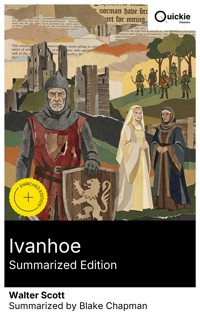
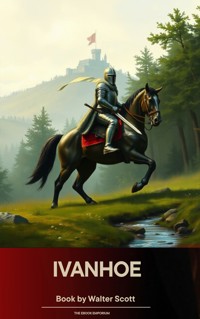
Set in late twelfth-century England under Norman rule, Ivanhoe tracks the disinherited knight, Rowena, Rebecca, and the outlaw Locksley through the Ashby tournament, abductions, and the siege of Torquilstone. Scott marries swift romance to learned archaism and multiple viewpoints, effectively founding the modern historical novel. His antiquarian detail—heraldry, legal custom, monastic life—frames a meditation on conquest, religious prejudice, and national reconciliation that reshaped later medievalism and the Robin Hood myth. Walter Scott, Scottish advocate, poet, and tireless collector of chronicles and border ballads, had reimagined Scotland in the Waverley Novels when, in 1819, he turned to the Plantagenet past. Drawing on medieval law, romance, and chronicle, he probed the aftershocks of conquest and the status of outsiders—especially Jews—projecting debates on empire, union, and toleration through a medieval lens, all while maintaining the anonymity he then favored. Readers of historical fiction, medieval studies, or the history of nationalism will find Ivanhoe indispensable: a vigorous tale with an intellectual core. For its tournament spectacle, legal drama, and humane challenge to prejudice, it merits a place on syllabuses and the shelves of serious general readers. Quickie Classics summarizes timeless works with precision, preserving the author's voice and keeping the prose clear, fast, and readable—distilled, never diluted. Enriched Edition extras: Introduction · Synopsis · Historical Context · Author Biography · Brief Analysis · 4 Reflection Q&As · Editorial Footnotes.
Das E-Book können Sie in Legimi-Apps oder einer beliebigen App lesen, die das folgende Format unterstützen:
Veröffentlichungsjahr: 2026
Ähnliche




Ivanhoe (Summarized Edition)
Table of Contents
Introduction
Ivanhoe turns on the pressure point where the glittering ideal of chivalry collides with the harsher realities of a fractured kingdom, tracing how personal honor, communal law, and cultural identity are tested by conquest, property, and faith, while pageantry and rhetoric tempt characters to mistake spectacle for justice, loyalty for faction, and courage for mere violence, so that every tournament, vow, and rescue carries the double weight of entertainment and ethical inquiry, inviting readers to consider what it would take for a society divided by language, class, and creed to imagine a future beyond grievance.
Published in 1819, Ivanhoe is a historical novel by Walter Scott, often grouped with his Waverley Novels, set in late twelfth-century England during the reign associated with Richard I and the political maneuvering that followed his absence. Mixing romance, adventure, and antiquarian detail, it helped consolidate the historical romance as a major form in English-language fiction. The landscapes stretch from manorial halls to forest clearings and tournament grounds, with social tensions between Norman conquerors and Anglo-Saxon landholders shaping the atmosphere. Scott draws on chronicles and ballad traditions to stage an accessible yet layered narrative that frames the medieval past as living debate.
At the story’s outset, a young knight returns to England in obscurity after campaigning abroad, estranged from his proud father and from the local elite that control land and favor. A tournament becomes the first stage on which his skill and loyalties are tested, while a circle of characters—an idealistic noblewoman, a wealthy Jewish traveler and his learned daughter, boisterous churchmen, ambitious soldiers, and wary outlaws—find their fortunes entwined. The plot moves swiftly through disguises, raids, and courtroom threats, but the intrigue always turns on competing claims to authority, property, and protection rather than on puzzle-box mystery.
Scott narrates with an omniscient voice that alternates between stately description and sudden bursts of humor, and he often slows the action to explain custom, ceremony, or law. The diction leans toward archaism without becoming impenetrable, and the dialogue plays with class and regional color. Scenes of fanfare and siege are balanced by smaller conversations in kitchens, chapels, and tents, giving the book a capacious, theatrical feel. Readers meet a large ensemble quickly, yet the narrative remains clear, moving in confident arcs from spectacle to ethical reckoning and back, with suspense grounded in character rather than trickery.
One central theme is how a nation might be made from former enemies. The Norman-Saxon divide provides a social grammar for grievance, inheritance, and language, and Scott explores whether courtesy, law, and shared institutions can bridge that breach. He also interrogates the code of chivalry: its promises of honor and protection, its appetite for display, and its vulnerability to vanity and faction. Trials by combat, feasts, and oaths become tests of more than prowess; they are experiments in public legitimacy, in whether might can ever serve right without destroying the very justice it claims to defend.
Another sustained concern is religious difference and the social costs of prejudice. Through Isaac of York and his daughter Rebecca, the narrative confronts the vulnerability of Jewish communities and the unstable protections offered by Christian rulers and knights, without pretending that sympathy cancels structural bias. Women navigate narrow corridors of influence, exercising intelligence and moral authority in settings that deny them formal power. The greenwood offers a competing ethic of fairness outside court and castle, yet it, too, must answer to law. The novel thus maps multiple, imperfect avenues toward justice and belonging within a contentious polity.
For contemporary readers, Ivanhoe matters both as a founding text of the historical novel and as a mirror for ongoing questions about nationalism, pluralism, and the ethics of heroism. It shows how myths of the Middle Ages are constructed, enjoyed, and contested, shaping everything from schoolbook history to modern entertainment. The book’s energy, humor, and set pieces still exhilarate, while its portrayals of prejudice demand critical attention. Reading it today encourages conversation about law and legitimacy, about who gets protected by institutions, and about how communities remember conflict without being imprisoned by it.
Synopsis
Set in late twelfth-century England, Ivanhoe unfolds amid tensions between Norman rulers and their Saxon subjects after the Crusades. Wilfred of Ivanhoe, a Saxon knight loyal to the absent King Richard, has been disinherited by his father, Cedric, partly for supporting a Norman king and for loving Cedric’s ward, Lady Rowena. Political uncertainty deepens as Prince John cultivates ambitious allies. Returning quietly from the East, Ivanhoe moves through a landscape where law is uneven and allegiances fragile. The stage is set for a test of chivalry, identity, and justice, where personal loyalties intersect with a wider struggle over England’s future.
On the road to a grand tournament, travelers converge: Saxon nobles from Cedric’s household, Norman churchmen and soldiers, and Isaac of York with his daughter, Rebecca. Their presence highlights entrenched prejudice and the precarious position of Jewish communities, who are vital to finance yet scorned by many. Courtesy and cruelty jostle side by side as threats from lawless retainers and opportunistic knights flourish. Into this mix steps a disguised champion whose restraint contrasts with the swagger of established power. All eyes turn to Ashby, where feats of arms promise glory, patronage, and political leverage for those who prevail.
At Ashby-de-la-Zouch, pageantry and rivalry collide. A mysterious Disinherited Knight challenges leading Norman lances, including the formidable Templar Brian de Bois-Guilbert. A second enigmatic figure—the Black Knight—lurks at the margins, intervening at crucial moments. The combats display both valor and partisanship: crowds cheer, nobles wager, and alliances shift. Lady Rowena’s public role as arbiter of honors underscores the social stakes of victory, while Ivanhoe’s wounds remind spectators of the real cost of reputation. An archery contest, dominated by the renowned marksman Locksley, introduces a different ideal of English skill—grounded, accurate, and independent of courtly rituals.
Triumph brings danger. On forest roads, allied barons seize key figures—Cedric, Rowena, Isaac, Rebecca, and the injured Ivanhoe—spiriting them to the stronghold of Torquilstone. Their motives range from ransom and political bargaining to forced marriage and personal obsession. As the captives weigh honor against survival, Rebecca’s medical knowledge becomes essential to Ivanhoe’s recovery, even as the Templar Bois-Guilbert’s fascination with her intensifies the moral pressure on all. Inside the castle, chivalric pretenses falter before naked power, and the captors’ competing aims begin to fray under the strain of pride, fear, and opportunism.
Outside Torquilstone gathers an unorthodox coalition: yeomen under Locksley’s leadership, disaffected retainers, and the Black Knight. Their siege challenges the authority of predatory lords and exposes the fragility of private warfare masquerading as feudal privilege. Within the walls, Isaac faces brutal coercion, Rowena navigates proposals backed by force, and Cedric clings to ancestral ideals. The assault, conducted with resourcefulness and local support, tests competing visions of justice—one rooted in communal solidarity, the other in aristocratic prerogative. Outcomes turn on courage, timing, and unexpected aid, reshaping the balance of power without resolving the realm’s deeper quarrels.
After the castle crisis, danger shifts from battlefield to tribunal. Rebecca falls into the hands of the military order that claims Bois-Guilbert, and she is accused of sorcery—a charge reflecting fear, envy, and religious zeal. The Order invokes trial by combat, binding life and innocence to a spectacle of arms. Ivanhoe, still convalescent, faces obligations that conflict with prudence, while Isaac seeks recourse where legal protection is uncertain. Prince John’s circle watches warily, aware that every verdict carries political reverberations. The judicial theater promises judgment yet risks entrenching injustice under the guise of immemorial custom.
Amid these personal ordeals, national questions sharpen. Rumors circulate about the rightful king’s movements, unsettling Prince John’s partisans and emboldening critics of his governance. Barons gauge which oaths will serve them tomorrow, not yesterday. Cedric’s unwavering Saxonism—his hope of reviving an older lineage—meets realities that demand compromise, while Rowena embodies both heritage and humane restraint. The Black Knight’s interventions hint at a unifying principle beyond faction, and Locksley’s disciplined archers suggest an English strength not tied to castles. Feudal privilege, clerical authority, and common-law sentiment intersect, each vying to define the boundaries of power and mercy.
The narrative converges at the judicial combat decreed for Rebecca’s case. Crowds assemble for a verdict dressed as ritual, where martial prowess stands in for evidence. Bois-Guilbert wrestles with private conflict and public expectation; Ivanhoe weighs honor against frailty and risk. The event concentrates the era’s contradictions: piety and spectacle, law and force, reputation and conscience. Political watchers anticipate that any outcome could tip alliances, while personal fates hang by a single lance’s stroke. Scott sustains tension without resolving the larger debate over what constitutes justice, leaving the immediate result poised to reshape lives and reputations.
Ivanhoe’s enduring power lies in its layered portrait of a society negotiating identity. It tests the ideals of chivalry against prejudice and greed, challenges hereditary pride with civic virtue, and measures ritual against fairness. By intertwining romance, adventure, and legal drama, the book explores how nations form not only through kings and battles but through fragile negotiations among faiths, classes, and customs. Its legacy is a vision of Englishness forged from competing traditions, and a reminder that courage, compassion, and the rule of law must be continually reconciled. The precise destinies of the principals crystallize these themes without exhausting them.
Historical Context
Set in late twelfth‑century England, the world of Ivanhoe is shaped by a feudal monarchy, shire administration, and the pervasive authority of the medieval Church. After decades of Norman rule, royal power radiates from itinerant justices, sheriffs, and castellans, while abbeys and priories manage land, justice, and almsgiving. Castles dominate strategic crossings and forests reserved by royal law structure life and livelihoods. The Latin of clerks and the Anglo‑Norman of the court frame written and spoken power, with English widespread among commoners. The narrative’s tournaments, sieges, and ecclesiastical courts arise from these institutions, recognizable in chronicles, charters, and legal records.
Since the Norman Conquest of 1066, England’s elite had been largely replaced by Norman and other continental families, documented in the Domesday Book of 1086. Feudal tenures tied land to military service, and stone castles enforced lordship. A cultural divide lingered: Anglo‑Norman French predominated among nobles and in law, while Old and Middle English persisted among the populace. Ecclesiastical and architectural styles, from Romanesque churches to motte‑and‑bailey forts evolving into keeps, marked Norman dominance. By the late twelfth century, these structures anchored ongoing social stratification and periodic friction between communities, an enduring backdrop that the novel dramatizes through hierarchy, custom, and speech.
International politics shaped the period: the Third Crusade (1189–1192) drew knights from across Europe, including King Richard I, whose campaigns in the Levant were followed by his capture in 1192 and detention by Leopold V and Emperor Henry VI. England paid an extraordinary ransom, financed by heavy levies and the sale of offices, after the earlier Saladin Tithe of 1188. Chivalric culture flourished in this milieu. Trial by combat existed in Norman law, and in 1194 Richard licensed tournaments at designated sites, collecting fees from participants. Military orders such as the Templars and Hospitallers exemplified crusading ideals that informed aristocratic identity and conduct.
Domestic governance rested on legal reforms associated with Henry II. The Assize of Clarendon (1166) and the Assize of Northampton (1176) expanded royal justice, introduced procedures using juries of presentment, and strengthened itinerant justices and sheriffs. The Exchequer managed royal finance, while coinage and tallages funded war and administration. Forest law protected royal hunting reserves with stringent penalties for poaching and encroachment. Outlawry punished those who refused to submit to courts, making forests dangerous but symbolically potent spaces. These institutions—shire courts, royal writs, and castle garrisons—frame the mechanisms of power and conflict that the novel employs in its depictions of authority.
Jewish communities, encouraged by Norman rulers after 1066, lived in towns such as London, Lincoln, and York, engaging in moneylending under royal protection that was simultaneously profitable to the Crown. Anti‑Jewish violence marred Richard I’s coronation in 1189, and in 1190 a massacre at York’s Clifford’s Tower destroyed a major community. In response, the Crown issued the 1194 Ordinances of the Jewry, establishing archae chests for chirographed loans and creating justices of the Jews under the Exchequer to record transactions and taxes. Legal disabilities and popular hostility persisted. This framework informs the novel’s portrayal of finance, protection, and prejudice.
England’s economy combined feudal obligations with a growing market network. Manorial agriculture dominated, but towns expanded under royal charters, hosting weekly markets and annual fairs that connected producers to merchants. The wool trade was rising in importance, moving raw fleeces through ports to Flanders. Scutage—payments in lieu of military service—supplemented knight service for campaigns, while purveyance and tallage burdened subjects. Roads, bridges, and river crossings shaped travel, guarded by tolls and castle gatehouses. Pilgrimage routes and hospices facilitated movement under ecclesiastical auspices. This material world—rents, tolls, rations, armor, and horses—grounds the novel’s scenes of travel, muster, and contest in recognizable practices.
Royal absenteeism during crusading campaigns and captivity strained governance. To meet costs, the Crown intensified revenue collection and sold offices, provoking resentment among magnates. Barons fortified castles and pursued private quarrels, even as royal courts sought to limit arbitrary violence. Under Richard’s brother John, disputes over justice, taxation, and feudal incidents escalated, culminating in Magna Carta in 1215—a later settlement but rooted in earlier tensions. In the 1190s, shifting loyalties, contested wardships, and claims over land and title created a volatile aristocratic landscape. The novel draws on this climate to stage rivalries and to examine claims of lawful authority versus coercion.
Published in 1819, Ivanhoe reflects Walter Scott’s Romantic historicism and the emergence of the historical novel as a form. Drawing on chronicles, legal antiquities, and antiquarian scholarship, Scott popularized medieval England for a broad readership amid a wider nineteenth‑century medieval revival. He presents institutions—feudal lordship, ecclesiastical courts, the tournament, and royal justice—while inviting readers to evaluate chivalric ideals against recorded practice. The book’s sustained attention to ethnic division and to the legal status of Jews engages verifiable twelfth‑century tensions, encouraging reflection on prejudice and inclusion. In doing so, the work both dramatizes its period and quietly critiques inherited hierarchies.
Author Biography
Sir Walter Scott (1771–1832) was a Scottish poet, novelist, and legal professional whose work helped define Romantic-era literature and the historical novel. Through poetry and the “Waverley Novels,” he brought the customs, conflicts, and landscapes of Scotland and wider Britain to a vast international readership. His narratives combined antiquarian curiosity with dramatic storytelling, shaping how later generations imagined the Middle Ages, the Jacobite past, and the making of modern society. Popular in his lifetime across Europe and North America, he became one of the first global literary celebrities, influencing publishing practices, tourist itineraries, and the cultural memory of Scotland and beyond.
Born in Edinburgh and connected to the Scottish Borders, Scott received a classical education at the High School of Edinburgh and studied law at the University of Edinburgh, qualifying as an advocate in the early 1790s. A childhood illness left him partially lame, and long periods of reading fostered a taste for balladry, chronicles, and travel narratives. He avidly collected Border tales and was strongly influenced by Bishop Percy’s Reliques. Early translations from German—especially Bürger and Goethe—brought continental Romantic motifs into his work. His participation in Edinburgh’s legal and literary life honed an interest in history, language, and the interplay between social classes.
Scott combined legal office with literary enterprise, serving as Sheriff-Depute of Selkirkshire and later as a principal clerk of the Court of Session, while also engaging in publishing ventures with the Ballantyne brothers. His Minstrelsy of the Scottish Border (1802–03) revived and edited traditional ballads, establishing him as an antiquarian editor and poet. Narrative poems followed in swift succession—The Lay of the Last Minstrel, Marmion, and The Lady of the Lake—each fusing chivalric color, Scottish settings, and brisk storytelling. These bestsellers made him a national figure and shaped tourist interest in the Highlands and Borders, even as taste in poetry rapidly evolved.
Responding to shifting literary fashions, Scott turned to prose fiction with Waverley (1814), issued anonymously. Its success launched a sustained project exploring Britain’s past through interlinked but independent narratives, later marketed collectively as the Waverley Novels. Guy Mannering, The Antiquary, and the Tales of My Landlord series quickly followed, including Old Mortality and The Heart of Midlothian. He expanded his range with Rob Roy, The Bride of Lammermoor, and Ivanhoe, the last set in medieval England and widely read across Europe. For years he published as “the Author of Waverley,” with public acknowledgment of authorship arriving only later, after cumulative acclaim.
Scott’s fiction examines social transition—how customary loyalties confront commercial modernity—through vividly drawn communities and mediating protagonists. A convinced Tory and supporter of the Union, he nonetheless portrayed Jacobite and regional traditions with sympathetic nuance. He helped choreograph the pageantry surrounding King George IV’s visit to Scotland, popularizing tartan imagery and integrating Highland symbols into national spectacle. Created a baronet in 1820, he used his public standing to promote historical education and cultural institutions. His editorial labors on Dryden, Swift, and various chronicles reflect a belief that literature should mediate between scholarship and a broad reading public.
The 1826 collapse of his publisher and associated printing business left Scott heavily indebted. Refusing bankruptcy, he undertook an extraordinary regimen of work to discharge obligations, producing novels such as Woodstock and sets like Chronicles of the Canongate, alongside large-scale nonfiction. The Life of Napoleon Buonaparte achieved international circulation, while Tales of a Grandfather introduced Scottish history to younger readers. Letters on Demonology and Witchcraft gathered folklore and skeptical inquiry. Ill health increasingly constrained him, and he traveled in hopes of recuperation. Even in diminished strength, he remained committed to completing projects that might honor his creditors.
Scott died in 1832 at Abbotsford, the house he designed and furnished as a living museum of national memory. His reputation has fluctuated, with later tastes challenging aspects of his style, yet his structural innovations and historical method continue to shape fiction. European novelists from Manzoni and Pushkin to Balzac and Dumas adapted his model of blending archival detail with compelling narrative. His works have been repeatedly dramatized and filmed, while landmarks such as the Scott Monument and Abbotsford itself anchor his presence in public culture. He remains central to discussions of Romanticism, nationalism, and the uses of the past.




