


4,49 €
Mehr erfahren.
- Herausgeber: DMG Edizioni
- Kategorie: Sachliteratur, Reportagen, Biografien
- Sprache: Englisch
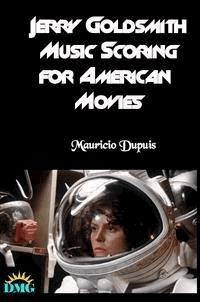
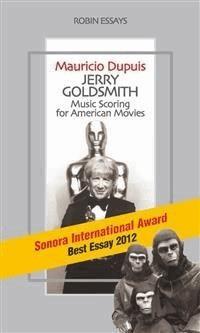
This essay represents the first organic study about Jerry Goldsmith (1929-2004), an emblematic American film composer from the second half of 20th century. His personality is examined within the cinematic production system in which he operated for about fifty years, collaborating with directors like John Huston, John Frankenheimer, Franklin J.Schaffner, Roman Polanski, Joe Dante, Richard Donner, Paul Verhoeven and many others. He won the Academy Award in 1976 for "The Omen". Revised edition.
Das E-Book können Sie in Legimi-Apps oder einer beliebigen App lesen, die das folgende Format unterstützen:
Veröffentlichungsjahr: 2017
Ähnliche

















Mauricio Dupuis
Jerry Goldsmith
Music Scoring for American Movies
Translated by Cecilia Martini
Preface
Robert Wise
Jerry Goldsmith, the American composer whose work spans from the 1950s to the beginning of the current century, can be considered one of the most significant names of musical creation applied to movies. A well-trained and cultured musician himself, he focused most of his work on movies, along with occasional incursions in orchestra and choral composition specifically conceived for concert halls. He also worked, at the beginning of his career especially, in radio and television, both of which turned out to be excellent training for his later work.
The present essay, among the composer's vast body of works, is centered on those connected to the American movie system. The focus will obviously be on Goldsmith's most meaningful scores, both in a strict musical sense and in relation to the movie they belong to, although each would be worthy of a lengthier and more specific analysis, such as those applied to musical theatre works. This book, however, will try to create a base for further studies.
The first and largest part – formed by chapters one to three – will concentrate on a few basic and recurring features of movie scoring: production context, relationships with directors and producers, orchestration and other practices of the composing "workshop"; we will then turn our attention to Goldsmith's specific case and finish the section with a brief excursus on the composer's career, which touched almost every movie genre. The second part – the fourth chapter – will cover his experience with the Star Trek saga, the work that turned him into an iconic composer. The book will end with a catalog of Goldsmith's body of work, including movies, television, radio, and other minor experiences.
As one of the main examples, together with John Williams, of the so-called silver age1 of Hollywood music, this Californian composer's successful work in movies started in the second half of the 20th century, allowing him to collaborate with many of the most prolific directors of his time, and to be signed on by the most famous production studios. In this sense, Goldsmith represents a significant paradigm: a 20th century musician from a consistently classic tradition – albeit open-minded towards avant-garde movements – who made a profit from a seemingly thankless and secondary job, all the while managing to make his mark on music, as witnessed by the excellent record sales throughout his career.
Most musical examples in this book are taken from reproductions of sketches, handwritten by the composer or by his aides and donated by Goldsmith himself in 1997 to the Margaret Herrick Library of Los Angeles; library curator Warren M. Sherk catalogued these hard-to-access notebooks, which constitute a fundamental musicological starting point for the study of the composer2.
Jerry Goldsmith
Notes
1 Such is the name of the American movie score era spanning from the end of the 1950s to the 1990s, as opposed to the Golden Age going from the first half of the 1930s to the beginning of the 1960s, the main representatives of which are Erich Wolfgang Korngold, Max Steiner, Miklós Rózsa, Franx Waxman, Alfred Newman, Bernard Herrmann and other, lesser composers.
2 The commercialization of orchestral movie scores is generally limited. The available scores are usually a miscellanea of (simplified) piano arrangements or single tracks in different versions (e.g. band arrangements). John Williams, who wrote scores for the Star Wars saga and for many of Steven Spielberg's movies, is a rare example of renowned composer who published his pieces as suites or single tracks in the original orchestra version.
Mauricio Dupuis
The author: Mauricio Dupuis was born in Montevideo, Uruguay, in 1974. He has a degree in Musicology from the University of Pavia, branch of Cremona, Italy. He also works as a literary curator for several Italian publishers. Among his works are the Italian editions of Mr Arkadin by Orson Welles, Porgy by Dubose Heyward, Rebecca and Rowena by Thackeray and A Start in Life by Balzac. He translated "Trumbo" by Bruce Cook (Rizzoli). With DMG Edizioni he edited "Dalton Trumbo" by Larry Ceplair and Christopher Trumbo.
Cromatismi
Jerry Goldsmith Music scoring for american movies
Mauricio Dupuis
Translated by
Cecilia Martini
nuova edizione elettronica: dicembre 2017
ISBN 978-88-99307-22-6
© 2017 DMG Edizioni via Bellini 14, Cassola (Vicenza), Italy tel. +39 3472173602
e-mail [email protected]
1
A LIFE IN MOVIE PRODUCTION
Production context
Ever since expressive media such as radio, movies and, later, television made their appearance, the average 20th century composer often turned to the "applied" conception of musical composition; if, on the one hand, the subordination of music to a specific medium – in this case, movies – could be seen as an intellectual limitation, on the other hand it allowed for more opportunities of interacting with the current forms of artistic expression. Prior to the 1900s, the focus had been on such media as theatre and dancing, but the 20th century brought along a greater range of expressive possibilities. After the full development of sound in movies, during the 1930s, music and pictures started cooperating in earnest, forging a relationship that became a basic part of artistic and intellectual evolution in the 20th century.
While examining the movie production system – even when it is appropriate to use terms such as "art" and "strong individual expression" – we must bear in mind that the final product is never created by a single artisan, as it happens in other musical fields such as musical theatre or ballet. The composer, consequentially, does not enjoy the expressive freedom he would have when composing for himself or when being commissioned work from musical institutions or symphonic orchestras. Although the U.S. movie industry underwent drastic changes after the major studios' great crisis,1 the various phases of movie production retained their basic "assembly line" approach: storyline, script, casting and direction, editing and musical composition. The same limitations applied to directors. In Europe, even today, the director is seen as the keystone of a cinematic work's personality. In the U.S., by contrast it is rare for the so-called director's cut of a movie to be released in theaters, and a studio-appointed producer usually has the last word on the editing process. As for scripts, they are often reviewed – or even distorted, especially as far as the ending is concerned – to match the requirements of a hypothetical audience. Even within this system's stifling conventions, however, it is clear that original voices can manage to surface and offer a significant contribution in both content and meaning.
Rather than to opera, movie scoring can be compared to the composition of incidental music for theatrical pièces, where the composer’s space for individual expression is reduced in the extreme2. Movie scoring is generally regarded as mechanical work, and those who undertake it end up embodying the stereotype of eclecticism, becoming one-size-fits-all composers who oblige to follow explicit requests from a director or a producer; this usually means employing the common musical formulas of each genre, which the audience is trained to expect and recognize. In short, a composer who writes scores for pre-packaged works – be it in movies, radio, television or theatre – is almost always forced to avoid the use of bold musical language, with the paradoxical aim of finding a qualitative balance among the final material, or of simply matching the (often stereotypical) requests of his customers.
Lesen Sie weiter in der vollständigen Ausgabe!
Lesen Sie weiter in der vollständigen Ausgabe!
Lesen Sie weiter in der vollständigen Ausgabe!
Lesen Sie weiter in der vollständigen Ausgabe!
Lesen Sie weiter in der vollständigen Ausgabe!
Lesen Sie weiter in der vollständigen Ausgabe!




