


4,99 €
Mehr erfahren.
- Herausgeber: Sem Edizioni
- Kategorie: Sachliteratur, Reportagen, Biografien
- Sprache: Englisch
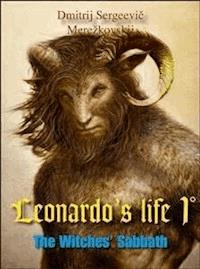
Who really was Leonardo da Vinci? The author of the Cenacolo of the Monna Lisa and many other masterpieces, or the Antichrist? The man of faith or a heretic? Perhaps of all, maybe more. It depends on how you look.Here is the first volume of the trilogy, “Leonardo’s life 1°- The witches' sabbath." Tells, through the eyes of his disciples, the man wanted by Ludovico il Moro to help him realize his unbridled political ambitions of Europe. With his many qualities and many defects. Among alchemists in search of the Philosopher's Stone, witches engaged in demonic Sabbath, Inquisition burning at the stake not only witches, but all the classical works, books, statues or paintings. A horror that even today we live.
Das E-Book können Sie in Legimi-Apps oder einer beliebigen App lesen, die das folgende Format unterstützen:
Veröffentlichungsjahr: 2017
Ähnliche

















Dmitrij Sergeevič Merežkovskij
Leonardo's life 1° - The Witches' Sabbath
Leonardo’s life 1°
The Witches' Sabbath
by Dmitrij Sergeevič Merežkovskij
Editorial director: Cosimo de Leo
Editor: Ugo di Vittorio
Translator: Lavinia Galvagno
Cover: Michelangelo Allegri
© 2017 SEM - Editorial & Multimedia Services
Editorial office, Via Volta 18 - 20094 Corsico - Milan - Italy
www.semedizioni.com
All rights reserved. No part of these pages may be reproduced in any form, included any electronic and mechanical means, without prior written permission by the Editor, except for brief quotations used for purposes of review. VAT is pre-paid by the publisher in accordance with section 74, paragraph 1, letter C of Presidential Decree 633/72 and further modifications.
Indice dei contenuti
The white she-devil (1494)
Ecce Deus - Ecce homo (1494)
The poisoned fruits (1494)
The Witches’s Sabbath (1494)
Your will be done (1494)
From the diary of Giovanni Boltraffio (1494 – 1495)
Bonfire of the Vanities (1495)
The white she-devil (1494)
“Those who fall in love with practice without science are like a sailor who enters a ship without a helm or a compass, and who never can be certain whither he is going„
Leonardo da Vinci
I.
In Florence, the warehouses of the Art of the Dyers stood next to the rectory of Orsanmichele. Here, clumsy and baroque constructions, built close to houses and placed on wooden poles, spliced in the upper part to the overhangs of the slate roofs, so that a slip of sky barely remained visible. In the street, darkness reigned even in daylight. Wool fabrics in many guises were hanging from beams and arches to the entrance of shops. They were of a pleasing red or lilac or blue color, coming from overseas but all dyed in Florence. In the middle of the street, paved with flat pebbles, a rivulet of putrid water flowed, variously colored, thrown away from the tubs of the dyers. At the door of the warehouses and shops, the so-called «Fondachi», shields were hanging, bearing the emblem of Calimala, which was the denomination of the Art of the Dyers. It represented a golden eagle in a red field, with the talons leaned on a globe of pure white wool.
Messire Cipriano Bonaccorsi, the rich florentine merchant, consul of the noble art of Calimala, sat in one of these «Fondachi», surrounded by lists and registers. In the cold light of that day of March and in the humidity seeping in through the cellars, where the wares were piled, the old man curled up feeling the cold, drawing around him his worn-down squirrel fur coat torn at the elbows. He had a quill on the ear. With weak and short-sighted eyes, to which nothing escaped, he observed, apparently with indifference, parchment papers and an account book. The papers were split lengthwise in two sections named credit and debit.
In that rough book, wares were registrated in a round and regular cursive, without punctuation and in roman numerals, beacause Arabic numerals were considered as a frivolous innovation, not appropriate to the seriousness of account books.
On the first page of the register, you could read: « In the name of our Lord Jesus Christ and of the Most Blessed Virgin Mary. This book of registrations starts in the year of birth of Christ MCCCCLXXXXIV».
Therefore, examined the latest registrations and corrected an error in the total of a certain parcel of wool, in exchange for which he had received in advance a loading of pepper, ginger from Mecca and cinnamon, Messire Cipriano threw back his head on the back of his chair, closed his eyes and started to think about a business letter he had to write to Montpellier, in France, to his administrator, who was there because of the wool fair.
Lesen Sie weiter in der vollständigen Ausgabe!
Lesen Sie weiter in der vollständigen Ausgabe!
Lesen Sie weiter in der vollständigen Ausgabe!
Lesen Sie weiter in der vollständigen Ausgabe!
Lesen Sie weiter in der vollständigen Ausgabe!
Lesen Sie weiter in der vollständigen Ausgabe!




