


Erhalten Sie Zugang zu diesem und mehr als 300000 Büchern ab EUR 5,99 monatlich.
- Herausgeber: The History Press
- Kategorie: Sachliteratur, Reportagen, Biografien
- Sprache: Englisch
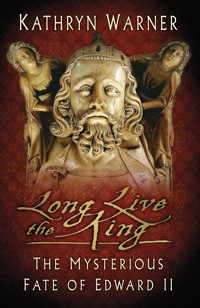
Edward II's murder at Berkeley Castle in 1327 is one of the most famous and lurid tales in all of English history. But is it true? For over five centuries, few people questioned it, but with the discovery in a Montpellier archive of a remarkable document, an alternative narrative has presented itself: that Edward escaped from Berkeley Castle and made his way to an Italian hermitage. In Long Live the King, medieval historian Kathryn Warner explores in detail Edward's downfall and forced abdication in 1326/27, the role possibly played by his wife Isabella of France, the wide variation in chronicle accounts of his murder at Berkeley Castle and the fascinating possibility that Edward lived on in Italy for many years after his official funeral was held in Gloucester in December 1327.
Sie lesen das E-Book in den Legimi-Apps auf:
Seitenzahl: 527
Veröffentlichungsjahr: 2017
Das E-Book (TTS) können Sie hören im Abo „Legimi Premium” in Legimi-Apps auf:
Ähnliche


















This book is dedicated to John Lamb, in memory of sixteen years, and hoping that many more are not taken from us.
Kathryn Warner has been a recognised expert on the reign of Edward II (1307–27) for more than ten years. She currently works part-time as an English teacher, and carries out historical research on the fourteenth century. She gives lectures about Edward, his life and reign and possible survival after 1327, in the UK and Italy. She is the author of the acclaimed biography Edward II: The Unconventional King and Blood Roses: The Houses of Lancaster and York Before the War of the Roses.
First published 2017
This edition published 2021
The History Press
97 St George’s Place, Cheltenham,
Gloucestershire, GL50 3QB
www.thehistorypress.co.uk
© Kathryn Warner, 2017, 2021
The right of Kathryn Warner to be identified as the Author of this work has been asserted in accordance with the Copyright, Designs and Patents Act 1988.
All rights reserved. No part of this book may be reprinted or reproduced or utilised in any form or by any electronic, mechanical or other means, now known or hereafter invented, including photocopying and recording, or in any information storage or retrieval system, without the permission in writing from the Publishers.
British Library Cataloguing in Publication Data.
A catalogue record for this book is available from the British Library.
ISBN 978 0 7509 8327 3
Typesetting and origination by The History Press
Printed and bound in Great Britain by TJ Books Limited, Padstow, Cornwall
eBook converted by Geethik Technologies
CONTENTS
Acknowledgements
Timeline
Dramatis Personae
Introduction
Part I: The Reluctant King
1 The Making of the Reluctant King, 1284–1314
2 The King and the Contrariants, 1314–1324
3 Invasion and Deposition, 1325–1326
4 Imprisonment of a King, 1327
Part II: The King is Dead
5 The Murder of a King
6 The Funeral of a King
7 The Murderers of a King
Part III: Long Live the King
8 The Rescuers of the King
9 The Rescuers of the King Part 2
10 The King in France, Germany and Italy
11 The King in France, Germany and Italy Part 2
12 William the Welshman
Part IV: Arguments For and Against Edward II’s Murder and Survival
Conclusion
Afterword
Appendix 1: The Fieschi Letter
Appendix 2: The Melton Letter
Appendix 3: Lord Berkeley’s Testimony
Appendix 4: The Confession of Edmund of Woodstock
Abbreviations in Notes and Bibliography
Notes
Select Bibliography
ACKNOWLEDGEMENTS
I owe a huge debt of gratitude to Ian Mortimer, without whom it would not have been possible to write this book. His immense research on Edward II’s survival after 1327 has blazed a trail for the rest of us, and his tireless dedication to uncovering the mysteries of what happened in and after 1327 has long been an inspiration to me.
I also owe a great debt to my friends of the Auramala Project in Italy, who are doing incredible research on the possibility of Edward II’s survival in that country. In particular I wish to thank Ivan Fowler, MariaRosa Gatti, Elena Corbellini, Mario Traxino, Stefano Castagneto, Luciano Maffi, Elena Giacomotti, Simone Bertelegni and Alice Galbiati.
Thank you to my lovely talented friend Craig Robinson for taking superb photographs for me to use in the book, and to everyone at Berkeley Castle, especially Helen Berryman and Joshua Nash, for giving Craig access and for permission to use the photos here.
Thank you to the staff at Gloucester Cathedral, Bristol Cathedral, Cologne Cathedral (especially Christine Di Costanzo), St Mary’s church in Berkeley, the church of Sant’Eustorgio and the office of cultural heritage in Milan, the cathedral archive of Genoa, the capitulary library in Vercelli, the hermitage of Sant’Alberto, Oramala Castle, the Archives départementales de l’Hérault, and the DGA Education, Culture, Jeunesse, Sport, Loisirs in Montpellier.
Thank you to the excellent genealogist and researcher Kevin McKenzie, who has helped me and the Auramala Project so much and given so generously of his time and expertise.
Thank you again to my wonderful friends in Italy, especially Gianna Baucero, Claudia Bergamini, Ezio Candellone, Maurizio Tarotti, Gabriela Grandi, Andrea Candellone, Angela Barbero Candellone, Claudia Candellone, Alberto Portalupi, Gaia Portalupi, Lorenzo Tarotti, Gian Luca Marino, Fabrizio Zerbin, Caterina Costanza, Massimo Greppi, Enza Battaglia, Monsignor Sergio Salvini, His Excellency the Archbishop of Vercelli Father Marco Arnolfo, Timoty Leonardi, and Margherita Grillo, with whom I spent a wonderful day exploring historic Milan.
Thank you to the staff at the seminary of Vercelli, the university library of Pavia, Original History Walks and the Chesterton Association, and all the others in Vercelli and Pavia who have been so incredibly generous, kind and welcoming.
Thank you to the Reverend Chris Harrington, Mary Cummins, Lesley Pinchbeck, Pete Banks, Sue Banks, Chris Cullen, Michael Cullen, Marilyn Scholefield and everyone at St Andrew’s church, Heckington, Lincolnshire, for inviting me to speak there about Edward II and for their kind hospitality. Thank you to all the staff at the English Library Düsseldorf, a resource I have enjoyed for many years, and also for inviting me to speak there.
Thank you to Paul Dryburgh for giving me the opportunity to speak about Edward II at the International Medieval Congress, and to Professor Mark Ormrod of the University of York for moderating our session.
For all their support and help, thank you to my dear friends Laurel Albright, Juliana Brümmer, Rachel Fitzpatrick, Valentino Krìžani Kovačić, Vishnu Nair, Jen Parcell, Sami Parkkonen, Joanne Renaud, Gillian Thomson, Julie Thomson, Sarah Ursell, Masud Vorajee and Kate Wingrove. Thank you to all my history friends on my blog and my social media, especially Bev Newman and Susan Wakefield for helping to suggest the book’s title. Thank you to all of you who have been so kind to me during recent difficult times. Thank you to all my wonderful students in Düsseldorf.
Thank you always and forever to my mum Elaine, my dad Phil, my stepmum Betty and my father-in-law Alan for your endless love and support.
Without John Lamb, I would not have been able to write this book. I only hope that one day you can read it, my love.
Last but certainly not least, thank you to my editor Mark Beynon and everyone at The History Press for giving me the opportunity to write a book I’ve been desperate to write for years.
TIMELINE
25 April 1284
Birth of Edward II ‘of Caernarfon’, fourth son of Edward I and his first queen Leonor of Castile.
19 August 1284
Death of Edward’s 10-year-old brother Alfonso of Bayonne, making Edward heir to the throne.
28 November 1290
Edward’s mother Leonor of Castile dies; he inherits her county of Ponthieu in northern France.
c. late 1295
Birth of Isabella of France, daughter of Philip IV of France and Joan I of Navarre.
8 September 1299
Wedding of Edward I and his second wife Marguerite of France, half-sister of Philip IV.
1 June 1300 and 5 August 1301
Births of Edward of Caernarfon’s half-brothers Thomas of Brotherton, Earl of Norfolk and Edmund of Woodstock, Earl of Kent.
7 February 1301
Edward made Prince of Wales and Earl of Chester.
7 July 1307
Edward I dies; Edward II becomes King of England and Lord of Ireland; he is already Duke of Aquitaine.
25 January 1308
Edward marries Isabella of France.
25 February 1308
Edward and Isabella’s coronation as King and Queen of England.
19 June 1312
Execution of Edward’s ‘favourite’, Piers Gaveston.
13 November 1312
Birth of Edward and Isabella’s first child Edward of Windsor, later Edward III.
24 June 1314
Edward loses the Battle of Bannockburn to Robert Bruce.
15 August 1316
Birth of Edward and Isabella’s second son John of Eltham, Earl of Cornwall.
18 June 1318
Birth of their third child Eleanor of Woodstock, duchess of Guelders.
c. 1319/20
Hugh Despenser the Younger becomes Edward’s latest favourite.
5 July 1321
Birth of Edward and Isabella’s youngest child Joan of the Tower, Queen of Scotland.
1321/22
‘Contrariant’ rebellion of a group of English barons against Edward and Hugh Despenser.
29 August 1321
Despenser and his father are exiled from England; they return in March 1322.
2 January 1322
Accession of Isabella’s third and last brother Charles IV as King of France.
13 February 1322
Roger Mortimer imprisoned in the Tower of London during the rebellion against the king.
1 August 1323
Roger Mortimer escapes and flees to the Continent.
July 1324
Edward goes to war against his brother-in-law Charles IV of France (the War of Saint-Sardos).
18 September 1324
Edward confiscates Queen Isabella’s lands.
9 March 1325
Queen Isabella leaves for France to negotiate peace between her husband and brother.
12 September 1325
Edward of Windsor, made Duke of Aquitaine and Count of Ponthieu, leaves for France; he pays homage to his uncle Charles IV on the 24th.
c. late October 1325
Isabella refuses to return to Edward unless he sends Hugh Despenser away from him.
1 December 1325
Edward writes to Isabella for the last time.
c. late 1325/early 1326
Isabella begins an association with Roger Mortimer.
5 February 1326
Isabella writes to the Archbishop of Canterbury explaining why she cannot return to Edward.
27 August 1326
Isabella betroths her son Edward of Windsor to a daughter of the Count of Hainault and Holland.
21 or 22 September 1326
Isabella’s invasion force leaves Dordrecht; arrives in Suffolk on the 24th.
2 October 1326
Edward II flees from London to South Wales.
20–24 October 1326
Edward and others on the sea in South Wales.
27 October 1326
Execution of Hugh Despenser the Elder, Earl of Winchester, in Bristol.
16 November 1326
Capture of Edward II near Neath in South Wales; he is sent to Kenilworth Castle.
17 November 1326
Execution of Edmund Fitzalan, Earl of Arundel, in Hereford.
24 November 1326
Execution of Hugh Despenser the Younger in Hereford.
12 January 1327
Start of the parliament in London which deposes Edward II.
20 January 1327
Last day of Edward II’s reign.
25 January 1327
First day of Edward III’s reign.
1 February 1327
Coronation of Edward III.
3 April 1327
Edward of Caernarfon moved from Kenilworth Castle to Berkeley Castle; is in Gloucester on 5 April and probably arrives at Berkeley on the 6th.
c. mid-June/mid-July 1327
The Dunheved group succeed in temporarily freeing Edward from Berkeley.
27 July 1327
Thomas, Lord Berkeley sends a second letter to the chancellor of England informing him about the attack on his castle and the Dunheveds’ seizure of Edward.
14 September 1327
William Shalford, deputy justice of Wales, writes to Roger Mortimer about a Welsh plot to free Edward; Mortimer sends man-at-arms William Ockley with a message to Berkeley Castle.
21 September 1327
Official date of Edward II’s death.
22 September–21 October 1327
Edward’s body is guarded at Berkeley Castle by sergeant-at-arms William Beaukaire.
23/24 September 1327
Thomas Gurney informs Edward III of his father’s death during the night at Lincoln.
Before 29 September 1327
Edward’s joint custodian Sir John Maltravers is paid ‘for services to the king’s father’ in Dorset and is at Corfe Castle, Dorset.
c. late September/October 1327
A group of knights, abbots and burgesses see Edward’s body ‘superficially’ (according to one chronicler).
6 October 1327
An abbey is granted permission to keep the anniversary of Edward’s death on 21 September every year.
21 October 1327
Edward II’s body is moved from Berkeley Castle to St Peter’s Abbey, Gloucester.
23 October 1327
The Archbishop of York asks for prayers for Edward’s soul.
13 November 1327
Edward III’s fifteenth birthday.
20 December 1327
Funeral of Edward II at St Peter’s Abbey.
c. 22/24 December 1327
The woman who embalmed Edward’s body is taken to Queen Isabella.
24/25 January 1328
Wedding of Edward III and Philippa of Hainault in York.
5 November 1328
Edward II’s first cousin Henry, Earl of Lancaster tells the mayor and aldermen of London he has news from Edward’s half-brother the Earl of Kent which he dare not write down.
8 March 1329
A group of men later associated with the Earl of Kent are ordered to be taken to Edward III.
24 March 1329
The Earl of Kent begins making preparations to visit Pope John XXII in Avignon; he leaves c. 11 June.
24 September 1329
John Maltravers named as constable of Corfe Castle, Dorset, apparently a confirmation of an appointment made on 17 November 1326.
10 October 1329
William Melton, Archbishop of York, is informed that Edward is alive; he sends a messenger to Donald, Earl of Mar in Scotland; Mar promises to bring an army to England to help release Edward.
Before 3 December 1329
The Earl of Kent returns to England.
7 December 1329
Sheriffs and justices warned about ‘false rumours of the arrival of foreigners’ in England, most probably with reference to Donald of Mar and his army.
14 January (almost certainly 1330)
The Archbishop of York sends a letter to his kinsman the mayor of London, Simon Swanland, telling him that Edward of Caernarfon is alive and well and in a safe place.
18 February 1330
Coronation of Philippa of Hainault, who is five months pregnant, as Queen of England; the Earl of Kent attends.
10 March 1330
Four of the Earl of Kent’s adherents ordered to be arrested.
13 March 1330
Arrest of the Earl of Kent in Winchester.
14 March 1330
Order for the imprisonment of Kent’s wife and children.
16 March 1330
Kent confesses to attempting to free his half-brother Edward of Caernarfon from captivity; he names some of his adherents.
19 March 1330
Execution of the Earl of Kent for treason.
31 March 1330
Order for the arrest of several dozen of Kent’s adherents.
c. March/April 1330
According to the Fieschi Letter, Edward II makes his way from Corfe Castle to Ireland after hearing of the death of the Earl of Kent.
March–August 1330
Orders issued for the arrest of many more of Kent’s adherents, and for inquisitions to be held across several English counties and Wales to discover the identity of others; many are imprisoned and their lands and goods seized; at least eighteen flee the country.
13 April 1330
All the sheriffs of England and the justice of Wales are told to arrest anyone who claims that Edward II is still alive; two chroniclers say that belief in Edward’s survival is widespread at this time.
23 and 30 April 1330
The Archbishop of York appears before King’s Bench.
15 June 1330
Birth of Edward III and Queen Philippa’s first child Edward of Woodstock (later Prince of Wales and father of Richard II).
July/August 1330
Measures taken against an invasion of England from the Continent by former allies of the Earl of Kent.
8 August 1330
Justice of Wales ordered to arrest anyone supporting the Earl of Kent’s adherent Sir Rhys ap Gruffudd, who in September 1327 had tried to free Edward of Caernarfon from Berkeley.
10 August 1330
Sir William Aune, constable of Caerphilly Castle, ‘indicted for adhesion’ to the Earl of Kent.
19 October 1330
Edward III arrests his mother Queen Isabella’s favourite Roger Mortimer at Nottingham Castle; the king keeps his mother under temporary house arrest.
26 November 1330
Parliament opens at Westminster; Thomas, Lord Berkeley says that until now he had not known of Edward II’s death; Thomas Gurney and William Ockley sentenced to death for Edward’s murder; John Maltravers, John Deveril and Bogo Bayouse sentenced to death for the entrapment of the Earl of Kent.
29 November 1330
Execution of Roger Mortimer, Earl of March.
1 December 1330
Edward III appoints William Melton, Archbishop of York, as treasurer of England.
3 December 1330
Edward III orders the arrest of Thomas Gurney, William Ockley, John Deveril and Bogo Bayouse; Gurney, Bayouse and John Maltravers flee abroad; Ockley and Deveril disappear from history.
Early December 1330
Edward III pardons the late Earl of Kent and his adherents; restores their lands and goods; invites those who have fled to return to England.
24 December 1330
Execution of Mortimer’s ally Sir Simon Bereford.
c. December 1330
According to the Fieschi Letter, Edward II leaves Ireland and travels via the port of Sandwich to Sluis in Flanders; he subsequently makes his way through France to the pope in Avignon, with whom he spends fifteen days.
20 May 1331
Edward III writes to Alfonso XI of Castile thanking him for arresting Thomas Gurney; Gurney later escapes and flees to Naples; John Maltravers evades capture in Spain and ends up in Flanders.
Early to mid-1330s
According to the Fieschi Letter, Edward II travels from Avignon to Paris, Brabant, Cologne, Milan, Milascio and Sant’Alberto di Butrio.
9–10 May 1332
Edward II’s elder daughter Eleanor of Woodstock stays at the port of Sluis, Flanders.
26/27 May 1332
Wedding of Eleanor of Woodstock and Count Reinhoud II of Guelders in Nijmegen.
25 July 1332–31 January 1333
Giles of Spain, sent to Spain by Edward III to arrest Thomas Gurney, instead arrests several men accused of conspiring towards Edward II’s death.
16 January 1333
Edward III learns that Gurney is now in Naples.
c. June 1333
Death of Thomas Gurney, arrested by Sir William Thweng, in Gascony on his way back to England.
c. summer 1332 or summer 1333
Edward of Caernarfon crosses the Alps into Italy?
Late 1333/early 1334
Edward of Caernarfon arrives in Milascio?
23 March 1334
Edward III sends his friend William Montacute to talk to John Maltravers, who is in exile in Flanders.
26 July 1334
Death of Bogo Bayouse in Rome.
4 December 1334
Death of Pope John XXII in Avignon; Benedict XII elected on 20 December.
29 March and 3 June 1335
Seven men in England, including Thomas, Lord Berkeley and his brother, pardoned for receiving John Maltravers.
31 January 1336
Death of Cardinal Luca Fieschi in Avignon.
13 June until late October 1336
Siege of Pontremoli, formerly a fief of Luca Fieschi and his brothers near Mulazzo, currently held by Luca’s nephew-in-law; is this the ‘war’ which prompts Edward to move from Milascio to Sant’Alberto di Butrio?
16 March 1337
Thomas, Lord Berkeley cleared of all charges relating to Edward II’s death and pardoned.
c. 1338
Manuele Fieschi, papal notary and future Bishop of Vercelli, writes (or completes) a letter telling Edward III that his father survived Berkeley Castle and ended up in Italy.
5 September 1338
Holy Roman Emperor Ludwig of Bavaria makes Edward III a vicar of the empire in Koblenz.
c. early September 1338
Edward III in Koblenz meets William the Welshman, ‘who asserts that he is the king’s father’.
13 September 1338
Pope Benedict XII appoints Arnaud Verdale as his envoy to Ludwig of Bavaria.
January 1339
Arnaud Verdale becomes Bishop of Maguelone; some years later he compiles the cartulary where the Fieschi Letter is found in the nineteenth century.
22 August 1358
Death of Isabella of France, dowager Queen of England, Edward II’s widow.
27 October 1361
Death of Thomas, Lord Berkeley.
16 February 1364
Death of Sir John Maltravers.
21 June 1377
Death of Edward III, aged 64.
1877
The Fieschi Letter is discovered in a cartulary of Arnaud Verdale, and is presented in Paris on 21 September 1877, the 550th anniversary of Edward II’s death.
DRAMATIS PERSONAE
ROYALTY
Edward II, known as Edward of Caernarfon, b. 25 April 1284: son of Edward I, King of England (1239–1307; reigned 1272–1307) and his first wife Leonor of Castile (c. 1241–90); King of England July 1307–January 1327.
Isabella of France (c. 1295–22 August 1358): Queen of England; daughter of Philip IV, King of France, and Joan I, Queen of Navarre; marries Edward II on 25 January 1308.
Edward III (13 November 1312–21 June 1377): King of England; eldest child of Edward II and Isabella of France; succeeds his deposed father as king on 25 January 1327.
Philippa of Hainault (c. 1314–69): Queen of England; daughter of Willem, Count of Hainault and Holland, niece of Philip VI of France; marries Edward III on 25 January 1328.
John of Eltham (1316–36), Eleanor of Woodstock (1318–55) and Joan of the Tower (1321–62): the younger children of Edward II and Isabella of France.
Louis X (1289–1316), Philip V (c. 1291–1322) and Charles IV (1294–1328): Kings of France and Navarre; Queen Isabella’s brothers.
Philip VI or Philip de Valois (1293–1350): King of France; son of Philip IV’s brother Charles de Valois; Queen Isabella’s first cousin and, via his sister Jeanne de Valois, Queen Philippa’s uncle.
Edmund of Woodstock (5 August 1301–executed 19 March 1330): Earl of Kent; son of Edward I and his second queen Marguerite of France (1278/9–1318), the half-sister of Philip IV of France; half-brother of Edward II, uncle of Edward III and grandfather of Richard II; first cousin of Queen Isabella; his older brother is Thomas of Brotherton, Earl of Norfolk and Earl Marshal of England (1300–38).
Eleanor Despenser née de Clare (1292–1337): Edward II’s eldest and favourite niece; second child of his second-eldest sister Joan of Acre, Countess of Gloucester (1272–1307); marries Hugh Despenser the Younger in 1306.
Thomas of Lancaster (c. 1278–1322): Earl of Lancaster, Leicester and Derby; grandson of Henry III, nephew of Edward I and first cousin of Edward II; half-brother of Joan I of Navarre and uncle of Queen Isabella.
Henry of Lancaster (c. 1281–1345): Earl of Lancaster, Leicester and Derby; brother and heir of Thomas; guardian of the former King Edward II in early 1327.
Margaret (1275–c. early 1330s), Duchess of Brabant and Mary (1279–1332), a nun at Amesbury Priory: the only two of Edward II’s sisters alive after 1316.
NOBILITY
Hugh Despenser the Younger (c. 1288–24 November 1326): Lord of Glamorgan; appointed Edward II’s chamberlain in 1318 and his ‘favourite’ from about 1319; marries Eleanor de Clare in 1306; Edward’s nephew by marriage; his eldest son is Hugh or Huchon, born c. 1309.
Hugh Despenser the Elder (1261–27 October 1326): Earl of Winchester; father of Hugh Despenser the Younger; a loyal supporter of Edward II throughout his reign.
Roger Mortimer (1287–29 November 1330): Lord of Wigmore; appoints himself first Earl of March in 1328; imprisoned by Edward II in 1322, and later Isabella of France’s ‘favourite’ and probably her co-ruler of England during Edward III’s minority.
Edmund Fitzalan (1285–17 November 1326): Earl of Arundel; at first an enemy and later a close ally of Edward II; cousin and enemy of Roger Mortimer; his son and heir is Richard, b. c. 1313, who marries Hugh Despenser the Younger’s eldest daughter Isabella (b. c. 1312) in 1321 and who joins the Earl of Kent’s plot in 1330.
Donald (c. 1290s/early 1300s–11 August 1332): Earl of Mar; nephew of Edward II’s great enemy Robert Bruce, King of Scotland, imprisoned in England as a child in 1306 by Edward I, but becomes a long-term friend and ally of Edward II.
Humphrey de Bohun (c. 1276–16 March 1322): Earl of Hereford; marries Edward II’s fifth sister Elizabeth (d. 1316) in 1302; dies in rebellion against the king.
John de Bohun (1305–36): Earl of Hereford; eldest son of Humphrey and Elizabeth; nephew of Edward II and first cousin of Edward III.
BISHOPS
William Melton: elected Archbishop of York in late 1315; friend and ally of Edward II; dies April 1340; writes the Melton Letter in January 1330.
John Stratford: Bishop of Winchester 1323–33, Archbishop of Canterbury 1333–48; persecuted by Edward II in 1323.
Adam Orleton: Bishop of Hereford 1317–27, Bishop of Worcester 1327–33, Bishop of Winchester 1333–45; persecuted by Edward II in the 1320s; Stratford and Orleton play significant roles in Edward’s deposition in 1326/7.
Hamo Hethe: Bishop of Rochester 1317–52; supports Edward II in 1326/7.
Stephen Gravesend: Bishop of London 1318–38; joins the Earl of Kent’s plot to free Edward in 1330.
Walter Stapledon: Bishop of Exeter 1308–26; murdered in London in October 1326 after the queen’s invasion.
Robert Wyvill: Bishop of Salisbury 1330–75; previously parson of Kingsclere, Hampshire, and succeeded there by his brother Walter in 1330; secretary of Queen Isabella.
POPES (IN AVIGNON, NOT ROME)
Clement V: born Bertrand Got; Archbishop of Bordeaux; Pope June 1305–April 1314.
John XXII: born Jacques Duèse; Cardinal-bishop of Porto; Pope August 1316–December 1334, following a period of Sede vacante of over two years.
Benedict XII: born Jacques Fournier; Cardinal-bishop of Mirepoix; Pope December 1334–April 1342.
Clement VI: born Pierre Roger; Archbishop of Rouen; Pope May 1342–December 1352.
BERKELEY CASTLE, 1327/CORFE CASTLE, 1330
Thomas, Lord Berkeley (c. mid-1290s–1361): Lord of Berkeley in Gloucestershire; married to Roger Mortimer’s eldest daughter Margaret; imprisoned by Edward II in 1322; Edward’s custodian in 1327.
Sir John Maltravers (c. 1290 or earlier–1364): brother-in-law of Thomas Berkeley, and a knight of Dorset; flees from England in 1322 and with Roger Mortimer on the Continent between 1323 and 1326; Edward of Caernarfon’s other official custodian in 1327; constable of Corfe Castle, Dorset.
Sir Thomas Gurney: a knight of Somerset, also an enemy of the king in 1321/2; appointed by Thomas Berkeley to share custody of Edward in 1327; convicted in 1330 of Edward’s murder; dies in Gascony in 1333, having fled to Spain and then Italy.
William Ockley: a man-at-arms and adherent of Roger Mortimer sent to Berkeley Castle in September 1327, and convicted in 1330 of Edward II’s murder; disappears.
William Beaukaire: a royal sergeant-at-arms, probably French; seemingly an adherent of Edward II and Hugh Despenser the Younger in 1326; guards Edward’s body for a month in 1327; in Edward III’s household in 1328 then no longer appears on record in England.
Thomas Dunheved: a Dominican friar, and his brother Stephen, formerly Lord of Dunchurch in Warwickshire: leaders of a group who temporarily free Edward from Berkeley Castle in 1327.
William Shalford: Roger Mortimer’s deputy justice of Wales; sends a letter to Mortimer which prompts Mortimer to send William Ockley to Berkeley Castle in September 1327.
John Deveril: Probably the acting constable of Corfe Castle under John Maltravers in 1329/30; sentenced to death in 1330 for entrapping the Earl of Kent into believing that Edward of Caernarfon was still alive; disappears.
Sir Bogo Bayouse: a knight of Yorkshire and supporter of Roger Mortimer, at Corfe Castle in 1329/30; also sentenced to death for entrapping the Earl of Kent; dies in Rome in 1334.
OTHERS
Sir Rhys ap Gruffudd (b. c. 1280s): a knight of South Wales and a loyal supporter of Edward II; flees to Scotland after trying to free Edward from captivity in September 1327, and involved in the Earl of Kent’s plot in 1330.
Sir Gruffudd Llwyd (b. c. 1260s): a knight of North Wales, also a loyal supporter of Edward II; imprisoned in September 1327 for taking part in the plot to free Edward; his son is Ieuan.
Simon Swanland: mayor of London 1329/30; a draper, knighted 1337; kinsman of William Melton, Archbishop of York.
Thomas, Lord Wake (b.1297/8): brother-in-law of Edmund of Woodstock, Earl of Kent; first cousin of Roger Mortimer; son-in-law of Edward II’s first cousin Henry, Earl of Lancaster.
Margaret Wake, Countess of Kent (b. c. late 1290s): sister of Thomas; marries Edward II’s half-brother Edmund of Woodstock, Earl of Kent, in late 1325; grandmother of Richard II.
Sir Ingelram Berenger (b. 1271 or earlier): a knight of Wiltshire; a long-term adherent of Hugh Despenser the Elder, Earl of Winchester; joins the conspiracy of the Earl of Kent in 1329/30.
William la Zouche: Lord of Ashby, Leicestershire; captures Edward II and Hugh Despenser the Younger in November 1326; marries Despenser’s widow Eleanor de Clare in early 1329; joins the conspiracy of the Earl of Kent in 1329/30.
ITALY, FRANCE, THE LOW COUNTRIES AND GERMANY, 1330S
Luca Fieschi (b. c. 1270/3): appointed cardinal in March 1300; dies in January 1336; born into a noble Italian family and a kinsman of Edward I and Edward II via his mother; nephew of Pope Adrian V (born Ottobuono Fieschi) and great-nephew of Pope Innocent IV (born Sinibaldo Fieschi).
Manuele Fieschi: a second cousin once removed of Luca; Bishop of Vercelli 1343–8; notary of Pope John XXII then Benedict XII from 1327; author of the Fieschi Letter.
Percivalle Fieschi: a first cousin of Manuele; appointed Bishop of Brescia in 1317 and Bishop of Tortona in 1325.
Bernabo Malaspina: nephew of Cardinal Luca Fieschi; appointed Bishop of Luni in 1321; brother of Niccolo Malaspina.
Niccolo Malaspina: nephew of Cardinal Luca; Marquis of Oramala in the Staffora valley near the hermitage of Sant’Alberto di Butrio.
Pietro Rossi: marries Cardinal Luca’s niece Ginetta Fieschi in October 1328; Lord of Pontremoli.
Luchino Visconti: marries Cardinal Luca’s niece Isabella Fieschi in 1331; Lord of Milan; his brother Giovanni Visconti is made Lord and Bishop of Novara in 1331 and Archbishop of Milan in 1342, and is Luchino’s co-ruler of the city.
Antonio Fieschi: brother of Ginetta and Isabella, Cardinal Luca’s nephew; succeeds his cousin Bernabo Malaspina as Bishop of Luni in 1338.
Carlo Fieschi: brother of Cardinal Luca and father of Ginetta, Isabella and Antonio; ‘captain of the people’ of Genoa; appointed as a member of Edward II’s council in August 1315 and often acknowledged as his kinsman.
Guillaume Laudun: Archbishop of Vienne 1321–7, Archbishop of Toulouse 1327–45; dies 1352; an envoy of John XXII to Edward II several times, the last time in May/June 1326; a Dominican.
Edouard I (1294/5–1336): Count of Bar in eastern France; Edward II’s nephew, son of his eldest sister Eleanor (1269–98).
John II (1275–1312): Duke of Brabant; Edward II’s brother-in-law and father of John III.
John III (1300–55): Duke of Brabant; Edward II’s nephew, only child of his third sister Margaret (1275–c. early 1330s).
Margareta of Brabant (1276–1311): sister of Duke John II and aunt of John III; marries Henry of Luxembourg, Holy Roman Emperor (c. 1275–1313) and is the mother of John ‘the Blind’, King of Bohemia (d. 1346) and Marie of Luxembourg, Queen of France (d. 1324).
Balduin of Luxembourg (c. 1285–1354): Archbishop of Trier from December 1307 and ruler of the town of Koblenz; brother of Henry of Luxembourg, Holy Roman Emperor, and brother-in-law of Margareta of Brabant; one of the seven electors (the men who elect the Kings of Germany).
Ludwig of Bavaria (1282–1347): also sometimes called Louis the Bavarian or Ludwig der Bayer in German; Holy Roman Emperor, King of Germany and Italy, Duke of Bavaria; married to Margareta of Hainault (b. 1311), sister of Philippa, Queen of Edward III of England.
Wilhelm (c. 1299–1361): Count, then Margrave and later Duke of Jülich; married to Johanna of Hainault, Queen Philippa’s other sister; his brother Walram von Jülich is appointed Archbishop of Cologne in January 1332 and is one of the seven electors.
Arnaud Verdale: Bishop of Maguelone (near Montpellier in the south of France) 1339–52; Pope Benedict XII’s envoy to Ludwig of Bavaria in 1338/39; the Fieschi Letter is copied into his cartulary.
William le Galeys (‘the Welshman’): taken to Koblenz in c. early September 1338 when Edward III is meeting Ludwig of Bavaria; claims to be Edward III’s father.
INTRODUCTION
It was the night of Monday 21 September 1327. King Edward III of England, not yet 15 years old, was holding parliament at Lincoln. Also present in Lincoln was the young king’s mother Queen Isabella, the real ruler of the country during her son’s minority. 160 miles away, Edward III’s father Sir Edward of Caernarfon, formerly King Edward II, who had been forced to abdicate in favour of his teenage son nine months earlier, lay in misery at Berkeley Castle in Gloucestershire. Abandoned by everyone, detested by his wife, tormented, starved and abused, the former king was kept in a tiny cell, with decaying animal corpses deliberately disposed of nearby in the hope that the foul stench would kill him. On the night of 21 September, a group of murderers slipped into his room. They turned him on to his stomach and held him down, and inserted a drenching-horn inside his anus. A poker, heated in a fire until it was red-hot, was slid inside the horn and up into the man’s intestines. His agonising screams as he died slowly could be heard miles away, and drove many of the inhabitants of Berkeley village to their knees in horror, to pray for the soul of a human dying in such torment. This method of foul murder was chosen so that no-one would see marks on Edward’s dead body and realise that he had been murdered, and as a punishment for his being the passive partner in sexual acts with men. Even to this day, a story goes, ghostly echoes of Edward’s dying screams can still be heard at Berkeley.
If this is the tale you have always heard about Edward II’s death, you are far from alone. The lurid and disgusting story of the deposed king’s murder by red-hot poker at Berkeley Castle in September 1327, and the abuse and mistreatment inflicted on him beforehand by his jailers, has become part of popular culture. It appears in Christopher Marlowe’s play about Edward (c. 1592) and is repeated ad nauseam online; a Google search for ‘Edward II poker’ brings up hundreds of thousands of hits, and the number increases all the time. The story is also still often told as though it is certainly true, and arouses considerable public interest, as grotesque torture/murders often do: in November 2015, the Yesterday channel’s Medieval Murder Mysteries series featured the story, with one guest claiming that the story of the poker is true.
It is not. Edward of Caernarfon, formerly King Edward II of England, was well treated at Berkeley Castle and had servants, access to a chapel, good food, wine and wax candles, and if he was murdered there at all, it was far more likely to have been done by suffocation or smothering. The notion that he was tormented and abused and kept in a cell next to animal corpses was invented twenty-five years later by the chronicler Geoffrey le Baker, who was promoting Edward’s candidacy as a saint and therefore grossly exaggerating his woes and the patience with which he suffered them; it is disproved by evidence from Berkeley Castle records and the chancery rolls issued at the time by the English government. The majority of chroniclers from the late 1320s until the 1360s do not mention a red-hot poker as the cause of Edward’s death; this tale was a minority opinion first related by chroniclers far in time and place from Berkeley Castle which much later became the ‘accepted’ story, while the evidence from other chronicles stating that Edward was suffocated or strangled or died of illness or even natural causes was – and still is – mostly ignored. Christopher Marlowe’s play about Edward in the late sixteenth century also went a long way to popularising the story. Finally, late in the twentieth century, historians began to question the red-hot poker narrative and to look at other possibilities. Most historians of the fourteenth century now reject the tale, but still assume that Edward II died at Berkeley Castle on or around 21 September 1327, most probably murdered. Ian Mortimer is the main exception, and discusses Edward’s survival past 1327 at length in his books The Greatest Traitor, The Perfect King and Medieval Intrigue, and also in academic articles and in essays on his website; he is the ‘public face’ of the notion that Edward II lived past 1327. I also argue for Edward’s survival in my biographies of him and his wife Isabella, The Unconventional King and The Rebel Queen, and in my English Historical Review article about the plot of Edward’s half-brother the Earl of Kent to free him from captivity in 1330, years after Kent attended his funeral. Although in 1978 the red-hot poker story was described as ‘one of the worst soi-disant [so-called] histories ever to be foisted on an unsuspecting public’, it is often repeated in books written about the era by non-experts as though it is certain fact, even well into the twenty-first century.1
For five and a half centuries, few people ever questioned the idea that Edward II died at Berkeley Castle in September 1327. In 1877, however, a remarkable document called the Fieschi Letter was discovered in an archive in Montpellier in the south of France; it was discussed by the great historian T. F. Tout at the beginning of the 1920s and published in the third volume of his Collected Papers in 1934. The Fieschi Letter describes in detail how Edward II escaped from Berkeley Castle in 1327 and made his way to Ireland, to the pope in Avignon and through Brabant, Cologne and Milan to an Italian hermitage. For all the drama and excitement of this tale, it was an entire century after the letter’s discovery before Edward II’s fate and possible survival really began to be examined by English-speaking historians, in a groundbreaking article entitled ‘Where is Edward II?’ by George Peddy Cuttino and Thomas W. Lyman in 1978. This was followed eighteen years later in 1996 by Edward II specialist Professor Roy Martin Haines’ article ‘Edwardus Redivivus’ in the Transactions of the Bristol and Gloucestershire Archaeological Society, and in 2003 by Haines’ long academic biography of Edward II published by a Canadian university press; he had also written a short book in 2002 about Edward’s death and possible survival past 1327, aimed at the popular market.
Professor Haines is a firm believer in the idea that Edward II died at Berkeley Castle in 1327, as are Edward’s other academic biographer Professor Seymour Phillips and most other historians of the period. For example, there is J. S. Hamilton’s 2008 article ‘The Uncertain Death of Edward II’ for History Compass, and Nicholas Vincent’s debate on the subject with Ian Mortimer in the January 2016 edition of BBC History Magazine. Andy King’s article ‘The Death of Edward II Revisited’ was published in the ninth volume of Fourteenth Century England in June 2016, and also comes down in favour of Edward’s death in September 1327. In 2003, Ian Mortimer entered the fray and first expressed his belief that Edward II did survive past 1327 in his biography of Edward’s nemesis Roger Mortimer (no relation), first Earl of March, The Greatest Traitor; he expanded at length on his ideas in his 2005 English Historical Review article ‘The Death of Edward II in Berkeley Castle’, his 2006 biography of Edward’s son Edward III, The Perfect King, and his 2010 collection of academic essays, Medieval Intrigue. In 2003 and 2005, the writers Paul Doherty and Alison Weir also discussed Edward II’s potential survival in their books about Edward’s queen, Isabella of France, and decided in favour of it.2
Paul Doherty’s 1985 novel Death of a King is an early exploration of the possibility that Edward II survived past 1327. Written in the form of a report by a clerk of Edward III whom the king appoints to investigate his father’s death, it follows the Fieschi Letter and has Edward II surviving as a hermit in Italy, but unfortunately the novel is hopelessly historically inaccurate and can hardly be taken seriously. To date, no other historian has publicly accepted the notion that Edward survived after 1327, preferring the traditional narrative that he died at Berkeley Castle that year. This is a perfectly reasonable stand to take, but the standard of debate has often been poor, with historians preferring to wield the words ‘unconvincing’ and ‘implausible’ in lieu of actual arguments when dismissing the notion that Edward II might have lived beyond his official death. A particular low point was reached in the discussion between Nicholas Vincent and Ian Mortimer about the matter in BBC History Magazine in January 2016, when Vincent dismissed the idea that a man who met Edward III eleven years after Edward II’s death and claimed to be his father might really have been Edward II on the grounds that Vincent himself often sees a homeless man claiming to be the King of Poland on the streets of Paris in the twenty-first century and does not execute him as a royal pretender.
Yet there is considerable evidence that Edward II did indeed live past 1327, or at least that many influential people of the era believed that he did. In January 1330, the former king’s close friend and ally William Melton, the Archbishop of York, told the mayor of London in a letter that Edward was then alive and in good bodily health, and asked the mayor (a wealthy draper) to provide money, clothes, shoes and other items for the supposedly dead man. In March 1330, Edward II’s half-brother the Earl of Kent was beheaded after trying to free Edward from captivity. Contrary to the claims of some historians, Kent did not act alone or with a mere handful of clerics; he was supported by hundreds of people. Two contemporary chroniclers both state that a belief that Edward II was not dead was widespread in England in the late 1320s. Some years after this, probably in the late 1330s, an Italian nobleman and papal notary who later became a bishop wrote a detailed letter explaining to Edward III how his father had escaped from Berkeley Castle and had subsequently travelled to Ireland, to the pope in Avignon, and to Brabant, Germany and Italy. In Koblenz, Germany in September 1338, one of Edward III’s household officials recorded that a man ‘who asserts that he is the king’s father’ was taken to the king. And as Ian Mortimer has pointed out, the whole narrative of Edward II’s death in September 1327 was set in motion by the former king’s legal guardian Thomas, Lord Berkeley, who sent a letter to Edward III telling him that his father was dead. Berkeley rather curiously told parliament three years later that he had, in fact, not heard of Edward’s death until he arrived at this present parliament. Puzzlingly, though, there is also considerable plausible evidence that Edward did die in 1327, even if the manner in which he died is not (and almost certainly never will be) clear.
Until now, there has been no book dedicated solely to exploring the mystery of the death and/or survival of Edward II, with the exception of Roy Martin Haines’ Death of a King, a rather peculiar little book published by an obscure press in 2002, which is only 155 pages long with numerous illustrations and quotations from literature but with no footnotes, source citations or index, and which is now very difficult to find. I have decided therefore to write a book of my own on the topic, with as much detail as possible, setting out the evidence both for Edward’s death in 1327 and his survival after this date. I have divided the book into several sections. Part I contains four chapters on Edward II and his reign, the vital years of his downfall and deposition in the years 1325–7, and his imprisonment in 1327, to set the scene for readers unfamiliar with the general background. Part II looks at all the evidence for Edward’s death in 1327 and its aftermath; the men charged with his murder and their fate; what fourteenth-century chronicles say about it; and so on. Part III covers the evidence for Edward’s survival after 1327, including the Melton Letter, the Fieschi Letter and the Earl of Kent’s plot to free him. Part IV is entitled ‘Arguments For and Against Edward’s Death and Survival’. There is also an afterword by Ivan Fowler of the Auramala Project (a team researching Edward’s possible survival in Italy), an introduction and a conclusion, appendices containing some of the most important sources in both English and the original Latin or French, a timeline, short biographies of the main characters, maps and photos. My aim is to introduce the reader to the debate and all the evidence both for Edward II’s death in 1327 and his survival after this date, to show that there is vastly more to his story than the mythical red-hot poker.
PART I
THE RELUCTANT KING
1
THE MAKING OF THERELUCTANT KING, 1284–1314
Edward II was born in Caernarfon, North Wales on 25 April 1284, the feast day of St Mark the Evangelist, in the twelfth year of his father’s reign as King of England. His parents were both in their 40s at the time of his birth, and in April 1284 had been married six months short of thirty years. They were Edward I, King of England, Lord of Ireland and Duke of Aquitaine, born in June 1239 and then almost 45 years old, and his Spanish queen Leonor of Castile, who was probably born in late 1241 and was thus 42 when she gave birth to Edward, her youngest child. Edward I had recently conquered North Wales, and had just begun building the magnificent and massive stone castle which still stands in Caernarfon. Edward II was therefore probably born in the middle of a muddy building site, unless Queen Leonor had decided to take more comfortable lodgings in the town itself. Edward II has always been strongly associated with his birthplace, and in his own lifetime and ever since has generally been known as Edward of Caernarfon. He was the first of three Kings of England born in Wales (the others are Henry V, born in 1386, and Henry VII, born in 1457) and the first of two English monarchs with a Spanish parent (the other is Mary I, born in 1516 as the daughter of Henry VIII and Katherine of Aragon).
Edward I had succeeded his father Henry III as King of England in November 1272. He and Queen Leonor were on crusade in the Holy Land at this time, where Edward survived an assassination attempt by Sultan Baibars on his 33rd birthday in June 1272, and returned to England in August 1274. Queen Leonor was the twelfth of the fifteen children of a great warrior-king: Fernando or Ferdinand III, King of Castile and Leon (two of the four kingdoms of medieval Spain), who died in May 1252 in Seville, where his tomb still exists in the cathedral. Fernando had recaptured much of southern Spain from its Muslim rulers the Almohad dynasty in the 1230s and 1240s, and was canonised as St Fernando four centuries after his death in 1671; his feast day is 30 May, the date of his death in 1252, and he is the patron saint of the city of Seville. Edward II’s grandfather was a Spanish warrior-saint, and his many Spanish uncles included the Archbishops of Seville and Toledo, a senator of Rome, and King Alfonso X, known to history as ‘the Wise’ or ‘the Learned’ and a law-maker, musician and astrologer; the Alphonsus crater on the Moon is named after him. 15-year-old Lord Edward, elder son and heir of Henry III of England, married Alfonso X’s much younger half-sister Doña Leonor in Burgos, northern Spain, on 1 November 1254, when she was 13 or shortly to turn 13. Over the next thirty years the couple had at least fourteen children together and perhaps as many as sixteen, though more than half of them died in childhood. By the time their fourth son and youngest child Edward of Caernarfon was born in April 1284, only six of his thirteen or more older siblings still lived: Eleanor, Joan of Acre (who was born in the Holy Land in 1272), Margaret, Mary, Elizabeth, and the only surviving boy, Alfonso.
Alfonso, named after his uncle and godfather Alfonso X of Castile, was born in Bayonne, southern France in November 1273 and had been heir to the English throne since the death of his 6-year-old brother Henry in October 1274. Edward I and Queen Leonor’s first son John had died at the age of five in 1271 during the lifetime of his grandfather Henry III. Edward of Caernarfon was not born next in line to his father’s throne, but in August 1284, four months after his birth, his brother Alfonso of Bayonne died suddenly at the age of 10. The three elder brothers he never knew having all died young, Edward of Caernarfon became heir to the throne, and luckily for his father was a healthy boy who survived childhood. His mother Queen Leonor died in November 1290 when he was only 6, and nine years later his father married a second wife, Marguerite of France, daughter of King Philip III (who was Edward I’s first cousin) and half-sister of Philip IV. With Marguerite, Edward I had two more sons, Edward of Caernarfon’s half-brothers: Thomas of Brotherton, Earl of Norfolk, born in June 1300, and Edmund of Woodstock, Earl of Kent, born in August 1301 and seventeen years Edward’s junior. Only six of Edward I’s seventeen or nineteen children outlived him: Margaret, Mary, Elizabeth and Edward II from his first marriage, and Thomas and Edmund from his second.1
Edward I died on 7 July 1307 at the age of 68, in the village of Burgh-by-Sands near Carlisle in the far north-west of his kingdom, on his way to yet another military campaign in Scotland. Edward’s brother-in-law King Alexander III of Scotland had died in 1286, having outlived all three of his children and leaving as his sole heir his 3-year-old granddaughter Margaret ‘the Maid’ of Norway, daughter of King Erik II of Norway and Alexander’s daughter Margaret. Margaret the Maid, Queen of Scotland in her own right, was betrothed in 1289 to her cousin Edward of Caernarfon, but she died the following year without ever setting foot in her kingdom. In 1292 the Guardians of Scotland, who had asked Edward I for his aid and counsel, chose John Balliol as their king, but in 1296 Balliol allied with Philip IV in his war against Edward I. Edward thus invaded Scotland and removed Balliol from the throne. The candidate with the second best claim to the throne in 1292 had been Robert Bruce, and Bruce’s grandson of the same name had himself crowned King of Scots in March 1306 following a ten-year interregnum. Edward I, whose counsel to the Scottish Guardians had come with a price attached – that the kings of Scotland thereafter would acknowledge him and his successors as their overlords for the kingdom – set out on a campaign against Robert Bruce, but died before he reached Scotland. His son and successor Edward II was a very different kind of man to his father, and although he had been raised to believe that he was the rightful overlord of Scotland, he was never able to impose the slightest authority on Bruce. Indeed, his merely sporadic and always unsuccessful forays into the northern kingdom allowed Bruce to entrench his position, defeat his enemies and gain numerous new allies.
Edward II was 23 years old when he became King of England and Lord of Ireland in July 1307. He already held several titles: he was Duke of Aquitaine in southern France, territory he had inherited from his father and ultimately from his great-great-grandmother Eleanor of Aquitaine, Queen of England; he had been Prince of Wales and Earl of Chester since 1301 (he was the first heir to the English throne to receive the title of Prince of Wales); and he had been Count of Ponthieu, a small county in northern France bordering Normandy, since the death of his mother Queen Leonor in 1290. Although Spanish, Eleanor had a French mother, Joan of Ponthieu, Queen of Castile, and had inherited the county from her. It passed to Edward as Leonor’s only surviving son. He was thus a peer of the realm of France as well as King of England, and owed homage for his French lands to his overlord the King of France; this was to create huge problems for Edward in 1325, and he was unfortunate that during his reign of nineteen and a half years there were no fewer than four kings in France, to all of whom he owed the ceremony of homage. Although still called Dukes of Aquitaine, the Kings of England no longer held the entire duchy but only a part of it, Gascony.
It is entirely probable that Edward II’s very first act as king was to recall a man named Piers Gaveston from the exile imposed on him by Edward’s father some months before. Gaveston was a nobleman of Béarn in the far south of France near Spain, part of the area ruled by the Kings of England, and had lived in England since 1297. Edward I placed Gaveston in his son’s household in or before 1300, and he was, almost beyond a shadow of a doubt, the great love of Edward II’s life. Concerned about the two men’s relationship, and unable to send his own son and heir out of the kingdom to separate them, in April 1307 Edward I exiled Gaveston from England instead. As soon as he could when his father died only a few weeks later, Edward II brought Gaveston back, gave him the Earldom of Cornwall, and made him a member of the royal family by marriage to his niece Margaret de Clare, second daughter of his second-eldest sister Joan of Acre and the oldest unmarried female member of the English royal family in 1307.
Not long after Gaveston’s wedding, Edward II himself married. His bride was Isabella of France, only surviving daughter of the powerful French king Philip IV and Joan I, who was Queen of Navarre – another of the Spanish kingdoms – in her own right. Edward and Isabella’s marriage had been arranged by the pope as far back as 1298 as a means of making peace between the warring kingdoms of England and France, and neither of them had the slightest choice in the matter. They married in Boulogne, northern France on 25 January 1308 – Edward also performed homage to his new father-in-law at this time as Duke of Aquitaine and Count of Ponthieu – and were crowned as King and Queen of England at Westminster Abbey exactly a month later. Isabella was probably born in late 1295, and was at least eleven and a half years Edward’s junior and only 12 when they married. Her mother Queen Joan I of Navarre died in 1305 and was succeeded by Isabella’s then 15-year-old brother Louis, who also acceded to the French throne as Louis X on the death of Philip IV in November 1314. Isabella’s other brothers were Philip V and Charles IV, the last kings of the Capetian dynasty which had ruled France since 987; as the three brothers all left daughters but no sons, they were succeeded by their cousin Philip VI, son of Philip IV’s brother Charles of Valois, and the first Valois King of France. Although it is often assumed that Edward II and Isabella of France’s marriage was an unhappy, unloving tragedy from start to finish, this is not the case: there is much evidence that for many years they showed each other considerable affection, support and loyalty, and it was not until the 1320s that Edward’s behaviour began to drive his wife and queen into opposition.
Within months of his accession to the throne, Edward II brought his kingdom to the brink of civil war by his passion for and favouritism towards Piers Gaveston. In 1308, a large group of English barons demanded that Gaveston be exiled. Edward refused for months, and both he and his opponents prepared for war; military confrontation seemed almost inevitable. Edward finally averted the threat when he agreed to send Gaveston out of England and appointed him lord lieutenant of Ireland, but then spent the next few months manipulating his barons and bribing Pope Clement V until Clement lifted the ban of excommunication on Gaveston if he returned to England, and the English barons consented to his return in June 1309.
Edward failed to learn his lesson; he continued to shower Gaveston with lands, gifts, appointments and favours, while Gaveston gave his baronial opponents insulting nicknames and acted with a haughtiness and superiority which they found unbearable. He was exiled from England for a third time in late 1311, this time leaving his royal wife Margaret de Clare behind in England, pregnant. Yet again early in 1312, Edward II brought Gaveston back to England, unable and unwilling to live without him, and restored him to the Earldom of Cornwall. A group of exasperated barons captured Gaveston in June 1312, just five months after the birth of his and Margaret de Clare’s only child Joan, and had him run through with a sword and beheaded at Blacklow Hill in Warwickshire. Their leader was the richest and most powerful earl in England, a man of high royal birth: Thomas of Lancaster, Earl of Lancaster, Leicester, Derby, Lincoln and Salisbury, who was Edward II’s first cousin (he was the elder son of Edward I’s younger brother Edmund of Lancaster) and Queen Isabella’s uncle (he was the younger half-brother of her mother Queen Joan I of Navarre). King Edward would never forgive Lancaster for this act of murder, and the hostile relations between the two cousins dominated English politics for the next decade.
Queen Isabella, now 16 or 17, was four months pregnant at the time of Piers Gaveston’s murder, and on Monday 13 November 1312 at Windsor Castle she gave birth to her and Edward II’s first child, the future King Edward III. Despite some modern speculation, there is no doubt whatsoever that Edward II was his son’s real father. The assumption that he was not is solely a modern idea first mooted in the 1980s, and is based entirely on the presumption that because Edward II was a lover of men, he was necessarily incapable of intercourse with women. This theory is disproved by the existence of Edward’s illegitimate son Adam, who was born sometime between 1305 and 1310 either before Edward’s marriage to Isabella or when she was still too young to be his wife in more than name only, and by the behaviour of contemporaries: there was clearly not the slightest doubt in anyone’s mind that Edward III was the true son of Edward II. Three more royal children were to follow: John of Eltham, Earl of Cornwall, in August 1316; Eleanor of Woodstock, Duchess of Guelders, in June 1318; and Joan of the Tower, Queen of Scots, born in the Tower of London in July 1321. The royal couple made a long and successful visit to Isabella’s homeland in the summer of 1313 to attend the simultaneous knighting of Isabella’s three brothers and her cousin Philip de Valois, an eventful stay during which Edward passed the first anniversary of Piers Gaveston’s murder by watching more than fifty entertainers dance for him naked and a little later saved Isabella’s life when a fire broke out in their pavilion one night. She may have suffered a miscarriage later that year.




