


4,49 €
Mehr erfahren.
- Herausgeber: Jennifer Severn
- Kategorie: Sachliteratur, Reportagen, Biografien
- Sprache: Englisch
'D'you think you might've got the MS because you can’t forgive your dad?'
That wasn't Jennifer Severn's doctor asking—or her psychologist. It was her lawyer, but it was a good question.
When Jen, aged 22, settled into a cab at Sydney Airport one rainy night in 1988, she'd taken pains to create a safe, sensible life for herself after an abusive upbringing. But that was about to take a turn. The driver was a follower of Bhagwan Sri Rajneesh, and the conversation that night set her on a new, dual existence—Jen the medical sales rep and Marga Sahi the Rajneesh disciple. Was it the strain of maintaining this double life that brought on an episode of visual disturbance—double vision, no less—in 1994?
Family dysfunction, inappropriate relationships, life as an 'orange person', a diagnosis of multiple sclerosis … Jen bounced between Australia, India and Amsterdam before circumstances conspired to land her in Quaama, a small rural village in dairy country on the far south coast of New South Wales.
Will an unrestored 1840s shearer's cottage and a quirky rural community be her salvation?
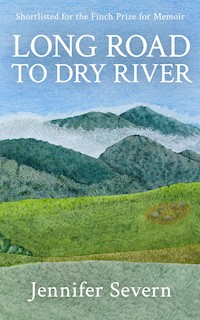
Long Road to Dry River was shortlisted for the Finch Prize for Memoir in 2018.
Das E-Book können Sie in Legimi-Apps oder einer beliebigen App lesen, die das folgende Format unterstützen:
Veröffentlichungsjahr: 2019
Ähnliche


















About Long Road to Dry River
‘D’you think you might’ve got the MS because you can’t forgive your dad?’
That wasn’t Jennifer Severn’s doctor asking—or her psychologist. It was her lawyer, but it was a good question.
When Jen, aged 22, settled into a cab at Sydney Airport one rainy night in 1988, she’d taken pains to create a safe, sensible life for herself after an unhappy childhood. But that was about to take a turn. The driver was a follower of Bhagwan Sri Rajneesh, and the conversation that night set her on a new, dual existence—Jen the medical sales rep and Marga Sahi the Rajneesh disciple. Was it the strain of maintaining this double life that brought on an episode of visual disturbance—double vision, no less—in 1994?
Family dysfunction, inappropriate relationships, life as an ‘orange person’, a diagnosis of multiple sclerosis … Jen bounced between Australia, India and Amsterdam before circumstances conspired to land her in Quaama, a small rural village on Dry River on the far south coast of New South Wales.
Will an unrestored 1840s shearer’s cottage and a quirky rural community be her salvation?
Long Road to Dry River was shortlisted for the Finch Prize for Memoir in 2018.
About Jennifer Severn
Jennifer Severn grew up in Sydney and has also lived in Melbourne and India.
She’s been writing as long as she’s been reading. As a child she wrote poems, short stories and book reviews … no blank piece of paper was safe in her childhood home. She completed a science degree then worked in medical diagnostics and sold medical equipment, later diversifying into jewellery and gemstones. After an MS diagnosis in 1997 she looked for something she could do sitting down and found contract work in technical, scientific and commercial writing before she started a web design business … and continued to write.
Jennifer’s manuscript Long Road to Dry River was shortlisted for the Finch Prize for Memoir in 2018.
She lives with her husband and two dogs in Quaama, a small village on the far south coast of NSW, where she still works in web design, volunteers with a community newspaper and writes short stories and non-fiction. You can read her blog at www.jennifersevern.com.au, or follow her on Facebook (DryRiverWritings).
First published by Jennifer Severn in 2019 This edition published in 2019 by Jennifer Severn
Copyright © Jennifer Severn 2019jennifersevern.com.au The moral right of the author has been asserted.
All rights reserved. This publication (or any part of it) may not be reproduced or transmitted, copied, stored, distributed or otherwise made available by any person or entity (including Google, Amazon or similar organisations), in any form (electronic, digital, optical, mechanical) or by any means (photocopying, recording, scanning or otherwise) without prior written permission from the publisher.
Long Road to Dry River
EPUB: 9781925786811 POD: 9781925786835
Cover artwork: Inversion #1 © Rose Chaffey, 2018 Cover design by Red Tally Studios Thanks to Chumbawamba and EMI Publishing for permission to quote Chumbawamba’s ‘Tubthumping’ in Part Three, Chapter 2.
Publishing services provided by Critical Masswww.critmassconsulting.com
Some names have been changed.
Contents
For Jonathan 14.10.67 – 21.6.2017
and
Naomi Elise 19.7.2017 –
The solicitor’s office is small and stuffy and smoky. Light struggles through gappy venetian blinds, faintly illuminating the motes of dust in the air. Ashtrays brim with cigarette butts. Towers of manila folders, some tied with slim pink ribbons, teeter on filing cabinets, on each end of the desk, in every corner on the scuffed linoleum floor.
Across the desk from me, the solicitor is sifting through my file, occasionally stopping to read an entry, and grunting softly. Sometimes he lifts his eyes to peer at me over the top of his spectacles, then returns them to the papers. He’s stout and red-faced, and wheezes softly with every breath. From time to time he sips coffee from a chipped china tea cup.
I sit silently and wait. I’ve driven for two hours down the peninsula from Melbourne on a friend’s recommendation. ‘He’s like a bull terrier with a bone,’ my friend had said. ‘Just what you need.’ Looking around me, I’m beginning to wonder if I’ve wasted my time. But finally, after twenty minutes, he closes the folder, leans back, clears his throat and says something that floors me.
‘D’you think you might’ve got the MS because you can’t forgive your dad?’
Part One
1. some future adventure
‘I’m Sukh.’
I had almost dozed off, hypnotised by the rhythmic swish of the wiper blades. ‘Sorry?’
‘Sukh,’ said the driver. ‘My name’s Sukh.’
He had sad, brown eyes, messy hair, faded jeans and a thick, denim bushman’s shirt, with a string of wooden beads just visible at the collar. I looked down at my own attire. A cashmere jumper and a woollen skirt, kitten-heeled pumps … a short strand of pearls. Standard Medical Rep, circa 1988.
I was twenty-two. I had flown back into Sydney Airport from Melbourne, tired after a hectic sales trip. It was cold and raining hard, and I was pleased to settle into the warm, nicotine- and vinyl-stained air of the cab. I wasn’t looking forward to getting home—my boyfriend and I had agreed to separate but he hadn’t moved out of our Top Ryde flat yet and the atmosphere was cool.
Sukh? I would have loved to offer a more exotic name, but … ‘I’m Jenny. Pleased to meet you’.
We were just turning onto Anzac Parade, and between there and Top Ryde—forty-five minutes’ drive—we talked. About the planet, mostly, the environment … We agreed on most things, but he seemed to arrive at his conclusions via avenues of deduction, diversions and detours that my left-brain reasoning didn’t follow. I’d never met anyone like him. I still haven’t.
He clicked the meter off in the driveway of my block of units. I reluctantly got out of the warm cab and stood in the misting rain as he pulled my suitcase from the boot.
He looked sideways for a moment then turned back to me and grinned.
‘Well, goodbye, then,’ he said. We shook hands shyly. I would enjoy the memory of this taxi ride with Sukh, the erudite and handsome driver, but for now I had to face Simon.
When I got upstairs, I found that Simon had eaten the pasta sauce I’d left in the freezer ready to warm up, and was sitting, stony-faced, in front of Family Feud. But there was no point in an argument. I took a deep breath, grabbed my purse and ran back down the stairs, my thoughts on a burrito from Pancho’s Grill across the road.
When I reached the ground floor I could make out someone at the security door across the foyer, banging on the glass with the palms of both hands. Some lowlife for number eleven, I thought. Then I heard our phone ringing and ran back up the stairs in case it was for me. It was my best friend, Elise, who knew I was due back that night. When I went back downstairs ten minutes later I was glad to see that the ‘lowlife’ had gone.
A few mornings later I was on my way down to the garage when I noticed a blue airmail envelope tacked to the noticeboard on the ground floor. ‘This letter is addressed to Jenny,’ the envelope read, ‘a gorgeous blue-eyed honey who lives somewhere in this apartment block and whom I chanced to meet once. I would be very grateful if you could hand it to her personally. Thank you. Clue: she works for a medical instrument company.’ I tore it open.
Inside were three crisp, sky-blue pages. ‘I was driving a taxicab last Wednesday night and picked up a passenger from the Australian Airlines Terminal in Mascot … On arriving at your destination I was sorely tempted to invite you for a cup of tea or perhaps some future adventure but sadly I held back and drove away rather stunned. I returned shortly afterwards determined to press every intercom button, no matter how foolish, in order that I might speak to you once again’. So the ‘lowlife’ was him! Sukh! … I read on.
He supposed I might see his actions as ‘pretty foolish, crazy or mad’, and wrote, ‘life is to be lived and to be crazy is to be alive and to surround one’s self with crazy laughing loving dancing trusting sensitive people is a very rare benediction in this world. As I thirst for life, love and laughter, silence and meditation, I must take this small risk that you have in your hand … Anyhow, if this has reached you and it feels good to read, please phone me to say hello, or leave a message’. He signed off with a phone number.
Some future adventure? A cup of tea? I’d been chatted up before but this was something else.
Simon and I had prided ourselves on being sensible. We’d studied hard and set up life insurance and superannuation policies. We’d done everything possible to remove risk from our lives after the scary, uncertain family lives we’d both left behind. Now, here was a man who appeared to embody the very antithesis of that—crazy, adventurous, risk-taking. Alive. I was filled with a sense of living on the edge. I folded up the letter and kept it with me for the next week or so, taking it out to re-read it now and then, and each time feeling the same sense of possibility.
One night, from a hotel room in Newcastle, I rang Sukh’s number. A few nights later we had dinner in a small vegetarian restaurant in Bondi Junction, and soon we were spending weekends together. Over the next few months Sukh introduced me to seedy pool rooms in Surry Hills; breakfast at cafés on Bondi Beach; share houses full of people with Indian names who slept on futon mattresses on the floor and drank herbal teas; and, last but not at all least, the strange, physical meditations taught by Bhagwan Sri Rajneesh.
He also took me camping in the Blue Mountains.
Sukh and I drive from Bondi out to Blackheath at dawn, turn left across the train tracks and park at a property where the owner’s happy for bushwalkers to cross his land. We swing each gate closed as we cross the farm, then mid-morning we squeeze through the fence which holds back the forest, at a point where a ridge juts out towards the Cox River. Here, propelled by the weight of our backpacks, we plunge down the steep escarpment, lurching from tree to tree for handholds, our boots finding purchase on roots and rocks, until we burst out onto a grassy flat beside the water.
The river roars and, where it stills in rocky pools near the banks, is as clear as glass. We hop from rock to rock—pink granite and sandstone. Out there on the river we can sing and shout and not hear ourselves, the torrent’s so strong.
On our first weekend in the mountains, Sukh grinned and pointed to my fists; they were clenched tight and I pumped them as I walked. I hadn’t been aware of it. I practised swinging my arms, fingers loose. It took a while but eventually I started to feel the breeze on my palms—the chill, eucalypt-infused air of the Megalong Valley.
***
Next thing I knew, I’d given notice on the flat in Top Ryde (Simon had moved out) and moved into a big share house in Strickland Street, Rose Bay with Sukh and others, mostly followers of Rajneesh—sannyasins, commonly known as Orange People after the clothes they’d worn in earlier years. Our house was the centre of activities for the local sannyas population, with a huge room perfect for group meditations—and parties. At any one time there would be about eight residents living in the house, and there could be as many visitors camping on landings or in the meditation room.
Our fellow residents were mostly Germans (the house was known in the sannyas community as ‘Stricklandstrasse’) applying for their Australian permanent residency permits, and there were interminable ‘house meetings’ where we—well, really the Germans—tried to orchestrate the house’s domestic requirements and events (parties, meditations, therapy groups). It was in Stricklandstrasse that I first heard of ‘deep cleaning’. This went well beyond spring cleaning. The whole house was dusted, de-cobwebbed, vacuumed, scrubbed, polished … and a lot more often than this mere Australian would have thought necessary.
One domineering fräulein had appointed herself as a kind of ‘houseparent’. If I ever questioned a decision she would glare at me, hands on hips. ‘Listen now, oi hef been in ze communes for ten years!’ It was common for sannyasins to live in big, co-operative dwellings, but she made them sound like salt mines. And the ones in Germany … well, I can only imagine the authoritarian hierarchies in those ones.
I suspect now that Sukh and I had landed in the midst of a people processing inter-generational guilt from a war that was over before they were even born.
On that note … our housemate Swarna, from Berlin, had adopted a young German shepherd pup. He used to wander, and Swarna could often be heard calling him from our rooftop balcony. Ignorant of the meaning—just liking the sound of the word—she’d named the dog ‘Shalom’, Hebrew for ‘peace’. And as she called him from our vantage point on the hill, across the rooftops of the very Jewish enclave of Rose Bay, all the way down to New South Head Road on the harbour foreshore, people could be seen emerging from their doors, waving back and calling ‘Shalom! Shalom!’ and my head would spin with the levels of irony. The poor dog wouldn’t be home for hours.
But Stricklandstrasse wasn’t all hand-wringing over bathroom mould and food kitty discrepancies. There was always music playing; tantalising aromas wafted from the kitchen—trays of cheesy vegetarian lasagne, or vats of spicy bean dishes. There were always some housemates wanting to ‘hang out’, drink tea and chat, and others wanting to ‘take their space’—always solemnly respected. I tried smoking dope and gave away my staple drink, the Black Russian. I started using the sweet, lilting ‘Na du?’ instead of the broad, flat ‘How ya goin’?’
I got used to people walking around the house in varying stages of undress. The upstairs bathroom had two basins, a shower, a bath tub and a toilet, and often in the morning all would be in use at once. I soon dispensed with my prudish self and stepped bravely into this new life. And every weekday morning I’d don my pencil skirts, padded shoulders and pumps, apply eye make-up and lipstick (a process that fascinated Sukh, as did my insistence on wearing a bra) and drive across the Sydney Harbour Bridge to Crows Nest. I’d climb the stairs to the Inmed office, call potential customers, make polite chitchat with my boss and the receptionist, and set out to trawl the cardiac wards and intensive care units of major public hospitals to spruik my product to grim, distracted doctors, with all the enthusiasm I could muster. I was living parallel lives.
***
Throughout Stricklandstrasse hung large portraits of Bhagwan—a compelling and complex presence with his deep, hooded eyes and flowing, grey beard, and often a hint of humour around his cheeks, or in the arch of an eyebrow—and his books occupied a shelf in the lounge room. Flicking idly through a ‘darshan diary’ one Sunday in October, I found the following words.
The moment you cross the boundary of the known, fear arises, because now you will be ignorant, now you will not know what to do, what not to do. Now you will not be so sure of yourself, now mistakes can be committed; you can go astray. That is the fear that keeps people tethered to the known, and once a person is tethered to the known he is dead.
Life can only be lived dangerously—there is no other way to live it. It is only through danger that life attains to maturity, growth. One needs to be an adventurer, always ready to risk the known for the unknown. That’s what sannyas is all about. But once one has tasted the joys of freedom and fearlessness, one never repents because then one knows what it means to live at the optimum. Then one knows what it means to burn the torch from both ends together. And even a single moment of that intensity is more gratifying than the whole eternity of mediocre living.
Bhagwan didn’t ‘write’ books as such but all his words were transcribed by his sannyasins into a vast library of publications. The ‘darshan diaries’ recorded Bhagwan’s conversations with his disciples. In this diary, The Tongue-Tip Taste of Tao, he was initiating disciples in Buddha Hall in his ashram in Pune, India—the disciples were ‘taking sannyas’. Bhagwan would give each one a new name, and explain what the name meant for their spiritual path. ‘Sukh’, I learned, meant ‘bliss’, although it came out more as ‘bless’ in his Kiwi accent. His full sannyas name was Prem Sukh—‘the bliss of love’.
The book was illustrated with black and white photographs of these meetings: Bhagwan holding his thumb to the foreheads of his disciples (the ‘third eye’, supposed to perceive more deeply than regular sight); Bhagwan placing a string of wooden beads (a mala) over a disciple’s head; disciples in flowing robes sitting cross-legged, listening to Bhagwan with clear adoration.
Freedom, fearlessness, adventure … the known and the unknown … freedom to make mistakes … against my safe, sensible, mediocre life. The next day I went to work, handed in my resignation and started making plans.
2. Orphan Annie and the Ice Princess
While I’d launched myself straight into university after school, my best friend Elise had spent a season skiing and cleaning lodges in the Snowy Mountains before completing a degree in Mandarin at Sydney University. Then she’d travelled to China to study, improve her language skills and work. She was very excited to hear, at the end of 1988, that I was planning to travel at last. She suggested meeting up in Hong Kong, an ‘easy landing’, she said, for someone who’d never been out of Australia (she didn’t warn me about the hair-raising descent that planes took to the old airstrip in those days, between banks of laundry-decked skyscrapers that felt only a wingtip away).
We spent a week exploring the hectic markets of the Hong Kong mainland and the downtown of Hong Kong Island, returning each night to our bunks in a low-ceilinged, windowless dormitory room on an upper level of Chungking Mansions in Kowloon, a popular backpacker accommodation. We weren’t aware that earlier that year there’d been a fire in that same high-rise complex—a Danish tourist was killed. I shudder now to imagine residents trying to flee its upper floors via its two creaky elevators and seventeen storeys of stairwells.
When we’d tired of sweating our way through Kowloon’s chaotic, steamy alleyways and were craving some nature, we caught the ferry to Lantau Island, at the time a relative wilderness ringed with fishing villages (now the site of Hong Kong’s new airport, and connected by a bridge to the mainland). There we spent a week at Po Lin Monastery, which perched atop the highest peak on the mountainous isle, after meeting a monk on a bus who promised us ‘lotus pizza’ for dinner.
Elise and Jen trekking in Thailand
Next we flew to Thailand. We caught the train north and went trekking in the jungles of the infamous Golden Triangle. Our small party awoke from a late afternoon nap one day, surprised to see our guides transformed from amiable, often comical, young trekkers to furrow-browed security guards, complete with semi-automatic weapons. Apparently there’d been a hint of drug runners in the area and our guys weren’t taking any chances—kidnappings of moneyed Western tourists were not unheard of at the time. We returned to Chiang Mai unharmed, bought silly trinkets and pirated cassettes for our Walkmans at the night markets, then caught the train back south to drink coconut water and eat banana pancakes and fish slow-baked in deep sandpits on the tropical island of Koh Phan Gan.
I loved being in Asia—the constant bustle, the raucous conversations in the street, the endless energy. I soon learned to love the Asian disregard for personal space—or, a different interpretation of personal space—a world away from the shy, apologetic dance of Australian public encounters. I devoured the food and reached a healthy weight for the first time in many years, perhaps ever.
Back in Bangkok, on the backpackers’ mecca of Khao San Road, a huge street party for New Year’s Eve was under way. I noticed a long-haired man, his wooden beads swinging wildly as he danced. I grabbed his sleeve. ‘You’re a sannyasin!’
‘Yeah! I’ve just come from Pune to sort out my visa.’
‘I’m going to Pune next,’ I gushed. Where did that come from? I’d booked a flight to India, but planned to backpack around the country—the route already traced out in my Lonely Planet guidebook—and end my Indian sojourn in Pune. But seeing this man and his mala I felt a longing, almost a homesickness, to again be around the sannyas way of life. Soon I was back in the air, heading further west.
***
People ask me what sannyas is. Is it a cult? A religion? A belief system?
I’ll start with the last one. That’s easy. No. No-one is asked to believe anything. The one thing Bhagwan (or Osho, as he was known by the time he died) stressed was the benefit of meditation. He urged us ‘to live life in its totality, but with an absolute condition, categorical condition: and that condition is awareness, meditation’. And even mainstream, conservative scientists have now demonstrated quantifiable, beneficial effects on the brains of meditators.
Is sannyas a religion? Again, no. There’s no supernatural figurehead, no-one to worship.
A cult? Wikipedia says, ‘… a cult is a religious or social group with socially deviant or novel beliefs and practices’.
There’s hardly anything deviant or novel about meditation. But Bhagwan said that sex was a distraction to be transcended, and the only way to do that was to experience it fully, with no inhibitions, no fears. So, yes, there was plenty of sex. Or, as much as anyone wanted. But from what I could see it was plain, healthy sex between consenting adults, and it didn’t feel deviant to me.
Cults seem to be characterised by the control that a leader exerts over his or her followers. And I saw no sign of control in the ashram in Pune, or in communities I experienced around the world. No rules about where or how to live, conduct relationships, earn a living. We were, are, free to pursue our own goals, make our own mistakes, learn our own lessons. Bhagwan said,
Always remember, whatsoever I say to you, you can take it in two ways. You can simply take it on my authority: “Osho says so, it must be true” – then you will suffer, then you will not grow. Whatsoever I say, listen to it, try to understand it, implement it in your life, see how it works, and then come to your own conclusions.
***
So I flew out of Bangkok a few days after New Year 1989 and landed in Bombay (now Mumbai) at two o’clock one morning. At the airport a skinny hustler spotted this young, tired tourist.
‘Hottle, madam? Very cheap, very comfort!’
I gave him my backpack and followed him to an auto-rickshaw. After a short ride through dimly-lit streets, he led me through a maze of back alleys and cramped courtyards until depositing me and my backpack at a reception desk in a shabby guesthouse. I managed to get a few fitful hours’ sleep in a cupboard-sized room, water pipes clanging in a cavity behind my pillow, then found my way to Victoria Terminus and bought a second-class train ticket to Pune.
Although Pune was only 150 kilometres east of Bombay, the trip took five hours, most of it stop-start shunting. I shared a compartment with about ten other passengers, all Indians, and immediately found myself the subject of a passionate but amiable debate: I must learn the local language, they told me, but half of them spoke Hindi and half Marathi (the native language of Maharashtra state). Luckily for me, English is almost everyone’s second language in India, so it was in English that the good-natured argument proceeded. At every stop, platform food and drink hawkers thrust their wares through the metal bars on the train windows, and my hosts—as they seemed to view themselves—filled my lap with namkeen (paper packets of salty snacks), vegetable ‘cutlets’ (fried patties) and cups of sweet, milky chai. When we reached Pune they all bid me hearty farewells, their hands pressed together, prayer-like, at the chest. I heaved myself and my backpack off the train, flushed with achievement: I could count to ten in both languages.
The Hotel Kapila in Pune had cashed in on the sannyasin market by partitioning off the top floor with cardboard-thin walls to form monk-like cells just large enough for a narrow single cot and a metal locker. These low-rent rooms were not the place for a good night’s sleep after Bhagwan’s evening lecture, when the occupants and their partners for the night would arrive in a convoy of rickshaws and fling themselves into noisy and exuberant sex, every detail shared with the neighbours. It was into this haven of lust and unfettered passion that I arrived, tired, dusty and sweaty, to spend my second sleepless night in India.
The next morning, bleary-eyed, I caught a rickshaw—‘Ashram, madam?’—and fronted up at the Rajneeshdham reception. I filled in some forms and let a nurse take some blood—everyone entering the ashram in Pune had to have an AIDS test. The results would be available overnight. In the meantime, I caught a rickshaw into town to look around. I was acclimatising to the dust and noise and frenetic activity of India. It was relentlessly alive, and I loved it.
But when I received my ashram pass the next day and entered the gates, I found another world: paths of polished stone meandering between gardens of lush foliage; ponds with waterlilies and swans; a canopy of towering bamboos and ferns and tropical trees casting dappled light on the ground. Even the air was clearer, and a few degrees cooler. Everywhere were the sounds of trickling water and soft music—the breathy flutes and faint tabla rhythms of Indian classical music. Westerners drifted along the paths, or sat on low marble walls chatting.
Wandering further in, I found cafeterias, a bookshop, a vast, marble-floored, open-air meditation space—Buddha Hall, insect-netted all around. More paths, more gardens, all immaculately kept. People were sweeping the paths and tending the gardens. A sound like a loud cat’s miaow turned my head: a peacock on a rock in a lotus-filled pond. And all under a soft, filtered light, a world away from the dry dust, heat and commotion of the streets outside.
After a few days I found a room in a shared flat at the ‘Popular Heights’ apartment complex just a short walk from the ashram, and bought some furnishings: a coconut-fibre mattress, some sheets, a mosquito net and a rack to hang clothes on. At first I tried some ‘groups’—therapeutic courses all aiming to dispense with my ‘conditioning’. A typical group would see us sit in a circle of eight to twelve, or in pairs, taking part in exercises designed to reveal those subtle lessons that we’d absorbed with our upbringing that were holding us back from being happy and fulfilled. Some exercises were fun, some confronting, some downright frightening. At times I was aware of wanting to show that I was letting go of my conditioning even when I wasn’t, just so the facilitators’ focus might move to the next person. Sometimes I didn’t even want to drop my conditioning. I was often confused.
Every night hundreds of visitors from all over the world—German, American, French, Italian, British, Australian, Japanese—filed into Buddha Hall to watch video reruns of Bhagwan’s lectures. Bhagwan lived in a house on the perimeter of the ashram, but at the time he was ill and unable to appear in person.
But if the general ashram population was a rainbow of nationalities, it seemed that every therapy group I enrolled in was facilitated by an officious Swiss-German woman who issued instructions like commands from the Gestapo. Role playing was a common device. Zis man ist your fazzer! Vot do you vont to say to him? Or, Zis vooman, she ist your mozzer! Tell her! Tell her! The German group participants (always a majority) seemed to hold a bottomless well of vitriol in their bellies, and they could unleash it at will. But I would cower, trying in vain to summon the anger that the facilitator—and I—believed I should be feeling. I just couldn’t seem to locate it. The facilitator would say I was conditioned to repress my fury. But was it possible that I just wasn’t the angry type? Instead, I usually just curled up in tears of frustration and defeat. After the final session disbanded and the group hugs were finished, I’d wander off feeling a sense of failure.
***
And I said there was plenty of sex, or as much as anyone wanted. Sukh had encouraged—exhorted!—me to have lovers and experience Pune to the fullest, but I found myself unable to participate with wild abandon. I veered between neediness—wanting to attach myself to someone safe, and punishment—wreaking vengeance on men for sharing a gender with Dad. The only wild bit was the constant crunching gear changes between Orphan Annie and the Ice Princess.




