


Erhalten Sie Zugang zu diesem und mehr als 300000 Büchern ab EUR 5,99 monatlich.
- Herausgeber: Mercier Press
- Kategorie: Sachliteratur, Reportagen, Biografien
- Sprache: Englisch
Discover Michael Collins, Himself a revealing book that goes beyond the famed soldier and statesman persona. Take a closer look at the man behind the myth and dive deep into Collins' personal world, highlighting the pivotal role of women in his life, his interests, and his personal anecdotes. Featuring exclusive family memories and rare photographs of Collins throughout his life and those connected to him. A must-read for those seeking an intimate look at the legendary figure.
Sie lesen das E-Book in den Legimi-Apps auf:
Seitenzahl: 282
Veröffentlichungsjahr: 2015
Das E-Book (TTS) können Sie hören im Abo „Legimi Premium” in Legimi-Apps auf:
Ähnliche



















MERCIER PRESS
3B Oak House, Bessboro Rd
Blackrock, Cork, Ireland.
www.mercierpress.ie
http://twitter.com/IrishPublisher
http://www.facebook.com/mercier.press
© Chrissy Osborne, 2015
Foreword © Tim Pat Coogan, 2003
First published in 2003
ISBN: 978 1 78117 391 6
Epub ISBN: 978 1 78117 392 3
Mobi ISBN: 978 1 78117 393 0
This eBook is copyright material and must not be copied, reproduced, transferred, distributed, leased, licensed or publicly performed or used in any way except as specifically permitted in writing by the publishers, as allowed under the terms and conditions under which it was purchased or as strictly permitted by applicable copyright law. Any unauthorised distribution or use of this text may be a direct infringement of the author’s and publisher’s rights and those responsible may be liable in law accordingly.
Acknowledgements
The author and publisher would like to thank the following for permission to use their photographs: National Library of Ireland, Cathal Brugha Barracks, Collins Barracks, Mercier Archive, the Glasnevin Trust, Brendan Leigh Doyle, the Kiernan family, the Collins family, Lisbeth Kelly and the late Peg O’Driscoll.
Every effort has been made to establish the sources of all the photographs used and acknowledgement given – should a source have not been acknowledged, we take this opportunity of apologising for such an oversight and will make the necessary correction at the first opportunity.
The author would also like to thank Anne-Marie Smith MAGI, Member of Accredited Genealogists Ireland, whose research into the Butterley/Collins connection is the basis of the genealogies of the Butterley family on page 216.
Foreword
This affectionate collection of Michael Collins memorabilia by Chrissy Osborne creates a gentle picture of some of the man’s more ordinary and more endearing traits. Anecdotes about his family background, his taste in clothes, culture and how he amused himself, predominate over accounts of guerrilla warfare or high politics.
The work adds up to a nice present for anyone already interested in the great Irish leader or a useful introduction to Collins’ life for someone who has heard the name but knows little of the man. And more should be known about Collins, not merely as a mythic figure from the past. He has a very direct and instructional relevance to the present also. To think of him limed merely in a family glow, as it were, would be akin to basing one’s impressions of his beloved West Cork coastline on a summer holiday spent sailing from places like Clonakilty, Union Hall, Baltimore or even Schull, along by the Fastnet, without even knowing what the area looked like in a winter storm. Or knowing only that Collins’ great adversary, Winston Churchill, smoked cigars, wore boiler suits, kept black swans and painted pictures.
For example, as Chrissy Osborne points out, an important element in Collins’ character formation was the fact that his father, a remarkably learned man and respected figure, was seventy-five when Collins was born, the youngest of a large family as intelligent as it was adoring. Collins senior had lived through the famine, a traumatic event, which evidently influenced him, as it did hundreds of thousands of others then and subsequently, to delay marrying and bringing children into such a cruel and unpredictable world. Many of the elder Collins’ contemporaries never got over that fear and did not marry at all. For several decades after Michael Collins’ death, the elderly Irish bachelor, living alone, was a common sight in the Irish countryside.
Stories of the famine, of the Fenians and of the land war that raged through Cork with particular virulence, not all that long before Collins’ birth, were staples of the conversations which the young Michael Collins heard at home, school and pre-television, at that great source of information, the forge.
All these things helped to shape his political outlook and led, through the GPO, to the formation of his assassination squad, ‘the twelve apostles’, guerrilla warfare, the Treaty on which contemporary Ireland is founded, and his Janus-faced policy towards Northern Ireland: he armed the IRA there while seeking to crush the organisation in the south, and used every means in his power to destabilise the new statelet.
The complexities, injustices, intrigues and the detritus of empire which led to the formulation of this duplicitous policy are still with us. The Good Friday Agreement, the contemporary variant of Collins’ Treaty, which was supposed to help resolve these complexities, is tottering. Elections have been postponed, as Britain once again ignores majority opinion on the island of Ireland and tilts towards supporting, not even Unionism, but a mere fragment of it, that led by David Trimble. Many of the attitudes and the forces which go to create today’s six county impasse were present in Collins’ day and drove him to act as he did.
The moral of the story, even a gently told and domestic one, like that recounted in the following pages, is an old one – those who do not learn from history, relive it.
Tim Pat Coogan, 2003
Introduction
Having been born and lived most of my life in England, people have often asked me, as an Englishwoman, why I have become so fascinated by Michael Collins. However, like 50 per cent of the population in that country, my roots are in Ireland. My family, on my father’s side, was originally from Kilgarriff, a townland just outside Clonakilty in West Cork, and just a couple of miles from Woodfield, where Michael Collins was born in 1890. One of the many interesting links between Michael and myself, I discovered during my research into this book, was that a great-uncle of his and a great, great, great-uncle of mine had been next-door neighbours, both living in Kilgarriff during the mid nineteenth century.
From around the early 1950s, I was to spend many annual family holidays in Ireland, usually in the south, although we did have one touring around Co. Down and the Mourne Mountains, just before the new ‘troubles’ erupted in the early 1960s.
Boarding the train, which in the 1950s was hauled by a giant steam locomotive, at Euston Station, London, we would arrive some hours later at Holyhead in North Wales. At that time, the train pulled up next to the dock, and its passengers, including myself and my family, would then alight and walk over to the waiting steamer, either the RMS Hibernia or its sister ship Cambria. The steamer, or ‘mail’ boat, which was its main function, was also capable of carrying up to 2,000 foot passengers – car ferries were still a thing of the future. The voyage across the Irish Sea to Dun Laoghaire took about four hours on a good run and as we neared the coast of Ireland most of the passengers came up on deck to catch a first glimpse of their beloved homeland.
Occasionally my parents decided to spend a couple of days in Dublin, before heading off by train to the west of Ireland where we usually spent our holidays. My earliest memories of Dublin are of numerous horse-drawn vehicles and very few cars. In fact, I vividly remember having just caught the train up from Dun Laoghaire to Westland Row station, now Pearse Street, coming out of the terminus with my parents and climbing into a waiting horse-drawn hackney cab. I can still recall the dark, leathery smell of its interior, and the ensuing bumpy journey, as horse and vehicle clattered across the city’s cobbled streets to the hotel we were staying at in Mountjoy Street. However, over fifty years ago I never knew that we were just a stone’s throw from where Michael Collins had lived at No. 44. The area, in Dublin’s north inner city, even by the mid 1950s, would have changed very little from the time when Michael had resided there between 1917 and 1920.
I also remember, although I was only about seven at the time, the run-down tenements and slums that had once been the smart town houses of the wealthy of Dublin back in the late Georgian and early Victorian eras. Although living conditions were beginning to improve by the 1950s, there was still a great deal of poverty in Dublin’s inner city. It was in Dublin that, for the first time, I had ever seen children playing in the streets bare-footed and badly clad. Despite being only a young child myself, it is a memory that has remained with me to this day.
From the mid 1950s to the mid 1960s, I was fortunate to spend many an idyllic holiday, with friends of my parents, on a remote farm in the foothills of Ireland’s highest mountain, Carrauntouhil, which is part of the Macgillycuddy Reeks in Co. Kerry. The farm, run by three elderly sisters, had been in the family for generations. Most of their relations had either emigrated or died, and the day-to-day running of the farm had changed very little in the last hundred years. There was no electricity or running water, and all the cooking was done over an open fire in the main living-room/kitchen. The turf, which was our only fuel and source of heating, was cut from the bogs on the mountain slopes behind us. The farm was completely self-sufficient. The milk from the cows was churned into butter. The fleece from the sheep was carded and spun, to make wool for clothing. Hens provided us with fresh eggs and the pig, having been killed by the local travelling butcher, would be cured, to provide our weekly supply of rashers and boiled bacon. The few luxuries, such as soap or fruit, would arrive about once a fortnight, via the travelling shop, weather permitting. Each Sunday morning we would set off down Black Valley by pony and trap, along the rough track that led to the nearest village, about five miles away. There we would attend mass, which in those days was in Latin, at the village church.
On the occasional evening some of the local neighbours would arrive at the farm and we would have an impromptu ceilidhe. Fiddles and tin whistles would come out and we would sing and dance, often into the early hours of the morning. Many of the old songs and tunes that we sang had been handed down from past generations, some having reference to the terrible days of the Great Famine. Black Valley and the immediate area around it saw some of the worst scenes of evictions, starvation and death in the county of Kerry.
It is only now that I realise how privileged I was to have experienced such a way of life, even though it was only for a few weeks each year. This simple, old-fashioned lifestyle I am sure has now disappeared forever, even in the remotest parts of Ireland. In many ways it would have been very similar to the world Michael Collins had known and grown up in, as a young boy in West Cork in the 1890s.
It was also during those childhood, and later teenage, holidays in Ireland, that I was to develop a great love for all things Irish, its music, culture and history, although at that point I only had a passing interest in Ireland’s more recent past. My father, however, had a keen interest in its history and especially the 1916–22 period. He often spoke about de Valera and Michael Collins, although their names meant little to me then. My father also had a fair knowledge of the Irish language, along with being a skilful ‘step’ dancer – all abilities inherited from his Irish roots.
By the late 1960s, however, my family and life had undergone many changes. Our annual holidays to Ireland had ended. I had left home and gone to live in Canada, and my parents, whose health had begun to deteriorate, were unable to undertake the long and arduous journey over to Ireland ever again.
It was after an absence of almost thirty years that I eventually returned to a very different Ireland in 1996. It had joined the European Union and under its influence had become, at last, a prosperous and dynamic country – the Celtic Tiger had arrived! It was during that holiday that an event occurred which was to change my life.
In the spring of 1996 myself, my husband and two friends decided to take a holiday in the west of Ireland, touring around the still remote region of Connemara. We drove through the wild and rugged countryside on what was a beautiful, sunny May day, until we reached Clifden, a small market town nestling in the foothills of the mountains. There, we decided to stop for lunch and have a look around the place.
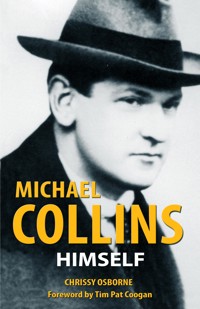
Leaving my husband and friends at the local general outfitters, sifting through the Aran sweaters and Donegal tweed jackets and caps, I strolled on down the main street, stopping in front of the town’s only bookshop. Prominently displayed in the shop window was Tim Pat Coogan’s recent biography of Michael Collins. On the front cover of the book was a head and shoulders photograph of Michael, taken, I was to discover later, when he became chairman of the new Provisional Government in January 1922. It immediately struck me – what an interesting, and handsome, character he looked. I went into the shop and, flicking through the pages of the book, quickly realised just what an intriguing, indeed amazing person this Michael Collins actually was.
Back in England, after the holiday, I bought Tim Pat’s book, as it had been republished to coincide with the release of Neil Jordan’s film, Michael Collins, later that same year. I read the book within a couple of weeks and immediately became totally fascinated with this charismatic Irishman and all he had done for his country in the early part of the twentieth century.
It was from that point on that my whole life began to change. I returned to Ireland several times over the next four years, each time seeking to learn more about this Michael Collins and discovering the various places associated with him – beautiful West Cork, where he was born and reared, the numerous safe-houses and offices scattered around Dublin, used by him between 1917 and 1921, as well as the more remote associations with him, such as Sligo Jail where he was imprisoned for three weeks, and the Greville Arms in Granard, Co. Longford, home of Kitty Kiernan, the woman he finally fell madly in love with and had hoped to marry. Also in Ireland was an amazing range of books and videos on both Michael Collins and associated subjects, many of which were, and still are, unavailable in England.
It was during those four years, after each visit to Ireland, that my love for the country, its history, its people and their way of life, grew deeper. So, too, did my fascination for Michael Collins – the more I learned about him, the more intriguing he became. Finally, in June 2000, I was offered a job in Dublin. I had achieved my ultimate dream, a chance to live and work in the country I had grown to love and felt totally at home in.
I quickly settled into my new life in Ireland and found myself, quite by chance, living in Howth, a peninsula north of Dublin Bay, about ten miles from the city centre. By sheer coincidence, I later discovered that Howth was one of Collins’ favourite resorts in the Dublin area, Greystones at the southern end of the bay being the other. It was to Howth that he used to escape for peace and quiet during the height of the War of Independence. Perhaps the rugged cliffs and the cries of the wild seabirds reminded him of his own beloved West Cork’s coastline.
My research was now a lot easier, and any spare time I had was spent visiting various libraries, archives and museums, along with seeking out and meeting people, especially those whose family or friends had actually known Michael Collins. Gradually, Michael’s true character and the kind of man he really was began to slowly unfold. The way he dressed and spoke to people, the practical and sometimes cruel schoolboy pranks he got up to, the music, books and plays he liked, even the kind of food and drink he enjoyed. I discovered he was passionately fond of Kerry Blue Terriers and was in the habit of giving them as presents to his friends. He gave two to his friend Harry Boland when he went to America, and another to the socialite Hazel Lavery whilst he was in London, after the Treaty talks in 1922.
I soon began to realise that all this information I was gathering could be the basis of an interesting and unusual book about the man behind the mask. Not the soldier, statesman or guerrilla leader, of which numerous books have already been written, but the real, human Michael Collins. One of my hobbies is photography, and over the years I have taken numerous pictures of various locations and buildings associated with Michael and his life. I include a couple of these in the picture section, and anyone who enjoys seeking out locations should find these of interest.
I was very fortunate to gain access to many of Michael’s safe-houses, offices, places of detention, as well as the more familiar locations, such as his birthplace, schools and other places of significance, many of which were already starting to disappear. I was very privileged to be given permission to photograph his quarters and office in what was Portobello, now Cathal Brugha, Barracks in Dublin, where, during July and August 1922, he was to spend the last few weeks of his life as commander-in-chief of the new Free State army.
Frongoch internment camp in North Wales was also an interesting discovery, with its one surviving hut and old disused railway station. On 28 June 2002, eighty-six years after the prisoners first arrived at Frongoch, the local people of Bala, the nearest town to the camp, erected a commemorative plaque on the site of the old North Camp in memory of the 1,800 Irish prisoners held there after the Rising in 1916. However, I was unable to gain access to Stafford Jail, where Michael, along with the other rebels, was first held in England, as it is still very much in use. The now derelict jail in Sligo, where Michael was imprisoned for three weeks, was an interesting discovery, especially as I managed to find the actual cell he occupied, with its view of Knocknarea Mountain, something he mentioned in his diary written at the time.
During a visit to London I discovered the four houses where Michael had lived with his older sister Hannie from 1906 to 1916. On a more recent trip and after further research, I also found the locations of the city offices where he had worked as a young man, as well as various locations connected with him, such as Barnsbury Hall in Islington, now a theatre, where he was sworn into the Irish Republican Brotherhood (IRB) in 1909 by Sam Maguire, after whom the All-Ireland Gaelic Football Final cup is named. Gaining access to 15 Cadogan Gardens, 22 Hans Place and 5 Cromwell Place, all locations associated with the Treaty talks in London during October to December 1921 was indeed a bonus, but I was only able to photograph the hallways of the latter two.
I realised that through my research there may be one or two things I have discovered about Michael that might be controversial, especially in dealing with his relationships with women, and particularly Kitty Kiernan. Here, I have tried to be factual and honest, as I have later in another chapter that deals with his frequent use of curses and strong language, which, for some, would not be the image they have of Michael Collins – but he was a very human person!
I am greatly indebted to the many people who helped me with my research. I was extremely honoured to have met and known the late Colonel Seán Clancy, who was born in 1901 and joined the Volunteers in 1917, and later the Free State army. He had worked with and knew Michael personally as a young man in Dublin during the War of Independence. He was also to stand beside him during the handover of Dublin Castle in January 1922.
Also, the many members of the Collins family, especially grand-niece Mary Clare O’Malley and her family, Michael’s grand-nieces Nora Owen and Mary Banotti, as well as Maureen Kirwin and Patsy Fallon, and his niece who remembered him as a child, the late Joan Bunworth. Grand-nephews Pol Ó Murchú and Tom Collins, whose help and encouragement will always be remembered. On his mother’s side, the O’Briens, and a special thanks to the late Peg O’Brien-O’Driscoll and her late brother Jimmy and family of Sam’s Cross, West Cork. Numerous people whose parents or grandparents had helped, worked with or knew Michael, especially the O’Donovans of Rathgar, Dublin. The Kiernan family, Margot Gearty, Laurette Kiernan and Kitty’s only surviving son, Michael Collins Cronin. My thanks also to Risteard Mulcahy whose father, Richard Mulcahy, knew Michael as a relative and soldier, as well as a fellow member of Dáil Éireann. They first met in Frongoch in 1916 and, later, Richard became Minister for Defence and succeeded Michael as commander-in-chief of the army after he was killed at Béal na mBláth in August 1922.
A special thanks to the late Molly O’Brien-Murphy, whose family sheltered Michael in Howth during the Tan War, and to Joan Browne, whose grandmother was a second cousin of Michael’s, living in Howth and later Dublin during the early part of the twentieth century. Also Brian Doyle, Margaret Connolly, Dave McKenna and the late Leslie Ó Laoi, together with the people of Howth, who have tried to help me piece together the jigsaw of Michael and his Howth connections. I am most indebted to Tim Pat Coogan, writer and historian, for his additional help and general advice. Also Meda Ryan, fellow author and biographer of Michael Collins, who kindly met me to share her experiences of writing and research.
To Dr Brendan Leigh-Doyle of Carlow, whose grandfather and family were closely connected to Michael throughout the War of Independence and its aftermath. Also to Piaras O’Connor – whose two older brothers, Peadar and Seán, were members of Michael’s Active Service Unit in Dublin and later, in 1922, the Free State army – who gave me an amazing insight into the background of events during those times.
A big thank you as well to the numerous librarians, archivists, historians and particularly Comdt Victor Laing (now retired) of the Military Archives at Cathal Brugha Barracks, who was a great help and encouraged me in the early days of my research.
My many friends and former colleagues at Dáil Éireann, especially Maedhbh McNamara, librarian and fellow author, for her invaluable advice on writing and getting a book published. Also Jim O’Keeffe, formerly Fine Gael TD for West Cork, and his family; Tim and Dolores Crowley, who established and run the Michael Collins Centre near Clonakilty; and the people in that part of Ireland, whose family or friends were either related to or involved in events connected with Michael Collins and his times.
A big thank you to Catherine Ryan (the memory woman), antique and second-hand bookseller, who lent me various books to assist with my research, to Gerry Donnelly, whose knowledge of the Kerry Blue Terriers and Michael’s interest in them, was extremely helpful and to genealogist Anne-Marie Smith for her research into the Collins/Butterley family connections. Also, the many other people too numerous to mention, who invited me into their homes, loaned me videos, books, letters, family mementos and every kind of useful information and source material. Most of all for their time and enthusiasm upon hearing of my project, the Lawlor brothers, Peadar and Frank, whose father and uncles had known and worked for Michael Collins.
Last but not least, I should like to thank the family of the late Michael Collins of Waterford, Johnny and Nancy’s youngest son and Michael’s nephew, who was not only instrumental in helping me move to Ireland, but inspired me to sit down and write this book about his favourite uncle. A big thank you to everyone.
1 Michael Collins: Little Fellow, Big fellow
Psychologists have often debated the concept of the charismatic leader, whether he or she becomes so by nature or nurture. Like most true talents, charisma must surely be innate, honed and improved by the learning process and experience, but a true gift of nature nonetheless.
There was one man who changed the course of Irish history, thrice blessed, not only charismatic, but also handsome and possessing a larger-than-life personality. He had a winning smile, warm personality, charmed women and inspired men; someone who in any walk of life would have been a success, earning him the popular title by which he was, for ever after, referred to by his followers and admirers. This was ‘The Big Fellow’, and that man was Michael Collins.
The Little Fellow
The ‘Big Fellow’ was once a ‘Little Fellow’, born in the early hours of the morning of Thursday 16 October 1890 at Woodfield, a small farm nestling in the hills of West Cork, about three miles from Clonakilty. The land had been in the Collins family for seven generations. Michael was the youngest of eight children, three boys and five girls, born to Michael Collins, a farmer, and his young wife Marianne (née O’Brien), nearly forty years his junior.
Michael’s father was sixty years old in 1876 when he finally married Marianne, his fatherless goddaughter, who lived with her brothers, sisters and elderly mother at a farm in Sam’s Cross, a small hamlet about half a mile down the laneway from Woodfield.
Patsy Fallon, whose grandmother was Margaret Collins-O’Driscoll, Michael’s oldest sister, gave me an interesting insight into Marianne’s character. When she married Michael’s father at twenty, she realised that due to lack of education she would have no other choice but to remain a farmer’s wife for the rest of her days. This, however, prompted her to ensure that any daughters she had would receive educational opportunities equal to that of her sons. All five girls were to do very well, either as teachers or civil servants, or in Helena’s case, joining a convent in England and becoming a nun.
Despite the difference in ages, the marriage was a happy one and after a year their first child, Margaret, was born in 1877. Then, with about a year and a half’s gap between each child came John (Seán), Johanna (Hannie), Mary, Helena, Patrick and Kathleen (Katie), after which three years elapsed before the last child, Michael, was born. Michael senior was by now seventy-five years old, but his powers, both intellectual and physical, were undiminished.
Michael was only seven when his father died in March 1897, but those few years together made a great impression on the small boy. His father was particularly fond of his young namesake and helped instil into him his great love for old people, something Michael was to have all his life. Little Michael tried to help his father around the farm and, in turn, Michael senior told him legends and tragic tales of Ireland’s history and quoted lines in praise of nationalism. He had, as a young man, become a Fenian, and later joined the IRB, a secret society dedicated to bringing about Ireland’s independence from Britain.
Many an evening Michael and his family would gather around the kitchen fire in the old farmhouse at Woodfield to discuss O’Connell or Thomas Davis, and the children soon became familiar with the rebel songs and poems of the era. There had been a significant history of conflict in the area during 1798. The battle of Big Cross had taken place near Clonakilty, and a branch of the Collins family, who lived next door to the farm at Woodfield, had suffered, along with many other local families, at the hands of the militia combing the area for rebels.
It was also around this time that young Michael became friendly with James Santry, an old Fenian blacksmith, who had the forge at Lisavaird, another small village on the road between Clonakilty and Rosscarbery. The boy would spend many hours in the company of the old man, as he worked away in the forge, listening to his stories of the 1798 Rebellion and Father Murphy, and how he, himself, had made pikes for the 1848 and 1867 rebellions against the British.
No one outside the family was to have a more profound influence on the young Michael than James Santry. At the age of eight he would tell his brother, ‘there is no man I have greater regard for. I have heard him speak of the Ireland he wished to see. When he struck the spark on the anvil, he struck the anvil in my heart. When I leave school, the only pursuit I want to engage in is the winning of the freedom of my country.’
Another person who was to have a great influence on the young Michael was his schoolmaster, Denis Lyons, who also was an active member of the IRB. Although Michael was only four and a half when he first attended the local national school at Lisavaird, he soon, under the influence of his teacher, developed a pride in being Irish and a keen sense of history and the wrongdoings his country had suffered over the centuries under British rule.
Michael grew up in a very happy and loving environment. Although the family were not rich, they had a good standard of living and were self-sufficient. The Collins family were all hard workers but never hard drinkers. Michael was particularly loved and fussed over both by his mother and elder sisters. Hannie, whom he later went to live with as a teenager in London, was to say, ‘We thought he had been invented for our special edification!’ After his father died, Johnny, his oldest brother, took over running the farm as well as keeping a fatherly eye on the boy. His other brother, Patrick, decided quite early in life to go to America and was never to return to his native land.
Michael was a particularly bright child, and many years later, when he had been smuggled into the police barracks at Great Brunswick Street, Dublin (now Pearse Street), at the height of the War of Independence to look through the files, he came across one on himself which described him as ‘coming from a particularly brainy West Cork family’. Michael was thoroughly amused and he subsequently took great delight in quoting this to his pals.
Although Michael’s father was a farmer, he was also a scholarly man and had learned from a wandering ‘hedge’ schoolmaster to speak French, Latin and Greek. He was also good at mathematics, widely read and had an amazing memory, all abilities his youngest son possessed. Michael’s mother, Marianne, encouraged her youngest son from an early age to read, and these numerous skills helped the thirteen-year-old Michael to progress from the local school at Lisavaird, to further his education at the National School in Clonakilty. There he studied for the Post Office Boy Clerkship exam which, at the age of fifteen and a half, he passed with flying colours. He was offered a job in London, to work as a boy clerk in the Post Office Savings Bank in West Kensington, where his older sister Hannie was already working as a ledger clerk. In July 1906 Michael left home and his ‘beloved’ West Cork to join his sister in London. For the rest of his life Michael never lost his love for West Cork and often quoted, ‘Ye can take a man out of West Cork, but ye cannot take West Cork out of a man!’
He spent nearly ten years working and living in London and he had four different jobs. Each job helped lay the foundations for his various roles as Director of Organisation, Intelligence and Minister for Finance later on during the War of Independence.
During those years in London Michael and Hannie lived at four different addresses. When Michael first joined Hannie in 1906, he shared her small bedsit at 6 Minford Gardens, a late Victorian, four-storey house in Shepherd’s Bush, just around the corner from the Post Office Savings Bank where they were both working. By 1908 they managed to find a more spacious flat, this time above a bakery at 11 Coleherne Terrace, now part of Brompton Road, which they occupied for five years until 1913. This second address has an interesting connection with my own life, for it was at 11 Coleherne Road, a five-storey family house built in the 1870s and later turned into five flats, that I lived in London from 1975 to 1981. No. 11 Coleherne Terrace is on the corner of Coleherne Road, now no longer a bakery but an upmarket café. Unfortunately, during the time I was living there I had no idea of this intriguing link with Michael Collins.
As their landlord at 11 Coleherne Terrace decided to sell both his business and property in 1913, Michael and Hannie moved to another flat, at 28 Princes Road in Notting Hill – a small artisan house built in the mid nineteenth century. Michael always had a fascination for the Notting Hill area, with G. K. Chesterton’s The Napoleon of Notting Hill being one of his most read and treasured books.
They moved again in early 1914, to 5 Netherwood Road, an early 1900s three-storey house back in the Shepherd’s Bush area. This was to be Michael’s last address in London. It was a substantial flat above a dairy, comprising two bedrooms, a sitting-room, kitchen and bathroom (a great luxury to most working-class people at the time). Michael returned to Ireland in early January 1916, although his sister, I believe, continued to live at their London flat until she retired from the post office in the 1940s.




