


9,99 €
Mehr erfahren.
- Herausgeber: The O'Brien Press
- Kategorie: Sachliteratur, Reportagen, Biografien
- Sprache: Englisch
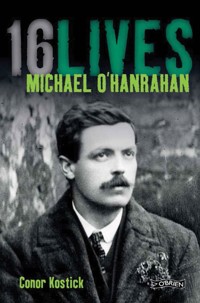
From a staunchly Republican family, Michael O'Hanrahan's outwardly quiet and serious demeanour concealed a burning desire to see an independent Ireland. He was instrumental in setting up the first branch of the Gaelic League in Carlow. Michael also helped found the workingman's club in Carlow, which he left when they decided to admit a British soldier. After moving to Dublin, he played important roles in both Sinn Fein and the Irish Volunteers. As quartermaster of the Volunteers, he was responsible for the procurement of many of the arms used in the Easter Rising. Michael O'Hanrahan was also a talented journalist and novelist whose development was cut short by his execution in 1916. In this new biography Conor Kostick brings to life a man who helped launch the 1916 Rising.
Das E-Book können Sie in Legimi-Apps oder einer beliebigen App lesen, die das folgende Format unterstützen:
Veröffentlichungsjahr: 2015
Ähnliche















The 16LIVES Series
JAMES CONNOLLY Lorcan Collins
MICHAEL MALLIN Brian Hughes
JOSEPH PLUNKETT Honor O Brolchain
EDWARD DALY Helen Litton
SEÁN HEUSTON John Gibney
ROGER CASEMENT Angus Mitchell
SEÁN MACDIARMADA Brian Feeney
THOMAS CLARKE Helen Litton
ÉAMONN CEANNT Mary Gallagher
THOMAS MACDONAGH Shane Kenna
WILLIE PEARSE Róisín Ní Ghairbhí
CON COLBERT John O’Callaghan
JOHN MACBRIDE Donal Fallon
MICHAEL O’HANRAHAN Conor Kostick
THOMAS KENT Meda Ryan
PATRICK PEARSE Ruán O’Donnell
CONOR KOSTICK– AUTHOR OF 16LIVES: MICHAEL O’HANRAHAN
Conor Kostick is an award-winning historian and novelist who lives in Dublin. His other historical works include Strongbow, Revolution in Ireland and, together with Lorcan Collins, The Easter Rising – A Guide to Dublin in 1916.
LORCAN COLLINS – SERIES EDITOR
Lorcan Collins was born and raised in Dublin. A lifelong interest in Irish history led to the foundation of his hugely popular 1916 Rebellion Walking Tour in 1996. He co-authored The Easter Rising – A Guide to Dublin in 1916 (O’Brien Press, 2000) with Conor Kostick. His biography of James Connolly was published in the 16 Lives series in 2012. He is also a regular contributor to radio, television and historical journals. 16 Lives is Lorcan’s concept and he is co-editor of the series.
DR RUÁN O’DONNELL – SERIES EDITOR
Dr Ruán O’Donnell is a senior lecturer at the University of Limerick. A graduate of UCD and the Australian National University, O’Donnell has published extensively on Irish Republicanism. His titles include Robert Emmet and the Rising of 1803; The Impact of the 1916 Rising (editor); Special Category, The IRA in English Prisons 1968–1978; and The O’Brien PocketHistory of the Irish Famine. He is a director of the Irish Manuscripts Commission and a frequent contributor to the national and international media on the subject of Irish revolutionary history.
ACKNOWLEDGEMENTS
Heartfelt thanks are due to Clodagh Kinsella of Carlow County Libraries; Dermot Mulligan from Carlow County Museum; Niamh McDonald of the National Archives; Freya Verstraten Veach; Pat O’Neill; Valerie Bistany; Ray Bateson of the National Graves Association; Michael O’Hanrahan (no relation); Bride Roe; Pat Ingoldsby; Laura Ashcroft Jones for her diligent and eye-straining research among the newspapers of the day; and above all, to Michael Purcell, who was extremely generous with his time and who has a deep knowledge of Carlow’s local history and its sources.
16LIVES Timeline
1845–51. The Great Hunger in Ireland. One million people die and over the next decades millions more emigrate.
1858, March 17. The Irish Republican Brotherhood, or Fenians, are formed with the express intention of overthrowing British rule in Ireland by whatever means necessary.
1867, February and March. Fenian Uprising.
1870, May. Home Rule movement founded by Isaac Butt, who had previously campaigned for amnesty for Fenian prisoners.
1879–81. The Land War. Violent agrarian agitation against English landlords.
1884, November 1. The Gaelic Athletic Association founded – immediately infiltrated by the Irish Republican Brotherhood (IRB).
1893, July 31. Gaelic League founded by Douglas Hyde and Eoin MacNeill. The Gaelic Revival, a period of Irish Nationalism, pride in the language, history, culture and sport.
1900, September.Cumann na nGaedheal (Irish Council) founded by Arthur Griffith.
1905–07.Cumann na nGaedheal, the Dungannon Clubs and the National Council are amalgamated to form Sinn Féin (We Ourselves).
1909, August. Countess Markievicz and Bulmer Hobson organise nationalist youths into Na Fianna Éireann (Warriors of Ireland) a kind of boy scout brigade.
1912, April. Asquith introduces the Third Home Rule Bill to the British Parliament. Passed by the Commons and rejected by the Lords, the Bill would have to become law due to the Parliament Act. Home Rule expected to be introduced for Ireland by autumn 1914.
1913, January. Sir Edward Carson and James Craig set up Ulster Volunteer Force (UVF) with the intention of defending Ulster against Home Rule.
1913. Jim Larkin, founder of the Irish Transport and General Workers’ Union (ITGWU) calls for a workers’ strike for better pay and conditions.
1913, August 31. Jim Larkin speaks at a banned rally on Sackville (O’Connell) Street; Bloody Sunday.
1913, November 23. James Connolly, Jack White and Jim Larkin establish the Irish Citizen Army (ICA) in order to protect strikers.
1913, November 25. The Irish Volunteers are founded in Dublin to ‘secure the rights and liberties common to all the people of Ireland’.
1914, March 20. Resignations of British officers force British government not to use British Army to enforce Home Rule, an event known as the ‘Curragh Mutiny’.
1914, April 2. In Dublin, Agnes O’Farrelly, Mary MacSwiney, Countess Constance Markievicz and others establish Cumann na mBan as a women’s volunteer force dedicated to establishing Irish freedom and assisting the Irish Volunteers.
1914, April 24. A shipment of 25,000 rifles and three million rounds of ammunition is landed at Larne for the UVF.
1914, July 26. Irish Volunteers unload a shipment of 900 rifles and 45,000 rounds of ammunition shipped from Germany aboard Erskine Childers’ yacht, the Asgard. British troops fire on crowd on Bachelor’s Walk, Dublin. Three citizens are killed.
1914, August 4. Britain declares war on Germany. Home Rule for Ireland shelved for the duration of the First World War.
1914, September 9. Meeting held at Gaelic League headquarters between IRB and other extreme republicans. Initial decision made to stage an uprising while Britain is at war.
1914, September. 170,000 leave the Volunteers and form the National Volunteers or Redmondites. Only 11,000 remain as the Irish Volunteers under Eoin Mac-Neill.
1915, May–September. Military Council of the IRB is formed.
1915, August 1. Pearse gives fiery oration at the funeral of Jeremiah O’Donovan Rossa.
1916, January 19–22. James Connolly joins the IRB Military Council, thus ensuring that the ICA shall be involved in the Rising. Rising date confirmed for Easter.
1916, April 20, 4.15pm.The Aud arrives at Tralee Bay, laden with 20,000 German rifles for the Rising. Captain Karl Spindler waits in vain for a signal from shore.
1916, April 21, 2.15am. Roger Casement and his two companions go ashore from U-19 and land on Banna Strand in Kerry. Casement is arrested at McKenna’s Fort.
6.30pm.The Aud is captured by the British navy and forced to sail towards Cork harbour.
1916, 22 April, 9.30am.The Aud is scuttled by her captain off Daunt Rock.
10pm. Eoin MacNeill as chief-of-staff of the Irish Volunteers issues the countermanding order in Dublin to try to stop the Rising.
1916, April 23, 9am, Easter Sunday. The Military Council of the Irish Republican Brotherhood (IRB) meets to discuss the situation, since MacNeill has placed an advertisement in a Sunday newspaper halting all Volunteer operations. The Rising is put on hold for twenty-four hours. Hundreds of copies of The Proclamation of the Irish Republic are printed in Liberty Hall.
1916, April 24, 12 noon, Easter Monday. The Rising begins in Dublin.
16LIVESMAP
16LIVES - Series Introduction
This book is part of a series called 16 LIVES, conceived with the objective of recording for posterity the lives of the sixteen men who were executed after the 1916 Easter Rising. Who were these people and what drove them to commit themselves to violent revolution?
The rank and file as well as the leadership were all from diverse backgrounds. Some were privileged and some had no material wealth. Some were highly educated writers, poets or teachers and others had little formal schooling. Their common desire, to set Ireland on the road to national freedom, united them under the one banner of the army of the Irish Republic. They occupied key buildings in Dublin and around Ireland for one week before they were forced to surrender. The leaders were singled out for harsh treatment and all sixteen men were executed for their role in the Rising.
Meticulously researched yet written in an accessible fashion, the 16 LIVES biographies can be read as individual volumes but together they make a highly collectible series.
Lorcan Collins & Dr Ruán O’Donnell,
16 Lives Series Editors
Contents
Chapter 1 • • • • •
1846–1898
The Corkcutter
… while tinmen’s shops, and noisy trunk-makers,
Knife-grinders, coopers, squeaking cork-cutters,
Fruit-barrows, and the hunger-giving cries
Of vegetable-vendors, fill the air.
‘London’s Summer Morning’, Mary Darby Robinson (1800)
In the mid-nineteenth century the corkcutting trade in Ireland was in the hands of a very small number of master craftsmen, one of whom was Richard O’Hanrahan of New Ross. Because of the bulky nature of cork, those who practised the trade of converting the bark of the Mediterranean tree into finished goods generally lived in a port; Richard, who was born in 1846 and grew up in one of Ireland’s major ports, Wexford, found in the late 1860s that he could make a living at the equally busy entrepôt of New Ross. New Ross at the time was home to about 5,000 people, many of whom were employed in connection with the vigorous trade that arrived at the town’s long stretch of quays. Ships – schooners under sail more often than steam-powered vessels – would arrive there with timber, coal, manures, lace, boots and other cargoes. They would depart with bacon, beer, felt, leather and the goods of smaller industries.1 And there too, the shipments of cork would arrive, typically from Portugal, and be delivered to Richard’s workshop.
One of the reasons for Richard’s move from Wexford – via a number of other brief addresses – to New Ross was that he felt under pressure from the British authorities. Earlier in the 1860s Richard had been sworn in as a member of the Irish Republican Brotherhood, the secret organisation also known as the Fenians, which, under the influence of its main organiser, James Stephens, strove for an independent Irish republic and, indeed, a republic for the poor.2
With the main IRB leaders having been arrested in 1865, and with informers having a heavy presence in the movement, an effort to launch an uprising against British rule early in 1867 stalled badly. The IRB consequently suffered further from the capture and the execution of those involved in planning the rising. This, and the subsequent atmosphere of repression, may have provided the context for Richard’s departure from Wexford. In leaving home, he left a supportive family, including his brother, Watty O’Hanrahan, who had a large printing business in the town.3
Having survived the danger of arrest and having established a business in New Ross, by 1870 – although a youthful twenty-four and of modest means – Richard felt confident enough in his future to invite nineteen-year-old Mary Williams to come from Wexford and marry him. Mary was a sister of John Williams, the chief accountant in Cherry’s Brewery and it might well have been that Mary met Richard through the brewery’s employment of O’Hanrahan as a corkcutter.4
Living in one of a row of houses that made up St Mary’s Terrace (off South Street) and then in Barrack Lane, the young couple’s early efforts to start a family were met with tragedy when their first two babies, both called Richard, died at or near birth in March 1871 and March 1872 in New Ross.5 Their next attempt at having a child saw Mary travel home to Wexford in 1875 for the labour, and this time they were rewarded with the successful birth of the first of three sons: Henry (‘Harry’ to his family and friends). In 1877, Michael was delivered in New Ross, followed by Edward, also in New Ross, in 1879.6
Born on 16 January 1877, Michael O’Hanrahan was baptised in the old parish church, now St Michael’s Theatre, South Street. Two of Mary’s cousins acted as his godmother and godfather, suggesting that the closer relatives of the young family were not to hand. It is probable that their nearest family was still in Wexford, as that is where Mary went for support for the birth of Henry.7
A plaque dedicated to Michael’s memory on the Tholsel building in New Ross offers the highly symbolic date of 17 March as his birthday, and a number of publications and websites have made St Patrick’s Day Michael’s birthday ever since. But the evidence of the birth certificate supports the January date.8
The surname that Michael carried was inherited from the O’h-Anraghain dynasty of pre-Norman Irish lords: not necessarily by direct birthright, as the lower social orders of the land often took their surnames from their princes. The name appears in connection with aristocrats in Corcaraidhe (a territory in the county of Westmeath, later forming the barony of Corcaree) and O’h-Anraghain nobles also had a presence in a district in County Tipperary. In the 1659 poll-tax returns, the family name was most common in Limerick County and to a lesser extent, Tipperary and Sligo.9
In Michael’s day, the surname had been anglicised in three common forms: O’Hanraghan, O’Hanrahan and Hanrahan. As an adult, Michael preferred to use the Gaelic Ua hAnnracáin. Of those who bore the name in previous centuries, perhaps the most illustrious was Mulbrennan O’h-Anraghain (d. 1132), abbot of Clonfert. Another O’h-Anraghain of note was the priest Daniel O’Hanraghan, who as an elderly man was killed by English soldiers at Lislaughtin, County Kerry, on 6 April 1580.10
The young family’s departure from New Ross, c.1880, came about because Corcoran’s Mineral Water Factory in Carlow Town needed a corker on site to cut stoppers for products such as Corcoran’s red lemonade, seltzer water, soda water, aromatic ginger ale, ginger beer and champagne cider.11 Established in 1827 by Thomas Corcoran, the company had flourished to become one of Carlow’s major employers. As the job offered Richard a steady income, he acquired a house in the town and soon saved enough to set up on his own with Corcoran’s as his main customer. In 1881, the family moved to 90 and 91 Tullow Street, a house, shop and workshop on a major thoroughfare of Carlow Town. All along Tullow Street were represented the main trades of the era: butchers, tanners, shoemakers, ironmongers, timber makers, jewellers, glassworkers, painters and decorators, bakers, coach builders, dressmakers, drapers, blacksmiths, malters, grocers, dyers and printers.12 Number 90, where the O’Hanrahans lived, evidenced the progress of Richard’s career: it was made of stone with a sturdy roof and four windows facing the street. The house had five rooms, one of them the shop.13
At the time, the Carlow location was an effective one for serving businesses in Dublin. While the tolls on the Grand Canal that connected Carlow to Dublin were expensive, small bags of corks could be easily transported to the capital by horse and cart and – increasingly – by rail. The Great Southern and Western Railway’s line from Dublin to Kilkenny via Carlow was constructed between 1846 and 1850, while the Bagenalstown and Wexford Railway serving Borris was begun in 1855. Supplies of the bark that was his raw material could reach Richard’s new workshop easily enough via the River Barrow, which joined the Suir to reach the sea at Waterford, a city with a small corkcutting industry of its own.
Like the country as a whole, County Carlow was still suffering in the aftermath of the Great Famine of the 1840s. The population had dropped from 86,000 in 1841 to 52,000 in 1871, at which time the decline had still not stabilised. The ‘push’ factor of the famine years had been followed by a ‘pull’ factor as the generation of emigrants who had settled in the USA, Canada, Australia, etc., invited their relatives to follow them. In 1881, the population of County Carlow was down to 47,000 and in 1901 it was just 38,000, less than half of what it had been sixty years previously. Outside of the major cities, this trend, unfortunately, was more or less the same across Ireland. Carlow Town had suffered slightly less than the countryside, but even so, the urban population fell from 10,409 in 1841 to 6,513 in 1901.14
Once settled in Tullow Street, Mary had another baby, Richard (b. 1881), who died before his first birthday.15 Soon, however, three daughters joined the family. The 1901 census lists Anna (b. 1884), Mary (b. 1887) and Eillen (b. 1889). Mary would be known to all as Máire and Eillen as Eily. In addition, the O’Hanrahans had room to take on lodgers and in 1901, brothers Dominic and James Dillon, a carpenter and a wheeler, were also living in 90 Tullow Street.16
It is possible to discern two of the values that were highly thought of in the O’Hanrahan household. Education was clearly prized, with all of the children being able to compete for white-collar jobs. At the time of the 1901 census, Anna, aged seventeen, was a stationer, while Edward had won a place in the Post Office as a sorting clerk and telegraphist. Harry and Michael were practising the corkcutter’s trade, yet not only had they learned Irish by this time but they had also acquired precise and accurate literacy and numeracy skills. Harry and Michael – when not working full-time for revolution – would go on to work in insurance (Harry), and as a fundraiser, proofreader in Irish, journalist and novelist (Michael).
The other strong family value was republicanism. Not only was Richard a Fenian, but the family also kept alive the memory of a near relative who, at the age of seventeen, participated in the uprising of the United Irishmen, joining the noted leader Fr John Murphy in the battle of Oulart Hill on 27 May 1798 before returning to his home by the River Slaney months later.17 Richard’s rebel past seems to have been an important influence on his children, with Harry, Michael and Eily in particular playing a very committed role in the fight for Irish independence. During the Civil War, Harry and Eily took an anti-Treaty position, which seems to reflect the more plebeian republicanism of their father; it certainly went against the views of the IRB leadership of 1922, who backed the Treaty. More definite evidence for a strong belief in social justice in the O’Hanrahan household is the participation of Harry and Michael in the creation of Carlow’s Workingman’s Club.
Life at the O’Hanrahans’ in Tullow Street would have been completely coloured by the scents and sounds of corkcutting. This was a trade that was mainly concerned with the supply of corks for bottles and earthenware jars. The demand for new corks in Ireland was not for wine: people would keep their old corks for that purpose. Rather, it came from brewers to cap their beer bottles (until the invention of the crown cap) and from grocers and farmers for fruit, pickle and sauce jars, etc. Corks were also required for certain drinks, such as ginger beer and lemonade. Shoemakers, too, would sometimes work with cork insoles. Somewhat more specialised handcrafted corkcutting was needed to produce swimming aids, floats for fishing nets and discs for machines in the cut-glass industry. There was also a small demand for bath mats and components in hats and bustles.
Having collected their cargo of Mediterranean bark, Richard and the boys would take it to the back yard for burning. One of the important properties of cork is its fire resistance, which allows for the outside of the bark to be burned so that the cork shrinks, its pores close and it becomes fully waterproof without the flames consuming the whole. Turning the bark in the fire with a minimum of waste was the most skilled job of the corkcutter and was usually performed by the master, in this case Richard. By contrast, brushing off the ash was a filthy job given to the apprentices, i.e. the boys. The ash (along with all the small, unworkable pieces of cork) was saved for sale to dyers, being a valuable ingredient for the creation of pigments for dark colours. When the scorched outer layer of bark was cut off (some twenty-four hours after the burning process), a strip remained, which was cut into quarters, and from these were cut the finished products.
Cutting hundreds and hundreds of cork items was boring work, but there were advantages to practising this trade compared to some of the other work being carried out on Tullow Street. In winter, the O’Hanrahan house would have been warm as a result of the burning process. There was no seasonality to the demand for cork products, so the household income would be fairly steady the whole year round. Also, other than the characteristic squeaking sound of the knife working the cork, it was a relatively quiet trade, so the family could sit and converse while working.
The great problem the family had to face, however, was that in Ireland and elsewhere theirs was a trade in decline; or rather, the small home workshop was on its way to becoming extinct, being replaced by the factory. The peak years for the – always small – spread of the corkcutting industry were the 1860s, after which it became more centralised. Not only were inventions like the glass bottle stopper removing some of the demand for local corkcutters (and this would eventually affect the O’Hanrahan’s main customer, Corcoran’s), but machine processes were revolutionising the trade. As the Birmingham Daily Post noted in 1891, ‘a skillful corkcutter can produce from 1,500 to 2,000 corks a day, his only tools being two sharp knives with broad blades. Machines have been made which can cut 2,000 an hour.’18 Moreover, in 1894 Henry Avern and a member of the Barris family from Palafrugell in Spain built a factory in Silves, Portugal, that employed hundreds of corkcutters, in contrast to the industry average of workshops with just five workers.19 Giving the children other career options through education, then, was not only a worthy aspiration; it was a necessity. And over the long century from the birth of Henry in 1875 to the death of Máire in 1975, it has to be recognised that the shadow of poverty was a constant presence over the children of the corkcutter.
The boys of the O’Hanrahan household attended the local Christian Brothers School, at that time on College Street, near Carlow Cathedral.20 Here, their enthusiasm for the national cause would not have suffered at all; in all likelihood it was encouraged. Among the many students who attended the school and subsequently became involved in the national struggle was Padraig Mac Gamhna (Paddy Gaffney), a radical socialist republican to whom – coincidentally – a plaque is dedicated at number 92 Tullow Street, his former residence.
After attending the Christian Brothers School, Michael planned to take the examination for a place in the Civil Service. But on learning that all civil servants were required to take an oath of allegiance to the Queen, he abandoned that goal. According to Eily, he told Richard and Mary, ‘I will never earn or take a penny of English money.’ ‘His decision,’ she recalled, ‘was valiantly upheld by my parents.’21 After leaving school, Michael and Harry worked in their family business, while Edward – who did not object to its Imperial shortcomings – entered the Post Office. But their education was not complete, for all the children in the family set about the task of learning Irish, with the most passionate for the language being Michael.
Notes
1 Joseph McCarthy, BMH.WS1497, p. 1.
2 Eily O’Hanrahan, quoted in Larry Larkin, ‘Ross Recollections’, New Ross Standard, 6 August 1948.
3 Tomas Ua Raghallaigh, letter to the Irish Press, 28 March 1966.
4Irish Independent, 4 May 1966.
5 Death Certificates: Richard, born to Mary Williams and Richard Hanrahan, 1 March 1871, New Ross. Died 1871, aged 0. Richard, born to Mary Williams and Richard Hanrahan, 25 March 1872, New Ross, aged 0. Both were available at http://www.irishgenealogy.ie/en/ but in July 2014 the Civil Records Search was temporarily suspended.
6 Birth cert: Henry; Michael; Edward; death cert Richard. All were available at http://www.irishgenealogy.ie/en/.
7 Marriage cert was available at http://www.irishgenealogy.ie/en/. Eily O’Hanrahan-O’Reilly in ‘Ross Recollections’, New Ross Standard, 6 August 1948.
8 Birth cert was available at http://www.irishgenealogy.ie/en/.
9 Seamus Pender, ed. A Census of Ireland circa 1659 (Dublin, 1939). My thanks to Michael O’Hanrahan for this information.
10 John O’Hart, Irish Pedigrees 2 (fifth edition: Dublin, 1892) 1.209–10.
11 Alice Tracey, unpublished manuscript version of Carloviana: Journal of the Old Carlow Society, Vol. I, No. 12, (1963); with thanks to Michael and Pat Purcell.
12http://www.rootsweb.ancestry.com/~irlcar2/tullow_st3.htm, accessed 13 June 2014. The Nationalist and Leinster Times, 21 December 1895.
13http://www.census.nationalarchives.ie/reels/nai000419050/, accessed 13 June 2014.
14http://www.cso.ie/ accessed 25 June 2014.
15http://civilrecords.irishgenealogy.ie/churchrecords/details-civil/a9d26c8897964 and http://civilrecords.irishgenealogy.ie/churchrecords/details-civil/a1fad019408232 accessed 8 July 2014.
16http://www.census.nationalarchives.ie/pages/1901/Carlow/Carlow/Tullow_Street/1041265/, accessed 13 June 2014.
17 Fr Michael O’Flanagan in Miceál Ua hAnnracáin, Irish Heroines (Dublin, 1917), p. 3.
18Birmingham Daily Post, 1 April 1891. Cited at http://corkcutter.info/, accessed 13 June 2014.
19http://boards.ancestry.com/surnames.avern/7.1.1/mb.ashx, accessed 13 June 2014.
20http://www.cbscarlow.ie/SchoolHistory.aspx, accessed 13 June 2014.
21Irish Independent, 4 May 1966.




