


Erhalten Sie Zugang zu diesem und mehr als 300000 Büchern ab EUR 5,99 monatlich.
- Herausgeber: Books on Demand
- Kategorie: Sachliteratur, Reportagen, Biografien
- Sprache: Englisch
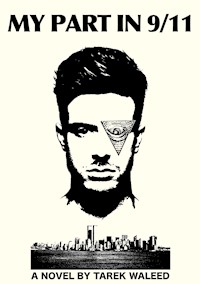
Every American should read this story because the world needs the US more then ever. My Part in 9/11 is the fascinating and entertaining tale of Tarek who was born in Germany of an Egyptian father and a German mother. He grows up there exposed to radical Islam, fascism, Anti-Semitism and German Anti-Americanism. With 16 he goes to spend a high school exchange year in the Bible Belt in a mainly baptist community. In a mood of adolescent rebellion against his host environment he decides to adopt the pose of a radical jihadist. What begins as a prank becomes increasingly bitter and Tarek commits the mistake of his life. Years later life offers him the chance to redeem himself. Finally Tarek comes to the conviction that only through the existence of the USA a half-decent world is guaranteed.
Sie lesen das E-Book in den Legimi-Apps auf:
Seitenzahl: 209
Veröffentlichungsjahr: 2018
Das E-Book (TTS) können Sie hören im Abo „Legimi Premium” in Legimi-Apps auf:
Ähnliche


















PLEASE NOTE:This is a work of fiction. Names, characters, businesses, places, events, locales, and incidents are either the products of the author’s imagination or used in a fictitious manner. Any resemblance to actual persons, living or dead, or actual events is purely coincidental.
Dedicated to Paul and Heather
Table of Contents
How It is
The Evil City of Frankfurt
Uncle Murad Explains the World in Cairo
Cem and the Asteroid
Enter the Terror Sheikh
Planting the Seed
The Little Sheikh
Blood and honor
Credit Where Credit is Due
A Middle East conflict
The Gauland Twins
Why I like Jews
Just Before The 11th of September
The View from Paul and Heather
Robert Falcon Scott High
The Age of Dissent
Islam Act
Fundamentalism for Beginners
The Miller’s Home Library
Kuffar Literature
This Machine Kills Fascists
Don’t Tell It on the Mountain
Georgia Lynch Mob
Don’t Let The Sun Set On Him Here
Sally Jefferson
Twenty Gods or None At All
Shahada
Paul’s Birthday Present
The Morning after the Night Before
Homeward Bound
After the 11th of September
Future Legislators of Society
Trojan Horses
The Dark Ladies of Cairo
Here Comes the Judge
Frankfurt Railway Station
The Defense
Midnight Call to Georgia
How It Is
Like the great Tom Paine once said: “These are the times that try men’s souls.” I, today, have come to believe that were it not for Tom and his compatriots— Jefferson, Madison, Franklin, the American Founding Fathers—that I would be either a dead, religious Muslim fanatic or not even born at all due to Nazi racist madness. A strange position for a German Arab of my generation to hold, you may think, but if you want to laugh in my face or kick me in the pants because of it, then bring it, bring it on, for this is where I stand.
But of course it wasn‘t always like that. We have all said or done things in our lives that we shame ourselves for even years and years later; but believe me, I have never heard of anyone the likes of me. Something so dumb and mean and stupid, so childish, evil, and hurtful to people who deserved a whole lot better and this all in connection with one of the most horrific crimes in human history. It was so bad that it took me the best part of 16 years to come crawling out of my hole where I hid myself to make some kind of amends. This is my tale.
The Evil City of Frankfurt
Call me Tarek. Tarek Waleed. I was born in Germany in Frankfurt am Main (that city of banks, greed, finance and drugs) at the beginning of the 1980s of German and Egyptian parents. I grew up there, in the borough of Bockenheim, a culturally mixed area. We lived on Falkstraße close to the university campus. As a child I used to sneak up on to the roof of our house and from there over the years I saw the skyline growing. I remember watching the trade tower being built: that huge obelisk with its shining pyramid on top and blinking light. This, said my Egyptian father, was the Eye of the Illuminati, the Jews, and the Freemasons. My German mom considered this to be just figments of his Arabic imagination, and I didn‘t know what to think.
When my dad was in his mid-40s, struggling with his midlife crisis, he decided to become a more radical type of Muslim. At that time, I was 9 years old and did not understand why Dad all of a sudden started to pray all over the living room at all times of day and night. I was wondering because I never saw him praying before. He was always running to the mosque and bringing people from there home—and not just his taxi driver colleagues as usual. When I asked him about it, he just said that he was finding his way back to his religion. I found this strange because I thought he always been a Muslim anyway. “Reverting,” he called it. My mom said it was just his way of dealing with getting old. My sister and I found this all very confusing, standing between a Catholic mother and a hyper Sunni father. I didn‘t know then that this disturbance to my identity would one day lead to catastrophe.
Uncle Murad Explains the World in Cairo
Every year during the school summer vacation, we travelled to Egypt to visit Dad’s family. We stayed at uncle Murad’s place with his wife and two sons in Medinat Nasr, Cairo. As a child, Cairo seemed to me an incredible sleepless, noisy, hot, mysterious, and fantastical place. The capital of the world, the mother of all cities. The land of the Arabian nights. A place of dreams and miracles and fantasies.
I will never forget one evening when my chubby, hairy Uncle Murad explained the world to me. The rest of the family went out and we were alone together. I sat directly opposite to him on the sofa, he in a big, old-fashioned chair. Next to us was the television where he watched CNN greedily, 24 hours a day.
Turning to me, he said, “Tarek I have to talk to you. I know you come from Germany and there are maybe things that you haven‘t been told.” He pointed at the television and said, “The Jews, the Jews in America.”
“What do you mean, Uncle Murad?” I asked.
Uncle Murad lit a cigarette, blew out the smoke, and looked directly at me. “Listen, Habibi! This here,” and he pointed again at the TV, “This here is all under the control of the Jews in the United States. They want to show the world that we Arabs are the bad guys. Because, Tarek, the Jews always controlled the US and told them what to do because they do everything in their power to control the whole world. I know this is a difficult subject for a little German boy, but I think you are old enough now to know these things.”
Confused, I looked at the carpet and said, “But uncle, at school in Frankfurt I heard it different.”
Uncle Murad laughed. “The Jews and the Americans, they want you to feel guilty and not to say what you think.”
“How do you know all this Uncle Murad?”
Murad took a sip from his tea put his cup back on the table and began pacing the room.
“Do you really believe what the media tells you, Tarek? You grew up in Germany and you think you are free, but you are brainwashed everyday and you all are a bunch of puppets on a string.”
He walked across to the window and closed it, shutting out the noise of the evening traffic and turning around, then said excitedly, “All Jewish lies. Hitler didn‘t kill six million Jews; he didn‘t kill no one. Tarek, you are not a little kid anymore, you have to know all those things. The Jewish clique of the World Bank and their Freemason friends like the Rothshilds from your Frankfurt run this planet.”
He ran up to the television and went down on his knees, pointing at the screen with his finger, saying, “Tarek, the media is controlled by the Jews! Just look at this CNN. Who founded it?”
“I don’t know!” I said, shocked at his manic behavior.
“Ted Turner! And what is he? A Jew! Or in Hollywood, you know them Warner Brothers? Who are they? Jews! Or this roaring lion before the movie, this Goldwyn Mayer. Jews! Or what’s the name of this movie director, Goldberg or someone?”
“Steven Spielberg, Uncle,” I said.
“Yes, exactly. Steven Spielberg. And what is he, Tarek? This Steven Spielberg?”
“A Jew, Uncle Murad.”
“Exactly. You’re learning, my boy,” he said, smiling at me, obviously pleased.
I couldn‘t know then what a tragedy this type of instruction would lead me to one day.
Cem and the Asteroid
But, like always, there was another view of the world. A couple of weeks later back in Frankfurt, I was hanging out with my Turkish friend Cem who was the same age as me. We always liked to get as near as we could to this group of winos who gathered every day next to the observatory of the Senckenberg museum in Bockenheim to drink and fool around.
Cem had a shock of black curly hair so thick you could hardly see his face, always wore a Bayern Munich football shirt, and wanted to be a professional soccer player. Like me, he was born in Frankfurt but his parents came from Anatolia and I knew them both very well. And like the rest of his family, they were all great believers in the glory of the Ottoman Empire and the greatness of the Turkish nation. They were great haters of all Americans, like a lot of my family were.
As we were watching the antics of the street drunks (who were always good entertainment), Cem suddenly said to me, “You know what I saw on television last night? There was this documentary about asteroids and some of them real monsters come really close to the earth sometimes, and they are watching out for them all of the time because if one of the big ones were to hit the earth it would be the end of us all—like when the dinosaurs were wiped out by one millions of years ago.”
I looked up at the observatory in front of us and into the sky beyond. This was pretty frightening stuff.
“And you know what I thought, Tarek? If one of them, a real planet-killer, was really heading towards us on a collision course, the whole world would as one would jump up and say, ‘Where are the Americans? The Americans must save us. What are the Americans going to do?’ No one, nowhere, anywhere, would be asking, ‘What are the Turks going to do?’”
I burst out laughing. “No, Tarek! Seriously, it was suddenly completely clear to me, those are the guys you can rely on with something like that. I mean, only they can take on a job like that. I mean, who else? Didn‘t they invent the washing machine and send the first man to the moon? Whatshisname? Louis Armstrong. So, if an asteroid was coming at us, like that they’d set some of their real brainy science Yahudis on to it, like Richard Dreyfuss in Close Encounters and Jaws.”
“You mean, Cem, the whole world would think that only the Americans could save us?” I asked doubtfully.
“Of this I am quite certain,” said Cem.
I noticed that the group of street drunks had stopped drinking and fooling around and were looking across at us strangely.
“Cem, if those guys over there tell your father what you have been saying, he’ll kill you.”
“Evet,” said Cem.
If only I had listened to Cem, perhaps nothing of that terrible thing would later have happened.
Enter The Terror Sheikh
There was a man in my neighborhood in Bockenheim who went from house to house collecting donations; he said it was for poor orphans in Palestine. It turned out later he was actually collecting money for terrorist attacks, which means the killing of the nonbelievers, the “Kuffar.” He spent a lot of time in the mosques in and around Frankfurt and also tried to recruit young people for the Jihad, fishing for lost souls. And one day he was standing in front of our house door.
I’d been talking to my mom, asking about Dad’s midlife crisis and if it was a very serious disease. Mum said, “He just thinks a little bit more than usual. Nothing to worry about.” But Dad had really changed over the last few months. He was constantly in a bad mood and agitated, always reading his Quran, and spent more time in the mosque than driving his cab and earning his living. It was as if he really had rediscovered the religion that he had given up on soon after arriving in Germany as a young guy, and learning the pleasures of the decadent, western Kuffar life. But then came age and family, responsibility, and a routine, badly paid job, and his illusions of success, wealth, rich women, expensive cars, and gold on the street in the Promised Land evaporated quickly. Like a lot of others, disappointed Muslims sought comfort in the Quran and Islam and a late recognition of their moral supremacy over the rotten and sinful West.
And that’s how religion came into our home. My mom’s pride and joy as a kindergarten teacher was her library of used books that she had bought over the years here and there. One day, my dad came home in a religious fury shouting, “Sophy, those books have got to go, throw them out! They just take up space and gather dust and all we need to read is in the holy Quran.”
My mom reared up. I had never seen her so angry: “Just like you burned the library at Alexandria or what? You Muslim hero? Over my dead body!” And then she walked out, slamming the door. They didn‘t speak for days. I guess in that silent house I felt a real intimation of the Clash of Civilizations.
The doorbell rang, and I walked across and opened the door. I could hear him wheezing for breath before I saw him: a mysterious collector for Palestinian orphans. He wore a sort of turban on his head and seemed to be wrapped in bedsheets and a big brushy beard that went down his waist. He just stood there, wheezing and grunting and snorting as I stared at him in fear. His left eye was snow-white and the right one mad and gleaming.
“Hello, Tarek! I am a friend of your father. My name is Hamed. I have a meeting with your dad today.”
All in all, I didn‘t have a really good feeling about this character.
My father came up behind me, his arms stretched out before him. “Abu Hamed, how are you, brother? Welcome to my home.”
At the same time my mom came along the hallway, and my father, full of joy, said, “Sophy, look who is here to visit us. Brother Hamed!”
My mother simply said, “Why doesn’t that surprise me?” and walked straight by, out of the house.
My father, obviously embarrassed, pushed me forward, saying, “Brother Hamed, this is my son Tarek.
Say hello to Uncle Hamed, he is a wise and pious and learned man.”
“Hello, Uncle Hamed,” I managed to say before being engulfed in a bear hug by the monster in front of me. I wanted to throw up.
“Go and bring tea for our guest, my son,” my father said before they disappeared into the living room. I brought them their tea and they sent me away, spending the next two hours alone in whispered conversation.
Planting the Seed
In the following weeks he visited us often and my mother always absented herself when he arrived. I had the impression she was worried about me somehow but couldn‘t really do anything. Their conspirative meetings went on for a couple of weeks and my father becoming weirder and weirder. Then one day I was invited in as well to listen as the sheikh talked for hours and hours about the wonders of Islam and how it would triumph over the entire world and how the unbelievers would be defeated and burnt in hell.
I began to find it all fascinating. It seemed to be a real explanation for everything and I could understand my father’s commitment. Not long after, I became a member of a small group of young disciples centered around Sheikh Hamed.
The Friday prayers were over, and Sheikh Hamed, Muaviz, Ehup, and I went out to eat near our backyard mosque in the Galluswarte, in a kebab shop run by one of the brothers. It was pouring rain and the three of us ran behind the fat, puffing sheikh through the grubby streets till we were there. As we ran I noticed his brand new “Air Jordans” beneath his voluminous robes.
My mother was troubled, to say the least, that I was spending so much time in this company, but my father insisted that I needed this Islamic education. Ehup and Muaviz were two brothers whose parents came from Turkey and they were always following the sheikh around—they absolutely hero-worshipped him. Ehup was 16 years of age and had a fluffy little beard and had already been in big trouble with the law. His brother, Muaviz, was two years younger, had no beard at all, and was an even nastier piece of work. Both always wore black clothes, had black hair, and even blacker fantasies.
We ordered at the counter and sat ourselves down. The sheikh began to speak: “It is good, brothers, that we eat in this good Islamic eating place because if you eat in a devil’s place like that,” he said, pointing out of the window at a McDonald’s on the other side of the street. “Wallah, every cent goes to the Zionist in Israel and the Zionist are like Satan, all of them child murderers!” The two brothers next to me nodded simultaneously in agreement.
“Tarek, habibi,” continued the sheikh, “Did you ever look at the Coca-Cola logo in the mirror?”
“No,” I said curiously.
“You would read in Arabic that there is no God.”
“No, I didn’t know that, Sheikh Hamed.”
“You must know, Tarek, that the Jews in America always work with secret signs and symbols. They conceal themselves in order to perpetrate their evil plans. Did you ever see the Eye in the pyramid on the American dollar? The symbol of the Jewish Freemasons just like the filthy trade tower here in Frankfurt. The Freemasons and the Jews, they control the world from America. It is all in the protocols of Zion.”
The waitress, an attractive girl who was wearing an expensive silk headscarf, came over with our food. I smiled at her and said, “thank you,” but she simply looked away and went without speaking. I noticed that Sheikh Hamed was staring at me angrily. He then turned and said to Ehup and Muaviz, “very good, my brothers. I noticed that you did not look at the woman; your eyes were fixed at the floor. Alhamdulillah, this is how it should be.” He then turned and said to Ehup and Muaviz, “very good, my brothers. I noticed that you did not look at the woman; your eyes were fixed at the floor. Alhamdulillah, this is how it should be.” Then, he turned back to me, saying, “You must know, my son, that temptation lurks everywhere. Do you not believe in Shaitan and the evil amongst the Jinn and how they numb our senses with poisonous thoughts and lead us to the fires of hell where the Kuffar suffer forever?”
“Allah protect us,” said Ehup and Muaviz together.
I looked out of the window at the traffic passing by on the street outside, and with my nine years, felt a mixture of fear for eternity and guilt for my weakness.
“This also, Tarek, applies not just to women and their wiles but also to basketball, music, dancing, singing, football, skateboarding, film, and television, and all the things that are pleasing to the Kuffar. Curse them!”
I didn’t understand what was so wrong with those things but I didn‘t have the courage to say anything against him. We carried on eating. Then, Ehup said, “Tarek, in the past I did many evil things: drugs, drinking, and fighting. I was a bad example for my brother, Allah forgive me, but thanks to Sheikh Hamed I am back on the straight path, Alhamdulillah.”
“No, habibi, Allah alone brought you back to the straight path, the Sirat al Mustakeen.”
“You are right, Sheikh Hamed, of course it was Allah,” Ehup replied. “I really was a great sinner.”
I was wondering what it was that a 16-year-old could have done that was so terrible when Muaviz broke in, saying, “Ehup, tell them about the thing with the horse.”
Ehup looked over to me and said, “I think he is too young to hear that!”
But Sheikh Hamed said, “No, no, habibi, go ahead and tell, so that Tarek can understand what the holy Islam has made of you.”
“Ok, Tarek,” he began as the other two leaned back to listen, smiling. They had obviously heard the story before.
“When I was your age, Tarek, maybe a little bit older, my cousin and I used to go on our bikes in the night to a horse stable near to where we lived. A kuffar riding school for little girls.”
“Yes, yes,” gasped the sheikh, snapping for air.
“Now it comes.” His eyes were wide with pleasure.
Ehup continued: “We then used to creep out to where the horses were standing sleeping in a field. They sleep while standing, these creatures, Tarek! Naturally, we brought something with us.”
“What did you bring?” I asked.
“We each had a one-meter-long, thick wooden stick with lots of splinters on it.”
The sheikh began to giggle in anticipation. “And do you know, Tarek, what we did then? My cousin puts one end of his stick in the rear end of one of them and I from behind rammed it with all my strength. Bang! Right into it.” The three of them roared with laughter.
I simply sat there looking at them. Then, the sheikh said, “What’s wrong, Tarek? It was only an animal.” He looked over to Ehup and said, “Ehup, why don’t you tell Tarek your other story about chopping the lamb after Ramadan?”
Ehup smiled and said, “Ok,” and his brother, Muaviz, laughing, said, “This is great, here it comes.”
“Two days before the end of Ramadan, my father bought a lamb to sacrifice for the feast. He put it in a cage in the cellar of our house and we kids used to go down there and torture it a bit. One night I had it alone all for myself and I took a can of orange spray and sprayed it all over orange because prisoners wear orange, you understand Tarek, I wanted my very own personal prisoner. I had a knitting needle from my mom with me. You know, its eyes just popped like grapes.”
“But what did your father say?” I asked in horror.
Muaviz answered for his brother, saying, “When dad saw the blinded lamb, he realized that even though Ehup was only 12, he had what it takes, so he let him cut the lamb’s throat in the bathtub the next day himself.”
“My cousin held its legs,” said Ehup, “and I slit its throat, but I swear to God, Tarek, I wanted to cut its whole head off, its whole kuffar head.”
All three once more began to roar with laughter. So loud that the whole room looked across to us and then resumed eating, stuffing great wads and chunks of halal meat into their mouths, kuffars and believers both. I think this was the moment when it began—my lifelong aversion to eating dead flesh. The sheikh could hardly control himself laughing; his big, fat belly was heaving to and fro. “Alhamdulillah, alhamdulillah,” he kept saying, almost choking, and Ehup and Muaviz joined in, “Alhamdulillah, alhamdulillah,” and the sheikh looked across at both of them with a secret smile in his eyes, as if he was thinking he found the right recruits at last. Me, he didn‘t even look at. Years later I read in a Frankfurt newspaper that all three of them who were sitting there with me that day had been killed in a drone attack in Afghanistan. Alhamdulillah. Yet had he known what would happen in another continent far away, I think that, despite everything, the sheikh would have been proud of his pupil Tarek. The devil is a carnivore.
The Little Sheikh
Little Mohammed was already very sick when he came to Frankfurt to visit us. My father had in the meantime reinvented himself professionally and next to his job as taxi driver begun to work as a guide for medical tourists from the Gulf states, ferrying them around during their stay in Germany.
As I was free from school at that time, I was able to go with my dad to the airport to pick up the family Said from New York City. This was a big deal because the family Said was a sort of Kuwaiti aristocrat family who lived in New York and so little Mohammed with his 13 years of age was like a genuine little prince.




