


8,39 €
Mehr erfahren.
- Herausgeber: Salt
- Kategorie: Sachliteratur, Reportagen, Biografien
- Sprache: Englisch
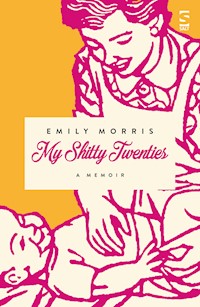
Guardian readers favourite books of 2017 When Emily Morris was a 22-year-old student, she found out she was pregnant. The father of her baby told her to 'enjoy your impending shitty, snotty, vomitty twenties' and then disappeared. Despite not feeling maternal, Emily decided to go ahead with the pregnancy. She left university, moved back to the quiet town she was from to live with her mum, and braced herself for life being turned upside down. In her memoir, Emily shares the loneliness, alienation and adventure she experienced finding her way as a single parent. My Shitty Twenties started life as an award-winning and immensely popular blog. Moving, thoughtful, funny and wise, it is now a book that is heartbreaking, uplifting and an inspiration to any parent who has no idea what they are doing.
Das E-Book können Sie in Legimi-Apps oder einer beliebigen App lesen, die das folgende Format unterstützen:
Veröffentlichungsjahr: 2017
Ähnliche



















MY SHITTY TWENTIES: A MEMOIR
EMILY MORRIS
The baby’s father’s parting shot was “Enjoy your impending shitty, snotty, vomity twenties.”
When Emily Morris was twenty-two and half way through university, she found out she was pregnant. It felt like an alien invasion but her instincts took over and, despite being totally unmaternal, she found herself going ahead with the pregnancy.
My Shitty Twentiesis based on an award-winning blog about being a single mum. Emily Morris started writing when her son was two and she needed to try to find something funny in a crap, banal day. Six years later, this is her story.
PRAISE FOR THIS BOOK
‘The freshest, frankest, wisest, ballsiest memoir I’ve read. Daring, eloquent, and important: a glorious tale of one woman’s triumph over the past and her own fears as she learns how to be a single parent in a world where ‘single’ is still a dirty word. I cried heaps and adored every page.’ —Emma Jane Unsworth
My Shitty Twenties
EMILY MORRIShas an MA in Writing Studies from Edge Hill University. As well as memoir, she loves writing scripts, young adult fiction and short stories.My Shitty Twentiesis her first book, based on her award-winning blog of the same name. Emily teaches writing workshops to both adults and teenagers. She lives in Manchester with her son and her cat and is no longer in her twenties.
Published by Salt Publishing Ltd
International House, 24 Holborn Viaduct, London EC1A 2BN United Kingdom
All rights reserved
Copyright © Emily Morris,2017
The right ofEmily Morristo be identified as the author of this work has been asserted by her in accordance with Section 77 of the Copyright, Designs and Patents Act 1988.
This book is in copyright. Subject to statutory exception and to provisions of relevant collective licensing agreements, no reproduction of any part may take place without the written permission of Salt Publishing.
Salt Publishing 2017
Created by Salt Publishing Ltd
This book is sold subject to the conditions that it shall not, by way of trade or otherwise, be lent, re-sold, hired out,or otherwise circulated without the publisher’s prior consent in any form of binding or cover other than that in which it is published and without a similar condition including this condition being imposed on the subsequent purchaser.
ISBN 978-1-78463-092-8 electronic
For my son and my mum, both of whom made this book possible in various, wonderful ways.
One
September brought thestudents back. They clogged the aisles of the Magic Bus, grubby festival wristbands ringing their arms, unsullied trainers on their feet, skin tanned by the Thai sun. Everything they said came out in a question: they’d all hadamazingsummers, they were all like, totally skint, man, and some complained of beingblatantlyon the worst comedown in the history of the entire universe?
I’d never understood why people were nasty about students. Suddenly I did. It’s easy to dislike people when you’re not part of what seems to be their fun and privileged club, even more so when you were a member but are no longer because of your own stupidity.
Being a student had afforded me more than my insular village upbringing ever could have done: an endless supply of knowledge, freedom of the city with which I had become besotted, friends who didn’t think I was weird for liking techno; even a few who liked it too. And parties, so very many parties. Nights in warehouses out of town, in basements where sweat rained down from the ceiling, evenings venturing out with keys and a tenner and nothing much else, knowing I’d see the gloaming before home.
In the end, the freedom and the hedonism led me to the very opposite.
The Magic Bus was the cheapest one to get from the student suburbs, south of Manchester, into the city centre. Apart from the massive wizards painted on the sides, there was nothing magic about that bus. I still needed to catch it most days; not because I was going to university, but because I was going to work. My part-time student job was in a call centre, selling package holidays to members of the British public who needed their regular spells in the sun. It was alright, as far as part-time student jobs go: we enjoyed our own heavily-subsidised holidays, plentiful rewards and trips called ‘educationals’ that were basically all-expenses-paid tours of sunny places. It was before the credit crunch and the travel industry was booming, which is why my company was happy to oblige when I’d asked if I could switch to full-time. Five days a week, I didn’t disembark the bus when it stopped outside the universities and the students jostled off, bags full of books bobbing on their backs. Instead, I rested my head against the filthy window, gazing out of it, feeling my skull rattle and my teeth chatter with the thrum of the stationary bus. Each time, at All Saints Park, I craned my neck towards my building, unable to see it but wishing I was there, rushing through the wide, bright atrium with its abundant green plants, on my way to a lecture about architecture or photography or feminism. As the bus nosed its way back into the Oxford Road traffic and soared under the Mancunian Way, I’d look forwards and get out of my seat, ready for another day hooked up to the telephone, feigning cheer.
I was intercalating, a word I had only just discovered that meant taking a year out of university. Despite the feeling that my life had just come to a very sudden and jarring halt, I was very busy doing lots of alien verbs. I was intercalating, gestating and abstaining. Before long, I would be lactating.
I wished my neighbours had complained to the police and theManchester Evening Newsabout my epic house party. I wished my student loan was, like, not even in my account. I wished my friend had burnt a pothole in my awesome vintage dress. I wished my library fine had hit three figures. I wished my housemate had pissed in the oven. I wished I had missed my connecting flight from Koh Pan Ngan to Bangkok. I wished my tent had been washed away on a wave of sewage in the famous Glastonbury floods.
Mostly, I wished I was one of them.
On this particular morning, I didn’t get off the bus after the students, but before them. It was raining and the moisture drew all the bad smells out of everyone’s clothes: stale smoke, sour laundry that had been left in the washer too long, patchouli joss sticks and skunk. Around that time, weird smells made me want to puke (bananas in the supermarket especially), so I spent most of the journey trying not to breathe. I’d managed to get myself a seat, a small triumph I regretted as soon as I realised I was going to have to squeeze my way through the smelly crowds before I missed my stop. “Sorry, excuse me, thank you, sorry excuse me, thank you,” I said, holding my breath and sidling through. “I’m one of you, you know,” I wanted to add, pointlessly.
I stepped off on to the wet pavement and took a deep breath of freshish air (diesel fumes mixed with wet grass). The Magic Bus hissed off through the puddles, spraying me with silt. In front of me, the brick of the Whitworth Art Gallery (my favourite gallery in Manchester and the world) shone glossy like red marble. Rain slapped down from the top of the grand trees in Whitworth Park, their branches sagging under the weight of the downpour. It was autumn, but few of the leaves had begun to turn. It wouldn’t truly be autumn until they were golden, I told myself, or until they were shrivelled and skeletal and stamped into the ground. Autumn was my favourite time of year, but that year, I didn’t want it to come. I was frightened of it, because autumn meant the definite end of the summer in which it had all begun, and would carry me closer to the thing that was inevitably next.
The last time I’d walked down Hathersage Road had been in the summer, for an exam. It was on architecture, if I remember rightly, and it was on the (now demolished) Elizabeth Gaskell Campus. I’d just got back from India (courtesy of the job) and was sporting a pair of leather flip-flops and a precarious skirt made of bits of old saris sewn to a tie-on waistband. I was terrified, of failing my exam and of the skirt slipping clean off in the middle of the street. Now, four months later, I was schlepping down the same stretch, wearing scuffed Converse All Stars and jeans that were way too long, the rain darkening the denim, a water line that edged ever closer to my knees. For as long as possible, I stayed on the same side of the road as the Elizabeth Gaskell Campus, trying to remember what it was like to only have things like exams and potential wardrobe malfunctions to worry about. When I knew I couldn’t go any further without missing my appointment, I looked up at the hospital and crossed the road.
I wished I hadn’t believed him when he said he couldn’t get me pregnant.
But I did, and he could, and I was.
I wished I was on the worst comedown in the history of the entire universe.
In a funny way, I was.
Two
This is thestill.
Everything could change in this moment, but it won’t.
I’m only doing it for peace of mind. And because I needed a break from the bloody phones. I wish I could press a button that said, “August is peak season, so I’m afraid you really won’t be able to find a week in Spain for £99. Not even on a last minute deal. Not even if it’s allocation on arrival. Not even a cancellation.”
The Pound Shop do two tests in a packet for a quid. I should have gone there, really, but I didn’t have time to go anywhere except the chemist across the road. Plus I wanted to be sure. I don’t know how reliable the Pound Shop ones are and this feels like the sort of thing I shouldn’t scrimp on, like bras and sun cream and earrings that won’t make my earlobes itch and swell up and explode.
It’ll be over soon. When I’ve finished, I will put everything in the tampon bin, kick myself for wasting seven quid and go and sell some holidays.
Outside, the matted pigeons are cooing on their crusty sill. The air is hot and static; there’s a storm on its way. London was bombed this morning. It’s on the TV screens that are screwed to every wall in the office, ticker tape constantly crawling in front of images of flashing lights and people in uniform, and a bus with its top blown off.
My bus crashed on the way to work today. It was after the news had come through about London, so everybody knew. For one tiny second after the impact, the other passengers and I looked at each other and thought the same thing. It wasn’t serious, but the driver wanted us to stick around until the police arrived and be witnesses. The car had pulled out in front of him, he said, effing and blinding at its driver. I hadn’t noticed; my head had been full of the familiar morning swill that kept telling me to stop going out in the week.
“Oi, come back!” the driver shouted at me, as I stepped over thick chunks of glass, gems scattered on the grubby pavement.
I couldn’t though; I was going to be late for work.
Anna thinks that’s why I am feeling weird: a delayed reaction to the shock of the bus crashing on a day of such horrible news. I emailed her as soon as I got to work, typing the words slowly as the voice in my headset asked me if I thought it was still safe to travel to Majorca, given the news about London.
‘I think I might be pregnant,’ I wrote. ‘I feel dazed and like I can’t function.’
‘You’re hungover,’ she replied, “and probably a bit shaken. Mainly hungover, though.’
Maybe she was right, but once the idea had entered my head, it wouldn’t go away. I switched my status to COMFORT BREAK, marched to the chemist, bought the test, came back to the toilets and locked myself into the end cubicle, the one with the most reliable lock.
I get the stuff out of the box. This is stupid. I am only a day late and I can’t actually be pregnant. I just need to make sure, then I can go and carry on with the rest of my shift and the rest of my life.
I’m about to begin the final year of my degree. I’m supposed to be going on a work placement at a New York art magazine. I’ve just put a deposit on a flight to visit my friend Alex in Sydney for new year. When the fireworks pop over the Opera House, I will think back to this ridiculous moment and silently thank the sky that I didn’t turn out to be pregnant.
The second line appears immediately. There’s already one and if a second one appears, crossing through it vertically, it means you’re pregnant. It’s alright though; the instructions, on translucent, Bible-like paper, tell me I have to wait two minutes for a result to appear. It will therefore take two minutes for the line to disappear and for everything to return to normal.
I wait ten minutes, just to be sure. I lay the stick on a piece of tissue on top of the sanitary bin. I close my eyes and press my thumbs into the sockets, watching pixels and fractals fizz and twist against the black. I listen to someone lock herself in the next cubicle, wee, not wash her hands, blast them under the drier for a second, and leave.
When I open my eyes, I blink away the colours. The line is still there: blue, unmistakable, bold. I am furious: it was supposed to be the best test in the shop and it is wrong. I want my seven quid back.
“You can’t argue with me,” the stick seems to gloat, resplendent atop the tampon bin, “I am 99% correct.”
I clutch the broken toilet-roll holder and hold on tight. I close my eyes and gasp and open them again and the line is still there, of course it is: the negative has become a positive, the minus a plus.
Three
I decided tokeep my baby at Queen Victoria’s feet. She was staring down at me, pigeon shit streaking her cheeks and dripping off the end of her nose. She was not amused.
It was the second time I’d sat there, on the steps beneath the statue in Piccadilly Gardens. The first time had been four days after I had found out I was pregnant, the soonest I could get a consultation at a clinic. I hadn’t cried since I’d found out, but it all came out then, when the male doctor who wouldn’t look me in the eye was giving me an internal examination to determine precisely how pregnant I was. Afterwards, I told the nurse I’d need more time to think and I walked out on to the hot pavement and pulled my big plastic sunglasses down over my eyes and walked and wept and walked and wept until I reached Piccadilly Gardens and collapsed beneath Victoria.
The sobs were all-consuming, humungous, grief-shaped. No oversized sunglasses were ever going to disguise them. Four days of tears and snot had been dammed by the shock and now they were flooding out all over me and the steps of Queen Victoria in the city’s biggest square. Several passers-by stopped to ask me if I was OK and stood awkwardly over me for a few seconds as I lied to them that I was. I often wish I could thank those people. Most of them were men, a fact that touched me and set me off crying even more. Eventually, Anna, who I’d phoned, came and yanked me up like an old lady out of a low-down chair and dragged me to the pub for lunch.
“It doesn’t have to be the end of the world,” she said, sliding an orange juice to me across the soggy, mahogany table.
“It is.”
“It’s not. People are in way worse situations than you are now. You’re alive, you’re healthy.”
I knew all this, and I felt bad about it. I also knew that there were women out there who’d do anything to piss on a stick and see two lines instead of one.
“You’re going to have to make a decision and stick with it.”
“I know. But I’m shit at decisions, you know I am: it took two years and two false starts for me to figure out what I wanted to study at university. I can’t even decide what to buy for tea without flipping a coin or doing ip-dip-do in the middle of the shop.”
“OK, so you need longer to think. Maybe it’s not a disaster, that’s all I’m saying. I actually think you’d make an amazing mum.”
I laughed, for the first time in days.
“Don’t be ridiculous.”
Yet as soon as Anna left me to go back to work, I went to Waterstones. Instead of seeking out new fiction, or leafing through mighty books about art theory, I looked for a department I’d never even been to before. Someone asked me if I needed any help and I told them I didn’t because I didn’t want to say the name of the section I was looking for out loud. When I found the right shelf, I checked over both my shoulders to make sure I was alone, like someone sneaking a look at a top-shelf magazine. It didn’t take long to find the part I was looking for: shrimps floating in black space, eyes like seeds in a watermelon, creepy-looking things.WEEK SIX, it said,Your baby is about the size of a daisy petal, its heart has started to beat.
I slammed the book shut, shoved it back on the shelf and walked and wept, walked and wept all my way to the bus stop.
What followed was a torturous few weeks of copious puking and very little sleep. It was like pregnant purgatory. I was sleep-deprived, hormonal, alone: no state to be in when you’ve got a big decision to make. There were two counsellors, one through the family planning clinic and one at university. In the night, when I was wide awake, I regularly called the Samaritans and begged them to tell me what to do. They all listened, and were brilliant, but they couldn’t give me the answer. I went to my GP and there was nothing she could say or do to make me feel better (I think I wanted her to prescribe me the right answer). I tried the father a few times, but he’d been elusive ever since the day I told him and I knew I couldn’t rely on him for help or advice or anything else. I spoke to Mum, who made me weep when she told me she’d support me whatever I decided to do; I spoke to several friends who were as horrified and confused by the situation as I was. At my very lowest ebb, I consulted a Stockport psychic.
I would have saved a lot of time and utter despair (and money) had I admitted to myself sooner that I did not want to have an abortion. I think I knew it really, when I was on my own in my room at night, between the calls to The Samaritans and Alex in Australia, listening to the mice scurrying around in the stuff strewn all over my bedroom floor. Had I wanted to end my pregnancy, I would have just got on and done it as soon as I could, but instead I was mulling it over, driving myself mad, venturing into the dark section of maternity books in Waterstones. I wanted to drink barrels of alcohol and forget, but I didn’t, because I felt I shouldn’t. I wanted to smoke all the cigarettes, but despite the half-full packet of Marlboro Lights and the lighter at the bottom of my handbag, I held off. My head ached constantly with the stress of it all, but I avoided painkillers. I felt I had to end the pregnancy because I was two-thirds of the way through my degree, single, skint, knew nothing about children apart from the fact they hurt, screamed and smelled, and what about all the women who didn’t have the option of a free, safe, legal abortion? And yet it was still there: that overwhelming and terrifying urge to protect the daisy-petal-sized thing that had taken root in my womb.
The final realisation came on a journey into town for a counselling appointment. A lot of this story is set on the Magic Bus, but that’s the generally the life of a Manchester student (or it was back then, anyway). My bus stopped for longer than normal in Rusholme, where a heady mix of diesel fumes and lunchtime curries stirred my stomach. There were a lot of horns beeping outside and crackly, staccato messages bursting through the driver’s radio. Word soon came from the upper deck that the traffic in front was jammed for as far as the eye could see. Eventually, the bus driver yanked open his cabin and announced that we weren’t going anywhere because there’d been a bomb scare in town. It was a feasible threat, given what had happened in London just a few weeks earlier. And the first thing I did was worry about the baby; I looked down and my hand was on my tummy. I stumbled off the bus and called the clinic to cancel my appointment, watching strings of cars sizzle in hot mirages, wondering if anything was real.
I called Anna, who worked in town, for an update on the situation. The city centre had just been given the all-clear, she told me, it was a hoax, but buses were probably still going to take ages to get to Piccadilly.
“You’ve not missed your counselling appointment, have you?” she said, always trying to keep my lateness in check.
“Yeah, I have, but I don’t think it matters.”
“What?”
“I’ll call you back.”
I found myself strolling quickly in the direction of town, the soles of my flip-flops slapping my heels. There was no way I was going to have an abortion, I realised. Pro-choice means pro-choice, which is a belief in a woman having the freedom to make up her own mind. Without the option of an abortion, I would have felt completely trapped and desperate. As it happened, the knowledge that there was a way out if I needed it had kept me from plummeting into despair. Choosing to keep my baby wouldn’t mean I was pro-life, it would mean me doing what felt right for me. And it did feel right, even though the timing was terrible and the whole thing was totally surreal. I was lucky enough to have a mother who’d promised to support me, something that not everyone who finds themselves in that situation has. But that wasn’t to say becoming a single mother was going to be easy, definitely not.
I went to Superdrug and bought a bottle of water and a box of folic acid. I wasn’t even sure what folic acid did, but I knew that pregnant women were supposed to take it. If I was going to do this thing, which it seemed I was, I might as well go about it properly. I plonked myself down on the steps beneath Queen Vic again. I looked up at her stern, crapped-on face. At least I didn’t live in Victorian times, I thought, when I’d have been labelled a ‘fallen woman’ and my baby would have been a foundling and taken away. I thought of my nan, a child of Victorian parents, who’d carried their values into the 21st century. When I went on holiday with a boyfriend, aged nineteen, she took me to one side: “Now here’s your ice-cream money,” she whispered, pressing the traditional holiday fiver in my hand, giving it the name it had had since I was three. “We all know why you’re going on this trip but please, don’t come back pregnant.”
The last time I’d seen Nan had been the day before I did get pregnant. Her Alzheimer’s had got worse and my uncle, determined to care for her himself, had guiltily admitted defeat and moved her into a nursing home. Mum, my sister Hannah and I had found her waltzing round the living room, her inhibitions and her teeth lost.
“Look at this,” she’d said, tutting and grabbing the ring of tummy that peeped over the brim of my skirt. She turned to Mum and said, “Your grandson’s in there, you just don’t know it yet.”
Oh, how we laughed.
Maybe Nan wouldn’t realise I was pregnant, or maybe she somehow already knew, but I hoped that the horrible fact of her dementia, the brief flashes of lucidity mixed with stretches of confusion, would in a way make it easier for her to deal with. I realised that, despite the fact I wasn’t living in Victorian England, the idea of shame had haunted me since I’d discovered I was pregnant. It wasn’t because I’d ‘fallen’ out of wedlock, that was fine, but because I had been idiotic enough to let my guard down and believe what I did. When I was a teenager and I read the problem page letters in magazines from girls who wondered whether they could get pregnant if they did it standing up/they were on their period/it was their first time, I smirked, smug in the knowledge that I would never be daft enough to believe such nonsense myself. Then, at twenty-two, on no basis other than the fact he was thirty, which seemed to me like a mature and reliable age, and I had known him for nearly two years, I believed something so ridiculous and dangerous that I ended up in the position I thought I would never get in.
That was what had made me thoroughly ashamed and, in the beginning, angrier with myself than I was with the man who had lied.
I’d had enough time to kick myself though, to punish myself, to come to terms with the fact I couldn’t go back and reset my foolishness levels to zero. I was just going to have to get on with it. The adulthood I’d imagined (lots of travelling, a stint living in London, a writing career) looked very different, but I decided to look upon having a baby as a sort of non-exotic adventure, like embarking on a night out with hardly any money and no sense of direction. For at least eighteen years.
Queen Victoria was still making me uncomfortable, so I shuffled round the steps and dropped the folic acid behind her back. In front of me, normality carried on. Trams tooted and snaked through the streets, commuters dashed past, chatting into their hands-free headsets, and Piccadilly Gardens was full of children. There were loads of them, dancing in the spray of the fountains, cooling off in the rare afternoon sun, tiny hands splayed out like flowers. It seemed to me like a strange place to play, but their parents seemed relaxed as they looked on, eating picnics and guarding buggies. Children probably played in Piccadilly Gardens all the time, I’d just never noticed them before. Now, they were everywhere, splashing each other and squealing. On the smaller ones, nappies sagged with the weight of the fountain water. I wondered how old they were, or how old any child is when they stop wearing nappies, or walk, for that matter, or talk, or eat solid food.
I threw the thick tablet to the back of my mouth and washed it down with a good slug of the water, tipping the bottle towards the sky, toasting the unknown.
Four
Isuppose you’rewondering who and where the father of my child was; I know I was. I knewwhohe was, in the literal sense, but he’d turned out not to be the friend I had him down as, which was disorientating to say the least. As forwherehe was, at that point, it was still Manchester, but he’d let me know that he planned to vanish as soon as he possibly could. The day after deciding to go ahead with the pregnancy, I emailed him totell him. His reply gutted me, not just because of its offensiveness, but because I believed it to be accurately prophetic:
Enjoy your impending shitty, snotty, vomitty twenties. Goodbye.
People’s reactions when you tell them you’re expecting an unexpected baby vary. Mum rang me when I was on my way to buy my pregnancy test, to talk about what had happened in London.
“I’m at work, Mum, you’ve caught me on a break.”
“Oh, lovely, are you getting some lunch?”
“No, I’m getting a pregnancy test,” I said, probably because I hadn’t fully grown out of the teenage desire to shock her.
“Why?!”
“Just for peace of mind.”
“Well you must think youcouldbe pregnant to be doing it in the first place.”
“Maybe,” I said, “but it’s highly unlikely. Anyway, I’ve got to go.”
She sent me a text message when I was in the toilets with the stick.
RU OK?
YEH FINE.
Over the next few days, Mum tried to call me many times, but I never answered. Until three days later, when I couldn’t keep it in any longer and I really needed to talk to her. I didn’t have to tell her because she already knew. I sat on the edge of my bed, whimpered that I was sorry and adopted the brace position, ready for the bollocking of my life.
“It’s alright,” she said, “I will support you whatever you decide to do.”
“Oh my God, she can’t even look after herself, how can she look after a baby?” my sister, Hannah, reportedly screamed when Mum broke the news. I think that’s the first time the two of us have ever had the same opinion on anything.
Friends weren’t sure how to take it. One said she thought I was mad to bring a child who I knew would be fatherless into the world, and I never saw her again. Another told me she didn’t think I was very child-friendly, which made me sound like a pub without a play area. Ellen, who I’d only met about a week earlier, asked me if I’d like a cup of tea. She was going out with my housemate and happened to be the only person at home when I got in from finding out.
“Are you OK?” she asked. “I thought you were working the late shift today.”
“I was, but I’m ill.”
“Oh no, what’s wrong?”
“Actually, I’m not ill, I’m pregnant.”
The words fell out of my mouth like pebbles and landed, bouncing, on the laminate floor.
“Shit. Do you want a cup of tea?”
I hate tea and the notion that it cures everything, but I accepted that cup because I didn’t know Ellen well enough to be honest with her about that (even though she was the first person after my boss with whom I’d shared the fact I was knocked up). As I took small, reluctant sips, Ellen and I talked about my options. Even then, she said that it might not be a disaster, that maybe there was another way of looking at it.
Most of my friends were as confused as I was and said things like “good luck” and “cool, a baby!” through gritted teeth, giving me feeble hugs. Alex was practical: the circumstances were far from ideal, but I’d just have to get on with it and women had been having babies and surviving for quite a while. Anna, bless her, just kept telling me I’d be an excellent mother until I almost began to believe her. Stu, my best friend who was a man, wasn’t sure how to take it.
“I told my mum and she feels really sorry for you,” he said.
“That’s nice.”
We were walking along the Curry Mile in the warm aftermath of a downpour. The sky was daubed with streaks of grey and cream, the tarmac sparkling. Stu is tactless, a good cook and knows loads about Detroit techno. We met at college when we were eighteen and I swapped him a bag of twelve free family-planning-clinic condoms (oh, the irony, etc.) for a lift home with my unwieldy art portfolio. He’s one of the best friends I have. Five months earlier, he had accompanied me on a dirt-cheap holiday to Goa.
“How long have we got before we have to stop being seen together in public, then?”
“What are you on about?”
We carried on along Wilmslow Road, past the sari shops and the fruit stalls and the restaurants that smelt like 3am.
“You know, before you look properly preggers and people can see and they think it’s mine.”
“Oh yeah. A few weeks, maybe. I don’t know. Those taxi drivers in India would say they told us so.”
The most popular mode of transport in Goa is the Bedford minivan, which is at odds with the dusty, uneven terrain. Tiny wheels on bumpy tracks make for an undignified ride, especially when everything under your kaftan’s being held together with an ill-advised string bikini.
“She is your wife?” the drivers would say to Stu, looking at my reflection in the rear-view mirror.
“No, she bloody isn’t.”
“Your girlfriend?”
“No.”
“But no jiggy jiggy?”
“No, no jiggy jiggy!”
“Definitely not any jiggy jiggy!”
“Then she is your sister?”
“No. We’re just friends.”
“Here you will come next for your honeymoon!”
After a few days, we realised it was easier to feign romantic unity than face the inquisition.
“She is your wife?”
“Yes,” I said.
“Fuck’s sake,” said Stu, giving me a sharp kick in the mosquito-bitten shin.
“I wish I’d have known,” I said.
We were outside the restaurant where we’d eaten on our first ever weekend in Manchester, star-struck by the big city. (Imagine, an entire neighbourhood just for the curries!) We had both been ecstatic about our first move out of home, from Southport to the same huge halls of residence, just off Oxford Road.
“Wish you’d have known what?”
“That within a year of us going to India, I’d have a child.”
“What would be the point in knowing? Would you have done anything differently?”
“Maybe been less of an idiot.”
“You should have stayed away from that thing in the temple, what was it called?”
“The bull of fertility.”
“Yeah, the bull of bloody fertility. Should have kept well away from that sleazy bastard.”
The rain was starting up again, lit by the sun, falling like flour through a sieve.
“Shall we have a curry?”
“Go on, then,” I said. “Just like Goa.”
And we ducked into the restaurant, ordering hot food in metal dishes, talking about elephants, but not the one in the room.
Whilst my friends and I didn’t really know how to handle the concept of a baby, the older generation didn’t judge me, as I half-expected them to, but seemed to think it was all completely fine. I emailed my tutor at university and tentatively, apologetically, explained my situation (pregnant, single, in need of at least a year out).Congratulations!she replied,What very exciting news!
Mum, meanwhile, was way too excited by the prospect of her first grandchild to worry about minor details like the fact its mother was single, useless at getting up in the morning and devoid of common sense. Jane, the older woman who sat opposite me at work on the late shifts and often gave me a lift home, was equally thrilled.
“Aren’t you going out tonight?” she said, as I finished one of the last calls of the evening.
“Out?!”
“Well, it is a Tuesday.”
Tuesday: the night when I traditionally ignored the last few calls, sneaked into the loos to do my eyeliner and headed straight to the sticky dance floor and predictable, indie soundtrack of 42nd Street.
“No,” I said, pulling off my headset and yawning, “too tired.”
“You do look worn out. Let me give you a lift.”
Jane spent a lot of time looking after her grandchildren, so her car was always full of booster seats, sweet wrappers and gaudy toys.
“Just chuck it all in the back,” she said, as I sat on Barbie’s sharp feet.
“Not like you not to go out on a Tuesday,” Jane said. “You writing an essay or something?”
“Oh no, I’m not at university at the moment.”
“Of course, it’s still summer. You wouldn’t think it with this bloody weather, mind.”
“No, I mean I’m not at university for now. I’m taking a year out.”
“Oh. You’ve not given up, have you?”
“No. I hope not, anyway.”
“What’s up?”
I wondered whether to tell this kind woman, who was old enough to be my mum, who gave me lifts home from work and always made me feel safe, how spectacularly I’d messed up. I must have wanted to, though, because I did.
“Oh, congratulations!”
Jane was beaming; genuinely ecstatic. She’d had no time to forge that face, no time to consider her reaction. She took her left hand off the steering wheel and rubbed my arm.
“Wonderful!”
“I’m not with the father, you know. He doesn’t want anything to do with it.”
“Silly man! He’ll regret that, I can tell you.”
“Mum says that.”
“Your mum’s right. When are you due?”
“March.”
“Oh, how lovely! I’m thrilled for you, really thrilled. It’ll be the best thing that ever happened to you, you know.”
I watched the cardboard Eric Cantona, the Magic Tree and the rosary swinging from the rear-view mirror. And all I could do was hope that Jane was right.
Five
On the drawersnext to my bed, there were two tickets for The Cribs at the Bierkeller. They’d been sitting there for a few weeks, calling to me from inside their envelope. One was for me and one was a gift for the father of my child. I didn’t know what to do with them. Now the date had come around and going to the gig on my own felt like a kind of rebellion.
I ordered red wine, because I had read somewhere that it was good for pregnant women, in moderation.
A friend I’d met in my first year was working behind the bar. I could tell from her face that someone had told her the gossip about me.
“Are you alright?” she shouted over her shoulder, filling a cup at the vodka optic.
“Yeah,” I said. “I’m having a baby.”
“Sorry, what was that?”
The music was really loud, but I couldn’t bring myself to shout what I wanted to say, so I shook my head.
“If I get a break, I’ll come and see you.”
She didn’t, though, not because she didn’t want to, but because she was busy. Maybe I’d have stuck around for a bit longer if I hadn’t been on my own. After a few vinegary sips of wine, I felt tipsy and guilty. When The Cribs came onstage, the crowd surged forward and I retreated to the back, sustaining several cigarette burns along the way. It felt like I was a spectator of the audience as much as the band. Ryan Jarman bloodied his mouth on the mic and kept going, his hair plastered to his face in black straggles. People were crashing into each other, sloshing warm drinks over the tops of plastic cups and hitting their heads on the low ceiling. The air was thick with smoke and it was starting to knock me sick. It was filthy, frenetic, spectacular; it was no place for a Woman in My Condition.
The band had only played three songs when I put down my crap wine and stomped up the staircase. As I emerged on to Piccadilly, the smell of doorway urine was like perfume.
When I got home, I lay on my bed, exhausted, stinking, sad. It was almost daylight again when I woke, still in my clothes, contact lenses suckered on to my eyeballs like limpets.
“Jesus, they don’t tell you it affects your voice box, do they?”
Calling Alex seemed like a good idea. There was nothing to say to The Samaritans anymore, and I knew she would be awake. I dragged my duvet into the coolness of the hallway and sat on the bottom step.
“Sorry,” I whispered, “my housemates are in bed.”
“No worries,” she said, in what I was sure was an Australian accent. “How are you going?”
I’d met Alex in Freshers’ Week; she was my housemate in student halls. She was from the countryside, posh compared to me, but incredibly down-to-earth and practical, thanks to her farm upbringing. A design student, she’d extended the desk in her bedroom with the aid of a stack of plastic crates and a long plank of wood. When I trod on my hair straighteners and was convinced they were broken beyond repair, Alex quickly fixed them with duct tape (and they were still going strong, three years later). When John, the man she loved, moved to Australia, Alex simply took on the breakfast shift at a local hotel, getting up at 4:30 every morning and saving up enough money to book the peak season flight to go and visit him that Christmas. She was also totally cool with kids: the first time she went home to visit her family, I called her on the landline there and was surprised to hear very young children shrieking in the background.
“Just a minute,” her mum said. “Alex is helping me out today.”
It turned out that Alex’s home was not just a farm but a day nursery, and that she was well versed in the care of babies and toddlers.
Alex was blessed with a calm practicality that I severely lacked. She was also very honest, and I knew that if anyone we knew was knocked up and single and not me, she’d have plenty to say about it. Instead, though, she accepted the fact it was happening and acted like it was totally fine. Babies were normal in her world, after all.
“I feel weird,” I said. “I cancelled my flight to Sydney yesterday.”
“That’s probably for the best.”
“Yeah. Not really, though. New Year’s Eve!”
“New Year’s Eve in Sydney is overrated. It’s hell even trying to find a place to sit and you can’t see the fireworks for people. Even worse for you, being as short as you are. Like standing at the back of a gig.”
“The fireworks are in the sky.”
“OK, well you wouldn’t have been able to see them anyway, you’d have been too intoxicated. And the next day you’d wake up and think ‘I can’t believe I just spent hundreds of pounds on a New Year’s Eve night out and I can’t even remember any of it.’”
“Thanks.”
“And hangovers are hell in the heat. A horrible business.”
We’d been through our fair share of hangovers, Alex and I. She didn’t drink often, so hangovers were a big event for her. We’d spent days together in pyjama-clad recovery. She was good at rustling up posh food with filo pastry and pesto; I was good at sticking the previous night’s photographs to the ‘wall of shame’ and doing her make-up before we went out again. Before the call centre, I somehow managed to get a job on a designer make-up counter at a department store in town. They flew me down to London for my training course – in which I got a surprise 100%. Alex, with her immaculate, countryside complexion, was terrified of make-up. I used to sit her down and give her flicks of eyeliner or plum lip stain or lime-green eyelids to match my own.
“I wish you were here, you know.”
“I don’t wish I was there, sorry, but I don’t.”




