



8,99 €
Mehr erfahren.
- Herausgeber: tredition
- Kategorie: Gesellschafts- und Liebesromane
- Sprache: Englisch
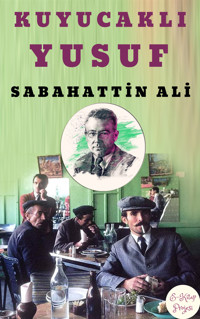
In ‘New World’, Sabahattin Ali guides us through the villages, small towns and wild gorges of Anatolia with clear, vivid language. His characters harbour hopes that clash with poverty, power and old constraints. With an incorruptible gaze and a tenderness that never becomes kitschy, Ali shows how love, honour and fate collide - and how quiet rebellion begins. At the heart of the collection is the legend of ‘Hasanboguldu’: a story of love and loss that echoes in waterfalls, pine forests and mountain paths. But even beyond this ballad, the stories shine—sometimes harsh, sometimes funny, always human. Ali's prose opens windows into a ‘new world’ that is both distant and frighteningly present: social divisions, the harshness of everyday life, the longing for dignity. A book about the vulnerable greatness of humanity—uncompromising, poetic and close to the heartbeat of the country.
Das E-Book können Sie in Legimi-Apps oder einer beliebigen App lesen, die das folgende Format unterstützen:
Seitenzahl: 223
Veröffentlichungsjahr: 2026
Ähnliche



















Sabahattin Ali
New World
A world where new things grow quietly
Translated by
INCE
Contents
Paved road
Singer Melek
Teapot
Ayran
To warm up
Sleep
Greetings
The beginning of a career
A conference
New World
Two women
Sulphate
Hasan drowned
COPYRIGHT
Paved road
After about two hours of violent jolting, the lorry that had left the station for the provincial capital dropped me off at the start of the road leading to the village I was heading for. I couldn't even manage to take two steps. I picked up my bag and sat down on a stone with green grass growing around its edges. As I did so, I began to listen to the humming in my head.
The lorry, which smelled of a mixture of dust and sweat inside, had shaken us so much on this most broken road in the world that we were thrown to the floor.
Suddenly, there were stops and jolts, as if we were falling into an abyss. They made me forget where I was and transported me into a dark dream world. Now I was trying to wake up from this dream while sitting on that rock. The driver had shown me the village I wanted to go to. It was about half an hour away from where I was staying and consisted of a pile of ash-grey bricks. On one side, a few poplar trees rose up, narrow and delicate, made of the same ash-grey brick material, suggesting that there was water there, albeit in tiny quantities.
I sat there for about an hour before slowly and unsteadily getting up. I picked up my small bag and started walking. Since I come from a village myself, I know the villagers well and did not feel like I was going to a strange place. I was sure that I would succeed in my first task.
It was beginning to get dark. As I approached the village, an all-encompassing red spread across the area. My long shadow lay on the dry steppe grasses, which sparkled and moved like a red sea; and the upper part of my shadow was lost in the distance among those grasses, from which grasshoppers sprang up here and there.
When I came to a few houses on the edge of the village, I smelled the scent of burning dung. In my mind's eye, I saw a stove on which thin flatbreads were being baked and barefoot children waiting.
A few cows that had not yet found their way home were running in the streets, swishing their tails against their hindquarters and occasionally bellowing. This bellowing was almost like a profound saying, uttered slowly and deliberately.
A pungent smell of dung, which grew stronger and stronger, drew me closer to this place. A village is a living, working entity, and this smell is the smell of its sweat. No smell in the world has ever enveloped me like this, and so many memories flashed through my mind, one after the other.
Apart from a few old men, no one was left in front of the coffee house. When they saw me, they looked at me motionless, without getting up. I went over to them, sat down and explained who I was.
One of them, the village chief, reported that six months had already passed since my predecessor left as a teacher and that the school had remained closed ever since:
"The harvest is not yet finished; the children are not coming to school. You can rest for another five to ten days!" he said.
It wasn't difficult to gather the children and organise the lessons. The villagers quickly understand those who speak their own language. At the moment, I have nothing to complain about. There is only one road problem, which I have taken into my own hands and have been working on for months. This road, which almost killed me with a truck on the first day of my arrival, has proven to be the biggest problem in the entire province.
Everyone had to transport their harvest and every passenger had to be transported via this road. There is no other road, and calling it a road is somewhat of an exaggeration. Strangely enough, this is the road that connects the centre of the province with the railway sixty kilometres away! I suspect that more important matters have delayed the construction of this road. I have approached the province from both our village and other villages, explaining as best I could how necessary it is to build the road. Since government officials do not read long applications, I wrote each of my ideas in a separate application and submitted them from different villages so that they would all be read. I also put forward many ideas on how the villagers could help build the road.
Recently, when I went to the city, the director of education treated me a little strangely – he seemed to be annoyed without showing it openly, preferring instead to mock me. I wondered why.
Then, casually, he said:
"You seem to find time to deal with extracurricular matters – is your student population that small?"
"Not low, but isn't it my job?" I replied.
He let his mocking gaze wander over me, but said nothing more. Later, I heard from friends in a café that the director of education had been angry with me. I had read and explained the constitution to the villagers. A villager who worked in the land registry had submitted a report and, after some time, asked for a response. When asked, "What response?", he replied emphatically, "You simply must give a response!
You have to! There is a law!" When it became known that he had learned about the law from me, a complaint was filed with the Director of Education. Many people are now annoyed that I am so concerned with this road issue – not because they have anything personal against me, but because they are annoyed with the issue itself. In the village where I work as a teacher, there is a wealthy master craftsman named Rüstem who runs a cartwright's shop in the town and repairs feather carts and ox carts.
I heard him go to the villagers and speak out against me. That did not surprise me. So far, all my efforts have come to nothing. Sometimes I think about letting the whole thing rest – because government officials, especially those in the Nafıa in the city, openly mock me. But in the evenings, when I see the condition of the carriages, ox carts and poor animals returning from the station in the village, it pains me; and I say to myself: "Don't leave what you've started unfinished, my dear – that's not like you!"
What a lengthy process it is. There was no room in the provincial building where our applications did not go in and out; even the villagers were surprised at my zeal, and they too seemed to have no hope of a successful outcome.
Still, nothing has been achieved... They probably won't build this road. Even the villagers won't help me – they are truly sluggish creatures... but perhaps they are also very clever beings who don't want to waste their energy on such a futile endeavour. I have no enthusiasm left. Even if they answered me with a few words – be it "yes" or "no" – it is as if we had thrown these requests into a deep well from which no sound can be heard.
In the evening, I climb the hill next to the village and look at the long, dust-covered road. Sometimes a lorry appears, so white with dust and covered with wicker baskets that it looks as if it is swaying back and forth, like a person raising and lowering their knees in a swamp, as if it is about to collapse, and slowly moving forward.
It is such a sad sight that you have to close your eyes to avoid seeing the struggle between this machine, one of the most modern expressions of technology, and this most primitive road in the world. Sometimes I feel the urge to run out and smooth the road with my palms to do my part to ensure that at least five or ten metres of the section finally become a "road".
Our cause suddenly gained momentum. Recently, one of our elders came to town. No matter how comfortable his car was, this road must have made itself felt again, because he mentioned it in a conversation with the governor, who immediately intervened:
"This is one of the first things we are thinking about, we want to have it built this year, the projects are in preparation. We are even thinking of asphalting it... Would you visit our city more often if this road were asphalted?
The elder replied:
"Of course I will come..."
And with that, the asphalt issue gained momentum. I must be dreaming, because the governor spoke of projects. It seems that they are by no means indifferent to this matter, but find it more appropriate to serve the citizens in a quiet, unobtrusive manner.
But in contrast to this silence, this time a lot of fuss was made about the work. Half of the province's weekly newspaper – which is almost as extensive as a meal plan – was filled with reports about asphalt roads. My reputation in the village also seemed to be growing; the way our villagers treat other people is like a barometer anyway. In my opinion, it was not necessary to asphalt the road for the time being. It would cost three times as much, and this money could be used for far more urgent purposes.
A simple, clean road would be perfectly adequate for us. But perhaps they have other ideas – perhaps they want everything to be absolutely perfect. Such large-scale projects are beyond my comprehension. Whether it's a road or, if we have the money, even a carpet being laid... The governor has gone to Ankara. The engineers who carried out the survey reported that the road would cost half a million, while the province's budget was 350 thousand lira.
To raise this money, banks were approached – but they did not want to lend any money without a guarantee from the Ministry of Finance, and the Ministry of Finance could not enter into a guarantee agreement without the permission of parliament. In short, it was complicated.
The governor made it his mission to overcome all these hurdles. He gave a speech to obtain approval from the general assembly – I read this in the provincial newspaper – an impressive example of eloquence. He explained that it was the signal from the elder that had prompted him to do his utmost for this road, and reminded everyone that he had promised to honour us again after the road had been built.
Indeed, our elders see everything and wake the sleepers with a single sign. The governor did not mention that there had been numerous requests from the population for this road, nor did he talk about how much the road would benefit the villagers. Perhaps because these things are common knowledge. Be that as it may, I am glad if I had even a small influence on the construction of this road.
Construction work on the road has already begun. Money has been borrowed from the banks – it will probably be paid off over several years. To cover the instalments, a little has been diverted from the hospital's budget, and next year the education service will be cut back a little. I never thought it would come to this. But so far, nothing concrete has been decided. We should not panic prematurely. When it comes to raising money, there are many things to consider before education. For example, the governor – who is very committed to this road project – could refrain from having a governor's palace built for the time being...
The construction of the road is progressing, and feverish work is going on at the corner assigned to our village. The rollers come and go, and many workers from the village, in their spotted clothes, work like ants. This work continues until late in the evening, then they retreat to the tents on the edge and go to bed. Most of the workers sleep outdoors.
The contractor could not get enough tents. At dawn, work starts again. There are also workers from our village. They earn five or ten shillings and pay their tax debts. At night they return to their village, but they are exhausted. The official assigned to them by the construction company could hardly give them ten minutes off to eat bread.
Our villagers were very indifferent at first, but when the stone and asphalt work began, they became curious. They can hardly accept that this black stuff, which is cooked in huge cauldrons and then poured onto the ground, is walkable, let alone that trucks and cars will drive on it. Those whose fields are on this side of the road sit in the ditch by the roadside on their way home in the evening, smoking their cigarettes, watching the roller going back and forth and chatting to the workers they know about their wages.
The road is finished. In a few days there will be an opening ceremony. When you look up the hill near the village, it glows in the distance like a black snake. They will plant trees on both sides. That's a wonderful thing. When I think about how all the people from the province will pass through here, how easily they will reach the train station, something inside me leaps. There are rumours about the strength of the road... They say the construction company didn't do the job properly. But I think that's just a rumour. I wonder how anyone can have negative thoughts when faced with this terribly beautiful view.
Today was the happiest day of my life. Cars were parked on the outskirts of town, and all the officials appeared in their official attire. Even the head of private accounting wore a top hat over his beige coat and, at 1.55 metres tall, took a seat in the front row. I ironed a shirt myself, put it on and arrived looking smart. The director of education looked sceptical, even disapproving, but whatever he said – if I leave the village one day, the world won't come crashing down... this road is part of my work... the people and villagers watched from afar; I went to them, talked to them, and it was as if I wanted to embrace everyone with joy.
After returning to my seat, I remembered and signalled to the villagers to come closer, because this road belongs to them above all others. This road belongs to them first and foremost. Some ventured forward but were held back by the gendarmes; I did not raise my voice, but much of my joy escaped me.
The governor gave a long speech, which I couldn't hear very well because his voice wasn't very loud, only to my ears: "The land, charitable work... Our role models... Everything for the people...". A few other people said a few words. The barrier was broken through and a convoy of cars, led by the governor's, drove up.
The officials followed him five or ten steps behind, all seeming to get used to the feel of the asphalt under their feet. The villagers, perhaps because of their inexperience, perhaps because they were afraid to say anything, did not dare to step on the asphalt, but walked on the dirt on both sides of the road and stared wide-eyed at the asphalt in the middle, where the tracks of fresh car tyres glistened wet and damp.
Despite everything, I returned to the village like a victorious general.
On the tenth day after the road was opened, the scientific staff of the provincial building authority submitted a report. They reported that ox carts, cattle carts and even other carts had severely damaged the asphalt. They did not mention that this was also due to the poor condition of the road, but there were potholes and defects in places where not only ox carts but also lightly loaded trucks had passed.
The province was alarmed. Faced with the danger that the unpaid road would revert to its original condition within fifteen days, even before the city dignitary had paid a single visit, they immediately convened a meeting and decided to ban non-tyred transport vehicles from using the asphalt road.
No one in the village wanted to believe this news, but when some villagers were stopped by the gendarmes and forced to remove their ox carts from the road and return through the muddy fields, it became clear to everyone that it was serious. This ban was extremely strict. Since the road ran through a narrow pass between two mountains, those who wanted to go to the railway station now had to drive around this mountain and waste six hours.
They gathered to find a solution, but at first it was neither possible to oppose the gendarmes nor to fit rubber tyres to the ox carts. They would take a route that would take six hours longer and be many times more miserable than the old one – the road around the mountain... No one spoke to me anymore; everyone looked at me with hostile eyes.
One evening, the village chief came and said:
"My son, we weren't unhappy with you, but this road issue has changed everything. The villagers know that you are the reason for our problems; they have no other opinion on the matter. Several times they wanted to beat you up – yes, even go further – but I was just able to stop them. Your enemies are growing in number in other villages. One day, something will happen to you. It is better if you leave here with dignity. Don't be sad or disappointed, take care!"
I had thought of that too. Given the hostile attitude of the villagers towards me, nothing good could happen anymore. I packed some of my belongings into my bag, put the rest into a pouch, and just as I had come to this village, I left it one evening.
Just as I had come to this village, I left behind the acrid smell of dung and smoke, while the sun reached the yellow grasses and the wind rippled them like a red sea.
Singer Melek
Next to the door leading to the coffee house, there was a small carpet on top and an old rug underneath, which looked like a platform. The instrumental ensemble, consisting of three people, sat with unmistakable seriousness on the local wicker chairs. If one of them wanted to get down, they had to jump from a spot about a metre away. At such moments, singer Melek called on the little waiter Hamdi for help, leaning on his shoulder with one hand and holding his skirt with the other as she stretched her thin legs down. These moments were important opportunities for the uncouth clientele sitting in this neighbourhood. Weak but eager eyes immediately turned in that direction, and moustaches were licked with the lower lip, as if something sweet had been eaten.
The café windows were so fogged up with cigarette smoke and breath that all you could hear was the sound of the rain falling outside, and the drops falling through the windows could not be seen from inside.
The two waiters running around in the middle could hardly make their way through the crowded room. A heavy smell coming from the muddy shoes made the guests, more than half of whom were drunk, dizzy, and from time to time there was such a loud noise from the door, which was frequently opened and closed, that it drowned out the sounds.
The new arrivals caused a commotion wherever they went, because they threw the coats hanging behind the chairs onto the floor as they wandered around, and after they had found a place, they took off their wet caps to scratch their heads.
The violin, the lute and Melek raised their voices from time to time, as if they wanted to make an advance. Then, for a few minutes, a veritable battle ensued between the noise and the music. Sometimes the noise gained the upper hand, and the instrument continued its humming in a shameful manner; sometimes, however, when it seemed that the audience was becoming a little quieter in the course of this battle fought with full commitment – almost like a fight for survival – the instrument raised its voice with joy. In such moments, Melek's fine, slightly hoarse but penetrating voice filled the hall, and a hint of interest appeared in the glances directed at her.
The door with the glass window opened slowly and Hüseyin Avni, the lawyer, entered. He turned up the collar of his black coat and pushed his hat of the same colour in front of him. Only a small part of his face and his bearded chin were visible, for his sickly eyes were hidden by his steamed-up glasses. He carried a dilapidated umbrella from which rainwater dripped.
With tentative steps, holding onto the backs of the chairs to keep from falling over, he moved forward and came to a spot near the reeds. There were no empty chairs in sight. He searched with his eyes. The civil servants and single teachers who had settled in this neighbourhood had their heads bowed or were engrossed in conversation so as not to meet his gaze and have to invite him to their table.
Three butchers sitting around a table, hiding their hashish cigarettes in their palms, invited Hüseyin Avni to join them. They wanted to make fun of the old drunkard and show the singer that a distinguished gentleman was sitting at their table, thereby gaining prestige.
Hüseyin Avni wiped the fog from his black glasses with the sleeve of his jacket and turned down the collar of his coat. He took off his hat. His white hair, which had become very thin, stuck to the cracked and blotchy skin of his head. After making himself comfortable in the local low-backed wicker chair, he turned his head towards the instrument and smiled. His long, sparse teeth and matt pink gums were exposed, and saliva dripped from the corners of his mouth.
The dark-haired young man with the long head who was playing the violin returned the lawyer's greeting with a bow. Melek made a barely perceptible gesture with her head. The old artist, however, who was bent over the lute in his lap and singing at the top of his voice, took no notice of the world and continued with his song.
Melek thought, "Oh God, will I never get rid of this guy?" Never in her life had she disliked a man so much. She had been earning her living with her voice for five years, and when it came down to it, she had to use her body to help that voice. In this profession, it was not customary to choose one's clients, but there were certain limits. Hüseyin Avni's face didn't play a big part in her aversion anyway. What really frightened Melek were his intrusive movements and his gaze, which darted back and forth behind his black glasses like a dirty rag.
The young woman, who did not turn down the tea ordered by other lovers and paid this generous bon vivant with a smile, simply could not bring herself to wear the few gold bracelets that Hüseyin Avni had given her after who knows what dramatic scenes in his house.
According to the coffeehouse owner, this man had previously been a member of the civil court but had been dismissed because of his alcoholism. He received a very small pension and supported his wife and three children by writing petitions as a legal advisor. Since he had not completed a law degree, but had come from a career as a court clerk and showed no interest in his work, hardly more than a few farmers a day came to his office.
Coffee house owner:
"The man doesn't have a penny to his name, why are you paying him any attention?" he said. "He writes two petitions a day for two villagers and gets very little money for it, which he turns into raki at Mahir's, the innkeeper's, while his wife and children go hungry at home. He's not ashamed of his age, doesn't care about his white beard, and attacks the sixty-year-old peasant women who come to his office. Not a day goes by without him getting beaten up. Have you ever seen any of the gentlemen who come to our café even glance at him? He's a piece of dirt!"
Melek had been in this small town for two months now, and Hüseyin Avni had not missed a single night of coming to the coffee house since then. Every evening, whether in the office or in the restaurant, he drank a certain amount of Raki and made his way – often after the second glass, with unsteady steps – to the coffee house stage. The slightly fragile but passionate voice of this young, slender, dark-skinned woman drove him almost mad.
But he didn't even need this reason to cling stubbornly to a woman. All women – from the most beautiful to the ugliest, from the youngest to the oldest – exuded a certain charm. These scents, sometimes delicate, sometimes so overpowering that they caused headaches, had a common note despite their diversity. They spread through his decaying body like a painful shock, robbing the poor man of both sleep and the ability to think.
With a thousand and one tricks that his twisted mind devised in an astonishing manner, he lied to his wife, grabbed some valuable items that had been left behind in a chest or deep down in a bundle, and took them to the coffee house. There he had some songs played that he wanted to hear and then sent the things he had brought with him to Melek with the apprentice Hamdi.
He had invited the violinist to his office several times and offered him dry olives and raki. He hoped that this young gypsy, who was proud to sit at a table with an "efendi", could influence Melek in his favour.
But now his patience was exhausted: apart from half-hearted greetings and the words "How are you, sir?" that came from the young woman's lips in times of distress.
The bouts of desire that whipped through his old body at irregular intervals had become unbearable.
When he looked over at Melek from his seat, he was overcome by a wild urge – a feeling that he had to jump up immediately and throw himself at her.




