


18,49 €
Mehr erfahren.
- Herausgeber: The History Press
- Kategorie: Sachliteratur, Reportagen, Biografien
- Sprache: Englisch
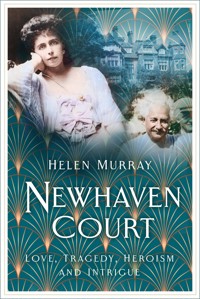
'This is the house by Cromer town …' Built in 1884 as the grand summer home for the well-connected Locker-Lampson family, the red -brick, turreted mansion Newhaven Court once sat high on a windswept hill above Cromer. Before its dramatic destruction in flames nearly eighty years later, the house played host to such eminent figures as Sir Winston Churchill, Alfred Lord Tennyson, Sir Ernest Shackleton, illustrator Kate Greenaway and French tennis superstar Suzanne Lenglen. It was a home where poets rubbed shoulders with politicians and aristocracy with artists and authors. There was dance, dining and song – but also family tragedy and hidden love. Follow the true story of Newhaven Court and its colourful inhabitants from the decadent years of the late nineteenth century and the elegant Edwardian era, through the tragedy of the First World War and terrible conflict of the Second to the roaring twenties and the uncertain post-war age.
Das E-Book können Sie in Legimi-Apps oder einer beliebigen App lesen, die das folgende Format unterstützen:
Veröffentlichungsjahr: 2022
Ähnliche



















NEWHAVEN COURT
First published 2022
The History Press
97 St George’s Place, Cheltenham,
Gloucestershire, GL50 3QB
www.thehistorypress.co.uk
© Helen Murray, 2022
The right of Helen Murray to be identified as the Author of this work has been asserted in accordance with the Copyright, Designs and Patents Act 1988.
All rights reserved. No part of this book may be reprinted or reproduced or utilised in any form or by any electronic, mechanical or other means, now known or hereafter invented, including photocopying and recording, or in any information storage or retrieval system, without the permission in writing from the Publishers.
British Library Cataloguing in Publication Data.
A catalogue record for this book is available from the British Library.
ISBN 978 1 8039 9215 0
Typesetting and origination by The History Press
Printed and bound in Great Britain by TJ Books Limited, Padstow, Cornwall.
eBook converted by Geethik Technologies
Contents
Acknowledgements
Preface
1 The Beginning of the End
2 The Lockers Meet the Lampsons
3 Arise – Newhaven!
4 Frederick and Janie
5 Death Comes Knocking
6 Janie Starts Again
7 A New Century Dawns
8 The War to End All Wars
9 Oliver and Bee
10 Game, Set and Match
11 The Commander
12 Conflict
13 The Last Dance
14 Fire and Ice
Epilogue
Bibliography
Further Reading
Kate Greenaway Newhaven illustration with poem by Austin Dobson. (Family collection, KG courtesy of Michael Dadd)
Acknowledgements
Enormous thanks and love are due to my husband, Anthony, and my three dear children, Tristan, Austin and Alexandra. Grateful thanks also go to my extended family around the globe, those who have so kindly furnished me with memories, anecdotes, photographs and documents: Ellie Sturrock, Diana Patoir, Julian Delmar-Morgan, Janie and Peter Fowler, Conway Ellison, Miranda Delmar-Morgan, Rachel Connor, Clare Herring, Jonathan Locker-Lampson, Anthony Locker-Lampson, Maranda Locker-Lampson and Patricia Walker.
My sister, Miriam Jamieson, not only provided an original piece of artwork but along with my cousin, Ellie, provided unfailing support and encouragement. I couldn’t have done it without you both. I have been lucky that the family left a considerable paper trail behind them, including biographies and letters and, as prominent members of society, they were frequently mentioned in newspaper columns of which I have made good use.
Significant contribution to this work has been made by family members who are no longer with us. Locker Madden, Jane Madden, Rosa Mornard and New Zealand historian and author Stephen Locker-Lampson, I have much to thank you for.
Along the way, I have been fortunate enough to meet several Cromer residents who have been immensely helpful. Author Brenda Stibbons helped me gain access to family letters and Robbie Nash, as well as helping with research and maps, kindly shared his uncle Philip Colman’s recorded memories of working for Oliver Locker-Lampson. George Baker, whose father and uncles served in Russia with Oliver Locker-Lampson, gave me considerable time to explore his memories, books and treasured photo collection.
The more recent occupants of Newhaven Court were instrumental in filling in the later years of the house. Grateful acknowledgement goes to Anna Jansz, Phillip Shaw, Brian Welham and the brothers, Ian and Roy Boyd-Stevenson. Their spare time, memories and photos were of immeasurable help. Jenny Scally also shared her happy memories of Newhaven Court. Special thanks must go to Anna’s mother, the late Josephine Towle, who preserved many priceless family letters from being lost forever.
Grateful thanks also go to the Locker-Lampson family of New Zealand, Kim Woodrow of AG Brown, Jane Hunt, Steve Snelling, Mike Rogers, Philip Colman, Christopher Dreyfus, Val Edmondson, Alexandra Shackleton, Caroline Jarrold, Michael Dadd, Pam Griffiths, David Pope, Terry Mace, Philip Griffin, Jacqueline Regis, Stephen Scott-Fawcett, Trevor Barton, Phyllida Scrivens, Jurg Linggi, Tony Spurgeon, Norwich Writers Circle, Stuart McLaren, David Clay, Paul Brighton, Paul Browne, Norfolk Record Office, Norfolk Museums Service, Leeds University Archive, Wayne Kett of Cromer Museum, Chris Bennett of Hertfordshire Archives and Local Studies, Keith Giles of Heritage Collections, Auckland Library and Yasmin Ramadan of the Beinecke Rare Book and Manuscript Library.
Credit must also go to my siblings, who have supported me all these years, and my nieces and nephews whose company bring me so much joy. My love goes to my dad, who would have encouraged me to write this. I hope I have done you proud. Lastly, my amazing mum whose endless determination, drive and ambition to do more, learn more and see more has given me the courage to try.
Preface
This is the house by Cromer town,
Its bricks are red, though they look so brown.
It faces the sea on a windswept hill –
In winter it’s empty, in summer it’s chill:
Indeed, it is one of Earth’s windiest spots
As we know from the smashing of chimney pots.
In August I ask for an extra quilt –
This is the house that Jane built!
Newhaven Court. (Courtesy of Miriam Jamieson)
With characteristic touches of humour, this is the poem written by Frederick Locker-Lampson to describe his newly built summer property, Newhaven Court, an imposing red-brick house that once stood exposed and proud on a windy hill overlooking the north Norfolk seaside resort of Cromer. Designed and built in 1884, under the instruction of Frederick’s wife, Hannah Jane, with the help of her charismatic American father, the elegant Victorian mansion with its ornate chimneys, turret and jumbled architecture, stood braced against the North Sea under the wide-open Norfolk skies for almost eighty years before its dramatic destruction by fire in 1963.
For almost four decades, Newhaven Court was the grand summer home of the Locker-Lampson family, Frederick and Hannah Jane (known to all as Janie), with their children, Godfrey, Dorothy and the twins, Oliver and Maud, who decamped to Cromer every year to spend the warmer months by the sea. The wealth of the family’s social, cultural, literary and political connections meant their many and varied family and friends followed, invited to stay under their roof where they laughed, argued, danced and dined within its walls. It was a happy and welcoming home where people spent their leisure time but also where they fell in love, sought refuge, had affairs, conducted business, found comfort during illness and prepared to go to war.
Frederick and Janie’s younger son Oliver, whose electric personality burns bright throughout this history, inherited Newhaven Court on the death of his mother in 1915. Following the Great War, Oliver converted the building into an exclusive guest house. Thousands of pounds were spent updating the property and adding an impressive ballroom and two enormous indoor glass-roofed tennis courts. With the help of his fashionable young wife, Bianca, whom he married in 1923, the couple entertained some of the most prominent figures of 1920s society.
In his son Jonathan’s words, Oliver was a man who managed ‘to ingratiate himself with royalty wherever he went’. A grand statement but not one overstating the facts. While serving during the Great War with his armoured car squadron in Russia, Oliver engineered a meeting with Tsar Nicholas II and later, when he and his men were in Romania, he personally introduced himself to Queen Marie. Oliver’s association and friendship with the Romanian royals led to the exiled King and Queen of Greece staying at Newhaven and to a lengthy visit from Marie’s daughter, the young and glamorous Princess Ileana. Oliver was also friendly with Princess Marie-Louise, a granddaughter of Queen Victoria, along with King Albert of Belgium. It was through his association with the latter that Professor Albert Einstein, on the run from the Nazis, came to be Oliver’s guest in 1933.
Once financial considerations and family tragedy forced Oliver to sell Newhaven, the house experienced several custodians moving through its rooms, each in turn leaving their mark on the grand house through years challenged by a further conflict and the seismic changes inevitably faced by a post-war society.
It was on one of those long summer days of endless blue skies and warm sunshine, seemingly only found in the distant vista of childhood, that I first became dimly aware of Newhaven Court. My mother’s mother, Jane Madden, had taken my sister and I for a day out to Cromer. We drove there from nearby Norwich, bumping along the country lanes in her outlandishly bright orange Volkswagen Beetle, sucking on travel sweets all the way. A picnic lunch was eaten on the golden sands and in a lull after the food, as waves gently lapped at our toes, we listened as she told us of a big house on the hill above the town, once owned by her charismatic Uncle Oliver. She quickly became lost in her memories of days on the beach with her cousins, eating ice creams and splashing in the cooling surf.
We must have shown a reasonable interest as, later in the day, we were taken to Cromer Museum. I have a clear recollection of being shown a large black and white photograph of a family enjoying a picnic on the beach. My Grandma showed me her mother, Dorothy, who sat immortalised in the picture, looking back at me with her beautiful large, dark eyes.
Jane Madden on a visit to Cromer, 1939. (Family collection)
Grandma was fond of talking about her childhood, from where her memories remained clear and strong. Anecdotes and recollections, oft repeated, became familiar to us all. We heard about gentle Aunt Maud reading Tennyson poems to her by the warmth of a fire, a beautiful carnival princess, kings and queens, her notorious practical joker godfather, and an intriguing story of her meeting Albert Einstein. Many of the stories revolved around the house in Cromer and her time there both as a child and a young woman.
As we lived in nearby Norwich, we occasionally drove to Cromer for some fresh sea air. After a day spent walking on the beach and drawing letters in the sand, we headed for home. Driving up and out of Cromer, we passed two roads on our right, named Newhaven Close and Court Drive. With Grandma’s tales in our thoughts, the car came to a stop so that we could walk up these roads looking for a trace of the mysterious house that we had heard so much about. But we were disappointed to find nothing and soon drove on.
Twenty-five years later, in the brief summer respite from the covid pandemic in 2020, I paid a visit to a cousin, the keeper of many of the family records. Out came a heavy square volume of blue leather, inlaid with big, bold, gold lettering spelling out the name ‘NEWHAVEN’. It was the visitors’ book that I had been shown so many times as a child. Written in black spidery handwriting, names like Shackleton, Churchill and Tennyson jumped out at me. Other names, so familiar from anecdotes, felt like they had been waiting patiently for me to find them and tell their stories. I was immediately fascinated, and so began my epic journey of discovery culminating in this volume.
With the project set in my mind, I again made the 25-mile trip north to Cromer. On a scorching August day and armed with a map, I walked up towards where Newhaven would have been. On the top of the hill, with the sun beating down, I stood admiring the clear view down onto the picturesque blue sea below. On the opposite side of the road, a lady was enjoying the sunshine from a deckchair in her garden. On enquiring whether she knew anything of Newhaven Court, she told me that her house had probably been built where the tennis courts had been and that it was not unusual to still find little burned pieces of Newhaven glass from the fire of 1963.
Having spent the morning exploring the boundary and grounds of the old estate, I sat down to rest on a concrete kerb on the very spot where the grand entrance hall would have been. Closing my eyes against the warm sunshine, I imagined the large Queen Anne-style house rising from the ashes behind me. There was Alfred, Lord Tennyson in his long, black cloak and hat taking a solo stroll around the grounds, occasionally stooping to pick a strawberry or admire the pretty rose garden. And then Janie, my great-great-grandmother, walking purposely through the grounds to check on the explorer Shackleton, lined and worn from his recent Antarctic expedition, then occupying one of the little huts in the grounds to write a book about his adventures.
Walking down the sweeping drive over 100 years before, I may have encountered the author M.R. James ambling along thinking up a new ghost story to scare the guests with after supper, or possibly the children’s illustrator Kate Greenaway returning from a walk on the beach with the children, their intention to join Janie busily conducting a game of croquet on the lawn.
I imagine a carriage conveying the troubled Oscar Wilde whistling past, and then one of Oliver’s men thundering by in a noisy armoured car. Then there is the familiar figure of Winston Churchill, puffing on his cigars, deep in conversation with Oliver.
Moving forward just a few years, I spot the stunt pilot Winifred Crossley standing at a window, waiting for her call-up papers to arrive. Then, in the late 1950s, I might have even been knocked aside by a young American couple walking carefree arm in arm to dance the night away on Newhaven’s sprung-floor ballroom where the latest rock ’n’ roll music played from the stage.
As well as the story of Newhaven Court, this is a story of those who dwelt within, so bound up in the history and fortunes of the house.
A NOTE ON THE TEXT
The spellings ‘Newhaven’, ‘New Haven’ and ‘NewHaven’ were used interchangeably. For clarity, I have used the spelling Newhaven throughout.
1
The Beginning of the End
TUESDAY, 22 JANUARY 1963
As dawn broke on the grey and bitterly cold Tuesday morning of 22 January 1963, the residents of Cromer reluctantly began to rise for work and school. Freezing temperatures meant that, for the majority without central heating, it was a struggle to emerge from their warm beds. While the adults quickly dressed to get downstairs to put the kettle on, their children marvelled at the swirled ice patterns that had formed on their windows before racing each other to the front room to grab the best spot in front of the coal fire. Those who could on that wintry day stayed at home, others, who had to go out, by late afternoon rushed home along the dark, frozen streets, looking forward to a hot dinner.
On the windswept incline above Cromer town sat the Newhaven Court Hotel. On that chilly afternoon, enjoying their tea in the lounge were the hotel owners, Donald and Violet Boyd-Stevenson, and their three boys, 15-year-old Ian, 11-year-old Christopher, and Roy who, just days earlier, had celebrated his 10th birthday.
Though partially sheltered from the easterly winds by the neighbouring lighthouse hill and the wooded areas that surrounded the hotel, the family still shivered in the frigid breeze blowing in over the North Sea as it whistled down the towering chimney stacks, finding its way in through the edges of the old window frames. All winter it had been a battle to keep warm and despite having central heating and a fire burning constantly, the old house with its numerous roomy spaces, corridors, projections and turret struggled to retain any semblance of warmth.
The peaceful family meal that afternoon was suddenly interrupted by a man who burst into the room. ‘The hotel is on fire!’ he shouted breathlessly.1 It was a tremendous shock. All were unaware that as they had sat eating, the top floor of Newhaven Court was already a mass of smoke and flames.
As the Boyd-Stevenson family hurried out of the hotel, Cromer residents watched with alarm as smoke poured from the roof of the old Newhaven Court. Most of those who had spotted the fire assumed that someone else had already called the emergency services. When the engines failed to arrive, Arthur Mayes, who lived with his family on nearby Arbor Hill, called to ask where the fire engines were, only to be told his was the first call they had received.
The call handler asked him where the fire was. Not realising the line had connected to a central number and not the Cromer station, Arthur told them ‘Newhaven Court!’
The handler replied, ‘Where is Newhaven Court?’
Incredulously, Arthur replied, ‘In Cromer, of course!’2
NOTES
1 Interview with Ian Boyd-Stevenson, 2021.
2 David Pope, Facebook ‘Cromer’ Group, 2021. Mr Mayes was the manager of Travis & Arnold Builder’s Merchants.
2
The Lockers Meet the Lampsons
To tell the story of Newhaven Court, we must travel back to the year 1806, to the small community of New Haven Mills in the American state of Vermont. It was here that 44-year-old mill owner and sheep farmer William Lampson lived with his wife Rachel and their nine children. The Lampsons were well established and prosperous residents of the close-knit community and had lived in the pleasant small town since at least 1790. First chartered in 1767, the town by 1806 boasted a population of over 1,300, who ran a blacksmith, tannery, general store, wagon shop, creamery and cheese factory as well as a small village school.
The settlement was next to a river, and we can be sure the substantial Lampson homestead, in common with the other houses in town, enjoyed a scenic backdrop of rolling hills, fields, forests and the beautiful Green Mountains in the distance. Every September, the trees would explode with colour, cloaking the landscape in the fiery red and orange foliage that signalled the onset of autumn.
It was on the 21st of that month, and most probably at home, that Rachel gave birth to her tenth child, a robust, healthy boy. Rachel, who was nearly 39, must have been relieved to survive another pregnancy and birth. The little boy was quickly welcomed into the noisy household by his three older brothers and six sisters. He was named Curtis Miranda Lampson, his unusual middle name a tribute to the once-celebrated South American emancipator, Francisco de Miranda, a figure admired by Curtis’s parents.
Curtis was enrolled at the local school, where he received a rudimentary education and showed early signs of his later entrepreneurial aptitude. The boy was given the job of stoking the school fire and was paid in the form of the wood ashes, from which he made soap to sell to the townsfolk. Alongside school, he helped his father run the mill and farm. Any spare time was spent roaming the forests hunting deer and fishing in the tumbling clear waters of New Haven River, both pursuits that would become lifelong passions.
This carefree early childhood was rocked in the spring of 1813 when an epidemic affecting Vermont known then as ‘spotted fever’ carried off his 3-year-old little sister, Laura Anne, followed by his mother, a month later. The illness, which modern-day doctors would probably identify as cerebral spinal meningitis, was terrifying. In 1814, Dr Hale wrote that his patients would commence with ‘severe pain in the head and back … pain increased until in a short time it produced a delirium’.1 In fatal cases, the afflicted would develop dark blotches or spots, nausea and vomiting, then become comatose and die within hours, sometimes before doctors could reach them.2 Curtis was just 6 years old when he stood in the New Haven evergreen cemetery and watched as his mother and sister were laid to rest together.
William supported the family with a combination of sheep farming and working in the clover mill. The children picked up work when and where they could, including Curtis, who at 13 was working in the general store. William was an opportunist, a trait also seen in his youngest son. In 1820, at the age of almost 60, his diary reveals that he began working in the fur trade for his older son, William. He writes, rather excitedly, that he had bought in preparation ‘thick shoes and a beaver hat’.3
Curtis grew into a tall, broad-shouldered young man with a strong, handsome face and head of wavy, fair hair, combed into a side parting. He was energetic, kind, optimistic and full of adventurous spirit. His future son-in-law, Frederick Locker, writing in his own reminiscences, wrote of Curtis, ‘I am told that as a youth, he was wise beyond his years and intelligent in advance of his experience; that he was confided in for counsel by people old enough to be his father.’4
By the age of 17, Curtis had outgrown the small township and left to join his father and older brother, who were already working with the Hudson Bay Trading Company in Canada. Bright, ambitious and driven and not afraid to start with the most menial of jobs, it was not long before Curtis began making a name for himself. He showed a natural flair for business, and before long he was regularly sent to New York and London on behalf of fur dealers, including the financier, John Jacob Astor, who was well on the road to amassing a personal fortune.5
It was during a spell in New York that Curtis met Jane Walter Sibley of Sutton, Massachusetts, one of a pair of ‘very beautiful’ daughters of Gibbs Sibley and his wife Hannah.6 Jane was just 17 and Curtis 21 when they married in 1827. A portrait survives of Jane in her wedding dress, revealing her curved figure and attractive heart-shaped face, framed by curling, chestnut brown hair. She and Curtis made a handsome young couple.
Three years after their marriage, Curtis took his wife to London where, at the age of just 24, he set up a successful business, trading in furs under the name C.M. Lampson. London, with its busy streets, squares, grand buildings and wealth of culture, must have suited Curtis, who quickly made England his home. He would never live in his birth country again. The fur venture was a success and Curtis and Jane quickly became very wealthy.
With great success came invitations and introductions, often from other extremely wealthy individuals. One of these was the influential American philanthropist George Peabody. George, all but forgotten today, was a millionaire who rendered assistance to charity. Brought up in deprived circumstances himself, Peabody gave very generously to public schemes both in America and the UK, predominantly involving housing for the poor.
Although not as active as Peabody, Curtis collaborated with his friend on several occasions. In 1851, the two men donated £40,000 to fund American participation in the Crystal Palace Great Exhibition and the following year, £5,000 was spent to fit out SS Advance, which was sent far north to look for the missing John Franklin expedition.7
Six years after their marriage, Jane gave birth to her first child, a boy named George Curtis. Two years later, a brother for George arrived, little Henry. In 1846, after a gap of over ten years, Jane gave birth to Hannah Jane, the builder of Newhaven Court, followed by a further son, Norman George, in 1849.
‘Rowfant’ was the name of the enormous Sussex Tudor mansion purchased by Curtis for under £50,000 in the year after the birth of his daughter.8 This enchanting manor house, ‘with the pointed old-world gables, the Horsham tiling mortared with moss and grey stone walls’ was to become the Lampsons’ country home.9 The family divided their time between Rowfant and their city address at 80 Eaton Square in London. Curtis also leased a hunting forest and lodge at Inchbae in Scotland. Having firmly established himself in England, 43-year-old Curtis became a naturalised British citizen in May 1850.10
All four of Curtis and Jane’s children were energetic and lively but their only daughter, Hannah Jane, known to her family as Janie, was singled out by her affectionate father from the start. He doted on his daughter and the two became solid companions. Janie’s son, Oliver, later wrote, ‘The Americans are far more affectionate than the English and the bond between my mother and her father was American in its touchingly tender strength. They adored each other.’11 Perhaps Curtis saw much of himself in the wide-eyed, dark-haired and cheerful little girl, or maybe her vulnerability from childhood brushes with death, once from rheumatic fever and later diphtheria, made him particularly protective of her.
Rowfant House c. 1890. (Family collection)
The family lived a life of luxury, employing a large staff of servants, maids, footmen, stable hands, nannies and chefs. Having only received rudimentary schooling himself, Curtis placed value on a good education. George, Henry and Norman were all sent to a prestigious private London school before further education at Trinity College Cambridge. As a girl, Janie was educated at home by a governess.
Janie was taught the basics of reading, writing and arithmetic, in addition to receiving tuition in French, German and Italian. As befitting a lady of her class, she was introduced to the key accomplishments of deportment, conversation, dancing, drawing, needlework, horse riding and music; all skills to ensure that she would stand out in the competitive marriage market.
Janie was, as her father before her, easily pleased but naturally bright. She became a proficient pianist and a skilled choral singer as well as a talented dancer. She loved reading and a favourite pursuit of father and daughter was reading Tennyson poems aloud to each other.
A good governess was expected to press on her pupil Bible study and a strict adherence to the moral code. Janie’s governess would not have been disappointed in this regard, as she showed early signs of her lifelong religious zeal. Occasionally, she would be the only member of her family to attend church on a Sunday, once remarking in her diary that she had been left alone in the pew sitting ‘like an owl in an ivy bush’.12
However, Janie was not solely academic and serious minded. Her diary for 1864, the year she turned 18, shows the lighter, fun side of her personality. Using rushed sweeping paragraphs, she describes attending parties with her brothers where she danced the quadrille and the waltz as well as taking part in after-dinner games such as Blindman’s Buff, Forfeits and Twenty-One Questions. She wrote about eligible young men, games of croquet, shopping trips with her mother, theatre shows with her father and taking regular, long walks with her friends and American cousins. It was also the year when she was presented at Court before Queen Victoria, and the outfit she wore, reported in The Evening Standard, gives us an idea of her young, fashionable style, ‘Miss Lampson wore a train and corsage of rich mauve satin, ornamented by tulle over a petticoat of rich white satin, trimmed with tulle and bows of satin ribbon. Head dress of plume, lappets; parlure of diamonds.’13
By this time, George Curtis, Janie’s elder brother, was already causing his parents distress with activities for which he would later become renowned and which would also later lead to his sister inheriting what, by birthright, should have been his.14 Rumours of shady, underhand financial dealings and other disreputable behaviour were rife, leading Lord Battersea to allegedly proclaim that George and his brother Henry were, ‘the biggest bounders he ever met’.15
Curtis was rumoured to have been offered a partnership with merchant bankers, the Baring Bros, only to have had the offer withdrawn when the directors met his wayward sons. Perhaps the more disappointment Curtis felt in relation to his older sons, the more he revelled in the company of his daughter. Curtis was fond of taking Janie to view his projects, one of which became his most celebrated achievement.
Sir Curtis Miranda Lampson. (Family collection)
In 1856, the Atlantic Telegraph Company was formed to lay the first deep-sea transatlantic telegraph cable, with the ambitious aim of connecting the 2,000 miles between England and America. Curtis was appointed as a director and later promoted to vice chairman. The project was beset by delays and repeated failures and as the company struggled to achieve success, several of the directors became despondent. Ever the optimist, Curtis persevered, expending his own time, money and considerable effort. He was eventually rewarded when, on 27 July 1866, the project came to completion and a transatlantic telegram was sent and received. Queen Victoria was said to have been greatly pleased and it was at a formal dinner in Liverpool in October that year that Lord Derby, then prime minister, announced that Curtis would receive a baronetcy.
Although already well respected, newly titled Sir Curtis and Lady Lampson were now invited to mix in the most influential of social circles. It was on one of these occasions, a New Year party in January 1873, that their daughter Janie first met 51-year-old Frederick Locker, the man who would later become her husband.
Frederick was born in 1821 to Edward Hawke Locker and his wife Eleanor, the second son and third child of six in an upper-middle-class family of considerable interest. Edward Hawke Locker was the youngest son of Nelson’s friend and mentor, Captain William Locker, later Lieutenant Governor of Greenwich Hospital.16
As a young man of 17, Edward entered the navy as a clerk before becoming a civil secretary. His naval duties took him to Europe during the Peninsular War and in 1814 he met ex-Emperor Napoleon Bonaparte during his incarceration on Elba.17 Later in his career, he became Resident Civil Commissioner of Greenwich Hospital and with the appointment came beautifully appointed, fine, large living quarters for him and his family that faced the River Thames. A talented watercolour artist and author himself, Edward fulfilled his father’s ambition of a painted hall at Greenwich, in addition to filling his own bright, roomy apartments with carefully chosen paintings and interesting books.
It was an idyllic home for the young Locker family. Frederick and his closest two siblings, Edward and Ellen, took brisk walks with their father in the scenic park behind the hospital or stopped to chat to the resident ‘old salts’ – Greenwich naval pensioners – who entertained them with high tales of adventures at sea. On rainy days they took dancing lessons, played the piano or fed the stray cats in the cellars. Occasionally, they stood at the water’s edge to watch the boats on the river or sat at the large Georgian windows where in the street below Dutch women in their high, white caps and stout petticoats sang as they sold brooms to passers-by. On bright days, they played outside with bows and arrows or took Strawberry the pony for a ride around the courtyard.
Frederick’s mother, Eleanor, was the daughter of the intelligent conservative scholar, Reverend Jonathan Boucher, who as a young man had taken off to Virginia and found himself tutor to the stepson of the future president, George Washington. Boucher and Washington had been firm friends until they found themselves on opposing sides during the American War of Independence.
Loyalist Boucher was an eloquent preacher, and his outspoken proclamations of ‘God save the King!’ made him extremely unpopular. Fearing physical harm, he spent his last few months in America preaching with two loaded pistols on his pulpit. He eventually fled back to England in 1775 for his own protection, where he later settled with his second wife and large brood of children in Epsom, Surrey.
Edward had fallen for the considerably younger Eleanor on first sight. She was charming, with ‘a fine figure, beautiful face, sprightly, with gentle feminine manners’.18 The courtship was short, and the couple married within weeks of meeting.
Although short in stature, Edward commanded respect, and though imbued with many good qualities, he was also prone to an irritable temper made worse by a series of chest complaints that frequently made him weak and tired. Family legend has it that Eleanor, when she first married her older husband, was ‘scared of him’.
Despite being loving and warm towards her children, Eleanor was vulnerable to influence, and during Frederick’s earlier childhood fell in with the morally questionable and frightening Mrs Shore, who terrified the children with stories of eternal damnation, insisting ‘the road to everlasting punishment was extremely broad and very crowded’.19 This was all terrifying to a little boy who already, from his own admission, was a nervous child.
Frederick went through a succession of unhappy school placements, made worse by his sensitive nature and slow learning. It led to his father, a man of immense energy, intelligence and drive, to write in frustration, ‘Fred cannot read even tolerably, though almost eight!’ After schooling, and out of options, his parents placed him in unsatisfactory monotonous clerking positions before finding him a place in the Admiralty.20
However, it was his early life at Greenwich Hospital that had the greatest effect on his life. His father’s rich circle of literary and political connections meant there were always interesting people invited to dine at Greenwich and the children were allowed to come down and join the guests for dessert. Sir Walter Scott, the Poet Laureate, Robert Southey, and astronomers working in Greenwich all came to dine with the Lockers.
At the end of the evening, after the guests had left, the children sat with their mother in the bedroom along with their black Newfoundland dog, Argus. After a short time, Edward, dressed for bed in his white cap and grey gown, would join them and encourage them to converse and ask questions. He would also regale them with tales of his own experiences, such as in 1820 when he listened to Quaker Elizabeth Fry lecture the Newgate prisoners or when he ascended to the skies in squally conditions in the summer of 1802 with celebrated Parisian balloonist André-Jacques Garnerin.
Edward also enriched them with experience, taking the children to the Continent to view the site of the Battle of Waterloo or to see the first omnibus, as well as making frequent trips into the centre of London where watermen would row them from their Greenwich apartments to Westminster Bridge.21 Frederick and his siblings grew up with a talent for socialising and a passion for literature, art, book collecting, paintings and beautiful objets d’art that was to colour and determine the course of their lives.
Along with a nervous disposition inherited from his mother, Frederick also suffered from a gastric complaint which he called ‘the hag, dyspepsia … who waits upon grief and anxiety, and had always more or less tormented me’.22 In 1849, aged 28, the symptoms were debilitating enough for him to obtain a lengthy leave of duty from his naval position. It is impossible to determine an exact diagnosis, but the symptoms described, such as vomiting and, at times, weight loss, could suggest a chronic serious bowel disease or could easily be due to physical manifestations of severe anxiety, for, in 1844, his father had suffered a breakdown which put enormous stress on the entire family. Though his mother, fearful of losing her home and income, initially tried to hide her husband away, his mental health and memory were failing. Edward was forced to retire his position and apartment in Greenwich and died in 1849. Soon after, Frederick fled to the Continent with a small inheritance and a pocket full of introductions.
In his late twenties, Frederick was a good-looking and fashionably dressed young man, 5ft 9in tall, slim with dark eyes and a mop of curly chestnut-brown hair and well-trimmed sideburns. With his interesting personality, talent for conversation and love of the arts, he was a captivating man to be around.
Lady Charlotte Bruce, daughter of Lord Elgin and four years his senior, was one of many rich and attractive young women Frederick met on his travels. He was immediately smitten, calling her his ‘beneficent angel’. They fell quickly in love. Frederick proposed, and Charlotte accepted. The happy couple married in Paris in July 1850.




