


Erhalten Sie Zugang zu diesem und mehr als 300000 Büchern ab EUR 5,99 monatlich.
- Herausgeber: epubli
- Kategorie: Sachliteratur, Reportagen, Biografien
- Sprache: Englisch
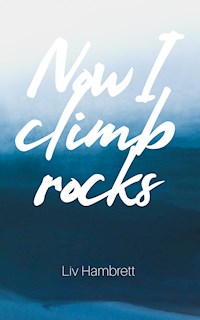
How much of who we are is where we come from? How do we give our children their cultural inheritance when we are so far removed from it? And is it possible to learn an entire language in a birth prep class? In this collection of essays, Liv Hambrett dives into her own experiences of pregnancy and the early years of motherhood as they played out in a country and language not her own. Poignant, funny and personal, Now I Climb Rocks explores how raising children in another country can make us question our very ideas of belonging and becoming.
Sie lesen das E-Book in den Legimi-Apps auf:
Seitenzahl: 184
Veröffentlichungsjahr: 2020
Das E-Book (TTS) können Sie hören im Abo „Legimi Premium” in Legimi-Apps auf:
Ähnliche















Liv Hambrett was born in Sydney and grew up in its beautiful Hills District. She moved to Germany in 2010, planning to stay for a year. After stints in North-Rhine Westphalia’s Münster and Bavaria’s Weiden in der Oberpfalz, she now – happily – lives in Schleswig-Holstein, in Germany’s wonderful north, with her very north German husband and their two children.
Now I climb rocksCopyright © 2020 Olivia Hambrett
Other Books:What I Know About GermansHeimat: Notes from an Australian in Germany
To my children, raising me as I raise them.
Foreword: Ink in the Water
A lot changes when you have a baby and much, really, stays the same. Time begins to morph, becomes something wickedly untameable. One’s body becomes a site upon which something extraordinary took place – and yet, to look at you, nobody knows – and it must now find its way back to the ordinary.
One’s appreciation for silence deepens. Things that once seemed so big, so important, they shrink, gather dust, no longer frighten. And yet, the world in which you now carry an additional human, is still the same world through which you walked alone. The shift is so seismic you almost don’t feel it, like when a noise is so loud and so quick, you wonder if you heard anything at all until you look around and realise everything is ever so slightly left of centre. Still there, still familiar, just not quite as it was. The very loud noise was a door closing; the life you had before your child is one you will never know again. You must now move forward as best you can in a world you have deliberately tilted on its axis, aware that you have created the very thing that’s loss would destroy you.
Writing with children is something done in dribs and drabs. Easier with a newborn: like koalas, they seem to sleep for most of the day. More difficult as they grow and disrupt attempts at schedules with teeth and sore tummies and new tricks that must be practiced at 3 o’clock in the morning. More difficult still when they become little people with ideas and plans of their own, and you adjust to being not only their means to achieve these ends but their most sacred source of comfort when things don’t quite work out. I found no way around the typical oxymoron - the more my children grew, dragging me along with them, the more I had to write about, but the less time I had within which to do it. Instead, I did what mothers have always done – I grabbed pockets of time and pressed motherhood onto paper while they napped or played quietly or watched TV. I found I was drawn more and more to my own childhood, long gone, as they crawled into theirs, stood up, and took off running; my childhood and who I was as a result of where I had grown up, and how I could pass this on to my children who would grow up on the other side of the world. Whereas I had once written to unpick a people and a culture I had found myself in the midst of, not particularly deliberately, now I wrote to understand my role as both a mother and a cultural inheritance.
As I settled into days with a newborn, ein Deutsches Kind (a German child) according to the foreigner’s office, I found myself constantly, more than ever before, negotiating my foreignness. I was, although I was too tired to think about it at the time, learning two things on the job; how to be a mother, and how to be an immigrant. A good immigrant. One who worked within the system and tried with the language and didn’t stick out. It helped that I was white, that my mother tongue was one Germans learnt for years at school. My child, my deliberate choice to tilt my world on its axis, was also a declaration to a country I had only just resolved to happily call home; I’m staying. She was an anchor. Before, I was the Australian. Now I was the Australian mum. When I got it wrong, I got it wrong on two levels, as a first-time mother and as a woman parenting outside of her own culture. My German had to improve, and quickly, to handle the paediatrician appointments and Rückbildungsgymnastiks Kurs (post-partum sports designed to strengthen the pelvic floor) and baby swim classes and Krabbelgruppe (baby playgroup) where I was gently chastised for sitting my baby up and not letting the baby lead the way. I fed my daughter different first foods and balked at the German staples of parsnip and mushed carrots. My mother-in-law gave me a jar of pureed meat – Fleisch – and several jars of KarottenPur which my child steadfastly refused to eat (something I am sure my mother-in-law suspects me of influencing). Time after time, we had the great barefoot debate, as she would go clucking after socks to protect my baby from instant, cold-footed death. There was a bit of handwringing about how her German would suffer due to her early exposure to so much English.
Through it all, the linguistic misunderstandings, the culture clashes, the moments my Australianness ran headfirst into the Germanness I lived in, I was repeatedly referred to as entspannt, or what us Aussies might call easy-going. Was I relaxed because I am Australian, or because of simply who I am?
But am I not who I am, because of where I come from? Can the two be divorced? I’m not so sure. They bleed into one another.
You cannot remove ink from water.
Just shy of two years after my daughter’s birth, in the very same room overlooking the fjord, on a warm day at the end of an unseasonably warm May, my son arrived. After a bit of a push from a homeopathic induction cocktail – the Germans prefer trying natural remedies first – followed by acupuncture and finally the real induction drugs, he came quickly, too quickly. He shot out, tiny and blue, the cord having got stuck around his neck. His eyes, like his sister’s, were wide open, taking it all in. I was a Mum, again, to another Deutsches Kind.
Another anchor dropped in the flat, brackish Baltic. Another heir to my language, my country, my ink.
He brought with him a calmness; I knew what to do as a mother, and I was more seasoned in my foreignness. I had begun the process of making peace with living on the other side of the world and raising my children so far from all that was familiar. I had begun writing more and more about what that entailed and in doing so, had come to learn that while the outside is a place of uncertainty yes, it is also one of strange freedom. As my daughter began chatting away and my son became rotund and bouncy, my time evaporated even more – but the field within which I wanted to write became only more fertile.
There were a handful of hours a week during which my daughter was at a playgroup and my son would nap, and I pulled motherhood and culture and belonging under the microscope and wrote. Often, I would meet, within the first few sentences, a familiar melancholy. A lovely, quiet sadness at distance and absence and difference that I learnt not to see as a bad thing, but as something that was now a robust fibre, glittering gold in the tapestry.
With my second-born, I stopped assuming points of difference were a result of my being wrong, and instead chalked it up to a difference in upbringing, a difference between what I think is normal and what the Germans do. My mother-in-law’s relentless handwringing and worrying I knew, this time, was not because I was doing anything wildly different or stupid; it was merely her default setting of German Angst, dialled up as a result of her own upbringing by an emotionally distant mother, who herself was born as Hitler passed the Nuremberg Laws, and sent away as the bombs fell. The Germans telling me how to do something was not necessarily because what they were doing was right, but because Germans tend to think they are always right. Australians play the ‘aw I dunno, I might be right, but I don’t want to toot my own horn’ card as a matter of course; the Germans don’t have that card in their deck. It took me a long time to learn that very simple lesson – neither of us were necessarily right, we just came at things very differently. And that was okay.
As the Germans became clearer, and my own position within their country with it, the inevitable happened: my own culture came into sharper relief. Culture can be this shimmering thing, liquid, impossible to grab and hold, particularly by us people of the ‘new world’. We’re the small kids on the playground, with lots of bluster and self-esteem issues. But I saw it – at least, I saw it as it pertains to me – and I felt it, my Australianness, as it left me and entered my children. I began to see, as my children developed their personalities and learnt to speak both languages, the little ways in which Germans became Germans, and Australians became Australians. The myriad ways in which we become, draw out what we were born carrying, learn and take on what we weren’t. Culture is imbued, breathed into the next generations and when you raise your children in your own culture, you unwittingly, unthinkingly, often accidentally pass it on. But as a parent raising a child outside of your own culture, you can only pass it on through a concerted effort. You must do it emphatically, perhaps more so, because you are its only source.
But running alongside my kids as they took off in this world, exploring and inhabiting, I began to see that my children were giving as much to me as I was to them. Erik Erikson was right about babies raising parents, and I felt this particularly acutely as an immigrant parent. While later, my daughter would start providing German words I was missing or correct me on the pronunciation of her friends’ names, which all seemed to include the dreaded ‘schwa’ sound at the end – Hanne, Jette, Merle, Jonte – as babies and toddlers, the children dragged me out of my shell because someone had to take them to the Spielplatz (playground) and make stilted conversation with the other parents in the cold afternoon air. Someone had to take them to the baby music classes and baby dance classes and baby swimming classes, to while away the rainy, cold days. Someone had to buy them their Rosienenbrötchen at the bakery (a raisin bun, the standard snack for German children) and curate a wardrobe of softshell and fleece and a hat for every possible weather occasion. They showed me a country that belongs to them through birth and blood, a country that belongs to me through circumstance and choice. Blood and birth is a different relationship to circumstance and choice. Their love for their childhood land is different to my love for my adulthood land. My children force me to choose what I want to give them: they force me to expand my acceptance and understanding of this foreign life because they take for granted my roots in this soil are as deep as theirs. They do not fully understand that my roots have not always grown here, that this soil is at times uncomfortable and mostly unknown.
My country once only resided in me, as I went about my daily life in a colder, rainier corner of the world. But it is now carried in my children. Whereas once my days were driven by my own curiosity about the world, now they are driving with me, pointing things out, asking questions, trying to make sense of how we all fit. I wrote to try and get a handle on raising my children – and being raised by them – in a country I have come to know intimately but do not come from. To understand culture and providing a cultural inheritance, a baton I must push into my children’s hands as firmly as I can. But I found something rather unexpected as I peeled back the layers and peered at what pulsed beneath: very few of my experiences were limited to the consequences of my choice to live in another country. I thought my foreignness was the ink in the water, but that wasn’t quite right. On this period of my thirties, it wasn’t the linguistic quagmire, the different passport, the foreignness – or, better, it wasn’t only these things that had the greatest impact. Motherhood was as much a foreign land and language as the literal foreign land and language I inhabited.
For me, the two experiences – migration and motherhood – produced very similar symptoms, provoked very similar reactions, awoke very similar beasts.
So that is what these essays are about. We are all water and we all have ink. It spills and seeps and we are forever changed, however and wherever we move.
The Right Time
It was late November. The weather had cooled to its usual early-winter briskness and the days were short, sharp and dark. We were a month from winter solstice, the shortest day of the year, a lethargic blink of begrudging light not worth getting out of bed for. In Weiden’s tiny Altstadt their Christmas market had just popped up. It was small and quaint, like the town’s Altstadt itself, and had been an annual town staple since 1600. The stalls clustered mainly around the little old Rathaus, a pointy-roofed, avocado-green, vine-covered storybook building that was built between 1539 and 1545, and the town felt more alive than it did any other time of year. This wasn’t particularly difficult - nothing much ever happened in Weiden in der Oberpfalz.
In an apartment very close to the centre of town, opposite a big church and land-lorded over by a man whose meaty, dense Oberpfälzisch dialect we could never understand, we were at a somewhat uncertain point in our young lives. We were bound to Weiden, a place we simply could not get on with, by Julian’s job. I could only find a few crumbs of work, enough to get me out of the house once a week and pay for the groceries once a month. We had, in fact, already failed in this town: the previous year, a few months after moving to Weiden from Münster in Germany’s west, I had flown back home to Australia, alone, to try and figure out if this country – and the relationship keeping me in it – was what I wanted. It was and I went back, but not to Weiden. Julian was sent to do a six-month placement in Kiel, his Heimat, and so I joined him there, in an attic apartment on the same stony street his Oma had raised her girls on. It was the third state I had lived in in Germany, hopping from west to south east to far north, and I knew it was there, if anywhere, I belonged in this country. The sea and its huge swooping gulls, the brisk northerners with their dry humour and steadfast loyalty. No mountains, no gingerbread houses, just gloriously flat, blue coastline and thatched red brick. I found work, I made friends and life unfurled once more. When we left Kiel to return to Weiden for the foreseeable future, Julian applied to return north as soon as possible. While our application was being considered, we could only wait. Even if we were successful, even if there was a job going back up north, things in German bureaucracy move glacially. There was no telling at that point how long we would be stuck down south. Begrudgingly, but boosted by our northern stint, in our apartment opposite the big Catholic church, we waited.
Days were slow and sleepy. I baked a lot, something I had never been particularly good at but learnt to love. It felt productive, as if I had something to show for spending so much time at home, alone, waiting for Julian to come back from work, waiting to hear back from language schools I had sent my CV to, waiting to hear whether we would be relocated, waiting to hear if anyone wanted to publish my writing. I went on walks around the town, searching for and occasionally finding little pockets of cobbled-street beauty that I tucked into my own narrative of Antipodean on a grand European adventure even though the adventure felt terribly ungrand and slightly off-course. I watched a lot of television illegally, homing in on a particular sitcom featuring a woman floundering around in her late twenties, and I wrote a lot. With Julian working shifts, I spent a lot of time on my own, often at my desk in the apartment’s second bedroom, staring out the window at the huge church whose bells tolled faithfully every fifteen minutes. In time, my thoughts wandered to and stayed very much preoccupied both by what I wanted from this time in my life and from my approaching thirties. Perhaps there was an element of Torschlusspanik (the sensation of panic one encounters as a door begins to close on an era within which you haven’t achieved what you wanted, commonly experienced at turn-of-the-decade birthdays) associated with an encroaching thirtieth, or perhaps it was simply that one’s navel makes for excellent gazing when there’s not much else to do. My thirties had a vague shape that was yet to begin taking form: the glamorous life of a famous author had not yet beckoned, although I nurtured hope I would be discovered in my little linoleum-floored office where I churned out reams of blog posts, content-mill travel articles and never-to-be-read fiction. I wanted children, generally speaking, and I wanted them, generally speaking, sooner rather than later, younger rather than older.
I had never thought children belonged to my twenties per se, but they seemed to be a part of my imagined thirties, presumably beamed there at some point to complete the picture of me, glossy and professional, accomplished and assured, flanked by miniature versions of myself. But as the sleepy days in Weiden passed by and my homemade bread got better and no news came of a possible transferral north, something began to happen: the chubby little forms hovering on the horizon began to sharpen.
At my desk, in between the unreadable fiction and the blog posts, I started crunching the numbers of my life and its temporal budgets and, as we settled back into Bavarian life, I decided I wanted to get started on children soon. Immediately, really. Nightmare scenarios of being stuck in Weiden for years, loomed large. What if we kept putting off kids until ‘things were better’ unbeknownst to us that things weren’t going to get better – that is, we weren’t going to be transferred – for years?
The three fates up there with their thread might keep dolling out the Weiden yarn for a decade before giving it a snip – how were we, mere mortals, to know what German bureaucracy had in store for us? In a decade I would be heading towards forty, presumably unemployable after a decade of unemployment in the void of Weiden, and if we didn’t get started on children, didn’t get over the ‘let’s wait and see’ hump, I’d be childless too. Panic began to flutter in that way it does when you think you are able to see into the future. This wasn’t how it was supposed to look. The panic fluttered alongside other things, key in creating the urge to move, to decide. I was lonely - days, they were so empty with no work in sight to fill them.
Friends and family, they were so far away. Impatience, loneliness, and the slow, empty days of walking in circles began to swirl with the panic and together the concoction bubbled and broiled. From the cauldron rose an impetus I had hitherto never had in that quiet town.
Being female, however, is a noisy endeavour. We get our period – which must be endured quietly, cleanly and demurely shamefully – and spend the next fifteen years being told loudly how ruinous pregnancy would be and how we must do everything in our power – and it was always in our power, not in the penis’s – to avoid it. Finish school, get qualified, get a job, do really, really well at that job and climb, climb, climb. Decide, at some point, if you want children and justify that decision, whatever it may be, to all and sundry as you climb, climb, climb. If you do want them, then don’t put it off for too long because your eggs will shrivel, and the winds of time will slam the fertile window closed and all those years you spent terrified of getting pregnant will seem so very redundant. Obviously don’t have kids young because you’ll waste your twenties and those years are for finding yourself, so you’re a better mother when the time comes – one can only know oneself as a mother, if one has discovered oneself appropriately within the decade assigned for self-discovery. Don’t, though, have them when you’re too much older, because you’ll have wasted your most fertile and energetic years and you’ll be inflexible and exhausted. Actually, don’t have children at all, because the world is burning, and over-population will be the end of everything. If you do, though, babies are expensive, make sure you have plenty in savings; babies don’t need that much, stop mindlessly consuming. Plan carefully, you can’t plan for it.




