


11,99 €
Mehr erfahren.
- Herausgeber: Mercier Press
- Kategorie: Sachliteratur, Reportagen, Biografien
- Sprache: Englisch
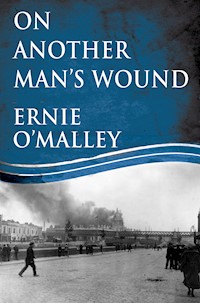
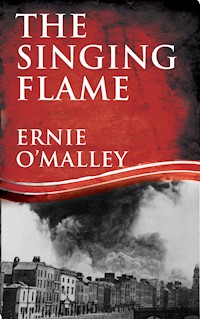
'On Another Man's Wound', its title taken from an old Ulster proverb, 'It's easy to sleep on another man's wound', was first published in 1936 and has become the classic account of the years 1916-21 in Ireland. It captures the essence of Ireland at the time, the way people lived, their attitudes, their beliefs, the songs they sang, the legends they knew. O'Malley pictures the Irish landscape magnificently, and his cameo sketches of the great personalities of the Rising and the war that followed bring them into instant focus. The sequel 'The Singing Flame', which details O'Malley's experiences of the Irish Civil War, and 'Raids and Rallies', covering his comrade's experiences during the War of Independence, are also available from Mercier Press.
Das E-Book können Sie in Legimi-Apps oder einer beliebigen App lesen, die das folgende Format unterstützen:
Veröffentlichungsjahr: 2013
Ähnliche
















MERCIER PRESS
3B Oak House, Bessboro Rd
Blackrock, Cork, Ireland.
www.mercierpress.ie
http://twitter.com/IrishPublisher
http://www.facebook.com/mercier.press
First published 1936
Revised edition 2002
This edition 2013
© Cormac K. H. O’Malley, 2013
ISBN: 978 1 78117 149 3
Epub ISBN: 978 1 78117 173 8
Mobi ISBN: 978 1 78117 174 5
This eBook is copyright material and must not be copied, reproduced, transferred, distributed, leased, licensed or publicly performed or used in any way except as specifically permitted in writing by the publishers, as allowed under the terms and conditions under which it was purchased or as strictly permitted by applicable copyright law. Any unauthorised distribution or use of this text may be a direct infringement of the author’s and publisher’s rights and those responsible may be liable in law accordingly.
CONTENTS
preface
Abbreviations
introduction
Flamboyant
1. 1897-1906
2. 1906-1915
3. 1916
4. 1916–1917
5. 1917
GOTHIC
6. MARCH–AUGUST 1918
7. AUGUST 1918–FEBRUARY 1919
8. MARCH–MAY 1919
9. MAY 1919–APRIL 1920
10. 1920-COUNTRY, DUBLIN
11. MAY–JULY 1920
12. 1920 POLITICAL, MILITARY
13. JULY–AUGUST 1920
14. AUGUST–OCTOBER 1920
ROMANESQUE
15. OCTOBER–NOVEMBER 1920
16. DECEMBER 1920 - KILKENNY
17. DECEMBER 1920 - DUBLIN CASTLE
18. JANUARY–FEBRUARY 1921
19. FEBRUARY–MARCH 1921
20. APRIL 1921
21. MAY 1921
22. MAY–JULY 1921
Irish words and Phrases
cHRONOLOGY
Preface
MY FATHER ERNIE O’Malley (1887–1957) was a medical student in Dublin when the Easter Rising of 1916 broke out. The country and O’Malley were initially indifferent, but as he watched the progress of the uprising, O’Malley’s feelings changed. He soon joined the Irish Volunteers (later to become the Irish Republican Army) and organised or reorganised companies, battalions, brigades and flying columns around Ireland, reporting directly to Michael Collins, Director of Organisation, and to Richard Mulcahy, the Assistant Chief of Staff. His organising ability and outstanding personal courage led to his appointment as officer commanding the Second Southern Division, the second largest division of the IRA.
At the end of the war against the British, O’Malley was twenty-four. In appearance he was remembered as a long-striding young man, tall and thin, with lean features and a steady unflinching gaze, very noticeable red hair and a pale complexion.
The Treaty with Britain was signed on 6 December 1921. Diehard Republicans like O’Malley would not accept it. It was his own Second Southern which first broke away from the authority of both GHQ and Dáil Éireann. In April 1922 came the occupation of the Four Courts as IRA headquarters in Dublin and in June the start of the Civil War, a fight even more savage than that against the British. O’Malley became the IRA Assistant Chief of Staff and also the officer commanding Ulster and Leinster. In November 1922, riddled with bullets in a raid, he was captured and imprisoned until July 1924, the last Republican leader to be released.
***
This current volume is the first Mercier Press edition of On Another Man’s Wound and in my revision I have for the first time been able to examine my father’s original notebooks, manuscripts and typescripts, and accordingly I have made some minor adjustments to the text and added some explanations in my footnotes. I must thank Dr Spurgeon Thompson for his assistance in reviewing this edition with me.
The story of how the 2002 revised edition came about is a tale worth telling. The background lies in the original writings and publications of my father. He was released from the Curragh, an Irish Free State military prison camp, in July 1924. During his travels in New York, New Mexico, Mexico and Peru in the years 1928–1934, he wrote an account of his War of Independence and Civil War, an initial draft of thirty-nine chapters. He returned to Ireland in 1935 and the following year Rich & Cowan of London published the first twenty-two chapters under the title On Another Man’s Wound. The remaining chapters, covering the Truce, Treaty and Civil War, lay undiscovered until 1972 – these were published by Anvil Books as The Singing Flame in 1978.
An American edition of On Another Man’s Wound was published by Houghton Mifflin of Boston in 1937, but for marketing reasons the title was changed to Armywithout Banners: Adventures of an Irish Volunteer. It received impressive reviews. The New York Times called it ‘a stirring and beautiful account of a deeply felt experience’; the New York Herald Tribune hailed it as ‘a tale of heroic adventure told without rancour or rhetoric’. The American edition included seven pages which had been deleted by Rich & Cowan as they recounted the torture of my father in Dublin Castle, when Auxiliary officers had used their persuasive tactics, including fists, a red-hot poker and a revolver with blanks, to try to make him disclose information.
The next chapter in the story occurred when Mary O’Donnell, the Irish dress designer, gave me an unforgettable present. She had asked Hanna’s Bookshop in Dublin to locate a copy of On Another Man’s Wound. It had been republished by Anvil Books in 1979, but was temporarily out of print. Shortly afterwards an assistant from Hanna’s called her to ask if a copy of the American edition, Army without Banners, would do. She bought it and discovered inside an inscription written by my father – ‘With love to my Cormac’. She immediately sent me a telegram to New York.
What a thrill it was for me to receive this inscribed book, which had probably been unintentionally included in a book auction by my father. The fascinating thing about this particular copy was not the dedication, but the annotations made throughout. Father had used the American edition because he wanted to make an important addition to the section that had been deleted by Rich & Cowan: the names of the Auxiliary officers involved in his 1920 Dublin Castle interrogation. He also corrected certain facts, added names and expanded descriptions. One of the additions was a comment about Michael Collins: ‘We who had given up drink had always a soft spot for Michael’s use of drink.’ Another note disclosed that in January 1921 a Dublin Castle official had tried to track down his older brother, Lt Frank Malley, then serving in the King’s African Rifles in Nyasaland, East Africa; the official thought that Frank ‘could tell us something about Ernest’; in fact, unbeknownst to the writer of that letter, the ‘notorious rebel and officer of the IRA, who has been concerned in many attacks’ was actually incarcerated in Dublin Castle at that very moment under the alias Bernard Stewart.
All his corrections and additions have been included in this new edition of On Another Man’s Wound. Though my father expressly stated in his foreword that he was not interested in dates, I have included a brief chronology for those not familiar with the period.
I should also note that the Nannie to whom my father refers, was Mary Anne Jordan, who lived with his parents, Luke and Marion. His family name was Malley, not O’Malley. The Malley family lived on Ellison Street, the main street of Castlebar, County Mayo. Their four older children were Francis (Frank), Ernest (Ernie), Marion (Sweetie) and Albert (Bertie). The next four children were Cecil, Charlie, Paddy and Kevin; these four followed Ernie’s inclinations and joined Na Fianna, and later became involved in IRA activities to different degrees.
***
I want to offer particular thanks to five people who over the years have helped to preserve the records of Father’s life, each in their different way: Frances Mary Blake in the early 1970s; Padraic O’Farrell and his short The Ernie O’Malley Story (1983); Dan Nolan and Rena Dardis of Anvil Books, who kept O’Malley’s name alive with the first publication of The Singing Flame and the republication of On Another Man’s Wound; and Dr Richard English for his Ernie O’Malley: IRA Intellectual (OUP 1998). Without them, and particularly Richard, who spent the best part of ten years wrestling with the O’Malley enigma, we would not now have as clear a picture of my father, who was, as he said himself, ‘a sheltered individual drawn from the secure seclusion of Irish life to the responsibility of action’.
Cormac K. H. O’Malley
New York, July 2012
Abbreviations
CS Chief of Staff
DI Director of Intelligence, IRA
GPO General Post Office
IRA Irish Republican Army
IRB Irish Republican Brotherhood
NCO Noncommissioned Officer
OTC Officers’ Training Corps
RIC Royal Irish Constabulary
An outline of reasons for the use of certain capital letters may be useful. Please note that when East Tipperary, for instance, is capitalised, this refers to the East Tipperary Brigade (IRA) and not to the geographical location, which would be given as east Tipperary. The same applies for the other brigades and areas.
When specified, the higher IRA military ranks and formations are given capital letters, such as the Brigadier, the Divisional Adjutant/Quartermaster and the First Southern Division, but battalions, companies, sections and garrisons, together with their officers, have not usually been capitalised.
A distinction has been made between Headquarters and headquarters, between Staff and staff. While headquarters refers to any localised site, Headquarters always means the GHQ centre of operations. Thus, whereas there is a garrison staff, or staff officers, meaning officers in general attached to those positions, the term Headquarters Staff, or Staff, is used only for the top-ranking members of GHQ.
Introduction
THIS BOOK IS an attempt to show the background of the struggle from 1916 to 1921 between an empire and an unarmed people. The Irish situation is complicated by reason of conquest beginning at the close of the twelfth century, and by successive reconquests never fully completed. The outcome of these successive attempts was the wearing down of a people who refused to surrender or submit, a withdrawal of their life apart from that of the conquerors and the gradual destruction of their civilisation. The tradition of nationality, which meant not only the urge of the people to possess the soil and its products, but the free development of spiritual, cultural and imaginative qualities of the race, had been maintained towards the end of our struggle not by the intellectuals but by the people, who were themselves the guardians of the remnants of culture.
To show the complicated situations and race memories, I have touched on childhood and boyhood as seen twenty or more years later, then necessarily vague, ill-defined and romantic. A certain amount of our background seems necessary to explain our disturbance by certain flaring of outside events.
My attitude towards the fight is that of a sheltered individual drawn from the secure seclusion of Irish life to the responsibility of action. It is essentially a narrative set against the background of the lives of the people. The tempo of the struggle was intermittent, life went on as usual in the middle of tragedy, and we were intimately related to this life of our people. The people’s effort can be seen only by knowing something of their lives and their relationship to our underground government and armed resistance. We who fought effected a small part of the total energy induced and our individual effort as personalities was subordinated to the impersonality of the movement, and not inspired by it.
The relationship of events is traced as the situation developed. I have endeavoured to explain action as I then saw it and, as far as was possible, to avoid all retrospective realisation of the implications of events. As the survey is seen through my eyes I had to show my own progression in development. Each of the three divisions of the book – Flamboyant, Gothic, Romanesque – deals with a certain phase of events and with my changing relation to them.
This is not a history. Dates I considered unimportant. Our people seized imaginatively on certain events, exalted them through their own folk quality of expression in song and story. Anonymous songs of the period, at the end of some chapters, express what the people thought, and amplify, in so far as they are concerned, the situations described. From time to time a summarisation of events is used to relate the general development of the situation to the particular.
E. O’M.
1931–34
New Mexico, Mexico, Peru
Flamboyant
1.1897–1906
Mayo
OUR NURSE, NANNIE, told my eldest brother and me stories and legends. Her stories began: ‘Once upon a time and a very good time it was,’ and ended with, ‘They put on the kettle and made tay, and if they weren’t happy that you may.’ Tales of the king of Ireland’s son, his strange adventures and exploits; fairy tales about the ‘good people’; the story of the heavy-handed, mighty Fionn and his giant strength; the epic of Cúchulainn, the boy hero, the Hound of Ulster – Cúchulainn of the grey sword that broke every gap; of Ferdia of Connacht whose loss was our loss, for was he not from Erris in our County Mayo. That was the best of all her stories.
She sang us songs and ballads of the people and of the land:
’Tis often I sat on my true love’s knee
And many a fond story he told me.
He told me things that ne’er should be,
Go dtéigh tú, a mhúirnín slán.
I’ll sell my rock, I’ll sell my reel,
When flax is spun I’ll sell my wheel,
To buy my love a sword of steel,
Go dtéigh tú, a mhúirnín slán.
Oh the French are on the say,
Says the Shan Van Vocht,
The French are on the say,
Says the Shan Van Vocht.
Oh the French are in the bay
They’ll be here without delay
And the Orange will decay,
Says the Shan Van Vocht.
I know where I’m going
I know who’s going with me,
I know who I’ll love
But the dear knows who I’ll marry.
A Bansha Peeler went one night
On duty an’ patrollin’ O,
An’ met a goat upon the road
An’ took her for a stroller O.
With bay’net fixed he sallied forth,
An’ caught her by the wizzen O,
An’ then he swore a mighty oath,
‘I’ll send ye off to prison O’.
But this last, ‘The Peeler and the Goat’, in a quieter tone and when we were alone.
In low and often stilly tones she told and retold ghost stories that afterwards made us keep our heads under the blankets. In the demesne, which belonged to Lord Lucan, we looked for green-coated leprechauns under the trees, listened for the ting-ting of their silver hammers, and watched for the fairy dancing rings in the glades. Often on the path close to the chestnut trees we met old Lord Lucan on his tricycle. Although we felt inclined to laugh at his machine, which we thought of as a child’s toy, and his straight-backed, slow, crab-like approach, we answered his few remarks with serious faces. Nannie took our part against our parents, defended us and often accepted the blame for our small faults, which in a home atmosphere could grow to gigantic proportions.
Life at first seemed to be a mixture of admonitions, curly hair and velvet suits, probably due to a wave of little Lord Fauntleroys. Governesses replaced each other rapidly; we had not much sympathy with that anaemic form of spinsterhood. With the servants we spent many happy hours talking or listening; from them we confirmed or changed our ideas of people. By exchanging gossip with the girls in other houses they could view family life in unexpected and unwished for ways. They knew our visitors and guests well, especially if they had been a long time in the family. Then they could advise, quarrel, threaten to leave and often domineer; but, except Nannie, they were in a rank of servitude and looked upon as a third sex. We listened to the stories of the butter-woman, watched her unroll her ridged pats and bulky ovoids from a muslin wrap, and gathered near her when she drank her big mugs of tea.
We were not allowed to go with other children; few were ‘good enough’ for us. We could not accept the distinctions of our elders. We divided people into those who were courteous and those who were distinguished according to our views. Many with whom we were not supposed to mix passed our tests, others whom we met in the house or in the streets did not. Our chief admiration was for a boy who could use stilts and a tomboy who could walk on her hands. The most interesting of all our illicit acquaintances was a beggar woman, who was double-jointed, and the town crier, who gave extra dongs of his bell when he stopped to speak. With envy we watched boys and tomboy girls at horseplay, listened to their shouts; watched the men who cemented the outside of the house as they slithered with spades at delicious puddles.
The Royal Irish Constabulary had a barracks opposite us. They touched their caps to Father. We often climbed the steps and were shown spruce weapons: carbines clipped in arms racks, blue-black revolvers, the steel of bayonets, and heavy-padded helmets. The head constable would talk to us in a chesty voice, a sergeant with thick gold Vs brought us through the rooms. Once we saw police, no longer in bottle-green, stiff-collared tunics, but like ordinary people, wearing soft caps and cloth suits. They were going to the north on special duty to keep the peace at the Twelfth of July celebrations, when the Orangemen with song, bands, banners, and fists blooded from thudding their drums, remembered the victory of William of the Boyne. Mary Anne, our Nannie, did not like to see us talking to the police – they were peelers, she said.
Ours was a shoneen town, as I knew it. A shoneen, little John Bull, was anyone who aped the manners and fashions of the English as interpreted through the Anglicised Irish; who adapted his mentality, or lack of it, to theirs; who despised and, actively or passively, ignored the remnant of the older Gaelic civilisation of the people. Father and Mother never spoke of Ireland to us. If one minded one’s business there was time for little else. Nationality did not exist to disturb or worry normal life. We heard long discussions at table about names – Parnell, Redmond, Tim Healy – and the words Home Rule. There was a general parliamentary election which was of interest to us; every day we could look at the opposing parties, who were presented in the newspapers as men climbing long ladders. Englishmen thought of nothing but their bellies; that seemed generally agreed on. But when I was called Ó Máille, our name in Irish, I was insulted. That was not my name; only the poor used it. I would have none of it.
At the concerts in the Mall, given by a band from the garrison, most of the onlookers took off their hats when ‘God Save the King’ was played. We saw the militia stamping by on the way to a summer camp and heard the ring of their nailed boots. Aided by the delightful remarks of shawled neighbours – ‘Whisha, look at the boyo, Kateen, Glory be to God, will ye look at Tinker Durcan.’ – we picked out some of the town drunks noising past, clean-shaven, in khaki. The minister invited us to cinematograph shows in his house; all Protestants were respectable and rich. Priests came to us for dinner. They were hearty men who drank their whiskeys and sodas with Father or sat at the fire sipping at sweet-smelling punch; but why did they screw up their faces after a long drink if it was not pleasant? One of them always called the ‘pope’s nose’ on a bird ‘the ecclesiastical part’; that meant a laugh at table. At Westport, where we had driven to Mass from the sea, a temperance preacher asked us all to stand up to take the pledge against drink for a year. We were in the gallery. Father alone kept his seat, though Mother whispered, ‘Stand up, dear; don’t make a show of yourself.’ Later he lashed the cowards who, next day, would drink as usual.
The priest would read out the dues from the altar. He blew his nose like a cracked trumpet. I often tried it and I knew how it hurt. It would be fine to make a noise like that. He would pause for a long time after some names, or cough in a threatening way. He would repeat a name, as if by accident: ‘Patrick Joe Grimes, two shillings … Patrick Joe Grimes.’ Nannie said priests would stick you to the ground if you went against them, or put horns on you, God save the mark.
At Mass on Sundays, from the centre of the chapel we could look across the partition to the right and left, to the penny and tuppenny places where there were low stool seats or bare ground to kneel on. We sat on high-backed, varnished pews; country women knelt on bare knees. One man, at the Elevation, always hit his stomach three resounding smacks. I heard father say to a friend that he was ‘a regular craw-thumper’. At funerals I heard women wailing and saw them beating their long, wild-strewn hair as they climbed the hill in the foot-gatherings. People lifted their hats, blinds were drawn, shops would put up a shutter. It was a good thing, when the procession passed, to turn and walk three steps after the corpse. In the town a box of clay pipes and tobacco or snuff might be left outside the chapel door whilst the corpse was lying inside.
On market days we could sense the roughness of country people. Awkward men drinking pints of frothy porter, using wiry ash plants on each other in daylight, or being dragged and sometimes carried to the barracks by police. Bullocks beaten through the streets, the shrill complaining of pigs, a steady waft of speech and smells of cow-dung and fresh horse droppings. Shawled, barefooted women selling eggs and yellow, strong, salty butter in plaited osier baskets, salty dilisk in trays, or minding bonnovs with a súgán. A ballad singer with an old song or one of a recent happening, stressing his syllables, rushing a long line into a short singing space whilst the people gathered in a circle, following the words eagerly. They bought his broadsheets and hummed the notes as they walked around. Old women with pleated frills to their white caps, the more wealthy with black bonnets shaking from a spangle of flat beads; boys in corduroy trousers and bare feet; rosy girls in tight-laced boots, which some had put on at the entrance to the town. Through all, talk, laughter, hot-blooded sudden blows, a sense of the bare breath of Mayo, backed by rounded mountains and sea, frayed lake-edges and the straight reach of Nephin mountain.
Nannie could tell fortunes with tea-leaves: ‘In the space of three you’ll get a letter you won’t expect … there’s a red-haired man has a great wish for you.’ She looked at the sky last thing at night to find out the direction of the wind and the chances of rain. The sun-wise turn was important; we should pass the salt that way, or whatever was wanted at table. A Connachtman had leave to speak twice and to poke the fire, she said. Thunder was God’s voice in anger, lightning, earthquake or tidal wave punishments visited on the evil. We were afraid of the dark through stories of walking death, black dogs whose eyes were yellow fistfuls of fire, and the cóiste bodhar, the terrible death coach. A ringing noise in the ear meant a friend dead and shooting stars were souls released from purgatory.
The gentleness and kindness of the people were all around us as children, shielding and expanding, offset by steady supervision of parents, nuns, priests and teachers. One had to be courteous to understand or feel with the people; on the surface they were pleasant to each other, though I thought their deference to those who were wealthier and had more social standing to be put on. We would see their smouldering wild fierceness also. Nannie would speak of mountainy men and show them to us at a fair; somehow they were different. Whether she came from the hills I do not know, but ever since a mountainy man, or the name itself, heightens something in me.
At school, where soldiers’ sons from the garrison attended, we pronounced ‘a’ as ‘ah’ and not as ‘ae’, as they did. Somehow for us ‘ah’ represented the difference between the two nationalities. We were taught a little Irish, the Our Father, the Hail Mary and a few salutations. The few words of Irish in common use were vulgar: gob, pus; but endearing terms a ghrádh, a chuisle, a mhic, a stóir, and pulse of my heart were used naturally as well as the diminutive ‘een’: Noreen, calfeen. The speech of the country people and of some of the townsfolk was rude: tay, mate, afeard, decave, faut, twiced; Tudor words once respectable. Adjectival richness, Irish construction in English, use of Irish in an English sentence, the marked rhythm of voice, were fit only for the uneducated. We saw donkeys and jennets carrying creels of turf to sell from house to house and watched asses and carts loaded with bog-dale.
The history of our town became loosely threaded together in our minds: Dudley Costello of the early seventeenth century lingered on. As a rapparee he had fought the Planters from Mayo to Tyrone until his head rounded a spike on the gateway of Dublin Castle … Outside a hotel on the Mall was the tree from which Father Conroy had been hanged in 1798. He had taken a dispatch from a messenger riding hard to the redcoats, roused his parish to gather supplies for the French, but he had not fought … Sheriff Brown in that Year of the French had made many a boy and man dangle from the trees on the edge of the Mall … Stoball, a hill in the town said to be connected with an order ‘Stab all’ … French Hill, where the Frenchmen who had landed at Killala fought and died chasing the English who had bolted to Athlone on the Shannon … Fighting FitzGerald, whose house we often passed, had been hanged on a cart; the rope had broken. ‘The British Government can’t even buy a decent rope to hang me with,’ he had said. We watched the judge at the Assizes clothed in scarlet and ermine. He sat erect in his carriage, guarded by cavalry with drawn swords. The escort was a result of the land war; their white spotless bridles had a metal core in memory of the slashing pikes of the ’98 rebels.
We hurried home once to tell our tense rage. We had heard the story of Deirdre and the sons of Usnagh; we were angry against Conchubar, the king who had killed the three brothers and had broken his word.
On Clew Bay, where we went each summer, we learned to row punts and boats, to blister our hands sitting side by side tugging at the one long sweep with the fishermen. They carved small boats for us, models of schooners, frigates, ships, full-rigged boats in glass bottles. We learned to work a lugsail and to manage centre keels; we knew the names of sails and shipping terms, to the delight of our sailor-teachers. We sailed on the stout-nosed fishing smacks of the bay, where there are few traditions. Further out, beyond the bar, was rough sea, and the storytellers of Achill and Clare Island. Near the steep swarthy cliffs of Achill, men shot the seals that gluttoned on fish; fishing in a chopping sea we helped to pull in leaping lines and watched gleaming blue-green mackerel and scaly silvery herrings fighting death with curved bodies. We took lobsters from floating lobster pots and watched shells being gathered in oysterbeds. Clare Island was an adventure even on what would be called a calm day; the open sea lashed the cliffs that faced towards Dooega Head and the rising slate blue of Croaghaun of Achill. It lashed the people who lived there. To us the island meant stories of Gráinne Ní Mháille, who had refused a title from Queen Elizabeth – ‘Were they not both princesses?’ – a strong-minded Connacht woman who worried her husbands, flaunted Elizabeth’s governors and, as a pirate, robbed Spanish and English ships. A cable led from her bedroom in one of her castles to a galley below; she did not leave much to chance. In the minds of the people her name, Gráinne Uaile, had become a symbol for Ireland.
We lived the stories we heard of pirate ships and wrecks from the Great Armada. We sailed off in a rowboat on daring discoveries; there were islands near where we lived. Our sister Sweetie would be Gráinne Uaile, but the orders would come from Frankie and me. She would change suddenly to be the mother of an English sea captain. ‘Let’s play …’ ‘Let me be …’ ‘No, me …’ ‘Me …’ It was hard to fight against the English because none of us wanted to be the Sassenach; it was an insult which could be wiped out only by having the shouting Irish, who always won in the person of Frankie, become the English later on.
One day we stole away in a small boat; the lugsail was folded around the mast, which was under the seats. When out of sight of the house we all roared orders at the same time, the boat dipped and wallowed with excitement. ‘There she is …’ ‘Bang … BANG.’ ‘More powder …’ ‘SURRENDER …’ We saw a high galley poop and the gunners with lighted cord matches whilst we bore down to leeward straight on to ram in our two-banked galley. Our wooden spears had cords attached so that we could throw them into the water and haul them in again; they served as spears, guns, cannons and arrows. Sweetie was a nurse who bound up heads with our hankies. The curly-headed Bertie and she had to become our prisoners; we tied them with ropes; they were now the crew of the Spanish ship.
We learned to love the sea, to be unafraid of it; stormy days found us out on a point watching the curve of breakers or shouting on a cliff ledge above the spray and crash. Behind the bay was the pointed reek, Croagh Patrick, with its yearly pilgrimage climbing the rocky slopes to hear Mass where Patrick had once fasted. Stout-bellied hookers with dun and sienna sails carried turf to the mainland; we listened to the Achill men talking their wild, strong-sounding Gaelic, which we had heard in town at markets and in the courthouse during trials.
The islanders had nearly all been abroad as sailors; they talked around the turf fires about their hardships and adventures in foreign parts, but from the women we heard the stories of the islands. After returning from a fair the men imitated the gestures, speech and peculiarities of the mainland people; with twisting sarcasm they mimicked people we knew. They were quickly enraged if their lack of energy in off seasons was criticised. At a wake I heard the caoin, a heart-breaking cry of women in grief, caught up by it so that it seemed to flow through them from another source; the wail became unified, impersonal as a sea-moan, disembodied as grief itself. We were shown the Dane’s Hole, which had passages leading to the sea. In one room were old swords and an Irish flag; but we did not go down through fear. The people had confused the Danish invaders with an earlier race, the Tuatha Dé Danann.
Now we knew the country on either side of the bay, from grey hungry Connemara to Mulranny. The bare, once ice-covered drumlins gave the land a gloomy look when the sky was clouded or when rain-winds tufted black clouds. But sun made the cold land and the dark green glint and become lush; it shone on the crowded islands, lifting them out of the water, making the cliffs recede. A harsh land and lonely, hard to make a living from its grudging soil, cruel-hard they said it was, as hard as the hob of hell, and desolate in the winter when storms could cut them off for three weeks from the mainland. Misty, indefinite, the land changed its surface in the mind from gaiety to brooding melancholy; but it gripped hard when one knew it or had lived there. In rain or sun we loved this country; its haunting impersonal bareness, its austerity, aloofness, small lakes, the disproportionate bulking of the mountains, smells of shrivelled seaweed rotting in grey dirt-spume, brine, storm-wood, tarred rope and riggings, sea-wrack, and mud after an ebb tide. The glass green-blue of a rough sea, clear depths under a cloudless sky, blurred distorted crabs and the flowing of fronds and seaweeds, slow apricot sunsets, steel-grey, white and light-blue clouds furled up by wind, splotched by rain until they mixed as on a palette, white-green undersides of waves dashed back from pitted, torn rocks, phosphorescence dripping from oars and bow on a dark night, the bullet precision of caillech dubh diving clean for fish. Changing swirls of moaning wind on capey headlands, rain splashing off thatched roofs or pelting against windows, waves smashing in rough sea as the bow dipped in furrows when one lay stretched out forward, the raucous harshness of herring gulls, islanders shouting into the breeze against the clapping of sails. Our life was ringed by the bay; it was a huge world to us.
An old woman told my fortune one day as I dried myself at her fire after I had fallen out of a punt. She looked at my feet as well as my hands and kept her hand on my head as she told me of fighting and trouble; but I do not remember the end of her tale.
2.1906–1915
Dublin
AT A STATION in the midlands as the family moved to Dublin we heard loud moaning from women who were saying goodbye to their sons and daughters who were off for America.1 The moans became a caoin, women threw their shawls back from their heads and beat their faces as they wailed: ‘A Mhuire, Mhuire … O Katey, girleen … O Michael boy, my son.’
Our accent was mimicked, and back-to-back my brother Frank and I fought a ring of tormentors; in the end we were left alone, as we were both lithe and hardy. We told our school chums stories of Fionn and Cúchulainn, but they laughed at us. They had read the latest Buff Bill, could talk of the red varmints of Indians, Colt-emptying frontier fighters, of split-up-the-back Eton suits and the rags of that other public-school life of the Magnet and Gem. Only to ourselves now did we talk about the older stories. We told lies and deceived our teachers whenever it suited us. We felt ourselves conspirators against what we considered the undue authority of school and home.
I made my first Holy Communion. It would be the happiest day of my life I was told, and I would always look back at it proudly; but I was in the dumps. I looked at myself in the glass. I could not see the light of grace on my forehead; perhaps I had made a bad communion. I worried over the confession in my mind …
Yearly a Brother, whom we called the recruiting sergeant, came to enquire about our vocations for the Brothers or the priesthood. We were interviewed singly and prompted about our leanings towards religious life.
I learned of comparative religion by swopping stories with a Presbyterian boy. Some of my tales began: ‘There was once a minister Dick …’ His: ‘There was a fat old priest who …’ My suppressed indignation lingered on, but helped me to make an adjustment in tolerance.
King Edward came to Dublin. I was sent with Bertie, my younger brother, and my sister to see the procession pass down town from the Phoenix Park. We stood in the front rank of the waiting people. I said we would keep our hats on. Scarlet-coated Life Guards with shining helmets cantered past; but we alone of the crowd looked at the carriage with hats on. To show my intense conviction I spelt King with a small letter. I did not like the English. Early, Nannie, with a grimace of disgust, told us the story of the giant who said, ‘Fee, fah, fum, I smell the blood of an Englishman’; evidently they smelt badly. We met few English people; they seemed very grand in manner, important and serious, with loud voices.
Joe Devlin, Member of Parliament for Belfast, came to see us. Our teacher had told us about the mighty man before he visited the classroom with the head. We stood up and cheered when he entered. He asked for a half-holiday for the school, which was granted; truly, he was a great man. He spoke about Home Rule and Irish freedom.
We learned to mix with ‘gutties’ in the lower schools, to sit beside patched home dignity and thrift or carelessness. We laughed at the Jesuit school, Belvedere College, and invented names for the initials ‘BC’ on their caps; in examination results we beat them. We fought boys from Belvedere and Protestants from Mountjoy School or MS; they were Swaddlers and Proddy-dogs; we were papishes, RCs pronounced quickly, and O’Connell’s Sausages from the ‘OCS’ on our caps; their ‘MS’ meant Monkey Slops.2 At home there were still taboos as to whom we should mix with; but our selection was based on liking. At school there was no stress on relative wealth; brains were shared equally by rich and poor, but many could not reach the higher grades because their parents needed their earnings.
Now there came a change. Here was more of a middle-class concentration; its prejudices and distinctions gripped us. The budding attractions of ties, long trousers, hair-oil and girls were combined with Ruskin, who seemed as necessary for certain years as pimples. Gentility flourished easily in Ireland; very little wealth nourished it. In the towns tuppence-ha’penny looked down on tuppence, and throughout the country the grades in social difference were as numerous as the layers of an onion.
My sister was taught deportment by nuns in boarding schools, how to enter and leave a carriage, the flouncing courtesy, recitations for company, and art as applied with needles in a ladylike way to unoffending backgrounds. By the irony of Irish life she was now in St Ita’s, Pádraig Pearse’s first school, conducted by Miss Gavan-Duffy, a friend of mother’s. Pearse, a separatist, controlled a boy’s school, St Enda’s, one of the two Catholic schools not conducted by religious. I had the accepted Catholic views of normality, in religion, morals and behaviour; atheists were perverse, they sinned against the light. There was a pitying commiseration for them and for people of other religions.
There were strikes in Dublin, the great lock-out of the Larkin strike.3 Workers who refused to resign from the Irish Transport and General Workers’ Union were thrown out by the Dublin Employers’ Federation. Twenty thousand men starved slowly for six months whilst they fought the masters, the Irish Parliamentary Party and separatist opinion. Sheehy-Skeffington, Countess Markievicz, George Russell, Jack White and some intellectuals were with the workers, but the fight ended in defeat. The lock-out showed the terrible conditions under which Dublin workers had to live, and for a while the slums stank.
I heard Jim Larkin speak, a fiery orator, well loved by his men, and the calmer James Connolly, who did not provoke such enthusiasm as Larkin, but whose every word told. I was in O’Connell Street one evening when Larkin, to a promise, appeared on the balcony of the hotel, wearing a beard as a disguise. He spoke amidst cheers, and hoots for the employers. Police swept down from many quarters, hemmed in the crowd and used their heavy batons on anyone who came in their way. I saw women knocked down and kicked. I scurried up a side street; at the other end the police struck people as they lay injured on the ground, struck them again and again. I could hear the crunch as the heavy sticks struck unprotected skulls. I was in favour of the strikers. Later I saw bodies of men drilling in Croydon Park – the Irish Citizen Army. A newsboys’ strike at what period I do not remember. Mounted police charging quick-witted urchins who scattered and lured the attackers into narrow by-lanes. There the boys used stones and pieces of brick with accuracy and rapidity. My sympathies were with the newsboys.
I was at Skerries on the coast when the Howth gun-running took place ten miles from Dublin.4 The Irish Volunteers landed 900 heavy single-shot German Mausers, and the Skerries company assisted. Police and military attempted to disarm the Dublin Volunteers on their way back to the city, but did not succeed. A Scottish regiment, the King’s Own Scottish Borderers, the KOSB, provoked by the Dublin crowd which had heard of the attempt to disarm the Volunteers, fired at close range. Three people killed and thirty-three wounded. The Zabern incident seemed small in comparison.5 A man came round to the hobby-horses and side-shows on the strand that night: ‘Women and children have been shot down in the streets of Dublin,’ he said. ‘Stop your amusement and mourn for your dead.’ We laughed at him and walked away. Who was he, anyhow? He gathered a small group around him and kneeling they recited the Rosary. Young boys whistled a new tune:
We are the Volunteers, the Volunteers.
We are the Volunteers
And not the Scottish Borderers.
The European War came.6 John Redmond, the Irish Parliamentary Party leader, pledged Ireland’s support to help England; the Irish Party voted for war. Home Rule was on the Statute Book, but an amending act was passed to suspend it until six months after the war would be over.
Asquith, the British premier, came to Dublin to appeal for recruits. Redmond had already advised Irishmen to carry the war to Flanders. With a school friend I walked through the crowded streets. The approaches to the Mansion House were guarded by Royal Irish Constabulary, armed with carbines. They stood in the shadows lining the shop fronts of Grafton Street, the butts of their rifles resting between their toes. In Woolworth’s we bought small siren blowers, decorated with the Union Jack. We blew them as we walked around. A procession led by Redmond’s Volunteers, armed with ‘sewer pipes’, as the large ammunitionless Garibaldi rifles were called, had marched to the Mansion House. Posters on the tram standards announced that Jim Larkin, James Connolly and others would address an open meeting: ‘A counterblast to the packed meeting in the Mansion House.’ We walked towards Liberty Hall, the labour headquarters. A large board outside: ‘We serve neither King nor Kaiser – but Ireland.’ The Citizen Army was drawn up; some of them carried rifles, magazine rifles and bandoliers of ammunition. They marched across to the top of Grafton Street, a few hundred yards from Asquith’s meeting, and stood with fixed bayonets as a guard to James Connolly who spoke. Outside the old House of Parliament Jim Larkin spoke to the crowd and asked their pledge that they would never join the British Army. We had minor skirmishes as people tried to snatch our sirens because they flaunted the Union Jack. We heard rumours that Asquith had been fired at, that the procession would be broken up as it left the Mansion House; but although there was a feeling of tenseness, nothing happened. Asquith said, ‘Room must be found and kept for the independence, existence, and free development of the smaller nationalities.’
I attended recruiting meetings held in the streets. Recruiting officers were asked questions about the freedom of Ireland when they spoke of poor little Belgium. The interrupters were silenced by police, or arrested. Sometimes a rival anti-recruiting meeting would begin; police and detectives would force their way through the crowd and attempt to arrest the speakers. Men were fined for answering the police in Irish. Irish Volunteer organisers were arrested or ordered to leave the country; attempts were made to disarm the Volunteers. Often up amongst the Dublin mountains I met their battalions on route marches or on manoeuvre. Officers in full uniform with stiff tunic collars, some of the men in uniform, others wearing equipment only, a number carrying rifles. I looked at them curiously, watched them in the evening, mud-splashed after a hard day’s work. At home we discussed them, laughed at them. They were play-acting, trying to pull the lion’s tail. Who were they going to fight? They hated England more than they loved Ireland. A crowd of pro-Germans, that’s what they were. My brother, Frank, joined a cadet corps, and was commissioned to the Dublin Fusiliers. My friends joined the British Army. I would also join, later on.
O’Donovan Rossa died in America and his body was brought home to Ireland. He was an old Fenian and the two traditions met, the old Ireland and the new. He lay in state in the City Hall, with an armed guard of Volunteers and Citizen Army men. Out of curiosity I passed by the glass coffin lid, objecting to the green-uniformed Fianna boys who guided the long files, but I did not utter a word. I watched the funeral pass to Glasnevin Cemetery, company after company of Volunteers marching by, some in uniform, some wearing uniform hats and bandoliers, others green ties only. I saw the ungainly side of the parade: irregular marching, faulty execution of commands, strange slouch hats turned up at one side, uniform caps wobbling, long single-shot Howth Mauser rifles. They provided an amusing topic of conversation at dinner.
Father asked me what I would like to do. He thought I might care for law; but I did not like that profession. Once I had heard him say that in Ireland the law considered one guilty until innocence had been proved. I wanted to do medicine; it seemed good to help to prevent imperfect bodies and to relieve pain. I went to the university with members of my school class. There one heard little of the Volunteers or the various other movements.
I saw the St Patrick’s Day parade of the Dublin Volunteers, staff officers with yellow tabs on their grey-green uniforms, companies marching with a swing. We laughed later when discussing them. They had no guts, they would never fight. I was still thinking of joining the British Army. Around us the people were mostly imperialists or believed in the Parliamentary Party. The old men, to prove their loyalty, had joined the GRs, the George Royals, a defence corps known to some as the Methusiliers, or the Gorgeous Wrecks. I was commended for my desire to join up, but I was dramatising myself. I had no interest in the war; at most it appealed to me as a physical hardening if I saw service.
The old hatred of the ‘Redcoats’ had disappeared. Before the war, scapegoats, those in debt or in trouble over a girl, had joined the ranks; now all trades, professions and classes were found there. The quick change was due to the promise of Home Rule in the English House of Commons. When men became soldiers their relations were emotionally closer bound to them. Yet the new association included neither a feeling of closeness to the British nor a liking for them; emotionally most of us were apart from them and detached, as we were not with the Latin peoples. Now, for the first time in our history, Irishmen were soldiering for a people whom they distrusted in the hope that a promise would be kept.
There were rumours about the Volunteers being disarmed; but who would bother about them? They did not count. Police arrested and deported some, others were forbidden to enter certain stated areas in Ireland. Three were sentenced to three months for singing ‘God Save the King’ in an unseemly way. Fianna boys, Citizen Army and the Volunteers were seen more often on the streets and in the outskirts on manoeuvre. ‘So many fine boys dying at the front while those ragamuffins strut around,’ said a neighbour, ‘they should be conscripted.’ The Pals Battalion of the Dublin Fusiliers suffered heavily and those who had lost sons were less kindly disposed at seeing other boys, unhurt, walk the streets of the city. A letter from my brother stationed at Cork; he had joined a detachment sent to the coast to prevent gun-running and was ‘very much bucked’. Mother cried – he was in danger, and in his own country. Father looked worried but said nothing. In the papers we read that men had landed in a collapsible boat, evidently from a German submarine, off the Kerry coast. Two of them had been found by the Royal Irish Constabulary hiding in the sand-dunes, German automatics in their haversacks. They had been removed under escort to what newspapers called an unknown destination.
Mournful Lines on the Military Outrage in Dublin
You true-born sons of Erin’s Isle, come listen to my song,
My tale is one of sorrow, but I won’t detain you long,
Concerning the murderous outrage that took place in Dublin town,
When a cowardly regiment was let loose to shoot our people down.
On the 26th day of July, the truth I’ll tell to you,
The Irish Volunteers all swore their enemies to subdue,
They marched straight out to Howth and soon the people were alarmed,
When they heard the glorious news ‘Our Volunteers are armed.’
The crowds all kept cheering on as our brave defenders passed,
But their cheers were stopped by an outrage which for some time did last.
Our gallant men, the Volunteers, were met in front and rear,
By the King’s Own Scottish cowards, who are doomed for everywhere.
God save our gallant Captain Judge, the hero of the band,
Who nearly gave his precious life for the just cause of the land,
In spite of terrible injuries and weak from loss of blood,
He fondly hugged his rifle grand, the prize of his brotherhood.
Next in the line of heroes is the scout so well renowned,
With the butt-end of his rifle felled a Borderer to the ground.
He disarmed him of his weapons and soon made his escape,
By climbing a wall in Fairview, for his young life was at stake.
The Dublin police were ordered the Volunteers for to subdue,
But O’Neill and Gleeson boldly replied: ‘Such a thing we decline to do,
For to fight against our countrymen would on us put a stain,
For we wish to see our native land A Nation Once Again.’
On Bachelor’s Walk a scene took place which I’m sure had just been planned,
For the cowardly Scottish Borderers turned and fired without command.
With bayonets fixed they charged the crowd and left them in their gore,
But their deeds will be remembered in Irish hearts for evermore.
God rest the souls of those who sleep apart from earthly sin,
Including Mrs Duffy, James Brennan, and Patrick Quinn;
But we will avenge them and the time will surely come,
That we’ll make the Scottish Borderers pay for the cowardly deeds they’ve done.
1 The Malley family moved to Dublin in 1906 when the solicitor for whom Luke Malley had worked as a clerk was promoted to Solicitor-General of Ireland. Luke got a job in Dublin with the Congested District Board, and ultimately became a senior civil servant.
2 Belvedere College and Mountjoy School were private secondary schools in Dublin.
3 The major strike in Dublin was in 1913.
4 Erskine Childers landed the guns from Germany in Howth in July 1914.
5 The Zabern incident is more commonly known as the Saverne affair, which was caused by the actions of Prussian soldiers in Alsace. Only one person was seriously wounded.
6 The First World War started in September 1914 and John Redmond’s Irish Parliamentary Party made concessions on the implementation of the Home Rule Act for Ireland.
3.1916
Dublin
EASTER OF 1916 came. At Verdun the French were hard pressed. The Allies looked to the United States for munitions. It was a late Easter. Flowers bloomed early; the weather was warm and dry, almost like midsummer. I sat in Stephen’s Green on Easter Saturday, basking in the sun, watching the ducks and gulls, before I walked up and down to ‘do’ Grafton Street and meet my friends.
Easter Monday, a holiday, was warm, and many people went to the races, to the Hill of Howth, Killiney, or to the mountains. I walked across the city over the Liffey to the south side, intending to visit the older portions of Dublin. Up by Winetavern Street, through the Coombe and back around by Dublin Castle walls. I looked at the statue of Justice on the upper Castle gate. She had her back to the city and I remembered that it had frequently been commented on, satirically.
I passed by Trinity College; the heavy oaken doors were closed. In O’Connell Street large groups of people were gathered together. From the flagstaff on top of the General Post Office, the GPO, floated a new flag, a tricoloured one of green, white and orange, the colours running out from the mast.
‘What’s it all about?’ I asked a man who stood near me, a scowl on his face.
‘Those boyhoes, the Volunteers, have seized the post office. They want nothing less than a Republic,’ he laughed, scornfully. ‘They’ve killed some Lancers; but they’ll soon run away when the soldiers come.’
Thin strands of barbed wire ran out in front of the GPO. Two sentries in green uniforms and slouched hats stood on guard with fixed bayonets. They seemed cool enough. Behind them the windows had been smashed. Heavy mailbags half filled the spaces, rifle barrels projected, officers in uniform with yellow tabs could be seen hurrying through the rooms. Outside, men were carrying in heavy bundles. ‘Explosives, I bet, or ammunition,’ said a man beside me. Others unloaded provisions and vegetables and carried the food inside. On the flat roof sentries patrolled to and fro. Men on motor bicycles, uniformed and in civilian clothes, arrived frequently and the sentries made a lane for them through the crowd.
I walked up the street. Behind Nelson’s Pillar lay dead horses, some with their feet in the air, others lying flat. ‘The Lancers’ horses,’ an old man said, although I had not spoken. ‘Those fellows,’ pointing with his right hand towards the GPO, ‘are not going to be frightened by a troop of Lancers. They mean business.’ Seated on a dead horse was a woman, a shawl around her head, untidy wisps of hair straggled across her dirty face. She swayed slowly, drunk, singing:
Boys in Khaki, Boys in Blue,
Here’s the best of Jolly Good Luck to You.
On the base of the Pillar was a white poster. Gathered around were groups of men and women. Some looked at it with serious faces, others laughed and sniggered. I began to read it with a smile, but my smile ceased as I read:
POBLACHT NA H EIREANN
THE PROVISIONAL GOVERNMENT
OF THE
IRISH REPUBLIC
TO THE PEOPLE OF IRELAND
IRISHMEN AND IRISHWOMEN: In the name of God and of the dead generations from which she receives her old tradition of nationhood, Ireland, through us, summons her children to her flag and strikes for her freedom.
… In every generation the Irish people have asserted their right to national freedom and sovereignty; six times during the past three hundred years they have asserted it in arms … We declare the right of the people of Ireland to the ownership of Ireland and to the unfettered control of Irish destinies, to be sovereign and indefeasible … The Republic guarantees religious and civil liberty, equal rights and equal opportunities to all its citizens …
Signed on behalf of the Provisional Government.
THOMAS J. CLARKE
SEAN Mac DIARMADA THOMAS MacDONAGH
P. H. PEARSE EAMONN CEANNT
JAMES CONNOLLY JOSEPH PLUNKETT
Clarke I had known through a friend of ours, Major MacBride, who used to come across the city to buy cigars in his little shop. Pearse I had seen for the first time a few minutes before. A man in the crowd had shouted out his name as a quiet-faced figure in uniform with a strange green soft hat had passed slowly out through the front door of the GPO. He had talked with an officer underneath the portico beside a fluted pillar. His face was firm and composed. Connolly I had heard speak at meetings. I had seen MacDonagh in the university where he lectured on English, gayer than the other lectures. Plunkett was editor of The Irish Review, back numbers of which I had read. They did not mean anything – only names. As I stood looking at the GPO, pigeons fluttered up from the roof and with flat dives flew swiftly in different directions. The Volunteers’ communications were not going to be interrupted, evidently.
I was walking home when I met three boys I knew from Trinity College. Trinity had been founded by Queen Elizabeth and had been built and maintained mainly on confiscated Irish lands. Its tone had always been anti-Irish, arrogantly pro-British, and it had always linked itself to Dublin Castle. The students all wore their college ties, black and red, carried themselves with a swagger and seemed very pleased with life in general.
‘What do you think of those damn Sinn Féiners?’ said one. One night not long before, when both of us were tight, I had helped him to climb the college wall and railings. He had no trace of brogue, but a polished ‘garrison accent’.
‘I don’t know,’ I said, ‘but they will soon be chased out by the military.’
‘We are collecting our people, as we want to defend Trinity. It may be attacked. Will you come along? We’ll give you a rifle. There are plenty there belonging to the OTC.’
‘I’m going home now, but I will be back to see you later,’ I said.
‘You better hurry or you may not be able to get through. Cheerio!’ and they walked away.
As I continued on my way I met another boy whom I knew. He was jubilant. ‘There will be fighting,’ he said. ‘We have expected it for a long time past. There’s going to be dirty work at the crossroads.’
So he was in favour of the rebels. He was a student at the School of Art. We had never discussed politics; I had not any to discuss, save to laugh at other people’s opinions.
‘Well, I am going back to Trinity in the evening. I was offered a rifle,’ and I chuckled. Was it not pleasant to have a rifle and to feel that there was going to be excitement? This was a lark. He stopped suddenly and looked at me hard.
‘Why? What is Trinity to you?’
‘I said I would go back there to defend it.’
‘But it’s not your university. Remember you’ll have to shoot down Irishmen, your own countrymen. You bear them no hatred. If you go in there you cannot leave; and, mark my words, you’ll be sorry ever afterward. Think it over.’
I parted from him and went home thinking of what he had said.




