


Erhalten Sie Zugang zu diesem und mehr als 300000 Büchern ab EUR 5,99 monatlich.
- Herausgeber: Mercier Press
- Kategorie: Sachliteratur, Reportagen, Biografien
- Sprache: Englisch
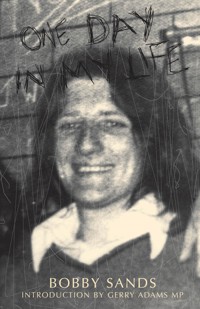
Bobby Sands was 27 years old when he died. He spent almost nine years of his life in prison because of his Irish republican activities. He died, in prison, on 5 May 1981, on the sixty-sixth day of his hunger strike at Long Kesh Prison, outside Belfast. This book documents a day in the life of Bobby Sands. It is a tale of human bravery, endurance and courage against a backdrop of suffering, terror and harassment. It will live on as a constant reminder of events that should never have happened – and hopefully will never happen again.
Sie lesen das E-Book in den Legimi-Apps auf:
Seitenzahl: 147
Veröffentlichungsjahr: 2001
Das E-Book (TTS) können Sie hören im Abo „Legimi Premium” in Legimi-Apps auf:
Ähnliche


















MERCIER PRESS
3B Oak House, Bessboro Rd
Blackrock, Cork, Ireland.
www.mercierpress.ie
http://twitter.com/IrishPublisher
http://www.facebook.com/mercier.press
© The Bobby Sands Trust 1983
This edition 2001
ISBN: 978 1 85635 349 6
Epub ISBN: 978 1 78117 217 9
Mobi ISBN: 978 1 78117 218 6
This eBook is copyright material and must not be copied, reproduced, transferred, distributed, leased, licensed or publicly performed or used in any way except as specifically permitted in writing by the publishers, as allowed under the terms and conditions under which it was purchased or as strictly permitted by applicable copyright law. Any unauthorised distribution or use of this text may be a direct infringement of the author’s and publisher’s rights and those responsible may be liable in law accordingly.
Introduction
GERRY ADAMS
Sinn Féin President
‘I find it startling to hear myself say that I am prepared to die first rather than succumb to their oppressive torture and I know that I am not on my own, that many of my comrades hold the same.’
Such prophetic words from Bobby Sands two years before his death, written at a time when the blanket men in the H-Blocks of Long Kesh and the women POWs in Armagh Jail had already been on protest for three years. That protest, prison confrontation, and, ultimately, hunger strike, only came about because the British government consciously decided to make the prisons a battleground, to try and defeat in prison those who it couldn’t defeat in the field of armed struggle.
Up until 1969 the prison population in the north of Ireland was small and could be counted in a few hundred. But that was soon to change, both in numbers and composition, as a result of the repressive reaction of the unionist government to the peaceful Civil Rights Movement’s demands for reform in local government (including for many nationalists the right to vote), in housing and for an end to the Special Powers Act.
After the British Army was reintroduced in the six counties in August 1969 it soon became clear from its actions that it was here as an instrument of unionist and British misrule. Those actions included attacking nationalists, firing gas indiscriminately, and curfewing and raiding nationalist areas for weapons which had never been used for offensive purposes but solely for defence. The IRA, in turn, re-emerged and reorganised and fought back against the British Army and the northern state.
After 1969 the prison population exploded as protesters, young nationalist demonstrators and Irish republican activists were arrested and charged with various offences, convicted and sentenced to time in prison; or were arrested without charge and interned without trial in various prisons, including Long Kesh Prison Camp.
In 1972 veteran republican Billy McKee, a sentenced prisoner in Crumlin Road Jail, led a hunger strike demanding political status. Before there were any deaths, the British government acceded to the prisoners’ demands and granted ‘special category status’, a face-saving expedient for what was, in reality, political status. Under this regime prisoners organised their own lives within the prison, wore their own clothes, carried out their own education and were organised within their own command structure.
Bobby Sands had been one of those young people whose family suffered sectarian harassment and who were driven from their home in Rathcoole, North Belfast, moving to the Twinbrook estate on the outskirts of West Belfast. In October 1972 Bobby was arrested and charged with possession of four handguns. While on remand he got married and in April 1973 was sentenced to five years in jail, which is where I first met him. I had been interned in June 1973 but was charged with attempting to escape and was sentenced to two terms of imprisonment. When internment ended in 1975, I was moved from the internees’ cages to Cage 11, where Bobby was serving his time.
Roimhe seo, bhí Róibeard i gCás 17 agus seo mar a bhfuair sé an grá a bhí aige don Ghaeilge. Dódh Campa na Ceis Fada i mí Dheireadh Fómhair 1974 agus ina dhiaidh seo chríochnaigh sé suas sa bhothán Gaeltachta i gCás 11. Bhí an-tsuim aige sa teanga, le sean-Phroinsias Mac Airt – go ndeana Dia trócaire ar a ainm – agus Coireall Mac Curtáin ó Luimneach mar mhúinteoirí aige. Bhain sé ard chaighdéan amach measartha gasta agus fuair sé Fáinne óir roimh deireadh 1975.
B’as an Trá Ghearr cuid mhór dá chairde ach bhí Bobby ábalta meascadh go furasta le gach duine sa chás. Bhí sé go maith ar an ghiotár agus bhí ceol aige agus bhí sé láidir agus díograsach mar pheileadóir i lár na pairce. Chuir muid aithne ar a chéile le linn na ndíospóireachtaí agus na tógraí oideachais a bhí idir láimhe againn i gCás 11. Chomh maith leis sin bhain an bheirt againn úsaid as an bhothán staidéara go mion minic, bhí mise ag dul don scríobhnóireacht agus bhí seisean ag cleachtadh ar an ghiotár, nó ag teagasc agus ag foghlaim na Gaeilge san áit ciúin suaimhneach sin, ar shiúl ón ruaille buaille agus tormán sna gnáth bothsáin.
Before this, Bobby was in Cage 17 and it was here that he developed a strong love for the Irish language. In October 1974, after the burning of the camp, Bobby was moved to Cage 11 and moved into the Gaeltacht hut. He was an avid Gaelgeoir, and was taught by the late Proinsias MacAirt and then by Coireall Mac Curtain from Limerick. He became fluent and attained gold fáinne level within a short space of time.
Bobby’s close associates were Short Strand men, but he mixed easily with everyone in the cage. He was a decent singer and guitarist and a robust and enthusiastic soccer footballer. He and I got to know each other better through the political discussions and educational projects which were organised in Cage 11. The two of us also used the study hut a lot – me for writing, he for practising his guitar or for studying Irish as it was possible to get quiet time there, away from the hustle, bustle and noise of the huts.
I have often said that Bobby Sands was a very ordinary person. He would not stand out in a crowd nor push himself forward. Yet, like some special ordinary people who find themselves in extraordinary circumstances Bobby was to go on to do extraordinary things. I remember him as an earnest yet good-humoured and good-natured young man; an obviously committed republican with a willingness to learn, to educate and to be part of building our struggle to achieve its objectives. He used his time in prison so that on his release he would be able to make a greater and more meaningful contribution to the struggle. I remember well the time, those weeks, just before Bobby’s release in 1976, about ten months before I myself got out. We use to ‘boowl’ (dander) round the exercise yard together, discussing the struggle, its history, the situation on the outside, the lay of the land, the state of things, with Bobby quizzing me about my own views. Though we were to write to each other throughout the first hunger strike and for some time into his own hunger strike, the next time I was to see Bobby was in his coffin in the living room of his parents’ home in Twinbrook, five years later.
Three years after introducing special category status, the British government decided to phase it out as part of a new offensive against republicans. It launched a three-pronged security strategy.
‘Ulsterisation’ of the Crown Forces involved increasing the size of the RUC and UDR and placing them in the front-line of the war against the IRA, and reducing the strength of the British Army. The advantages were obvious to its British strategists. Lowering the casualty rate of British soldiers would help thwart the possible development of a popular ‘troops out’ movement in Britain, and an increase in ‘local’ deaths would help project the image that the conflict was internal, with Britain acting the peace-maker.
‘Normalisation’ involved purportedly handing over the primacy in ‘security’ decisions to the RUC, depicting the conflict as a ‘law and order’ issue, one of gangsterism waged by common criminals who were controlled by cunning Godfathers.
‘Criminalisation’ was the policy of arbitrarily treating anyone sentenced after 1 March 1976 for a politically motivated offence as a criminal, an individual, subject to prison discipline and an onerous regime. Prisoners were expected to wear a criminal uniform and obey all orders. In 1975 Long Kesh Prison Camp had been extended and divided by a wall, behind which new developments, the H-Blocks, were built.
The policy was riven with contradictions. Clearly, the prisoners were special. They would not have been in prison but for the conflict. They were arrested under special laws and held for interrogation in special centres for up to seven days without access to lawyers. In order to operate this system Britain had to derogate from the European Convention on Human Rights. The prisoners were charged with ‘scheduled offences’ – described as politically motivated offences – under the Prevention of Terrorism Act or the Emergency Provisions Act. They appeared before special one-judge, non-jury, Diplock Courts, which used special rules of evidence, shifting the burden of proof onto the accused, and were usually convicted on the basis of signed statements alone. This conveyor belt system which could put an opponent of the state away for life encouraged the RUC to make arrests, to torture and to ill-treat prisoners. Thousands of these cases have been documented by, among others, Amnesty International and the European Commission on Human Rights.
After all this process, when the prisoners reached the H-Blocks they were suddenly deemed to be not special and were expected to bow to prison warders, most of whom had unionist sympathies or were British ex-servicemen. The late Kieran Nugent was the first to be sentenced in September 1976. He refused to wear the prison uniform, was beaten and placed in naked solitary confinement. Within months, he was joined by scores of other young men.
Bobby Sands, who had political status during his time in the cages, was released in April 1976 and lived with his wife and young son, Gerard, in Twinbrook. There, he helped to form a local tenants association and worked within the community. However, within six months he was re-arrested on active service and was sentenced to fourteen years in jail for possession of a handgun. In total, he and three other comrades, including Joe McDonnell who would also die on hunger strike, got eighty-four years between them for possession of one gun.
Shortly afterwards, Bobby’s nightmare began: fifteen days held completely naked in Crumlin Road Jail and punished with a No.1 diet of bread and water for refusing to conform. He was moved to the H-Blocks of Long Kesh in September 1977 and immediately joined his comrades, first, on the blanket protest, and then, in 1978, the no-wash, no slop-out protest.
Bobby was a gifted writer, poet and song-writer (his lyrics and songs have been recorded by Christy Moore, among others). While on the blanket he wrote short stories and poetry for Republican News and An Phoblacht/Republican News, was the PRO of the prisoners and became Officer Commanding of the prisoners during the first hunger strike in 1980. It was the British government’s failure to honour its public and private commitments to liberalise the prison regime at the end of that strike that led directly to the second hunger strike, a tense, emotional, seven-month period which broke the hearts but not the resolve and determination of Irish republicans, and which moved the watching world. The incredible courage of those ten men who died that year inspired and energised another generation and beyond.
The sudden death of Frank Maguire MP – a friend of the prisoners – during the early days of the hunger strike gave rise to a by-election in Fermanagh and South Tyrone in April 1981. It was a great gamble for Bobby to agree to stand as a candidate given that a defeat, even by a narrow margin, would have been crowed by Thatcher as a major victory and would have had demoralising repercussions on the campaign to save the lives of the hunger strikers.
A Long Kesh prison photograph of Bobby taken in Cage 11, that photograph of a long-haired, smiling Irish man which has now become an icon, adorned the election posters to the consternation of the Northern Ireland Office, who were trying to get the media to carry a more rugged, less complimentary image. The world press was in Enniskillen when Bobby’s victory over his captors, over the policy of criminalisation, was announced in the form of 30,492 votes. If ever the British government had an opportunity to save face and negotiate, it was at this time, when the prisoners had a mandate and when British strategy was in tatters. Thatcher’s reaction, however, was to introduce an amendment to the Representation of the People Act, barring any other prisoner from standing for election.
Thatcher refused to negotiate and 27-year-old Bobby Sands died on 5 May 1981 after sixty-six days on hunger strike, unbowed, unbroken, his name synonymous for all time with integrity, nobility and courage. Nine of his comrades followed in his steps, their deaths bringing to life a new vigour, a new determination to the struggle for freedom.
That Long Kesh and the H-Blocks were built on a lie we always knew, as did, of course, the British. While British propaganda was describing the IRA as a criminal organisation, the most senior British Army officer in the north at the time, Brigadier James Glover, Commander of Land Forces, was writing a top-secret assessment of the IRA. It fell into the hands of the IRA in 1979 and was published in An Phoblacht/Republican News.
Glover said:
The [Republican] Movement will retain popular support sufficient to maintain secure bases in the traditional republican areas … We are satisfied that the data establishes beyond reasonable doubt that the bulk of the republican offenders … are reasonably representative of the working-class community of which they form a substantial part … They do not fit the stereotype of criminality which the authorities have from time to time attempted to attach to them.
We also knew that those carrying out the beatings in the Blocks knew the calibre of the people they were dealing with. Last year one former prison officer said:
At first we thought they were dirty animals. The stench was incredible. Our stomachs turned when we went near the cells and we couldn’t understand how anyone could live in such filth. But eventually there was some grudging respect for those on the protest. They were incredibly determined. I didn’t agree with what they were doing but you had to admire them for sticking it out. At first I thought it would only last for a few days, or a week or two at the most, but they kept going for years and then queued up to give their lives. I didn’t think I would have been able to do it, no matter what the cause.
Not just hunger strikers died. Prison officers were killed by the IRA, and women and children on the streets were shot dead by plastic bullets, and funerals were attacked and mourners batoned by the British Army and the RUC. When the republican prisoners of Long Kesh’s H-Blocks were given early release as a result of the peace process it was the admission made explicit from the British that all along they had known it had been a war against Irish patriots they had been fighting.
This book, which was written in the winter of 1979, almost never came to be published. The Sinn Féin office in Belfast, which also housed the H-Block Information Bureau, was regularly raided by the British Army and the RUC, who seized documents, typewriters, photocopiers and telex machines. A lot of historical material was lost in these raids, including ‘comms’ from the prisoners – small messages written in small print on cigarette paper and smuggled out of the jail. Many of the comms, however, were preserved and dispersed in the homes of republican sympathisers for safety.
It was only after Bobby’s death that a supporter on the Falls Road discovered and came forward with the manuscript of One Day In My Life, which was thought to have been lost in an earlier raid. Bobby’s handwriting was recognised immediately and plans were then made to publish the book with Mercier Press. The manuscript and all other extant material has been lodged in the National Library in Dublin by the Bobby Sands Trust, which was set up for the purposes of publishing and promoting Bobby’s writings.
In his introduction to this book, when it was first published in 1983, the late Seán MacBride, founder member of Amnesty International and holder of the Nobel Prize for Peace, wrote that ‘the majority of the ordinary decent people of England are not really interested in what happens in Ireland’:
They ignore, and do not particularly wish to know of, the grievous sufferings which have been inflicted on the Irish people in the course of the British conquest and occupation of Ireland. Whenever this is mentioned, they just complain that our memories are too long and that we should forget the past…
The death of Bobby Sands and his writings are but a fall-out resulting from the cruel interference by Britain in the affairs of the Irish nation. I wish it were possible to ensure that those in charge of formulating British policy in Ireland would read these pages. They might begin to understand the deep injuries which British policy has inflicted upon this nation, and now seek to heal these deep wounds.
Despite the British government’s involvement in the peace process, republicans will always remain suspicious and sceptical of British intentions and cannot rest until British interference in Irish affairs ends completely, and the cause for which our hunger strikers and many others laid down their lives has been realised.




