



4,99 €
Mehr erfahren.
- Herausgeber: Moby - Giants of Literature
- Kategorie: Sachliteratur, Reportagen, Biografien
- Sprache: Englisch
VOLUME 1 OF THE COMPLETE WORKS OF OSAMU DAZAI
A central author of the Buraiha movement. This volume begins the integral collection of Dazai's literary output, whose writing examines alienation, identity, and the systemic deconstruction of the individual in post-war Japan.
CONTENTS:
- No Longer Human (Ningen Shikkaku): A novel about social disqualification, psychological withdrawal, and the clown's mask.
- The Setting Sun (Shayo): A narrative chronicling the fall of an aristocratic family after the war.
- Schoolgirl: An interior monologue following a teenager's thoughts over a single day, examining subjective consciousness.
- Run, Melos!: A story about moral debt, loyalty, friendship, and keeping one's word.
- Villon's Wife: A woman's perspective on her writer husband's dissipated life and marginalization.
- Flowers of Buffoonery: Fiction based on his suicide attempt in Kamakura, acting as a structural precursor to his later works.
- Goodbye: His unfinished work, a series of farewells with an unusually light tone.
- Fairy Tales (Otogizoshi): An ironic and modern retelling of traditional Japanese folklore tales.
- Pandora's Box: An epistolary novel detailing physical and spiritual recovery in a sanatorium.
- Tsugaru: A travel chronicle and return to his native region in northern Japan, exploring cultural heritage.
- The Late Years and Schoolgirl: Short texts marking his early literary period.
Das E-Book können Sie in Legimi-Apps oder einer beliebigen App lesen, die das folgende Format unterstützen:
Veröffentlichungsjahr: 2026
Ähnliche

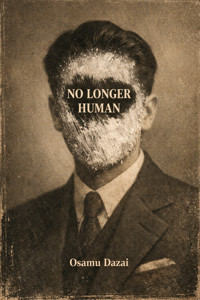













Osamu Dazai - Complete Works Vol. I
Osamu Dazai
Original Work: 太宰治全集 第一巻
Author: Osamu Dazai
The original work is in the public domain.
Translation: © 2025 Moby
All rights to this translation reserved.
Publisher: Moby - Giants of Literature
Osamu Dazai - Complete Works Vol. I
Flowers of Buffoonery
***
***
***
***
***
***
***
***
***
***
***
Goodbye
Change of Heart (I)
Change of Heart (II)
Procession (I)
Procession (II)
Procession (III)
Procession (IV)
Procession (V)
Superhuman Strength (I)
Superhuman Strength (II)
Superhuman Strength (III)
Superhuman Strength (IV)
Cold War (I)
Cold War (II)
No Longer Human
Prologue
The First Memorandum
The Second Memorandum
The Third Memorandum: Part One
The Third Memorandum: Part Two
Afterword
Fairy Tales
The Lump Removed
Urashima-san
Kachi-Kachi Yama
Tongue-Cut Sparrow
Pandora's Box
Author's Note
Curtain Rises
1
2
3
4
Health Dojo
1
2
3
4
5
Bell Cricket
1
2
3
Life and Death
1
2
3
4
Ma-bo
1
2
3
4
5
6
About Hygiene
1
2
3
Cosmos
1
2
Chapter III
Chapter IV
Younger Sister
Chapter I
Chapter II
Chapter III
Chapter IV
The Trial
Chapter I
Chapter II
Chapter III
Chapter IV
Chapter V
Chapter VI
Chapter VII
Chapter VIII
Solid Bread
Chapter I
Chapter II
Chapter III
Chapter IV
Chapter V
Lipstick
Chapter I
Chapter II
Chapter III
Chapter IV
Chapter V
Master Kasho
Chapter I
Chapter II
Chapter III
Chapter IV
Chapter V
6
7
Take-san
1
2
3
4
5
6
Run, Melos
Schoolgirl
The Setting Sun
CHAPTER ONE
CHAPTER TWO
CHAPTER THREE
CHAPTER FOUR
CHAPTER FIVE
CHAPTER SIX
CHAPTER SEVEN
CHAPTER EIGHT
TSUGARU
Prologue
MAIN PART
I — Pilgrimage
II — Kanita
III — Sotogahama
IV — Tsugaru Plain
V — West Coast
VILLON’S WIFE
CHAPTER I
CHAPTER II
CHAPTER III
The Late Years* and *Schoolgirl
Editor's Foreword
The biography of Tsushima Shūji, who wore the mask of Osamu Dazai, unfolds with the grim inevitability of a foreclosure notice served on a condemned property. Born into the landed gentry of Aomori in 1909, strictly removed from the harsh realities of the soil that fed him, he spent thirty-nine years fulfilling a destiny of ruin. His corpse, recovered from the Tamagawa Canal in 1948 alongside his lover Tomie Yamazaki, was not the climax of a tragedy but the stamping of a void file. He had been dead in spirit for years; the water merely confirmed the status of his lungs and liver. This final act lacked the grandeur of romantic suicide; it resembled, rather, the disposal of hazardous waste.
He christened his debut collection *The Late Years*, presuming an imminent departure that refused to arrive. Instead, he endured a decade of decay, his body a vessel for tuberculosis which he treated not with medicine but with Pavinal and alcohol. The Tsushima family erased him from their registry after he ran off with the geisha Hatsuyo Oyama, an act less of punishment than of hygiene—removing a gangrenous limb to save the aristocratic body. His dalliance with the banned communist movement lacked all political substance; it was a clumsy performance of rebellion, driven by class guilt, ending swiftly in police custody and betrayal. Dazai was never a revolutionary; he was a terrified aristocrat playing at dissent to punish his own bloodline.
To read *No Longer Human* as autobiography is to underestimate its cruelty. It is a prosecutorial brief against the self, devoid of any plea for leniency. It is a live autopsy. Dazai observes himself with the cold detachment of an entomologist pinning a beetle to a cork board. In *Schoolgirl*, he committed literary theft, consuming the diary of a female admirer to ventriloquize a voice he could not generate himself. His creative well was poisoned, so he drank from others. The women in his orbit—from Hatsuyo to the hairdresser Shimeko Tanabe at Kamakura with whom he botched a double suicide, leaving her dead and himself alive to face charges—were casualties of his incompetence even in self-destruction.
*The Setting Sun* gave a name to the fading aristocracy of post-war Japan, yet Dazai was neither its historian nor its sympathizer; he was its primary symptom. His writing was fueled by debt; every word was mortgaged to a bartender or a drug dealer. He wrote to pay for the means to obliterate his consciousness. There is an utter absence of heroism in this cycle. His prose, stripped of affectation, is the lucid report of a man monitoring his own rot. The post-war intelligentsia claimed him, but he remained an island of despair, inaccessible and cold.
This volume collects the fragments of that wreckage. Do not seek comfort here. Avoid looking for redemption. Dazai offers only a meticulous accounting of cowardice, drafted by an observer who disqualified himself from the human race long before his final breath. It is the sound of a man drowning in shallow water, paralyzed by a weight of his own making, watching the light recede with a mixture of terror and relief. Reading these works is akin to sifting through the personal effects of the deceased, finding only unpaid bills and confessions of weakness.
He is often associated with the "I-novel" (Watakushi-shōsetsu), yet Dazai subverted this genre entirely. Instead of the naturalistic confession that seeks empathy, he offers an exhibitionist display of his own sores. Shame is his currency. His refusal to mature, his accumulation of debts, his insistence on remaining in a state of perpetual, pained adolescence, resonates as a denial of adult responsibility. The rejection of family, of society, of life itself; all shape a map of absolute negation.
Dazai's obsession with the Bible, despite his lack of conventional faith, reveals a desperate search for a framework to contain his suffering. He compared himself to Judas, never to Christ. He saw himself as the necessary traitor, the one who must sin so that history can be fulfilled. This self-perception, at once grandiose and pathetic, grants his work a dark gravitational pull. It drags the reader down into the mud where he dwelt. Dazai operates from the underground, from the sewers of consciousness, reminding us that civilization is a thin veneer painted over the chaos of our basest instincts. To read him is to look into a broken, dirty mirror, and to recognize oneself, with horror, in the distorted reflection.
Flowers of Buffoonery
Osamu Dazai
"Passing this point, the city of sorrow."
My friends all distance themselves from me, gazing at me with sorrowful eyes. Friend, speak to me, laugh at me. Ah, my friend turns his face away in vain. Friend, ask me. I will tell you everything. With these hands, I sank the garden into the water. With the arrogance of a devil, I prayed that even if I were to revive, the garden should die. Shall I say more? Ah, but my friend only gazes at me with sorrowful eyes.
Oba Yozo sat upon the bed, looking out at the open sea. The open sea was smoking with rain.
Awaking from a dream, I reread these few lines and, struck by their ugliness and disagreeableness, I feel a desire to simply vanish. Good grief, the height of exaggeration. In the first place, what is this "Oba Yozo"? Not drunk on sake, but intoxicated by something far more potent, I applauded this name, Oba Yozo. This name fit my protagonist perfectly. "Oba" symbolizes the unusual spirit of the protagonist, leaving nothing to be desired. "Yozo," again, is somehow fresh. One feels a true newness welling up from the depths of antiquity. Moreover, the pleasant harmony of these four characters lined up: Oba Yozo. Is this name not already epoch-making? That very Oba Yozo is sitting on a bed, gazing at the rain-smoked open sea. Is it not increasingly epoch-making?
Let's stop. Mocking oneself is a wretched business. It seems to stem from a crushed pride. Even in my case, because I do not wish to be told off by others, I drive the nail into my own body first. This is cowardice. I must become more honest. Ah, humility.
Oba Yozo.
I cannot help it if I am laughed at. A crow mimicking a cormorant. Those who can see through it, will. There are likely better names, but for me, it is a bit troublesome to change. I could simply use "I," but I just wrote a novel this spring with a protagonist called "I," so continuing it twice feels embarrassing. If I were to suddenly die tomorrow, there is no guarantee that some strange man wouldn't appear, reminiscing with a knowing look that "that fellow couldn't write a novel unless he made 'I' the protagonist." Truly, for that reason alone, I will push through with this Oba Yozo. Is it funny? What, even you?
***
In late December of 1929, the seaside sanatorium known as Seishoen was in a bit of an uproar over Yozo's admission. There were thirty-six pulmonary tuberculosis patients at Seishoen. There were two critical patients and eleven with mild cases; the remaining twenty-three were convalescents. The East Ward No. 1, where Yozo was accommodated, was a so-called special private room, separated into six distinct chambers. The rooms on either side of Yozo were empty; in Room He, the furthest west, was a university student with a tall stature and a high nose. In Room I and Room Ro on the east side, young women were sleeping in each. All three were convalescent patients.
The previous night, a double suicide had occurred at Tamotogaura. Though they threw themselves in together, the man was pulled up by a returning fishing boat and his life was saved. However, the woman's body could not be found. The three patients, hearts pounding, had listened to the fire bell ringing violently for a long time as the village firemen launched boat after boat out to sea, shouting calls to search for the woman. The red lights of the fishing boats wandered the shores of Enoshima all night long. Neither the university student nor the two young women could sleep that night. At dawn, the woman's corpse was discovered at the water's edge of Tamotogaura. Her short-cropped hair glistened, and her face was white and bloated.
Yozo knew that Sono had died. He learned it while being swayed in the fishing boat. Returning to his senses under the starry sky, he first asked, "Did the woman die?" One of the fishermen replied, "She ain't dead, she ain't dead. Best not to worry." It was a tone filled with some sort of compassion. *She's dead,* he thought in a daze, and lost consciousness again. When he awoke once more, he was inside the sanatorium. The narrow room with white board walls was packed full of people. Someone among them asked about Yozo's identity this way and that. Yozo answered each question clearly. After the sun rose, Yozo was moved to a different, more spacious hospital room. Upon being informed of the incident, Yozo's family back home had immediately placed a long-distance call to Seishoen regarding his treatment. Yozo's hometown was two hundred *ri* away from here.
The three patients of East Ward No. 1 felt a strange satisfaction that this new patient was sleeping right near them, and looking forward to the hospital life starting today, finally fell asleep around the time the sky and sea became completely bright.
Yozo did not sleep. Occasionally, he moved his head slowly. White gauze was pasted here and there on his face. Tossed by the waves, his body had been wounded by rocks here and there. A nurse of about twenty named Mano was attending him alone. Because of a somewhat deep scar above her left eyelid, her left eye was slightly larger compared to the other. However, she was not ugly. Her red upper lip curled slightly upward, and she had shallow black cheeks. She sat in a chair beside the bed, gazing at the sea under the cloudy sky. She tried not to look at Yozo's face. She felt too sorry to look.
Near noon, two men from the police visited Yozo. Mano excused herself from the room.
Both were gentlemen wearing suits. One grew a short mustache, and one wore iron-rimmed glasses. The mustache lowered his voice and asked about the circumstances with Sono. Yozo answered exactly as it happened. The mustache wrote it down in a small notebook. After finishing the general interrogation, the mustache leaned over the bed and said, "The woman died. Did you intend to die?"
Yozo remained silent.
The detective wearing iron-rimmed glasses, raising two or three wrinkles on his thick forehead and smiling, tapped the mustache on the shoulder. "Stop it, stop it. The poor thing. Let's leave it for another time."
The mustache, staring straight at Yozo's eyes, reluctantly stowed the notebook in his coat pocket.
After the detectives left, Mano hurriedly returned to Yozo's room. However, the moment she opened the door, she saw Yozo sobbing. She quietly closed the door as it was and stood in the hallway for a while.
In the afternoon, it began to rain. Yozo recovered his spirits enough to walk to the toilet alone.
His friend Hida, wearing a wet overcoat, danced into the hospital room. Yozo pretended to be asleep.
Hida asked Mano in a whisper, "Is he alright?"
"Yes, he is now."
"I was surprised."
He wriggled his fat body, took off his oil-smelling overcoat, and handed it to Mano.
Hida was a nameless sculptor, and a friend of Yozo, a similarly nameless Western-style painter, since their middle school days. If a person has an honest heart, they will surely want to make an idol of someone close to them in their youth; Hida was one such person. From the time he entered middle school, he gazed admiringly at the top student in the class. That top student was Yozo. Even a frown or a smile from Yozo during class was no trivial matter to Hida. Also, finding Yozo's mature, lonely figure in the shadow of the sand pile in the schoolyard, he sighed deeply in secret. Ah, and the rapture of the day he first exchanged words with Yozo. Hida imitated everything Yozo did. He smoked tobacco. He laughed at the teachers. He even learned the method of clasping both hands behind his head and staggering about the schoolyard. He even learned the reason why artists are the greatest. Yozo entered art school. Hida was a year late, but he was able to enter the same art school as Yozo. Yozo was studying Western painting, but Hida intentionally chose the sculpture department. He claimed it was because he was moved by Rodin's statue of Balzac, but that was an intent lie to add a light dignity to his history when he became a master; in truth, it was out of consideration for Yozo's Western painting. It was out of a sense of inferiority. Around that time, the paths of the two finally began to diverge. Yozo's body grew increasingly thin, but Hida gained weight little by little. The disparity between the two was not just that. Yozo was drawn to a certain direct philosophy and began to make a fool of art. Hida, on the other hand, was becoming a little too ecstatic. He fired off the word "art" so frequently that the listener would feel embarrassed. While constantly dreaming of masterpieces, he neglected his studies. And so, both graduated from school with poor grades. Yozo practically threw away his paintbrush. Saying that painting is nothing but posters, he disheartened Hida. "All art is a fart released from the economic mechanism of society. It is nothing more than a form of vitality. Any masterpiece is a commodity, just like a sock," he would say in a precarious tone, confusing Hida. Hida liked Yozo just as in the old days, and felt a vague awe toward Yozo's recent thoughts, but for Hida, the throbbing of a masterpiece was greater than anything else. Thinking "Any day now, any day now," he fidgeted and played with clay. In short, these two are art objects rather than artists. No, precisely because of that, I was probably able to narrate this easily. If I were to show you real artists of the marketplace, you would vomit before reading three lines. I guarantee it. By the way, my friend, why don't you try writing a novel like that? How about it?
Hida, too, could not look at Yozo's face. He used stealthy steps as skillfully as possible and approached Yozo's pillow, but he only stared intently at the streaks of rain outside the glass door.
Yozo opened his eyes and, smiling faintly, called out, "You must have been surprised."
Startled, Hida glanced at Yozo's face, but immediately lowered his eyes and answered, "Yeah."
"How did you know?"
Hida hesitated. Taking his right hand out of his trouser pocket and stroking his broad face, he secretly asked Mano with his eyes if he could say it. Mano put on a serious face and shook her head faintly.
"Was it in the newspaper?"
"Yeah." In truth, he had learned of it on the radio news.
Yozo felt hatred for Hida's indecisive behavior. He thought Hida could be more open. He hated this friend of ten years who, after a single night, had turned over and treated him like a foreigner. Yozo pretended to sleep again.
Hida stood by Yozo's pillow for a while, slapping the floor with his slippers in boredom.
The door opened soundlessly, and a petite university student in uniform popped his beautiful face in. Hida found him and groaned with relief. Chasing away the shadow of a smile rising to his cheeks by twisting his mouth, he went toward the door with intentionally leisurely steps.
"Did you just arrive?"
"Right." Kosuge answered hurriedly, worrying about Yozo's direction.
His name is Kosuge. This man is a relative of Yozo, enrolled in the law department of a university, and though he differs in age from Yozo by three years, he was still a friend without barriers. New young men do not seem to adhere much to age. He had returned to his hometown for winter vacation, but hearing of Yozo, he immediately flew back on an express train. The two went out to the hallway and stood talking.
"You have soot on you."
Hida laughed openly and pointed under Kosuge's nose. Train soot was stuck there faintly.
"Is that so?" Kosuge hurriedly took a handkerchief from his breast pocket and immediately rubbed under his nose. "How is it? How is his condition?"
"Oba? He seems to be alright."
"Is that so? ...Did he fail?" He stretched out his upper lip to show Hida.
"He failed. He failed. It must be a huge uproar at home."
"Yeah. A huge uproar. It was like a funeral," he replied while stuffing the handkerchief into his breast pocket.
"Is someone coming from home?"
"His older brother is coming. His old man said, 'Leave him be.'"
"It's a major incident," Hida muttered, placing one hand on his low forehead.
"Is Yo-chan really okay?"
"Surprisingly, he's calm. That guy is always like that."
Kosuge tilted his head, including a smile at the corners of his mouth as if he were buoyant. "I wonder what he's feeling."
"I don't know... Want to see Oba?"
"Sure. Even if I see him, there's nothing to talk about, and besides... it's scary."
The two began to laugh quietly.
Mano came out of the sickroom.
"He can hear you. Let's try not to stand talking here."
"Ah. That's..."
Hida shrank his large body desperately in embarrassment. Kosuge peered at Mano's face with a curious expression.
"Have the two of you, um, had lunch?"
"Not yet," they answered together.
Mano blushed and burst out laughing.
After the three went off to the dining hall together, Yozo sat up. He gazed at the rain-smoked open sea.
"Passing this point, the abyss of empty mist."
From there, I return to the first opening. Well, I am clumsy, even to my own eyes. In the first place, I do not like this kind of time trickery. I don't like it, but I attempted it. Passing this point, the city of sorrow. Because I wanted to enshrine this lament of the gates of hell, which rolls so easily off the tongue, as a glorious opening line. There is no other reason. Even if my novel has failed because of this single line, I have no intention of weak-heartedly erasing it. Another word while striking a pose: Erasing that line would mean erasing my life up to today.
***
"It's ideology, old man. It's Marxism."
This phrase is foolish, which is good. Kosuge said it. Saying it with a knowing look, he re-gripped his milk cup.
The four board walls were painted with white paint, and on the east wall, a portrait of the director with three copper-coin-sized medals on his chest hung high; beneath it, about ten long narrow tables were lined up silently. The dining hall was empty. Hida and Kosuge sat at a table in the southeast corner, taking their meal.
"He was doing it quite intensely." Kosuge continued speaking, lowering his voice. "Running around like that with a weak body, it makes you want to die."
"He was a captain of the action squad, I suppose. I know." Hida interjected while chewing his bread. Hida was not pretending to be knowledgeable. Any young man of that time knew at least the leftist terminology. "However... that's not all. Artists aren't such simple things."
The dining hall grew dark. The rain had become stronger.
Kosuge drank a mouthful of milk and said, "You're no good because you can only think of things subjectively. To begin with... to begin with, you see. They say that in the suicide of a single human being, there lurks some objective, major cause of which the person himself is unaware. At home, everyone had decided that a woman was the cause, but I told them that wasn't it. The woman is just a traveling companion. There is another major cause. Those people at home don't know it. Even you say strange things. It's no good."
Hida muttered while staring at the fire burning in the stove at his feet. "The woman, however, had a separate husband."
Placing the milk cup down, Kosuge responded. "I know. That sort of thing is nothing. To Yo-chan, it's not even a fart. Committing suicide because the woman had a husband—isn't that naive?" Finishing his statement, he closed one eye and aimed a gaze at the portrait above his head. "Is this the director here?"
"I suppose so. However... the truth can't be known unless it's Oba."
"That's true." Kosuge agreed lightly and looked around restlessly. "It's cold. Are you staying here today?"
Hida hurriedly swallowed his bread and nodded. "I'm staying."
Young men never argue seriously. They take the utmost care not to touch each other's nerves, while also cherishingly protecting their own nerves. They do not want to receive useless insults. Moreover, once wounded, they brood over it until they think of killing the other or dying themselves. That is why they dislike disputes. They know many non-committal words of deception. They could probably effortlessly use a single word of refusal in about ten different ways. Before beginning an argument, they are already exchanging eyes of compromise. And in the end, while laughing and shaking hands, they both mutter this in their bellies: Lowlife!
Now, my novel also seems to have finally blurred. Shall I turn around here and deploy a few panoramic scenes? Don't talk big. You, who are clumsy at everything you do. Ah, I hope it goes well.
The next morning was peacefully sunny. The sea was calm, and the smoke from the eruption on Oshima rose white above the horizon. No good. I hate writing scenery.
When the patient in Room I awoke, the hospital room was filled with the sunlight of an Indian summer. She exchanged good mornings with the attending nurse and immediately measured her morning temperature. It was 37.4 degrees. Then, she went out to the veranda for pre-meal sunbathing. Even as the nurse gently poked her in the flank, she was already stealing a glance at the veranda of Room Ni. Yesterday's new patient was sitting in a rattan chair, neatly wearing a dark blue kimono with a splash pattern, gazing at the sea. He was frowning his thick eyebrows as if dazzled. He didn't seem like such a good-looking face. Occasionally, he tapped the gauze on his cheek lightly with the back of his hand. Lying on the sunbathing bed, she observed only that with half-open eyes, then had the nurse bring a book. *Madame Bovary*. Usually, she would get bored with this book and throw it aside after reading five or six pages, but today she wanted to read it in earnest. She thought that reading this now was truly fitting. She flipped through the pages and began reading from around page one hundred. She picked up a good line. "Emma wanted to be married at midnight by the light of torches."
The patient in Room Ro was also awake. Going out to the veranda to sunbathe, she saw Yozo's figure and immediately ran back into her sickroom. For no reason, she was afraid. She dove straight under the covers. Her attending mother laughed and covered her with the blanket. The girl in Room Ro pulled the blanket over her head, her eyes shining in that small darkness, and listened intently to the voices in the adjacent room.
"Seems she's a beauty." Then, quiet laughter.
Hida and Kosuge had stayed over. They slept together in a single bed in the empty sickroom next door. Kosuge woke up first, opened his narrow eyes astringently, and went out to the veranda. After glancing sideways at Yozo's slightly pretentious pose, he turned his head sharply to the left to search for the source that made him strike such a pose. A young woman was reading a book on the veranda at the far end. The background of the woman's bed was a wet stone wall with moss. Kosuge shrugged his shoulders tightly in a Western style, immediately returned to the room, and shook the sleeping Hida awake.
"Get up. It's an incident." They delight in fabricating incidents. "Yo-chan's Big Pose."
In their conversation, the adjective "Big" is frequently used. perhaps because they want some object of expectation in this boring world.
Hida jumped up in surprise. "What is it?"
Kosuge taught him while laughing.
"There's a girl. Yo-chan is showing her his specialty profile."
Hida also began to frolic. Raising both eyebrows exaggeratedly high, he asked, "Is she a beauty?"
"Seems a beauty. She's fake-reading a book."
Hida burst out laughing. Sitting on the bed, he put on his jacket, put on his trousers, and shouted.
"Alright, let's grill him." He has no intention of grilling him. This is just backbiting. They calmly spew backbiting even about their close friends. They leave it to the tone of the moment. "That Oba guy wants every woman in the world."
A little later, a roar of laughter erupted from Yozo's hospital room, echoing through the entire ward. The patient in Room I snapped her book shut and looked suspiciously toward Yozo's veranda. There was only a single white rattan chair left shining in the morning sun on the veranda; no one was there. Staring at that rattan chair, she dozed off. The patient in Room Ro heard the laughter, popped her face out from the blanket, and exchanged a gentle smile with her mother standing by her pillow. The university student in Room He woke up at the laughter. The university student had no attendant and lived a carefree life like a boarder in a lodging house. Realizing the laughter came from yesterday's new patient's room, he blushed his pale dark face. He didn't think the laughter was imprudent. From the magnanimous heart peculiar to convalescent patients, he was rather relieved that Yozo seemed energetic.
Am I not a third-rate writer? It seems I became too enraptured. Attempting something unsuited to me like a panoramic style, I finally ended up smirking like this. No, wait. I have words prepared in advance just in case of such a failure. *With beautiful feelings, one creates bad literature.* In other words, the fact that I became so overly enraptured is because my heart is not that devilish. Ah, blessed be the man who thought up these words. what a convenient phrase it is. However, a writer can only use these words once in a lifetime. It seems that is the case. Once is charm. If you repeat these words a second or third time as a shield, it seems you will end up miserable.
***
"It was a failure."
Sitting alongside Hida on the sofa by the bed, Kosuge concluded with that, then looked in turn at Hida's face, Yozo's face, and finally the face of Mano standing leaning against the door, and seeing that everyone was laughing, he rested his head heavily against Hida's round shoulder in satisfaction. They laugh often. They laugh loudly over nothing at all. For young men, making a smiling face is about as easy as exhaling breath. Since when did such a habit begin to stick? If you don't laugh, you lose. Do not overlook even the most trivial object that should be laughed at. Ah, is this not a fleeting glimpse of voracious epicureanism? However, the sad thing is, they cannot laugh from the bottom of their bellies. Even while dissolving in laughter, they worry about their own posture. They also often make others laugh. They want to make others laugh even if it hurts themselves. This likely stems from that nihilistic heart, but can one not infer a desperate predisposition one layer deeper than that? A spirit of sacrifice. A spirit of sacrifice that is somewhat careless and holds no specific purpose. The fact that they occasionally perform splendid actions that could even be called praiseworthy tales by the moral codes up to now is entirely due to this hidden soul. This is my dogmatism. Furthermore, it is not a groping in the study. These are all thoughts heard from my own flesh.
Yozo is still laughing. Sitting on the bed, swinging both legs, he laughed while minding the gauze on his cheek. Was Kosuge's story that funny? As an example of what kind of stories they amuse themselves with, I shall insert a few lines here. During this vacation, Kosuge went skiing at a certain famous hot spring resort about three *ri* from his hometown and stayed overnight at an inn there. Late at night, on his way to the toilet, he passed a young woman staying at the same inn in the hallway. That is all there is to it. However, this is a major incident. To Kosuge, even if they just passed by for a moment, he cannot be satisfied unless he gives that woman an extraordinary good impression of himself. He has no plan to do anything in particular, but in the moment they pass, he pours his life into making a pose. He holds expectations of life in earnest. He thinks over every circumstance with that woman in an instant and feels his chest bursting. They experience such breathless moments at least once a day. That is why they are never off guard. Even when alone, they are decorating their posture. It is said that even when Kosuge went to the toilet late at night, he wore his newly tailored blue overcoat properly and went out into the hallway. After Kosuge passed that young woman, he thought deeply, *It was good.* He thought it was good that he wore his overcoat. Sighing in relief, he peeked into the large mirror at the end of the hallway, and it was a failure. From beneath the overcoat, two legs wearing dirty long underwear were sticking out.
"Oh dear," he said, laughing lightly as expected. "The underwear was twisted up, and my leg hair was visibly black. My face was swollen from sleep."
Yozo is not laughing that much inside. It also seemed like Kosuge's made-up story. Still, he laughed loudly for him. Intending it as a return for the disposition of his friend who, unlike yesterday, was striving to be open with Yozo, he deliberately laughed himself silly. Because Yozo laughed, Hida and Mano also took the opportunity to laugh.
Hida felt completely relieved. He thought he could say anything now. "Not yet," he suppressed himself. He was dawdling.
Kosuge, riding the momentum, spoke it out easily.
"We fail with women. Isn't that right, Yo-chan?"
Yozo, still laughing, tilted his head.
"I wonder."
"It's true. It wasn't a suicide pact."
"Was it a failure?"
Hida was happy, so happy, his chest throbbed. They had crumbled the most difficult stone wall amidst smiles. Thinking that this strange success must be thanks to the unscrupulous virtue of Kosuge, he felt an impulse to squeeze this young friend.
Hida opened his thin eyebrows brightly and began to speak while stuttering.
"I think you can't say in a word whether it was a failure or not. In the first place, the cause is unknown." *Clumsy,* he thought.
Immediately, Kosuge helped him. "That is known. I had a big argument with Hida. I think it's from an ideological impasse. Hida, this guy, putting on airs, says 'there's something else.'" Without a moment's delay, Hida responded. "There's probably that too, but that's not all. In short, he was in love. He wouldn't die with a woman he disliked."
He had spoken hurriedly without choosing his words from a desire not to have Yozo guess anything, but it sounded innocent even to his own ears. *Well done,* he secretly sighed in relief.
Yozo lowered his long eyelashes. Vanity. Laziness. Flattery. Cunning. Nest of vice. Fatigue. Anger. Murderous intent. Selfishness. Fragility. Deception. Viral poison. They shook his chest in a jumble. He thought he would say it. He muttered, deliberately looking dejected.
"The truth is, even I don't know. I feel like everything was the cause."
"I understand. I understand." Kosuge nodded before Yozo's words were finished. "There are times like that. Hey, the nurse isn't here. I wonder if she was being tactful."
I mentioned this before, but their arguments are held to adjust the tone of the moment comfortably rather than to exchange their thoughts. They speak not a single truth. However, while listening for a while, one may stumble upon an unexpected find. In their pretentious words, sometimes a surprisingly honest resonance can be felt. The words leaked carelessly contain something seemingly true. Yozo just muttered "everything," and isn't this the true motive he inadvertently spat out? Inside their hearts, there is only chaos and, additionally, an inexplicable repulsion. Or perhaps it is better to say, only pride. Moreover, a finely sharpened pride. It trembles and shudders at even the slightest breeze. As soon as they believe they have been insulted, they writhe as if to die. It is no wonder Yozo is perplexed when asked for the cause of his suicide. —It is everything.
***
In the afternoon of that day, Yozo's older brother arrived at Seishoen. The brother did not resemble Yozo; he was stout and magnificent. He was wearing a *hakama*.
Guided by the director, when he came to the front of Yozo's hospital room, he heard cheerful laughter inside. The brother pretended not to know.
"Is it here?"
"Yes. He is already in high spirits." Answering thus, the director opened the door.
Kosuge was surprised and jumped off the bed. He had been sleeping in Yozo's place. Yozo and Hida were sitting side by side on the sofa playing cards, but both stood up hurriedly. Mano was sitting in a chair by the bed knitting, but she too started to put away her knitting tools awkwardly, looking embarrassed.
"Since his friends came, it's lively." The director whispered this to the brother over his shoulder, walking up to Yozo. "You're okay now, right?"
"Yes." Answering so, Yozo felt miserable for the first time.
The director's eyes were smiling behind his glasses.
"How about it? Won't you live a sanatorium life?"
Yozo felt the inferiority of a criminal for the first time. He answered only with a smile.
In the meantime, the brother bowed methodically to Mano and Hida, saying "Thank you for your care," and then asked Kosuge with a serious face. "Did you stay here last night?"
"Right." Kosuge said, scratching his head. "The sickroom next door was open, so Hida-kun and I stayed there."
"Then come to my inn from tonight. I've taken an inn at Enoshima. Hida-san, you too."
"Yes." Hida was stiff. He answered while struggling with the three cards in his hand.
The brother turned toward Yozo as if it were nothing.
"Yozo, are you okay now?"
"Yeah." He nodded while deliberately looking bitter.
The brother suddenly became talkative.
"Hida-san. Let's accompany the Director and go out to eat lunch together. I haven't seen Enoshima yet. I thought I'd have the Doctor guide me. Let's leave immediately. I have a car waiting. It's fine weather."
I am regretting this. Just by introducing two adults, it's completely ruined. The somewhat unusual atmosphere that Yozo, Kosuge, Hida, and I, the four of us, had managed to build up nicely, has withered and shriveled miserably because of these two adults. I wanted to make this novel an atmosphere romance. I had prayed to create an atmosphere swirling round and round in the first few pages, and then gently unravel it little by little. Complaining of clumsiness, somehow I have advanced my pen this far. However, it is a collapse.
Forgive me! It's a lie. I played the fool. It was all done by me on purpose. While writing, I became embarrassed about that "atmosphere romance" thing, and simply destroyed it intentionally. If I have truly succeeded in the collapse, that is rather exactly what I wanted. Bad taste. The single word tormenting my heart now is this. If the persistent preference to try and intimidate people without reason is called that, perhaps this attitude of mine is also bad taste. I don't want to lose. I didn't want my insides seen through. However, that is likely a fleeting effort. Ah! Are all writers like this? Decorating words even to confess. Am I not a brute? Can I live a true human life? Even while writing this, I am worrying about my sentences.
I will expose everything. The truth is, my popping out the face of a man called "me" between the scenes of this novel and speaking a passage of unnecessary things was also due to a cunning thought. Without letting the reader notice, I wanted to secretly fill the work with a unique nuance using that "me." I was conceited that it was a modern style not yet seen in Japan. However, I failed. No, I should have counted this confession of failure in the plan of this novel. If possible, I wanted to say it a little later. No, I feel like I had prepared even these words from the beginning. Ah, do not believe me anymore. Do not believe a single word I say.
Why do I write novels? Do I want the glory of a new writer? Or do I want money? Answer without theatrics. I want both. I want them so much I can't stand it. Ah, I am still telling blatant lies. People inadvertently fall for lies like this. It is a despicable lie among lies. Why do I write novels? I've started saying something troublesome. It can't be helped. It's unpleasant to seem suggestive, but I will answer tentatively with one word. "Revenge."
Let's move to the next description. I am a marketplace artist. Not an art object. If that disgusting confession of mine brings some nuance to this novel of mine, that would be a stroke of luck.
***
Yozo and Mano were left behind. Yozo crawled into bed and was thinking while blinking his eyes. Mano was sitting on the sofa putting away the cards. After placing the cards in a purple paper box, she said:
"That is your older brother."
"Yeah," he answered, staring at the white wall of the high ceiling. "Does he resemble me?"
When a writer loses affection for the object of his description, he immediately creates such sloppy sentences. No, I won't say anymore. It's quite a chic sentence.
"Yes. The nose."
Yozo laughed aloud. In Yozo's family, everyone had long noses resembling their grandmother.
"How old is he?" Mano laughed a little and asked.
"My brother? He's young. Thirty-four. He puts on airs and feels full of himself."
Mano looked up at Yozo's face abruptly. He was speaking with a frown. She hurriedly lowered her eyes.
"Brother is still fine as he is. My old man is..."
He started to say it but shut his mouth. Yozo is being well-behaved. He is compromising on my behalf.
Mano stood up and went to get her knitting tools from the cupboard in the corner of the room. Sitting again in the chair by Yozo's pillow as before, Mano also began to think while knitting. She was thinking of a cause one step before ideology or love.
I won't say anything more. The more I speak, the less I am saying anything. I feel I haven't touched on the truly important matters at all yet. That is natural. I am leaving out many things. That is also natural. It is common knowledge in the way of novels that the writer does not understand the value of his work. I must admit that, though it is vexing. I was a fool to expect the effect of my own work myself. Especially, I should not have spoken of that effect aloud. The moment I spoke it aloud, another completely different effect was born. The moment I inferred that the effect was roughly like this, a new effect leaped out. I play the fool who must forever only pursue it. Is it a poor work or a not-so-bad result? I shall not even try to know that. Perhaps this novel of mine will give birth to a tremendous value beyond my thoughts. These words, I obtained by hearing from others. They are not words that oozed from my flesh. That is why I feel like relying on them. To speak clearly, I have lost confidence.
***
After the lights were turned on, Kosuge came to the hospital room alone. As soon as he entered, he leaned over the sleeping Yozo's face and whispered.
"I've been drinking. Don't tell Mano."
Then, *hah*, he breathed strongly onto Yozo's face. Drinking sake and coming in and out of the hospital room was forbidden.
After stealing a sideways glance at Mano continuing her knitting on the sofa behind him, Kosuge said as if shouting, "I went sightseeing in Enoshima. It was good." Then immediately whispered again.
"That's a lie."
Yozo got up and sat on the bed.
"Were you just drinking until now? No, I don't mind. Mano-san, it's okay, right?"
Mano answered while laughing without resting her knitting hands. "It's not exactly okay, but..."
Kosuge rolled onto his back on the bed.
"It was a consultation with the four of us including the Director. Old man, your brother is a schemer. An unexpected go-getter."
Yozo remained silent.
"Tomorrow, your brother and Hida are going to the police. They're going to settle everything completely. Hida is stupid. He was getting excited. Hida is staying over there today. I came back because I didn't want to."
"They must have been badmouthing me."
"Yeah. They were. They said you're a big fool. They said there's no telling what you'll do next. But they added that the old man is also no good. Mano-san, can I smoke?"
"Yes." Tears seemed about to come out, so she answered only that.
"I can hear the sound of waves. ...It's a good hospital." Kosuge held an unlit cigarette in his mouth and closed his eyes for a while, breathing roughly like a drunkard. Eventually, he sat his upper body up heavily. "That's right. I brought a kimono. I put it there." He jerked his chin toward the door.
Yozo dropped his eyes to the large *furoshiki* bundle with arabesque patterns placed near the door and frowned again. When they speak of blood relatives, they create a somewhat sentimental countenance. However, this is merely a habit. Education from childhood has simply created that countenance. Speaking of blood relatives reminds them of the word "property," which seems unchanged. "I can't beat my mother."
"Yeah, your brother said that too. He said Mother is the most pitiable. Because she worries about things like kimonos like this. It's true, old man. —Mano-san, got a match?" Receiving a match from Mano, he gazed at the face of the horse drawn on the box with puffed cheeks. "I heard what you're wearing now is a kimono borrowed from the Director."
"This? Yeah. It's the Director's son's kimono. —Brother must have said something else too. Badmouthing me."
"Don't be cynical." He lit the cigarette. "Your brother is relatively new. He understands you. No, maybe not. He acts like a man of the world, quite a bit. We discussed the cause of this incident of yours, but at that time, you see, it was a big laugh." He exhaled a ring of smoke. "As for your brother's guess, it is that this is because Yozo was debauched and desperate for money. He says it in dead seriousness. Or, though this is hard to say as a brother, he surely caught a shameful disease and became desperate." He turned his eyes, muddy with alcohol, toward Yozo. "How about it? No, surprisingly, this guy..."
***
Since Kosuge was the only one staying tonight, and there was no need to go out of their way to borrow the adjacent sickroom, everyone decided after consultation that Kosuge would sleep in the same room. Kosuge slept on the sofa alongside Yozo. That sofa, upholstered in green velvet, had a mechanism and became a questionable bed. Mano slept on it every night. Today, deprived of that bed by Kosuge, she borrowed a thin straw mat from the hospital office and spread it in the northwest corner of the room. It was right below Yozo's feet. Then Mano surrounded that modest sleeping place with a low two-panel folding screen she had found somewhere.
"Cautious." Kosuge, while lying down, looked at the worn-out screen and giggled to himself. "The seven autumn flowers are painted on it."
Mano wrapped the electric light above Yozo's head in a wrapping cloth to dim it, said goodnight to the two, and hid behind the screen.
Yozo was finding it hard to sleep.
"It's cold." He tossed and turned on the bed.
"Yeah." Kosuge also pursed his lips and agreed. "The drunkenness has worn off."
Mano coughed lightly. "Shall I cover you with something?"
Yozo answered with his eyes closed.
"Me? It's fine. It's hard to sleep. The sound of waves sticks in my ears."
Kosuge thought Yozo was pitiable. That is entirely an adult emotion. Needless to say, the one who is pitiable is not this Yozo here, but himself when he was in the same circumstances as Yozo, or the general abstraction of those circumstances. Adults are well-trained in such emotions, so they easily sympathize with others. And they take pride in being easily moved to tears. Young men, too, occasionally immerse themselves in such easy emotions. If adults gained such training from, to put it kindly, a compromise with their lives, where did young men learn it from? From worthless novels like this?
"Mano-san, tell us a story. Don't you have an interesting story?"
Out of meddlesomeness to change Yozo's mood, Kosuge sucked up to Mano.
"Well." Mano just sent back that answer from behind the screen along with a laugh.
"A scary story is fine too." They are always itching to shudder.
Mano seemed to be thinking of something and did not reply for a while.
"It's a secret." Prefacing with that, she lowered her voice and began to laugh. "It's a ghost story. Kosuge-san, are you okay?"
"By all means, by all means." He was serious.
An event from the summer Mano was nineteen, just after becoming a nurse. A young man who had attempted suicide over a woman, like here, was discovered, admitted to a certain hospital, and Mano attended him. The patient had used chemicals. Purple spots were scattered all over his body. There was no hope of saving him. In the evening, he regained consciousness once. At that time, the patient looked at many small shore crabs playing along the stone wall outside the window and said, "They're beautiful." The crabs around there had red shells while still alive. Saying he would catch them and take them home when he recovered, he lost consciousness again. That night, the patient vomited two washbasins full and died. Until his relatives came from his hometown, Mano was in the hospital room alone with the young man. For about an hour, she endured sitting in the chair in the corner of the room. She heard a faint sound behind her. Staying still, she heard it again. This time, she heard it clearly. It sounded like footsteps. Turning around decisively, a small red crab was right behind her. Mano began to cry while staring at it.
"It's strange, isn't it. There truly was a crab. A live crab. At that time, I thought of quitting nursing. Even if I don't work alone, at home we can get by just fine. I told my father that, and he laughed at me hard. —Kosuge-san, how was it?"
"It's scary." Kosuge shouted, deliberately acting playful. "That hospital is?"
Mano did not answer that, but tossed and turned with a rustle, muttering like a monologue.
"You know, with Oba-san too, I thought about refusing the summons from the hospital. Because I was scared. But coming and seeing him, I was relieved. He is energetic like this, and says he'll go to the toilet by himself right from the start."
"No, the hospital. Is it this hospital?"
Mano answered after a pause.
"It is here. It is here, actually. But please keep it a secret. It involves trust."
Yozo let out a voice as if half-asleep. "Don't tell me it's this room."
"No."
"Don't tell me," Kosuge also mimicked. "It's not the bed we slept in last night."
Mano burst out laughing.
"No. It's perfectly fine. If you're going to worry that much, I shouldn't have said it."
"It's Room I." Kosuge lifted his head softly. "The only room where you can see the stone wall from the window is that room. It's Room I. Hey, it's the room where the girl is. Poor thing."
"Please don't make a fuss, go to sleep. It's a lie. It's a made-up story."
Yozo was thinking of something else. He was thinking of Sono's ghost. He was picturing her beautiful form in his chest. Yozo is often simple like this. To them, the word "God" is merely a casual pronoun mixed with ridicule and goodwill given to a foolish character, but perhaps that is because they are too close to God. If I touch on the so-called "Problem of God" lightly in this manner, surely you will criticize me severely with words like shallow or easy. Ah, forgive me. Even the poorest writer secretly wants to bring the protagonist of his novel close to God. Thus, I shall speak. He resembles a God. Minerva, the goddess of wisdom, flying her pet owl into the twilight sky and secretly laughing as she watches.
***
The next day, the sanatorium was buzzing from the morning. It was snowing. The thousand or so low spreading pines in the front garden of the sanatorium were uniformly covered in snow, and the thirty-some stone steps leading down from there, as well as the sandy beach continuing from them, were covered in thin snow. Falling and stopping, the snow continued until around noon.
Yozo lay on his stomach on the bed, sketching the snowy scenery. Having Mano buy charcoal paper and pencils, he started work from around the time the snow completely stopped falling.
The sickroom was bright with the reflection of the snow. Kosuge was lying on the sofa reading a magazine. Occasionally, he stretched his neck to peek at Yozo's drawing. He felt a vague awe toward something called art. That was an emotion stemming from trust in Yozo alone. Kosuge had seen and known Yozo since childhood. He thought him unusual. While playing together, he dogmatically decided that all of Yozo's strangeness was due to his cleverness. Kosuge had liked the stylish, good-at-lying, lecherous, and even cruel Yozo since he was a boy. Especially, he loved the burning eyes of Yozo in his student days when backbiting his teachers. However, that way of loving was an attitude of appreciation, unlike Hida's. In short, he was clever. He follows as far as he can follow, and meanwhile, feeling it absurd, he turns his body and becomes a bystander. This is likely where Kosuge is somehow newer than Yozo or Hida. If Kosuge holds even a little awe toward art, it has exactly the same meaning as straightening his attire in that blue overcoat, stemming from a heart wanting to feel some object of expectation in this continuous daylight life. Since a man like Yozo is producing it covered in sweat, surely it must be something extraordinary. He just thinks so lightly. In that respect, he trusts Yozo after all. However, sometimes he is disappointed. Now, Kosuge is disappointed even while stealing glances at Yozo's sketch. What is drawn on the charcoal paper is just scenery of the sea and islands. And it is an ordinary sea and islands.
Kosuge gave up and absorbed himself in reading the storytelling in the magazine. The sickroom was silent.
Mano was not there. She was at the laundry, washing Yozo's wool shirt. Yozo had entered the sea wearing this shirt. The scent of the beach had soaked into it faintly.
In the afternoon, Hida returned from the police. He opened the door of the sickroom with vigor.
"Hey," seeing Yozo sketching, he shouted exaggeratedly. "You're at it. Good. An artist's strength is doing work after all."
Saying this, he approached the bed and glanced at the picture over Yozo's shoulder. Yozo hurriedly folded the charcoal paper in two. Folding it further into four, he said as if shy.
"It's no good. When I haven't drawn for a while, only my head gets ahead."
Hida sat on the foot of the bed with his overcoat still on.
"That might be so. Because you're rushing. But that's fine. It's because you're enthusiastic about art. Well, think of it that way. —What kind of thing did you draw, anyway?"
Yozo, resting his cheek on his hand, jerked his chin at the scenery outside the glass door.
"I drew the sea. The sky and sea are pitch black, and only the island is white. While drawing, I felt it was pretentious and stopped. The design is amateurish in the first place."
"Isn't it fine? Great artists are all somewhat amateurish somewhere. That is good. First an amateur, then becoming a professional, and then becoming an amateur again. Bringing up Rodin again, but he was a man who aimed for the goodness of an amateur. No, maybe not."
"I think I'll quit painting." Yozo stowed the folded charcoal paper in his bosom and said, overlapping Hida's speech. "Painting is sluggish and no good. Sculpture is the same."
Hida brushed up his long hair and agreed easily. "I understand that feeling too."
"If possible, I want to write poetry. Because poetry is honest."
"Yeah. Poetry is good too."
"But maybe it's boring after all." He thought he would make everything boring. "What suits me best might be becoming a patron. Making money, gathering many good artists like Hida, and cherishing them. How about that? I've become ashamed of art." Still resting his cheek on his hand and gazing at the sea, he finished saying that and quietly waited for the reaction to his words.
"It's not bad. I think that's a splendid life too. We must have people like that too. Really." While speaking, Hida was staggering. Feeling that he himself, unable to refute a single thing, looked like a jester, he hated it. Hida's so-called pride as an artist may have finally elevated him to this point. Hida secretly braced himself. For the next words!
"How was the police side?"
Kosuge suddenly spoke up. He was expecting a non-committal answer.
Hida's agitation found an outlet in that direction.
"Prosecution. It's the charge of aiding suicide." He regretted saying it. He thought it was too harsh. "But, in the end, it will probably be a suspended indictment."
Kosuge sat up abruptly from where he had been sprawling on the sofa and clapped his hands *smack*. "It's become a troublesome thing." He intended to turn it into a joke. But it was no good.
Yozo twisted his body greatly and lay on his back.
You, who likely feel resentment that their attitude is too carefree for people who have seemingly just killed one person, will shout "Bravo" for the first time here. *Serves you right.* However, that is cruel. What about it is carefree? If only you understood this sadness of constantly being next to despair and making flowers of buffoonery without even exposing them to the wind!
Hida, flustered by the effect of his single word, tapped Yozo's legs lightly over the quilt.
"It's okay. It's okay."
Kosuge lay down on the sofa again.
"Aiding suicide, huh." He still strove to be buoyant. "Was there such a law?"
Yozo said while retracting his legs.
"There is. It carries penal servitude. And you a law student."
Hida smiled sadly.
"It's okay. Your brother is handling it well. Your brother, for all that, has his thankful points. He's very enthusiastic."
"He's a go-getter." Kosuge closed his eyes solemnly. "Maybe we don't need to worry. Since he's quite a schemer."
"Idiot." Hida burst out laughing.
Getting off the bed, he took off his overcoat and hung it on the nail by the door.
"I heard a good story." He said, straddling the round ceramic brazier placed near the door. "The woman's partner, you see," he hesitated a little, then lowered his eyes and continued speaking. "That person came to the police today. He talked with your brother, just the two of them, but hearing the story from your brother later, I was a bit struck. He said he doesn't need a single penny, he just wants to meet the man. Your brother refused that. Saying the patient is still agitated, he refused. Then that person made a pitiful face and said, 'Then please give my regards to your younger brother, do not worry about us, take care of your body, and—'" He shut his mouth.




