


Erhalten Sie Zugang zu diesem und mehr als 300000 Büchern ab EUR 5,99 monatlich.
- Herausgeber: The History Press
- Kategorie: Sachliteratur, Reportagen, Biografien
- Sprache: Englisch
Penicillin revolutionized healthcare and turned the modest, self-effacing Alexander Fleming into a world hero. This book tells the story of the man and his discovery set against a background of the transformation of medical research from 19th-century individualism through to teamwork and modern-day international big business.
Sie lesen das E-Book in den Legimi-Apps auf:
Seitenzahl: 663
Veröffentlichungsjahr: 2005
Das E-Book (TTS) können Sie hören im Abo „Legimi Premium” in Legimi-Apps auf:
Ähnliche

















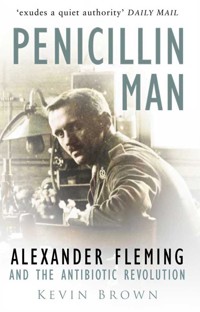
PENICILLIN MAN
To my parents, Thomas and Lily Brown
PENICILLIN MAN
ALEXANDER FLEMING
AND THE ANTIBIOTIC REVOLUTION
KEVIN BROWN
First published in 2004 by Sutton Publishing Limited
This paperback edition first published in 2005
Reprinted in 2013 by
The History Press
The Mill, Brimscombe Port
Stroud, Gloucestershire, GL5 2QG
www.thehistorypress.co.uk
This ebook edition first published in 2013
All rights reserved
© Kevin Brown, 2013, 2013
The right of Kevin Brown to be identified as the Author of this work has been asserted in accordance with the Copyright, Designs and Patents Act 1988.
This ebook is copyright material and must not be copied, reproduced, transferred, distributed, leased, licensed or publicly performed or used in any way except as specifically permitted in writing by the publishers, as allowed under the terms and conditions under which it was purchased or as strictly permitted by applicable copyright law. Any unauthorised distribution or use of this text may be a direct infringement of the author’s and publisher’s rights, and those responsible may be liable in law accordingly.
EPUB ISBN 978 0 7509 5347 4
Original typesetting by The History Press
Contents
List of Illustrations
Preface
1
‘That’s funny!’
2
Doctor in the Making
3
Republic of Science
4
Into Battle
5
‘Purge me with hyssop’
6
Oxford Breakthrough
7
Disputed Laurels
8
Challenge for America
9
World Ambassador
10
Miracle Cure
11
Living Legend
Honours Awarded to Sir Alexander Fleming
Glossary
Notes
Bibliography
List of Illustrations
1.
Fleming assessing an Opsonic Index with Captain Hayden, c. 1909
2.
Silhouettes of staff of the Inoculation Department in the 1920s
3.
The Clarence Memorial Wing, St Mary’s Hospital
4.
‘Private 606’: sketch by Ronald Gray marking Fleming’s success in the London Scottish Regiment and as a ‘pox doctor’
5.
A wartime laboratory: Fleming and A.B. Porteous at Wimereux,1918
6.
‘Tear antiseptic’: cartoon by J.H. Dowd, suggesting one way of producing lysozyme, 1922
7.
Family life: Sareen and Robert
8.
One of Fleming’s germ paintings that failed to impress Queen Mary
9.
Fleming at the time of the discovery of penicillin
10.
Fleming’s 1929 photograph of his petri dish contaminated by a mysterious mould that inhibited the growth of bacteria
11.
Penicillin in use on the battlefields, Luxembourg, 1944
12.
An exhortation to build a penicillin factory to aid the war effort
13.
Howard Florey, assisted by Jim Kent, injects a mouse
14.
Ernst Chain analysing penicillin, 1944
15.
The penicillin girls tending the mould at the Sir William Dunn School of Pathology
16.
American pioneer Andrew Moyer
17.
A hero to bullfighters, Barcelona, 1948
18.
Fleming and Amalia at the Acropolis, 1952
Fleming’s notebook for 16 February 1929, testing the effects of penicillin on Stuart Craddock’s nasal mucus (p. 98)
Preface
This is the book I never intended to write and yet that I was fated to write. When I was appointed Archivist to St Mary’s Hospital and Medical School back in 1989, I consciously decided to avoid doing anything at all connected with Fleming. The subject already seemed to have been done to death, and the controversy surrounding the rival claims of Fleming, Florey and Chain still aroused violent passions, especially at St Mary’s, where Fleming spent most of his career. It is a lesson never to say ‘never’. Very soon I was sweating blood to set up the Alexander Fleming Laboratory Museum and, without intending to do so, I had become something of an authority on Fleming. I resisted all entreaties to write a biography until I could resist no more.
The more I have researched the subject, the more it has seemed that a new approach to Fleming’s life and the history of penicillin and a new book are timely. The existing biographies have suffered from too partisan an approach, either glorifying Fleming or knocking him from his pedestal. The more I have learned of the subject, the more unsatisfactory some of these earlier accounts have appeared to be, suggesting the need for an independent and exhaustively researched account that is not partly polemic in intent. There is enough credit to go around and to spare. Any book is partly a product of its own time, and fears that the antibiotic age in medicine ushered in by the work of Fleming may be about to end makes a re-examination at the start of the twenty-first century especially topical.
When I began to research this book, I had not realised just how far I would travel geographically in my quest. Naively, I expected to find most of my material in and around London, with Fleming’s papers deposited at the British Library, Florey’s at the Royal Society, Chain’s at the Wellcome Institute Library and the archives of St Mary’s Hospital in my own charge. Instead my mission took me to Sweden, across the United States and to Greece. In the course of this undertaking, I have had the help of many old friends and I have made many new friends, eager to offer what assistance they could.
Fleming himself has been a constant and congenial, if sometimes shadowy, companion throughout. At times his silences have been frustrating, but they have made all the more rewarding the times when those rare but revealing phrases or words of his have unexpectedly brought him vividly to life and given an insight into who he was. Actors say that it is more difficult to play a good character, often a very internalised personality, than an extrovert villain. Equally, it has been a challenge to portray a good, very likeable man, who rarely expressed his feelings and who was often overshadowed by being surrounded by larger-than-life personalities with their hearts too openly on their sleeves. Although it is often said that he was more interesting as a scientist than as a man, what lay beneath the apparently dour, intensely reserved outer carapace has continued to attract and fascinate the public ever since penicillin first found fame. The great challenge is to show why.
Chance famously played a large part in Fleming’s life and work; I too have been amazed at some of the unplanned coincidences that have dogged my researches. Indeed, he and penicillin have seemed inescapable even when I haven’t sought them out. I remember once visiting Barcelona, walking round the corner from my hotel and finding a bust of Fleming in front of me in a square named in his honour. I was invited to deliver the 2001 Andrew J. Moyer Lecture at the United States Department of Agriculture National Center for Agricultural Utilization Research at Peoria, Illinois, exactly sixty years after Howard Florey and Norman Heatley arrived there to get penicillin production under way in the New World. That was planned, but going to Athens exactly fifty years after Fleming’s tour of Greece in 1952 to consult the Fleming papers his widow had taken back to Greece with her was a complete coincidence. Indeed I was only yards away from where he had proposed to Amalia on the same day fifty years before.
There was also a coincidence of atmosphere. My researches into the Second World War development of penicillin in the United States took me to a country where the America of 7 December 1941 had more than a resonance in the nation in the aftermath of 9/11. The sense of impending unease and fears of the threat of terrorist outrages as war against Iraq approached in late 2002 and early 2003 forged a link with the urgency of the mood in the archival documents from sixty years previously that I had been studying in Washington DC, Philadelphia, New Brunswick and New York. There was nothing like being imaginatively immersed in the feel of the time being studied. Working in my day job at St Mary’s, the institution with which Fleming was intimately involved for so long, and knowing some of the people who had known him there brought the deepest of all creative links to the past.
Undoubtedly, penicillin was one of the defining discoveries of the twentieth century; it has affected everyone and continues to be relevant to this day. The themes of the importance of individual contributions as opposed to collective effort, the role of war as an agent of change, the role of chance and the story of a man prepared to take advantage of serendipity are all of universal relevance. For contemporary scientists the story of penicillin has lessons about the need to be flexible with different research strategies suitable for different situations and the need to communicate with the public if their work is not to be ignored or distorted. Fortunately for me in retelling that story, penicillin is perhaps one of the most accessible to the non-scientist of almost all discoveries. It is something we can all relate to. I vividly remember as an 8-year-old first learning the story of Fleming and a teacher demonstrating the discovery of penicillin with a mouldy orange. With hindsight I am also conscious that I myself might not be here without penicillin. As a young woman my mother had meningitis at a time when antibiotics were coming into use to treat this sometimes lethal infection. Perhaps this gives me all the more incentive to look behind the accepted story of Fleming and try to establish what really happened.
While this interpretation of the penicillin story and of Fleming is my own, I owe a deep debt of gratitude to many people around the world who have given me assistance in so many ways. I can only apologise in advance to anyone whom I may have inadvertently missed out. Dr Robert Fleming, son of Alexander Fleming, has always been supportive of, and interested in, the various forays I have made into aspects of his father’s life and work. Although this is in no way an official biography, the generosity with information and the support for my task from Robert have been greatly appreciated, and this book would have been the poorer without them. Biography, by its nature, if it is to tell the truth, must be intrusive, and I am grateful to all who knew Fleming who have shared their memories of him with me. He was a man who compartmentalised his life and rarely showed himself in the round to others. Only by talking to a range of the people still alive who knew him in different spheres have I been able to see how others perceived him and connect the different aspects he showed to them. I wish to thank, in particular, Bill Frankland, Barbara Gammon (née Parry), George Bonney, Keith Rogers, Felix Eastcott, John Ballantyne, John Crawford Adams, the late Jack Suchet, the late Andrew Matthews, Frank Diggins, Giles Romanes, Wolfgang Suschitsky, Phyllis French (née Norton), Ian Craddock, Diana Morley, Margaret Parfitt, Barbara Webb, John Hofmeyr and Edith Dee. Unfortunately Norman Heatley, the last surviving member of the Oxford team, was too frail to be interviewed again for this book. Boyd Woodruff has kindly shared with me his memories of wartime production at Merck in the United States and, with David Pramer, of Selman Waksman of Rutgers University, who coined the very word ‘antibiotic’. Tom Lees and Elmer Gaden have shared with me something of the atmosphere at Pfizer, where modern fermentation methods of penicillin production were first introduced on an industrial scale. Margaret Child and Jessie Carter have both vividly described what it was like to be the recipient of penicillin in the early days. Gilbert Shama has drawn my attention to material on wartime German involvement with penicillin. Over the years I have had many discussions on Almroth Wright with his biographer Michael Dunnill.
At St Mary’s, I must express my gratitude to St Mary’s NHS Trust for encouraging me in the writing of this book. There has been interest in my progress from many people throughout the Trust, but I wish to thank in particular Julian Nettel, Chief Executive, the Baroness Hanham, Chairman, and Jill Blowers for their interest in the project. Nor can I forget Alasdair Fraser, who has constantly urged, if not nagged, for many years that this was a book waiting for me to write it. The St Mary’s Hospital Association has given some sponsorship, for which I am grateful. In thanking the then Chairman of the Association, Averil Mansfield, I wish to thank all the Executive Committee and alumni who make up the membership. I must also thank the Lord Glenarthur for his interest in Fleming and this book, going back to his time as Trust Chairman, when he, Simon, was a keen supporter of the idea of setting up the Alexander Fleming Laboratory Museum. It was from this time too that I owe a debt to Professors Alan Glynn and Charles Easmon for their elucidation of the bacteriology behind Fleming’s work. Stuart Philip has also helped with my understanding of the practical side of this science at various times over the years. If I have got any of it wrong, it is my fault alone. Evi Kalodiki has communicated her enthusiasm for her compatriot Amalia Fleming and the Greek connections of Fleming. Tony Rippon has offered practical help and shown a keen enthusiasm, which I have much appreciated. Simon Newman has experimented with digital imaging for copying some fragile material. I would also like to express my appreciation of all the volunteer guides who enthusiastically work in the Alexander Fleming Laboratory Museum and have shown such a keen interest in my progress with this work throughout, as has former assistant archivist Tudor Allen.
At the National Center for Agricultural Utilization Research, Peoria, Illinois, I was made to feel both like an adopted member of the NCAUR family and like an honoured VIP guest during my visit as 2001 Andrew J. Moyer Lecturer and in all my subsequent communications with them. I am grateful for their wholehearted help, given in much the same spirit as it was for a much more important project back in 1941, when the foundations of modern antibiotic production were laid there. I especially wish to thank Peter Johnsen, Director, Kate O’Hara, Technology Communications Officer, and Joyce Blumenshine, Librarian. Cletus Kurzman, Head of the United States Department of Agriculture, Agricultural Research Service Culture Collection, and Steve Peterson, Curator of Aspergillus and Penicillium collections, showed me the national culture collection originally established by Charles Thom, especially the strains relating to the development of penicillin, and the accompanying documentation.
I have enjoyed great cooperation from the pharmaceutical industry, which has opened its doors surprisingly willingly. At Pfizer (UK), I am indebted to John C. Adams for facilitating my visit to their Sandwich plant and to Ian Cording, Assistant Records Manager, for access to the Kemble Bishop records held there and for his investigation of other sources of material within the company. At Pfizer in New York, my thanks go to Robert J. Fanteux, Veronica Plucinski and Gustavus Barrientos of the Corporate Affairs Division for access to the records of Pfizer. At GlaxoSmithKline, I wish to thank Danita Onräet for her encouragement and contacts, Bill Smith and Tony White. Brian Ward of Merck in the United Kingdom similarly eased my route to Joe Ciccone, Archivist at Merck Corporate Archives at Whitehouse Station, New Jersey, who has been helpful despite staffing difficulties. Brian Davis of Bristol Myers Squibb, New Brunswick, New Jersey, has kindly supplied material relating to his company’s involvement in penicillin.
At Rutgers University, I owe a great deal of gratitude to Douglas Eveleigh, who took considerable pains to facilitate my researches in the New Jersey area and for his nominating me as Pfizer Visiting Professor. My visit to Rutgers was a pleasure as much as a labour and was smoothed considerably by Doug.
At the Alexander Fleming Biomedical Sciences Research Centre at Vari, Greece, I am grateful for the cooperation and hospitality of the Centre proffered by John Volanakis, the then Director. In particular, I must mention the help from George Panayotou, who went out of his way to make my stay there and my researches as comfortable and productive as possible. I am also appreciative of the access to Fleming’s papers given by Elsa Rokofillou, President of the Hellenic Foundation for Basic Medical Research Alexander Fleming, and for sharing her memories of her friend Amalia Fleming.
In Italy, I have had much help from Maria Luisa Messa of Brescia, who has long had an interest in Fleming, and also from Michele Francaviglia, Medical Director of the Fleming Laboratories. In Spain, Lluis Martinez, sub-Director of Avui in Barcelona, has been assiduous in collecting for me material relating to Fleming’s visit to Barcelona in 1948 and in generously translating documents from Catalan into Spanish for me, becoming a friend in the process. Some of the material he gathered was supplied from Manuel Escudé Aixelà, Chair of the History of Medicine at the University of Barcelona. My thanks also go to Carlos Flores Varela, Director of the Archivo General at the Universidad Complutense Madrid, for access to material relating to Florencio Bustinza Lachiondo, one of Fleming’s greatest admirers. I must also thank Marika Hedin, then of the Nobel Museum in Stockholm, for advice on sources relating to the Nobel Prize. Hans Jörnvall, Director of the Karolinska Institute, granted access to the 1945 Nobel archives, despite his disastrous summer and near fatal car accident. Material from the Nobel Archives was kindly provided by the Nobel Committee for Physiology or Medicine. Maria Lorentzon, with whom I have collaborated on issues of nursing history, translated those documents that were in Swedish for me into English over a couple of bottles of wine.
Inevitably, though, much of the research has been conducted in libraries and archives. I would like to thank the staff of the British Library, the Wellcome Institute and Royal Society Libraries and Archives, the Bodleian Library, Library of Congress, Public Records Office (now the National Archives, London), and National Archives and Records Service of the United States, as well as those other librarians and archivists mentioned by name. At the National Academy of Sciences, Washington, DC, Daniel Barbiero and Janice Goldblum were helpful. Arlene Shaner, Reference Librarian at the New York Academy of Medicine, enthusiastically showed me her relevant holdings. Thomas J. Fusciano, University Archivist at Rutgers University, and his staff facilitated access to the Waksman papers. Monica Blank, Archivist at the Rockefeller Archive Center, has been ever ready with help. Clem Webb of the London Scottish Regiment facilitated my access to the regimental library. I also wish to thank Amey Hutchins of the University of Pennsylvania Archives for her unsuccessful search for references to the Alexander Fleming Memorial Fund. Over the years, I have enjoyed the facilities and friendship of the staff of the Library at St Mary’s Hospital Medical School (now the St Mary’s Campus Library of Imperial College Faculty of Medicine), especially the help of Nigel Palmer and Sally Smith, the former and present librarians, and their staff, in particular Rachel Shipton and Dinah Akan. Bernadette Tallon, formerly of St Mary’s Audio-Visual Services, has always been helpful regarding photographs of Fleming and ensured that the collection was saved and passed to my care on the regrettable closure of her department, just as Cathy Ison was a guardian of Wright and Fleming relics until my advent. I am also grateful to Professor Herman Waldmann, Head of the Sir William Dunn School of Pathology at Oxford, for freely making available photographs of the ground-breaking work done there.
Robert Peberdy I wish to thank for first suggesting Sutton Publishing as a firm that might be interested in this book and for advising me on publishing issues. At Sutton, my thanks go to Jaqueline Mitchell, who has been an enthusiastic commissioning editor and has made constructive comments. Also I wish to thank Hilary Walford and Mary Worthington for helping me to make this a better book.
Completing this book amidst the flurry of activity surrounding celebration of the seventy-fifth anniversary of the discovery of penicillin has underlined for me the continued importance of Fleming’s discovery. Amidst a series of television appearances ranging from BBC Breakfast to a news item on Catalan television, newspaper interviews, a competition sponsored by the Royal Society of Chemistry to find Britain’s mouldiest mug, a summer festival marking the anniversary at St Mary’s Hospital, the merchandising of the inevitable anniversary memorabilia and delivering special lectures, I seemed to spend much of the anniversary week at the scene of the discovery talking about Fleming. It all left little time for drawing breath, let alone thought, yet a rare quiet moment to myself for reflection in Fleming’s laboratory exactly seventy-five years after the discovery was enough to remind me of the importance of what had happened there and of why I had written this book: to retell a story that has never lost its drama but where sometimes the truth has slipped behind the myth.
London 3 September 2003
ONE
‘That’s funny!’
It was the bane of many a bacteriologist’s life – the contamination of a culture plate by a fungus. Yet this mysterious mould was destined to change the world and to revolutionise medicine in a way the scientist who noticed it could never have predicted that early September day. It would also change his own life and bring him the fame and public attention he would never have intentionally sought for himself. Forty-seven-year-old Alexander Fleming had only just returned from holiday that Monday morning, 3 September 1928, after spending August with his wife and 4-year-old son at their country home in Suffolk. His appointment as Professor of Bacteriology at St Mary’s Hospital Medical School, part of the University of London, had commenced on Saturday 1 September, but, whatever pride he may have had in his new status, he was really returning to a department he had worked in for over twenty years and he did not expect too many changes to his way of working. If anything, he was more interested in the research that had absorbed his attention before he went away.
Before him on the bench of his cramped laboratory, crowded with the tools of his bacteriologist’s trade, were some discarded petri dishes containing Staphylococcus aureus, a fairly common bacterium which can cause nasty though not lethal abscesses and boils. He had finished working on these cultures before his holiday and now had no further use for them, but settled down to examining them for one last time before asking his laboratory technician to sterilise them so that the glass plates could be reused. The culture plates were stacked in an overflowing shallow enamel tray for examination and after inspection would be transferred to an adjacent tray, containing lysol, a strong disinfectant.1 Many bacteriologists liked to dispose of their discarded culture plates as soon as they had finished with them, but not Fleming. His usual practice was to leave them for a few weeks until the bench was overcrowded with forty or fifty cultures just to see what, if anything, might have happened. He teased any of his more orderly colleagues with the charge of excessive tidiness if they cleared their benches and discarded test tubes and culture plates for which they had no further use at the end of each day.2 Fleming’s approach was about to be vindicated.
He was busy examining his plates under a hand-held magnifying glass when a visitor popped his head around the always open door of the laboratory. Merlin Pryce, then a research scholar, had helped Fleming with his earlier work on Staphylococcus aureus, but had left the laboratory in February 1928 to work as a pathologist in the Department of Morbid Anatomy at St Mary’s, leaving Fleming to continue with the work himself. Fleming, ever anxious to encourage the careers of younger associates, indeed wished to make him co-author of the resultant publication, but Pryce refused as he believed he had not contributed enough to the work on staphylococci to merit such distinction. Fleming continued to sort through the plates, a number of them contaminated with colonies of yeasts and moulds, as he chatted to his visitor, chiding him for having left him to do all this work himself and occasionally pulling out an interesting specimen at random to show to his colleague. Indeed he had come very close to discarding the culture plates without inspecting them when his visitor arrived, but Pryce urged him to continue to look at them.3 Suddenly, Fleming noticed something unusual and paused to examine much more closely one of the plates he was about to hand to Pryce. ‘That’s funny!’ he said. He had discovered penicillin.4
Fleming showed Pryce what had interested him. Colonies of staphylococci cluster together like bunches of grapes and the plate should have been densely covered with these colonies on nutrient agar jelly. What the two men saw was that the plate had become contaminated by a mould. There was nothing unusual in that, as contamination was an occupational hazard. It would have been easy to have glanced at the contamination and immediately set the culture aside without a further glance.5 However, Fleming had noticed something that caught his attention much more than the big blob of mould. There were no staphylococci growing close to the fungus and beyond this zone of inhibition there were signs that the bacteria were being lysed or dissolved. The fungus was producing a substance capable of inhibiting the bacteria. That substance Fleming at first called ‘mould juice’.
Indeed it was the signs of lysis that perhaps interested Fleming more than anything. Pryce confessed himself to have been unimpressed by the plate that had so excited Fleming: ‘I didn’t know what was going through his mind, but for my own part I thought that the lysis was due to acids produced by the mould . . . But pandering to the great man, I actually said “That’s how you discovered lysozyme.” He made no comment, but with automatic hand he took his platinum loop and subcultured the mould into a tube of broth.’6 Unconsciously, Pryce had hit upon the very factor which had attracted Fleming’s interest. The circumstances in which he had made the first of his great discoveries, that of the body’s own antiseptic lysozyme, almost seven years earlier, were very similar to the discovery of penicillin. In both discoveries, a chance observation of a natural phenomenon on a petri dish was the starting point. Fleming was always to claim that much of his best work had been done on lysozyme but its therapeutic value was limited. Now here was another substance with lytic activity, one that was perhaps more potent than lysozyme. Certainly, in attacking Staphylococcus aureus it had shown itself capable of destroying a common pathogenic organism. It was well worth pursuing.
An acute observer of natural phenomena, Fleming at once took action and subcultured a minute sample of the fungus from the culture plate into a liquid growth medium rather than the solid agar of the petri dish. The test tube in which he placed his specimen was filled with Sabouraud’s medium, a mixture of peptone–agar used for culturing fungi, though he later found that an ordinary meat broth would have done just as well. He also took pains to preserve the original plate, photographing it and exposing it to formalin vapour both to kill and to fix the mould and the bacteria. He was to keep this original plate for many years, even when there were few people who believed that penicillin would prove to be anything more than an interesting phenomenon or useful laboratory tool. Dried up and brittle, it is now a national treasure in the British Library, where it was deposited in 1965 with Fleming’s papers.7 It was obvious that, from the beginning, Fleming considered the plate interesting and important enough to be preserved.
He also thought it worth sharing with his colleagues. It was shown to anyone who called into his laboratory that day, including E.W. Todd, who had just returned from New York, Hurst Brown, a Canadian Rhodes scholar, and C.J. La Touche, an Irish mycologist who occupied the laboratory immediately below his own. They were politely interested but no more. He even took it to the main laboratory up the stairs from his own room and, standing in front of the open fire with the ever-present cigarette dangling from his lip, proudly showed his colleagues the plate. Once again it was greeted without any enthusiasm. Everyone dismissed it as another of Fleming’s interesting curiosities of bacteriology that they had seen so many times before and that were without much significance. Almost as soon as they had seen the plate, they forgot about it. Thirteen years later, when the clinical importance of penicillin had been truly established, they were all to remember this moment.8
With hindsight it may have been a Eureka moment, but Fleming was not by nature a very demonstrative man nor one to show excitement. His laconic comment on making the observation that it was funny was typical of a man given to few words. Affectionately nicknamed ‘Flem’ by his colleagues, Alexander Fleming was considered by many to be the typical dour Scot, revealing little of what he actually thought. One of his research assistants, Frederick Ridley, was to say that ‘in seeking to recapture something of Fleming’s personality, one is up against almost a brick wall’.9 Fleming’s biographer André Maurois was to describe him as a shy man, but Ernst Chain, the biochemist who was to contribute so much to bringing penicillin into clinical use, disputed this: ‘I knew him sufficiently well to say with certainty that he was anything but shy . . . he was a taciturn Scot, and small talk did not come easy to him. He was oligophasic.’10 It is something of an overstatement, but it is true that, fond as he was of company, he was always a better listener than a talker. His favourite snooker partner at the Chelsea Arts Club, the artist Vivian Pitchford, was stone deaf, rendering small talk unnecessary.11 A conversation with him was ‘like playing tennis with a man who, when he received a service, put the ball in his pocket’.12 Fleming was equally comfortable with silence and could stand staring at someone without exchanging a word and without showing the slightest embarrassment or discomfort, making his conversations ‘masterpieces of brevity’.13 Taciturn though he may have been, he was sociable and generally ready to attend scientific meetings, give lectures and socialise with his colleagues, visiting scientists and his friends outside work. Ever accessible, he invariably left his laboratory door open. Visitors were always welcome. If no one called in on him and he felt like some company, he would wander into the main laboratory, often doing little more than watch what was going on. Occasionally, he would make some comment on the state of the stock market, the marriage of a colleague or some scandal in the scientific world, but generally he was not given to gossip and he had no time at all for the smutty stories of the locker room.14 Nor was this practical and down-to-earth man likely to inspire his colleagues with the excitement of his discovery.
He was a small man, only 5ft 6in in height, with blue eyes and greying hair, once fair and now well on its way to being white.15 He was very conscious of his lack of stature and sensitive to the disadvantages of being small and of needing to prove himself. He once commented to his friend and stockbroker Anthony Ritchie that Ritchie’s son Brian ‘doesn’t need to bother about exams – he’s tall and tall people can do anything, go anywhere’.16 Yet, despite his stature, his head was large and dominated by a boxer’s bent nose that had been broken when he was a boy and by the intensity of his stare through large and noticeable searching blue eyes, features that were often remarked on.17 He had a disconcerting habit of keeping his eyes closed when talking and then suddenly opening them, only to stare at the person he was talking with.18 Although he had lived in London since the age of 16, he had never lost the soft lilt of his Ayrshire accent and had a slight speech impediment when pronouncing his ‘r’s.19 Often he would sing at his work.20 There was a ‘swing in his walk, almost a jaunty lift of the shoulder’, and, while attractive to women, he was considered ‘very much a man’s man’.21 His one affectation of individuality in dress was always to wear a brightly coloured bow tie.22 Very rarely was he seen without a cigarette in his mouth. He smoked sixty cigarettes, which he often rolled himself, during a working day alone, and on his lab bench there was always to be seen an upturned glass petri dish pressed into use as an ashtray, overflowing with cigarette butts and ash.23
By modern twenty-first-century standards his laboratory was primitive in the extreme. He had shared it with his colleague E.W. Todd since his return in 1919 from the First World War, and, though it was small, no more than 12ft by 10ft, the two men had appreciated being able to work with little or no disruption from their colleagues in the larger open-plan laboratory.24 Fleming sat facing three windows, which covered one entire south-facing wall of the laboratory, giving him a good source of the natural light he needed. If he needed extra light, he used an electric light improvised from a low-powered bulb covered by a cigarette tin with a hole cut in it. He used an old monocular Beck microscope, which was not much use for any photographic purposes. Much of the equipment was either handmade or improvised by Fleming or the laboratory boys. Pipettes and other delicate items of glassware were hand blown and Fleming would often teach the new lab boys the art of glass blowing.25 Indeed one of Fleming’s party tricks for children was to use his glass-blowing skills to make little animals for them. The laboratory would have been cramped enough even without Fleming’s craze for hoarding things that might come in useful at some time or other, including string, elastic bands, old cigarette tins and blackened cotton-wool plugs. On the bench was a clutter of oil baths, copper water baths, an opsonisation bath for estimating the activity of leucocytes, hand-drawn pipettes, test tubes plugged with different coloured cotton wools to indicate their contents, conical flasks, culture plates, staining bottles, jars of reagents, Wright’s capsules for separating blood cells from serum, medical flats (flat-bottomed flasks) in which bacteria were grown in meat broth, a bench-top incubator, an asbestos Seitz filter and all the other paraphernalia Fleming needed for his experiments. It may have seemed a jumble, but Fleming, who had a remarkably sterile technique as a bacteriologist, knew where to lay his hands on anything he required and he liked everything to be handy on his crowded mahogany work bench. It was only when he went away on holiday that Dan Stratful, his laboratory boy (as the technicians were then called irrespective of age) since 1921, could tidy the bench and completely clean it by wiping it down with a disinfectant.26
The laboratory, with its walls half-tiled with plain yellow tiles that were easy to wipe down and that were crowned with a dado of floral-patterned green tiles, was on the second floor of a turret of the Clarence Memorial Wing of St Mary’s Hospital and had never been designed to house a laboratory. The wing had been planned in 1892 as a memorial to Queen Victoria’s grandson the Duke of Clarence, who had been attended in his last illness by a St Mary’s physician, Sir William Broadbent, and nursed by two of the hospital ward sisters. The intention had been to give St Mary’s a grand public frontage onto the main thoroughfare of Praed Street, Paddington. The hospital, founded in 1845, had suffered from obscurity in facing a mean back street and it was even claimed that the usually omniscient London taxi drivers could rarely locate it. The foundation stone was laid in a great flurry of publicity by the Prince of Wales on 17 December 1892, and his surviving son, the Duke of York, whose life had been saved from typhoid by the same team from the hospital that had tended the Duke of Clarence in his last illness, became President of the Hospital. Unfortunately, the name of the late Duke of Clarence was not the fundraising draw the hospital had hoped and by 1898, when the basement of the wing was opened as a new Outpatients Department, the money had run out for further building work. Irreverently named the ‘amputation stump’ by the students, this much truncated building had a roof that was let out as a stand for spectators watching the return of the City Imperial Volunteers from the Boer War in 1900. A bequest of £25,000 on condition that the hospital could find an equivalent amount within six months enabled the building’s completion by 1904. The only problem was that the hospital could not afford to open any of the wards until 1907. Sir Almroth Wright, founder of the Inoculation Department in which Fleming worked, had seized the opportunity to expand his own empire by leasing space for laboratories and a research ward in the Clarence Wing using privately raised funds.27
Old-fashioned as it was, it was perhaps only in that small, cramped, musty and dusty laboratory that Fleming could have discovered penicillin, or so he himself thought. Years later at the end of the Second World War, when shown around the modern, state-of-the-art Pfizer plant at Brooklyn, Fleming was asked by a journalist what he thought of the laboratory facilities. The expected answer was what marvellous work Fleming could have done with the most sophisticated of facilities compared with what had actually been available to him in 1928 in his old-fashioned laboratory back at St Mary’s. However, that was not how he saw it at all: ‘I could never have discovered penicillin here. Everything is much too clean and tidy.’28 His lab boy may not have appreciated this casual dismissal of his best efforts at keeping the laboratory free of the dust and pollution of Paddington, amidst Fleming’s clutter, but without the possibility of contamination there would have been no penicillin.
It was not just the physical environment of the laboratory that made Fleming’s workplace so conducive to him making the discovery. He had the freedom to pursue something that interested him and, working as an individual in the tradition of the nineteenth-century lone researcher, was able to follow up a chance occurrence in a way denied to the modern researcher tied by the tight deadlines that come with research grants. Fleming himself was very conscious of this advantage and often in later years was to stress that none of his detour to study penicillin would have been possible had he been part of a team, though he admitted that teams rather than one individual were needed for the subsequent development of the drug: ‘Suppose, however, I had been part of a team at the beginning and I was being directed on a certain piece of research which I was engaged on, and the accident happened which led to penicillin. In this circumstance I would have chucked the thing away and gone on with my research. Fortunately I was an individual . . . the only way to do it is to give a man a free hand for a portion of his time and let him do as he will.’29
It was in connection with an invitation to write a chapter on the staphylococcus group of bacteria for a prestigious nine-volume publication, A System of Bacteriology, by the Medical Research Council that Fleming had prepared the culture plates he was working on when he discovered penicillin.30 He was a recognised authority on this micro-organism, but his detailed prior knowledge did not absolve him from the hard labour of collecting and reading references to the subject and confirming through practical laboratory experiments the observations he wished to make in his paper. Although his mentor and the head of the Inoculation Department at St Mary’s in which he worked, Sir Almroth Wright, was firmly of the school that raised reason over observation and believed that ‘one observation suffices if properly performed to establish the truth of a principle’,31 Fleming adopted a much more thorough approach to his research, putting careful practical observation above a logic that might perhaps be faulty and lead one astray. He had begun work on his studies of staphylococci for the book in 1927, with the help of Merlin Pryce.32 His acquaintance Joseph Bigger of Trinity College Dublin had recently done some work correlating the virulence of staphylococci with the variations in the colours of their colonies, which intrigued Fleming and prompted him to repeat the experiments. Bigger and his colleagues had suggested that, if culture plates were left for days and weeks at room temperature rather than incubated overnight at 37°C as usual, the bacterial colonies might change their colour and that such colour changes might indicate their virulence.33
However, staphylococcal variation was not Fleming’s main concern; it was his curiosity about something that appeared to dissolve bacteria that actually made him look at the plate with interest rather than annoyance, as he himself admitted: ‘Now had I been intensely interested in staphylococcal variation and not in antibacterial substances I would have cast out the plate, possibly with suitable language, and carried on with my original programme. However, it was the other way about – I was much more interested in antibacterial substances than I was in staphylococcal variation, so I subcultured the mould and the staphylococcus and proceeded to see why the mould colony should have acted as it did.’34
If it was the evidence of lysis or of the bacteria being dissolved that attracted Fleming’s initial interest, there is a problem with the exact process by which he made the discovery. Penicillin has no effect upon mature bacteria. However, it does inhibit the growth of developing colonies of microbes. For there to be signs of lysis, the plate must have been contaminated before the staphylococcus was plated or at an early stage of the growth of the bacteria and not after the colonies were mature and exposed to the air, as Fleming had seemed to suppose. Fleming had himself been aware in the 1940s of the difficulties of reproducing his culture plate if mature bacteria were exposed to contamination by the mould. However, it was left to Ronald Hare, who as a research student in the Inoculation Department had been one of the first to be shown the mould, to reproduce the discovery of penicillin in 1966. When Fleming went on holiday at the end of July, space on his bench had been cleared so that his latest research assistant, Stuart Craddock, could work there during his absence. The enamel dish containing the petri dishes awaiting examination had been put to one side but otherwise left undisturbed. The plates were left at normal room temperature for the next month or so. Hare believed that the penicillin plate had never been placed in the incubator, following the methods reported by Bigger. However, very strict environmental conditions were still necessary if there were to be any signs of lysis on the plate. If the temperature had been less than 98.6°F (37°C), the growth of the staphylococci might have been very slow, allowing penicillin from the mould to attack them during growth. If the room temperature had been any higher, the conditions would have been impossible for replicating Fleming’s culture plate. At first Hare had thought the very specific conditions necessary for the growth of the mould would have made it impossible to reproduce the plate in summertime. However, Meteorological Office records showed that temperatures were unusually low for nine days after 28 July 1928, with maximum daily temperatures of only 68°F (20°C). Fleming’s turret room was also a target for cold winds from the east and south. The conditions for the growth of the penicillium mould were just right and then a heat wave from 10 August on had been conducive to the growth of the bacteria beyond the zone of inhibition.35
Another mystery that has exercised the imaginations of young and old ever since the discovery of penicillin is exactly what was the source of the mould that changed the world. In the urge to clarify the matter, journalists came up with some bizarre explanations that could only be immediately discounted. One newspaper claimed that Fleming, cast in the role of the absent-minded scientist, ate a mouldy cheese sandwich that cured a boil on the back of his neck.36 Rather than cure a boil, it would have been more likely to cause a gastrointestinal upset. The Evening Standard, with a total disregard for chronology, reported that there was reason to say ‘Thank you, Luftwaffe’, claiming that during the bombing of nearby Paddington Station in 1940 the force of the blast had disturbed some cultures, one of which became contaminated by a mould.37 Since Fleming had not discovered some form of reverse time travel to whisk his contaminated culture back some twelve years to 1928, the weakness of the explanation is only too obvious, although it does reflect the interest there was in finding some easily understandable explanation for the source of the mould. However, the most popular and frequently repeated explanation is that the mould came through an open window from the street outside. The public house opposite, the Fountains Abbey, even lays claim to having been the source of the contaminant, not the best of advertisements for a pub. Fleming himself even supported the idea of the spores having come through the window.38 The only problem was that the window was rarely opened. As a bacteriologist, Fleming preferred to work in a still atmosphere, and ventilation was supplied by the ever-open door onto the staircase.
If the open window and the street outside were not the source of the mould, where did it come from? This was not a question that gripped Fleming. He was more interested in establishing whether other fungi produced anything similar to penicillin. He collected samples of mould from wherever it could grow – mouldy walls, jam jars, leather, Wellington boots and even cheese.39 He also obtained samples from a mycologist, or mould specialist, Charles La Touche, working in the laboratory below his own. La Touche had been appointed by John Freeman, Director of the Allergy Department at St Mary’s, to study the effects that fungi could have on asthma. Freeman had attended a lecture at St Thomas’s Hospital by the Dutch allergist Storm van Leuwen in which he suggested that some sufferers from asthma had their allergy brought on by moulds growing in the foundations and floorboards of their homes. La Touche’s task was to isolate moulds from the homes of asthma patients, identify the mould and make extracts from it that could be used to desensitise the patient. Fleming asked him for help in identifying the mould and for samples he could test to see if they also produced anything similar to penicillin. Only one strain of mould produced penicillin and it was one of those supplied by La Touche, the same strain of Penicillium notatum as that which had contaminated Fleming’s culture plate, although the mould was misidentified by La Touche as Penicillium rubrum. The most likely explanation would be that the spores of mould had entered Fleming’s laboratory on someone’s clothing or had been airborne.40 Ronald Hare suggested that the ultimate source of the contaminant may have been the basement of the townhouse of one of Freeman’s private patients living in Belgravia, Mayfair or Kensington, but it has also been suggested by A.W. Frankland, who succeeded Freeman as head of the Allergy Department, that the mould may have been among those acquired by La Touche at the start of his work from Professor Harold Raistrick of the London School of Hygiene and Tropical Medicine, a pioneer in the study of fungi.41
Chance had undoubtedly played its part in the circumstances of the discovery, but it would be wrong to say that Fleming was merely lucky. His detractors, however, continue to charge him with no more than being in the right place at the right time in their attempts to topple the idol from his pedestal.42 Fleming himself freely admitted the role that chance had played:
My important part in the story was that I saw something unusual and appreciated something of its importance so that I set to work on it. I have no doubt that the same phenomenon had been presented by accident to other bacteriologists, but they were not interested and so the chance was missed . . . Further than that, if my mind had been occupied with other things I might have missed it; I might have been in a bad temper; my chief might have insisted that it was not worth pursuing this strange path. Then I would probably have thrown away the culture and thought no more about it.43
The discovery of penicillin is perhaps the classic case that can be used to illustrate Pasteur’s often quoted dictum that chance events favour only the prepared mind.44 Training as a doctor and twenty years’ working experience as a bacteriologist made him receptive to the interesting phenomenon, but it was factors in his own life that made him more likely to grasp its significance. For Fleming this was almost a discovery waiting to happen. It was to lead him down paths that no one could ever have imagined and take him a fair distance from his simple origins.
TWO
Doctor in the Making
‘For Pasteur, 1881 was a memorable year; so it was for me, for it was then that I was born,’ Alexander Fleming was later to say in his characteristically dry and laconic style.1 Scientifically, it was an exciting time. Louis Pasteur, that titan of nineteenth-century science whose work had laid the foundations of modern microbiology, had successfully vaccinated sheep against anthrax in June 1881, validating his belief in immunisation.2 Like immunology, the science of bacteriology, in which Fleming was to make his mark, was in its infancy. Alexander Ogston, a fellow Scot, had just described the bacterium staphylococcus against which Fleming’s penicillin was to prove so effective. The work in France of Pasteur and in Berlin of Robert Koch, who was the first scientist to show that a specific disease could be caused by a specific micro-organism, had demonstrated the existence of harmful bacteria and showed how they could cause disease. This led to a search for chemicals that could kill bacteria without doing more harm than good to the patient, a search that was later to attract the attention of Fleming. The work of Joseph Lister on such antiseptics as carbolic acid supported Pasteur’s germ theory of infectious disease and laid a basis for modern surgery.3
In both community and hospital, death from infection was common, and many people suffered from such bacterial infections as septicaemia, pneumonia and peritonitis. Lobar pneumonia was common and frequently fatal. Tuberculosis killed 65,000 in 1896 in Britain and left many young adults permanent invalids. The sexually transmitted diseases gonorrhoea and syphilis were prevalent. Women died of puerperal sepsis after childbirth. Children were prone to whooping cough, scarlet fever, diphtheria and middle-ear disease, which could cause permanent deafness. Typhoid fever had killed Prince Albert and was to endanger the life of his grandson Prince George, the future King George V. Mortality in hospitals was high, with a quarter of all surgical patients dying from gangrene or mortification of the wound.4 There were no antibiotics to fight these diseases. Alexander Fleming was destined to play a major part in the conquest of many of these infections, although in 1881 that lay far in the future.
His life, which was to have such an impact on this fight against disease, has often been depicted all too readily as the classic rags to riches story of the humble farm boy made good.5 It is an attractive story with an enduring appeal, but like many of the myths that have grown up around Fleming it is not true. Like another Ayrshire success story, that of the ploughboy Robert Burns destined to become the Scottish national poet, Fleming’s story is much more complex than the modern version of the Dick Whittington myth might suggest.
He was born on 6 August 1881 at Lochfield Farm near Darvel, Ayrshire, the second youngest of the eight children of a hill farmer. Since 1855 his father, Hugh Fleming, had rented the 800-acre farm from the Earl of Loudoun. Sheep farming was the main activity at Lochfield, but there were some 40 or 50 acres of arable land and a small herd of cattle. Life at Lochfield was spartan by modern standards, but the Flemings were as prosperous as any Ayrshire tenant farmers of the time. Tempting as it has been for some authors to write of the poor farm boy who went barefoot to school, the truth is that the Flemings were comfortably situated, if far from wealthy. The sons of the family could be launched onto the first rungs of successful professional or business careers, albeit that small sacrifices had to be made in order to do so. Their home was comfortable if not luxurious. Lochfield was substantially built of immaculately whitewashed stone, with barns and byres forming three sides of a courtyard, and had three bedrooms for the four adults and four children living there in the 1880s. Compared with the two-roomed cottages of some of their neighbours in nearby Darvel, the Flemings had a spacious home.6
Hugh Fleming, born in 1816, had been married twice. His first wife, Jane Young, died of pulmonary tuberculosis in 1874 after giving birth to her fourth child, Mary. Her eldest child, Jane, had been born in 1862, followed by Hugh in 1864, Thomas in 1868 and Mary in 1874. Left a widower with four young children to bring up and a farm to run, Hugh Fleming remarried in 1876. His second wife, Grace Morton, born in 1848, daughter of a neighbouring farmer, was to bear him another four children: Grace born in 1877, John in 1879, Alexander (known always to his family as Alec) in 1881 and Robert in 1883. As was common at the time in large families, the eldest daughter, Jane, helped her stepmother to bring up her siblings, some twenty years her junior, until she left home to be married when her youngest brother, Robert, was still a baby. Sadly, she was to die of smallpox within a year of her marriage to Dr Lyon of Darvel. Grace Fleming nursed Jane during her illness, regardless of the risk to herself but characteristic of the strong-willed and generous-minded woman, as concerned about her stepchildren as her own offspring.7
Grace Fleming was at the heart of the entire family, praised by her own children and her stepchildren alike as an excellent and cheerful mother, housekeeper and cook. She was practical and ready to join in with her children’s fun in the games they loved to invent. Grace Fleming united the children of both marriages as if they were her own, and there were no signs of the friction that could have arisen between them. They seem to have been close to each other, as they were to remain throughout their lives.8 Alec Fleming himself later said, ‘I have to render great thanks to my mother – one of the best women who ever lived – for my upbringing.’9 A happy upbringing and family life were to form the foundations of Alec’s background.
When Alec was 7 his father had a stroke and, after a short period as an invalid, died at the age of 72. Alec and Robert were later to remember their father only as a kindly, grey-haired old man confined to a chair by the fireside.10 He remained a shadowy figure in the memories of his younger children. Much more important for their upbringing was the partnership between their dynamic mother, Grace, and eldest brother, Hugh, who at the age of 23 had now inherited the tenancy of Lochfield and headship of the household. The second son, Tom, was a medical student at Glasgow when his father died, but was later to assume some responsibility for the care of his younger brothers when they were old enough to leave Darvel to seek their fortunes elsewhere. Until then Hugh was to take on the role of guiding them through their childhood.
Life on the farm was idyllic for the younger children, who were allowed to roam the local moors and hills unfettered by parental worries about their safety. The farmland covered an area approximately 2 miles long from east to west and a mile wide. The eastern boundary, corresponding with the border of Ayrshire and Lanarkshire, was marked by a fence, but the northern boundary was formed by a natural feature, a large bog known locally as Juck’s Haggs, which separated Lochfield from neighbouring Overmuir Farm. Three streams crossed the Lochfield land, Glen Water, a tributary of the River Irvine, forming the western boundary, and Calder Burn forming the southern boundary of the Flemings’ land. Close to the farmhouse was the Loch Burn. Separating the glens through which these streams ran were Lamb Hill, Rough Hill and Whiteknowe, about 900ft high. Higher hills were to be found to the north of this wild, remote countryside, scattered with the ruins of tiny farmsteads abandoned during eighteenth-century enclosure. The Fleming children were able to roam over this rough terrain in their free time, tobogganing down the peat slopes, bathing in the deep pools and clambering over the waterfalls. Danger meant nothing to them, nor did such escapades as raiding a neighbour’s turnip field on the way home from school.11
Alec and Robert were inseparable during their childhood at Lochfield. Robert did not remember Alec ever acting the heavyhanded part of the elder brother, but even as a child Alec was to show a determination to win at competitive games. Keen to prove himself the one who could roll fastest downhill in one of these games, he chose a steep slope ending in a sheer drop to a rock-strewn gully. Watched with fascinated horror by his brothers and sisters, he rolled out of control and came to a stop only on the edge of the drop, merely remarking ‘Ah cam doun tha quick.’12 Such pawky understatements were to remain his trademark, just as a quietly competitive streak was to show itself at times throughout his life.
Hunting and fishing provided many hours of amusement for the boys, when they were not helping with sheep shearing or performing other small chores on the farm. Too young to use guns, they would catch rabbits with their bare hands. The boys noticed that rabbits would stay still in the undergrowth if they thought themselves unseen, and so would play a game with these rabbits by pretending not to notice and then swiftly diving on their unlucky prey. They would also collect plovers’ eggs to sell for 4d each to a Darvel grocer, who sold them on to his customers for 5s




