


7,00 €
Mehr erfahren.
- Herausgeber: Garnet Publishing
- Kategorie: Sachliteratur, Reportagen, Biografien
- Sprache: Englisch
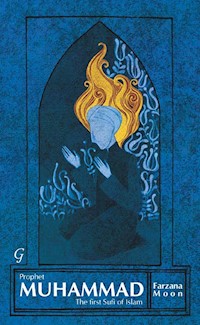
This important book is a biographical account of Prophet Muhammad's life, written in narrative style. It differs from other books on the subject of the Prophet Muhammad, as it touches on the Sufic aspects of his life. In this book, Farzana Moon sets out to portray the true spirit of Islam as a religion of peace and reconciliation, as practiced by the Prophet, and to correct contemporary misconceptions about this. The reader travels with Muhammad through his life and shares his most intense experiences: his love for his wife Khadijah, his passion for establishing peace in Arabia, his visions and ecstatic experiences, and his character as one of the most successful military commanders, leaders and social reformers of all time.
Das E-Book können Sie in Legimi-Apps oder einer beliebigen App lesen, die das folgende Format unterstützen:
Veröffentlichungsjahr: 2013
Ähnliche


















Prophet Muhammad
The first Sufi of Islam
Farzana Moonfarzanamoon.blogspot.co.uk
Prophet Muhammad
The first Sufi of Islam
Published by
Garnet Publishing Limited
8 Southern Court
South Street
Reading
RG1 4QS
UK
www.garnetpublishing.co.uk
www.twitter.com/Garnetpub
www.facebook.com/Garnetpub
blog.garnetpublishing.co.uk
Copyright © Farzana Moon, 2013
All rights reserved.
No part of this book may be reproduced in any form or by any electronic or mechanical means, including information storage and retrieval systems, without permission in writing from the publisher, except by a reviewer who may quote brief passages in a review.
First Edition
ISBN: 9781859642962
British Library Cataloguing-in-Publication Data
A catalogue record for this book is available from the British Library
Typeset bySamantha Barden
Jacket design byHaleh Darabi
Printed and bound in Lebanon by International Press: [email protected]
For Floyd My handsome son-in-law
Chapter 1
The Holy Bridegroom Year 595 ad
I cast the garment of love over thee from Me. And this in order that thou mayest be reared under Mine Eye.(Quran20:39)
A subtle scent of rose and jasmine hung in the air, emanating from Muhammad’s very soul as he lay sleeping on a mattress of feathers covered with white sheets. The room in which he was sleeping was in the home of his uncle Abu Talib. It was his home too: he had lived there practically all his life. This small house in the town of Mecca in Hijaz was his haven and sanctuary, ever since he had been orphaned at an early age.
His dreams were dousing his twenty-five years in the baptismal waters of mystery and longing. He had had no intention of taking a siesta; he had been wishing the day to melt into the evening so that he could claim Khadija as his wife. But after indulging himself in the luxury of a cool bath, he had drifted into the bowers of sleep, inhaling the familiar fragrance of rose and jasmine, a scent which never failed to remind him of the first time he’d noticed it, as if it flowed out of his breath. He was a child then, visiting Medina with his mother, and this perfume had become a part of him, shortly before his mother had died on their journey back to Mecca.
In the tapestry of Muhammad’s dreams, his childhood was unfolding as a tableau of loss and loneliness. He was still in his mother’s womb; his father was far away on a trading trip in the city of Gaza close to Syria, falling ill during his journey back, dying in Medina. Muhammad’s dream-vision afforded him the sight to witness his own birth in Mecca, then it carried him to the House of Nabgha, a graveyard in Medina where his father lay buried. A newborn babe again, he could see himself suckled by Thuwaibiyah for two whole days before he was entrusted to the care of Halima from the tribe of Banu Saad. His senses cherished the smell of camel’s milk, and the taste of dates and barley cakes on his tongue. The desert birds flew overhead, and a sudden storm of locusts swept past. He was eating locusts, then going home to Halima, and welcoming the aroma of mutton and roasted gazelle.
The scene shifted, lifting him onto the rungs of six happy years as Muhammad Mustafa. He was playing with his foster-brothers. Two men in white were floating towards him, swords of light gleaming in their hands. They were pinning him down and slitting his breast open. He could see them washing his heart with snow, then replacing it within his little breast, and sealing his skin with a wand of light. Suddenly, they had vanished, and so had his foster-brothers. Halima was racing towards him, terror shining in her eyes. She was clasping him to her breast, weeping and praying.
It was a dream made of quicksilver; now it abandoned him into the arms of his mother Amina. He was on the road to Medina with her. This dream too was short-lived; now he was journeying back to Mecca with his mother and an Ethiopian slave by the name of Baraka. His mother was ill, and he as a six-year-old boy was watching her die in the village of Abwa, left alone with Baraka.
Another time, another dream! The face of his grandfather Abu Muttalib was coming alive. But this dear face too was snatched by death, and so he was entrusted into the care of his uncle, Abu Talib.
Muhammad’s dreams grew dark; he was startled into waking.
Muhammad, the deep-hearted son of wilderness with his beaming black eyes and deep soul brimming with love, was up on his feet. He looked out of the window at the shimmering plains spruced with grey houses. His gaze shifted to his ivory comb, his little object of luxury, and then lingered over the drinking goblet with silver trimmings. The copper wash bowl was demanding his attention too, but his senses were surrendering to the sweetness of music from downstairs.
The sprightful tunes were goading Muhammad to get dressed into his bridegroom’s fineries, but the dreams which he had dreamed were hovering over his awareness. They were not just dreams, they were the mists of daydreams, and more of them were visiting him; his trips to Syria and Yemen with his uncle, Abu Talib, trading silver bars and precious stones for oil, rice, sugar and perfumes. A familiar ache, which had become a part of his soul, was stirring inside him, attaining the voice of a distant thunder.
Why? Why this ache and longing? On this blessed, blessed day of my marriage to Khadija? The eve of desire and blessing, is it not? The dance of joy in my heart – where did it go? Where?
Muhammad began to dress with the precision of an artist.
The holy bridegroom had commenced the ritual of dressing, straightening each crease in his tunic before donning it, and gathering it around his waist with a red sash. The wedding songs accompanied by music were rippling forth afresh from downstairs. His joy was so clear and his perception so keen that he could distinguish the laughter of each of his uncles amidst the rollicking of music and songs. Hamza’s mirth was loud in contrast to Al Abbas’s, low and trilling. Abu Talib’s laughter could not be missed, so clear and bubbling, while Abu Lahab’s lifted above them all, booming and uncontrollable. He was claiming the staff of reveries. Khadija was with him. Muhammad’s heart ached to hold her in one eternal embrace. His very thoughts were carrying her into the Cave of Mount Hira, murmuring endearments.
Mount Hira! Muhammad chuckled to himself at his own incredible wish. She would die of fright. A boyish smile lit his features to a sunny glow. Mount Hira, a few miles outside Mecca, cradled a great cave in its bosom which had become Muhammad’s second home, where he was wont to retire quite often when overwhelmed by the ache and longing inside him to find his own self. Once inside the cave, he would sit there for hours seeking the will of al-Llah, who ruled over the Arab pantheon of idols.
Muhammad’s own heart at this precise moment was brimming with love and peace, for the word Al-Amin penetrated his awareness, sailing up to him from the lips of his uncles and aunts amidst their symphony of jubilations. Al-Amin, meaning literally honest, fetched a broad smile upon Muhammad’s lips.
I have never lied! Have remained kind and chaste in this desert of cruelty and corruption! Muhammad’s heart was trembling.
Summoning the vision of Khadija before him, Muhammad began draping the length of linen around his head, chanting his fiancée’s praises in his thoughts.
Like him, Khadija had been orphaned at an early age, and like him her lineage could be traced back to the family of Quraysh, the same as Muhammad’s. Her immediate patrimony was linked to the clan of Makhzum, while Muhammad’s filtered down further to the clan of Banu Hashim. The common link between their families was their knowledge that they were the descendants of Ishmael, the son of Abraham. Khadija’s father was a noble merchant, and he had bequeathed a rich legacy to her as she was the most favourite of his daughters. As a young woman, she had multiplied her fortunes by striking lucrative deals in selling and trading. While still active in business, she had got married, but she was widowed within a span of a few years. She had married again, becoming the mother of one son and two daughters. Unfortunately, her second husband too was the victim of an untimely death, and for several years after that she was content to be married to her business alone, until she met Muhammad. She had employed Muhammad as her manager, entrusting to him her fleet of caravans to be led to Syria and Yemen for trade and barter. For a long time, Muhammad had no suspicion that she had fallen in love with him, and he would have remained ignorant of her passionate heart, had she not proposed to him herself.
More than two years of his service to Khadija came to Muhammad’s mind. His memories of long trips to the towns of Aleppo, Baalbek, Antioch, Palmyra, Beirut and Damascus were vivid and alive. One of Khadija’s Ethiopian slaves, by the name of Maisra, had accompanied him on several of those trips. It was during one of those trips that Maisra had confessed her mistress’s interest in him.
‘How come a man of your good looks and fine family is not married?’ Maisra had asked with a sly smile.
‘I am poor,’ Muhammad had laughed. ‘Besides, I am on the road most of the time, dependent upon a gracious lady for salary and commission! How can I ever think of establishing a home?’
‘You could marry a wealthy woman?’ Maisra had suggested enigmatically.
‘A travelling salesman, hoping to marry a woman of wealth!’ Muhammad had responded amusedly.
‘Suppose a good-looking lady of the best family asked you to marry her?’ Maisra had goaded.
‘Who could this dream creature be?’ Muhammad was thrown into a fit of laughter, but Maisra was quick to mention Khadija’s name.
The same evening, when he returned to Mecca, Khadija’s close friend Nafisa met him on the road, holding him in the same vice-like grip of inquisition as Maisra. Soon, Khadija’s house was in view, and Muhammad’s senses were growing numb due to the scene unfolding before his gaze. Khadija was standing on the terrace watching the rocky road, but her eyes were bright as the stars, as if weaving a carpet of welcome under the very feet of the camels.
Muhammad stirred and returned to dressing for his wedding, absent-mindedly claiming his yellow scarf from a low stool. In conformity with Arab custom, he needed to tie the scarf around his forehead to add the final touches to his head-dress. Something inside him was flaring all of a sudden; that familiar ache of longing. The stealth of this ache was so overwhelming that the mists of oblivion were obscuring his senses. He didn’t even notice the sudden presence of Baraka.
‘Al-Llah will smite you dumb, Muhammad, if you don’t hurry, and ride swiftly to the home of your bride!’ Baraka scolded, stressing her privilege as a surrogate mother.
‘Al-Llah Taala loves me. Didn’t you know, Baraka?’ Muhammad whirled on his feet, facing her, his gaze a sudden kindling of mischief and laughter.
‘Here, let me tie that!’ Baraka snatched the scarf from his hands.
‘You’ll make my head throb like a drum, Baraka! I can’t stand your knotting and jabbing!’ Muhammad submitted, laughing.
‘Laugh as you will, Muhammad, since this is your wedding day.’ Baraka pulled the scarf over his forehead with great love and precision. ‘Shame on you for laughing at your old nurse! I will get you for that some day. Come now, your uncles are huffing and puffing…’ She plodded away without further warnings.
‘I am sorry, Baraka, I was laughing at myself.’ Muhammad followed her. ‘And you are not old. You are as young as my beautiful bride-to-be.’
Downstairs, it seemed the luxuriant home of Abu Talib was hosting the whole Banu Hashim clan. Abu Talib, noticing Muhammad, drifted towards him with open arms, kissing and hugging him amidst a profusion of compliments.
‘What impudence, Muhammad! You have stolen the national emblem of Arabia – you are shining like the moon!’ Abu Talib imprinted fresh kisses on both his cheeks, commanding, ‘Fetch the family ring and the gold staff for the bridegroom!’
Abu Talib’s sister, Safiyah, paraded the famous ring on a cushion of velvet, her sister Umaymah twirling a staff encrusted with a gold eagle head. Abu Talib bestowed the gold staff to Muhammad, and he claimed it with devotion.
‘This ring once belonged to Manaf bin Qusayy, seventh in line from Fihr, known as Quraysh, and we the Banu Hashim are second in line from that venerable tribe. May it prove lucky for your wedding.’ Abu Talib slipped the ring of green agate on Muhammad’s finger, kissing him once again.
‘Thank you, Uncle. This will be my talisman for a happy marriage.’ Muhammad kissed his uncle’s hands in return, gratitude shining in his eyes.
‘Don’t spoil him, Abu Talib! His eloquence will lead us all into a desert of troubles.’ Abu Lahab stroked his red beard, as if prophesying.
‘The purity of my eloquence comes from the tongue of Banu Saad, Uncle, cultivating only beauty, not discord,’ Muhammad sang happily.
‘Your ill humour doesn’t sit well on the rungs of this auspicious evening, Abu Lahab. Leave Muhammad alone!’ Hamza glared at his brother.
‘We can’t leave the bridegroom alone today! He must ride forth grandly on his Arabian steed, as befits the Banu Hashim clan, accompanied by a mob of his family and friends.’ Abu Talib clapped his hands, claiming the attention of his family members. ‘We must be on our way before the bride changes her mind!’
The wedding procession was a colourful sea of men, women and children on camels and horseback. The Arabian Desert had claimed Muhammad as its prodigal son. Abu Talib was riding beside him, flushed with pride by this ocean of wealth and opulence, arranged solely by him, donated from his own coffers.
‘Are you nervous, Muhammad?’ Abu Talib asked suddenly.
‘No, Uncle,’ Muhammad murmured back. ‘Strange as it may seem, I have been thinking more about my parents than about Khadija. I even dreamt about them today. I want to know more about them, my heart wishing – well, seeking – their blessings.’
‘Not strange, considering your sensitive nature, Muhammad,’ Abu Talib observed aloud. ‘Mighty strange though that your father died at the same age as you are now. He married young – he wasn’t even seventeen. Your mother belonged to the clan of Banu Jajjir, the descendants of Zuhrah. Her family is in Medina, prosperous and flourishing. You inherited but little from your father’s side; a small house, five camels, a few goats, and of course your Ethiopian nurse, Baraka. Your mother’s family named you Kothan, but your mother called you Ahmed. And your grandfather named you Muhammad Mustafa. Do you know what your name means?’ he asked wistfully.
‘My aunt Atika tells me it means ‘the Praised One’, and my uncles say, ‘the Chosen One’, though these words are as alien to me as my own self.’ Muhammad smiled.
‘Talking of strange; come to think of it, your grandfather made a strange comment after naming you Muhammad Mustafa,’ Abu Talib began wistfully. ‘I can remember our home teeming with guests after your birth. My father, and of course, your grandfather, held you in his arms proudly, calling you Muhammad Mustafa. The guests had never heard that name, so they asked him why he had chosen this strange name for his grandson. He merely laughed and said: “May the Most High glorify in heaven him whom he has created on earth.”’
‘What was my father like?’ Muhammad asked quickly.
‘Honest and handsome like you, Muhammad!’ Abu Talib declared. ‘In Mecca, he was called “the Lamp of the City”. You are called Al-Amin; no wonder! But your father, yes, he was the apple of his father’s eyes, though he was perceptive and restless like you, concerned about vice and degradation in the land of Arabia.’ He paused. ‘You, Muhammad, would stop worrying about the conditions of vice and corruption in Mecca, if you knew how they multiplied during the life of your grandfather. Your grandfather was young and only had one son when the tribes in Mecca stirred a violent dispute concerning the gods and the guardianship of the Kaaba. Averse to rifts and disharmony, your grandfather felt alone and helpless, praying to Hubal for the boon of ten sons. He concluded his prayers by making a sacred vow that if he were granted the favour of ten sons, he would sacrifice one to Hubal. His wish was granted in a succession of years, and the youngest one, who later became your father, was named Abdallah. It was time for your grandfather to fulfil his promise to Hubal, so he gathered all his sons and went to the Kaaba. A great trial confronted us ten brothers, as we awaited the will of Hubal by drawing lots amongst us as to who was to be sacrificed. Abdallah’s name was drawn by the priest of the Kaaba, followed by laments from our aunts, mothers and sisters. It was decided that lots would be drawn against a certain number of camels as offerings to Hubal, increasing the number in each draw until none of our names appeared on this scale of sons against camels. The first lot was drawn against ten camels, bringing up Abdallah’s name as the sacrificial lamb. Nine times, the lots were drawn, Abdallah’s name surfacing each time, the number of camels rising to ninety. Finally, the lot fell upon camels alone when the number reached one hundred. Amidst cheers of great relief, our father chose the best camels, offering them to Hubal. They were slaughtered between the hills of As-Safa and Al-Marwa, and the Meccans feasted on their meat for days. This account alone should tell you, Muhammad, how much your grandfather adored your father, and how heartbroken he was when Abdallah died.’
‘My memory of my grandfather is vague, but I can still feel the touch of his loving arms, and the laughter in his eyes,’ Muhammad reminisced aloud. ‘This is the first time I have heard you talk about grandfather. I wish I knew more about him.’
‘Our father – we all remember him as an old man with a clump of grey hair on his head, but then we were told he was born like that!’ Abu Talib laughed heartily. ‘He loved the Kaaba and the pilgrims who came every year for Hajj. Once someone told him that four centuries before his time one Chief of Mecca by the name of Harith, fearing an invasion, had fled to safety in some other town. But before fleeing, he had filled a well known as Zamzam with earth so the invaders couldn’t benefit from its water, known for its healing qualities. After hearing this story, my father’s concentration was such that the same night he found the location of Zamzam in his dream. Early in the morning, he led his men to the grave of Hagar and Ishmael, indicating the precise spot where to dig. Lo and behold, before the sun could go down, Zamzam had risen forth like a dream. Since then, Zamzam has been left in the care of Banu Hashim.’
‘Had I learnt to read and write, Uncle, I would have studied all the Scriptures ever written,’ Muhammad lamented. ‘Did my grandfather have any Christian friends?’
‘Many, from the towns of Sana and Yemen.’ Abu Talib was looking at the grey houses. ‘You were not born yet when a Christian Lord of Yemen by the name of Abraha came to the Kaaba to plunder and destroy the Sacred House. He seized two hundred camels of your grandfather’s before marching forth to the Kaaba. So your grandfather went to Abraha, demanding his camels back. Abraha was impressed by the dignified appearance of your grandfather, but disappointed that he only wanted his camels and showed no concern for the safety of the Kaaba. “You are talking about your camels and saying nothing about your religion and the religion of your forefathers, Abu Muttalib, which I have come to destroy?” Abraha had asked. To which your grandfather said, “I am the Master of the Camels, and the Kaaba has its own master, who would defend it.” And the Master of the Kaaba did defend it, sending birds from the sea, swallows and starlings, carrying stones in their beaks the size of peas and lentils, and attacking the enemy like an army from the heavens. The majority of Abraha’s soldiers were killed, and he fled to Yemen with only a handful of his men who had survived.’
‘The way you describe it, Uncle, I feel like I have seen the whole thing as it happened, and more.’ Muhammad’s gaze was lifted to the mysterious stars up above.
‘You might have, Muhammad; who knows?’ Abu Talib’s eyes were shining. ‘Remember our trip to Syria when you were twelve? We met a Christian anchorite by the name of Bahirah. He told me that I should take good care of you, for some day you would be the recipient of a divine call. No time to dwell on that though; you are marrying the Princess of Mecca, and you’d better act like a prince yourself.’
‘A poor prince!’ Muhammad laughed. ‘She is also titled Princess of Quraysh, but I prefer the title “Tahira”, meaning “the Pure One”.’
‘The Praised One married to the Pure One!’ Abu Talib exclaimed happily. ‘Now I can see her wealth tossed to the winds.’
‘I don’t care about wealth, Uncle, you know that!’ Muhammad declared.
‘How well do I know!’ Abu Talib urged his horse to a full gallop towards the white gate of Khadija’s mansion. ‘That’s why I have added twenty camels to your dowry, so that Khadija doesn’t feel that she is marrying a poor orphan.’
‘Uncle!’ Muhammad’s voice was choked. ‘How can I ever repay you for that?’
‘You don’t have to, Muhammad! All that is mine belongs to you,’ Abu Talib muttered under his breath, claiming Muhammad’s hand.
The high-arched entrance to the mansion was decked with colourful hangings of silks and brocades. The reception room was one great rectangular hall with a gilded ceiling and furnished with a chandelier, housing seven lamps, their wicks feeding on oil. A white carpet adorned the floor, spruced with cushions. The guests were making merry while admiring the bride, under some spell of awe and wonder.
Khadija was seated on a high dais, cradled by velvety cushions at her back. Her fair features had the glow and warmth of sunshine, matching the gold crown on her head studded with pearls. Her black hair, twisted in braids over her shoulders, was arrested in a scarf of gossamer-gold. Muhammad, seated opposite her on the same dais, could barely tear his gaze away from his beloved Khadija. But, always the paragon of courtesy, he was succeeding in forcing his gaze towards the celebrations in the hall.
Men in scarlet tunics were just a few drops of colour in this sea. The colours of the rainbow were woven into the gowns of the ladies, their jewels flashing. Muhammad’s thoughts were murmuring disbelief that all the chief members of Meccan families had gathered here this evening in honour of his marriage.
Abu Bakr with his sons, wives and daughters could not escape anyone’s notice. Not far from Abu Bakr stood Abu Sofyan, and opposite him his beautiful wife, Hind. Khadija’s aunts and uncles were mingling with the guests. The most visible amongst them was Khadija’s sister, Hala, her cousin Waraqa, her nephew Khusaima, and her uncle Omar ibn Assad. Muhammad’s gaze fell on Hindal, the son of Khadija, and then wandered in search of her daughters. Then he remembered that they were married and settled in Medina.
His gaze shifted to Waraqa, whose voice was soaring above some protests from the lips of Nizam, Khadija’s brother, and from Nawfal, her half-brother. It lingered on the old face of Waraqa with a profound interest, and then returned to Khadija, who was now surrounded by her friends Nafisa and Quillah, and by her maids, Khalwa and Maisra. In the background stood Khadija’s Syrian slave, Zaid, dressed in fine linens, his dark face aglow with joy and devotion.
The dreamy look in Muhammad’s eyes became tender as he spied his childhood nurse Halima, accompanied by her daughter Shayma. Behind them he could see his uncle Abu Talib weaving his way towards the dais. With a succession of claps, Abu Talib succeeded in gaining everyone’s attention.
‘There is no one to compare with my nephew, Muhammad Mustafa,’ Abu Talib sang with great pride. ‘He is the best man in wisdom, intelligence, in distinction of family, in purity of lineage, and in the nobility of his personal life. He has all the markings of a man destined to be great. He is marrying Khadija with a mehr of four hundred pieces of gold. I declare Muhammad and Khadija husband and wife. May al-Llah bless them both, and may He be their Protector and Sustainer.’
Amidst cheers of applause and felicitations, Waraqa rose to his feet. He was waiting for the applause to subside. Abu Talib clapped again and a curtain of silence lowered over everyone, reflecting awe and courtesy in honour of this marriage.
‘All praise and glory to al-Llah!’ Waraqa began with the Meccan invocation. ‘We affirm that Banu Hashim is excellent in character and judgement. We cherish the marriage of Khadija to Muhammad Mustafa. Their marriage unites our two houses, and their union is a source of great happiness to us. Oh Lords of Quraysh, I want you as witnesses that I give Khadija in marriage to Muhammad Mustafa with his mehr of four hundred gold pieces. May al-Llah grant them happiness together!’
Applause and congratulations soared again, and ceremonial gifts were piled high around the dais. Omar ibn Assad wended his way through the maze of cheers. He was waving his arms and then resorted to clapping, louder than Abu Talib’s.
‘We invite you to enjoy the wedding feast under the colourful tents at the back of the house.’ Omar ibn Assad indicated the direction with a gesture of his arm.
‘Make sure you don’t wander too far, to where the white tents are pitched. The feast in there is for the poor and the orphans of Mecca to have their fill, and to bless the marriage of Khadija with Muhammad.’
‘This eve of festivity doesn’t end here,’ Abu Talib continued quickly. ‘You are all invited to a banquet at my house tomorrow to bless the marriage of my nephew to Khadija. And that banquet will last for three whole days, for the Princess of Mecca deserves to be honoured as befits her status and wealth.’
The rectangular hall was flooded with cheers, followed by laughter. Finally, the bride and the bridegroom were afforded the luxury of solitude to enjoy their own wedding feast. Abu Talib and Omar ibn Assad were the last to leave. An eternity of silence had fallen upon the bridal couple. Khadija was the first one to lower her gaze, unable to hold and behold the dance of ardent stars in the eyes of her husband. And Muhammad sighed with relief at the approach of Zaid, followed by Maisra and Khalwa. They lowered silver trays laden with an Arabian feast. In a flash, they had vanished, leaving the bridal couple in a pool of silence. Both were heaping their plates with the food, a leg of lamb perched high on a mound of thin, flat bread.
‘How beautiful you are, Khadija! I was blind all those years not to have noticed,’ was Muhammad’s anguished confession of love and agony.
‘How fortunate to be noticed at last! And by a handsome man like you, Muhammad.’ Khadija smiled bashfully.
‘We could kill each other with compliments, if not with our silences.’ Muhammad laughed suddenly, feeling bold and exhilarated.
‘How beautiful, Muhammad, to be united like this, in life or death!’ Khadija’s own eyes were sparkling with mirth, her heart young and giddy.
‘How beautiful your expression is, my beloved Khadija! And I am supposed to be the eloquent one?’ Muhammad murmured.
‘It is your eloquence, Muhammad, be assured. I borrowed it from you.’ Khadija sang, her heart caught in a vortex of bliss that she dared not name or relinquish.
‘The privilege of a queen, I am sure.’ Muhammad arched his eyebrows. ‘I belong to you heart and soul, my Princess of Quraysh.’
‘My heart and soul are yours too, Muhammad, but I fear…’ Khadija’s voice trailed away.
‘Fear? What do you fear, Khadija?’ Muhammad asked. ‘We can spend the wedding night here if you are afraid of the bridal chamber in my uncle’s home?’
‘No, Muhammad!’ Khadija smiled. ‘It is nothing; the fear is gone.’
‘In that case, let me warn you about that chamber of horror, decorated most lovingly by my uncle and his wife Fatima. Baraka told me all about it. Their daughters Umm Hani and Rahmani added the final touches, and their sons, Jafar, Talib and Aqil kept guard,’ Muhammad began eagerly. ‘My uncle thinks I don’t know, but, thanks to Baraka, all the details are imprinted in my memory. The bed is smothered with silks and velvets, she said, and a canopy of gold cascades down to the floor, revealing a garden of flowers in red and green. All four corners of the room are furnished with jars of incense, and jars studded with the most precious of jewels.’
‘Abu Talib is so very sweet and considerate; his family too. I owe them many thanks for their love and generosity.’ Khadija’s voice quivered with delight.
‘You will forget your thanks, my Khadija, when you see how you are to be conducted to my uncle’s home at the head of a torchlit procession.’ The gleam of love in Muhammad’s eyes was holding her prisoner. ‘And the she-camel you are to ride, all gaudily decorated and dressed up. My uncle’s own chamberlain is instructed to hold a parasol of white silk over your head.’
‘I am beginning to feel like a queen after all!’ Khadija chimed. ‘If I am to be treated like a queen, then I must bestow gifts with the heart of a queen. My wedding gift to you, Muhammad, is my devoted slave, Zaid. He is to be your personal slave.’
‘And I will grant him freedom, as I did for Baraka, in honour of our wedding,’ Muhammad murmured. ‘But though I indulge in freeing the slaves of others, I will remain your slave, my love, for life.’ He paused, his look gentle and thoughtful. ‘I couldn’t find any gift worthy of your virtue and beauty, my Khadija. What can a man give to the Princess of Quraysh? A wedding gift, if you would accept, my beloved: I leave all the love in my heart and soul in your sweet possession, while I remain content to be your devoted servant as long as I live, loving you alone, and worshipping the very ground upon which you walk.’
‘Such rare and precious gems, Muhammad! Your gift of love alone is priceless. Who could ever buy such a jewel of a gift in the bazaars of Mecca? I would cherish this gift forever,’ was Khadija’s tremulous response, tears of joy sparkling in her eyes.
‘Don’t feel cheated, Khadija, when the worth of my gifts is revealed to you,’ Muhammad teased. ‘You deem them as jewels, but they are pebbles, not worth a straw as compared to your own purity of love. But to safeguard my wedding gift of pebbles, I must urge to you eat, or you will vanish within a week. Look, you haven’t even taken a bite!’ He laughed.
‘You haven’t either, Muhammad.’ Khadija sucked back her tears. ‘Let us pray together, Muhammad, before we eat.’ The stars of poetry were dancing in her eyes.
‘Beloved, I will kneel and pray to you alone!’ Muhammad declared.
‘To the gods and goddesses of the Kaaba, Muhammad, who have bestowed great fortunes on us both?’ was Khadija’s murmured plea. ‘Don’t you believe in them?’
‘I’m not sure, my Khadija.’ Muhammad closed his eyes. ‘There are so many!’
‘Yes, all the deities of the Kaaba, the gods and goddesses of all the Meccans! They are my gods and goddesses too,’ Khadija murmured.
‘Whatever you believe in, Khadija, is my belief also. Your gods are my gods, and your goddesses my deities, O Princess of Mecca. I will pray if you lead.’ Muhammad dared not open his eyes lest he bathe her feet with tears and kisses.
‘Al-Llah Taala and al-Allat, bless our marriage and keep us under the guidance of your love and mercy,’ Khadija prayed, her eyes closed.
‘Amen,’ Muhammad chanted under a spell of reverence and confusion.
After this prayer they sat immersed in silence, their eyes closed, not even noticing that Halima had straggled back, looking for her shawl. Noticing the bride and the groom in complete stillness, she stood numb and astonished. She smothered a sigh of relief as Muhammad opened his eyes.
‘Have you cast a spell on your bride, Muhammad?’ was Halima’s dazed enquiry.
‘Halima!’ Muhammad stumbled to his feet. ‘Here, sit with us and bless our marriage. You raised me as a shepherd, not as a sorcerer.’
‘Thanks to Hubal and al-Llah for that!’ Halima’s attention was shifted to Khadija. ‘Blessed be your marriage to Muhammad, Princess of Mecca. He brought us a bundle of fortunes while he stayed with us.’
‘For blessing our marriage, Halima, and for being a mother to Muhammad, please accept a small gift of forty sheep to add to your fortune,’ Khadija offered gratefully.
‘Thank you, princess.’ Halima could barely murmur.
Before Muhammad could speak, the octagonal hall was filled with songs and music. The dancing girls were floating into the room, carrying lamps, and wafting the scent of flowers and incense. They were followed by a group of family and friends, the foremost amongst them being Abu Talib and Omar ibn Assad.
‘Time to exchange the robes of honour amongst our two families!’ Omar ibn Assad’s eyes were fixed on Khadija. ‘You can’t leave home, Princess, until you anoint the head of your uncle with oils and perfumes.’
The ritual of leave-taking commenced with a fanfare of drums and tambourines. Friends and family formed a great circle around the bridal couple, singing songs and clapping. Khadija was snatched out of the circle by her friends, who led her towards her uncle. She began anointing her uncle’s hair with perfumed oil, sprinkling it with saffron and ambergris. Muhammad was claimed by Abu Talib.
‘My nephew must slaughter a camel before he can take his bride home. This will be his offering to the gods of the Kaaba, to seek their blessings.’ Abu Talib almost dragged Muhammad towards the door, laughter following at their heels.
The torchlit procession in front of them halted at the courtyard, where a camel stood in the middle. Someone thrust a sword into Muhammad’s hand. He obeyed his uncle’s command to perform the ritual sacrifice, and in one quick stroke he slit the throat of the camel. Zaid rushed forward to claim the sword, holding out a bowl of rosewater for washing his hands. While Muhammad was absorbed in these age-old rituals of sacrifice, Khadija was being escorted to her camel, followed by the dancing girls with lamps balanced on the palms of their hands.
Muhammad was riding his own Arabian steed, his gaze reaching out to the star-studded heavens, his beloved was gulfs apart on the back of her bridal mount, the she-camel. Something inside him was expanding and exploding. He could barely guide his horse, trying his best as he was to stay in rhythm with the wedding procession.
Khadija! Beloved! My All! Pray for your slave, whose longings exceed the limitations of worldly love and riches. And what those are, he himself doesn’t know – but Muhammad’s thoughts were snatched away by the heavenly orbs above and beyond.
The stars laughed and the heavens spun in a cosmic dance of love and music. Muhammad was alone and lonely: the bridegroom lost and searching. He could hear the music of silence within himself; the voice of his soul, both near and remote. Music and silence, from within and without. So alive and palpitating was the sound of that roaring silence inside him that he couldn’t distinguish between the tunes of the wedding songs and of his inward silence.
Chapter 2
The Cave of White Musk Year 600 ad
Mount Hira was polished to pewter, gleaming under the glaring sun of the Meccan desert, but inside its great cleft the cave was darkness. Muhammad, squatting on the rocky floor inside, was transported to realms divine and fathomless. His contemplations were suspended between thought and thinking. He was wearing his red cloak Bedouin-style, like a large shawl draped over his shoulders.
Muhammad sat tracing the journey of his breath, his reflections carrying him over the currents of the past five years. After his marriage to Khadija, his heart was filled with so much joy and love that there was no room left in it for anything else. And yet, his soul was tainted with a familiar longing for something greater than life. Khadija was his beloved, and yet he longed for more. He shared his longing with her, and she became his guide and comforter, granting him the luxury of solitude.
Khadija and Muhammad were blessed with a son within the first year of their marriage, but Abul Qasim was barely one year old when he died suddenly. One year after the death of their son, they were blessed with a daughter, named Zainab. He never tired of kissing his daughter; Khadija would laugh and exclaim that he would lick her sweet life away if she was not there to protect her precious daughter.
Zainab, now almost two years old, was appearing at the window of Muhammad’s mind as he sat still inside the Cave of Mount Hira. The fountain of love inside him was gurgling all of a sudden, and sprinkling him with the waters of awareness.
Why I am here? What is this longing? Why have I kept returning to this cave, day after day, for the past two weeks? Fasting and praying? The pilgrims will be coming from Basra, Syria, Yemen; from Damascus and Jerusalem; flocking around the Kaaba. The traders and the merchants will be selling their goods, and performing the rites of pilgrimage. Praying to the gods and goddesses. Which ones? How many?
A succession of scenes fluttered into Muhammad’s mind. He could see the Arabs converging on the Kaaba. The pilgrims teeming close to the hollow of Muzdalifah, and pleading with the thunder god for winter rains. Pitching their tents around the fringes of Mount Arafat for all-night vigil and prayers, then surging towards Mina in the morning, and hurling pebbles at the three cliffs called the Devil’s Pillars. Later, he imagined them retreating into the valley of Mina to offer animal sacrifices.
Where do these gods and goddesses come from?
A sudden stab of anguish cut through Muhammad’s pain and silence. He had recognised his longing: it was to meet the Creator face to face. His thoughts scattered like the sandstorms of the Arabian Desert. The god Hubal was rising out of his red granite mould. He hovered over the sea of devotees, while the High God of the Kaaba, al-Llah, watched, invisible to them. The goddess al-Uzzah was resting in the valley of Nakhlah. The shrine of al-Lat at Taif was guarded by the tribe of Thaqif. Al-Manat, the goddess of fate, had her own shrine at Qudayd.
What’s a man’s goal in life? Where does death take us? Why are there so many blood feuds and murders, when everyone has to die one day anyway? Why are there so many rifts amongst the devotees of all these gods and goddesses? Muhammad could see so many of the different idols.
The idols were speechless, much like Muhammad’s thoughts. They were forgotten by the tribes who had collected them from distant lands. Muhammad’s thoughts circled around the Kaaba, and then entered its inner sanctuary, looking at the painting of an old man, said to be Abraham. His mind’s eye admired the frescoes of Mary and Jesus. The colours were faded, yet the arrows in their hands were painted in bright colours, depicting them as emblems of magic and mystery.
Was the Kaaba not the first House of Worship built by Abraham? Is al-Llah Taala not the God Most High worshipped by Jews and Christians?
Muhammad abandoned his cave and contemplations, his eyes stung by the ocean of sunlight. He stood at the mouth of the cave, in awe. Mecca was calling him, beckoning him to come home, to kiss the hearth of the Kaaba. But his heart longed to be with Khadija, and to fold little Zainab into his arms.
His red cloak wrapped closely around him, and his hair bouncing loose over his shoulders, Muhammad was homeward bound. A three-mile stretch of journey lay before him, but his strides were swift. He could feel his soul dancing the dance of joy, not knowing why it was happy, nor why it bounded up and up towards the heavens.
Soon, we will appear before God in Zion.
Wearing a veil of serendipity across his eyes, Muhammad didn’t even know that he had left Mount Hira miles behind, until he became aware of the holy precincts leading towards the Kaaba. His attention was diverted to a procession of Bedouins, chanting prayers and imploring the thunder god for rains.
A horde of Bedouins had fastened dry blades of grass to a cow’s tail and set them on fire. The victimised beast was running in circles from the blaze, while the onlookers rolled with laughter. They were praying too, whipped by their belief that the cow’s tail looked like a flash of lightning, and that it would surely summon rain to nourish the parched womb of Arabia with fruits and fertility.
This scene of utter barbarity filled Muhammad’s heart with such profound sadness that his sense of inner joy disappeared. Is there nothing on the face of this earth which could help improve the lot of mankind, so blindly steeped into the marshes of cruelty, injustice, and ignorance? So engrossed was he in contemplating the murky clouds in his head that he almost collided with the famous poet, Imra al-Qais, who was hurling an arrow at an idol in the outer circle of the Kaaba.
‘Oh wretch, had it been the murder of your father, you would not have forbidden me to avenge it.’ Imra al-Qais sprang to his feet, glowering at the faceless idol.
‘I have never seen you in such a fit of rage before, Imra! What’s wrong?’ Muhammad stood there aghast, his tone gentle and anxious.
‘What’s wrong, what’s wrong?’ Imra al-Qais repeated between his grunts of rage and frustration. ‘I will tell you, Muhammad, what’s wrong. This wretch of an idol, to whom I have been faithful all my life! Today, as usual, I bow before it, pleading for an oracle to avenge the murder of my father. But, no! It forbids me. Look.’ He scooped the two arrows into his hands. ‘Can you see the one marked with yes? And the other with no? I have shot these arrows three times, and every time the arrow marked no comes back to me!’
‘Don’t you find it ridiculous, Imra, that most tribes in Arabia have fashioned their own personal gods to satisfy their needs, and nothing stops them making a mockery of the same gods, if the oracles are not in their favour?’ Muhammad demurred aloud.
‘We can’t help but fashion and refashion.’ Imra al-Qais waved his arms desperately. ‘Jews have their own god, and Christians too. But we have no claim on any god as our own. Even Hubal laughs at us, and the goddesses skip away from our imaginations. Why can’t we be blessed with a deity as our own personal god? Maybe a prophet amongst us from our own people?’
‘Why? Your arrows of anger and superstition.’ Muhammad turned on his heel.
Leaving behind the mad poet, Muhammad continued his journey homewards. He was not making much progress though, watching the pilgrims circling around the Holy House. A crescendo of voices entered his awareness, pouring down a hail of disputes. He knew their cause. For the past few months, he had been watching the men rebuilding the Shrine of the Kaaba, disputing as to who would have the honour of laying the first brick, or of repairing the roof.
He drifted towards the spring of Zamzam, contemplating the statue of Hubal, which peered out at him from its fiery abode of red granite. His heart was fluttering as he lifted his eyes up to the sky, the rude colours of the Arabian sunset glittering. He could not tear his gaze away from the dance of colours in the sky.
Infinity! God is infinite. Infinitely beautiful, beyond the comprehension of us lowly mortals. We, with our puny minds and limited intelligence! How can we fathom the infinite? An arrow of longing pierced Muhammad’s thoughts.
The pilgrims were floating past Muhammad, but he was oblivious to them all, listening to the song of love and longing within the silence of his soul. This song had no words, but the fire and the colour of countless sunsets. He was so profoundly absorbed in his solitary contemplations that he couldn’t comprehend the cause of a sudden uproar, as he stepped into the courtyard of the Kaaba.
‘Here is Al-Amin! Here is Al-Amin!’ Loud voices reached him.
Wading quickly through the waters of awareness, Muhammad learnt the cause of the uproar. Before his arrival, a violent dispute had broken out amongst the Arab clans as to who would have the honour of fixing the Black Stone onto the façade of the Kaaba. It was decided by the four major clans of Mecca that they would wait patiently for the first person they saw entering the courtyard of the Kaaba. And whoever he was, they would grant him authority as a decision-maker. So, that’s where the matter stood after Muhammad ascertained the facts.
‘So, Muhammad, you are chosen as our one and only arbiter!’ Ummayad ibn Khalaf declared. ‘Tell us, who will have the privilege of laying the Black Stone?’
‘The privilege belongs to us all, my friend, to make the matter simple,’ Muhammad laughed. ‘I will lay my cloak on the ground and we will put the Black Stone in the middle. Then one man each from all the four clans of Mecca can get a firm hold on each edge, carrying the Black Stone to its revered place. None of the clans will be neglected then, and no one will feel slighted. Abu Sofyan from the clan of Banu Shemite is here, and Nawfal from the clan of Banu Humayyah. Abdallah ibn Jash from the clan of Banu Muttalib can do the honours, and if permitted I will represent Banu Hashim.’
‘What a genius you are, Muhammad! Saving and protecting us from the necessity of a blood feud!’ Abu Jahl’s ugly face wrinkled into a smile.
‘No wonder his mother named him Ahmed!’ Abu Talib announced proudly. ‘Without m, Ahad means unity. An Arab he is, for sure! But ponder upon this, without a, it is “rab”, meaning lord!’
‘He is no lord, even if he is married to the richest widow in Mecca,’ Hind declared. ‘You think us all brutal and barbarous, Muhammad, don’t you? Though Abu Sofyan is your cousin from the long line of patrimony no one cares to remember.’ She lowered her veil which she always wore as a mark of her status and royal birth.
‘You misjudge me, Hind,’ Muhammad intoned gently. ‘More than half the clans in Mecca are far from brutal and barbaric. I find them hospitable and generous.’
‘Are Banu Hashim in the scale of the larger half?’ Hind challenged.
‘Permit me to satisfy your curiosity on that account.’ Hamza fixed his fiery gaze on the impudent wife of Abu Sofyan. ‘The Banu Hashim clan love their freedom, and they are admired for fidelity to their tribes, and for their manliness.’
‘Let’s get done with settling this Black Stone in its place, and then go home for feasting and drinking,’ Utbah ibn Rabia suggested impatiently.
‘Who cares about this Black Stone? It’s probably a meteorite from the hellish sky up there!’ Mistal, the poet sang in drunken glee.
‘I would rather believe in the legend that it was a white hyacinth which grew blacker and blacker due to the sins of men,’ was Muhammad’s wistful response.
‘We have made a mockery of our own religions! Worshipping the gods of stone, and then desecrating the very objects of our worship!’ Abu Bakr lamented.
The members of the four clans were holding on to the mantle, bulging with Black Stone, as they carried it to the front wall of the Kaaba. Once there, they were quick to slide it carefully into the crevice reserved for it. Muhammad stood back examining it, but noticing a little chink in the wall, he reached over, sliding the Black Stone to the right until it settled snugly. A great volley of applause broke forth as Muhammad stepped back. He was trying to weave his way out through the teeming crowds, his heart longing for the nearness of Khadija. Barely had he managed to squeeze himself out, when he was confronted by Zaid, his father Ashraf following him.
‘Solve this riddle for me, Muhammad, if you would?’ Ashraf gouged his way closer, panting with rage. ‘You have freed my son, and he still wants to be your slave! I have come to take him home, and he refuses to go!’
‘No riddle, Ashraf!’ was Muhammad’s amused response. ‘He likes me and he worships the Princess of Mecca. Besides, he is no slave, but my son.’
‘Muhammad!’ Zaid gasped, cowering with fright against his father’s rage.
‘You don’t believe me, Ashraf, do you?’ Muhammad’s eyes were searching the incredulous expression of Zaid’s father. ‘Come, Zaid, let us prove to your father that you are my son.’ He almost dragged him towards the Black Stone. ‘Put your hand beside mine, Zaid, and feel the warmth of this Black Stone. Bear testimony, all you who are here, that Zaid is my son. I will be his heir, and he shall be mine.’
Another volley of applause broke forth, while Muhammad made his way out, still holding Zaid’s hand, Abu Talib following them. Ashraf was lost in the mêlée of laughter and jesting. Abu Talib was trying to catch up with Muhammad, but a venerable member of the Quraysh by the name of Akram was seeking his attention.
‘This stark, windowless cube of a Kaaba, Abu Talib; do you think it will renew some long-forgotten feeling of peace and reverence in our hearts?’ Akram flung this query with his usual sense of doubt and curiosity.
‘Slow down, Muhammad, and leave Zaid alone. No one is going to steal him away from you.’ Abu Talib shot this command before turning to Akram. ‘How many lips have kissed this Black Stone, Akram? Don’t you think it has been revered much too much, becoming the centre of power, carving rifts through the wrinkled face of time, year after year? Don’t start an argument, Akram; go home.’ He waved impatiently. ‘I want to be with my nephew. I rarely see him these days, and I’m trying to take advantage of this opportunity to have a few words with him on his way home.’
‘You know you can talk with me whenever you want to, Uncle. What do you mean, you don’t get a chance to see me?’ Muhammad laughed.
‘You are busy with the Princess and with your daughter, and I with my little son, Ali. Isn’t it strange that Ali is only a year younger than Zainab?’ Abu Talib remarked. ‘Imagine, an old uncle having a son almost the same age as your daughter.’
‘You are not old, Uncle; only a few years older than me, being the youngest in the family – well, a few years older than Uncle Hamza.’ Muhammad’s eyes were a star-dance of mirth. ‘Besides, you, as the guardian of the Kaaba, must breed sons to maintain the purity of this Sacred House with holy rites and rituals.’
‘We are thirty years apart, Muhammad; don’t presume I am still as young as you!’ Abu Talib twirled his moustache. ‘As to the Kaaba, its holiness never dies, tripling every generation, and no sons are needed to nurture its purity or sanctity. Even Hubal, the High God of Mecca, is not venerated as much as the Holy House of the Kaaba itself.’
‘Because the gods are chosen with the dice of greed on the desert sands of Mecca. Isn’t that right, Uncle?’ Muhammad breathed profoundly. ‘Hubal takes precedence over al-Llah, even though more Meccans are inclined to worship al-Llah and His consort, al-Lat, than any other god or goddess?’
‘Deities come and go, Muhammad, but the Black Stone reigns supreme, worshipped by the pilgrims more than any High God of the past or present.’ Abu Talib stirred his own conflicting thoughts.
‘Why?’ A cry of agony ripped through Muhammad’s soul. ‘I have kissed it several times, this Black Stone, and I don’t know why! And yet, when I kiss it, it takes my breath away, pouring sweetness into my heart, and then draining all that it has poured till there is nothing left but emptiness.’
‘Your words are poetic and strange, Muhammad, considering you have not learnt how to read or write,’ was Abu Talib’s soft reply. ‘You ask why, Muhammad; why the Black Stone is worshipped more? Isn’t it sufficient that it is the only supreme mystery lowered to earth from the heavens since the expulsion of Adam? An emblem of the divine covenant between the Creator and the created!’
‘I thought Abraham was the first patriarch and he built the Kaaba with its Black Stone, as the centre of worship for one God?’ Muhammad asked dreamily.
‘Oh, yes, but the Black Stone itself is timeless. It was already there when Abraham came to Mecca. Many tribes before him worshipped it when they came to Mecca to trade goods and wares, but Abraham built the Kaaba as God commanded. Still – it’s a mystery that the Kaaba with its Black Stone has attracted more devotion than the God in Whose honour it was built.’ Abu Talib was swept up in his own learning.
‘Moses and Jesus; were they not sent to proclaim the message of one God as well?’ Muhammad murmured, more to himself than to seek an answer.
‘And who has been telling you about all this, my wise nephew?’ Abu Talib indulged brightly.
‘Waraqa, Khadija’s cousin, the eldest of all the siblings in her family,’ Muhammad confessed softly.
‘Isn’t he a Christian? Tired of preaching the gospel, I hear; so now he is talking about another Messiah and waiting for him?’ Abu Talib laughed.
‘He is not waiting, Uncle, but expounding parables from the gospel, which are the very essence of his religion.’ Muhammad joined his uncle in his mirth.
‘And what is the essence of his religion? He is waiting to die, more likely.’ Abu Talib veiled his curiosity in a fresh spurt of laughter.
‘Love, peace and unity; that’s the essence of his religion, Uncle. He says a Messiah will come as mentioned in the gospel, and he will dissolve all rifts between the Jews and the Christians, and all will live in peace.’ Muhammad’s look was dreamy again, mirth gone from his eyes and lips.
‘And does he hate all the idols at the Kaaba, all three hundred and sixty of them?’ Abu Talib’s curiosity was on the verge of exploding.
‘No, Uncle, he doesn’t hate anyone or anything.’ Muhammad was quick to defend Khadija’s loving cousin. ‘He says that the Kaaba represents the four corners of the world. The three hundred and sixty idols around it represent, he says, the symbols of the Sumerian belief in the sanctity of time, comprising the three hundred and sixty days in a year. He thinks of Mecca as it was, a Noble House as it was called, the City of Worship, with the Kaaba as its purest of shrines. The Kaaba in his gospel is the First House at Becca, built for the worship of one God alone, and these stone deities which different tribes have gathered over the years are bound to succumb to the power of Abraham’s God, when another Messiah arrives.’
‘Becca or Mecca, the Arabs would raise hell more gruesome than the hellfires of the Jews and the Christians if their idols were to be removed, even by the finger of God Most High!’ Abu Talib declared fiercely, astonished at his own vehemence.
‘They are already suffering the tortures of hellfire, Uncle, don’t you think?’ Muhammad tossed a gentle challenge. ‘The whole of Arabia is a pothole of drinking, gambling, and family feuds, not to mention a bloodbath of greed and hypocrisy!’
‘And who would pound sense into the heads of this degenerate race, may I ask? Hubal, al-Llah, al-Lat?’ Abu Talib waved his arm desperately.
‘Someone, Uncle. We must think and put our thoughts to action before this generation drowns in its own cruelty,’ was Muhammad’s gentle plea.
A curtain of silence drew over the thoughts of uncle and nephew, as if both were wearied by their inward journeys into a desert of unanswerable questions. Zaid was walking ahead jauntily. Both uncle and nephew were jolted out of their solitary contemplations by an abrupt outpouring of joy from Zaid’s lips.
‘So good to be home! Princess has been waiting for us, I can tell. All those lamps in every window! When will I get the time to carve that doll for sweet Zainab?’ Zaid pushed at the white gates till they swept back, churning sands in half-circles.
‘Oh, I took the wrong turn again!’ Abu Talib groaned. ‘Now I’ll have to walk back.’
‘You have two choices, Uncle. Either let Zaid walk back with you, or stay and have dinner with us, then I will walk back with you,’ Muhammad proposed.
‘No, Muhammad. My thoughts will keep me company during my short walk,’ Abu Talib murmured. ‘Although I am not so sure; they might hurl me back to your doorstep! What is this scent, wafting out of your clothes and filling the air with its fragrance? Is this a musk Khadija bought with her gold?’
‘The perfume of love, Uncle!’ Muhammad laughed. ‘A scent so subtle that only loved ones can catch a whiff of it.’
‘I shouldn’t have asked. My wife Fatima tells me that the scents which fill our home with the sweetest of smells come from your body; not that you ever use any scents…’ Abu Talib kissed him on both cheeks before hurrying back towards the gate.
‘We should go inside now, Muhammad. The Princess has been waiting for you and sent me herself to look for you, but then my father…’ Zaid sought Muhammad’s attention as he stood watching his uncle disappear behind the white gates.
‘First I have to settle a score with you, my son.’ The sparkling intensity in Muhammad’s eyes was now fixed on him. ‘Though you are my adopted son, your first duty is to your real father. You should go with him, and don’t feel obliged in any way to stay with us.’
‘I would rather die under the hot sun of the desert, Muhammad, than go with my father!’ was Zaid’s anguished protest.
‘He is your father, and it is your duty to be obedient,’ Muhammad coaxed gently.




