


Erhalten Sie Zugang zu diesem und mehr als 300000 Büchern ab EUR 5,99 monatlich.
- Herausgeber: Pitkin
- Kategorie: Sachliteratur, Reportagen, Biografien
- Serie: Pitkin Royal Collection
- Sprache: Englisch
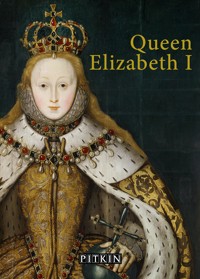
Queen Elizabeth I's reign is amongst the most exciting and fascinating of any period of English history. She was a glamourous queen who ruled a vibrant nation full of legendary figures: Robert Dudley, Francis Drake, Walter Raleigh, the Earl of Essex were all international celebrities of their day. Great events unfolded, with triumphs such as the defeat of the Spanish Armada, and tragedies, including the long-term imprisonment and execution of Mary Queen of Scots. With love affairs, wily politicians, sinister plots and intrigues at the royal court, Elizabeth's reign was a long-running drama; it is appropriate that William Shakespeare was writing at the time, and characters and events of his plays often mirrored Elizabethan life. But it was Queen Elizabeth who was the star of the story, holding centre stage over a glittering royal court. In this seminal Pitkin text by G.W.O. Woodward, revised and updated by Gill Knappett for 2019, read how Gloriana reigned in dazzling majesty over an exciting new age of exploration, discovery, artistic brilliance, architectural achievement, foreign conquest and prosperity. This beautifully illustrated biography is part of the Pitkin Royal Collection series, celebrating the lives of the British royal family. Other notable titles in this insightful series include Royal Babies, The Queen and Her Family and Queen Elizabeth II.
Sie lesen das E-Book in den Legimi-Apps auf:
Seitenzahl: 43
Veröffentlichungsjahr: 2019
Das E-Book (TTS) können Sie hören im Abo „Legimi Premium” in Legimi-Apps auf:
Ähnliche



















IMPORTANT DATES
1533
7 September, Elizabeth born.
1536
Anne Boleyn beheaded.
1547
Henry VIII dies, Edward succeeds.
1553
Edward VI dies, Mary Tudor succeeds.
1558
17 November, Elizabeth proclaimed Queen of England.
1559
Elizabeth made head of the Church of England.
1562–67
Hawkins and Drake initiate slave-trading voyages.
1577–80
Drake circumnavigates the world.
1584
Raleigh discovers a new land, later named Virginia.
1587
Execution of Mary, Queen of Scots.
1588
The Spanish Armada is defeated.
1601
Essex executed as a traitor.
1603
24 March, Elizabeth dies.
PLACES TO VISIT
Greenwich Park, London (where Greenwich Palace once stood);
www.royalparks.org.uk/parks/greenwich-park
Hampton Court Palace, Surrey;
www.hrp.org.uk/hampton-court-palace
Hatfield House, Hertfordshire;
www.hatfield-house.co.uk
Kenilworth Castle and Gardens, Warwickshire;
www.english-heritage.org.uk/visit/places/kenilworth-castle
National Portrait Gallery, London;
www.npg.org.uk
Tower of London, London;
www.hrp.org.uk/tower-of-london
Westminster Abbey, London;
www.westminster-abbey.org
Windsor Castle, Berkshire;
www.royalcollection.org.uk/visit/windsorcastle
Acknowledgements
Illustrations reproduced by kind permission of Alamy Stock Photo, with the exception of: AKG Images: 13; The Bridgeman Art Library: 2t; Shutterstock: 7; The Trustees of the British Museum: 2b; Victoria and Albert Museum, London: 24; Wikimedia commons: 23b
A 17th-century engraving of the Globe Theatre; one of the finest achievements of the Elizabethan Age.
Queen Elizabeth I’s reign is amongst the most exciting and fascinating of any period of English history. She was a glamorous queen who ruled a vibrant nation full of legendary figures; Robert Dudley, Francis Drake, Walter Raleigh, the Earl of Essex were all international celebrities of their day. Great events unfolded, with triumphs such as the defeat of the Spanish Armada, and tragedies, including the long-term imprisonment and execution of Mary, Queen of Scots.
With love affairs, wily politicians, sinister plots and intrigues at the royal court, Elizabeth’s reign was a long-running drama; it is appropriate that William Shakespeare was writing at the time, and the characters and events of his plays often mirrored Elizabethan life. But it was Queen Elizabeth who was the star of the story, holding centre stage over a glittering royal court.
The Seal Burse of Elizabeth I, embroidered with the Royal Arms of England.
With Elizabeth as sovereign, the nation emerged as a maritime power, enabling it to participate in the exploration of the world and to discover new horizons; the enhancement of trade, commerce and the nation’s wealth led to the creation of a worldwide empire. With skilful sea captains and superior ships, England was able to confront Spain, the European superpower, defeating it in one of the most decisive sea battles in history.
An oil portrait of Elizabeth I, on display at The National Maritime Museum, Greenwich.
Elizabeth saw the nation’s religious life completely transformed by the change from Roman Catholicism to Protestantism and the establishment of the Anglican Church. The darker side of Elizabethan England saw Roman Catholics persecuted ruthlessly. The torture of political prisoners in the Tower of London was officially unauthorized, and public executions, when those convicted where hanged, drawn and quartered, were brutal. The Church of England, however, came under great pressure from the more extreme Puritans, and the titanic struggle was still unresolved at the time of Elizabeth’s death.
Meanwhile, the large-scale increase in poverty in the kingdom was dealt with ineffectively by the government, while the growth of materialism and the desire to impress at all costs rose among the elite and the rapidly growing, affluent middle classes. But despite these shortcomings, Elizabeth was a monarch admired and respected by much of the known world. More than four centuries later, her reign is remembered as one of the most glorious.
A portrait of a young Elizabeth, attributed to William Scrots, c.1546. The large book behind her is the Old Testament; the smaller book the New Testament.
On 26 August 1533, Anne Boleyn, the second wife of Henry VIII, was heavy with child and took to the bedchamber prepared for her confinement at Greenwich Palace.
A letter announcing the birth of a prince had already been prepared when, on 7 September, Queen Anne gave birth.
Some reports say that Henry was furious that he had another daughter, not least of all because of the lengths he had gone to to secure an annulment of his marriage to his first wife, Catherine of Aragon, mother of his only other surviving child, Mary. However, he named Elizabeth after both his mother and Anne’s – and he remarked to his wife that they were both young enough to confidently expect to have sons in the future.
A portrait of the family of Henry VIII, painted c.1545; Henry is flanked by Jane Seymour and his son, Prince Edward (later Edward VI). On the left is the future Mary I and on the right is the future Elizabeth I.
Childhood
Besides her gender, an important influence in shaping the character of the future queen was loneliness. In an age when royal children could expect to see little of their parents, Elizabeth saw less than most. When she was three months old she was given her own establishment at Hatfield, Hertfordshire, which became her residence from then until her accession to the throne.




