


5,99 €
Mehr erfahren.
- Herausgeber: tredition
- Kategorie: Sachliteratur, Reportagen, Biografien
- Sprache: Englisch
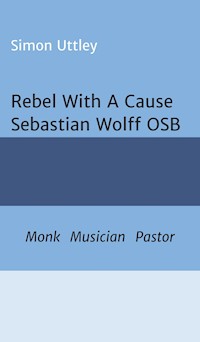
A brief biography of a monk and musician whose German heritage, combined with the turbulent yet bucolic landscape of 1940s Galway, led Sebastian Wolff to a Benedictine vocation in England. A vocation marked by music, monastic life and outreach to ordinary people. Wolff's contribution to the canon of ecclesiastical music is charted. His contribution to the lives of those with whom he came into contact, over many years of active ministry, are reflected in testimonials. This is an account of how the extraordinary is so often accomplished through the ordinary.
Das E-Book können Sie in Legimi-Apps oder einer beliebigen App lesen, die das folgende Format unterstützen:
Seitenzahl: 106
Veröffentlichungsjahr: 2018
Ähnliche

















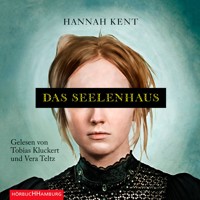

SIMON UTTLEYWITH CONTRIBUTIONSBY DR. A. H. CLAIRE
Rebel WithA Cause
Sebastian Wolff OSBMonk Musician Pastor
Copyright © 2018 Simon Uttley, Dr A. H. Claire
Editing: Catherine Johnson
Publisher: tredition, Hamburg, Germany
ISBN
Paperback:
978-3-7439-9881-0
Hardcover:
978-3-7439-9882-7
eBook:
978-3-7439-9883-4
All rights reserved. No part of this publication may be reproduced, distributed, or transmitted in any form or by any means, including photocopying, recording, or other electronic or mechanical methods, without the prior written permission of the publisher, except in the case of brief quotations embodied in critical reviews and certain other noncommercial uses permitted by copyright law. For permission requests, write to the publisher.
Acknowledgements
Chapter 1 – Origins – 1929
Chapter 2 – The Road to Galway
Chapter 3 – The Road to Buckfast
Chapter 4 – Buckfast Abbey c. 1948
Chapter 5 - The Second Vatican Council
Chapter 6 – Ministry
Chapter 7 - A brief commentary on the organ music of Sebastian Wolff and a list of his choral music - By Dr A. H. Claire
Chapter 8 Fellow Travellers – voices of appreciation
Fr Sebastian Wolff
[Sebastian Wolff collection / Buckfast Abbey]
Acknowledgments
This brief look at the long and varied life of one man is not meant as a critical evaluation but, rather, a celebration of how a life, on the face of it so different to most of us, can affect others for the good. I am grateful to all the contributors whose generous comments have helped capture something of our subject. I would particularly like to thank Dr A. H. Claire for his invaluable contributions and encouragement. I am grateful to Liz Keane and the Loughrea choir for their support. Thanks, too, to Cathy Johnson, for her comments and reading. Also, for his support and personal insights, Dr Chris Murray. All errors and omissions remain my own.
Dr Simon Uttley
London, October 2018
AMDG
Chapter One - Origins - 1929
The 4th of October 1929 was a day like any other day in Loughrea, some 22 miles East of Galway City, when the young Francis Joseph was born to parents, Karl and Dorothea. The birth was not straightforward and there was a real concern that the baby might not survive, so much so that the Protestant midwife performed a conditional baptism1 prior to Francis later being baptised again in the local cathedral.
Fig. 1 Dorothea and Karl
[Courtesy of Sebastian Wolff collection]
Picturesque and bucolic though it may have been, the Galway region had witnessed its own dramas in the years preceding the birth of a boy whose German parentage, itself, was to be one of the many formative strands in the development of the man, the musician and the monk.
Galway city had played a relatively minor role in the upheaval in Ireland from 1916–1923. In 1916, during the Easter Rising, Liam Mellows mobilised the local Irish Volunteers in the area to attack the Royal Irish Constabulary barracks at Oranmore, just outside Galway. However they failed to take it and later surrendered in Athenry. During the Irish War of Independence 1919–21, Galway was the western headquarters for the British Army. Their overwhelming force in the city meant that the local Irish Republican Army could do little against them. The only initiatives were taken by the University battalion of the IRA, who were reprimanded by the local IRA commander who was afraid they would provoke reprisals. This fear was not without justification, as the nearby town of Tuam was sacked on two occasions by the Black and Tans in July and September 1920.
Fig 2 The feared Black and Tans detain a suspected IRA operative [©Military History Now]
In November 1920, a Galway City Catholic priest, Fr. Michael Griffin, was abducted and shot by the British forces. His body was found in a bog in Barna. Galway businessmen launched a boycott against Northern Irish goods from December 1919 onwards in protest against the loyalist attacks on Catholic nationalists in Belfast, a protest that later spread throughout the country.
Before the outbreak of the Irish Civil War (1922–23), in March 1922, Galway saw a tense stand-off between Pro-Treaty and Anti-Treaty troops over who would occupy the military barracks at Renmore. After fighting broke out in July 1922 the city and its military barracks were occupied by troops of the Irish Free State's National Army. Two Free State soldiers and one Anti-Treaty fighter were killed and more wounded before the National Army secured the area. The Republicans burned a number of public buildings in the centre of town before they abandoned Galway.
Into this binary world of, on the one hand, the bucolic - the pastoral - and on the other, significant political upheaval, arguably a defining trope in the Irish narrative, Francis’ father had arrived from Germany. And it was another binary – this time the combination of conservative-minded immigrant parentage amid a naturally rebellious landscape- that was, inevitably, to add its own unique ingredient to Francis’ worldview.
Francis was the third of a family of nine children, the parents having left Germany in 1927. The Wolff family hailed from the town of Jülich in the Rhineland.
Jülich2
A town in the district of Düren, in the federal statre of North Rhine-Westphalia, the town inhabits a border region between the historically competing powers in the Lower Rhine and Mense areas. The town and the Duchy of Jülich played an historic role from the Middle Ages up to the seventeenth century. At the time of the Wolff family’s departure the town had a population of approximately 7500, though nowadays it has grown to mearly 40,000 inhabitants.
Fig. 3 The geography of the Wolff family’s hometown
Fig.4 Hexenturm in Julich [courtesy of Shutterstock]
Roman Jülich
luliacum, to give it its Roman name, was a small town along the main road from Tongeren, the capital of the Tungri, to Cologne, the capital of Germania Inferior. The town originally belonged to the tribe of the Eburones, and went into decline when Julius Caesar exterminated these people after the insurrection of Ambiorix (winter 54/53).
It appears to have been in c.10 AD that the area was cleared again and used as pasture. This was the district of someone named Julius. This early occupation is logical, because the land is fertile and archaeologists have shown that there were many large farms.
The town was situated east of the crossing of a small river, the Rur, and appears in the Peutinger map, which means that it was a settlement of some significance in the fourth century. This is confirmed by the archaeological record, which shows that at the beginning of the fourth century, Iuliacum was fortified with a mighty, fourteen-sided wall. According to the Roman historian Ammianus Marcellinus3, the castle was still in use in 357, when the area was plundered by a large group of Frankish cavalry. The fort may have been used for an additional half century.
Among the archaeological finds from ancient Iuliacum is a fine statue of Jupiter, seated on his throne, made of sandstone. Stylistically, it can be dated to the first quarter of the third century. Once, it must have graced a column in the court of a villa.
Fortified during the late Roman period, it was taken over by the Franks and grew to be the centre of a county which became the nucleus of a regional power. The counts and dukes of Jülich extended their influence during the Middle Ages and granted Jülich city status in 1234 (Count Wilhelm IV). During battles with the Archbishop of Cologne, Jülich was destroyed in 1239 and again in 1278.
In 1416, the city was granted fiscal independence by Duke Rainald of Jülich-Geldern. Following a fire in 1547, the city was rebuilt as an ideal city in the Renaissance style under the direction of the architect Alessandro Pasqualini. The citadel of Jülich was later visited by the French military engineer Sébastien le Prestre de Vauban and was rated exemplary.
After the ducal family line was extinguished in 1609, the Duchy of Jülich was divided in the War of the Jülich Succession; as part of that war, the fortress at Jülich was occupied by Emperor Rudolph's forces. The siege by Dutch, Brandenburg and Palatine forces led to the surrender and withdrawal of Imperial troops.
Jülich was occupied by the Dutch Republic until 1621-22 when the Spanish took the fortress after a siege of five months. Control of the city later fell to Palatinate-Neuburg, then the Electorate of the Palatinate (1685) and Bavaria (1777).
From 1794 to 1814, Jülich was part of France under the name of Juliers. The French added the Napoleonic bridgehead to the fortifications. In 1815, Jülich became a Prussian fortification and district town. The town was subsequently administered within the Prussian Province of Jülich-Cleves-Berg (1815) and then the Rhine Province (1822). The fortification was razed in 1860.
On 16 November 1944 (World War II), 97% of Jülich was destroyed during Allied bombing, since it was considered one of the main obstacles to the occupation of the Rhineland, although the city fortifications, the bridge head and the citadel had long fallen into disuse. The ruined city was subject to heavy fighting for several months until the Allies eventually managed to cross the Rur on 23 February 1945.
World War I
The Wolff’s, father Karl and mother, Dorothea, were well known as a musical family. Karl was the eldest of a family of four children. Two brothers, Albert and Heinz-Peter and sister, Kate. Born in 1896, Karl, at the tender age of six, lost his father. At the outbreak of World War I he was pursuing a classical education in Switzerland when his country called on him to take part in one of the defining events in European history.
Karl was to end his military career, but not before participating in the utter carnage which was the Battle of the Somme. This defining experience was captured powerfully in Wilfred Owen’s ‘Anthem for a Doomed Youth’, pertinent for the young men on both sides of the trenches:
What passing-bells for these who die as cattle?
-Only the monstrous anger of the guns.
- Only the stuttering rifles’ rapid rattle
-Can patter out their hasty orisons.’
[Owen, 1917; 2013]
Fig. 5 The Western Front, 1914
The Battle of the Somme
The Battle of the Somme, fought in northern France, was one of the bloodiest of World War One. For five months the British and French armies fought the Germans in a brutal battle of attrition on a 15-mile front. The aims of the battle were to relieve the French Army fighting at Verdun and to weaken the German Army. However, the Allies were unable to break through German lines. In total, there were over one million dead and wounded on all sides. In 141 days, the British had advanced just seven miles and failed to break the German defence. Some historians believe that with a few more weeks of favourable weather the Allies could have broken through German lines. Others argue the Allies never stood a chance. In any case, the British army inflicted heavy losses on the German Army. In March 1917, the Germans made a strategic retreat to the Hindenburg line rather than face the resumption of the Battle of the Somme.
Fig. 6 A German soldier: Battle of the Somme [source: unknown]
‘Every German soldier from the highest General to the most lowly private had the feeling that now Germany had lost the great battle’ [Oberstleutenant Alfred Bischer]4.
The war was to continue. At the start of 1918, Germany was in a strong position and expected to win the war. Russia had already left the year before, which made Germany even stronger.
Fig. 7 "How London hailed the end of war": Front page headline taken from The Daily Mirror on 12 November 1918 [BBC Education]
Germany launched the 'Michael Offensive' in March 1918, where they pushed Britain far back across the old Somme battlefield. However, their plan for a quick victory failed when Britain and France counter-attacked.
Germany and her allies realised it was no longer possible to win the war. The Triple Alliance [Germany, Austria-Hungary and Italy] had been damaged. Some reasons for this included the fact that the Schlieffen Plan had failed in 1914 and the Verdun Offensive had failed in 1916. Germany was now losing the Great Battle in France and the German Navy had gone on strike and refused to carry on fighting. Furthermore, the United States joined the war in April 1917, which gave the Triple Entente [Britain, France and Russia] greater power.
Germany was not strong enough to continue fighting, especially as the USA had joined the war and hundreds of thousands of fresh American soldiers were arriving in France. This added greater military strength to the Triple Entente forces.
The leaders of the German army told the German government to end the fighting. Kaiser Wilhelm, Germany's leader, abdicated on 9 November 1918.




