


22,99 €
Mehr erfahren.
- Herausgeber: C. H. Beck
- Kategorie: Sachliteratur, Reportagen, Biografien
- Sprache: Englisch
Robert Bosch (1861 - 1942) was one of the most successful German entrepreneurs and philanthropists of the 20th century and, at the same time, a pioneer of the social market economy. This book presents a comprehensive and impressive biography of a visionary who thought far ahead of his time like almost no other. Peter Theiner follows the traces of this trailblazer of modernity who founded a global company.
1886, Robert Bosch opened his Werkstätte für Feinmechanik und Elektrotechnik, today’s Robert Bosch GmbH, in a modest rear building. Pioneering innovations for motorized vehicles emerged from the young company, and Bosch was quickly able to point to tremendous international successes as an industrialist. Today, his name represents the rise of motor vehicles and electricity in the home. In addition, he also had an impact as a benefactor and philanthropist with a well-developed political profile and a strong sense of social responsibility. In a time of wars and upheaval, in an age of extremes, Bosch positioned himself as a staunch Democrat who cut against the grain of German history.
Das E-Book können Sie in Legimi-Apps oder einer beliebigen App lesen, die das folgende Format unterstützen:
Veröffentlichungsjahr: 2019
Ähnliche
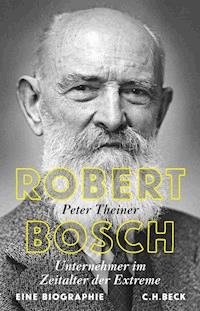

















Peter Theiner
Robert Bosch
An Entrepreneur in an Age of Extremes
A Biography
Translated by Patricia C. Sutcliffe, with the assistance of Sally Hudson Dill
C.H.Beck
The translation was supported with funds from the Robert Bosch GmbH and the Robert Bosch Foundation
To the book
Robert Bosch (1861–1942) was one of the most successful German entrepreneurs and philanthropists of the 20th century and, at the same time, a pioneer of the social market economy. This book presents a comprehensive and impressive biography of a visionary who thought far ahead of his time like almost no other. Peter Theiner follows the traces of this trailblazer of modernity who founded a global company.
About the author
Peter Theiner was Director of the department for the «History of Philanthropy» at the Robert Bosch Foundation until 2016.
Contents
Preface
Chapter 1: Heritage and Rise
Württemberg prior to industrialization
Family life and political culture
Education and life world
Travels and reforms
Take off, company founding, and a “chokehold”
Successes, expansion, and internationalization
Modernization and social policies
Social policies at Bosch
Civic pride and patronage
A backlog of reforms, Taylorism, and a strike
No conversion and a Liberal encyclopedia
Chapter 2: The Great War
Mobilization and the “Spirit of 1914”
Anger and restraint
Great hardship and philanthropic foundations
The meaning and aims of the war
The German National Committee
“Mitteleuropa”
Peace resolution and the fall of the chancellor
A memorandum before the last offensive
Thinking beyond the war: The German College for Political Science
The bursting of the “bubble”
Chapter 3: In the Weimar Republic
No system change without free elections
The Democratic Popular Union
Councils, socialization, and company statutes
The company and the effects of the war
Setting the course for corporate governance
New approaches to company communications
Social policies in the firm
Searching for peace
Change through rapprochement and European integration
Seeking an end to the “stereotypical Frenchman”
Crisis, renewal, and securing the company’s future
For the republic and international understanding
Chapter 4: Dictatorship, Building up Armaments, and Resistance
The transfer of power
A “wall of protection” for the firm
“Enforced conformity” and illusions
Armaments boom and concerns
Motives for resistance
The end of liberal adult education and the independent media
The company, the “Nazi wave” – an anniversary and the Bosch-Zünder
A new clinic
Bosch and his Jewish fellow citizens
In the maelstrom of the war economy
Still for peace and cooperation
The Bosch-Goerdeler connection
Business as a cover for resistance
A state funeral for Bosch
Epilogue
Forced labor at Bosch and late compensation for the victims
Conspiracy, failure, and late honor
The decision to create the Robert Bosch Foundation
Appendices
Acknowledgments
Notes
Chapter 1
Epilogue
List of Abbreviations
Archives
Newspapers and Periodicals
Printed Sources and Literature
Index of Persons
Preface
Robert Bosch is among the industrialists in German economic history whose name still has a special ring to it even today – and by far not only because the company he founded still exists and continues to grow.
From the time he came to prominence, he was in the public eye, as a headstrong advocate for a socially anchored market economy, as an increasingly well-known philanthropist and supporter of unconventional ideas throughout the country, as an exceptionally ambitious, assertive entrepreneur and pioneer of globalization, and, above all, also as a politically engaged contemporary.
Entrepreneurial success, engagement on behalf of the common good, democratic convictions, and, with them, economic, cultural, and political elements of a middle-class lifestyle worked together in him.
Moderation and taking the middle ground, self-restraint and self-discipline, an ethics of responsibility grounded in rationality, the weighing and balancing of self-interest and orientation toward the common good – all of these counted for him among the persistent requirements of a stable community open to development. This applied beyond his own country as well – because the German Empire’s reason of state, in his eyes, dictated dispensing with violence and searching for cooperation and balancing of interests in a Europe that relied on peace and integration. Robert Bosch was always looking for alternative paths for Germany, and, in so doing, called upon the leading elites’ willingness to learn. Examining this with a broad panorama of methodological and thematic access points can shed light on continuities and new approaches in the development of Germany and, thus, also on elements of the history leading up to the Federal Republic of Germany.
The reader will notice that this work owes a great deal to the research of Joachim Scholtyseck on the Bosch company’s resistance to National Socialism as well as of Johannes Bähr and Paul Erker on the company history.
And it remains worthwhile to make use of Theodor Heuss’s life story of Bosch, the entrepreneur and philanthropist, which was pioneering in its time. With his biography of Robert Bosch, the soon-to-be federal president, still in the agony of the Nazi regime, recalled that his contemporary stood for traditions, value orientations, and decisions that the country could adopt after its liberation from the “criminals.” The present book takes up this thread once again and portrays an entrepreneur and philanthropist in his economic, sociopolitical, and cultural spheres of activity. Consequently, it casts itself as a contribution to a history of engaged civic action in an era of extremes.
But for the professors in the academy, for the humanities generally, misery is more amenable to analysis: happiness is a harder nut to crack.
Ian McEwan, Saturday
Chapter 1
Heritage and Rise
Württemberg prior to industrialization
Robert Bosch was born on September 23, 1861, in Albeck, a village in the Swabian Mountains, about ten kilometers from Ulm. He was the eleventh of the twelve children of Maria Margarete and Servatius Bosch. On his father’s side, the family’s lineage can be traced back to the Reformation era. Johann Georg Bosch settled in Albeck in the first half of the eighteenth century, where he acquired the inn Gasthof Krone, which also entailed a large agricultural operation. Nothing specific pertaining to the childhood and youth of Servatius has survived; he was the great-grandson of the first proprietor of Gasthof Krone from the Bosch family; his father died in the year of his birth. Short life spans and high child mortality were the demographic sign of the epoch.[1] Of the thirteen children of Servatius Bosch’s grandfather, eleven had died while still children. The male line of succession went down to Servatius, who, in 1837, married eighteen-year-old Maria Margarete Dölle, the daughter of a proprietor in the neighboring town of Jungingen.[2]
Robert Bosch’s parents Maria Margarete and Servatius Bosch, around 1858
The family’s estate was splendid; the young beer brewer and agriculturalist Servatius Bosch ran the flourishing inn together with his wife. A grand new building was dedicated for it in 1834. It made sense to construct a new building after a new road was built that led the regional traffic to the family’s estate. Servatius Bosch delivered his beer with his horse and carriage all the way to Stuttgart. The inn was a welcome stopover for wagoners and traveling salesmen on the way to Ulm and a trading center for novelties from the countryside. Above all, however, the estate of Servatius and Maria Margarete Bosch was an agricultural operation of considerable size. It had 250 acres of arable land and pastures and another 50 acres of forest, as well as 25 head of livestock, which made it one of the large and profitable farms of the country, more a country estate than a farm. Thus, if one looks at Robert Bosch’s life from the perspective of his heritage, he was no self-made man from the most modest of circumstances but rather the offspring of a well-to-do family highly regarded in the community. Of course, it could hardly be foreseen – indeed, it was not even probable – that this family would produce a successful industrial entrepreneur with worldwide business activity, an entrepreneurial personality with a highly developed political profile who was also a philanthropist well-known beyond the borders of the Kingdom of Württemberg.
The Kingdom of Württemberg with its territorial expanse had only come into being in the course of the Napoleonic restructuring of Germany. Within the German Confederation, it was not on the vanguard of industrialization but rather displayed characteristics of delayed technological-commercial development.[3] Not until 1830 did an association for the promotion of commercial activity emerge, also with state support; in 1848, this became the state-controlled Zentralstelle für Gewerbe und Handel [Central Office for Trade and Commerce], which would play a prominent role as a catalyst in the economic development of the state. In 1840, Württemberg, too, entered the “age of the steam engine.” By 1846, their number in the state had risen to twelve with a total of about 100 horsepower.[4] The founding of the machine plant in Esslingen in 1847 marked the kickoff in the development of an independent engineering industry and the end of making defective reproductions of foreign devices. In the spirit of a forward-looking location policy, the state equipped this factory with a considerable loan and free properties.[5] Nonetheless, industrialization only accelerated in Württemberg in the 1850s. It could be discerned in the steep rise in the number of steam engines by 373 percent and the increase in their capacity by 786 percent between 1852 and 1861 alone. The number of industrial companies rose in the same period by 96 percent, with the number of employees in this sector increasing by 111 percent to 8,107.[6] This development benefited from consistently good harvests, which strengthened purchasing power, from the mid-1850s. The first great world economic crisis did not substantially disrupt the Kingdom of Württemberg, largely because of the region’s decidedly decentralized commercial structure, its traditional blend of commercial and agricultural production, and, above all, its banking sector, whose development was noticeably poor. This speculation-driven crisis – shocking to contemporaries – arrived in Europe from the United States in 1857. Friedrich Engels derisively remarked that the “American crisis” was driving companies in Germany “deep into the sauce” as well, but this did not apply to the Kingdom of Württemberg.[7]
There was a certain correlation between Robert Bosch’s entrepreneurial career and the relative backwardness of the credit business in Württemberg. His insistence on the independence of his undertakings and his reserve toward the temptations of speculative experiments were also deeply rooted in the historical attitudes and structures of the region. His successors in the company leadership have noticeably adhered to the primacy of a real economy that is solidly controlled over a dissociated financial sector.
Family life and political culture
The Bosch family was not at first existentially affected by the variable economic development in Württemberg around the middle of the century. When Robert Bosch looked back at the history of his family and his parental home, he did not mention the crisis-ridden development of agriculture – there was a series of bad harvests beginning in 1846, which was only interrupted in 1848/49 and then continued until 1853/54 – nor did he refer to the prerevolutionary hunger riots of 1847, the misery of the masses, and the waves of emigration. The estate’s size and earnings were sufficient to protect the family from the uncertainties that arose from the crisis of economic transformation characteristic of the mid-century.
If one compares the Bosch family’s estate with other agricultural operations, namely, in areas where land was highly parceled, then the life risks that the contemporary economic and social structure generated become apparent. In the first half of the 1850s, when the last really bad harvests occurred, regions with an especially large number of small agricultural businesses lost nearly half of their population due to emigration, and the remaining areas still lost over 18 percent.[8] Extremely high infant and child mortality rates were still a normal part of life. One can get a sense of how seemingly dull the world of experience was for the “average” village dweller from the records of a minister in Machtolsheim, about 30 kilometers from the Bosch family’s home in Albeck:
Family life is largely kept together by the external circumstance of joint labor; the wife is the working, in short, the leading part in the marriage. The man passes many labors on to the wife without adequately sparing her and allowing her to participate in his own joys […]. The death of the children who do not survive the struggle for existence and the danger of deficient living conditions and restless care is seldom lamented. The children are (then) released from all work and effort […]. The child is an object of quiet waiting in its first months of life [to see] whether it will grow roots in the raw earth of this world or die off.[9]
The everyday life of the Bosch family, the children growing up, the parents’ world of experience and horizon of expectations were very different. In his memoirs, Robert Bosch speaks of the “understanding” that the parents “showed” the children, of consistent warm-hearted care-giving and attention, of his mother’s humor up to a great age, her joint labor with her husband in the inn, and her impressive presence in the family. He talks of the always polished tin dishes, which there were enough of for the horde of guests of a big farm wedding, of the dignified clothing of his father and of free meals for the poor and needy: “However, everyone was to have a midday meal at my house, as long as I had something” – this was the consequence of his experiences in his parental home.[10]
Along with the family’s relative prosperity, other things that gave the Bosch household an air of being middle class both in terms of possessions and education were the self-evident nature of reading and the comely portraits of the parents. Education played an important role in the family, according to Robert Bosch’s description: “My father was a man educated beyond his class. He possessed a library of all the German classics and had also read and digested them.”[11] In the Lebenserinnerungen [Memoirs] of Robert Bosch, the attributes of what Manfred Hettling calls the “bürgerlicher Wertehimmel” [bourgeois or middle-class value system] were gathered together with remarkable clarity: In this value system, one is concerned with self-education, with observing social togetherness and testing it empirically, and with exploring the natural environment. Living communication, responsibility, and social equalization, and also constant performance orientation, human closeness, and the temperance of feelings and passions also figure prominently within it. Manfred Hettling calls “internal control of behavior” and “free association with groups” the “central structural principle of the middle class.”[12] Robert Bosch emphatically averred that he and his siblings “were raised very liberally” when it came to religion.[13] Without a doubt, Servatius Bosch was a model of middle-class, freedom-oriented self-determination, of intellectual independence, of fearless critical questioning about whether things were and had to remain the way one encountered them. The father’s professed belief in Freemasonry was also unconventional and, in Robert Bosch’s recollection – which was rather unusual for his generation – had none of the suspicious-conspiratorial, darkly subversive aspects typical in contemporary stereotypes. For his father, Freemasonry provided a refuge of cultivated civility, a liberal humane association, in which friendship, tolerance, solidarity, and cosmopolitan views were valued.[14] For Robert Bosch, his father was also a “staunch Democrat”;[15] the importance of this for the development of his political thought can hardly be overestimated: “As such, he [my father] was an opponent of Bismarck and of Prussianness. From the period before ’70 I remember political evenings that were held all around in Albeck on winter evenings in the inns and at which Prussian militarism was not exactly favorably spoken of.”[16] In his son’s recollection, Servatius Bosch was an indomitable advocate of democratic ideals. To call himself a Swabian Democrat meant to set himself apart from a political credo tamed by Liberalism. First of all, both of these tendencies aimed to free the individual from traditional material and ideological constraints that could not be justified by reason. In a constitutional state, the citizen was supposed to be protected from state violence against his rights of freedom and against his property. At least the Kingdom of Württemberg was a constitutional state with a bicameral system once its constitution was signed by the king in 1819 after tough negotiations with the councils representing the different classes.[17] About 15 percent of its residents had the right to vote, which was a comparatively high number for the states of the German Confederation in the period preceding the Revolution of 1848.[18]
The opposing positions of the Liberals and Democrats came clearly to the fore in the Revolution of 1848/1849 concerning the question of the further development of the constitution. Whereas Liberals advocated a gradual path, with voting rights expanded step by step, and the maintenance of the monarchy as a guardian of cautious modernization, Democrats fought to change the state into a republic and for equal voting rights. In their political publications, Democrats described the split in vivid terms in February 1849 – this also provides insight into the political thinking of Robert Bosch’s parental home: “Democracy separated itself out from liberal constitutionalism and […] the common points continuously diminished between those who wished to fix sovereignty for the propertied and educated classes first of all and those others who wished to see unrestricted political rights applied generally with the inevitable consequence of social reforms.”[19] This fundamental antagonism in the political life world of Robert Bosch’s father was quite influential on the young Bosch. In his youth, Robert Bosch supposedly described himself as a “Socialist.” Later, as a successful entrepreneur, he was anything but a revolutionary – at least, certainly not in the sense of seeking political transformations. But we will find the concept of coming too late, the criticism of the delayed synchronization of political order and socioeconomic development, and, thus, of the middle class’s lack of political understanding repeatedly in his thought.
The political stance of the Bosch family came clearly to the fore in the “national question,” that is, the call for a German national state, which generated a virulent debate beginning in 1859. The Democrats, like the Liberals, wanted to overcome Germany’s fragmentation into individual states; however, in contrast to their Liberal opponents, the Democrats did not wish to do so under the aegis of Prussian hegemony, which they saw as the epitome of the spirit of reaction and militarism. Württemberg Democrats, as “dyed-in-the-wool anti-Prussians,”[20] sought a strictly federalist order, a nation-state comprised of democratically structured member states with equal rights. For Ludwig Pfau, the eloquent speaker of the Democrats, Prussia was the “expression of a false idea of the state, […] the embodiment of a bad principle.”[21] The debates that took place among regular customers at pubs in the Swabian Mountains, which Robert Bosch recollected in his memoirs, were certainly fueled by Pfau’s battle cry, for which he even made use of Roman history: “Without a dissolution of Prussia in its tribes, the formation of a single, whole, and free Germany is an impossibility: Ceterum censeo Borussiam esse delendam.”[22]
The Democrats now gathered in the Deutsche Volkspartei [German People’s Party], and Servatius Bosch was elected to the state committee of the party for Albeck.[23] The consistency with which Robert Bosch always referred to his father’s basic political motives – his opposition to “Prussianness” and “Prussian militarism” – was remarkable.[24] Later on, he accepted the actual path of the unification of the empire under Prussian leadership as a done deed and also honored it as an achievement – but he did so, above all, on account of the first imperial chancellor’s achievements concerning securing the country through foreign policy rather than his policies aiming to expand the empire. One may also assume that, in retrospect, he deemed a federal German unification with the inclusion of Austria to be hardly realistic. Yet the leitmotifs of his thought, which began to be formed in his early family and local surroundings, can be discerned: fundamental reservations about hegemonial claims, an appeal for reconciliation of liberality in internal state affairs and consensus-oriented action between the states, the primacy of negotiation concerning octroi, and also the rejection of any sort of militaristic saber-rattling – indeed, a principle pacifism rooted in rationality.
Fundamentally, the Württemberg Democrats were concerned, often against the trend of their time, with the primacy of freedom over order, of self-determination over adaptation, of political competition over the hierarchy, and over the authority of office. Robert Bosch’s thought later moved noticeably toward elective affinity with the Swabian Democrat Ludwig Pfau when the latter wrote: “As the state is by no means the ends but rather the means and only exists in order to guarantee the individual the practice of his human rights, so is also state unity not the national ends but the political means to secure the independence of the nation in its tribes and communities both within it and outside of it. For the absolute goal of all social institutions is the development of humanity, that is, the realization of humanity through the sovereignty of the greater good – in a word, this is freedom as the path to justice.”[25]
Robert Bosch was able to concretely experience these political ideals through his father’s political involvement. Servatius Bosch intervened when he felt that coercive measures on the part of the state had injured his democratic sense of justice or when he imagined that the principle of proportionality in the exercise of communal executive power had been violated: “One day someone came to my father and told him that people had stayed past the legal closing time at a bar. The police lackey had come and written down the name of the lawbreakers, and the local magistrate had locked up just one, one poor broommaker; such a thing is unjust! My father went to the house of the police lackey. The latter was not there, and his wife gave my father the jail key when he asked for it. My father let the broommaker out and atoned for this self-granted authority with three weeks in Asperg.”[26]
Education and life world
The life world and the foundations of Bosch family life changed for Robert Bosch near the end of his first decade – in a very fundamental way. Different from industrialization, one could no longer imagine everyday life in the 1860s without “the railways as an early networking technology” and as a vehicle of economic and national integration.[27] The Bosch family felt the upheavals of the industrial economy with a vengeance when snorting monstrosities broke through into the life world of Albeck, which had previously been shielded from the transportation revolution. Whereas, in the general economy of Central Europe, the railways were regarded as a future-directed upheaval and a boost to investment,[28] they marked a dramatic shift in individual economies. As Heinrich Heine had already written concerning the construction of the new railways in France in 1843, “our entire existence [is] torn away, spun away.”[29] The Bosch family would have been able to relate to this. When a new railway was constructed, initially between Ulm and Crailsheim, Albeck dropped off the map, along with the Bosch family estate, which had previously been a popular rest stop along the state road. Even if the inn had managed to establish itself again along the new railway line, the customary business model of the property – providing services for traditional travelers – had already come to an end.[30] Because this impacted the “core piece of the Bosch business,”[31] Servatius Bosch decided to sell the entire property without further ado. This also meant that his youngest son Robert would no longer inherit a significant agricultural business with a flourishing inn, as had been planned. In his memoirs, Robert Bosch did not comment critically on his father’s business decision. Nonetheless, a skeptical undertone can be discerned in his characterization of his father’s decision to no longer be an independent businessman but rather to settle in Ulm as a wealthy pensioner “somewhat too soon.”[32] “My father,” Robert Bosch wrote in a letter from the period when he was on his way to being a globally active businessman, “retired back then with 250,000–300,000 marks. I do not wish to imitate him in this. Then one could run around in one’s old age as an independent knockwurst gentleman in the end.”[33] Leisure and relaxation, a well-managed work-life balance – these were carefully guarded constants in Robert Bosch’s daily routine as an adult. But in his reflections about his father’s decision, a deeply internalized, middle-class work ethic comes through that could not be properly reconciled with an existence that lacked work and responsibility.
In 1869, when the property in Albeck had been sold, the family moved to Ulm. In the garrison town of 25,000 inhabitants, Servatius Bosch soon rose to a position of high respectability in the local middle-class milieu. His older son Albert attended the Realschule [secondary school] and later became an architect, working on the construction of the Ulm cathedral.[34] Robert, like his brother, also attended the Realschule – the family did not regard the classical gymnasium oriented around ancient languages as an option worth striving for. The still new sort of Realschule provided access to the Polytechnical School in Stuttgart and thus was positioned at the beginning of reforms that gradually helped to break open gymnasiums’ monopoly on controlling access to higher education.
Robert Bosch did not pass the admission test to Ulm’s Realschule “with flying colors.”[35] In general, Bosch’s reminiscences about his schooldays betray nothing clever, no particular ambition, not even the necessary “staying power.”[36] Languages and, above all, physics, “practiced in a purely experimental way by the old rector Nagel,”[37] were the subjects he excelled in, whereas the mathematical foundations of the natural sciences did not count among his strengths. “I would like to invoke the fact that, as a 15-year-old, I was unable to prove the Pythagorean Theorem, as especially characteristic.”[38] In retrospect, he claimed that “only a technical feeling” in the relevant subjects “helped [him] get through.”[39]
When Robert Bosch took his Einjähriges exam [final exam at the Realschule], he had to decide on a career. In retrospect, he did not associate this biographical caesura with either enthusiasm or a decided will of his own: “Right when I was supposed to decide on a career, my father asked me once whether I didn’t wish to become a precision mechanic, and I said yes. My mind, however, was more disposed toward zoology and botany, but I did not enjoy going to school, where I would always perceive the large gaps in my knowledge as unpleasant, and so I became a mechanic.”[40] This undramatic and casual-sounding description of his career choice suggests that a historical description of his life should focus on contingency and openness and not cast Bosch’s later career as an industrialist and philanthropist into a preordained story of a hero. He himself “could not imagine” what could become of his almost randomly selected career choice.[41]
Looking back, Robert Bosch judged his time as an apprentice with an Ulm mechanic and optician as “bad enough.”[42] This was not due to a lack of motivation or desire to learn but rather to his master’s self-indulgent “tendency to live well”; he was seldom spotted in the workshop but, for that, was seen all the more in the pub. The apprentices were left to their own devices, and the workday seemed “wasted.” Curiosity, creativity, and clever suggestions for solutions to construction problems and technical defects were not rewarded. All in all, Robert Bosch was “not happy” in his apprenticeship,[43] but his resentment, which was still palpable in his reflections, had long-term effects. That he was “not even encouraged to learn”[44] in the Ulm workshop propelled his later systematic efforts to create a new foundation for industrial education.[45] Nevertheless, his period at the workshop in Ulm gave him his first practical experience with telegraphs, telephones, and the principles of electrical engineering.
After finishing his education at age eighteen, Bosch left home.[46] In September 1879, he briefly took up a position in Cologne with his brother as a metalworker. Karl Bosch, eighteen years older than his brother, had built up a business for gas and water pipes with his brother-in-law; he was also very active in local politics and later also participated in the founding of Cologne’s Handelshochschule [commercial college].[47] He was a model for his younger brother, who would measure his further career in relation to his. After this interlude on the Rhine, Robert Bosch initially returned to Württemberg, where he found a position as an assistant in Emil Fein’s company in Stuttgart. The company C. & E. Fein was regarded as a highly innovative business in the field of electrical engineering. Unlike the sluggish master in Ulm, Fein had brought experience and know-how from Berlin (Siemens & Halske) and London into the company, which was founded in 1867. Fein was an inventor and design engineer whose reputation for originality had spread all the way to the United States and to Thomas Alva Edison, who was interested in the Stuttgart company’s products. Working for Fein, Robert Bosch watched the workshop expand into a factory, impressive for the time, that soon had 60 employees.[48]
After another short stop at a jewelry shop in Hanau, where Robert Bosch worked for a year as a mechanical engineer, he then returned to Cologne to his brother’s company in order to “receive training in commerce.”[49] Robert Bosch never regarded himself as a salesman in a narrow sense but rather as an engineer, manufacturer, and educator who developed, produced, and installed things, and advanced innovations to be ready for series production; he proceeded in these endeavors by employing a division of labor while attending to complementarity of talents among the skilled individuals he gathered around him, and he gave them space to create their own, independent, and outstanding achievements. But since all of this had to be grounded in commercial activity, Karl Bosch taught his brother the basics of company management.
Meanwhile, however, Robert Bosch had to perform his unavoidable military service (1881), which lasted one year since he had his graduation certificate. In his memoirs, he recounted experiencing “no enjoyment” of the military routine and was able to gain something at most from the athletic challenges of daily life among the troops because of his gymnastics skills. His superiors did not manage to convince him to pursue a career as an officer, either. A little later, when he was working as an engineer in New York, he was certified as unsuitable for service due to a chronic infection of the middle ear.[50]
After the end of Robert Bosch’s period of military service in Ulm, Karl Bosch once again took his younger brother under his wing. In 1882, the same year electrical street lighting had been introduced in Nuremberg, the brothers attended the Bayerische Industrie-, Gewerbe- und Kunstausstellung [Bavarian Industry, Trade, and Art Exhibition] there.[51] They also traveled to Munich to the Erste Internationale Elektrizitätsausstellung [First International Electricity Exhibition], which was related to the Elektrotechnische Ausstellung [Electrical Engineering Exhibition] of 1881 in Paris.[52] Robert Bosch was fascinated by the “almost unlimited divisibility of electrical current”[53] evident in the city’s electrical supply, which was initially generated by private carriers. The French capital had started with this already in 1875. “As soon as the new technology became effective for the masses,” Jürgen Osterhammel wrote of this revolution of everyday life brought about by technology, “a veritable light mania broke out. The European cities competed for the title of ‘light city.’ The illumination of the inner cities had the most powerful consequences: Evening was democratized, since it was no longer only carriage owners and people carrying torches who dared to go out on the streets. At the same time, the state was better able to control the nighttime activities of its subjects and citizens. The countryside remained in darkness. Nothing put such a distance between the city and the countryside as the transformation of light from the emission of weak candles and dim lights into the product of technical systems.”[54]
In his memoirs, Robert Bosch noted rather casually: “I asked at Schuckert’s about work and I was hired.”[55] Siegmund Schuckert had started a small workshop in Nuremberg in 1873; ten years later, it had become a factory with 119 workers and 29 “salaried employees.” Schuckert was already installing arc lamps all over Europe and was considered a highly innovative and quality-conscious entrepreneur who knew how to find creative thinkers for his factory, but who also set standards by establishing a factory health insurance fund, later a retirement fund, and by introducing the ten-hour day early on (1889) and by providing comparatively high wages.[56] “I didn’t last long at Schuckert’s,”[57] Robert Bosch admitted after half a year in Nuremberg. In the summer of 1883, he moved on to Göppingen, where, in turn, he found a position in an electrical engineering factory: “I encountered the arc lamp.”[58] The interlude at Schuckert’s had first familiarized him with working conditions in an industrial manufacturing plant. Not only the size of the company but also its rules were new to him, and they now cut deeply into the daily lives of employees. The disciplined access to cherished customs from the traditional world of craftsmanship with its rather serene work week – not yet shaped by the rhythm of high industrialization – was rather strange to him. Without judgment, Robert Bosch shared a memory of a head salesman at the Schuckert factory and his message “that a factory has to have management that considers everything, as with an army, in order to structure the factory in a productive and efficient manner.”[59] Independent work for wages outside of the craft guilds was familiar to Robert Bosch, and naturally he was also motivated to deliver good work. Yet the increasing rationalization of wage work was still quite unfamiliar to him, and his memoirs provide evidence of the developmental stages in the world of industrial work over the course of his life: “In the circles of workers who were not very used to order at that time, one was not particularly accustomed to the creation of a health insurance fund, to the strict monitoring of the exits and entrances to the factory grounds, and to the checking up on working hours. Even I, although I managed to find my place in the order for good or ill, was not particularly happy about it. A rather easy life was customary among engineers. Mostly, there was nothing left on Monday morning of the wage received on Saturday, though it was unusually high for that time. Rather than working on Monday, many initially took sick days on Monday, and I remember one man […] who nearly always only started working on Wednesday, but then he always got more done than others.”[60]
Robert Bosch did not regard himself as a wage worker who subjected himself to the rules of a factory and accepted social benefits. He valued living life in such a way that one’s patron only had to intervene when absolutely necessary. This was Bosch’s basic individualistic pattern, and it would turn up again as a regulatory idea for company management under changed industrial circumstances, as we will see. All his life, Robert Bosch gruffly rejected a patriarchal habitus such as that of Alfred Krupp.
Bosch’s career stops with Sigmund Schuckert and then with Gottlob Schäffer in Göppingen, another pioneer of Württemberg industry, brought him into closer contact with the theoretical foundations of electrical engineering. This was because Schuckert had introduced the practice – rather revolutionary for contemporary conditions – of further education and training on the job. Friedrich Uppenborn, Schuckert’s “head electrician,” offered two-hour professional presentations followed by quizzes and exercises on Wednesday evenings and Saturday mornings, respectively.[61] At Schuckert’s, Robert Bosch became friends with August Utzinger, who had completed a course of studies at the Technikum, an engineering school in Winterthur. Utzinger would later play a key role for Bosch in the development of his company training and education system.[62] Robert Bosch’s experiences at Schuckert’s and Schäffer’s had also made him aware of the gaps in his expertise, which may have prompted his decision in 1883 “to attend the Technische Hochschule [Technical College] in Stuttgart as a non-registered student for half a year.”[63] Later, he baldly admitted that he lacked “the necessary prior knowledge” for this course of studies at the college.[64] Above all, he used his studies to learn how to convey what one intuitively understood in daily operations in the appropriate technical language. Robert Bosch’s period of studying in Stuttgart, where he also attended courses in the English language, was more of a sampling, but he believed he had the ability “to hold thoughts together, to observe, and to draw conclusions.”[65] Perhaps he could not have achieved more, anyway, because the field of electrical engineering at that time was really just taking off, and courses had only been offered since the summer of 1882, with the first full professorship only being established the next year – the first in Germany. Electrical engineering had to make do with sharing “the only existing room of about 80 square meters in the basement of the college” with the material testing department, which was truly “a downright modest beginning.”[66] Robert Bosch’s experience with this still rather paltry equipment would have significant repercussions for his later career as a philanthropist. But, for the time being, it did not really suffice to make his studies very productive as his “actual gain in scientific knowledge” was too minimal.[67]
Nonetheless, his studies did open up other opportunities, not so much to advance his career but rather in the search for alternative ways of life. Gustav Jäger, a doctor and zoologist, who held a professorship at Stuttgart’s Technical College through 1884, made a strong impression on Robert Bosch. Following Charles Darwin, Jäger had erected a theoretical edifice on human affects and their somatic foundations. Bosch, who had learned about Darwin’s evolutionary theory and regarded “man [as] embedded within all-inclusive nature,”[68] found in Gustav Jäger a persuasive mentor. This was evident in the fact that Bosch assumed the “wool regime” that Jäger propagated, a doctrine 40,000 people were already following by 1880, which maintained that woolen clothing was particularly conducive to living a healthy life. Although this may seem absurd to us today, for Robert Bosch it was an impetus to lead a more natural life without elevating it to a worldview. His later patronage of homeopathy was not only connected with his experiences in his parental home but was due, largely, to Gustav Jäger, who had turned to homeopathy when he retired from academic teaching.[69]
On the one hand, the course of Robert Bosch’s life displays the classic elements of the “bourgeois value system”: striving for independence, ambition, and willingness to learn, the will to rise and the power to make political and social judgments, with the ethical implications that entails. On the other hand, he grew up in a society that was losing its equilibrium. Religious philosopher Ernst Troeltsch later diagnosed it with the phrase: “Everything is shaking.”[70] The life reform movement – for many contemporaries, a symptom of this “shaking” – with its various branches, including “wool regimes” and homeopathy, was always an attempt to keep an eye out for free spaces and alternative models of life. For Robert Bosch, being open to the impulses from adherents of the life reform movement also always meant advocating an open stance toward alternative developmental paths for society. In addition, he gathered something of very concrete usefulness from unconventional perspectives: later on, his desire to have light and fresh air be standard requirements in the planning of his production facilities did not derive from his generous mood as a philanthropist but was due to his strong life-reform-oriented will.
Travels and reforms
Robert Bosch had not made any firm career plans when he set sail for America in the spring of 1884 with Leonhard Köpf, a former “study comrade.”[71] His travel journal only sketches out his thoughts about his future career in very general terms and does not exclude the possibility that he would have to “start at the very bottom” as a waiter or baker’s boy.[72] But his notes also betray his robust optimism, healthy self-confidence, and will to rise: “But now I want to put everything into moving forward, and it would have to be strange if I don’t push my way through in a country where many a person has already become something who didn’t even have the proper resolve for it, and that will not be lacking in my case.”[73] Robert Bosch did not go to the United States without recommendations. His Stuttgart teacher for electrical engineering, who had “no bad opinion” of him,[74] advised him to find the engineer Seibel in Munich before his departure; Seibel had installed a lighting system for the American Edison Company in the Hoftheater [court theater]. Seibel sent him on his way with letters of recommendation for relevant firms in New York.[75] Sigmund Bergmann, who had emigrated from Thuringia to New York as a locksmith and then opened his own workshop in 1876, became his first employer. Four years later, Bergmann expanded it with Thomas A. Edison as a shareholder. Robert Bosch’s encounter with Edison was clearly a key experience.[76] Many years later, Bosch dedicated a nearly panegyrical obituary to him, speaking of the “undreamt-of developmental possibilities” of the United States, of “science and technology” constituting the new foundations of the nation’s industrial rise at that time, and describing the fanatical work ethic he had perceived in Edison, for whom, nonetheless, “personal gain” had never been “the motivation for his tireless activity.”[77]
Leonhard Köpf and Robert Bosch in Rotterdam, 1884
However, unconditional devotion to work and advancing his career were not the focus of the young engineer’s life in his time in New York. Bosch familiarized himself with the manufacturing of a range of products, some of which were new to him – “David Edward Hughes machines [an early typewriter] and telephones, arc lamps and light fixtures, phonographs and remote thermometers” – “everything [was] built that was asked for.”[78] But he was not looking for employment related to pioneering technological innovations. He only heard about new sorts of grinding machines, which would later be of inestimable significance for his own products, in New York, and in general, he did not give “business matters the importance due them at all.”[79]
Nevertheless, he did not completely idle away this career interlude in New York. With sober distance, Bosch regarded his work in these months as simply an inevitable means of securing his livelihood: “In any case, I learned little for my career beyond what I picked up as a mechanic along the way. My skilled craft was my bread and butter. It was not joy in my career and in my work that spurred me to work.”[80] Although he self-confidently believed that he could discern the “overview of everything,”[81] the reality was more that he did not live to work, but rather, vice versa.
One likely factor in his decision to go to the United States was that it enabled him to work in a nation rising to become an industrial world power. On the occasion of the first world exhibition in 1851, the Economist had already asserted that the economy of the United States would surpass that of the British Empire “as sure as the next solar eclipse.”[82] Indeed, in the epoch after the Civil War, which Mark Twain referred to as the “Gilded Age,” the gross domestic product of the American national economy tripled, labor productivity continuously increased, national wealth grew by 550 percent from 1860 to 1900, and per capita income rose by 150 percent from 1860 to 1890.[83] Now, one could begin to see that industrial production in the United States would be twice as great as that of Germany, and that Great Britain’s economy would become only the third largest in the world.[84]
The flip side of this unparalleled growth, however, was cyclical economic crises. These struck the United States every decade.[85] Robert Bosch, too – who was in America from May 1884 to May 1886 – “was among the first” to be laid off unceremoniously in the crisis of the 1880s.[86] He experienced “bad times in New York,” he wrote his bride Anna Kayser.[87] Later, he found work again at Edison Machine Works.[88]
Robert Bosch also had political motivations for going to the United States: “I went to America to see the world, but then also because the land of freedom was especially attractive to the young Democrat I was from the upbringing and modeling of my father and my older brothers.”[89] It is entirely possible that Robert Bosch sought a footing and solidarity in a union-like interest group because of his new experience of uncertain employment. The “Noble and Holy Order of the Knights of Labor” he joined, in any case, gave him the idea that it was necessary and legitimate not to simply accept the uncertainties of the economic ups and downs without doing anything about it. The Knights of Labor had been founded by six tailors in Philadelphia in 1869, initially forming as a secret association and not becoming a public presence until 1878.[90] It was characteristic of the association’s profile that it did not see itself as the union of a particular sector but rather wished to appeal expressly to skilled and unskilled laborers of the most varied trades. Moreover, national heritage, the status of the immigrant, and the privilege of having been born in the United States all played as little a role as gender or skin color. When Robert Bosch stayed in New York, the organization had racked up 700,000 members, about ten percent of whom were black.[91] The Knights of Labor advocated for the eight-hour workday and the prohibition of child labor. They did not yet draw a sharp distinction between wage laborers and self-employed skilled craftsmen; and “shopkeepers” and “small manufacturers” supported the movement.[92] Their demands pointed beyond the labor market: They were also concerned with education and healthy lifestyles, and, thus, with the battle against the abuse of alcohol.[93] Behind their Homo Faber ideal, an “artisanal conception of activity, a visible, limited, and directed relationship to nature,”[94] they had entirely general political visions. The Knights of Labor deplored “factoryism, bankism, collegism, capitalism, insuranceism,”[95] and, thus, everything that appeared to be destructive to them in the progression of industrial society, with its urban consolidation and increasing social differentiation. They aimed to bridge the growing gap between the system of wage labor as the basic fact of capitalistic industrial societies, on the one hand, and the republican ideals of a society of free citizens, on the other – for example, when they argued for “corporately developed cooperative factories”[96] in place of the rapidly expanding system of factories with open wage labor. Many of the Knights’ demands and ideals betray a vision of the sociopolitical order of things that could also be found in early liberalism in Germany, and especially southwestern Germany: The concept of a classless civil society of average livelihoods (Lothar Gall) as an alternative development instead of a civil class society; the moderation of social oppositions; the gradual integration of lower-class social groups by means of property, education, and self-education; precisely the gentle social taming of a rapidly expanding society of acquisition, in a comparison that highlighted the contrast: “Not the industrial-trading society of England but rather the more equalized society of Switzerland.”[97]
If one wishes to trace the young Robert Bosch’s still explorative political self-discovery, one must take a look at the complex social and philosophical situation in which he found himself. His letters to his fiancée Anna Kayser referred to a campaign slogan he borrowed from his father: “Be a human and honor human dignity.”[98] He perceived it as the “primary and greatest injustice of the world […] that there are poor and rich people.”[99] And a few weeks later, he developed his own idea of how one could cope with this scourge: “You see, I am a socialist.”[100] One must not interpret this abrupt confession within the categories of partisan politics. Bosch’s thoughts comprised an amalgam of early socialist-cooperative theses, of observations from within North American society, and of what he described as his own goal for his intellectual development, namely, to be able “to think independently,” and express oneself “from one’s own point of view.”[101] In his view of “socialism,” it was “something great.”[102] When it was implemented, it would dissolve the dominance of human over human because goods would be manufactured in a brotherly fashion and, “as machines improve even more,” production methods would save work and open up unimaginable leeway in society. He imagined a socioeconomic formation in which qualification and integrity would replace dominance and exploitation – “the most capable will be placed at the top” – in which the distribution of the “necessary number of hour-checks” would take the place of the exchange of goods mediated by money, in which a caring state could make “food concerns and hunger” disappear, even for those who could not gain a livelihood on their own.
Robert Bosch left no doubt that, in his opinion, “everything must be fundamentally changed.” The “socialism” he saw as so obviously necessary was also supposed to have beneficial effects across borders: “Because everything is international, Europe will help America out, and it, in turn, Asia, etc.”[103] He did not expand on this further, but in this context he did begin to spin, so to speak, the antihegemonial-federalist program of the Württemberg Democrats into an internationalism, into the thought of a cooperative society on the level of a community of nations. In any case, one already finds in these letters the traces of a concept Bosch would later bring into the camp for international understanding. Already on board the ship to New York, he had made “a toast to the brotherhood of all nations.”[104]
This imagined antithesis to his life as a mechanic in New York was also a way Robert Bosch could court his bride; he was evoking an alternative world in which “absolutely nothing” would be able to “keep [him and Anna] apart.”[105] The societal role of the wife and the relationship between the sexes also concerned him. Bosch expected his partner to make critical judgments about him as a person and about his behavior, so that he could “hold himself to it,” and he encouraged her to engage in the free exchange of thoughts and feelings.[106] Anna was perplexed by his impetuous ideas about social reform. With some sense of resignation, she opined that things would go “back to the old [ways] in a short time,” if one seriously wished to tackle societal conditions. But she was impressed by her fiancé’s stance of wishing to defend “the rights of the woman,”[107] even though she was somewhat irritated by the thought of the “equality of the woman”: “I simply cannot help myself; I have the idea that the woman would thus step out of the circle in which she belongs.”[108] Whereas Robert Bosch’s fiancée alluded to an understanding of woman’s role that Hegel had already described – “We women do not stand in life out in the world like you [men] and, thus, cannot understand some things”[109] – her partner was grappling with “emancipation”[110] and could not be dissuaded from the idea that equal educational opportunities would also improve women’s societal status.[111] Prejudices against women were not surprising, he said, when one “has deprived them for centuries of the right to think, and puts them in a position such that they are dependent on capturing a man by means of their external charms.”[112] He had absolutely no desire to accept the idea that a wife was supposed to be “subordinate to her husband.” Rather, his view was: “I don’t want a toy, after all; I’m looking for a companion.”[113]
Among other things, for a partner to find him- or herself, for boundaries to be dissolved, and for couples to come to an understanding about questions of meaning, there was also a need for dialogue about the final matters, the crucial question about the place of religion in one’s life. In this phase of his life, Robert Bosch described himself as a “materialist of the purest sort.”[114] This was no brash profession of faith to a randomly snatched-up trend currently on offer in the market of worldviews at the time. He did not help himself from the toolkit of contemporary philosophers who abruptly filled in the metaphysical vacuum generated by natural science and technology with naturalistic, and, in the extreme, biological categories.[115] Indeed, Max Weber would later make this fundamental intellectual problem of the age – the demystification of the world – the crux of his sociological theory, which is still current today: “But wherever rational-empirical knowledge has consistently completed the demystification of the world with its transformation into a causal mechanism, the tension against the claims of the ethical postulate, that the world is a cosmos ordered by God, that is, that it is somehow oriented around ethical meaning, finally comes to the fore.”[116] Being a “materialist of the purest sort,” in this context, also could have meant making science and technology the guideline of one’s everyday activity – in other words, choosing a technocratic life plan and, thus, responding to the demystification of the world, as it were, with its remystification through supposedly pure technological rationality. Robert Bosch engrossed himself in thoughts of this nature in his correspondence with his wife against the backdrop of his bold theses concerning “socialism” as the path to a just society. In so doing, he encountered the dilemma that, in stark contrast to his fiancée, the religious tradition he inherited could not provide him with any inner stability. In this, he was particularly occupied by the problem of “retaliation in Heaven,”[117] that is, the question of a causality of equalization. His tendency to take paradoxes to their logical extreme helped him with this: “The believer says that the good poor person has it good in Heaven, all the better the worse he had it here on Earth, but what about the good rich person who swam in excess here and did whatever good he could? Will he go to Hell?”[118] In his search for rules of proper behavior, he was not satisfied with the offer of sacramental forgiveness of sins, either, because, “assuming we have a personal God, who is better, he who later goes mad about the rightness of our order out of a certain drive for justice and no longer believes in God, but rather squares things with his conscience and takes his human failings to heart in order to try to compensate for them, or he who allows his failings to be forgiven in his good faith, that is, because he never even thought about such matters?”[119] He went so far as to dismiss the church’s “forgiveness of sins” as “nonsense,” because “one has to answer for what one does.”[120]
From these reflections, Robert Bosch drew the conclusion, permeated with ironic side swipes at any form of self-satisfied living in the moment, that would henceforth become a leitmotif in his actions: He simply hoped for the future “to perhaps know exactly what should be done in individual cases because I only have to come to terms with my conscience.” That was nothing less than the maxim that Max Weber would formulate almost thirty years later as the inevitable constant task of the individual robbed of his religious certainties, namely, to constantly “give an account to oneself about the final meaning of one’s own actions.”[121] And for good reasons, Theodor Heuss later spoke of “ethical rigor” and of a “puritanism without religion” in regard to Robert Bosch,[122] value orientations that would become fundamental for Bosch’s business and philanthropic behavior. This was evident in his ability to face competing worldviews with tolerance and serenity: “I allow the Jew, Turk, Christian, and Buddhist to adhere to their God and idols; as long as they are good people, I love them.”[123] His agnosticism did not go over into dogmatic-moralizing self-certainty, even though Robert Bosch decided to formally leave the Protestant Church in 1908. In the end, he directed his penetrating questions about what the question of God and the search for binding values were really all about against his own skepticism. Years later, when representatives of a “Godless Alliance” wished to get him to join the organization as a supporting member, he confronted them with the laconic question: “Well, do you know for certain that there is no God?”[124]
There were several reasons for Robert Bosch to return to Europe: “But, as an enthusiast, I did not like it in the country where the cornerstone of justice was lacking: The equality before the law. I once wrote about this to my brother Karl. It may remain an open question how much me making my way to England after staying for about a year in the United States had to do with the fact that I had, meanwhile, become engaged through correspondence to my later wife, the sister of my friend Kayser, and how much this was due to the ongoing business crisis.”[125] It was obvious that Bosch, who “was especially drawn to this land of freedom,” had been chastened by his experiences in the United States.[126] The 23-year-old had written assiduously in his diary during the two-week voyage. His reflections reveal him to have been an astute observer of everyday life on board the ship. In language of a rather literary bent, he dissects the social relations of the internationally mixed passengers, their manners and charms, the underground hierarchy on deck, the status of the ship’s crew; he also describes happiness and joy, the fascinating experiences with nature in the vast expanse of the Atlantic.[127] In his recollections of his time in the United States, freedom and justice suddenly appear to be contradictions. This certainly was also due to the fact that in the Golden Age of American high industrialization, social opposites crashed into one another; that justice, as a rule, made rather one-sided judgments; and that tangible conflicts among the parties in the labor market were often ended with incommensurate harshness in favor of the employers. In addition, there was rampant corruption, which destroyed the credibility of political institutions, particularly in the large cities.[128]
To smooth over all of this with the idea of Knights of Labor-type “brotherhood,” or to at least ameliorate it, did not seem very promising to Robert Bosch in the end. He himself had experienced that cooperative initiatives aiming to strategically and effectively represent interests did not resonate there: “Once at our meeting, there was talk about it being pointless for the unemployed to offer their labor to employers, allowing them to hire them for lower wages and to fire those who were paid more. I made the suggestion that everyone who had work ought to give a portion of his earnings to the unemployed so that they would not need to make such offers, but I got no support at all.”[129]
In the spring of 1885, Robert Bosch traveled from New York to England, where he found a position at Siemens Brothers. However, he was hardly able to learn anything new. In his job there, he encountered “in contrast to New York, a type of manufacturing developed according to the German system, but one that was very out of date in every respect.”[130] In England, things were going “so badly in the business”[131] in his observation that he absolutely had to find a new orientation.
Equipped with healthy self-confidence and a “realistic way of thinking,”[132] he now contemplated the idea of self-employment with increasing clarity. He looked back over the course of his life up to that point with a certain melancholy and still skeptically perceived his insufficient theoretical knowledge – measured by his own standards. “I myself wish I had studied and, at the same time, completed a practical training course, but the two cannot be reconciled.”[133] For him, this also meant that there was something wrong with the educational opportunities in his country: “That only those should study who do not need to think about earnings cannot be right, even in this era of capital in which we live.”[134




