


15,59 €
Mehr erfahren.
- Herausgeber: Europa Editions
- Kategorie: Sachliteratur, Reportagen, Biografien
- Sprache: Englisch
"Lovely, hilarious, and seriously thought-provoking." TONI MORRISON "Endlessly curious, playful, and subtle." PANKAJ MISHRA SLEEPING AMONG SHEEP UNDER A STARRY SKY is a collection of essays written over the course of the last thirty-five years. Shawn seems to start from the premise that the world ought to be a place where all of us can lie around on cushions writing letters and love poems to each other on multi-coloured paper, as perhaps the women and men of the eleventh-century Heian court in Japan were able to do. Why do we not inhabit a world in which beauty, sensuality, and the adoration of other people, other beings, and the natural world are our principal preoccupations? Why, instead, are we obsessed with a joyless struggle for supremacy over each other? Why have we invented races and nations? Is what we call "civilization" the precipitating cause of our destructiveness and viciousness, our sadism, our love of murder? Shawn himself grew up as a child of privilege and has devoted his life to aesthetic pursuits and hedonism. Has the life he's led provided him with any sort of valuable vantage point from which to view the world, or has he simply been a parasite? As he himself feels that the answer isn't clear, a certain self-questioning underlies these essays, along with a nagging doubt about whether we're right to insist that all of our different qualities and aspects cohere into a single "self." If the self is simply an illusion, how can we understand "ourselves"? And if we don't understand ourselves, what conclusions should we draw from that?
Das E-Book können Sie in Legimi-Apps oder einer beliebigen App lesen, die das folgende Format unterstützen:
Seitenzahl: 285
Veröffentlichungsjahr: 2022
Ähnliche



















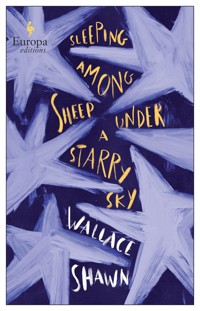
Europa Editions 8 Blackstock Mews London N4 2BT www.europaeditions.co.uk Copyright © Wallace Shawn 2009, 2010, 2022 First publication 2022 by Europa Editions All rights reserved, including the right of reproduction in whole or in part in any form. Art direction by Emanuele Ragnisco instagram.com/emanueleragnisco Cover design and illustration by Ginevra Rapisardi Photo © Don J Usner ISBN 9781787703643
Wallace Shawn
SLEEPING AMONG SHEEP UNDER A STARRY SKY
ESSAYS 1985-2021
SLEEPING AMONG SHEEP UNDER A STARRY SKY
INTRODUCTION
When I was a five-year-old child, I had the opportunity to play the part of a shepherd in a Christmas pageant on a wonderful stage with wonderfully painted scenery, and the magical, magically shifting lighting, representing the peaceful night outside of Bethlehem, where we slept among our sheep and then dimly awakened, made an impression on me that can’t be easily explained.
In the next few years after the Christmas pageant, I received an education that perfectly suited the mood of its time and place—a lovely neighborhood in New York City in the 1950’s, glowing with beautiful expectations. Fascism had been defeated, and our parents and their friends found no reason to doubt that the prosperity we enjoyed would inevitably expand—expand to embrace all human beings—while our teachers believed that the most significant challenge for each one of us was simply to discover what role in society best suited our particular inclinations. Poverty would end. Hunger would end. Our individual obligation was simply to figure out what we most enjoyed doing, because that would be the thing we would inevitably do best. Did we want to work in some fantastic industry, producing goods that would make daily life better and easier for the world’s people? Or did we want to nourish their spirits by giving them paintings, stories, or wonderful concerts? The people in our neighborhood were simply not in the right frame of mind to take the hints provided by the recent murder of Jews, Roma, and homosexuals in Europe, not to mention by the history of slavery in the United States, not to mention by the siege of Carthage, the Crusades, and what have you, that terrible dangers lurked within us.
In the 1960’s I studied a bit more, and my education was of the kind that might have permitted me to try to become, perhaps, an international civil servant of some sort, or a diplomat, or even (who knows?) an intellectual of some description—but the mesmeric power of the magically shifting Christmas pageant lighting pulled me back towards the memory of the scene I’d been in. The uncanny lighting had enchanted me, and it turned out that in the end I never escaped from it. I considered escaping, I was tempted to escape, but I guess I never seriously tried to escape. It turned out that I devoted my life to writing plays, and I even became an actor as well, never again called upon to play a shepherd but frequently summoned to provide a voice for talking animals of every kind in cartoons intended for five-year-old children.
Well, there’s only a very thin curtain between theatre and life, if I may use that metaphor. I mean, a lot of people have raised questions, for example, about whether music is “about” anything, and various people have puzzled in one way or another over the degree to which a poem is “about” something or just “is” something, but almost no one has ever tried to say that theatre is not about the world. And people involved with theatre can often be found brooding about their chosen subject matter. Aeschylus, Sophocles, and Euripides started the Western playwriting tradition by writing plays about politics. Someone recently told me about a great filmmaker who found it difficult to come to the set because it obliged him to briefly put aside the biography of Ulysses S. Grant that he was reading. And actors are professionally allowed and obliged to be obsessive students of human behavior. It’s been going on for a long time. In speaking to the actors visiting him, Hamlet says that the attempt to portray human beings accurately, to be a mirror, has been the actor’s goal “both at the first and now,” and indeed what actors are always struggling to do in every scene they play is to make what they do seem believably like real life, no matter how unlike any situation in real life the situation depicted in the scene may be, no matter how unlike a real person the character they’re playing may be, and no matter how dissimilar to the words spoken by real people the dialogue may be.
So you now have in your hands a collection of essays, written over a period of thirty-five years, in which I’m brooding about the world and even occasionally about the “world of make-believe” that I’ve had the privilege of living in. And naturally the essays paint a picture of me, of my life, and also of the strange period I’ve lived through and the shock of living through it. Because it’s all been a shock, it wasn’t what I’d grown up expecting, and I’m still shocked.
The experience of living through the last ten or twenty years has had its own special shocks. Some of the very tendencies that our parents felt they had driven off of the earth forever have crawled back onto the planet and amassed enormous power. More and more people, and more governmental “leaders,” and more entire countries, have joyfully embraced, as their guiding political principles, sadism, injustice, and inventive forms of cruelty towards the weak. At the same time, for reasons that are mysterious to ordinary people, the world’s money has flowed upwards towards a tiny group of individuals.
For me personally, it was a period in which I thought less about “Who am I?” and more about “What is this species that I seem to belong to?” (You can see this in particular in my longest essay, Night Thoughts.) But the two questions in fact are very closely related, because I think that the most striking thing about “me” is the way “I” lead two parallel lives at the same time. One life is the life of my thoughts. And my thoughts are about the suffering and death of my fellow human creatures and increasingly, because I’ve changed, and I care about things that at one time I never even considered, about the suffering and death of birds, the disappearance of butterflies and other fellow creatures of the earth who are not human, and even the catastrophes befalling lakes and glaciers that were never alive and have no feelings and that I’ve never visited and never will visit. But at the same time my other life is the life of my “self,” which runs parallel to the life of my thoughts but is chaotically discordant with it. My self doesn’t seem to change in response to my thoughts. Its priorities remain frighteningly the same as they’ve always been. While I eat my breakfast I’m usually watching on my computer a heartbreaking report about starving children, and it’s awful, and I’m upset, but if while I’m watching the report I taste a slice of the loaf of bread that I absentmindedly pulled from the bread shelf of the supermarket the night before, and I don’t enjoy the taste of the bread, I will angrily throw my slice of bread into the trash, and I’ll throw the entire loaf of bread into the trash as well, because I simply have to enjoy the food I eat. There’s no point in saving the rest of the loaf to eat later, because I’m never going to eat it. I don’t eat food that I don’t enjoy. It’s as if out of my left eye I’m watching the children trying to extract nutrition from grass and leaves, and out of my right eye I’m watching myself throwing the bread into the trash, and the stereoscopic image is sickening. My thoughts are all about the starving children, and my thoughts bombard the self, but the self keeps marching forward, the way legend tells us Rasputin did after being repeatedly shot.
This personal drama isn’t totally unrelated to what’s been going on with our species as a whole in the last couple of decades.
To me it’s interesting to realize that if we had the ability to take a trip back to the earth as it was, say, two million years ago, we might perhaps catch a glimpse of some of the ancient versions of horses, pigs, or apes, but from what we saw we’d be unlikely to guess that one day a single species would develop that would come to dominate the entire earth, and if we’d been informed that one species would indeed rise up above all the others, it’s very unlikely that we would have been able to guess that that species would be descended from one of the early apes.
If we had been told, though, about a dominant species that would one day arise, perhaps we would have correctly guessed that it would be a species that had an appetite for domination. And could the act of domination itself be so exciting, perhaps, that when creatures achieve supremacy they become momentarily incapacitated, blind to the landscape surrounding them? Well then, perhaps it makes sense that the species that would dominate the world would also turn out to be a species that would destroy the world. In any event, the years of my life have been the years in which this horrible possibility, the destruction of the world by humanity, which at first was a prospect so awful that all of humanity joined together to prevent it, began to be a reality that a huge segment of humanity seemed to join together to accept. In other words, at the beginning of my life (I was born in 1943), the atomic bomb was created, but, after the unspeakable atrocities of Hiroshima and Nagasaki, the countries and the governments that developed and controlled the dreadful weapons, despite their fear of each other and their rivalry and their animosity and their strongly-held beliefs, nonetheless refrained, as of this writing, from using the weapons. But then, a mere half-century or so after the invention of the bomb, it was revealed that by coincidence (or was it a coincidence? it had to be, and yet it couldn’t be) humanity had come up with a second technique by which it could end almost all life on earth, and this second technique was the simpler technique of systematically and directly poisoning the atmosphere, the climate, the air, the soil, the water, the birds, the fish, and the animals. The process of destruction of the conditions necessary for life on the planet had of course been going on in a gradual way since the industrial revolution, and even before that, but when humanity was finally brought to understand what was happening, people did not join together to stop it. On the contrary, the apparently infinite greed of the disturbed individuals who owned the engines of destruction—the executives and shareholders of the huge corporations—made it impossible for them to change course, and at the same time the great majority of the middle class people in the wealthy countries of the world declined to intervene. The truth is that they were so hopelessly addicted to the material comforts that seemed to provide a balm for their painful confusion and unhappiness that they were unwilling to risk the changes that were necessary if the poisoning process was to be halted. And so the process continues moving forward, not unlike the way my “self” continues moving forward. The species as a whole is in a way thinking, “Hm, we’re going under.” But the “self” of the species is saying, “I have to eat enjoyable slices of bread this morning, so leave me alone, I’m having my breakfast.”
If history were predictable, if history followed a straight line, so that today’s trends would simply continue in the same direction forever, until—well, no one wants to think about what would happen. But the good news is that history is not predictable. At least so far it never has been. And human beings, individually or as a group, are not predictable. Even the selfishness of the self is not predictable. Simone Weil didn’t really need to go to work in a factory. Karl Marx was a brilliant man—he could have made a good living if he’d devoted himself to becoming a professor instead of writing the things he wanted to write. Martin Luther King, Jr. might be living today as an honored 91-year-old Baptist minister if he had taken a more moderate approach in his speeches and sermons. And why did Prince Gautama give up his riches? We don’t know. But the essays in this book draw inspiration from the unexpected and unexplained developments that make it impossible for us to fully describe or define what people are like. Our attempts to see the limits of “human nature” always fail. Sometimes the truth is worse than what we’d thought, but sometimes it’s better. Despite the arc of disillusionment that might seem to be the shape of my years on earth, I want us to fight for survival.
INTRODUCTION TO ESSAYS2009
The human community is carved up into “individuals.” Why? Presumably because it’s helped us to survive, because a sleeping dog can easily be kicked, but it’s hard to damage a large group of flies. I honestly don’t know. At any rate, I didn’t ask to be an individual, but I find I am one, and by definition I occupy a space that no other individual occupies, or in other words, for what it’s worth, I have my own point of view. I’m not proud to be me, I’m not excited to be me, but I find that I am me, and like most other individuals, I send out little signals, I tell everyone else how everything looks from where I am. I have more free time than a lot of individuals, so, instead of talking, I sometimes write. My friends Anthony and Brenda found my signals interesting, so Anthony asked me to collect them into a book.
I’ve always somewhat hated being “me” and only me. I wrote my first play at the age of ten, fifty-five years ago, and I’ve always found it a fantastic relief to imagine I know what things would be like from the point of view of other individuals and to send out signals from where I actually am not. Playwrights never need to write from the place where they are. Unlike the fiction writer who says, as himself, “Fred woke up in his bed that cloudy Sunday,” a playwright can spend a lifetime writing without ever speaking from his own location.
I’ve passed my life largely in a fantasy world. My personal life is lived as “me,” but my professional life is lived as other people. In other words, when I go to the office, I lie down, dream, and become “someone else.” That’s my job.
I’ve worked in the theatre since 1970. I’ve written plays and a few screenplays, in each one of which a person who isn’t me speaks, and then another person who isn’t me replies, and then a third one enters or the first one speaks again, and so it goes until the end of the piece. I’ve even worked as a professional actor, speaking out loud as if I were someone not myself. And perhaps it’s disturbing or frightening how easy it is to become “someone else,” to say the words of “someone else.” It really doesn’t feel odd at all, I have to tell you.
Every once in a while, though, I like to take a break from fantasyland, and I go off to the place called Reality for a brief vacation. It’s happened a dozen or so times in the course of my life. I’ve looked at the world from my own point of view, and I’ve written these essays. I’ve written essays about reality, the world, and I’ve even written a few essays about the dream-world of “art” in which I normally dwell. In a bold mood I’ve brooded once or twice on the question, Where do the dreams go, and what do they do, in the world of the real?
My congenital inability to take the concept of the inviolable “self ” seriously—my lack of certainty about who I am, where I am, and what my “characteristics” are—has led me to a certain skepticism, a certain detachment, when people in my vicinity are reviling the evil and alien Other, because I feel that very easily I could become that Other, and so could the reviler. And this has had an effect on my view of the world.
I grew up listening to discussions about the world, and in school I studied history and politics and even a little elementary economics. My parents were completely (some might say excessively) assimilated American Jews whose own parents (said with only a moderate degree of certainty to have been born in Sweden, England, Germany, and possibly Canada) were probably all of Eastern European or Russian origin, or in other words, saved from a harsh destiny by the existence of the United States of America. My mother and father, fortunate members of the bourgeoisie, were American liberals of the old school. They never described the United States as “the greatest country in the world” as many politicians did. They were passionately close to their French friends and their English friends and presided over a living room in which people from India, Poland, Italy, and Czechoslovakia were constant visitors, and they adored and admired Adlai Stevenson. From an early age, I remember going with my mother to the gorgeous, modern United Nations buildings on our own island of Manhattan and buying holiday cards from UNICEF in the United Nations gift shop. (As a Jewish atheist, my mother was one of the world’s most loyal devotees of Christmas, and she loved Advent calendars, Christmas trees, and Christmas cards.) Mother loved UNICEF, the United Nations Children’s Emergency Fund, which helped poor children all over the world, and she loved the United Nations; and, to her, being an American meant being a person who loved the United Nations and was a friend to poor children all over the world, like Eleanor Roosevelt and Adlai Stevenson.
When not totally preoccupied with my own problems, I feel some of the emotions my mother felt toward those poor children all over the world. But my earliest essay, “Morality,” from 1985 (I was just over forty years old when I wrote it) shows me slowly seeing, as it appeared out of the mist, the outline of my own figure as a character in their story. It turned out that my role was sinister, dreadful, but for my first forty years I hadn’t realized that. My ignorance about my own involvement in the story of the children allowed me to think, Yes, the conditions in the world are terrible, certainly—but I still could feel that the topic could be discussed in a leisurely manner. When one hasn’t noticed that it’s one’s own boot that’s standing on the suffering person’s neck, one can be calmly sympathetic to the suffering person and hope that over time things will work out well for them.
I never became as nice as my mother. But by the time I was forty-five I understood a few things that she’d overlooked. I suppose I’m something like what my mother would have been if she’d gone down into her basement and stumbled on Eleanor Roosevelt murdering babies there.
The schizophrenic nature of this book (essays on war and death and essays on the windowless miniature world of theatre) gives a pretty good picture of my own mind. Born by most definitions into the ruling class, I was destined to live a comfortable life. And to spend one’s life as a so-called “creative artist” is probably the most comfortable, cozy, and privileged life that a human being can live on this earth—the most “bourgeois” life, if one uses that phrase to describe a life that is so comfortable that no one living it would want to give it up. To lie in bed and watch words bump together until they become sentences is a form of hedonism, whether the words and sentences glorify society and the status quo or denounce them. It’s very agreeable to live like that, even if people don’t like your work, criticize you, whatever. So I’ve always been tempted to turn off the radio and forget the world, but I’m not quite enough of a hedonist to forget it entirely and forever. I’m unable to totally forget the world—but I still haven’t (yet) become a compassionate enough person to leave my bed for more than a moment in order to devote myself to changing the world or alleviating the suffering of my fellow human beings.
In other words, I’ve been divided, like this book. When I was fifteen, my brain was feverish with the work of Dostoevsky and James Joyce. But by the time I was twenty I’d turned against art, I planned to spend my life as a civil servant, helping humanity, and I would no more have dreamed that I’d one day work in the theatre than that I’d one day become a champion racing car driver. Five years later I’d fallen hard for art again, and I was loyal to art for twenty years. Then its immorality became intolerable to me, and I turned against it again, though I failed to find, as I looked around me, anything else that I wanted to do. At any rate, the oscillations continued, their pattern unpredictable and indecipherable to me.
Not surprisingly, my own ambivalence leaves me totally in awe of those amazing people whose concerns and passions have stayed constant and undimmed throughout their lives. I find I do need models or heroes to guide me on my journey through the world, and this need, combined with my shaky grasp on who I find “myself” to be, led me not merely to seek out and interview the poet Mark Strand and the political philosopher Noam Chomsky, but to believe, against the evidence, that they were me, and so I insisted that these interviews were essays of mine and had to be included as part of this book. Of course one could say that no one person could be both Noam Chomsky and Mark Strand, not merely because it’s miraculous that anyone ever was remarkable enough to be either of them, but because their lives seem to point in opposite directions. That doesn’t seem to stop me from wanting to be both of them at the same time, and it doesn’t seem to stop me from refusing to accept that their lives are contradictory. Somehow poetry and the search for a more just order on earth are not contradictory, and rational thought and dreams are not contradictory, and there may be something necessary, as well as ridiculous, in the odd activity of racing back and forth on the bridge between reality and the world of dreams.
April 2009, New York City
AFTER THE DESTRUCTION OF THE WORLD TRADE CENTERNOVEMBER 2001
To: The Foreign Policy TherapistFrom: The United States of America, November 12, 2001
Dear Foreign Policy Therapist,
I don’t know what to do. I want to be safe. I want safety. But I have a terrible problem: It all began several weeks ago when I lost several thousand loved ones to a horrible terrorist crime. I feel an overwhelming need to apprehend and punish those who committed this unbearably cruel act, but they designed their crime in such a diabolical fashion that I cannot do so, because they arranged to be killed themselves while committing the crime, and they are now all dead. I feel in my heart that none of these men, however, could possibly have planned this crime themselves and that another man, who is living in a cave in Afghanistan, must surely have done so. At any rate I know that some people he knows knew some of the people who committed the crime and possibly gave them some money. I feel an overwhelming need to kill this man in the cave, but the location of the cave is unknown to me, and so it’s impossible to find him. He’s been allowed to stay in the cave, however, by the fanatical rulers of the country where the cave is, Afghanistan, so I feel an overwhelming need to kill those rulers. As they’ve moved from place to place, though, I haven’t found them, but I’ve succeeded in finding and killing many young soldiers who guarded them and shepherds who lived near them. Nonetheless, I do not feel any of the expected “closure,” and in fact I’m becoming increasingly depressed and am obsessed with nameless fears. Can you help me?
To: The United States of America
From: The Foreign Policy Therapist
Dear United States,
In psychological circles, we call your problem “denial.” You cannot face your real problem, so you deny that it exists and create instead a different problem that you try to solve. Meanwhile, the real problem, denied and ignored, becomes more and more serious. In your case, your real problem is simply the way that millions and millions of people around the world feel about you.
Who are these people? They share the world with you—one single world, which works as a unified mechanism. These people are the ones for whom the mechanism’s current way of working—call it the status quo—offers a life of anguish and servitude. They’re well aware that this status quo, which for them is a prison, is for you (or for the privileged among you), on the contrary, so close to a paradise that you will never allow their lives to change. These millions of people are in many cases uneducated—to you they seem unsophisticated—and yet they still somehow know that you have played an enormous role in keeping this status quo in place. And so they know you as the enemy. They feel they have to fight you. Some of them hate you. And some will gladly die in order to hurt you—in order to stop you.
They know where the fruits of the planet, the oil and the spices, are going. And when your actions cause grief in some new corner of the world, they know about it. And when you kill people who are poor and desperate, no matter what explanation you give for what you’ve done, their anger against you grows. You can’t kill all these millions of people, but almost any one of them, in some way, some place, or to some degree, can cause damage to you.
But here’s a strange fact about these people whom you consider unsophisticated: Most of the situations in the world in which they perceive “injustice” are actually ones in which you yourself would see injustice if you yourself weren’t so deeply involved in creating the situations. Even though they may dress differently and live differently, their standards of justice seem oddly similar to yours.
Your problem, ultimately, can only be solved over decades, through a radical readjustment of the way you think and behave. If the denial persists, you are sure to continue killing more poor and desperate people, causing the hatred against you to grow, until at a certain point there will be no hope for you. But it’s not too late. Yes, there are some among your current enemies who can no longer be reached by reason. Yes, there are some who are crazy. But most are not. Most people are not insane. If you do change, it is inevitable that over time people will know that you have changed, and their feelings about you will also change, and the safety you seek will become a possibility.
THE QUEST FOR SUPERIORITY2008
When I was five years old, I had a small room of my own, with a record-player and records and shelves full of books. I listened to music, I thought up different kinds of stories, and I played with paper and crayons and paint.
Now I’ve grown up, and thank God things have mostly gone on as before—the paper, the stories—it’s pretty much the same. I’ve been allowed to become a professional maker of art, I’ve become a writer, and I dwell in the mansion of arts and letters.
When I was a child, I didn’t know that the pieces of paper I used had been made by anybody. I certainly didn’t know that almost everything I touched had been made by people who were poor, people who worked in factories or on farms or places like that. In fact I’d never met anyone who worked in a factory or on a farm. I’d frequently met people who owned factories and farms, because they lived all around us in the huge houses I could see from my window, although I wasn’t aware then that the houses were huge because the people who lived in them paid very low salaries to their employees, while paying themselves enormous sums. Our wealthy neighbors were really like the giants in a fantastic tale, giants who were superior to others because they could spin gold out of human suffering.
Well, it turns out that I still live in the same neighborhood, because that’s where the mansion of arts and letters is located. So I still can see giants when I look out my window, and the funny thing is that pretty much all of us in the mansion of arts and letters actually live off the money we get from these giants. Isn’t that funny? You know, they buy the tickets to our shows, they buy our books and paintings, they support the universities where we teach, there are gifts and grants—it all comes out of the gold they’ve spun. And we live with them, we share the streets with them, and we’re all protected by the same cops.
But you see, some of the people who don’t live in the neighborhood—the ones our neighbors don’t pay well, or treat well?—some of those people are out of control, they’re so miserable, so desperate, they’re out of their minds, they’re very threatening, so it turns out we need more than cops. We actually have a large army as well, and a navy and an air force, plus the F.B.I., Coast Guard, Central Intelligence Agency, and marines—oy. It turned out that simply in order to be secure and protect our neighborhood, we needed an empire.
Some of us who live in the mansion of arts and letters are a bit touchy about our relationship to our wealthy neighbors. Bob, for example—he’s a painter who lives down the hall from me—he refuses to bow to them when they pass him in the street, but, you know—they buy his paintings just the same. For me, though, it’s my relationship with the poor people outside the neighborhood that I sometimes brood about in the middle of the night. It’s the fact that so many of them are in agony that’s in a way thought-provoking.
One evening last week, a friend and I went to a somewhat inexpensive restaurant, and the waiter who served us was in such a state of agitation or anxiety about God knows what that he didn’t even look at us. And so I was thinking about the fact that in more expensive restaurants, the staff is usually trained to focus their attention on the pleasure of the diners, not on their own problems. In fact, the waiters in more expensive restaurants are invited to be friendly, amusing, to make funny remarks about their lives, to let us diners get to know them a little. But in the most expensive restaurants, the really fancy ones, we don’t get to know the waiters at all. The waiters in those restaurants don’t make funny remarks. They do their work with such discretion that they’re barely noticed. And people compliment them by saying that they’re unobtrusive.
Actually that’s quite a good word for all those people whom we don’t know and don’t think about much but who serve us and make the things we need and whose lives we actually dominate: “the unobtrusives.” And the interesting thing I’ve noticed is that in those very expensive restaurants, we don’t talk with the waiters, but we enjoy their presence enormously. We certainly wouldn’t want them to be replaced by robots or by conveyer belts that would carry our food to us while we sat in the dining room completely alone. No, we want them there, these silent waiters, these—“unobtrusives.”
It’s obviously a characteristic of human beings that we like to feel superior to others. But our problem is that we’re not superior. We like the sensation of being served by others and feeling superior to them, but if we’re forced to get to know the people who serve us, we quickly see that they’re in fact just like us. And then we become uncomfortable—uncomfortable and scared, because if we can see that we’re just the same, well, they might too, and if they did, they might become terribly, terribly angry, because why should they be serving us? So that’s why we prefer not to talk to waiters.




