


8,39 €
Mehr erfahren.
- Herausgeber: Allison & Busby
- Kategorie: Sachliteratur, Reportagen, Biografien
- Sprache: Englisch
As head of her celebrity sister's production company, Gesine Bullock-Prado had a closet full of designer clothes and the ear of all the influential studio heads, but she was miserable. The only solace she found was in her secret hobby: baking. With every sugary, buttery confection to emerge from her oven, Gesine took one step away from her glittery, empty existence-and one step closer to her true destiny.
Das E-Book können Sie in Legimi-Apps oder einer beliebigen App lesen, die das folgende Format unterstützen:
Seitenzahl: 266
Veröffentlichungsjahr: 2011
Ähnliche



















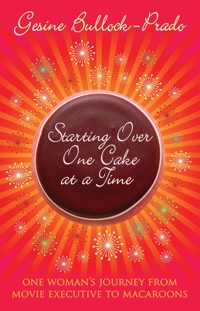
Starting Over, One Cake at a Time
GESINE BULLOCK-PRADO
Für Mutti
Contents
Recipes
Golden Eggs21
Espresso Cheesecake41
Scones52
Focaccia66
Starry Starry Nights86
Maple Pecan Sticky Buns103
Devil’s Cream Pie116
Raspberry Meringues131
Zwetschgendatschi143
Cherry Filling155
Opera Cake166
Carrot Cake179
Apple Pie190
New England209
Mandelhoernchen220
Apfelkuchen231
Passionfruit Healer242
Helga’s Cake256
Prologue
The Devil in St. Nick
ISAW THE DEVIL AT AGE THREE and he gave me chocolate. It changed my life forever.
On the evening of December 6th, 1973, in Salzburg, Austria, something stood on the landing just outside the door of our Schillerstrasse apartment, let loose an agonising moan, and rattled a ghastly chorus of heavy chains. My mother whooped in delight and invited me to open the door.
‘Sina! Mach auf!’
I was no stranger to this kind of perversely dark German childhood experience. My first storybook, Struwwelpeter, told such heartwarming tales as ‘The Story of the Thumb Sucker’ in which a naughty boy gets his thumbs cut off when he persists in that odious habit. Illustrations included. Or the story of the rascal Kaspar who, upon proclaiming he will no longer eat his soup, wastes away and dies, again accompanied by beautifully detailed artwork. And, there’s Pauline who insists on playing with matches. She certainly deserves to be consumed by those bright orange flames that take her to a fiery death. These children were not alone in their misdeeds; I myself was an avid nail biter. And, as my cousin Suzanne liked to remind me hourly, I once pooped on the Persian rug in the foyer. I was a toddler. What did I know?
But even worse, in the estimation of my majestically gorgeous and perpetually svelte mother, I was sugar obsessed. I was both grotesquely undisciplined and a potential fatty, effortlessly breaching two cardinal sins in my mother’s endless ledger of unforgivable venialities. To hide my growing addiction I became a candy thief, taking primarily from the ‘secret’ sweets drawer in my aunt’s credenza and sometimes from my friend Katya’s bedside table stash. It was for these ugly crimes that I had been anticipating an untimely end similar to those of Kaspar, Pauline, and that poor thumb-sucking boy. And now the devil had come to my door; my mother had apparently subcontracted her daughter’s grisly disposal.
I wasn’t going to help invite death in. My sister, five years older, wiser, and intent on setting unspeakable terrors upon me, opened the door herself. She was acquainted with our dark caller; she’d experienced him both as jolly Santa in America and as his cranky German alter ego, Saint Nikolaus. Either way, the outcome was usually pretty good for her on both sides of the Atlantic. We had dual natures ourselves; equal parts German and American, a bit of both our mother and our father. Our German mother, a professional opera singer, carted us to Europe while she toured, and our Alabama-born father kept the stateside fires burning in Virginia, toiling inside the rings of the Pentagon.
My sister opened the door just in time for us to spy a gruesome creature layered in chains, a filthy burlap sack strapped to his back and a leather collar cinched about his pockmarked neck. Attached to the collar was a leash, and as I followed the length of rope to the hand that grasped the lead, I beheld what appeared to be the devil himself. Our visiting demon was lank and grey-bearded, draped head to toe in sooty red velvet robes and sporting an impractically tall pointed hat. He left two matching velvet stockings leaning against the door jamb, brimming with chocolates bearing his likeness and countless other sweets. Once he and his henchman were safely out of child-snatching range, I braved the open hallway to grab the loot.
But before I could marvel at the bounty, I stood to face our benefactor. If I was going to take his offering, I felt obliged to overcome my fear and acknowledge his generosity by looking him straight in the eye, devil or not. He had gone through all the trouble of finding us. He’d probably checked in Virginia first. And then he’d have tracked us to Germany and followed the trail to Austria. And he could have left us coal. But he gave us chocolate. All of this and he was going to leave it at our door without taking credit for his trouble and kindness.
‘Grüß Gott, Herr Teufel. Vielen dank.’
He scoffed at my greeting, literally translated, ‘Greet God, Mr. Devil. Many thanks.’
‘Grüß Gott, Ferkel.’ Little piglet, he called me a little piglet. Sure, it was a term of endearment, but I was anything but a little piglet. He knew that.
And so it followed that he was anything but a devil. In fact, he was a misunderstood angel; he was the great Saint Nikolaus accompanied by his festering sidekick Krampus. And to put the final dusting of lustre on this confectionary miracle, my mother allowed us unlimited access to the contents of our velvet stockings.
I had less spectacular run-ins with confections while in Europe that I remember in an equal amount of detail: my fourth birthday cake, rimmed with marzipan clown heads and filled with almond cake and cream; the After Eight mints hidden in the credenza of the study in my aunt’s home in Bergen, Germany, top drawer of the middle row, behind the Christmas napkins; the stockpile of gummi bears in my grandmother’s handbag, which she doled out as bribery to keep me walking on the harsh cobblestone streets of Nürnberg during shopping expeditions. She herself kept a bar of the blackest bittersweet chocolate to bolster her own shopping spirits.
Martha, our American nanny, conjured slim packages of lemon cream-filled wafers from the pockets of her prairie skirts to coax me along on our daily visit to see my mother during her matinee performance. We crossed the river Salzach on the footbridge that connects the old Salzburg to the new. I portioned each wafer perfectly to coincide with our walk to the Landestheater, one tiny nibble to every ten footfalls on the narrow cobblestone streets. Once we reached the metal stairs that clung to the side of the building and led to the stage door, I would modulate my bites to coincide with the ring of every fourth step. I lifted my knees high and let my foot land squarely on the tread so that the sonorous metal ring would vibrate through my body and add more drama to the crunch of each bite.
Inside, the backstage hallways teemed with men in period costume, their britches open exposing girdles buckling from strain. Sweat streaked their heavily pancaked faces and loosened the glue holding their handlebar moustaches fast. Martha would usher me hastily past my mother’s empty dressing room and through a side door into the theatre, where I would slip into an empty seat for my afternoon nap. I might wake to see her mid-belly dance, or engaging in a lusty kiss or suffering a consumptive death. Once, I woke during a rehearsal of Carmen to see my sister among the gypsy children on stage, dramatically lunging for prop coins being thrown her way. The director invited us both to join a slew of other vagabonds to round out the cast, but I suffered from painful shyness and a general distrust of strangers. My sister had no such problems and took to the stage with hammy delight. At home, she emptied her pockets on her bed and revealed that the fake lucre she was scooping up on stage was in fact beautifully wrapped chocolates. Had I only known the rewards awaiting me, I might have conquered my timidity. I had, after all, faced a devil for chocolate only to find that I was in the presence of a saint. And in the end it was the example of unlikely angels and the power of confections that led me on a sweet path to happiness and grace in my adult life.
Chapter One
The Witching Hour
3 a.m.
IWAKE UP AT THE WITCHING HOUR. 3:30 a.m. According to folklore, it’s the very moment when witches, demons, and ghosts are at their most potent. It’s also when most bakers roll their flour-logged bodies out of bed.
My husband, Ray, sleeps through my alarm. I can’t look at him, sleeping or awake, without getting a little weak in the knees. He’s more handsome now than he was ten years ago when we first met in Hollywood, home to the prettiest boys and girls on the planet. My job was to develop films for those beautiful people. It was a miracle that I could find anyone attractive, I was so anaesthetised by the constant parade of bleached smiles and spray-on tans. But there he was, sitting across from me at a conference table at a big studio meeting, an honest-to-god Man, handsome as all get out. And smart. And funny. And not an actor. An illustrator for film, in fact. An employed artist and a grown-up, something in rare supply in Los Angeles among the insecure, fame-hungry hordes of beefcake.
I sit up. Stretch. The dogs wake long enough to yawn and deliver a few sloppy kisses, and then all three jump into my still-warm side of the bed, burrow under the covers, and snuggle up to Ray.
I take a bath, brush my teeth, and pull back my hair. For this very brief moment I see what’s become of my black mane. I’m in possession of Crystal Gayle-like, snake-handling, ankle-skimming hippie hair. Only a few years ago I’d drop major cash to get it permanently and perversely straight. To look at it now, you’d think I’d been scheduling regular appointments with a live power outlet.
I pad naked down the stairs, wanting so much to take a detour to the kitchen to make coffee but head instead to the laundry room and rummage for something clean to wear. I don’t care that our clothes never make it from the intertwined dance of the dryer to the smooth folds of the dresser drawers anymore. If it’s clean and comfortable, I’ll pull it on.
Today I’m sporting a dryer-culled ensemble consisting of an ancient Al ‘Big Daddy’ Roth T-shirt emblazoned with his signature hot-rod-straddling rat caricature flipping the bird. It’s unbelievably soft, manhandled by some grizzled biker into buttery suppleness and then graciously sold to me on eBay. At the moment, it’s both graphically offensive and soon to be encrusted with chocolate. It also sets off my growing collection of knife and burn wounds to great effect. My pants are ratty blue cords with a malfunctioning zipper circa 1978. They are number one on my queue of pants to wear to work, being both roomy in the thigh and so fantastically high-waisted that they don’t require a belt. My clogs are encrusted in flour and my socks don’t match. If my mother were alive, she’d be horrified that I’d half-consciously chosen this getup. She was, after all, the only mother at my elementary school who routinely wore leather pants and high heels. But if she knew my purpose, she’d forgive me any sartorial sin. She may have been a well-respected opera diva and an outrageously sexy and fashionable woman, but she was also our family’s resident master baker.
I was once a beautifully dressed woman. I have storage bins, tucked away in the attic of our barn, filled with ‘grown-up’ gear – smart pantsuits and death-defying heels, leather briefcases and tailored overcoats. I can’t bring myself to give the stuff away; I dragged every stitch from LA to rural Vermont. My beef was never with the clothes I had to wear to work in Hollywood, it was with Hollywood itself. So I keep them because they were innocent bystanders in my past misery as a cog in the wheel of the entertainment industry. And many of them are from my sister, better known as ‘Sand-me-downs’. Luxurious, couture bits of fashion she gets for free for being a movie star. Every few months she weeds through her closet and sets aside things she’s never worn and will never wear. And since she’s a loving and generous big sister, she sends me the prime nuggets. So they have sentimental value as well.
Unlike me, my sister found her calling early in life. Sandy’s also gifted genetically. She inherited my mother’s razor-sharp jaw and mile-high cheekbones. Her thick black wavy hair came from our father, but she blessedly missed that family’s predilection to start greying as teenagers. She pulled the dimple in her chin from a source so distant that no one in living memory has possessed one, and her sweet nose comes from Germany by way of my grandfather Meyer. Her wit and winning personality surely come from the Bullocks; both our father and Aunt Luddy can spin a yarn and charm the pants off anyone. Her talent could have come from either side, artistry bursting from our DNA at every angle. My sister was also blessed with great humility and cultivated a habit of downplaying her attributes and rerouting any and all attention or praise on me. Usually she does this in my absence. She’ll meet someone and feel the need to tell him or her I am brilliant. And she tells them I am beautiful and tall.
In the face of someone as beautiful as my sister, they come to think that I must be an otherworldly beauty if she describes me that way. Bless her; I think she really thinks all these wonderful things of me.
To be honest, I’m bright but not brilliant. Bookish and being a smart-ass really don’t add up to genius, though I wish they did. And the words most often used to describe me physically – exotic or striking or stunning – all translate to tall, pretty girl with black hair and a prominent nose. On more than one occasion, someone has pointed at me as evidence that my sister has had ‘work done’. I’m the ‘before’ to her ‘after’. But more often, I’m asked why it is that I don’t look more like her, to which I reply, ‘So sorry to disappoint you, you ass.’
She also forgets to add to her long list of superlatives for me that I am a socially retarded misanthrope, awkward on the best of occasions and completely witless and offensive on the worst. So my chosen profession, one in which I am required to work behind closed doors in the darkest hours of the morning with very little contact with other humans, is quite fitting.
On this black morning, dressed in ‘baker’s casual’ with my still-wet hair in a sloppy ponytail, I’m searching for my car keys and I look out the kitchen window to see where the moon hangs. If it’s just above our first ridge of pine, lighting my path to the barn door, I’m making good time. Any hint of daybreak and I’m screwed. In the winter, the path is a slippery white corridor. Pearly walls reaching up to our chins, small arterial tunnels dug by the dogs breaking off from the main throughway and leading into places unknown.
In the summer, moonlight permitting, I greet the toads that linger at the side door, tales of soggy midnight rainstorms and dewy grass clinging to their skin. Apple green luna moths, as big as my palm, loiter on the glass of the kitchen door. I see their fuzzy bellies first and carefully open the door to admire their handsome wings before they fly away.
My headlights flood the ghostly dark dirt roads twisting from our house to the paved street that leads to Montpelier. I have fifteen minutes of uncorrupted driving ahead of me. Not one luxury car cutting me off in the narrow canyons of the Hollywood Hills. Not a single Harley shattering my solitude on Sunset Boulevard. No road rage, no cell phones, no fake tits or tans, no prestige handbags, no billboards, no stoplights, no braking, no traffic, no nothing. Welcome to Vermont. Just heaven.
Golden Eggs
I HAVE THOUSANDS of great recipes but only one magic recipe. It’s vanilla cake, really just an ordinary yellow cake. Plain old humdrum yellow cake. Big deal. So where’s the magic?
Made simply, with pure vanilla extract and vanilla beans, this cake is hands-down the best thing ever. It’s moist and dense but still effortlessly springy. The vanilla lives deep in this batter; it permeates every molecule of butter and imparts a richness of flavour that trumps every other yellow cake out there.
But you can take out the vanilla and still make grown men cry. Add lemon extract and fresh blueberries and you’ve just made a groundbreaking muffin. Add sour cherries and orange extract, sprinkle a buttery streusel on top before baking, and you’ve made every other coffee cake obsolete.
But if you really want to mess with people, if you want to make something that is both confusing and outrageously delicious, make a Golden Egg.
I created the Golden Egg for Easter. I make hot cross buns too, but I wanted to offer something else. Something special. I consulted my magic recipe. And I remembered reading about a technique that made ordinary cake taste like doughnuts, without all the deep-frying. That’s pretty special.
I make Golden Eggs year-round now; they’re not just for Easter anymore. And they are coveted as if they were indeed genuine 14-carat gold.
MAKES 12 EGGS OR ABOUT 12 MUFFIN-SIZED CAKES
For the cake
Nonstick baking spray
3 cups all-purpose flour
1 tablespoon baking powder
1 teaspoon salt
1 teaspoon nutmeg
½ pound (2 sticks) unsalted butter, at room temperature
2 cups sugar
5 large eggs, at room temperature
1 teaspoon vanilla extract
1¼ cups nonfat buttermilk
For dipping the eggs
8 tablespoons (1 stick) unsalted butter, melted
1 cup sugar and 1 teaspoon cinnamon mixed together in a small shallow bowl
Preheat the oven to 325°F/170°C. Spray your moulds with nonstick spray. (I, obviously, use egg-shaped moulds. You can use a muffin pan or any other small baking moulds.)
Sift together the flour, baking powder, salt, and nutmeg. Set aside.
In an electric mixer fitted with either the paddle or the whisk attachment, whip the butter and sugar together until light and fluffy. This can take up to 10 minutes, depending on the temperature of your butter. As you’re whipping away, stop and scrape down the sides of the bowl to make sure all the butter is incorporated into the sugar. You can’t make magic without a lot of patience. So keep whipping and keep scraping.
Add the eggs one at a time, whipping after each one until the egg is fully incorporated into the batter. Scrape down the bowl every now and again as well. Add the vanilla.
Once all the eggs are incorporated, alternate adding the flour mixture and the buttermilk, mixing slowly. After they are well incorporated but not overbeaten, take a rubber spatula and fold the batter a few times to make sure everything is evenly distributed and the batter is smooth.
Distribute the batter into your moulds, filling each cavity a little less than halfway. Bake for about 15 minutes. Baking time varies depending on the size of your mould, so check for a very light golden brown colour and make sure the cake springs back when you touch it.
Unmould your little cakes and while they are still warm, dunk them quickly in the melted butter, then dredge them in the cinnamon and sugar. One warning: people are going to call you a stinking liar. They will not believe that these precious morsels aren’t fried like a doughnut. But that’s the cost of making magic.
Chapter Two
To Thine Own Baking Self Be True
4 a.m.
GETTING CLOSER TO TOWN, small farms give way to neat rows of wood-clad Cape Cods, built in the 1800s, some kept as fastidiously now as they were back then by their Dutch builders. Others are a little the worse for wear, Tibetan prayer flags spanning the front porches and marking the homes as communal breeding grounds for modern-day hippies. My shop is just around the corner, as you enter the city limits of Montpelier in a neighbourhood we call the ‘Meadow’. Our sign jumps out first, a gold owl set against a black background. My mother never got to see my life revolution from Hollywood cog to baker, but she’s always with me. Since she was a young girl her nickname had been Eule, owl in German. So our store logo, our protector and my totem, is a horned owl that Ray hand-drew on a scrap of paper, inspired by our new life and by her memory.
We’re across from Terry Shannon’s convenience store, the eponymously named Meadow Mart, and still a few blocks away from the city centre that houses the administrative works of the state of Vermont, a gold-domed capitol building, the DMV, a post office, five locally owned pizza joints, and two streets: State and Main. This is Montpelier, Vermont, population 8,035, the smallest state capital in the United States and the only one without a McDonald’s.
I unlock the front door to my pastry shop; it’s still black outside. Terry’s is shuttered, a Miller Light sign glowing in the front picture window. Only a few times a year is there evidence that someone else has been up in the wee hours of the morning. A local legend, the Valentines Phantom, plasters thousands of 8½ × 11 colour photocopies of big juicy hearts all over town. Every year on February 14th the front of our store is beautifully festooned, top to bottom, with a riot of red. I take it as a matter of greedy pride that we get the most hearts. I’ve counted. Or on December 13th, Santa Lucia Day, there may be a blazing lantern sitting on the front stoop, left by our resident saint, Larry, to bring me light at the darkest and coldest time of the year. In return, I make him cardamom-infused Saint Lucia buns.
I push open the front door and enter at a full sprint. I have thirty seconds from the front of the shop to the alarm panel to stop the ominous beeping. Surfing across the ancient pine planks that run the length of the store, shimmying past the pastry case with index finger at the ready, I punch in the code with twenty seconds to spare.
I take a deep breath, blood pumping, and turn reverently to the tall metal repository that contains inky black beans, on the right side decaffeinated and on the left, rocket fuel. As the coffee brews, I stand a while and take in that opulent smell of freshly ground beans. How could I have dismissed the smell as a child? There’s so much now that I savour that would have repulsed me as a kid. Like the aroma of yeast, the scent that greets me when I slide open the glass doors of the pastry case and pull out trays of croissants that have been resting overnight, the yeast slowly blooming and coming to life so that when I arrive at 4 a.m., they are plump and aching for the blast of a hot oven. Balancing sheet pans loaded with plain, chocolate, raspberry, almond, and savoury croissants, I kick open the door to the kitchen and power up the huge convection double ovens, 400 degrees for the top and 300 for the bottom. The fans come to life and fill the room with a constant low moan that continues until we close at 5 p.m.
I pray at the altar of the two great comestible goddesses, pastry and coffee. And while I have taken the veil as a servant of the almighty baked good, devoting my life to unearthing her secrets and guarding the sanctity of butter, sugar, and flour, I am no less in awe of the great mysteries of her holiness, java. As a matter of fact, I have only two truisms that I apply to humanity. Never trust anyone who drives an Astro van. And never trust anyone who doesn’t drink beer or coffee unless they have a doctor’s note.
My German grandmother, Omi, was a Grand Master in the art of the brew. At three o’clock, the sacred hour of kaffee und kuchen (cake and coffee), she would set about carefully rinsing out her paper-thin porcelain coffee decanter with blistering-hot water. She measured the whole beans precisely and ground them to perfect consistency in her tiny tabletop grinder. She set the water to boil and poured a steady stream over the resting beans, patiently, so that every ground was saturated with scalding water and contributed to the chocolate brown elixir that dripped from the coffee filter. Ray has taken up the mantle of Coffee Guru and can extract the most beautiful essence from a bean using one of the most complicated pieces of engineering I’ve ever been terrified of, the professional fully manual espresso machine. I respect his rectory of coffee and don’t get near the espresso station, just as he respects my dominion over the ovens and all things pastry. But I won’t be denied this ritual, the simple act of slowly dripping water over ground bean. And I need a gentle caffeinated push into wakefulness to aid me in my very long day of communing with butter and sugar.
In my former life, I’d still be asleep at this hour. I’d eventually roll out of bed around seven and drive through an endless landscape of graffitied concrete, sleazy billboards, and row after row of McMansions. Drag myself into the gym chock full of out-of-work starlets and fuel myself with dread at the thought of facing another soul-sucking day in Hollywood. Get to the office by nine. Work a full eight hours putting together the infinite pieces that get movies made, fielding thousands of calls from faceless humans, all of them swearing to be in possession of the perfect script and wouldn’t Sandy be just perfect in it. And I’d come home feeling empty and useless.
I first arrived in LA, just out of college, to hang out with my sister and go to law school. Sandy got ridiculously famous by my second year there. I was driving to class, listening to mindless drive-time radio. The DJs were babbling; I was tailgating and futzing with the lid to my coffee. They were chatting for what seemed to be an eternity about this adorable girl in this cute romantic comedy their girlfriends had dragged them to and they ended up liking the movie and loving the actress in it. And then I caught on. Holy shit! They were talking about While You Were Sleeping. They were talking about Sandy! I became privy to these kinds of conversations all over the place – in line for coffee, at the dentist, at the dog park. At first I was delighted that she had made such a rousing success, but pretty quickly it got creepy.
I’d get home and find the answering machine full. Messages from hundreds of fixated strangers who took the obsessive time to track down the unlisted number of a woman they didn’t know, whom they had seen play a fictitious character in their local Cineplex and for whom they suddenly had a deep and meaningful attachment. Some messages were full of longing and despair. Some were eerily casual and familiar. Others were thick with menace and confusion, from poor souls who should have been heavily medicated and hospitalised, internal voices commanding them to find this woman and bring her home. But they all contained a sense of ownership, as if they’d seen a product advertised in a catalogue and were putting in their order: I saw it, I want it, I deserve it, and it’s mine.
About the same time, I graduated from law school, passed the bar, and went on exactly two interviews at law firms.
‘Miss Bullock, our firm is dedicated to boring the hell out of you and ensuring you have no life. Pray at the altar of billable hours!’
Comparatively, Hollywood was looking positively alluring. And as luck would have it, my sister was starting up a production company. It took me a nanosecond to say, ‘Sign me up!’ We were going to make movies, me armed with my nebbish book smarts to look over contracts and nitpick over inaccuracies in historical biopics. And Sandy had her boundless creative energy. I’d also be able to keep an eye out for those crazies who were calling her and she’d be able to boss around her little sister. The work wasn’t particularly fulfilling, but I hadn’t taken much time to figure out what would be. So for the time being it was a win-win situation. And I met Ray.
At our newly minted company, I’d get as many calls from stalkers as I got from studio executives. I had two piles on my desk. On the one side, a tidy mountain of scripts and contracts. And on the other, a freakish cumulus of creepy fan letters and items I’m reluctant to label as presents because they were really more like pagan offerings: collages composed of human hair and photos torn from trade magazines, a box of Halloween candy and razor blades. Once we got a proposal of marriage accompanied by a dozen roses and a live Dalmatian puppy. Every week I’d bundle up the freak show and ship it off to the police for cataloguing.
I read abominable scripts, lifeless books, and uninspired pitches in the morning. In the afternoon I’d have meetings with writers, studio executives, and producers in our upstairs conference room, wherein I devoted the hours between three and five trying my damnedest not to scream bloody murder whenever I heard the words cute, quirky, and romantic comedy.
And my friends, they started to call to ‘do’ lunch, to read their scripts, to hear their ideas, to confirm a bit of gossip. No big deal, really. Even an ex had something to sell, shamelessly sidestepping that little piece of our history where he stomped my heart to bits. After a few months, it dawned on me that I had stopped being a confidante and had become a contact. They had an ‘in’ and it was me. And every lunch, every dinner party, had become an opportunity to kiss my ass and sell me ideas. I’d never felt so lonely.
Every once in a while, an actual movie production would break out in between all the schmoozing. And by a movie production, I mean sitting on a set for two months waiting for something to happen.




