


Erhalten Sie Zugang zu diesem und mehr als 300000 Büchern ab EUR 5,99 monatlich.
- Herausgeber: Parthian Books
- Kategorie: Sachliteratur, Reportagen, Biografien
- Sprache: Englisch
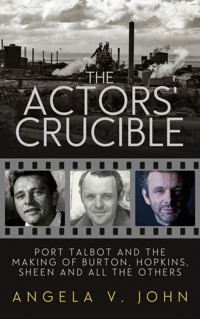
The town of Port Talbot has long been seen (quite literally) as synonymous with the steel industry. Yet it also has another claim to fame as the actors' capital of Wales. It has produced a remarkable number of actors since the inter-war years. Richard Burton, Anthony Hopkins and Michael Sheen head the glittering cast but there are many others including early stars such as Ronald Lewis and Ivor Emmanuel, more recent figures like Rob Brydon and Di Botcher as well as a cluster of exciting young actorsstarting to make their names in the West End and on the big and small screen. This book suggests explanations for this phenomenon. Its author is a historical biographer who hails from Port Talbot and has done extensive research including numerous interviews. It explores the provision of educational and cultural facilities for young people over the years and demonstrates a commitment to drama that is deeply embedded in the town's history. It tells in some depth the stories of the super-stars but in a novel way, focusing on how they emerged and on those who nurtured their talent, presenting the actors as part of a tradition that was set in motion even before Richard Burton began to make his mark. It surveys the careers of fifty actors from Port Talbot and it considers what its most famous stars have put back into their community, culminating in the spectacular three-day event of Easter 2011 when Michael Sheen resurrected Port Talbot's pride and hopes through the immersive theatrical experience of The Passion. Written at a time of mixed fortunes for actors when funding for training is threatened yet opportunities for theatre and film work are expanding within Wales, this book puts centre-stage a town, its actors and those who guide them and so offers a new kind of cultural history. Such an approach also raises wider questions about the importance of the arts and of drama in particular to the wellbeing of communities.
Sie lesen das E-Book in den Legimi-Apps auf:
Seitenzahl: 296
Veröffentlichungsjahr: 2015
Das E-Book (TTS) können Sie hören im Abo „Legimi Premium” in Legimi-Apps auf:
Ähnliche
















Contents
Title PageDedicationAcknowledgementsIllustrationsAbbreviationsMapIntroduction – Going to townPART ONE – BEFORE THEY WERE FAMOUSBecoming BurtonEnter Anthony HopkinsMichael Sheen’s TimePART TWO – IN THEIR FOOTSTEPS and GIVING BACKProducts of Port TalbotRemembering the townPride and PassionSo is there something in the water?Appendix – Fifty Port Talbot ActorsNotesCopyright
THE ACTORS’ CRUCIBLE
PortTalbotand the Making of Burton, Hopkins, Sheen and All the Others
ANGELAV.JOHN
For Andrew, Mair, Nia, Andrew H. and Katie with gratitude and love
ACKNOWLEDGEMENTS
This subject crept up on me and took meover.I hadembarked on another project, a more conventional historicalstudy.Buta chance meeting with Michael Sheen at a conference got me thinking. Back in 2010 in asurveyarticle called ‘Lifers: Modern Welsh History and the Writing of Biography’ (in theWelsh History Review)Ihadfloatedtheideaofsomeonewriting about the remarkable cluster of actors fromPortTalbot and a few yearslater,to my surprise, hijacked myself and embarked on what becameThe Actors’ Crucible.
SomyfirstthankyoumustbetomypublisherRichardDaviesatParthianfor generously permitting me to deviate (temporarily) fromthevolumehehadbeenexpectinginordertoresearchand write this book. I am grateful also to Gillian Griffiths, ClaireHouguez,RobertHarries,ElaineSharplesandSusieWild.ThanksareduetoWilliamHowells.Iamespeciallypleasedtohavehad the opportunity to work again with the writer Francesca Rhydderch as myeditor.
Many people have generously assisted me during the courseof myresearchandIappreciatethis.Itwouldbeimpossibletolist everybody here but I must mention the invaluablecontribution of those who willingly subjected themselves to my interviews, usually in long sessions in their homes and/or in repeated written and oral communication. They are: MatthewAubrey,Robert Blythe, Philip Bond, DiBotcher,Betty BrooksRichards, Rob Brydon, Katrina Burton, NormanComer,Hubert Davies, Rona Davies, Godfrey Evans, Nick Evans, Helen John, Simeon Jones, Luke Joyce,GaryLagden, Caroline Michael, Kevin Matherick,FrancineMorgan,SiânOwen,DougRees,KyleRees, Matthew Rees, Carol Scott, Meyrick Sheen, Michael Sheen, Gareth Snook, Jean Thomas, Gwyn Thomas, Ken Tucker, Michael Waters and Patricia Wright. Some of you also kindly supplied photographs.
Special thanks must go to Michael Sheen for his sustained encouragement. His parents Irene Sheen and Meyrick Sheen and uncle John Sheen have provided assistance in a host of ways.ThankyoutoSirAnthonyHopkinsforlettingmeusethe signedphotographandtoRoyGuyforallowingmetoreproduce his portrait of theactor.I am also indebted to Nia John for her photography and Llewela Gibbons for her expertise. Thanksto John Adams, Alana Adye, Allen Blethyn, Allan Cook, Alan Davies, Rhian Davies, Amanda Duke, JohnV.Hughes, Ronald Jenkins,DoreenJohn,ElinJones,RichardJones,SaraMays,Jeff Maddox, Pam Rees, Dennis Reed, Gaynor Richards, Shaun Richards, David Scott, Avril Stevens, Natalie Thomas, Lloyd Trott, Rhianon Trowell, StephanieWardand Heath Woodward for the information/sources/photographs they have supplied.PeterWhitebrookhasbeenveryhelpful.EnfysMcMurrykindly talked to Rosalie Mahoney in the United States and I am grateful to both of them. Every effort has been made to trace copyholders.
OneofmygreatestdebtsistoFredandMarilynSteadman-Jones who entrusted me with the precious archive they have builtup forCyrilJenkins.Fredhasalsoanswerednumerousquerieswith patienceandgoodhumour.AndIamespeciallygratefultoSally BurtonforlettingmeusetheBurton-Burgesscorrespondencein the NationalLibraryof Wales and for permitting me to reproduceapageofRichardBurton’searlydiary.Thanksaswell to Swansea University for allowing me to consult the original diaries and correspondence in the Richard Burton Papers held in the university’s Richard Burton Archive. I thank Elisabeth Bennett, university archivist and her staff and Steve Williams. Paula Durnell and staff at Dyffryn School, where the archives fortheSecarekept,werewelcomingandhelpful,aswerestaff and pupils at Sandfields School. Thanks also to Gill Lewis, Mayor’s Secretary, Mayor’sParlour,Port Talbot. I appreciate the assistance of Andy Brown atPortTalbot YMCA and thank thelibrariansandarchivistsatthefollowing:BristolUniversity (Theatre Collection), the British Library, theBBCWritten ArchivesCentre,CavershamPark,Reading(MatthewChipping), theBFILibrary,CardiffCentralLibrary,HaverfordwestLibrary,Port Talbot Library, TaibachLibraryand West Glamorgan Archives. As always, the staff at the National Library ofWaleshave been unfailingly helpful. I am grateful as well to those atRWCMDCardiff,RADA,andCentralwhoansweredqueriesand to Catrin Rogers atNTW.
Sally Roberts Jones and Professors Hywel Francis, Peter Stead and Chris Williams kindly read my manuscript and I greatly value their informed comments.Finally,I would like to thank thehistorianProfessorIeuanGwyneddJones.Ihaveknownhim since I was a raw postgraduate student of his at Swansea University.Heisnowinhisninetiesbutwhenhewasyounghe lived and worked in Port Talbot.Wehave had valuable conversationsaboutthetown’shistoryanditspeople.Icherish this abiding friendship andIeuan’sknowledge andwisdom.
ILLUSTRATIONS
Cover: Richard Burton (Siân Owen);Anthony Hopkins (by Edward Russell Westwood/© estate of Russell Westwood, National Portrait Gallery, London); Michael Sheen (Sarah Dunn/www.sarahdunn.com)
MAP: ThePortTalbot District (RobertHarries)
Port Talbot: A Steel Town (Nia John)
Philip Burton in the YMCA’s
Othello
, June 1932 (Newark Lewis)
Philip Burton: The Schoolmaster (Dyffryn School Archives)
Richard Burton and Meredith Jones (the James family)
T. Owen Jones (Dyffryn School Archives)
Richard Burton (Siân Owen)
Richard Jenkins’ handwritten diary, 9–15 September 1940 (© Sally Burton, Richard Burton Archives, Swansea University)
Port Talbot Secondary School (Dyffryn School Archives)
Richard Jenkins (third from left in back row) and class in 1940 (Dyffryn School Archives)
The first autograph? (Dyffryn School Archives)
Leo Lloyd (Jeff Maddox)
Cyril and Clarice Jenkins (Cyril Jenkins Archive)
Programme for
Outward Bound
1955 with Anthony Hopkins as Joint Stage Manager. Notice the advertisement for the family bakery (Cyril Jenkins Archive)
Portrait of Anthony Hopkins by Roy Guy in Port Talbot YMCA (© Roy Guy)
Anthony Hopkins (Tony) expresses his gratitude to Cyril Jenkins (Anthony Hopkins, Cyril Jenkins Archive)
The young Godfrey Evans as Becket in Selwyn Davies’ school production (Dyffryn School Archives)
‘Once in a Lifetime’, WGYTC production, 1985. Maxine Evans, Darren Lawrence (Port Talbot), Karen Willans, Michael Sheen (Port Talbot), Buddug Morgan (Kevin Matherick)
Dennis Burgess (Peter Stevens)
Ivor Emmanuel (the Emmanuel family)
Robert Blythe (Robert Blythe)
Di Botcher (Di Botcher)
Rob Brydon (Trevor Leighton)
Siân Owen and her uncle Richard Burton (Angela V. John)
The Portrait Bench on the Richard Burton Trail: Richard Burton, Rob Brydon and Forest Ranger Dick Wagstaff (Siân Owen)
Norman Comer (Norman Comer)
Godfrey Evans, founder of WGYTC at its 40th anniversary celbrations in Port Talbot, 2015 (Godfrey Evans/ WGYTC)
Glan Afan School Centenary production of
Under Milk Wood
, 1996. Professional actors and ex-pupils Michael Sheen and Norman Comer played 1
st
and 2
nd
Voice and local actor/producer Alan Davies was Captain Cat. Ken Tucker was the producer (Ken Tucker)
Sandfields School production of
Sweeney Todd
in 2003 with Marc Antolin and Christina Modestou (Helen John)
Sandfields School pupils rehearsing with their drama teacher Helen John for
The Wizard of Oz
2015 (Sara Mays)
Michael Sheen (Sarah Dunn, www.sarahdunn.com)
Programme for
Behold The Man
(Carol Scott)
Carol Mends (assistant director), Ina D. Jones (producer and director) and Carol Scott (assistant director) attending a planning meeting for
Behold The Man
in Margam Park with Margam Castle in the background (David Scott)
The Passion
: At the Seaside Social Club on the Saturday Night: Kyle Rees, Matthew Woodyatt, Francine Morgan, Michael Sheen, David Rees Talbot, Matthew Aubrey, John- Paul Macleod, Darren Lawrence. All these actors are from Port Talbot with the exception of Gwent’s Matthew Woodyatt (Richard Hardcastle/National Theatre Wales)
The Passion
: Michael Sheen as The Teacher in the crowd (Geraint Lewis/National Theatre Wales)
The Passion
: Members of the Company on the Beach (Richard Hardcastle/National Theatre Wales)
ABBREVIATIONS
Arts Ed – Arts Educational, London
Central – Royal [since 2012] School of Speech and Drama, London
LAMDA – London Academy of Music and DramaticArt
National – Royal [since 1988] National Theatre, South Bank, London
NTW – National TheatreWales
RADA – Royal Academy of Dramatic Art RSC – Royal ShakespeareCompany
RWCMD – Royal [since 2002] Welsh College of Music and Drama, Cardiff
WGYTC –WestGlamorganYouthTheatreCompany,Swansea
MAP
The Port Talbot District
INTRODUCTION
Going to town
It is the place where the mountains almost meet the sea. It’s the gritty industrial town that youcan’tignore, positioned between the cities of Cardiff and Swansea on the southWalescoast. And it is renowned for producing famous actors. As the broadcasterPatrickHannanputit,hereis‘agoldentrianglefor the acting trade’.1
This book explores how and why this much-maligned steel town has generated a glittering array of men and women with careers in drama. It considers their early lives and their relationship to theircommunity.
A triumvirate of Richard Burton, Sir Anthony Hopkins and Michael Sheen heads the cast. In 2005 a poll by the Old Vic Theatre named Hopkins the greatest British actor of all time (Lord Olivier came second) and Burton sixth.2Forone Welsh town to have produced such revered performers isremarkable.Yet,asthisbookdemonstrates,PortTalbothasspawnedatleast fiftyprofessionalorsemi-professionalactorssincetheinter-war years. They include esteemed Shakespearean performers,WestEnd actors starring in plays such asWar Horseand in popular musicals, familiar voices on radio and in Welsh, British and American television dramas and soaps, film actors across the decadesandactorsseasonedinrepertorytheatre.Thenthereis theactresswhoinspiredBetteDavisandtheactorwhowasthe model for the character of Cliff Lewis in John Osborne’sLook Back in Anger.Anumberofdevoteesofdramabecameteachers of the subject as well as moving into theatre production and other related work. And there is a deep-rooted commitment to amateur theatre in the town.
On 4 June 2014 theSouth Wales Evening Postasked and answered its own question: ‘Most talented place on earth? It must be Neath–Port Talbot’. This was, admittedly, an account ofperformerswhohadreachedthefinalsinthetelevisionseriesBritain’s Got Talent– most recently the thirteen-year-old local rapper Leondre Devries – but it also identified a wider Hall ofFamefromthelocality,namingfifteenindividuals.Includedwas the Hollywood film star Ray Milland (1907–86) from Neath, the first Welsh actor to win an Academy Award. In 1945 he was Best Leading Actor for playing an alcoholic writer inThe Lost Weekend.
Port Talbothas never been short of famous residents.3In his serieseditor’sintroductiontoReal Port TalbotPeterFinchwrote: ‘There’smorefamehereperstreetthaninCardiffandSwansea combined’.4But it is the remarkable cluster of actors that thisbookhighlights.ThePost’sarticlereflectsthepridethattheplacehasinitsperformers.Evenallowingforsomelatitude,two-thirds of the somewhat eclectic list is comprised of men and women renowned not only in Britain but also internationally.5This invitescloserinvestigation.6
A place dominated by labour(or,at times, lack of it) and Labour, Port Talbot is, in some respects, a Valleys town that slips down to the seaside. Topographically striking, it is bounded by both mountains and coast.Yetit has traditionally been assigned the role of the ‘baddie’ in the biographies of its stars. Usually written by those from far away,7it has been presented as a place that, against the odds, produced creative spirits who hastened to escape from it.
An archetypal town of heavy industry with an unforgettable industrial skyline, it has inherited the insults heaped on MerthyrTydfilinthenineteenthcenturyandbeenportrayedas a version of Dante’s Hell, a blot on the landscape. Such aview has been encouraged by the presence of a motorway thatlooks down on the town and whisks drivers away from it. This motorwayonstiltspermitsadramaticglimpseofthesteelworks that stretch for three and a half miles.
In 2014 the partial closure of one of the M4’s main exits enhancedasensethatitwasaplacetopassthroughratherthan stop off. The Works (as the steel plant is known) has been claimed – incorrectly it seems – as the inspiration for Ridley Scott’sfilmBlade Runner.8Whatiscertainisthatithashelped to produce many of the industrial products that we rely upon, including those cars that flee the scene. In 1960 the town boastedEurope’slargestintegratedsteelworks.Exudingitsown dangerousbeauty,it has played a visceral role in shaping how thetown’sactors have related to their nativeenvironment.
If you travel from north to south you can glimpse the area’s variety and history. Set off from the stunningly beautiful AfanValley,oncethesiteofcoalminingandtheOakwoodIronworks butnowaForestParkrenownedformountainbiketrails.Travelfrom Pontrhydyfen – boasting both aqueduct and viaduct – south through the former copper hub of Cwmafan (the English Copper Company held sway from the early 1840s) and you come down to the heart ofPortTalbot, named after the family whodevelopedthedocks9inthenineteenthcentury.Thetown grewfromacreekportthatexportedcoalandimportedcopper orefromCornwall.ItsoldcentrewasAberafan/Aberavon,once an‘Ancient’borough. It boasted a covered market and much else and is still the name of the Parliamentary constituency.10Now Aberafan is synonymous with the beach and its miles of golden sands.Toits west is residential Baglan, site of the old Baglan Hall and a Norman church named after St Baglan. BP Chemicals was nearby but the area is now being reinvented as an EnergyPark.
On the other side of town is Taibach, once known for its copper (smelted there from 1770). Taibach means LittleHouses, and here and across the town Port Talbot remains remarkably free of high-rise homes. Most inhabitants are used tohousesratherthanflats,aswitnessedattheSandfieldsEstate builtinthemid-twentiethcenturytohouseworkersattheSteel CompanyofWales.Nothing,itseems,canchallengetheskyline of theWorks.
Beyond Taibach lies Margam, best known for the modern steelworks (thoughPort Talbot’ssteel production dates backto the start of the twentieth century). Margam also has a British Oxygen plant, but cheek by jowl with such industry are less prominent but much older features such as a twelfth-century Cistercian Abbey Church (the steelworks used to be called theAbbeyWorks).ItwasthemedievalmonksofMargamAbbeywhostartedextractingironandleadoreinthearea.Thereistoothe Celtic Wheel Cross of Conbelin and MargamParkwith itsdeer,the ruins of a beautiful Chapter House, an elegant eighteenth-centuryOrangeryandtheneo-GothicMargamCastle,oncehometoBritain’srichestheiress,theVictorianEmilyTalbot.
PortTalbot has been and remains a town of contradictions and distinct parts. The boy the world would come to know as Richard Burton was born in the Afan Valley’s Welsh-speaking industrial village of Pontrhydyfen but spent his childhood and teenage years a few miles south in Taibach. Anthony Hopkins hailedfromMargambutmovedtoTaibach.MichaelSheengrew upfurtherwestinBaglan.AndanexplorationofwhatPeterSteadhascalled‘thePortTalbotconveyorbelt’11ofactingtalentneeds to recognise that despite their identification with the town, its mostrenownedtrioemanatedfromsomewhatdifferentdistricts andbackgrounds.Theirrespectivedatesofbirth–1925,1937 and 1969 – also helped to ensure that although they shared much, they faced in their youth rather different challengesand opportunities.
Their fortunes and those of other local actors have, nevertheless, been characterised by impressive cultural and
educational institutions.YetPort Talbothas never been aplace dominated by the elite. Its population is and has beenoverwhelminglyworkingclass.In1949,forexample,asurvey12oftheoccupationsof240fathersofpupilsinoneofthetown’stwogrammarschoolsrevealedthatonly15percentwerewhite collarworkersandthiswasjustbeforethenumberofindustrial workers (which had declined significantly in the 1920s) increasedoncemorewiththedevelopmentofSandfields,which became the second largest housing estate inWales.
Thoseartisticfigureswho‘madeit’mightbebestunderstood if seen as part of a rich culture and community that has, over time, encouraged creativity and aspirations, whilst their very success has in turn prompted a pride and desire to emulate. Rather than turning their backs on the place, the key players have been a spur and encouragement to younger generations fromthesametown.MichaelSheenhascommentedhowithas a‘richcinematicelement.YouliveinPortTalbotwiththeliving presence of Richard Burton… people are fiercely proud of that heritage.’ He stresses that Burton and Hopkins ‘made my dreams of becoming an actor just a little more possible.’13
The book is divided into two parts. Part One upsets traditionalnarratives.Inplaceofthefamiliarhastygenuflection to childhood and youth followed by a spotlight on superstar lives, loves and careers, it looks at the ‘Big Three’ before they became famous, seeking to understand them in the context of theirtime,placeandcontemporaries.Publicationcoincideswith the90thanniversaryofRichardBurton’sbirthon10November 1925 and this book appearsthirty-oneyears after his premature death in 1984. So the first chapter looks at the 1930s and 1940s and asks how the Port Talbot schoolboy Richard Jenkins emerged as the actor Richard Burton.
The Richard Burton story is, of course, especially beloved of journalists andPortTalbot pundits and it shapes and reshapes itselfascircumstancesdemand.Atitsworstitsuggestsacruderags-to-richesstory.14But even when it is knowingly and carefullyweighedupbyhistoriansandculturalcritics,theearly yearsinevitablyfeatureasameanstoanend,sinceitisthelife in the limelight that demands interrogation. Peter Stead’s analysis is partly concerned with what else Burton might have achieved and, unlike some, he is not simply concerned about the screen overtaking the stage.15Chris Williams’ fine editing of the Richard Burton diaries reveals the actor’s introspection interwoven with the public face but the fact that just one year of diaries exists for the Port Talbot period accentuates the emphasis on Burton rather than Jenkins.16
I’ll be showing how Richard Jenkins and then, in the second chapter Anthony Hopkins, discovered the stage and I’ll be seeking, in so far as is possible, to read thestory forwardsrather than backwards, putting these actors into the contextof their home environments before their careers developed. Morerecently,thesubjectofChapterThree,MichaelSheen,hasbeen portrayed as inheriting their mantle. The theatre and film director Sam Mendes has commented that Sheen is ‘Welsh in the tradition of Anthony Hopkins and Richard Burton: fiery, mercurial, unpredictable’.17Sheen’srise to fame isexamined.
ThethreechaptersinPartTwolookattherelationshipbetweentheseworld-famousfiguresandPortTalbot.Italsoconsidersits wide range of actors. In many other towns just one of these individualswouldbecitedwithprideasthelocalsuccessstory.ChapterFourbegins by considering legacy: the impact of the mega-starsandthesignificanceofemulationforthecareerofthe quick-wittedRobBrydon,whogrewupinBaglan.
Peter Stead has notedhow:
As a nation we publicly mourned the passing of our coal minersandoursteelworkersandyetwefailedtoappreciate the silent revolution that made us a nation of actors.18
Thechapter’smainfocus,however,isonthetownasacrucible for actors, following in the footsteps of earlier successes and creating what the journalist Doug Rees calls an ‘unusual production line of people’. An Appendix lists fiftyPortTalbot actors whose voices and faces have been heard and seen on radio, the professional stage and the big and small screen. DiBotcher,whose work ranges from Shakespeare to soap operas, comments how ‘We take it for granted’ that local people are actors. She adds that when she goes to town: ‘I quite often bump into parents of professional actors in Poundland talking about theWestEnd or somebody going over toBroadway’.
Chapters Five and Six explore how the international actors have handled and expressed their relationship to Port Talbotovertheyears, lookingat how, indifferent ways, Richard BurtonandAnthony Hopkins have remembered theiroldhomesandgiven something backtotheir communities. Michael Sheenhascommented thathis jobisallaboutobservationand that‘Everycharacter I do has something of Port Talbot in it’.19The Passion, the ultimate in site-specifictheatre,wasperformed acrossPort TalbotovertheEasterweekendin2011.Thetownwasdescribedinthenational pressas‘oneofthehappiest placesonEarth’20andThe Passionjudged‘oneof the outstanding theatrical events not only of thisyear,but of the decade’.21Most of its professional cast came from PortTalbot.
The conclusion sums up the ingredients that went into making this town the actors’ capital ofWalesand considers its position at a time when opportunities for Welsh actors seemto be expanding yet funding cuts threaten initialtraining.
Most biographies of superstars have been written by journalists, film and theatre critics or by those whoinvestigate thelifestoriesoftherichandfamous.Thisbookdrawsonrich biographicalmaterialaboutthetown’smanyandvariedactors, muchofitbasedonextensiveinterviews.Itisalsoabiography ofaplacefromtheinter-waryearsonwardsbyabiographerand historian from the town.
My brother and family still live there. My paternal grandmother, Margaret David, was born and grew up in what isknownas‘TheSker’,22aTaibachpubthattheyoungRichard Burton used to frequent. Margaret David married a builder descendedfromthenonconformistministerandwriterofWelshhymns, Thomas Williams (1761–1844) of Bethesda’r Fro. My maternal grandmother’s father HenryWalshwas ofWelsh-Irish descent and had an ironmonger’s shop in Cwmafan Road. He was a founder of the local Liberal Club, a member of the Progressive Party and twice mayor of theborough.
In my teens I knew well several generations of the large Jenkins family who lived in and aroundPortTalbot. Through them I met their most famous relative: Richard Burton. In my earlytwentiesImovedtoLondonwhereItaughtinasixth-form college. In what now seems like another life – and a curiously bifurcatedone–IwouldspendtimewithRichardandElizabeth whenevertheywereinLondon,attheirsuiteintheDorchester Hotel and later at Squire’s Mount, Hampstead, and attend rushes and premieres of theirfilms.
In my early childhood I had lived in Beechwood Road just a coupleofstreetsfromAnthonyHopkins’Margamhomeandmy parentswerefriendsofhisparents.Myauntandunclelivedin Baglan, home to Michael Sheen.
Whatfollowsdrawsonamixoftheatreandlocalhistory,oral history and biographical history, with a sprinkling of personal reminiscence.Puttogether it provides an alternative way of looking at the cultural history of a town and aprofession.
PART ONE
BEFORE THEY WERE FAMOUS
1
Becoming Burton
The birth of Richard Walter Jenkins in Pontrhydyfen on 10 November 1925 has been seen as the start of the town’s association with the acting profession and fame.Yetthis isnot quite true. Some years earlierPegEntwistle and ThomasOwen Joneshadmadeanimpactonthewiderworld.Theyarehardly household names today but their stories of burgeoning fame followed by early tragedy are trulydramatic.
Millicent Lilian Entwistle, known as Peg, was born in 1908 at5BroadStreetinthecentreofPortTalbot.23Thiswaswhere her grandparents, the Stevensons, lived – John Stevenson was a metallurgist – and where her mother Emily grew up. Peg’s uncle, who also lived in Broad Street, was the foundation organistandchoirmasterattheimposingStTheodore’sChurch built by Emily Talbot in 1897 and named after her brother Theodore (who had earlier brought Peg’s great-uncle Frank Richard Seaton to Margam Abbey as its organist and choirmaster). Peg’s mother had come home for the birth. She returnedtowestLondonsoonafterwardswiththebabybutthe marriage to Robert Entwistle did not last.
RobertobtainedcustodyofPeg,thoughsheapparentlyvisitedPortTalbot quite often as a little girl.However,they moved to NewYorkwhen she was six. Robert remarried, but the child’s stepmother died from spinal meningitis and when she was fourteenherfatherwaskilledinahit-and-runaccident.Robert hadbeenanactorandsotoowashisbrotherCharles,a successful London and NewYorkstagemanager.Charles and hiswifenowtookcareofPegandherhalf-brothers.Shestudied acting in Boston and, aged sixteen, got awalk-onpart in a Broadway production ofHamlet. The seventeen-year-old Bette Davis saw her inIbsen’sThe Wild Duckand later claimed that itwasPegEntwistle’sperformancethatinspiredhertobecome anactor.Aged eighteen, Entwistle met an actor called Robert Keith. She married him four days later. A messy divorce followed.
By 1932 she was in Los Angeles in a supportingrolewith the young Humphrey Bogart inThe Mad HopesattheBellasco Theatre. She also secured a part in a film: DavidO.Selznick’s thrillerThirteen Womenstarring MyrnaLoy.Butherscenes ended up on the cutting-roomfloor.Within monthsofarriving in Hollywood the twenty-four-year-oldblue-eyed,platinum blonde actor had taken her own life and securedmorefame, albeitposthumously,thanshehadenjoyedduringhershortlife. In September 1932, with the aid of aladder,PegEntwistle threw herself off the top of the H of the HollywoodSign(then called Hollywoodland). It was two days before herbodywas foundinaravine.Asuicidenotestressedthatalotofpain could have been spared had she taken actionsooner,implying thatthemanypersonaltragediesofherlifehadtakentheirtoll rather than simply the loss of her part in the film. Justafew days after her death a letter arrived offering her a jobatthe Beverley Hills Playhouse. It was the part of a woman drivento suicide.
Recently Peg Entwistle’s death has attracted renewed attention.In2014anoutdoorscreeningofThirteen Womenwas shown in Hollywood with proceeds going to the American Foundation for Suicide Prevention. A book, essays and a documentary have appeared about her and there is aprojected movie. Here in the UK, Heath Woodward’s musicalGoodnight September24argues that, far from being a failure, sheachieved as much as anactor.But even if we focus onPegEntwistle’s life rather than death, it is a long way from Broad Street to Broadway and beyond.
ClosetoBroadStreetisTalcennauRoadwhere,in1912,PortTalbotHigherElementarySchoolforboysandgirlshadopened. Nineyearslaterithadbeenupgradedtoasecondaryschooland began preparing pupils for the Welsh CentralBoard’sSchool Certificate and Higher School Certificate. One of the boys who passedhisscholarshiptotheSec(asitwasknown)inthe 1920s was a collier’s son from the AfanValleyvillageofBryn. Bornin1914,ThomasOwenJoneswascoachedindramaby theschoolmasterP.H.Burton.Herecognisedtheactingpotentialofthistall,handsomeyouthwhoseemstohavebeenespeciallykeenonphysics.Indeed,accordingtoayoungercousinofOwenJones,PhilipBurtonarrivedinBrynonedayandofferedtoadopttheschoolboyactor.Hisparentsapparentlysenthimaway‘with a flea in his ear’. As is well known, History would, in asense, soon repeatitself.
In his final year at school Burton cast him as Petrucio in the school production ofThe Taming of the Shrew. He gave a ‘brilliant and memorable performance.’25The actors were rewarded with a spread in the school kitchen and a 2d bar of chocolate. Jones also played rugby for the school and during rehearsals,insteadofprotestingtoPetruciowiththewords‘Youaremarvellousforward’,theboyplayingGremiodeclared:‘Youare a marvellousforward’.26
Jones won a Leverhulme Scholarship to RADA in 1933 then touredWales,EnglandandIrelandinrepertoryaswellasacting on the London stage, most notably at the Old Vic. During its famed1936–7seasonheworkedwithsomeofthebest-known actors of the past, present and future. In the Festival for Shakespeare’s Birthday he appeared with the Vanbrugh sisters VioletandIreneaswellaswithLaurenceOlivier,AlecGuinness and Margaretta Scott. He was inLove’s Labour’s Lostwith Michael Redgrave and Rachel Kempson,Twelfth Nightwith Olivia and Jessica Tandy andHenry Vwith Guinness andOlivier.
PhilipBurtonrecallsthatOwenJoneswasLaertestoOlivier’s Hamlet and that he took the young actor’s parents to London to see him in this part.27Yetit was Michael Redgrave whowas castasLaertesinTyroneGuthrie’suncutproductionofHamletthat season.28It was during thisrunthat Olivier, uncannily anticipating the future, announced one night to the audience that‘Agreat actress has been born. Laertes has a daughter’.29Redgrave had just become the father of a baby calledVanessa.OwenJonesdidatleastdeliverthefirstlineoftheplaybutwith the minor part of the sentry Bernardo, a role he reprised when Guthrie took the play to Elsinore’s Kronborg Castle.30
OwenJoneswasanunderstudyforthepartofLaertes(afact that Burton omitted to mention)31but the talented young WelshmandoesseemtohavehadthechancetoplayLaertesat leastonce,andhewasanywayappearinginShakespeare’splays withthebest.Hemightintimehavebecomeahouseholdname. But after taking a commission as a wartime RAF flyingofficer,he damaged his hip when a packed parachute fell on him from a great height. Complications resulted in cancer and his death in December 1942, aged justtwenty-eight.32
The Owen Jones story suggests that it is worth looking more closelyattheopportunitiesthatPortTalbotwithitspopulation of 40,000 offered to working-class boys interested in acting between the wars. Central to his development and that of the world-famousactorRichardBurton(whowouldplayHamletin his triumphant Old Vic season of 1953–4) was the grammar school and amentor.
Those fortunate enough to win a placeandstay on at a grammar school in a Welsh industrial town in the inter-war years were in a privileged and precarious position. They were privileged in that the legacy of latenineteenth-centuryeducational legislation for Wales was a greater link betweenelementaryandsecondaryeducation than in England and a more democratic system, with merit scoring over money in securing secondary school places and a higher percentage of pupilswinningfreesecondaryeducation.Admittedly,aslateas 1930 only 5 per cent of the Welsh population over fifteen received any full-time education but the Depression had an unexpected beneficial effect on schooling in Wales. With many familiesleavinginsearchofworkelsewhereandtheconsequent decline in the school population, by 1931 10 per cent more elementaryschoolpupilsinthe11–12agebracketinWaleshad the opportunity to progress to secondary school than did their counterparts in England.33
Port Talbot’s other secondary school was the older County School that dated back to 1896 when it opened with eighty- five pupils. Its formal name was thePortTalbot Intermediate School and it was one of the first secondary schools of itskind in Wales. Grammar school pupils from working-class families were in a precarious position since the tough economic conditions of the time – especially for those from mining communities – combined with the school-leaving age of fourteen, made it tempting for parents to opt for the wagethat employment could offer rather than keeping their offspring at school. In the years 1931 to 1934, unemployment in Port Talbot stood at an average of 46 percent.34
Thesteelindustry,establishedinthetownin1901–2,35was in thedoldrumsand blast furnaces were working at half capacity. From 1924 to the end of 1930 only one of the two furnacesatMargamwasinblast.Steelproductionwasvirtually atastandstillformostof1927.This,thedeclineofthetinplate trade and the closure of mines in the lower AfanValley,saw it classified as a Deprived Area.
Richard Jenkins’ eldest sister Cecilia, twenty years hissenior(andknownasCis–SistoRichard),andherhusbandElfedJamesfacedadilemmaearlyinthewar.Thenewlymarriedcouplehadtakeninthetwo-year-oldRichard36tolivewiththeminTaibachin1927whenhismotherEdithJenkins(néeThomas)haddiedfromsepticaemiaafterthebirthofherthirteenthchild.Richard’scollierfatherwasanalcoholicunabletotakecareofhimself,let alone his younger children, though heworkedon and off until he wasseventy-five.Richard would visit him and his brothers andsistersandhewouldsometimesstayinTaibach.Diminutive andtoothless,heisrememberedasalwayssmiling.
Now Cis and Elfed had two growing children of their own. Elfed (who was not only Richard’s brother-in-law but also his second cousin on his mother’s side) was a collier but out of work and Richard was a strong lad, old enough to leaveschool and bring home vital money like most of his contemporariesin Taibach.
Richard had won his all-important scholarship to the Sec in 1937.37




