


9,59 €
Mehr erfahren.
- Herausgeber: The Collins Press
- Kategorie: Sachliteratur, Reportagen, Biografien
- Sprache: Englisch
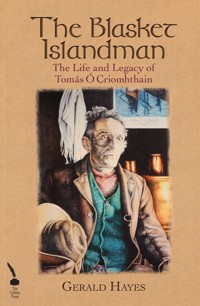
Tomás Ó Criomhthain (1856–1937) is one of the giants of Irish-language literature. His best-known books, Allagar na hInise and An tOileánach, are acknowledged classics. But he was a highly unlikely author. He lived his entire life on the isolated and now-abandoned Great Blasket, in a house he built with his own hands using stones he found on the island. Likewise, he crafted a valuable literary heritage out of island life. With indefatigable persistence, he steadily built on his modest formal education, learning to read and write in Irish during middle age while simultaneously expanding his knowledge of literature and history. Scholarly visitors were impressed with Tomás's observations of his tiny community. They encouraged him to commit his stories and memories to paper. He wrote three first-person accounts of his experiences, bequeathing to us a captivating saga of a folk culture doomed by difficult circumstances. His works are among the first examples of Ireland's transition from oral to written folk storytelling. The Blasket Islandman tells, for the first time, the full story of Tomás's life, with its many triumphs and travails. This absorbing account also describes the forces that influenced his work and details his impressive legacy. Tomás was determined that his community be remembered. In the process, he achieved a level of immortality for himself. More than eighty years after his passing, he remains the famed 'Blasket Islandman' and, to paraphrase the man himself, the like of him will never be again.
Das E-Book können Sie in Legimi-Apps oder einer beliebigen App lesen, die das folgende Format unterstützen:
Veröffentlichungsjahr: 2018
Ähnliche



















The Blasket Islandman
The Life and Legacy of Tomás Ó Criomhthain
GERALD HAYES lives in Massachusetts and holds dual citizenship in the United States and Ireland. He has degrees from the College of the Holy Cross and the Harvard Graduate School of Education. His late father-in-law, Mike Carney, gave him a gift that was to substantially influence him: the story of the human drama that unfolded at the dawn of the twentieth century on the Great Blasket, Carney’s beloved homeland. Hayes is co-author with Carney of From The Great Blasket to America: The Last Memoir by an Islander (2013) and with Eliza Kane of The Last Blasket King (2015). His hope is to share the island’s story with the world.
Dedication
This book is dedicated to my late paternal grandfather, Daniel J. Hayes. Dan was born in 1883 in Ballyshonakin, Effin, Kilmallock, County Limerick, Ireland. He emigrated to the United States at the age of twenty-seven, settling in Springfield, Massachusetts, where he married Katherine Healy, another Irish ‘come-over’. The couple raised two sons, my father, Edward, and his younger brother, William.
Dan’s mettle was severely tested as he approached his sixties. His beloved Katherine passed away in 1940 at just fifty-two years of age. Two years later, his son William was killed at the age of twenty when his ship, the USS Juneau, was sunk by a Japanese torpedo during the Battle of Guadalcanal in the Second World War.1 Dan proudly wore a Gold Star lapel pin in his deceased son’s honour for the rest of his life.
Overcoming this double loss, Dan was steadfast in his commitment to his remaining family, focusing his energies on the well-being of his many grandchildren, grandnephews and grandnieces. And he never forgot his family back in County Limerick. Several times a year, Dan sent money and clothing to his brother Mick, who continued to work his Limerick dairy farm.
Known for his physical strength and varied skill set, Dan had a series of jobs in public works, manufacturing and security. In his golden years, he enjoyed an occasional Sunday afternoon visit to Springfield’s John Boyle O’Reilly Club, where he met my future father-in-law, native Blasket islander Michael J. Carney. They quickly became great friends.
In 1973, at the age of ninety, some sixty-three years after emigrating, Dan took his first trip back to Ireland to visit Mick. He returned to Limerick twice more over the ensuing years.
Dan died in 1979 at the age of ninety-six after a long life of adventure, hard work and an abiding love of family that sustained him in difficult times. He was the patriarch of the Hayes, Crowley and Buckley clan in the Springfield area. He is still sorely missed.
I am for ever indebted to Dan for shepherding me through challenges in my own life, including my mother’s death when I was thirteen. Dan did his very best to help me and my five younger siblings navigate very trying circumstances. I will be forever grateful to Dan for the stabilising role he played in our lives.
The dedication of this book to Dan is entirely appropriate, given the striking similarity in the stoic manner in which he and Tomás Ó Criomhthain dealt with the tragedies that came their way. Both these great Irishmen exhibited enormous grace and fortitude in the face of heartbreak that would surely break a lesser man.
GERALD HAYES
Contents
Ó Criomhthain Family Tree
Introduction
1.Tomás Ó Criomhthain: The Blasket Islandman
2.A Blasket Homeland
3.The Ó Criomhthain Family
4.Coming of Age on the Great Blasket
5.Marriage and Family
6.Tragedy Stalks the Ó Criomhthain Family
7.A Blasket Life
8.Inspiration, Irish Literacy and Early Writing
9.Influential Island Visitors
10.A Published Author In The Making
11.A Literary Outpouring
12.The Passing of the Islandman
13.The Islandman’s Descendants
14.Literary Fame and Criticism
15.The Legacy of the Blasket Islandman
A Comparative Timetable
Endnotes
Other Sources and Further Reading
Acknowledgements
Photo Credits and Permissions
Ó Criomhthain Family Tree
‘… the like of us will never be again’
Introduction
I can see him in my mind’s eye. It is well past sunset on the Great Blasket. While other islanders gather for another session of song, dance and storytelling, Tomás Ó Criomhthain is hunched over a table in the house he built with his own hands with stones he found on the island. He is deep in concentration. His face is creased by nearly seven decades in the sun, wind and rain. The wind is howling outside, but there is a warm glow from his fireplace. His work is illuminated by a single seal-oil lamp. He is writing on oversized foolscap paper with a Waterman pen given to him by his young mentor, Brian Ó Ceallaigh. His handwriting is meticulous, a work of art. He takes an occasional puff on his glowing pipe and the house gradually fills with smoke and the aroma of burning tobacco. This work continues almost nightly for more than six long years.
The result of his dedicated labour is monumental and includes the original manuscripts of his classic works, Allagar na hInise (Island Cross-Talk) and An tOileánach (The Islandman). His writing is the thoughtful product of a true craftsman of words. He is tired, but he persists with his task. After all, he is creating a permanent record of people who, in his immortal words, will ‘never be again’. He is highly motivated. He is determined that the story of his community will be remembered, unlike so many ancient folktales that have vanished from memory without the benefit of being transcribed for posterity. He is the authentic Blasket islandman.
Inspired by my late father-in-law, Michael J. Carney, I have spent much of the last seven years immersed in writing about the Great Blasket. Until he passed away in August 2015, Mike was the oldest of just eight surviving native islanders. He was one of the island’s most outspoken advocates over the last half century of his life. His enormous passion for the island kindled my interest in the Great Blasket. I am deeply grateful to Mike for encouraging me to write about his now-abandoned but much-beloved isle in the Atlantic.
This is my third book about important figures in the island’s history, a Blasket trilogy. My first, From the Great Blasket to America – The Last Memoir by an Islander, was written in collaboration with Mike. It tells the story of his life, his youth on the island, his ten years in Dublin and then his emigration to Springfield, Massachusetts. My second, The Last Blasket King – Pádraig Ó Catháin, An Rí, was written in collaboration with Eliza Kane, the great-great-granddaughter of the island’s last king. A contemporary of Tomás, Ó Catháin played the key leadership role on the island in the first quarter of the twentieth century.
This third book, a biography of Tomás, the widely renowned ‘islandman’, has proved to be my greatest challenge. It is daunting to write about such a well-known personality and to present a value-added perspective. Tomás’ prominence and historical significance place a heavy burden on his biographer.
Tomás’ own autobiographical works, Allagar na hInise and An tOileánach, have been in circulation for over ninety years. They have been read throughout Ireland and around the world – tens of thousands of copies are in print. Tomás is also prominently referenced in virtually all of the many books that have been written about the island. He enjoys the greatest fame of any Blasket islander, although his contemporary Peig Sayers is a close second. He is one of those people of great stature known only by a single name – ‘Tomás’ – as if further elaboration is unnecessary to identify him. I will generally refer to him by this famous given name.
Tomás in a 1932 photo by Thomas Waddicor with his characteristic intensity on full display.
It is somewhat surprising that there is no single work, other than An tOileánach, that is devoted exclusively to telling Tomás’ life story. And An tOileánach tells only a portion of the tale. This book is intended to fill this gap in the Blasket literature, to describe the circumstances and forces that influenced his writing and to delineate his literary and cultural impact. This book centres on Tomás’ own accounts of his life, with additional material drawn from many other sources.
Tomás’ writing was edited, sometimes heavily. An tOileánach, for example, has been edited and published three times, with each edition based on Tomás’ original Irish manuscripts. Two editions have been translated from Irish into English. All this involved interpretation of his original meaning, as dedicated scholars sought to understand and express the precise meaning of his words.
Further, Tomás’ works have been analysed by scholars from all over the globe. Indeed, Tomás could never have imagined the amount of dissection and analysis to which his writing has been subjected. The reason for such extensive scrutiny is clear. Tomás provides a first-hand insight into the social dynamics of this celebrated island. His words are critically important to gaining an understanding, not only of life on the Great Blasket, but of the language and culture of Ireland as a whole. He provides a unique and irreplaceable window on a bygone place and time.
This is a work of biography, not literary criticism. My intent is to tell the tale of this extraordinary man, but to leave the literary criticism to others more qualified in that arena. The literature includes numerous essays and articles in academic journals and elsewhere critiquing Tomás’ work. I have included a summary of this criticism (see Chapter 14), but I highly recommend the many original sources to the reader seeking a more in-depth exploration of Tomás as an author.
A couple of editorial comments are in order …
When referencing Tomás’ major works, I will quote primarily from Tim Enright’s English translation of Allagar na hInise, entitled Island Cross-Talk, and Robin Flower’s English translation of An tOileánach, titled The Islandman. While these books are at least once removed from the author’s own words, they are the versions in the widest circulation. I will also quote from The Islander, an unabridged English version of An tOileánach by Gary Bannister and David Sowby, for passages from the original manuscript that were not included in The Islandman. This approach raises the valid issue of separating Tomás’ writing from his original Irish, but since this author is not fluent in Irish, it was the only practical methodology. With respect to other source material in Irish, my translators have made every effort to convey the meaning intended by the original author. I sincerely regret any errors.
I have generally used the English spelling for words, including names, places, artefacts and selected expressions. The Irish that seems closest to the local Irish convention in West Kerry is presented in parentheses immediately after the first use of such a word. With respect to names, I have used the form that was typically used during the subject’s lifetime, in either Irish or English. For persons known by multiple names, both forms are indicated at their first mention (e.g. Tomás Ó Criomhthain and Thomas O’Crohan). Nicknames are presented in quotation marks (e.g. Pádraig ‘An Rí’ Ó Catháin). Patronymics and matronymics are presented without quotation marks (e.g. Pádraig Peats Mhicí Ó Catháin). Maiden names are given in parentheses.
Tomás provides quite a few dates for significant events, but I have found that many of these dates lack historical accuracy. This is entirely understandable. Tomás wrote An tOileánach when he was in his late sixties and early seventies. He recounts many events that took place much earlier in his life, and he did not have access to reference material that would have enabled him to verify exact dates. Further, as an experienced raconteur, he probably didn’t focus a great deal on precision in the dates he cited. He approached his writing as a storyteller, not as a historian. Thus, many of the dates Tomás gives in his writing reflect only his best approximation of the timing of events. In this work, I have made every effort to corroborate Tomás’ timeline using whatever reliable documentation was available. Where appropriate, I have incorporated the evidentiary date rather than Tomás’ best estimate, with any difference noted in the narrative or endnotes. In other instances, dates or events are presented as ‘likely’ if there is a high degree of probability, but less than conclusive verification.
Ireland/West Kerry
Over eighty years have now elapsed since Tomás’ passing. His literary stature has grown significantly, and deservedly so. I hope this book is a fitting tribute to this genuine Blasket giant, Tomás Ó Criomhthain, the eminent islandman, as well as a valuable resource to those who seek to understand his life, times, and legacy.
Tomás Ó Criomthain outside his house, courtesy of the Blasket Centre.
1. Tomás Ó Criomhthain: The Blasket Islandman
Tomás Ó Criomhthain (pronounced ‘O-krih-hin’ and anglicised as Thomas O’Crohan) was one of Ireland’s foremost Irish language authors. He was born in 1854 on the Great Blasket (An Blascaod Mór), located off Ireland’s rocky southwest coast. He lived virtually his entire life on this stunningly beautiful but isolated island, making only occasional trips to the mainland. He was probably the first native Blasket islander to achieve full literacy in the Irish language, largely through his own determined effort as he approached middle age. Against all odds, Tomás emerged from a humble background and a limited formal education to chronicle the story of this tiny island community as it began slipping inexorably into history during the first half of the twentieth century.
As an author, Tomás was a key participant in Ireland’s transition from its thousand-year-old oral folklore tradition to an emerging written form of storytelling. Among his literary achievements are two Irish-language classics, Allagar na hInise (Island Cross-Talk) and An tOileánach (The Islandman). Tomás began writing them when was in his mid-sixties and they were published when he was in his mid-seventies, an enormous accomplishment. He later wrote a third book, Dinnseanchas na Blascaodaí, in which he described the physical features of the Blasket Islands (Na Blascaodaí). A collection of fifty-two of his folktales and poems was published years later as Seanchas ón Oileán Tiar. Another volume comprising more diary entries, was eventually published as Allagar II. Tomás was also a frequent contributor to several Irish-language periodicals, with about 150 published pieces to his credit. His stories, poems and articles have been collected in three anthologies, Bloghanna ón mBlascaod, Scéilíní ón mBlascaod and Cleití Gé ón mBlascaod Mór. For a writer who got a late start, Tomás was a prolific author indeed.
Tomás outside his house.
Tomás was dubbed ‘The Islandman’ by his principal editor, Pádraig ‘An Seabhac’ (pronounced ‘On showuk’ meaning ‘The Hawk’) Ó Siochfhradha. An Seabhac was an organiser for the Gaelic League, a leader of the Celtic Revival, a businessman and later a member of Seanad Éireann. ‘The Islandman’ is an entirely appropriate nickname. It is recognised far and wide and it has easily withstood the test of time.
Tomás was one of the most important Irishmen of the early twentieth century. His growth and development as a writer coincided with some of the most turbulent times in Irish history, including the Easter Rising (1916), the Irish War of Independence (1919–1922), the establishment of the Irish Free State (1922) and the Irish Civil War (1922–1923). He played a crucial supporting role in the ongoing Celtic Revival by providing inspiring first-person descriptions in Irish of an authentic folk culture that was largely uncorrupted by the influence of Great Britain.
Given his simple background as a fisherman and a farmer, Tomás was a highly unlikely candidate for literary fame. It is a tribute to his intelligence and initiative that he acquired the basic skills needed to memorialise Blasket life. He was then persuaded by island visitors to share the island’s unique story with a wide audience through the medium of his writing. Then, with indefatigable persistence, he used his acute powers of observation together with his budding writing ability to produce fascinating literature that documented his life and times for posterity.
Tomás was not a physically imposing man. He was no more than five feet four inches tall and built like a barrel, weighing about 83 kg (13 stone). But he had an intensity that was reflected in his deep-set eyes and in his writing. Robin Flower, a British scholar and frequent visitor to the Great Blasket, as well as a close friend of Tomás for over a quarter of a century (see Chapter 9), wrote that he was ‘a slight but confident figure’.1 Flower further described him in striking terms:
He was in those days [around 1910] a small, lively man, with a sharp, intelligent face, weathered and wrinkled by the sun and rain and the flying salt of the sea, out of which two bright, observant eyes looked critically upon the world.2
The early twentieth-century Irish scholar Daniel Binchy wrote: ‘I can still see him as he stood by the hearth in his own kitchen, a trim lithe figure with finely chiseled features and keen bright eyes that seemed to survey the world with friendly and somewhat ironic detachment. His voice still lingers in my ear, clear and musical like a silver bell.’3 Tomás almost always wore a distinctive black broad-brimmed hat. In his old age, he was a bit stooped. He was very bright and had an even temperament. His son, Seán Ó Criomhthain, said that he ‘didn’t like any fighting or quarrelling or bickering, and he was anxious that everything would be nice and civil.’4
Mícheál de Mórdha, the now-retired long-time director of the Blasket Centre (Ionad an Bhlascaoid Mhóir) in Dunquin (Dún Chaoin), West Kerry, wrote in his extensive history of the island, An Island Community – The Ebb and Flow of the Great Blasket Island:
In many ways, Tomás Ó Criomhthain was a person apart, and his view of life was different to that of his fellow islanders. At the same time, Tomás was a Blasket islander the same as the rest, who lived on the island his entire lifetime. It is because of that, more than anything else, that Tomás’s writing is so appealing.5
Tomás was primarily a fisherman and lobsterman by trade. He also cut turf for fuel, grew potatoes and worked on a series of important island building projects. He participated enthusiastically in the social and cultural life of the island. He experienced great joy and horrific sorrows. He may have become an author of great national significance, but he worked hard and struggled to get by just like everybody else on the island.
Tomás was one of the most prominent residents of the Great Blasket during his lifetime. His lifelong friend and eventual brother-in-law, Pádraig Peats Mhicí Ó Catháin, the last island king, played the key civic leadership role on the island during their adulthood. In contrast, Tomás’ importance was more as the island’s resident scholar and as an acknowledged master of the Irish language. The two men complemented each other.
As he aged, Tomás participated in decision-making about practical issues of common concern as a member of the island’s informal ‘council of elders’. He was highly opinionated, and he would not have hesitated to express his views on a wide range of subjects. He had a tendency to be somewhat of a contrarian. He was not, however, a dominating presence in a leadership sense.
Tomás was a skilled practitioner of several forms of Irish folk culture including poetry, singing, stepdancing and, of course, storytelling. He came to appreciate the critical importance of the Irish language and in his later years devoted himself to its preservation and advancement through his writing.
Over the course of his life, Tomás gained broad general knowledge that far exceeded the bounds of his limited national school education. He routinely brought higher-level thoughts to everyday life. Robin Flower wrote, for example:
Lying under the lee of a turf-rick, or sitting in his own house or the King’s kitchen, he would pour out tales and poetry and proverbs, quickening the whole with lively comments and precise explanations of difficult words and interspersing memories of his own life and of the island past.6
Flower once told a modest little story about a return trip to the Great Blasket that provides a glimpse into the lighter side of Tomás’ personality:
The day after my arrival on the Island, Tomás has been fishing all the morning over by Beiginis, and comes into the kitchen early in the afternoon carrying a large bream.
‘That’s a fine fish you have,’ I say.
‘It is for you, for I thought on the first day of your coming back to the Island you should have a good fish for supper.’
I take the fish and lay it down on the table, and begin to thank him in my halting Irish.
‘Don’t thank me till you have heard all my story,’ says he.
‘Well,’ I say, ‘no story could make any difference to my thanks.’
‘Listen then. When I came back from fishing this morning I had two bream, one larger and one smaller. That one there is not the larger of the two.’
‘How comes that?’ I say, smelling a jest in the wind.
‘Well, it was this way. I came into my house, and I laid the two fish down on the table, and I said to myself: “Now which of these two fish shall I give the gentlemen from London?” And there came into my head the old saying, “When the Lord God made Heaven and earth at the first, He kept the better of the two for himself.” And where could I find a higher example?’
Laughing together over this artfully prepared comedy … we sit down at the table in front of the window, through which the eye ranges over the strait to the naked line of the coast of Ireland, and the business of the afternoon begins.7
Tomás was a husband, a father and a grandfather. His personal life was marked by great disappointments and terrible tragedy. His marriage was arranged by his family despite his love for another woman. Of his twelve children, only three lived into their twenties, and only two outlived him.
Tomás was very thoughtful and self-aware. As he aged, he became a man on a mission, seeking to preserve his story and to achieve a form of immortality in the process. In the deeply personal concluding words of An tOileánach, he wrote:
I remember being a boy; I remember being a young man; I remember the bloom of my vigour and my strength. I have known famine and plenty, fortune and ill-fortune, in my life-days till to-day. They are great teachers for one that marks them well.
One day there will be none left in the Blasket of all I have mentioned in this book – and none to remember them. I am thankful to God, who has given me the chance to preserve from forgetfulness those days that I have seen with my own eyes and have borne their burden, and that when I am gone men will know what life was like in my time and the neighbours that lived with me.
Since the first fire was kindled in this island none has written of his life and his world. I am proud to set down my story and the story of my neighbours. This writing will tell how the Islanders lived in the old days.8
After the publication of Allagar na hInise and An tOileánach in the late 1920s, Tomás achieved a degree of fame throughout Ireland. His neighbours on the island must have been impressed by the acclaim his writing generated and the procession of visitors to the island seeking to meet him. But the islanders didn’t hesitate to voice some criticism too (see Chapter 14). Beyond the Great Blasket, Tomás’ renown spread as his books were more widely read. Much of his fame came after his death in 1937.
Tomás’ style as a writer is a reflection of his modest upbringing, his many heartbreaks, his arduous life and his stoic temperament. His writing was direct, spare and ironic, with a smattering of humour. He focused on recounting the major elements of island life and his own life story without much adornment or nuance. Since his own life was so similar to those of his island neighbours, his autobiography, An tOileánach, is effectively a detailed record of the life of the Blasket community as a whole.
Tomás was an intriguing man. He was a pivotal figure in the history of the Great Blasket and a giant in Irish language literature. His literary accomplishments in the Irish language, given their overall context, are nothing short of astounding. His contributions to Irish culture and literature are of epic proportions. He remains the quintessential ‘islandman’ and his legacy will endure forever.
2. A Blasket Homeland
Tomás was born, raised, lived and died on the Great Blasket during the late nineteenth and early twentieth centuries. He was steeped in island life. The profound impact of the island on Tomás as a person and as an author is evident in all his writing. Understanding the dynamics of life on the Great Blasket is essential to understanding this remarkable man.
During Tomás’ lifetime, the Great Blasket was the breathtaking setting for a drama of overarching cultural, linguistic, political and historical significance. As Tomás aged, the island community was gradually fading into history. Its decline played out while Ireland itself was engrossed in yet another phase of its long and difficult struggle to achieve independence from Great Britain and then to establish its own standing as a nation. Essentially, the Blasket community was dying as a sovereign Ireland was being born.
Although Tomás occasionally made visits to the mainland, he never travelled outside westernmost County Kerry (Contae Chiarraí). He had some limited exposure to the world beyond the Great Blasket from newspapers, visitors to the island, a selection of books, and letters from America and elsewhere. But it was primarily the rigours of day-to-day life on the Great Blasket, as he personally experienced them, that informed his writing.
The abandoned village on the Great Blasket in 2012 from Blasket Sound. Note the natural bowl that provided the village with some protection from the fierce winds.
While Tomás’ lens on the world was fairly narrow, he suffered no lack of powerful material for his literary efforts. This unique island, with its exceptional physical beauty, its small population of fascinating residents and its ongoing sequence of historic events, truly comes alive in Tomás’ writing.
Lesen Sie weiter in der vollst?ndigen Ausgabe!
Lesen Sie weiter in der vollst?ndigen Ausgabe!
Lesen Sie weiter in der vollst?ndigen Ausgabe!
Lesen Sie weiter in der vollst?ndigen Ausgabe!
Lesen Sie weiter in der vollst?ndigen Ausgabe!
Lesen Sie weiter in der vollst?ndigen Ausgabe!
Lesen Sie weiter in der vollst?ndigen Ausgabe!
Lesen Sie weiter in der vollst?ndigen Ausgabe!
Lesen Sie weiter in der vollst?ndigen Ausgabe!
Lesen Sie weiter in der vollst?ndigen Ausgabe!
Lesen Sie weiter in der vollst?ndigen Ausgabe!
Lesen Sie weiter in der vollst?ndigen Ausgabe!
Lesen Sie weiter in der vollst?ndigen Ausgabe!
Lesen Sie weiter in der vollst?ndigen Ausgabe!
Lesen Sie weiter in der vollst?ndigen Ausgabe!
Lesen Sie weiter in der vollst?ndigen Ausgabe!
Lesen Sie weiter in der vollst?ndigen Ausgabe!
Lesen Sie weiter in der vollst?ndigen Ausgabe!
Lesen Sie weiter in der vollst?ndigen Ausgabe!
Lesen Sie weiter in der vollst?ndigen Ausgabe!




