


11,49 €
Mehr erfahren.
- Herausgeber: Atlantic Books
- Kategorie: Sachliteratur, Reportagen, Biografien
- Sprache: Englisch
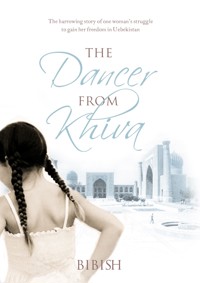
In a narrative that flows like a late-night confession, Bibish recounts her story... Born into an impoverished family in a deeply religious village, Bibish was named 'Hadjarbibi' in honour of her grandfather's hadj, his pilgrimage to Mecca. But her holy name could not protect her when, at the age of eight, she was brutally abused, and left for dead in the desert. Bibish's tenacity helped her survive the attack - she instinctively knew to keep her experience a secret rather than risk further punishment. But soon her love for dancing - prohibited by Islamic custom - resulted in her being beaten, victimized, and ostracized from her family and her community. Despite all this, Bibish secretly cultivated her own dreams of freedom - of dancing, of raising a family, and of escaping to tell her story to the world. The Dancer from Khiva is testament to Bibish's extraordinary resilience and spirit: the harrowing and ultimately inspiring story of a woman who risked everything.
Das E-Book können Sie in Legimi-Apps oder einer beliebigen App lesen, die das folgende Format unterstützen:
Veröffentlichungsjahr: 2009
Ähnliche



















THE DANCER
FROM KHIVA
Originally published in 2004 as Tantzovschitza iz Khivy, ili Istoria prostodushnoy by to Azbooka-Klassika Publishing House.
First published in English in the United States of America and Canada in 2008 by Black Cat, an imprint of Grove/Atlantic Inc.
First published in hardback in Great Britain in 2009 by Atlantic Books, an imprint of Grove Atlantic Ltd.
Copyright © Bibish, 2004, 2005
The moral right of Bibish to be identified as the author of this work has been asserted by her in accordance with the Copyright, Designs and Patents Act of 1988.
Translation copyright © Andrew Bromfield, 2007
The moral right of Andrew Bromfield to be identified as the translator of this work has been asserted by him in accordance with the Copyright, Designs and Patents Act of 1988.
All rights reserved. No part of this publication may be reproduced, stored in a retrieval system, or transmitted in any form or by any means, electronic, mechanical, photocopying, recording, or otherwise, without the prior permission of both the copyright owner and the above publisher of this book.
Every effort has been made to trace or contact all copyright-holders. The publishers will be pleased to make good any omissions or rectify any mistakes brought to their attention at the earliest opportunity.
1 3 5 7 9 10 8 6 4 2
A CIP catalogue record for this book is available from the British Library.
ISBN: 978 1 84354 623 8
eISBN: 978 1 84887 374 2
Printed in Great Britain
Atlantic Books An imprint of Grove Atlantic Ltd Ormond House 26–27 Boswell Street London WC1N 3JZ
www.atlantic-books.co.uk
This book is dedicated to my American friend, Linda Harris
I will tell you my story to unburden my heart a little. I think you will surely read the story of my cursed misery to the end. That is my hope.
I come from the East. Yes, I was born in Uzbekistan, not far from Khiva, in a very religious area with its own harsh, merciless laws and customs, its own strange and vicious ways of looking at life.
There is a legend about how Khiva got its name. An old man wandered through the desert for a long time in search of water, he was very thirsty. And finally he found a well. After quenching his thirst, he exclaimed Khey, vakh! in his pleasure. After that a town sprang up round the well, and they called it Khivak, and later they started saying simply Khiva. Much earlier, almost two thousand years before, the ancient state of Khorezm was here.
At one time, before the October Revolution, we had a khanate here, and in Russia they had tsars and emperors. Of course, you know about that. Well, the khan of Khiva had many slaves from many different countries. They all toiled hard for him. One of these slaves was my mothers father, who was brought from Iran as a child.
There is one other thing I would like to say about Khiva: Our former leader, Lenin, had only one single medal, which was given to him by my fellow townsmen of Khiva. Lenin did not have any other medals or orders at all.
Yes, I was born in a small kishlak, or village, from where we could glimpse the minarets of Khiva. The dreadful thing, as I have said, is that the people there were terribly religious. They observed the laws very strictly, and there was slander and rumor on every side.
My mothers father was known as Kurban-kul, which means the slave Kurban. He served the khan right up until the revolution. He looked after the camels and fed them. He was a camelherd. When the October Revolution happened in 1917, the Red Army liberated the slaves. But my grandfather could not go back to his homeland in Iran, so he stayed in the village and married a Uzbek woman, my grandmother. They had a little girl, my mother, and another seven brothers and sisters. My mother grew up, and when she was eighteen, she married my father.
Lesen Sie weiter in der vollständigen Ausgabe!




