


5,14 €
Mehr erfahren.
- Herausgeber: Proisle Publishing Services
- Kategorie: Sachliteratur, Reportagen, Biografien
- Sprache: Englisch
Frances Hewlett Morris was born in Memphis, Tennessee. She grew up in extreme poverty in the segregated South during the Civil Rights Era. She is a graduate of Tennessee State University where she became a member of Delta Sigma Theta Sorority. She began her professional career as a registered nurse at a teaching hospital dedicated to serving the vulnerable and underserved population. She continued her studies and earned a Master's degree in Health Law at Champlain College. She is a retired military officer and health care leader for a Fortune 100 company. After retiring, she began researching the reasons for poverty in the United States. Her goal is to help empower others to escape the debilitating clutches of poverty. She created a blog, Francie Mae's Journey, and wrote her first book, The Tangled Web: A little girl's struggle to overcome racism and poverty. She was inspired to write her second book, The Footlocker: A family's journey out of poverty, to honor her parents, George Hewlett II, and Charlotte Wallace Hewlett. Faith, family and fun are important to her. She is a mother, grandmother, sibling, and widow. She loves to laugh out loud, dance lively, travel, and enjoy life's adventures.
Das E-Book können Sie in Legimi-Apps oder einer beliebigen App lesen, die das folgende Format unterstützen:
Seitenzahl: 447
Veröffentlichungsjahr: 2022
Ähnliche



















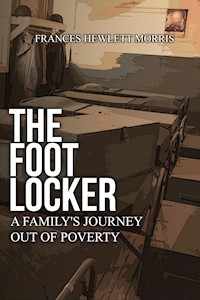
The Footlocker
A family’s journey out of poverty
By Frances Hewlett Morris
Copyright © 2022 by Frances H. Morris ISBN: 979-8-9868666-3-5
All rights reserved. No part of this book may be reproduced or transmitted in any form or by any means, electronic or mechanical, including photocopying, recording, or by any information storage and retrieval system, without permission in writing from the copyright owner.
The views expressed in this work are solely those of the author and do not necessarily reflect the views of the publisher, and the publisher disclaims any responsibility for them.
To order additional copies of this book, contact:
Proisle Publishing Services LLC 1177 6th Ave 5th Floor
New York, NY 10036, USA Phone: (+1347-922-3779)
Contents
DEDICATION
ACKNOWLEDGMENTS
PROLOGUE
CHAPTERONE
CHAPTER TWO
CHAPTER THREE
CHAPTER FOUR
CHAPTER FIVE
CHAPTER SIX
CHAPTER SEVEN
CHAPTER EIGHT
CHAPTER NINE
CHAPTER TEN
CHAPTER ELEVEN
CHAPTER TWELVE
CHAPTER THIRTEEN
CHAPTER FOURTEEN
CHAPTER FIFTEEN
CHAPTER SIXTEEN
CHAPTER SEVENTEEN
CHAPTER EIGHTEEN
CHAPTER NINETEEN
CHAPTER TWENTY
EPILOGUE
PREFACE
My father was a soldier during WWII. He was born in Mississippi and when he was a young child, moved with his family to Chicago. He attended Wendell Phillips School, was a good student and played football. As an adult, he returned to Mississippi, married, and later served in the segregated Army.
We called our father, Dad, and our mother, MaDear. Together, they raised five children. MaDear gave us all nicknames. The oldest son was called Tippy, the next son was called Lil Bro, the oldest daughter was called Vie, and the youngest son was called Rom. I was the youngest of all, and MaDear called me Francie Mae. Dad preferred to call us by our given names.
While serving in the Army, Dad learned MaDear was pregnant with their first child. Dad’s letters revealed a fear of going overseas and not seeing his child. He knew his bride was safewithherparents,buteagerlyawaitedthemomenthewould seeherandtheirchild.Thedayfinallyarrivedwhenhereceived receiving an honorable discharge. He expeditiously returned home to Mississippi to his wife and newborn son. His most prized possession, his faithful Army footlocker, accompanied him home.
My dad returned to a life of civilian segregation. He struggledtoearnmoneytofeedhisgrowingfamily.Myveteran father was forced to raise his family in abject poverty. We lived in the segregated South under racist Jim Crow laws, keeping us under the thumb of oppression. We made our home in various shackswithoutelectricityorrunningwater.Wesurvivedwithoutthenecessitiesoflife.Weweredeterminedand
resilient despite our circumstances. God’s grace was trulysufficient.
Dad wanted the best opportunity for his children tosurvive inacountrythatwasopenlyracist.Helivedinotherpartsofthe countryanddidnotexperiencetheblatantinhumanitypracticed in the South. He attended and excelled academically in an integrated school in Chicago and was not exposed to this cruel way oflife.
WhateverdreamsDadhadwashiddeninhisoldfootlocker. Eventually, MaDear became the keeper of the footlocker. Importantdocumentsandothertreasureditemsweredeposited inourfamiliarfriendonaregularbasis.Itcollectedmorevalued items in each location we moved. Over time, the footlocker was no longer visible. It was either concealed in a corner or placed under their bed, camouflaged with an old green Army blanket. After MaDear and Dad passed, I became the keeper of the footlocker. Even though I was an adult, I still enjoyed exploring theitemsinthefootlockerthroughchildisheyes.Itwasnotuntil I began my research regarding the existence of racism and poverty that I discovered the valuable information the footlockersafelykept.Isharemystorysothatitmayinspireand encourage others to know that despite your current situation, you, can not only survive; however, thrive in the environment you are in. Storms may come; however, if you are firmly rooted in faith, like a tree, you may bend, but never break. I share my family’s footlocker with you so that you will have a blueprintof how to survive life’s most unspeakable and unexpected circumstances with morals, dignity, andintegrity.
DEDICATION
Thisbookisdedicatedtomylateparents,CharlotteWallace Hewlett, and George Hewlett, II (MaDear and Dad), my latebig sister, Viola Hewlett Jacox (Vie), my late big brothers, Clifford Hewlett (Lil Bro) and Ronald Hewlett (Rom), and my eldest brother, George Hewlett, III(Tippy).
“The just man walketh in his integrity: his children are blessed after him.” –Proverbs 20:7
ACKNOWLEDGMENTS
Iwouldliketothankmyparentsforteachingusnottohave a poverty mindset and for demonstrating how to have faith in God. They instilled a level of integrity and resiliency in us that is unequaled in most families. I am forever indebted to themfor being a walking testimony of how God would want us to live our lives.
I am thankful to my siblings and other family members for having a sense of true humanity and having the desire to make the universe make sense. Their support and encouragement offeredmuchneededcomfortduringuncertaintimes.Ourbond was impenetrable because of our unitedjourney.
A special thank you my dear brother, Clifford Hewlett, for beingourfamily’sprotectorandproviderofourfamily’swritten and oral history. He passed away before this book was published, but his life eternally liveson.
I am grateful for my first childhood friend, Betty (BB), who experienced most of this odyssey journey with me. BB and I are still the best of friends more than sixty years later.
I would like to take the time to express gratitude to the myriad of friends I have met along the way. There are toomany to name, but they know who they are. Thank you for accepting me just the way I am. Thank you for understanding my past, believing in my future, and challenging me to find and express my ownvoice.
I was blessed to birth two precious daughters, Myiesha and Shaundra, who gave me two upstanding son-in-loves, the sons
a mother dreams their daughter would choose for a lifepartner. My children are my heartbeat and give me energy to endure. I wasblessedwithtwospiritualdaughterswhoenteredmylifeat different seasons. They all inspire me, and I am proud of every one ofthem.
What can I say about my fearless granddaughter, Mya? She ignitedmetowritemyfirstbook.Sheprovidesdailyinspiration andencouragesmewhenIfeelunmotivated.Weoweittofuture generationstobreakthegenerationalcursesofpoverty,cyclesof racism, and we have an obligation to leave the world a better place forthem.
My readers became part of my village. I shared my truth in the form of a blog and was compelled to write my first book. Theyreadmystoryandoverlookedmyerrors.Becauseofthem, I overcame my fear of writing, learned from my experience,and wrote my second book. Thank you for giving me the courage and confidence I needed to grow.
Last, but never least, my dear niece Tracy and her husband, Larry, my unsung editors. Thank you for your dedication and countless hours of helping to ensure my story is told in a way that enhances my message.
I love each one of you and I thank God for you! You are appreciated more than words can express.
PROLOGUE
Igrewupduringaturbulenttimeinhistory.Iwasbornand raised in abject poverty in the South. My family and I transitioned from absolute poverty to destitution in a decade and a half. My entire childhood was spent living in penury. I grew up during the civil rights era and struggled to understand myenvironment.Segregatedstateandlocallawsdictatedwhere we could live and where we could go. This form of oppression prevented my parents from obtaining substantial employment. Civil rights activists and other like-minded citizens protested these injustices.
Dad was rejected repeatedly, but never gave up his search for gainful employment. He worked odd jobs to provide for his family of seven. Despite his best efforts, it was not enough. We did not have the necessities of life. My veteran father did not obtain advantageous employment until he was nearly sixty yearsold.Dadwasconsideredaneducatedmaninthetownswe lived in. His eleventh-grade education was higher than most of the nonprofessional people, black or white. He did not choose for his family to live a life of lack. After moving back to Mississippi, he continued to seek employment opportunities. It was arduous for my dad because he had to compete with white menwhowereoftenlesseducatedandinexperiencedcompared to his education and skill set. He was consistently overlooked and rejected for the jobs he appliedfor.
MaDear was a woman who was very stoic, but stood for what she believed in. She ran our household with quiet and gentle tenacity. MaDear believed in order and organization.She
was the loving disciplinarian. She provided the nurturing and balance we needed. Dad and MaDear stressed the value of education and they made sure we excelled in our studies. Dropping out of school was not an option. If we didn’t go to college, we had to go to trade school. We couldn’t quit school andworkinthefields.Theywantedabetterlifeforus,andthey were willing to move to areas that were more progressive than the previous one. They worked whatever odd jobs they could find to make an honest living. What they lacked in formal education, they made up in resiliency and wisdom. We were educated about Jim Crow laws to prepare us for life in the segregated South.
There were many struggles and hardships along the way. I chose to learn and grow from each struggle. I gained strength fromeachhardship.Regardlessofourrace,ethnicity,andsocio- economic status, we all deserve humanrights.
MaDear and Dad were my first mentors and teachers. I’m grateful to them for wisdom, nurturing guidance and for teaching us our history. They were both exemplary Christians. Their demonstrated faith provided us with moral fortitude and a solid spiritual foundation. They were intelligent, hard-working, and ethical. They lived a life of intentional love and integrity.
CHAPTERONE
Letters from aSoldier
Dad was finally coming home. He had been away from his youngwifetoolong.Heleanedbackonhishardmetalbunkand closed his eyes. He was nearly 1,500 miles from her, and he countedthedaysuntilhewouldbedischarged.Hecouldn’thelp but think she had found someone else. MaDear didn’t write much,andthedistancemadehimuneasy.Hewasservinginthe Army during WWII and life for a soldier was lonely. He was separated from his wife, family, and friends. He lived and workedincrampedconditionsandsleptinbarracksthathoused many other soldiers. He was grateful for the temporary peace, he had time to think. He and approximately one million other blackAmericanswereinthemilitary.Theyallraisedtheirhands to defend their country but served in segregated units. Discrimination was practiced in every branch of the armed forces. It was not much different from the South where he and MaDear were living. Black soldiers were facing bigotry in the military and at home. He thought about what life would be like after he was discharged. In 1942, The Pittsburgh Courier, the largestAfricanAmericannewspaperintheUnitedStatesduring that time, launched the “Victory Abroad and Victory at Home” campaign. This was known as the Double Victory campaign, or Double V. This was an effort to bring changes in the United States and abroad. It was the fight for victory for democracy overseas and against racism at home. Dad was thankful he didn’t gooverseas.
Dad always signed his letters with some form of endearment. In the few letters he received from his bride, it was obvious she loved him. It was barely a year since they got married. Instantaneously, he was enlisted in the Army and stationed across the country. It was difficult to be a married couple and separated, but he joined the Army for better opportunities. Dad was eleven years older than MaDear, andhe felt it was his duty as a husband to offered encouragement and advice. He was a Christian and explained to her what living a life of faith meant. He mailed allotments from his pay to build their savings. He planned to buy a house once he was discharged. Dad advised her to spend some; however, to save the majority. MaDear was living with her parents, Momma and Poppa, while Dad was serving in the Army. He gathered his thoughts and penned another letter to his young wife. The soldier folded the crisp letter and held it to his chin, contemplating on whether to mail it. He decided to write another letter instead. The letter dated March 29, 1943, was pensively placed in his loyal footlocker. Its contents would not be discovered for many years tocome.
The last letter he mailed to MaDear was dated July 4, 1943. He was stationed in Fort Huachuca, Arizona. After learning he was going to be a father, he wrote about the anticipation of seeinghisbrideandtheirfirst-bornchild.Dadwasinjuredwhile training for potential overseas duty and had surgery on his left leg months earlier. The taxing hikes caused the veins in his left legtorupture.Asaresult,hehadvaricoseveinsurgery.Hewas hospitalized seven weeks at Lukefield Station Hospital in Phoenix, Arizona. Atlast,Dad’sdischargedatecame.HewasstationedatFort Huachuca,Arizona,CompanyA734M.P.Battalion.Hereceived an honorable discharge and returned home to Mississippi. MaDearandDad’soldestson,Tippy,wasbornsoonafterwards. Dad had experienced a lot in his thirty-seven years. He never spoke about some of the tough times he had growing up in Chicago. He loved to read and bought several books while serving out West. Reading allowed him to reduce stress and focusonthingsotherthanthechallengeshewasconfrontedwith daily.Readingallowedhimtoescapefromrealityandgavehim the opportunity to temporarily forget about his problems. He placed the newly purchased books in his trusted footlocker. He would need something to accompany him on the long journey home.
Once the handsome soldier arrived home safely, MaDear secured Dad’s discharge papers in his footlocker that now belongedtoher.Iinheritedmydad’sfootlockerafterbothofmy parents passed away. I was astonished and amazed of its contents.
Fort Huachuca, Ariz. March 29, 1943
“My Dear Charlotte,
Ireceivedyourmostwelcomeletter,andIwassogladtohearfrom you and know you are enjoying the best of life. I am doing well in health,butsurprisingly,notsowellinspirit.Ikeepverybusyinduty anddon’thaveanytimeforleisure.Youmayhavetowaitagoodwhile before I can send a picture. I can’t get the time to have them made. It’s possible I will be going overseas, and I want you to have them before I leave.
I married you hoping to life a happily married life. It is necessary in married life to love and care for each other. I have made your allotment and you should receive pay next month. Lots of soldiers say their wives haven’t received anything yet. I hope this never happen with you. When you get it, I expect you to take care of it. Spend some and save the majority. I also sent the rental check and war bonds.
Weareoldenoughtoknowwhatmarriedlifeshouldbe.Don’tpay attention to what other people say. After I’m discharged, we can have ahomeforourselves.Thethingsyoudon’tknow,youmusttrytolearn. I hope you will trust in the Lord, He will help you. He is our only salvation.LiveaChristianlifeandprayformethatwecanlivetogether again in happiness. Save your love for me. I’m saving mine foryou.
Wehaveitalittletoughhere;smallpoxbrokeoutincamp.Sixteen men got hurt Saturday night in a truck wreck. Some are expected to die. It’s bad times now, don’t let anybody fool you, trust in the Lord. Thedevilisbusynow,butIamtryingtobeathimbypraying.Keepon your knees and pray. Remember this; you have your own soul to save. Live as a Christian. Watch out for the devil. He works through sinful people who try to make you dowrong.
It’s hard to fight now; our only salvation is in the Lord. TheLord died on a cruel cross that we might be saved. He arose the 3rd day for us. We should be able to live for Him. I always strive to do right. The Lord is my secret judge. You don’t know the all the things I have suffered, the harsh words that have been said to me and about me. The losses I have suffered. Some things I will never talk about in detail. GrowingupinthebigcityofChicagowashard.Iwasaboyofthirteen during the awful riots of Red Summer. After WWI, veterans were unfairly targeted. I will soon be a veteran. I think about what is going oninournationanddon’twantyouandourchildtobeatarget.Ilost my parents at an early age and had to fend for myself. Through it all,I trusted and believed in Lord for I know that all power is in His hands. Hecanmakeawayoutofnoway.Hediditformeandhewilldoitfor you.
I’m happy to know you are in family way. A virtuous and true woman is a crown of honor to her husband. This is what I havealways wanted, a true wife and a family of my own. Save as much money as you can because now, I am more than ever determined to get our own house.IamawfullyanxioustoseeyouandIcan’twaittoseeourchild. I try to tell you what’s right because you are my wife. I don’t know ifI willbeoverseasornotbutifIam,continuetoprayandliveaChristian life and have faith inGod.
I want you to consider what you want to do in the future. Whateveryouchoose,Ihopeyouaresuccessful.Iamprayingandhope youareprayingforourfuturehappiness,forusandourchildren.Isay children because I hope we have many more. I don’t want our children to be raised in the big city of Chicago. It’s too easy to get in dangerous situations. It’s no longer you and I. We have a child to think about. Our children will be growing up in a world that is not kind to them. It’s up to us to set the example for them. I know I want our childrento live a Christian life and get a good education. It is up to us to teach them what they need to know. Regardless of what we go through, we shouldneverlosehope.IhopetoseeyouagaininlifeandIhopetomeet our first born child. After that, I hope to meet our futurechildren.
I have had time to reflect while in the Army. It is not those who have fallen through the crack of the world’s system that are most in spiritual danger. It is those who share responsibility for them falling through the cracks. People need to stop looking at the world for their examples and start looking to God. They cannot do it alone. They need someone of the kingdom to show them the way, that God’s kingdom here on earth is invisible. Without that mentor, they will easily fall in traps set for them. As parents, it is up to us.
IntheArmy,weneverknowwherewe’regoing.Ijustmustdothe best I can until I am discharged from service. We are in a large place withabout30,000soldiers.Withallthesepeople,Imetmycousinfrom Chicago. I had not seen him in years. I hate to be away from you and our child, but I believe the Lord will take care of that. Whether I make itbackornot,rememberthefutureholdsaplaceforus.Alwaysdoright andrightwillfollow.Wehavelivedwithourbacksagainstthewallfor a long time. I am a man of deep religious conviction and I believewhat I say. You must not fear anyone. I don’t believe you will because you grew up in Momma and Poppa’s house and they didn’t fear. In a family,loverulessothereisnofear.Asapeople,wemustabandonour fearofeachotherandonlyfearGod.AsChristians,wemustliveinthe present withdignity.
Love to all,
Your hubby Pvt. George Hewlett, II”
CHAPTER TWO
Humble Beginnings
MaDear gave us nicknames. Our nicknames were her little nuggets of love. She called our eldest brother George, Tippy, becausehelikedtotipoffandseewhatotherpeopleweredoing. The next oldest brother, Clifford, was closer to Tippy in years. Many people thought they were twins; therefore, he became known as Lil Bro. He and Tippy shared many boy-hood adventures. They were very talented students, artists, musicians, and historians. Our sister, Viola, was a few years youngerthanLilBro.Shewasatallandtalkativenaturalbeauty with high cheek bones. She was quick witted and had a talent formakinganythingbeautiful.ShewasknownasVie.Sadly,she passed away at age twenty-six. She was a wife and mother of two precious children, Tracy, and Kareem. Ronald was a few years older than me and was called Rom. He loved to figureout how things worked. His talent was taking things apart and putting them back together. If it was broken, he could fix it. He loved geography and spent his spare time studying maps. And then there was me, the youngest, Frances. MaDear called me FrancieMae.Iwascuriousandinquisitive.Evenatayoungage, Iwassociallyconsciousandadvocatedforjustice.Itisthisquest for knowledge that led me to tell mystory.
Dad and MaDear grew up in different regions of the country. MaDear was a farm girl and Dad was a product of the city. He was the youngest of ten males. His parents bought a multiple family home in an integrated neighborhood on the South Side of Chicago. Many of Dad’s classmate’s parents immigrated from Europe and Italy. He went to an integrated school and played football. Dad was studious and enjoyed learning. He learned to speak a little Italian and Spanish by associating with his classmates. Sadly, both of his parents died when he was young. He had to drop out of school to support himself. He married later in life. His brothers were deceased by thetimehemarriedandhadchildren.Hewasathoughtfulman, personable and loved to write letters to the editor. Some of his letters were published in the local newspaper. I felt something was missing because I never met my paternal grandparents. There were no pictures of them, but there were pictures of Dad, my uncles and other relatives. They were all dressed nicely in suits and looked distinguished. Their curly black hair was perfectly coiffed. I pressed Dad for more information about his parents. He was young when they passed away and he didn’t have much to share. He was told that his mother was half black and half Native American. I always felt there was more to the story that he didn’t feel comfortable discussing. Relatives described Dad’s mother as having a light complexion and long straight, waist-length, black hair. Later, we learned her ancestry was a well-kept secret. She was white and Native American. Dad’s father was described as having a dark complexion, high cheekbones, and straight, black hair. His parents had to escape from Mississippi because they had a mixed-race marriage.After arriving in Chicago, they lived a prosperouslife.
MaDear was a dark skinned, strong-willed, stoic, wise, and no-nonsense Southerner. She was athletic and loved to play softball. She was a woman of few words, but when she spoke, you paid attention. Her parents were descendants of enslaved people and were farmers. Like her mother and siblings, shewas notoriousforwearingaheadwrap.Theheadwrapprotectedher crownfromthebrutalhotsun,anditwasalsopartofherAfrican ancestry. She was the oldest of ten siblings. She only completed the sixth grade because she had work on the farm and help care for her younger siblings. As the eldest, she took on a mother’s role at an early age. She was the strongest and bravest woman I knew. One of her sisters passed away in childbirth before I was born. The brother close to her in age was drafted and served in the Army during WWII. After he came home, he went missing for many years. Eventually, he was found in another state. During those times, military people who went missing were referred to as being war affected or shell shocked. Post- Traumatic Stress Disorder (PTSD) did not have a name, norwas it treated during those times. Her sisters and brothers also had to quit school at an early age and help on the farm. They all had a strong family resemblance. They dressed fashionably and smiledandprofiledproudlyforthecamera.Therewerepictures of all the siblings except MaDear. She never liked to take pictures.
MymaternalgrandparentswerecalledMommaandPoppa. Theirparentswerebothenslavedpersons.Accordingtothe1920
U.S. Census, Momma and Poppa were born around 1885 and 1894. Since they didn’t have birth certificates, they had toguess. Poppa’s last name was Wallace and Momma’s last name was Hardrick. They married and had ten children. All their children were born at home and delivered by a local midwife Parents would often document vital statistics in the family Bible. This was considered legal documentation. Momma and Poppa both passed away when I was young, but I re-member them both. Poppa was a kind, tall, muscular, but slight man. He wore blue jeanoverallsandworkshoes.Mommawasajovial,short,round woman with a big smile. She was a great cook and always wore an apron over her dress. I never saw her without a head wrap. She wore it wrapped from the back of her head to the front and tied it with a perfect African knot. I was too young toremember all the details of their life and like Dad, MaDear preferred notto discuss herupbringing.
My two oldest history buff brothers, Tippy and Lil Bro, had remarkable memories and became the family historians. Momma and Poppa were not sharecroppers. They rented their land from a local businessman and grew cotton and large vegetable gardens. Even though both grandparents were hard workers with a “can do” attitude, their education was limited. None of their children finished school because they had to help with the farm work. In 1954, John Deere tractors were introduced to the farmers. The landowner insisted their tenants had to mechanize if they were to continue renting. This was a technique used to produce more crops. Machinery was an innovation that Poppa was not familiar with. He wanted to stay with the accustomed way of farming. He and Momma were not able to read, and his children did not read well enough to understand legal documents.
MaDear and Dad had previously moved to Memphis and didn’t know about the impending loss of the farm. Mommaand Poppa lost their farm and had to start over by share-cropping. PoppapassedawaywhenIwasfiveyearsold.Oneofhissisters, AuntNora,livedinNewYorkCity.Sheandherchildrenmoved away as part of the Great Migration. Even though they were separated by miles, she stayed in contact with her family by writinglettersuntilherdeath.Shealwaysspokeaboutlivinga Christian life and included biblical literature in her letters. She never failed to ask about family members who were still living in the South. MaDear was her niece, and she kept her aunt’s letters in the treasured footlocker. Dad’s uncle lived on a farm next to Momma and Poppa. This uncle was his father’s brother. He passed before I was born.
The Davis-Bacon Act of 1931 was a contributing factor of whyDadlosthisjobasabricklayerinChicago.Thisactrequired private contractors to pay prevailing wages (hourly wage, benefits, and overtime) to all employees on construction projects. This sounded like a good thing in theory, but the act prevented non-unionized black and immigrant laborers from competing with unionized white workers. Most of the major construction unions excluded black people. Dad was not ableto getaunioncardandhiseconomicopportunitieswererestricted. To support himself, he moved back South to live with his uncle and worked on the farm. It was on this farm that he met Charlotte, his futurewife.
Most of my childhood was spent in a rural farming community in the suburbs of Memphis, Tennessee. My family andIlivedinshackswithoutelectricityorindoorplumbing.We pumped water from a neighbor’s well and carried buckets of water back home. We used coal oil lamps to light the dark evenings and nights. We rode a yellow school bus approximately thirty-two miles round trip to and from school. When I was almost fifteen years old, we moved to a housing projectneardowntownMemphis.Thiswasthefirsttimewehad electricity and indoorplumbing.
There was no reason why poverty should exist in one ofthe wealthiest countries in the world. The American dreamwas built on the idea that hard work equals success. If only it was that simple. It may be helpful if everyone was in the same starting position. We did not live in a society where hard work was equally rewarded.
There are many reasons for poverty; however, racial discrimination is one of the leading causes. Systemic racism is embedded in laws and regulations in society. Systems and structures have long standing processes in place that create or maintain racial inequality for black and other people of color. Many people may have a poverty mindset or mentality. These beliefs develop over time and may be driven by fear. Inherited generational poverty creates hopelessness that may lead to several physical and psychological problems.
This increases the probability of growing up poor and repeating the cycle. It is time to break the generational curse of poverty. My family and I lived in poverty and refused to live in fear. As my social consciousness developed, I struggled to understand why black people were treated inhumanely. I searchedforanswersbyreadingasmuchinformationasIcould. I sought out information from books in the school library and magazines to learn about events relevant to black people. Reading provided an outlet for my pent-up emotions and at the same time posed more questions that adults couldn’tanswer.
My journey out of poverty started when I was a childliving in hardship. I learned to observe, listen and ask questions. My parents discussed racism and poverty with my siblings and me from a young age. Impoverishment is not only lack of money; it’s a lack of hope. My parents gave my siblings and me hope. I don’t believe they ever felt powerless to change their situation. They did not have a poverty mindset and they gave thislegacy to us. We lived in poverty, but poverty didn’t live in us, and it certainly didn’t define us.
CHAPTER THREE
Mississippi Life
Tippy and Lil Bro were the family historians for the early part of our journey. They were adventurous boys, who enjoyed exploring the nearby land. Since they were close in age, when you saw one, you saw the other. Every summer, they stayed approximately two weeks with Momma and Poppa on their farm in Mississippi. Farmer’s Hill was a place where they were free to explore the events that shaped our view of the world.
Life on Farmer’s Hill (1943-1949)
Dad was discharged from the Army, returned to Mississippi,andmethisnewbornson,Tippy.Peoplecamefrom nearandfartocelebratehissafereturnandtocelebratethebirth ofhisfirstborn.Whilehewasaway,MaDearlivedwithMomma and Poppa. They settled in a house down the hill from Momma and Poppa and two years later, Lil Bro wasborn.
Two years after Lil Bro was born, they welcomed Vie. Dad, MaDear and their three children settled into life on a farm. By now, Dad had temporarily forgotten about furthering his education and was adjusting to being a husband and father. He was working with Poppa while continuing to plan for his family’s future. He knew that he wanted his children to receive an education in Tennessee. The money he saved from working with Poppa would be used to make the move.
Near the turn of the century, more and more people began to move west of the Mississippi. They needed a lot of lumber to build towns and homes. North Mississippi was one of the areas inthecountrythathadanabundanceoftreesthatcouldbeused to make the lumber. This created a demand for timber to build houses and businesses. Lands in Northern Mississippi had an abundance of trees that planters wanted cleared out. Businesspeople saw opportunities in thissituation.
Planters wanted increased acreage for their cotton crops. They set up camps and began to clear the forest of trees. They initially used convict labor. They built rail systems that ran through the camps that connected to railroads going to thewest from Memphis. Some of the logs were floated down the river to New Orleans for export. When these lumber companies had depleted the forest of trees, they moved on. They left the landscape dotted with tree stumps. These stumps had to be removed before the land could be productive for growing cotton.
Poppa was offered a contract to be a tenant farmer on the conditionthataquarterofthestumpswereremovedeveryyear. Considering the scarcity of opportunities for black people atthe time, Poppa took the offer. After the quota of stumps was met, and the rent on the land was paid, he kept whatever the land yielded.Itwasclearthatitwouldtakehardworkifthislandwas goingtobesuitableforraisinglargecrops.Hehadtogiveevery stump a wide berth and plow around it. He used mules to perform the plowing.
Once the tedious task of stump clearing was done, Poppa planted something in the space previously occupied by the stump.ThousandsofacresoflandinNorthMississippihadtree stumps left by the lumber industry. When it was a thriving forest,thisareahadanabundanceofwildanimals.Deforestation practices caused an imbalance in the ecosystem and wildlife eventually dwindled.
Poppa and Momma were born in the hill country of Mississippi and over the years, became familiar with the land. When they became adults, the lumber industry was busy clearing hundreds of acres of forest to ship the wood out west by railroad to meet the needs of the settlers there. Blacklaborers spent long days sawing, cutting down trees and loading the trunks on platform cars. The work was dangerous, and there were many deaths. On the weekend, excursions were made to nearby Memphis, Tennessee. Invariably, the workers headed to Beale Street for some quick gambling and fun before heading back to the dreadedcamp.
People without lawful employment were declared va- grants. The Black Codes restricted black people’s freedom and created a system of oppression. This resulted in un-imaginable devastation for blacks, economically and psycho-logically.
For years, Southern states benefited from convict leasing. This practice added millions of dollars in revenue to state and local governments. It lowered the tax rate for average citizens andgeneratedmoneyforinfrastructure.Thefirmsthathiredout prisoners and the employers who worked them to exhaustion profited the most. It served as a cultural need by strengthening the walls of white supremacy. Black Codes became a replacement forslavery.
Most of the convicts were young illiterate black men. They wereservingafirst-timesentenceforminoroffenses.Theirtrials took place without an attorney and before an all-white jury. When prisons were investigated, camp managersbegged legislatures not to abolish the whip. There was not a black person in Mississippi who had not heard of Parchman. This penitentiary,composedmostlyofpoorblackpeoplewaslocated approximately ninety miles south of Memphis. It was built like a sprawling plantation filled with cotton fields. The prisoners were worked in the hot sun until they succumbed toexhaustion and heat stroke. The penitentiary made a handsome profit from the freelabor.
The Hewlett and Wallace family lived on land in North Mississippi called “The Bottom.” Dad’s uncle, Butney Hewlett, farmed property adjacent to Poppa’s. He and his wife, Aunt Alma,didn’thavechildrentohelpworktheland.Inthosedays, this was a handicap for someone dependent on hands to raise crops. Poppa, Momma, MaDear, Dad, our aunts, and uncles, helped them with their fields. They worked beyond the point of endurance. Everyone had a job to do, and they didit.
Every evening, Momma prepared a delicious meal. Poppa and our seven uncles did the plowing with a mule. Mules were vital to the success of a farm. In addition to plowing fields, they pulled wagonloads of cotton to the gin, and took families in the wagon to church on Sundays. The mules helped to pull up tree stumps. This was the principal condition that Poppa rented the land in the first place. The tree stumps were left by a logging company operating in North Mississippi at the turn of the century. The movement of Americans into land west of the Mississippi River and establishing towns, created a great demand for timber to build homes and locations for business. Mississippi planters wanted the dense forests cleared so they could increase their cotton crops. When the lumber industry arrived, they were welcomed by these planters. Now that the forests were depleted and the lumbercompaniesleft,landrentershadtogetridofthestumps. It was decided that black farmers could be enticed to do this workiftheyweregiventheopportunitytorentthelandfortheir own use. Poppa was one of a few black farmers to take advantage of this opportunity, and through the years, he made the most of it. He raised ten children to adulthood on the farm and had an influence on his grandchildren early in theirlives.
The landowner, Fletcher and Company, was in Hernando, Mississippi. They were keeping a close watch on the progressof black renters. A representative, Mr. Banks, was sent to check on things. He pointed out areas that Poppa was to clear of stumps. Poppa took verbal abuses himself so that his children and grandchildren could grow upsafely.
According to our Cousin Fessor, since most black peopleon the farm were not literate, they developed strong memories. They memorized songs, poems, and scripture with little difficulty. People took care of each other in those days. Lil Bro recalled hog killing time. Men from neighboring farms came to help, and in return, got meat for their hungry families. Sometimes,aloosebarteringsystemwasused,andtheyalsogot canned goods to compliment the meat. It always workedout.
When Tippy and Lil Bro were about four years old, they witnessed a burning building. They were coming from thestore with Dad and saw the neighbor’s house on fire. It couldn’t be saved and burned to the ground. Fortunately, no one was hurt or killed. All the men in the area came to help rebuild their house.Inashortspanoftime,theyhadanewhouse.Inthose days, Black people with an expertise as builders were called to help. They accepted pay in whatever the neighbor could afford in terms of barter.
People had to go into debt to get the materials on credit to rebuild. This neighbor borrowed on the upcoming cotton season’sharvest.Whenitwastimetopickthecottonforharvest, all helpers were paid after Poppa received the money the crop brought in. Tippy and Lil Bro helped Uncle Butney, with his cottoncrop.
Wheneverchickenswerekilledforsupper,theyusedoneof thetreestumpsinthefrontyardnearthehousetoplaceitshead on. After being positioned, they used a hatchet to chop its head off. Momma took one whack with the hatchet and the chicken’s neckandheadwasseveredfromitsbody.Thechickenfelltothe ground with its wings still flapping, then the body up righted itself and took off running. After about fifteen yards, the body stopped running. It turned left, and then right, then back left, turned around and took off running again. It ran back in the direction from where it came and crashed into the side of the porch. It lay there unable to right itself, kicking its legs until it couldkicknomore.“Ialwaysgetmyman”,thoughtMommaas shestrategicallywentovertothechicken,pickeditup,andtook ittothepluckingstation.Itsfeatherswereexpertlyplucked,and the chicken was prepared for supper. Witnessing the slaughter of a farm animal is especially traumatizing forchildren.
Sometimes after church on Sunday, Poppa and his family stopped by Uncle Butney and Aunt Alma’s house. MaDear and Momma loved to visit. During those times, MaDear and Dad only had three children, Tippy, Lil Bro and Vie. Aunt Alma was agreatcookandtreatedthemwithasliceofoneofherdelicious pies and a cold of buttermilk. Years later, Uncle Butney and Aunt Alma left Hernando for unknown reasons. They lived the rest of their lives in Sikeston,Missouri.
Mississippi was known for the blues. The blues in this area was like country blues. The Delta was known as the most Southern place on earth. It’s the place where blues started. MaDear’s brother, Uncle Earnest, played many homemade instruments. He made fifes and the diddly bo. He played the juiceharplikenoonehadeverheard.Thecanefifehadadistinct soundwhenaccompaniedbyasnaredrum.UncleEarnestcould also play Delta style blues on a harmonica aswell.
Uncle Charles was our mother’s youngest brother. He was the quietest of the uncles and loved to doodle. Lil Bro was interestedinmusicandart.UncleCharles’ssimpledrawingofa stick chicken made him realize that a picture could be made of what was seen. Music and art became long- term interests of Lil Bro andTippy.
Thereweremanywildanimalsinthewoodedareas.Wolves were often shot because they ate livestock. Momma was an expert in cooking wild game. She cooked and expertlyprepared whatever they brought back from the hunt. On this day, Poppa was lucky enough to capture a possum. Poppa cooked the possum.Heplacedtheentirepossum,dressedinsweetpotatoes, under the fireplace hearth on a hot bed of coals. The meat was delicious, but the smell of the burning possum hair, was nauseating. The noxious smell left indelible memories for my youngbrothers. Poppa had three horses and six mules. He had two dairy cows, many chickens, geese, and ducks. All the animals had to be fed a couple times a day. No food leftover from meals were wasted. Food scraps made up “slop” that was fed to the hogs. The dogs received meat scraps and bones. Poppa grew a large field of corn used to feed his animals, as well as for food.
One day, Poppa ordered everybody in the front yard to get on the wagon. One of his hunting dogs began to behave strangely. The dog began circling around in a confused state, withfoamfrothingarounditsmouth.Poppaannouncedthatthe dog had contracted rabies and had to be killed. He went in the house to get his rifle. The dog was lying on the ground, wailing inagony.WhenPoppacameout,heshotthesickdog.Everyone hadtogoinsidethehouseuntiltherabiddogcouldbeproperly disposed. Managing a farm also meant knowing how to eliminate rabid animals.
Afterthecottonwaspickedandweighed,TippyandLilBro alsowenttotheginwithPoppaandouruncles.Afterthewagon wasempty,theygotsomebalingwire,madeaholder,andthrew their empty soda bottles in it. They saved the soda bottles for Uncle Earnest. He nailed the baling wire loosely on the porch column and made it taut with a soda bottle. He played the one string like a steel guitar.
MaDear and her siblings attended Dean Hill. There wereno schools to attend beyond sixth grade. These school buildings were constructed chiefly by the local community. CousinFessor said the argument to support using tax money for whiteschools was rationalized by saying the taxes were paid by white propertyowners.Beneaththisargumentliesthefactthattenants always paid the hidden tax as part of their rent. A landlordonly paidtaxesonpropertyusedexclusivelybyhim.Mississippiand other Southern states were legally bound by state laws to provide separate schools for black and whitestudents.
Black students received a substandard education. The schooltermrangedfromthreetofivemonthsoutoftheyearand was taught by a teacher with a normal certificate. Thecertificate allowed teachers to instruct students in the subjects of reading, writing and arithmetic. Black churches in Mississippi tried to carry the responsibility of the state and county. Eventually, a newprivateschoolwasbuilt.ItwasnamedTheBaptistIndustrial School of Hernando, Mississippi. In the early days, attendancewas a problem because the students lived too far away. The solution was to build living quarters on the school grounds and a four- room cottage for the principal. In 1946, Cousin Fessor became theprincipaloftheschool.Hemodernizedthebuildingwithgas heat, inside running water and toilets. Another building was built for industrial arts. The same building was used as a gym for physical education. Life in Mississippi was brutal for my family; however, Dad’s footlocker gave our family confidence that things would be different oneday.
CHAPTER FOUR
The Move to Memphis
Mitchell Road, 1950
Dad was not content living on a farm. He wanted to do something that engaged his mind. He was a WWII veteran and knew there were other opportunities. This meant going beyond the rudimentary education available to black children in Mississippi.InMississippi,lifewasrevolvedexclusivelyaround the cotton crop. School was available for black children only after the fields had been harvested in early fall. Even then, attendance was sparse and not mandatory. There were still no public high schools for children to attend. Dad, MaDear, their four children and the ever-vigilant footlocker, moved to Memphis in late January 1950. Tippy was around six years old, Lil Bro was nearly five, Vie was two years old, and Rom was a newbornbaby.
Our parents planned to enroll their children in the Tennessee education system, where mandatory attendancelaws wereenforced.Thedayofthemove,thelandwascoveredinice, secondarytoanicestorm.Icicleswerehangingdownfromtrees, people’s roofs, and as far as the eye could see.
When they arrived at the shack located on top of a hill, Dad unloaded the tin wood heater from the back of the truck. Dad hired someone to move them. As his family shivered, Dad put the heater together and ran the pipe up the chimney. He went outsidetotheicywoodedarea,gatheredwoodtomakekindling andstartedafire.Hefirstsoakedthewoodwithcoaloiltogetit to burn because there was no dry wood to befound.
Our family was now living in a large segregated Southern city. It was different from life on the big farm. This separation was mandated by Jim Crow laws in Southern States. Theselaws were state and local laws that legalized racial segregation. After moving to Tennessee, Dad finally had the benefit of the GI bill tolearnatrade,sohefeltconfidentabouthisfuture.Heenrolled in a trade school and continued to learn the art ofbricklaying.
Daddidn’town,norcouldhedriveacar.Heandthefamily rode a streetcar or walked to their destinations. Dad refused to sit on the back of a streetcar if the places he wanted to go were within walking distance. There was a grocery store a fewblocks away. Dad, Tippy and Lil Bro would walk there on a regular basis. The store was owned by Mr. Vescouo, a kind Italian man. He and his family were emigrants from Italy and immigratedto the United States years ago. On one occasion, Lil Bro was passing through a neighborhood on the way to Mr. Vescouo’s store.Hesawashiny,brightredtoywagoninayardofacorner house. He was mesmerized by the wagon. He had never seen anything so captivating in his entire life! Lil Bro was used to getting what he wanted on the farm in Mississippi. It was this sense of entitlement, as well as his fascination with the coveted object, that he decided to take claim possession. He boldly retrieved the shimmering crimson cart and off hewent.
Lil Bro was brimming with excitement as he pulled his new acquisition behind him. As he approached Dad and Tippy, he saw the look of bewilderment on their faces. Dad finally asked withconsternation,“Son,wheredidyougetthatthing?”LilBropointed to the corner house and earnestly replied, “Overthere.” Dad, Tippy and Lil Bro rerouted their trek and approached the house Lil Bro identified. Lil Bro thought Dad was going to have him return the heisted wagon where he found it. Dad approached the house ahead of his sons and knocked on the door. A tall, unassuming man about Dad’s age answered the door. Dad introduced himself and his sons. He explained Lil Bro’s misguided actions of trespassing the stranger’s yard and wrongfully acquiring property from his yard. Dad further elucidated that Lil Bro was remorseful and wanted to apologize for his transgression. The gentleman relaxed his face, dropped his head, and quietly chuckled. He greeted my father with a handshakeandintroducedhimself.“MynameisJohnStrattford, please,comein.”Dad,TippyandLilBroenteredtheimmaculate home. Embarrassed, Lil Bro lowered his head and sheepishly apologized. “Always look a man in the eyes, son,” Dadasserted to Lil Bro. Lil Bro steadied his nerves and gradually lifted his head,meetingthetallman’sgentleeyeswithhis.“I...Iapologize for taking the wagon, Mr. Strattford,” stammered Lil Bro. The gentleman smiled and extended his hand to my brother, accepting Lil Bro’s apology. Dad wasn’t done with Lil Bro’s lesson yet. “Tell the kind man that you will never steal again, “Dad said sternly. This time Lil Bro was more confident in his apology. He looked Mr. Strattford in his eyes and boldly proclaimed what his father instructed. Mr. Strattford turned toward Dad and explained that he had a son approximately the same age as Tippy and Lil Bro. Mr. Strattford introduced them to his son, and they all became friends. They remained friends until my family moved to Brooks Road and like clockwork, Dad’s footlocker was by ourside.
Brooks Road, 1951-1953
Our family moved to Brooks Road in 1951. I was not born yet. Our family consisted of Dad, MaDear, Tippy, Lil Bro, Vie and baby Rom. Ma Dear’s parents, Mama and Poppa, were still living on Farmer’s Hill in Mississippi. By this time, they had electricity thanks to the Rural Electrification Project, which providedlow-costloanstofarmers.Oneofourunclespurchased a little black and white television. When Tippy and Lil visited thefarm,theywerecurioustoknowhowthetelevision




