


Erhalten Sie Zugang zu diesem und mehr als 300000 Büchern ab EUR 5,99 monatlich.
- Herausgeber: Birlinn
- Kategorie: Sachliteratur, Reportagen, Biografien
- Sprache: Englisch
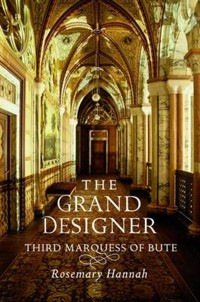
When the third Marquess of Bute (1847 - 1900) met the renowned Gothic designer William Burges it marked the start of a lifetime's collaboration with architects and artists, producing work ranging from the High Victorian Gothic exuberance of Cardiff Castle and Castell Coch to the ostentation of Mount Stuart on the Isle of Bute and the sumptuous restoration of the Renaissance Falkland Palace. This fascinating biography tells the story of a rich eccentric, whose learning, insight and kindness produced extraordinary results in architecture and life, a man who combined being amongst the richest men of the age with artistic patronage of an almost incomprehensible scale.
Sie lesen das E-Book in den Legimi-Apps auf:
Seitenzahl: 996
Veröffentlichungsjahr: 2012
Das E-Book (TTS) können Sie hören im Abo „Legimi Premium” in Legimi-Apps auf:
Ähnliche


















THE GRAND DESIGNER
To my mother, Joy Armstrong
This eBook edition published in 2012 by Birlinn Limited West Newington House Newington Road Edinburgh EH9 1QSwww.birlinn.co.uk
Copyright © Rosemary Hannah 2012
The moral right of Rosemary Hannah to be identified as the author of this work has been asserted by her in accordance with the Copyright, Designs and Patents Act 1988
All rights reserved. No part of this publication may be reproduced, stored or transmitted in any form without the express written permission of the publisher.
ISBN: 978-1-78027-027-2 eBook ISBN: 978-0-85790-227-6
British Library Cataloguing-in-Publication Data
Contents
List of illustrations
Preface and Acknowledgements
Stuart family tree
Hastings family tree
Abbreviations
1 Infancy
2 Custody
3 Education
4 Travel
5 Oxford
6 Lothair?
7 Marriage
8 Purgatory
9 Family
10 Mount Stuart
11 Hierarchy
12 Charity
13 Mayor
14 St Andrews
15 Death Sentence
Obituary
Titles
Notes
Bibliography
Index
List of illustrations
Endpapers
Front endpaper: Male Saints, mural at Mount Stuart
(Photograph Christoph Kicherer)
Back endpaper: Female Saints, mural at Mount Stuart
(Photograph Christoph Kicherer)
First plate section (black and white)
Images of the Third Marquess of Bute and his family
1. The earliest image of Bute. By the time this pen and ink drawing .
2. Young Bute stands beside his adored mother.
3. The young Bute stands before Cardiff Castle, showing the building as it was before Burges’s re-development.
4. Bute between the time of his leaving Harrow and starting at Oxford.
5. Marie Fox, later Princess von Liechtenstein, had a romance with the young Bute.
6. Lady Elizabeth Moore, a distant cousin of Bute’s mother, to whom he was devoted
7. Portrait of Gwen before her wedding to Bute.
8. Gwen in her wedding dress.
9. Gwen as a young matron.
10. Bute as a young man.
11. Bute in an amateur photograph, holding a baby, probably Margaret.
12. Bute’s children: Margaret baby Colum, ‘Nohn’ and Ninian
13. The New Year pantomime production ‘Alice in Wonderland’ in 1890.
14. Bute’s daughter Margaret posing for her coming-out picture with her mother.
15. Bute in middle age, dressed in the tweeds he habitually wore.
16.Margaret in walking dress with a cairn terrier.
17. A butler and four footmen posing on the steps of House of Falkland.
18. Bute on the curling rink at one of his Scottish homes.
19. Bute in his self-designed robes as Rector of St Andrews University.
20.Bute and Gwen with the children and family dogs in the old Mount Stuart, a comfortable Georgian house.
21. Cranes raising the new Mount Stuart House, built around steel girders
22. Margaret with her dog-cart and team of Shetland ponies outside Dumfries House.
23. A kindly contemporary caricature of Bute.
Second plate section (colour)
Cardiff Castle, one of Bute’s homes. Bute employed the architect William Burges to rebuild and restore the Castle from 1866 until Burges’s death in 1881, when William Frame continued the work.
24. The painted door of Bute’s sitting room, the first room created by Burges at Cardiff Castle.
25. A sorrowful angel: the windows in Bute’s bedroom at Cardiff Castle.
26. A detail from the mortuary chapel ceiling at Cardiff Castle, by Nathaniel Westlake.
27. The exotic gilded Arab Room at Cardiff Castle.
28. The Bachelor Bedroom in the Clock Tower at Cardiff Castle.
29. Bute’s bedroom at Cardiff Castle.
30. The Banqueting Hall at Cardiff Castle.
31. Exterior view of Cardiff Castle.
32. The library at Cardiff Castle.
33. The nursery at Cardiff Castle.
34. The roof garden of Bute Tower at Cardiff Castle.
35. The exterior of the Clock Tower at Cardiff Castle.
36. A detail from the Small Dining Room fireplace.
37. The Small Dining Room at Cardiff Castle.
38. The murals and carved and inlaid panels of the Winter Smoking Room window at Cardiff Castle.
39. The Summer Smoking Room at Cardiff Castle.
40. The Winter Smoking Room at Cardiff Castle.
Third plate section (colour)
41. Dumfries House, the homeliest of Bute’s homes.
Mount Stuart, the Third Marquess’s main home on the Isle of Bute, designed by architect Sir Robert Rowand Anderson
42. Mount Stuart viewed from the lawns that run towards the sea
43. Plan of the old Mount Stuart House, over which the plans for the new house are sketched.
44. The chapel created by Burges at Mount Stuart
45. The corridors running round the gallery of the Marble Hall at Mount Stuart.
46. The roundels of the Days of Creation at the head of the main staircase at Mount Stuart, created by artist H. W. Lonsdale.
47. The Marble Hall, the atrium at the centre of Mount Stuart.
48. Lonsdale’s sketches for the Zodiac windows at Mount Stuart.
49. The Libra window at Mount Stuart
50. The Scorpio window at Mount Stuart.
51. Lonsdale’s celestial ceiling of the Marble Hall at Mount Stuart.
52. The ceiling of Mount Stuart’s Horoscope Room
53. Two of the little carved panels in the Horoscope Room at Mount Stuart.
54. Mount Stuart’s Family Bedroom.
55. Lonsdale’s frieze of the life of St Margaret in the Family Bedroom at Mount Stuart.
56. The Gothic Drawing Room at Mount Stuart.
57. The Gothic swimming pool at Mount Stuart.
58. Detail of a carved capital of one of the pillars in Mount Stuart’s Marble Hall.
59. The Dining Room at Mount Stuart.
60. A silver ‘pepper-pot’ cruet, a present from Gwen to Bute.
61. Evening stained glass window (Nathaniel Westlake) at the side of Mount Stuart’s entrance hall.
Fourth plate section (colour)
House of Falkland (Fife) was a home which Bute left largely unchanged except for new decoration. Falkland Palace (Fife), Greyfriars Convent (Elgin), where the architect was John Kinross, and Castell Coch (a rural retreat north of Cardiff, designed by William Burges and completed by William Frame after Burges’s death) are all buildings which Bute commissioned for restoration but in which he never lived.
62. The House of Falkland exterior, designed by architect William Burn.
63. The ‘mural of the winds’ over the stair at House of Falkland, painted in 1898 by Andrew W. Lyons.
64. The Corpus Christi procession, a Lonsdale frieze, at House of Falkland.
65. Falkland Palace, seen against the Lomond Hill.
66. The Chapel Royal at Falkland Palace.
67. The restored painted wooden ceiling of the Falkland Palace Chapel Royal.
68. Detail from the Chapel Royal ceiling at Falkland Palace.
69. Portraits in oak of Bute’s children on a cupboard door in Falkland Palace.
70. The crown on a turret at Falkland Palace, loosely based on the Scottish crown.
71. The Crichton Stuart arms on a leather chair-back in Falkland Palace.
72. The Tapestry Gallery down which royalty passed to the chapel of Falkland Palace.
73. A wood panelled and marble bathroom at Falkland Palace.
74. A window at Falkland Palace, showing the village setting in magnificent countryside.
75. Greyfriars Convent, Elgin, designed by architect John Kinross.
76. The quadrangle, the centre of the monastic buildings at Greyfriars.
77. The chapel at Greyfriars
78. Looking down the chapel at Greyfriars from the altar.
79. The spiral staircase at Greyfriars, which ascends to a gallery.
80. Lady Bute’s bedroom at Castell Coch
81. The wash-stand designed by Chapple for Lady Bute’s bedroom at Coch.
82. The Drawing Room at Castell Coch.
83. The ceiling of the Drawing Room at Castell Coch, painted by Charles Campbell.
Preface and Acknowledgements
‘Bute does it for the fun of the thing, I’m sure’1
When the eighteen-year-old fabulously wealthy 3rd Marquess of Bute met the most outrageous of Gothic designers, William Burges, it was the start of a lifetime’s collaboration with artists and architects which would pour Bute’s original mind into fabulous buildings in an astonishing variety of styles, from the intricate Gothic of Cardiff Castle through the Arabian nights ostentation of Mount Stuart to the sumptuous Renaissance Falkland Palace. Bute was far more than a patron for his amazing buildings; he was also very much a collaborator in their art and architecture. That would have been enough achievement for a lifetime for most people, and more than enough to justify describing Bute as ‘the grand designer’. For Bute it was only part of his life’s work. His ‘designs’ for education were just as grand. He sought to re-shape the education for the priesthood in Scotland, and to create a centre for liturgical excellence in Oban, in both cases with indifferent success. His fight to save St Andrews University, and to make it into a modern university fit for the age and for the future, succeeded – yet another of his grand designs. Sadly, he was dying as he fought to save the University. Because those who bitterly opposed him controlled the Dundee newspapers, their hostile story has become the version commonly accepted. New research for this book gives a more balanced account.
In one sense, however, Bute was anything but grand. He had little sense of personal self-importance. His wealth was as much a burden as a delight, and he valued his title chiefly as a tool to be used consciously to win allies for his causes. Most of his closest friends were from the middle classes. Bute was, in every way, an astonishing man. Lord Rosebery, as a former Prime Minister, commented smugly that he had known every interesting person of his generation; he considered Bute the most remarkable of them all. Above all, Bute had a lively sense of the absurd and a cutting wit. This was one of the things which attracted him to Burges’s Gothic architecture, which is suffused with playfulness, something I missed when I first encountered the Victorian Gothic as a teenager.
Bute is especially beloved in Cardiff. True, it was his father, the 2nd Marquess, who created a busy port and a prosperous town out of something not much more than a fishing village, but it was the 3rd Marquess who saw the Victorian heyday of the town, who endowed numberless charities, and converted a modest castle into a towering Gothic extravaganza.
As a teenager, I thought Cardiff Castle a fraud. Instead of a building with Georgian elegance, or Victorian red-brick modernity, the patron and his architect had perpetrated a hideous and unoriginal fraud. I grew up. I came, gradually, to understand that Victorian Gothic was in fact one of the most original of all styles, a style that took the knowledge and wisdom of the past, and then had a great deal of light-hearted fun with it.
In middle age, I found myself living next to another of Lord Bute’s amazing houses, Mount Stuart. At that time it was still a private dwelling-house, and was as closed and as mysterious as the man for whom it had been built. The best source for Bute’s life was the biography by his friend, the Benedictine-baronet-Abbot Sir David Hunter Blair, a man whose social skills were greater than his originality, and who was bemused that anybody, however bored, could offer small talk along the lines of: ‘Isn’t it perfectly monstrous . . . that St Magnus hasn’t got an octave?’2
Hunter Blair was so torn between his amusement at Bute’s social inexpertise, his anger over past trouble between him and Bute, his respect for Bute’s learning, and his awe of Bute’s wealth and social position, that it is a very patchy portrait that emerges. One thing was clear: Hunter Blair thought that if Bute had received a more normal upbringing, he would have been a better man. Was that right? Did Bute’s childhood cripple him, and if so, was his mother to blame? Moreover, Hunter Blair raised as many questions as he answered. Why did a man so in love with the mediaeval put central heating in his houses? Why had Bute’s marriage been rumoured to be unhappy,3 and was it really so? Why was there such a long gap between the first child born to him and the second? What was the truth behind Bute’s behaviour to Marie Fox?4 There were questions, but no answers.
One of the challenges of writing this biography has been the sheer weight of previously unpublished material. It was impossible at the beginning to anticipate the shape it would take, and researching it was not unlike unravelling the plot of a real-life soap opera. The breadth and depth of Bute’s interests constantly threatened to overwhelm the story of the man himself. Bute is a difficult, unexpected figure, one of the last of the truly great Victorians to lack a modern biography. I trust these pages will go some way to explain the link between the man, his buildings, and his other projects, including his rescue of St Andrews University.
Stylistically, I have tried very hard to preserve the flavour of the original writing: where I found words underlined, I left them underlined instead of shifting them to italics, not least because the latter leaves one with a dilemma with doubly-underlined words. Where I found italics, I preserved them. I have also retained some idiosyncratic spellings and abbreviations including Bute’s habitual initial shortening of ‘ex’ to X or x, thus writing words such as ‘xcellent’ for ‘excellent’. The preferred spelling of the title is Marquess, but I have used Marquis in quotations where that spelling is used. The family name pre-1900 is usually Crichton Stuart, although the modern form is Crichton-Stuart (with hyphen); the British Museum General Catalogue of Printed Books prints this as Crighton Stuart (with a g and omitting the hyphen), and the Dictionary of National Biography, while spelling the name correctly, enters Bute’s biography under ‘Stuart’. The correct Christian name of the 3rd Marchioness is Gwendolen, not Gwendoline, although the more common spelling is often found in documents relating to her. The modern spelling of the family home on the Isle of Bute is Mount Stuart; the older spelling, all one word, is used where it occurs in quotations.
Apart from a continuing fascination with Bute himself, one thing has emerged from those five years: the kindness I have met with from almost all those whom I have bothered in the pursuit of my goal.
I am fairly certain that my admission to the archives at Mount Stuart arose from a misunderstanding, which, having once been made, was honoured by John Bute. He once asked me why I wanted to write about his great-great-grandfather. I answered as best I could, but I hope that as he reads these pages he gets a better answer, and one that in part repays his great kindness in giving me early access to his archives. I would also like to thank the Mount Stuart Trust for generously offering the free use in this book of all photographs in their gift.
Of all those to whom I have been a nuisance, Andrew McLean, archivist at Mount Stuart, must have suffered most, though he has never suggested it by word or look. Not only has he been superbly professional at his job, but he has also been a companion on the way, always ready to laugh, to commiserate, and above all to enthuse over the latest discovery. His has been the ready, sympathetic, listening ear into which I have been able to pour enthusiasm and never have it dampened. Latterly his deputy Lynsey Nairn shared her office with me, bore with my sighs, fielded my queries and listened endlessly. Thanks also to both of them for taking additional photographs for the book, and work on the preparation of images for it.
I had no right at all to call upon the generosity of Diane Walker, but she has kindly and unstintingly supplied help in all kinds, from a whistle-stop tour of Cardiff to a wealth of information on the death and burial of various members of the Bute family. The impeccable generosity and unfailing kindness of Matthew Williams, Keeper of Collections at Cardiff Castle, have extended far beyond anything that I will ever be able to acknowledge. Whenever the magnitude of the task before me dampened my spirits, he made me laugh. Many additional thanks for his work photographing details for reproduction here.
Ninian Crichton-Stuart, Hereditary Keeper of Falkland Palace, opened his personal family archives to me, and entertained me quite literally royally. The privilege of staying in the Palace is something I will never forget. They also kindly allowed me to view and reproduce their family images for this book. Pam Shinkins generously shared her intimate knowledge of the Falkland properties with me, and passed on to me the word-of-mouth history of the Marquess. I would also like to thank the National Trust for Scotland for allowing me and Kimberly Bohen free rein to photograph Falkland Palace, and especially the staff there, who most kindly facilitated our visit.
I would like to thank the Catholic Diocese of Aberdeen, who readily gave permission for Greyfriars to be photographed, and opened the building (now sadly unoccupied) so that Jeff Lowndes could record some of its beauties. I owe an especial thanks to Jeff and Kimberly who so freely gave of their time and talents; without that, this book would be much the poorer.
Libraries opened their doors, and their staff worked hard to help me. I would like to thank the staff of: Rothesay Public Library, Durham University Library, Glasgow University Library, the British Library, the Scottish National Library, and the Mitchell Library, Glasgow.
A great deal of my work has been done in archives far from home, and I would especially like to thank those who helped me struggle to decipher doubtful Victorian handwriting and impossible signatures. My thanks and acknowledgements go to: the Principal and Chapter of Pusey House, Oxford; the Earl of Sandon for entry to the Sandon Hall Papers, Staffordshire; the archives of the Scottish National Library and the British Library; the National Archives of Scotland; the Ayrshire Archives; the National Museum of Wales; Cardiff Central Library; Paisley Burgh Library; the Scottish Catholic Archive and the Sneyd family.
I would like to thank the priests at Cumnock and Galston for their kindness in allowing me to see their churches, and the minister at Cumnock Parish Church for his help with this project. I would also like to thank Ian Maclagan LLB, FSA Scot., for his advice on Victorian Scots law, and David Hamilton, head of the Renal Unit at Glasgow Western Infirmary and medical historian, for his invaluable help on the causes and symptoms of Bright’s disease. To him is due the graphic description of the suffering of the Hastings family. The causes of Bute’s death were unravelled by Dr Julia Lowe, MB, ChB, FRCP (UK) M.Med Sci (Clin Epi), who is Associate Professor of Medicine at the University of Toronto, and to her insight and acuity we owe an understanding of how and why Bute died so tragically young.
My former husband, Angus, helped me with the correction of the early drafts of this book, translated letters from French and Italian for it, and was supportive throughout. Sheila Wright undertook a huge amount of work to get the later chapters to a readable condition.
My last, and my greatest, acknowledgement goes to Dr Sheridan Gilley. It is no conventional thanks that I owe him. Not only has he readily offered me any help from the vast body of knowledge lodged sometimes on his bookshelves but more often in his head, but his steady faith in this work, his constant encouragement, his careful nurturing have given me a faith in it, and in myself, that I might otherwise not have found. If this account of Bute’s life makes interesting reading (as I hope it does), then that is due to his encouragement to tell it as a story. He was the audience for which I originally wrote this, his the reaction I imagined, as I tried to allow Bute to come out of the shadows and tell of the laughter, the pain and the triumph of his life.
Stuart family tree
Hastings family tree
Abbreviations
AC
J. A.Venn, LittD, FSA, Alumni Cantabrigienses, Part II vol. VI (Cambridge University Press: Kraus reprint, 1978).
AO
J. Foster, Alumni Oxoniensis (Parker & Co.: Oxford, 1888).
BL
British Library.
BP
Burke’s Peerage (Peter Townend, ed., Burke’s Genealogical and Heraldic History of the Peerage, Baronetage and Knightage, 103rd edition, London, 1965).
BU
Papers in the Bute archive, Mount Stuart House, Isle of Bute.
CCL
Cardiff Central Library
CDS
The Catholic Directory for the Clergy and Laity of Scotland (J. Chisholm: Aberdeen, 1888).
CP
George Edward Cokayne, The Complete Peerage of England, Scotland, Ireland, Great Britain and the United Kingdom, Extant, Extinct or Dormant, vols I–XIII, ed. The Hon. Vicary Gibbs, H. A. Doubleday (St Catherine Press: London, 1910–1940).
DNB
Dictionary of National Biography.
HB
The Right Rev. Sir David Hunter Blair Bt, OSB., John Patrick Third Marquess of Bute K.T. (1847–1900), A Memoir (John Murray: London, 1921).
JD
John Davies, Cardiff and the Marquesses of Bute (University of Wales Press: Cardiff, 1981).
JSPR
Journal of the Society for Psychical Research.
NAS
National Archive of Scotland, Edinburgh.
NLS
National Library of Scotland, Edinburgh.
SP
Sir James Balfour Paul, ed., The Scots Peerage (David Douglas: Edinburgh, 1908).
SR
The Scottish Review.
WB
William Burges papers in the Bute archive.
1 Infancy
‘All that should make a Parent’s heart thankful’
When the 3rd Marquess of Bute lay dying, his daughter heard a carriage rattle up to the door. The door was answered. Nothing was there.1 She knew at once that she had heard the ghostly death carriage of the Hastings. By tradition, spirits announced the forthcoming death of the head of the House of Hastings with a carriage heard but invisible. It seems almost fair that John Patrick Crichton Stuart should have been accorded this privilege.
He was not, of course, by any reckoning, the head of the Hastings family; that was his still-living cousin the Earl of Loudoun, Charles Abney-Hastings.2 Bute was only a Hastings through his mother. With his interest in the supernatural he would have appreciated it, however, in a way Charley would not have. Perhaps the ghosts made allowance for that, or for the fact Bute was dying of Bright’s disease, or, as it is now known, kidney failure, which had killed his mother and was an ‘almost hereditary’ disease in the Hastings family.
Bute was the late-born son of a second marriage. His father, John, 2nd Marquess of Bute,3 had made a happy first marriage to Maria North,4 but she was an invalid, and their marriage remained childless. The 2nd Marquess meanwhile devoted his amazing energy to the development of the run-down estates in Wales which he had inherited from his paternal grandmother.5 The city of Cardiff was largely of his making, springing up around the docks he built, which gave an easy outlet for the coal that South Wales began to produce, a good deal of it mined on the land he leased for development. He personally superintended all the details, as well as the broad sweep of his estates. He was laying the foundations of enormous wealth; just how much wealth the next generation was to find out.
In retrospect, it is easy to see that the 2nd Marquess managed his business enterprise wisely. At the time it seemed less certain. He sold the family estate at Luton (bought by his great-grandfather the much-vilified Prime Minister Earl of Bute) and borrowed heavily to finance the expansion of Cardiff. When he remarked that he was willing to think well of the prospects of his income ‘in the distance’6 he was tacitly recognising just how heavy his borrowing had been, and how the tide of finance might yet turn against him.
The 2nd Marquess’s first wife Maria died in 1841, and in 1845 he married again. He was fifty-two and his sight was seriously impaired. His bride was thirty-five years old. She was Lady Sophia Hastings,7 the daughter of Flora, Countess of Loudoun in her own right,8 and of the 1st Marquess of Hastings.9 It looked as if the 2nd Marquess was securing a companion for his old age not a potential mother for a putative heir.
This must have been reassuring to his younger brother, Lord James.10 Their parents having died young, both John and James Crichton Stuart had been brought up by their mother’s father, the old Earl of Dumfries, and John had inherited that title and the estate in Ayrshire on the death of the Earl in 1803.11 He inherited the Bute lands and title from his father’s father in 1814.
His brother James had gradually come to expect that these titles and estates, and the wealth his brother was beginning to create in Cardiff, would come to him. He too had married, and he had a family. His expectations were hardly shaken when the 2nd Marquess remarried.
Yet, however little Lord James anticipated it, shortly after her wedding Sophia became pregnant. Her child was stillborn in the seventh month.12 To add to the pain, it was a boy. Lord James must now have been confident that either he or his eldest son James Frederick would inherit everything. After all, Sophia did not come from a very healthy family.
Lady Flora,13 Sophia’s eldest sister, had taken up one of the few careers open to respectable aristocratic spinsters: a Lady-in-Waiting to the Princess Victoria, mother of the Queen. Her tragic story is well known. She had been alone with Victoria’s bête noire, Sir John Conroy.14 Her belly began to swell, and she was sick. Ugly rumours flew around. The young Queen believed them. It was not pregnancy, however, but cancer which was the cause, and Flora, who had been publicly humiliated by the rumours, was only able to establish her innocence by an exhaustive intimate examination. Victoria tried to make amends, but it was too little and too late. Lady Flora died aged thirty-three.
Sophia nursed Flora through her painful illness, afterwards publishing her sister’s poems.15 Within six months, her mother, too, was dead; and her brother, George, 2nd Marquess of Hastings, died four years later.16The whole family blamed the Curse of the Hastings, invoked by the marriage of George to Barbara Grey de Ruthyn.17 Legend had it that back in the middle ages there was a dispute over who should inherit the Hastings coat-of-arms: an heir descended through a daughter, who was also a member of the Grey de Ruthyn family, or a male Hastings. So bitter was the dispute that the Hastings claimant cursed any member of his family who married a Grey de Ruthyn.18
In 1847, two years after her marriage to the 2nd Marquess, it became plain that Sophia was again pregnant, and on 12 September she gave birth to a son ‘at half past five o’clock in the afternoon’.19 So it was that John Patrick Crichton Stuart became heir to the earldom of Dumfries, the marquisate of Bute and the curse of the Hastings. His parents, however, were both too overjoyed to let a mediaeval curse enter their minds.
Lord Bute wrote to a friend: ‘I now give you my news, and I know you will be rejoiced to hear that Lady Bute by the blessing of God gave me a little boy yesterday afternoon.’20 He wrote again, confirming that they were both doing well, not this time by the careful hand of an amanuensis, but in his own difficult scrawl.21 Since by this time he rarely wrote in his own hand, it is a measure of his joy, and perhaps his disbelief, that he, who was fifty-four, and his thirty-eight year old wife, had a son and heir. That she was scarcely less happy is confirmed by her answer to felicitations; she found her little boy was ‘indeed all that should make a Parent’s heart thankful’.22
Now, for the first time in his life, Lord James was no longer heir presumptive to the Bute estates. His life had not been fulfilling. He had made a career in politics, and had come almost at once into conflict with his brother John: he was elected member for Cardiff in 1818 and again in 1826; he was a popular MP and supported reform whilst his brother opposed it. Lord James would not change his opinions to suit his brother, so, at the next election, John put in a candidate against him. Lord Bute’s candidate won, and Lord James was out of Parliament until his election for Ayrshire (his home county) in 1835.23 In private, relations between the two men steadily worsened.24 To his sister-in-law’s disgust, Lord James regarded the child as only a temporary disruption to his prospects; he did not expect the late-born child of two ageing parents to survive.25
Lord Bute naturally wanted to take his son to Cardiff, the town he had created, and arrived early in March 1848. Already worrying over business matters, he received a letter from his brother which deeply distressed him.26 On 18 March, he and his wife entertained friends to dinner. The party broke up at ten o’clock and Bute retired to his room. Getting no reply when she called to him, his wife walked into his bedroom to find him lying dead in bed.27 She had hysterics, a fact ever after held against her as proof of an unsound mind.
Considering his reputation for punctilious business management, the mess in which the 2nd Marquess left his personal affairs after his death is odd. Perhaps, like other great men, he did not believe he would die; probably he intended to make detailed provision for his son (then just six months old), his wife and brother during his stay in Cardiff.28 In the wake of his unexpected death, however, a horrible legal tangle ensued. Bute had made a will in July 1847, when it was apparent that his wife was likely to carry her second child safely to term. Despite naming separate trustees for the English estates (O. Tyndall Bruce, J. M. McNabb and Lord James) and the Welsh (Bruce and McNabb only), it made no mention of the Scottish estates, which were later found to be intestate. Nor did the will make any provision for James, the failed politician in his fifties, with a family to support, who had spent all his life in his brother’s shadow, subsidised by him, distrusted by him, and in expectation of great wealth and a title upon his death. Now, seeing his prospect of inheriting a great estate go down before the interests of a baby still not in short frocks, Lord James was furious and desperate. He was convinced that his brother must have made provision for him somewhere, and went through every drawer to find some paper which would give him a secure claim on the estate. When he planned to go to Scotland, Sophia commented: ‘if he is to ransack the Bureaux I do not know what will be the consequence . . . I know there are many relics of those who have been loved and cared for.’29
Once the first shock passed, Sophia behaved with great determination and self-reliance. She chose as confidant her late husband’s agent, an executor under his will, O. Tyndall Bruce.30She first wrote to him a month after her husband’s death, because she had nobody else to turn to for help and advice.31 After that she wrote at least weekly, and in times of stress daily. Her letters became informal and personal as the correspondence continued. Normally neat, her handwriting disintegrated into a scrawl under pressure, though her style remained forceful and coherent. Of stress, she had plenty. Her son had not been left any proper provision for his minority, and Lord James, concerned with resolving his own difficulties, did nothing to make his sister-in-law secure, or the young Marquess comfortable.
Sophia was not in an enviable position. She was the widow of the creator of one of Europe’s busiest ports, and the mother of a son who must be reared as heir both to an ancient line and a modern fortune. Given this, her jointure of £3,50032 was not large. A house, and a separate allowance for her son, would have brought it into line with the arrangements made for other widows.33 Without these, it was inadequate. Bruce’s advice to her was to argue for a more handsome settlement for herself, to be secure even if her son were to die, rather than to seek a proper allowance for her son.34
Lord James had the poor taste (given his position) to harp on the same theme.35 Naturally, Sophia rebelled. She had buried a beloved sister, her Marquess brother, both parents, her first child and her husband. She was not going to build her future on the surmise of the death of her healthy child. She fought determinedly for a suitable settlement for her son, perfectly reasonably, since he was already the inheritor of his father’s wealth, and the 3rd Marquess of Bute. As ‘it has pleased God that Lord Bute has a child of his own I feel I am bound to expect for that child what I should have no right to for myself’, wrote Lady Bute, continuing a little desperately, ‘& tho’ he may not live I do not think his death should be assumed as probable, for any of the arrangements. The better taste would be for everything to go on as far as possible as it did in Lord Bute’s lifetime.’36
With the Scottish estates intestate, Lord James, as the new Marquess’s nearest male relative, became ‘Tutor-at-Law’, that is to say, responsible for managing and administering those estates.37 He refused Lady Bute the use of either of the two houses he now controlled as her own home. One of these was Mount Stuart, the Georgian house on the Isle of Bute. Set in pleasant woodland, facing to the east, with its lands rolling down to the sea, it was where the widowed Marchioness had borne both her sons, and buried the first. The second, Dumfries House, an Adam gem, was not in Dumfriesshire but in Ayrshire, near Cumnock. Lord James was financially mean too. Bitterly considering his suggestion of £1,400 p.a. for the young Lord Bute, Sophia commented ‘I consider his offer as miserable’.38 With her usual directness, Sophia encapsulated the position thus: ‘I do not see why the child should be pinched when, if he live by God’s mercy, he is likely to be very rich at the end of such a minority. Nor, if it be God’s will that he die, is there any reason that he and I should be pinched that Lord James and his family may have the more to squander hereafter.’39
What most enraged her contemporaries was that she did not have any inhibitions about dealing with areas of life generally left to men. One of these was the law, of which she had a much better grasp than many of the men around her. During her bitter struggles over a place of residence, she pointed this out to Lord Harrowby,40 himself a lawyer, and a cousin by marriage. ‘My family’, she commented smugly, ‘are a legal family in Scotland, and I know from my own knowledge [Lord James] has already incurred deep responsibility in his breach of the law.’41
Lady Bute’s attitude to Lord James was undoubtedly coloured by the letter her husband had received about ten days before his death. It has been suggested that it was uncommon for Victorian widows to experience anger and a desire to blame someone for their husband’s death, which is now an accepted part of the grieving process for many people,42 but Sophia blamed Lord James wholeheartedly: ‘the immediate cause of [Lord Bute’s] death was a letter written by his brother Lord James Stuart’.43 She was convinced, too, that he was mad; this had been her husband’s judgement, after that same letter.44 She did make an attempt to be fair to Lord James: ‘I believe he means to be kind but his letter is written in his most disagreeable style of inflated pompous condescension and self importance.’45 She added a little pitifully that it was not at all the style she was accustomed to. Presumably, the admirable 2nd Marquess did not talk down to his wife.
Lady Bute was not alone in her poor opinion of Lord James. McNabb was the other executor of her husband’s will. His natural caution as a lawyer did not hide his opinion of Lord James. He told his fellow executor that if Lord James took any active role in the management of the English Estates, they should ask him for a formal guarantee that any claims against him would not have to be paid by them. McNabb assumed that maladministration would be inevitable. Lord James also succeeded in forcing the South Wales trustees’ hands and making them agree, very much against their first intention, that he could continue to live in Cardiff Castle,46 thus occupying all three of the Bute houses, and leaving nowhere for the infant 3rd Marquess and his mother.
Much that Sophia wrote has the ring of determined level-headedness about it. She planned to take over administration for the annuities of ‘poor relations, old servants or old servants’ children’.47 She was ‘inclined to think it would be more wholesome for my own mind to be obliged to think of some sort of business and not to be too much at ease’.48 She was quite at home, if sometimes exasperated, negotiating for her own jointure and the allowance for her son. Her arguments never relied on emotion but on well-argued logic.
She told her confidants, too, about her ‘Child’, as she usually referred to him, responding that he was well; no ailments, real or imaginary, were mentioned. Obviously devoted to him, she retained her sense of humour:
He continues, thank God, to thrive so well that I can scarcely hold him for his weight – He is quite well & did I tell you? he has said ‘Mamma’. He is growing so interesting to me that I am fearful of tiring my friends with details of him.
The nearest she came to any sign of neurosis was in an early letter to Bruce. Just a month after her husband’s death, Lady Bute explained that she was giving Lord James a sword of her husband’s as a remembrance of him:
I had a superstition not to give him anything with a coronet and cipher – and yet I knew not what to chuse & could not pass him by without the offer of a remembrance – and Baby could not value the sword at present. Thank you – He is quite well and very hearty.49
The only way Lord James could legitimately hold such a coronet was, of course, by the death of the baby.
Lord James was miserably spiteful. He forbade Sophia to give orders to any of the servants in any Bute house she visited.50 He only ever referred to his nephew as ‘Lady Bute’s son’ or ‘her son’. He refused for years to surrender to her the family plate left for her use in her lifetime.51 He made snide remarks about her in nearly all of his letters, occasionally implying that she was verging on madness: ‘I fear Lady Bute is in a very nervous state.’52
Lady Bute fought back with vigour. She finally persuaded the south Wales trustees to get Lord James to leave Cardiff Castle in the summer of 1849,53 complaining bitterly that ‘Lord and Lady James left the house in a disgraceful state of filth and ruin’.54 She rented Dallars House, a small country house in Ayrshire, near to both Dumfries House and her old home at Loudoun, which gave her a Scottish base. She also leased Largo House near St Andrews for the summer months, where her son was ‘enchanted’ by bathing in the sea.55 Lord James’s own friends lost all patience with him, and repeated attempts were made to allow Lady Bute one of the Scottish homes as her own.56 She, or rather her son (for he, not his uncle, was the owner of all these properties), was finally allowed to live in Mount Stuart from about 1853.
Sophia was helped by being part of a close family of her own. George and Flora were dead, but her sisters Selina57 (by now married to a Mr Henry) and Adelaide58 were intimates, especially Adelaide, who was unmarried. It seemed as though the Hastings family could not escape tragedy. In 1851, the young 3rd Marquess of Hastings,59 a Rifle Brigade officer not yet twenty years old, died after falling into Birkenhead Dock.60 Lady Bute and her sister were ‘overwhelmed by the calamity’. The new Marquess of Hastings was his young brother Harry,61 still only nine years old. His eldest sister Edith62 was eighteen and virtually took the place of their mother, who had remarried.63
Very conscious that she was already being criticised by her brother-in-law, Lady Bute was scrupulous to avoid scandal, remarking ‘one cannot be too prudent in my position as to character’.64 A widow still of marriageable age, she largely avoided the company of men. She compensated by a wide circle of women friends, all approximately in their middle years, mainly unmarried, and all able and intelligent. Lady Elizabeth Moore,65 a distant cousin, some six years older than Lady Bute, was a particular friend. Lady Elizabeth was strong-minded, witty and interested in almost everything. But Sophia’s son was her greatest companion, and her greatest delight. From the very beginning she took pleasure in teaching him herself. The first letter of Bute’s that is still preserved was written when he was four years old. Lady Bute included an account of its composition and despatch: ‘They are his own words & I held his hand as he is particularly fond of writing letters, which he folds, puts the seal on the wax & the stamps on himself & then gives with sedateness to the servant “for the post”.’66
Bute’s letter was short and to the point: ‘I am very happy & Mama is pleased with me.’ A year later he was writing rather more: ‘I was in my nursery picking some wheatheads out of the corn I had picked in my walk in the morning & putting it into a bowl . . . Afterwards I meant to get a pestle and mortar . . . and make a little bit of bread.’67 Letters give a vivid picture of his life. One sent to Bute from the well-known authoress Agnes Strickland68 enclosed pictures of ‘horses, dogs, foxes, hares and a cat-a-mountains’ cut out by ‘my sister Elizabeth’. She continued, ‘Ask Mrs Lamb, your kind nurse, to read you the description of them all from some pretty book of natural history,’ and advised him to learn to read ‘at once, and beg your dear Mamma to allow you to devote half an hour twice a day to learning to read’.69 Did ‘Mamma’ in fact put the letter-writer up to this request? It does read a little like a sugar-coated pill. Certainly, as he learnt to read, either Bute or his mother requested printed letters so that he could read them himself.
Some correspondents were bent upon improving the young Bute. He was sent two bottles of water, one from the Dead Sea ‘which will remind you of the fearful judgements of God upon sin & wickedness of those who obey not his will’.70 In contrast there was a bottle of water from the Jordan, where the obedient Jesus was baptised. Others had the measure of a small boy a little more realistically. One correspondent did not have ‘time to write you a printed letter, but . . . I daresay you won’t mind having this read to you’.71 Also highly improving were the letters from ‘Godmother Aunt North’.72
Susan, Lady North was the last surviving North child. Maria, Lady Bute, had been her elder half-sister. She was genuinely devoted to Bute, as though he were her nephew and not her half-brother-in-law’s son by another wife. She had very little idea how to interest a child, but was a faithful correspondent. ‘I am very sure that you do wish me many happy returns of my Birthday but perhaps you do not think that not a little part of my happiness depends on your being a good boy.’73 There is no evidence that Bute gave Aunt North cause for concern. Other correspondents were more light-hearted. There is a charming letter with an indecipherable signature where selected words have been omitted, and little printed pictures have been cut out and glued in. Just in case the code was not broken, a separate envelope gave the solution. Thus the sheep turns out to be a wether, for weather.74
Another correspondent, Sir Francis Hastings Gilbert,75 later appointed guardian to Lord Bute, wrote that he looked forward to meeting Bute in St Andrews, to ‘renew our games of cricket, though I believe golf is the great game there, of which however I never yet could understand the science, so you will have to teach me’.76 At St Andrews there was sea bathing,77 shell collecting, visits to Principal and Mrs Lee, and to see the mechanical toys of Sir Hugh Playfair. Bute remembered also the spectacular three-tailed Donati’s Comet of 1858.78
Letters also show us something of the young Bute’s early instinct for giving. Hunter Blair, with his determined insistence that no good thing ever came from Lady Bute, attributed Bute’s generosity to the example which he received later in his life from the Galloway family,79 but Bute showed an early delight in giving. Already in March 1853, his dutiful Aunt North remarked, ‘I am sure the servants must have been pleased with all the nice things you gave them on your Mamma’s birthday.’80 Bute sent Henry Hunter Blair (uncle of Bute’s biographer), who was going to Australia, ‘the stuff for a coat’ and a book. The book seemed a ‘good one’, a phrase capable of two interpretations, and Henry added ‘I have no doubt I shall profit very much by the reading of it’.81 There were gifts to young friends as might be expected. But others were definitely not in this category. Mrs Tyndall Bruce got a surprise: when Bute had promised her a travelling suit, she had thought the boy was joking. Then one morning her servants brought in a brown paper parcel, which, unwrapped, showed foxes’ heads. She had been given furs. Her astonishment and delight were real.82 Unlike most children, little Lord Bute could afford serious presents. Equally evidently, he must have had adult help to choose well for his mother’s friends.
Another correspondent, a regular member of Lady Bute’s close circle of woman friends, was Miss Eleanora Boyle,83 or Nora as she was usually known. The large Boyle family were the children of the late Lord Justice Boyle of Scotland.84 John Boyle85 was one of the trustees of the Welsh estates, and his sisters were both ‘intimate friends’86 of the Marchioness. An early letter from Nora was full of fun, and suggests a thoroughly normal little boy: ‘Dear old man, Lady Mary87 & I miss somebody screaming on the stairs very much, and we have no one to hug us except each other, and she hugs Pincher, but you know I never do that.’88 ‘Dear man’ or ‘dear old man’ were the usual affectionate terms for Bute in the Boyle family.89 Nora’s dislike of Pincher, Lady Bute’s dog, was another standing joke. Her elder sister, Hamilla Augusta,90 usually known as Augusta, was also a close friend.
Nora avoids calling the little boy ‘Bute’, which he was to almost all his regular correspondents. Most people did not have enough rank themselves, or enough of a blood tie, to address the child by his Christian name. Some years later, his guardian referred to him as a ‘young potentate’.91 Though all young boys with a claim to be ‘gentlemen’ might hide their Christian names from each other, they were usually well-provided with brothers, sisters and cousins who would use the familiar first name. Few indeed were the children so exclusively called by their title.
A shared interest of the Bute circle was natural history. Adelaide encouraged him to keep a fresh-water aquarium. ‘Cousin Edith’ was much concerned with stuffing a lobster at Bute’s direction.92 All these letters are pleasantly informal in character, as though one relaxed adult were writing to another. Bute was perfectly at ease with the companionship of adults. There is a painting of him and his mother made when he was nine years old, and formally dressed in Highland costume. He lolls back on his mother untidily, one foot crossed behind the other. At their feet the family pets appear: the small terrier Mungo and a hedgehog. Mother and child seem completely at ease with each other, although Bute eyes the outside world with a hint of reserve.
In 1854 there was a serious rift between Adelaide and Sophia, the more painful as family and friends were dragged in to side with one or the other. It was sparked by Sophia’s dislike of Lady Adelaide’s marriage to Sir William Keith Murray of Ochtertyre, and made Sophia miserable.93 She subsequently caught scarlet fever, which friends with the usual shaky Victorian sense of the causes of infection put down to her unhappiness, and no sooner was she well than Bute caught German measles, followed by measles. Perhaps it was to aid their convalescence that in August 1855, just before his eighth birthday, they embarked on a trip to Belgium and Germany.94
From the moonlight drive to the ferry at Folkestone, it was an enchanted journey for the young Bute, so much so that themes from it were to haunt his adulthood. His diary was dictated, largely to his mother (to judge by the handwriting), so he was not deterred from making long entries. Yet he had a remarkably free hand in what he said. Despite her celebrated dislike of Roman Catholicism, she had no qualms about visiting Catholic churches. On one occasion, staying too long to enjoy a church, they found themselves in the service. Lord Bute saw his first Catholic Mass:
we had not been there long, when the bells began to ring and soon after the organ began and a man took a long taper and lit more of the candles, and the people began to come in a considerable number. A priest in his robes walked down the aisle and went into a confessional whispering-box. Then a lady in black went into it, but while I was staring at the marble monuments I was told to look at the high altar and I saw . . . a priest in white robes with a golden kind of hood ascending . . . the organ played very loud and made a disagreeable mixture of sounds . . . then came various kneelings and prayings . . . then the voices grew louder and the censer was flung in the air, and the bell was rung furiously.95
This account was a mixture of the standard evangelical phrases of dismissal (‘kneelings and prayings’), of childish curiosity (the lady and the confessional box), of genuine observation (the ‘white robes with the golden kind of hood’), genuine dislike (of the ‘disagreeable sounds’ of the organ) and of something like real appreciation (of the censer flung in the air and the furious bell). Later, at Munich, Bute was to record another beautiful church: ‘It is a Protestant church now I am glad to say.’96 He approved of the sixty-four splendid marble columns.
Bute gave three pages of description to his first Catholic service, whereas the zoological gardens, despite his fondness for them, got only half a page. Later, however, his first theatrical performance, the play Aladdin, earned five rapturous pages. After this, until his mother’s death, miniature theatres were to be a regular entertainment, giving the lie to suggestions that Sophia’s religion was joylessly narrow, since the really strict disapproved of the theatre at this date, although the moral content of a puppet theatre was a good deal more easily policed than the public stage.
Every day was a round of new pleasures – provided, like the little Bute, you were able to find your pleasures in churches, museums, battlefields and castles. Many eight-year-olds would have found it tedious. After his usual quiet life, the marble pillars, inlaid floors, painted ceilings, pictures and ancient silver came to Bute with great freshness. He had one great advantage over most little boys. The adults who surrounded him made it their business to interest him in everything he saw. Gradually, the dramatis personae of the trip emerge. Apart from ‘Mamma’ there were ‘Mrs Lamb, Dr Hood and Nora’. Dr Hood,97 by this time seventy-four years of age, was an Englishman who had spent most of his life in Scotland. He was the redoubtable first Rector of St Paul’s Episcopal Church, Rothesay, newly built to serve the Episcopalian congregation on the island. Both his age and the fact he was a clergyman rendered him an unexceptionable companion for Lady Bute, and gave Bute some contact with an adult male who was not a servant. Nora was sometimes a companion for Bute, and sometimes for his mother. Mrs Lamb was Bute’s much-loved nurse.
There is a good deal of horror in the diaries. Cruelty ‘haunted’ the adult Bute, to use his own word. It is hard to know if the young Bute was getting a satisfying shudder or real aversion from what he saw. Perhaps he himself did not know. One museum had a drum ‘covered with human skin’.98 Dr Hood escorted him to various torture chambers, although most were bare: ‘nothing to be seen except for the beams on which the wheel was said to be suspended’.99 At Brunswick in ‘a church’ he saw numerous coffins: ‘one of them contained Queen Caroline of England. There were many cushions attached to the coffins with metal bases, containing I was told the heart of those within. One of these hearts was taken out and shown to me. It was that of Duke Leopold.’100
Chance acquaintances also interested him, from the man who spoke such perfect English that Bute found it hard to believe he was indeed German, to the green tree frog
we caught . . . that afternoon. We put him on a tree and he climbed beautifully. Every little projection he seized with his little paws, just as a boy would with his hands and we saw his pulses beating in his back. He was very neatly made, but we let him go away.101
Some pleasures were typical of those enjoyed by most children: ‘I dined up at an actual dinner party at Mr Forbes! . . . I am sorry now that I did not take more sugar plums than one, for Mama says it is the custom to carry away some.’102 The party turned and headed for home, taking a boat down the Rhine, and telling legends of the river as they sailed. At Cologne, Bute summed up the mood of the trip: ‘Dr Hood finished the drawing of me which he had begun at Baden & Nora played on a very fine piano-forte. Mama had a cup of coffee & I had my tea & we were all very happy.’103
There were still delights in store. Bute saw the tomb of Charlemagne at Aix-la-Chapelle with its ‘immense slab of stone with CAROLOMAGNO simply placed on it’ and ‘three rows of arches one above the other with marble pillars’.104 They said goodbye to Dr Hood, and had a photograph taken for him ‘with my head in a vice’.105 There was a visit to a toyshop to buy presents for Bute and for his friends and relatives. There, ‘the people were very cross’ and ‘we were glad to get out of that scolding house’.106 Bute was used to content and cheerful people.
At the end of the first trip the party visited Cousin Edith who had married Charles Clifton in 1853; Bute met their two children, Charles107 and Flora.108 Edith’s unreasonable husband made their marriage miserable. In the many surviving documents referring to him, not one voice is raised in his praise. The usual verdict on Edith’s marriage was voiced by Lady Selina: ‘Poor soul, she has had much to bear.’109
This was the first of three such trips, but the only one for which there is a complete record. There is a fragmentary journal for the second, scribed by Nora Boyle. In 1857, a correspondent was hoping that Bute’s third trip to Brussels afforded ‘as much pleasure as the first did’.110
Bute was of an age when most aristocratic boys were at school, and his male relatives, by this time, were putting pressure on his mother to at least get him a tutor,111 but for a long while she prevaricated. Even when the tutor arrived (at the end of 1858), Bute had frequent and lengthy holidays, and days spent ‘running about’.112 In itself, this was an education. Lady Bute entertained a good deal, and her young son was often ‘kept running about, charging ladies’ plates at luncheon’.113 He grew up assuming that it was normal for women to be interested in the serious subjects that men were. Lady Bute also continued to have her own ideas about his education. Sophia had edited her father’s journals and her sister’s poems; now she assisted her eleven-year-old son to start a small newspaper. The Mount Stuart Weekly Journal was begun at the end of 1858 to ‘convey to our absent friends some knowledge of how we are occupied’, in which it succeeds now as then. Bute was the editor, and he copied the whole out in his own hand, and as a good editor should, he solicited contributions from all the talented associates he could find. Occasionally, however, he was forced to note that ‘No contributions have been sent in, not withstanding the repeated prayers for them.’114
There was a serial, a pastiche of melodramatic Victorian historical novels, contributed anonymously (in fact written by Lady Bute), which followed the breathless adventures of the loyal Marie, lady-in-waiting to Empress Maud (of Stephen-and-Maud fame). The subject was, of course, chosen because of the connections of Cardiff Castle with the story of the Empress. Her beleaguered position must have appealed to Lady Bute, and each short episode is full of strong women characters. The Misses Boyle acted as sub-editors, something the publication needed; Bute had a somewhat shaky grasp of spelling. On the other hand, he could hit the exact stylistic note for every feature of the paper. A dead bullfinch got the full treatment for his obituary: ‘every effort was made to restore the vital spark but in vain . . . he was a Bird much admired, loved and respected’. In true Victorian style, there followed details of the funeral. Wrapped ‘in silk he was deposited in [a wooden box] & the whole sewn up in calico, the seams of which were covered in wax. He was placed beside the body of his talented friend “Paris” in the vault of particular pets.’115 The whole is surrounded by a carefully ruled and inked black border.
Shortly after this, Lady Bute and her son travelled to the other family home in Scotland, Dumfries House, and the publication was renamed The Pilgrim’s Weekly Gazette and Mount Stuart Weekly Journal. From this issue comes a piece of editorial comment that sets the tone for the fervent Scottish nationalism of the circle.
That eminent man, Mr A. J. Boyle,116 we rejoice to say, has returned to his native country. In these days of centralisation, Scotland cannot allow all her sons to be absorbed by the sister country. If ‘Scottish rights’ are not to be for ever abandoned, if her identity as a nation is not to be wholly lost sight of, let her rouse herself to cherish those who can best uphold her.117
In Victorian Scotland, Christmas was not celebrated, but gifts were given at the New Year; and amongst other presents in 1859, Lady Bute had given her son a ‘Lilliputian Theatre’. Celebrations included performances of The Miller and his Men, reviewed in the journal:




