


10,99 €
Mehr erfahren.
- Herausgeber: tredition
- Kategorie: Fachliteratur
- Sprache: Englisch
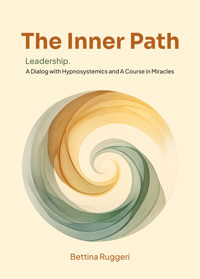
The Inner Path Leadership. A Dialog with Hypnosystemics und A Course in Miracles Leadership does not begin with methods. It begins with meaning. This book is an invitation for people in positions of responsibility to understand their inner perception in a new way – and, through that, to transform their outer impact at a deep level. Grounded in a hypnosystemic stance, inspired by A Course in Miracles, and supported by spiritual clarity, this path shows how leadership becomes effective when it emerges from inner quiet, a renewed way of seeing, and a conscious relationship with reality. A book for all who lead, guide, shape – and wish to find themselves in the process. Professional. Human. Transformative.
Das E-Book können Sie in Legimi-Apps oder einer beliebigen App lesen, die das folgende Format unterstützen:
Seitenzahl: 122
Veröffentlichungsjahr: 2025
Ähnliche
















Table of Contents
Title
Imprint
Introduction
Chapter 1
Chapter 2
Chapter 3
Chapter 4
Chapter 5
Chapter 6
Chapter 7
Chapter 8
Chapter 9
Chapter 10
Chapter 11
Chapter 12
Chapter 13
Chapter 14
Afterword
Gratitude
Bonus
Apendix
References
Bettina Ruggeri
The Inner Path
Leadership.
A Dialog with Hypnosystemic and A Course in Miracles
Imprint
Title: The Inner Path - Leadership. A Dialog with Hypnosystemics und A Course in Miracles
Author: Bettina Ruggeri
Design, Layout & Cover: Bettina Ruggeri
German Editing & Proofreading: Manuel Fernandes
Translation: chatgpt
Published Independently
Bettina Ruggeri
Therese-Giehse-Allee 110
81739 Munich, Germany
[email protected]
Production & Distribution:
tredition GmbH, Heinz-Beusen-Stieg 5, 22926 Ahrensburg, Germany
ISBN: 978-3-9827259-7-0
© 2025 – All rights reserved.
This work is protected by copyright. Any use – including excerpts – as well as reproduction, distribution, or public presentation requires the explicit written permission of the author.
Despite careful review, no liability can be assumed for the contents. The author welcomes notes on errors or suggestions at: [email protected]
This e-book is intended for inspiration and self-inquiry. It does not replace therapeutic or medical support.
Bookdescription
Leadership. A Dialog with Hypnosystemics and A Course in Miracles
Leadership does not begin on the outside, but with the way we see – and interpret – the world.
This book is a quiet, powerful companion for people who lead, guide, or carry responsibility.
It weaves together hypnosystemic thinking, the spiritual clarity of A Course in Miracles,
and insights from systemic organizational development into a new understanding of leadership –
as an inner path of experience.
At its center lies one question:
What meaning do you give to what you experience?
Because that is where change begins – not in behavior, but in the mind.
The Inner Path shows how a shift in meaning can allow a new reality to unfold:
more ease in everyday life,
more clarity in relationships,
more effectiveness in professional action.
This book is not a toolbox, but a space for meeting yourself.
For all who wish to lead themselves –
so they can be different with others.
Dedication
For you – with this book in your hands.May it remind you of what already knows within you.
About the Author
Bettina Ruggeri has been accompanying people and organizations for over 20 years
at the intersection of leadership, development, and inner alignment.
As an Agile Coach (CEC, CTC, Accreditation Coach),
a systemic and hypnosystemic coach, mediator, group dynamics practitioner,
NVC trainer, and organizational consultant,
she combines depth with structure, clarity with resonance,
and inner stance with effectiveness.
Through the Movement Programs she co-created,
she brings new learning together with coaching and mentoring –
a living field of experience between practice, mindset, and cultural change.
Her work is grounded in hypnosystemic principles,
agile experience, Nonviolent Communication,
and a quiet spiritual foundation: A Course in Miracles,
which she has used as an inner compass for three years.
Her consulting draws on
20 years of agile leadership in IT,
ten years of hypnosystemic practice –
and, more recently, her path into hospice and end-of-life support.
Her motivation?
To bring people back into connection.
To make clarity possible.
To strengthen inner leadership.
And to create spaces in which love, joy, and peace
are more than concepts.
Her motto:
“At the end of my life, I want to wear a necklace of moments of joy.”
Introduction
A Personal Beginning
There are books that are planned.
With a proposal, a target-audience analysis, a clear position in the market.
And there are books that simply knock.
Quietly at first. Then more insistently.
Not because you want to say something, but because something wants to be spoken.
This book belongs to the second kind.
I hadn’t intended to write another book about leadership, inner stance, or transformation.
But at some point—somewhere between meetings, coaching sessions, assignments, and moments of inner clarity—
it became clear to me: the real work happens elsewhere.
Not in methods.
Not in roles.
Not in competencies.
But in the space in between:
Between an inner part that clings, and one that trusts.
Between an expectation and a stance.
Between a system that works, and one that is ready to shift.
And at some point, that faint sense became a task.
An inner one.
To write.
Not to explain, but to remember.
What Awaits You – and What Doesn’t
If you are looking for a step-by-step guide to better leadership,
you may find this book too gentle.
If you are expecting a spiritual manifesto, you may find it too pragmatic.
And if you are hoping for a systemic treatise,
you may wonder why forgiveness suddenly appears.
That’s because this book is not a professional manual in the traditional sense.
It is not a textbook, not a guidebook, not a course.
It is a field of resonance.
A conversation.
An invitation to see differently.
Not only your colleagues.
Not only your role.
But above all: yourself.
Because everything begins there.
The Tone – Between Clarity, Depth, and Lightness
This book speaks in a language that is sometimes direct — and sometimes quiet.
It uses case stories not to prove, but to remind.
It asks questions not to test — but to open spaces.
And it uses words like spirit, peace, responsibility, forgiveness —
not because they sound pleasant, but because they become true when you are willing to become quiet inside.
You will find sentences that shake you awake.
And others that hold you.
Both belong here.
The chapters are of different lengths.
Some more concrete, others more poetic.
There are exercises — not to complete, but to explore.
Quotes — not as decoration, but as windows.
And quiet spaces in between — so what has been read can settle.
The Course That Is Not a Course
The invisible thread running through this book is the work A Course in Miracles by Helen Schucman and William Thetford.
Maybe you know it. Maybe not.
Maybe the title puts you off. Maybe it sparks curiosity.
What you should know:
This book is not a commentary on ACIM.
It is not a spiritual awakening book.
But it also cannot be written without honoring the understanding that A Course in Miracles has awakened in me.
Much of what I experience today in organizations, in leadership, in conflict, in transformation processes can be described from a systemic perspective — but understood from a spiritual one.
A Course in Miracles says:
You see only what you think.
The hypnosystemic approach would describe it this way:
You construct your reality — and then act as if it were true.
Both mean the same thing:
Your inner frame of reference creates the world you experience.
And it is precisely there — in this inner space — that leadership begins.
Two Perspectives, One Inner Path
Why this book connects Hypnosystemics and A Course in Miracles
Maybe you’ve wondered why this book brings two seemingly different worlds into alignment:
Hypnosystemics with its clear language about meanings, inner parts, and fields of resonance.
And A Course in Miracles with a quieter, spiritual perspective that speaks of forgiveness, inner choice, and love.
Both worlds appear different at first glance.
But they speak about the same thing.
Only with different language.
And with a different rhythm.
Hypnosystemics sees the human being as a meaning-creating system that does not depict reality, but generates it.
A Course in Miracles says that we see the world as we think it —
and that in every moment we can choose anew from which inner state we look at it.
Both invite us to shift our view.
Away from reaction — toward choice.
Away from judgment — toward responsibility.
Away from separation — toward connection.
Over the years I realized:
When these two perspectives come together, something third emerges.
Something that not only explains — but remembers.
Something that not only analyzes — but heals.
Something that becomes tangible in organizations when people begin to truly see.
This book is not a teaching path for Hypnosystemics.
Nor is it a commentary on A Course in Miracles.
But it would not be honest not to name these sources.
Because they shape my view.
My stance.
And what wants to come into the world through me.
If you are familiar with one and the other feels foreign to you:
Maybe you still allow yourself to engage with it.
Not as a theory.
But as the possibility that your way of seeing has more shaping power than you have believed so far.
This Book is a Path
Truth needs no defense.It only needs presence.
(adapted from A Course in Miracles)
You can read it like a non-fiction book.
You can browse through it like a journal.
Or you can use it as a traveling companion —
again and again, in ever-changing phases.
What you make of it is up to you.
What I offer you is a direction:
away from reaction — toward choice.
Away from inner fragmentation — toward clarity.
Away from guilt — toward leadership that acts from spirit, connection, and presence.
If you are willing to embark on this journey,
you will not only lead differently —
you will see differently.
Because this book does not want to convince you of anything.
It wants to remember.
Something in you — that is already ready to see.
Welcome.
CHAPTER 1
How inner images become outer reality
„I have given everything I seethe meaning it has for me.“
(A Course in Miracles, Lesson 2)




