


Erhalten Sie Zugang zu diesem und mehr als 300000 Büchern ab EUR 5,99 monatlich.
- Herausgeber: The History Press
- Kategorie: Sachliteratur, Reportagen, Biografien
- Sprache: Englisch
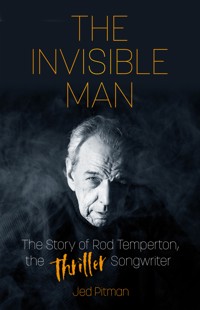
'My favourite moment is when I finish a song, that is the moment I cherish.' – Rod Temperton The Invisible Man tells the remarkable story of how Rod Temperton worked his way up from a Grimsby fish factory to become one of the most successful songwriters of all time. Born in Cleethorpes in 1949, Temperton embarked on a career in music with the funk band Heatwave, for whom he wrote the international hits 'Boogie Nights' and 'Always and Forever', before his songwriting talent caught the attention of Michael Jackson's legendary producer, Quincy Jones. For Jackson's Off the Wall album, Temperton penned both the hit 'Rock with You' and the album's title track. Three years later, he started work on what would become the best-selling album of all time – Michael Jackson's Thriller – writing three songs, including the now legendary title track. And yet despite collaborating with some of music's biggest stars, including Donna Summer and Michael McDonald, Temperton was famously reclusive and seldom gave interviews. Having enjoyed unprecedented access to the great man for his Sony Award-winning radio documentary on Temperton, Jed Pitman presents the fully updated, definitive story of one of music's most talented individuals.
Sie lesen das E-Book in den Legimi-Apps auf:
Seitenzahl: 442
Veröffentlichungsjahr: 2017
Das E-Book (TTS) können Sie hören im Abo „Legimi Premium” in Legimi-Apps auf:
Ähnliche


















Front cover image: Lucy Sewill/Commercial Arts Ltd
First published 2017
This paperback edition first published 2022
The History Press
97 St George’s Place, Cheltenham,
Gloucestershire, GL50 3QB
www.thehistorypress.co.uk
© Jed Pitman, 2017, 2022
The right of Jed Pitman to be identified as the Author of this work has been asserted in accordance with the Copyright, Designs and Patents Act 1988.
All rights reserved. No part of this book may be reprinted or reproduced or utilised in any form or by any electronic, mechanical or other means, now known or hereafter invented, including photocopying and recording, or in any information storage or retrieval system, without the permission in writing from the Publishers.
British Library Cataloguing in Publication Data.
A catalogue record for this book is available from the British Library.
ISBN 978 0 75098 329 7
Typesetting and origination by The History Press
Printed and bound in Great Britain by TJ Books Limited, Padstow, Cornwall.
eBook converted by Geethik Technologies
CONTENTS
Prologue
1 The Star of a Story
2 Too Hot to Handle
3 Boogie Nights
4 Lay It On Me
5 Pack Your Grip, Taking You on a Trip
6 Off the Wall
7 Give Me the Night
8 Thriller
9 Sweet Freedom
10 Groove of Midnight
11 The Invisible Man
12 All About the Heaven
13 Phool 4 the Funk
14 Turn Down the Sound
Rod Temperton Discography – Songs Written by Rod
The Contributors
Afterword
About the Author
PROLOGUE
Growing up in the 1970s with two older brothers, Nick and Nigel, my family home was often filled with music, the sounds and beats emanating from each room of the house, songs by T-Rex, Sweet and other darlings of glam rock and then punk and heavy metal, The Sex Pistols, The Clash and Motörhead.
Then, in 1977, while travelling to Cornwall on holiday in a Hillman Imp driven by my mother, for the first time on the radio I heard a song called ‘Boogie Nights’ by a band named Heatwave. From the moment the sound hit my eardrums, I knew my life had altered. I had never taken in such a hook, such a groove, such melody and I was transfixed and then transformed.
On that holiday, I bought my first ever LP, Too Hot to Handle, the album including ‘Boogie Nights’. Every song matched the one I had first listened to just a couple of weeks before and soon my brothers’ choices at home were being drowned out by the songs of a man called Rod Temperton. I was 11 years old.
I knew nothing about the man, of course. On the back sleeve of the album cover was a photo of each member of the Heatwave band and I was confused as to how a man who looked more like an accountant could have penned such songs. He was the band’s keyboard player too, and I immediately started to wish I had taken up music lessons at school.
The following year, I bought the follow-up Heatwave long player, Central Heating, and then in 1979, while all my friends at school were hooked into Blondie, The Cars and an emerging band called The Jam, I steadfastly stuck to what I liked, Heatwave. I would invite friends over and try to get them to understand what I understood – this was music like no other, complicated harmonies and arrangements, hooks that could catch a shark and choruses that would live in my head, keeping me awake at night.
I knew I had fallen for the groove and it was a love affair that lasts still.
Other songs grabbed my attention none more so than Funkadelic’s ‘One Nation Under a Groove’ and then Michael Jackson’s ‘Don’t Stop ’Til You Get Enough’. Again, on the strength of those singles, I saved up my pocket money, did a few bob-a-jobs and headed to the record store to purchase the LPs.
I remember to this day playing the opening track to the Jackson album Off the Wall. The long version of ‘Don’t Stop’ had me, but up next was a song that almost blew my mind. As it played, I headed over to the record player and watched for a few minutes as the vinyl spun round on the turntable. Song two was titled ‘Rock with You’ and, to my ears, it had a hook that sounded like Heatwave. As the record spun, I could make out in brackets beneath the title of the song the songwriter’s name – R. Temperton. Was this really the same man who had already grabbed me with the hits, ‘Boogie Nights’, ‘Always and Forever’, ‘Too Hot to Handle’ and ‘The Groove Line’? How had that happened?
I took the record off the player to see if this Temperton had written any more tracks on the album. He had – the title track and, for me, the best cut on the LP, ‘Burn this Disco Out’. They all had a similar kind of sound, a relentless rhythm that simply wouldn’t let go. For weeks, I hardly played any other track from Off the Wall, just the three written by R. Temperton. I drove everyone around me quite mad and did some damage to the floorboards in my bedroom due to my appalling dancing.
By now, I had become an avid reader of the magazine Blues & Soul and in one edition there was an interview with this man, Temperton. I ignored the rest of what was within the pages and headed straight to the feature. I sat the rest of the day in shock. Yes, this man was the same who had written those extraordinary Heatwave hits and he had more on the way for a band called Rufus and Chaka Khan and the Brothers Johnson. But what stood out most of all was that he was from England, from Cleethorpes in Lincolnshire, not a million miles from where I was sitting.
By the end of the decade I had started to grow a decent music collection, every bit of money I had was spent in a black music store in Nottingham. All the stuff I had and listened to on the radio was black music from America, yet here I was now reading that my real hero was white and from Cleethorpes. I would bore everybody at school with this newfound knowledge. Nobody cared, nor did anybody believe me when both ‘Rock with You’ and ‘Off the Wall’ became enormous hits for Michael Jackson. At school, people would sing those and I would tell one and all who had written them. The general refrain was ‘bollocks’ – impossible.
From there on, I bought albums based on writers and producers, rarely on artists. Anything to do with George Clinton, Bernard Edwards and Nile Rodgers or Rod Temperton would soon find their way onto my turntable.
Of course, by 1983 everybody at school, all their friends and all the members of their families, some of whom weren’t even alive, had a copy of the Michael Jackson album Thriller, of which the subject of this book also penned the famous title track. Yet, as the years passed by there was rarely anything written about the man and what he had achieved and I just couldn’t work out why. Did he really exist? Was it all a made-up story to hide the real identity of the man behind the hits that also included ‘Stomp!’ by the Brothers Johnson, ‘Give Me the Night’ by George Benson and ‘Razzamatazz’ by Quincy Jones?
By the late 1980s and moving into the early 1990s, Rod seemed to have disappeared completely, bar a couple of new tunes on Quincy’s Jook Joint LP. I had moved onto other obsessions, until one day I entered the World Wide Web for the first time, on dial-up. After spending an age trying to work out what this thing was, I managed to find a search engine and the very first name I put into it was Rod Temperton. What had he been up to for all these years and, most of all, what songs that he had written had I missed out on?
Unbelievably, I could find nothing on him and it wasn’t just because of my own technophobia. There was just nothing there at all. So, I formed a plan to find him and try to sell a documentary on him to the BBC. I can’t have been the only person on the planet to have been so affected by his music over the years and so often I had argued with people that Jackson did not write ‘Thriller’ every time it came on the radio at Halloween, but that it had come from the pen of a man from Cleethorpes.
It took me several years to find Rod, but in 2005, thanks to Neil, a friend of mine who had just set up his own production company, I did. Rod had hit the news online, a tiny article hidden in the music press with a story that he had just sold his back catalogue to London-based Chrysalis Records. Here was my chance. We arranged a meeting in a café in central London, in Pimlico. Apparently, Rod had a house somewhere nearby.
Neil and I arrived early, and then, after half an hour, I saw this figure walk in. It was the man I had seen on the back of that first Heatwave sleeve thirty years before. It was Rod Temperton. My heart rate went into overdrive. I spent the next four and half hours shifting nervously in my seat, sharing endless frothy coffees and Marlboro Red cigarettes (I had read that he was a chain-smoker, loving this particular brand, only to discover that he had recently given up the habit – until now, in any case).
He often looked uneasy, wary of my knowledge of him and my obsession with his work. ‘You know more about me than I do,’ he joked. We chatted through his whole career – ‘I didn’t write that many songs actually, but I was lucky and a lot of them were hits’ – and then, seemingly under duress, he agreed on principle to let me make the documentary – ‘I doubt very much that anyone will be interested, I’m really not that interesting’, he told me, but I politely disagreed.
However, in the hours we had spent together, not one person in the café looked our way, not one person stopped and asked for an autograph. Yet, I thought, everyone supping their drinks and munching on their cakes would know a song written by this great man if it had suddenly been played in there. I’m glad no song was, because I could imagine an embarrassed Rod just getting up and leaving.
Neil and I said our goodbyes and headed to the pub, where for some time I stood silent in disbelief that I had met Rod Temperton, a man who, strangely, sounded a lot like the former Conservative leader, William Hague – well, at least to my ears.
I spent the next year working on what became The Invisible Man – The Rod Temperton Story. It won Neil and I a Sony Award, the proudest night of my life (I sat right behind another hero of mine, Mark Radcliffe). The documentary, made during the evenings after I had finished my day jobs as a TV producer and presenter in Bristol and a columnist for the Daily Telegraph, was a labour of love. In fact, there was no labour in it.
And then it was over and I moved onto other things, making other documentaries on the album Thriller, as well as one on Ian Dury and the Blockheads. Even while making these, the name Rod Temperton would crop up from time to time. Blockhead Chaz Jankel (who shared a song credit on a Quincy Jones album with ‘Ai No Corrida’) and I spent time in a Muswell Hill pub, drinking Guinness and talking about Rod’s music as well as Chaz’s own ability to come up with something quite brilliant.
I waited to hear some new songs from Rod, songs that rarely materialised. There was one, ‘Family Reunion’, performed by George Benson, and I had read online that Mica Paris was working with Rod at the start of this decade. The truth of the matter was, however, that he never really needed to work again, the one song ‘Thriller’ making him a small fortune every time 31 October arrived and the tune would be played on the radio and at parties all across the globe.
Then, on 5 October 2016, after arriving to start a new life in Mexico, my phone started to ring requesting interviews about Rod. His death had been announced. I appeared on radio stations in the UK, Ireland, the USA and Australia. His impact on the music industry was global.
You can still hear the BBC documentary on Rod on YouTube, but the one thing lacking was a book on the man and his music. I hope that this goes some way to filling that void and I would like to thank all the contributors who spent time with me, Neil Cowling and Mark Goodier, who also did some of the interviews from where many of the quotes in this book were sourced.
To complete this mission, I also needed some new interviews, from those who I had never had time to speak to during the making of the BBC documentary. I emailed many others who had worked with Rod Temperton over the years and each one came back to me quickly, enthused about this project and answering my requests for interviews with vigour, using phrases like, ‘I would be honoured to be involved’.
Suddenly, I found myself on the phone speaking to the likes of Herbie Hancock (I was shaking while making the call), Bob James and Derek Bramble, former Heatwave player and producer of David Bowie’s album, Tonight, released in the mid 1980s. In the email reply, Derek described Rod as a friend and a mentor and this is something that came across in everybody I spoke to. Rod Temperton not only provided the world with some of the best songs I have ever heard but did so by seemingly making friends with everybody he worked with. He gave the likes of Michael Jackson, George Benson, Patti Austin and the Brothers Johnson some of their biggest hits. Rod was a genius, a man who would write and arrange songs in his head, as you will discover. Yet, he remained incredibly humble and private, his death only being announced after his funeral.
This is the remarkable story of a man who changed the lives of so many and still will, every time one of his songs is played on the radio or in a shop or, in the case of AeroMexico, every time you land after a long-haul flight when, rather than the usual elevator music, passengers are treated to ‘Rock with You’. The story is told largely through the words of Rod and the many talented musicians he worked with, all of whom loved their time spent with him.
Together, we will discover how a lad from Cleethorpes ended up working with, and partly creating, the biggest star in the world of entertainment, how he worked with the best known movie director of the time, Steven Spielberg, and how, through it all, he remained humble and invisible.
When the first edition of this book was released, I was overcome with some of the feedback I received. I was interviewed about the book for publications in the UK, USA and Australia. I soon realised that I was not the only person who had been attracted to the Rod Temperton sound.
I was asked to help with a screenplay on his life by a company in Japan and to write something for the director of the Thriller video, John Landis. Then there was a call from a London production company which was planning to add to their excellent Classic Albums series. Here I was, giving guidance to them on my knowledge of the making of George Benson’s Give Me the Night. You couldn’t make this stuff up. I sometimes really did have to pinch myself, one time bruising my arm so badly I ran out of frozen peas.
I also repeatedly bored people I met with my recollections. I was able to clear a couple of parties.
Then, in 2020, I read a story online of a new album coming out by a Canadian singer called Nikki Yanofsky. The album, to be titled Black Sheep, was to contain two new Rod Temperton songs. I could not quite believe what I was reading, but it turned out to be true. I was always on the lookout for anything from Rod, hoping that somewhere, as famously with Prince, Rod had a vault which had been opened and new songs would come pouring out of it.
In June 2020, a time when we were all locked indoors and rarely saw any sunlight, the album was released. The title had changed to Turn Down the Sound and, sure enough, Rod had co-written two of the songs including, as was often the case in his career, the title track. I became quite happy with lockdown because I was able to listen to the tracks over and over without the need to walk my dogs or be sociable.
YouTube has helped increase the interest in Rod, too. There is a Rod Temperton channel and you can now find many remixes of some classics. The Reflex version of Michael Jackson’s ‘Burn this Disco Out’ has indeed burned out several pairs of my headphones. There are many remixed versions of ‘Off the Wall’, ‘Rock with You’ and ‘Give me the Night’, too. Whether Rod would have approved of these, I don’t know, but as a fan of his, listening to new renditions of his songs has been very good to my earholes.
Meanwhile, my home page of Spotify includes playlists of songwriters, one of which is of songs penned by Rod, although, somewhat disappointingly, many of the tunes chosen are nothing more than samples. Still, even towards the end of 2022, more than six years since his death, it is clear that young artists have discovered Rod’s songs even though they may not have known that before finding out who to pay their sampling fees to. I was, at one point, approached by an independent production company that wanted an in to Spotify, and they approached me about creating a podcast for the Swedish audio streaming service. Alas, an issue with copyright meant this never went any further.
There has also been some sadness in the years that have passed since I completed the book, most notably with the death of the great engineer Bruce Swedien. He was incredibly nice to me when I interviewed him and his insights into his relationship with Rod stay with me forever.
I would like to thank him and everybody who agreed to take part, either directly for this project or for the previously broadcast BBC documentary. I hope you enjoy reading it as much as I did compiling it.
1
THE STAR OF A STORY
The future music business was to alter memorably after Les and Ida Temperton gave birth to a boy, named Rodney Lynn, on 9 October 1949. And the town that created this lad who was to become a musical genius, one who would write some of the world’s most famous songs? Not Hollywood, not LA, not New York, not even London, but Cleethorpes on the Lincolnshire coastline.
It was not long before Rod was introduced to the thing that would make him his fortune, if not the fame that should have gone with it – privacy was something he sought for much of his life, in spite of his enormous success. As Rod himself remembered:
My father wasn’t the kind of person who would read me a story before I went off to sleep so, even as a baby or when I was really young, one year old or something, he used to put a transistor radio into my crib, right on the pillow, and I would go to sleep listening to Radio Luxembourg. Remember that? 208 meters. And so I would listen all night long while I was sleeping to this, hearing tunes like ‘Love and marriage goes together like a horse and carriage’ by Doris Day and all this kind of stuff. And I think somehow that had an influence on me because my parents weren’t really musical. I mean my father had a good musical ear and played a bit of accordion at Christmas. My mother was not musical at all. So I think that having music by my ears while I was sleeping played a big part of my getting to love music. Well, I can’t think of anything else, anyway.
Rod’s first school was Reynolds Street in Cleethorpes, and it was there he first began to show off his talents:
When I was at junior school, we had a really good music teacher, a lady called Mary Boulders. She did a lot of choral things which I liked. So, she spoke to my parents about having singing lessons and I said that I wanted to do that. So, I worked with her for a while and she used to enter me into local singing competitions and I always came second, I don’t know why.
I really enjoyed that time. Mary was a really good teacher. I had started to play my first musical instrument, the drums. I used to skive off school occasionally and while dad was at work, I would get in the living room with my snare drum and my symbol, and play along to the test card on the TV. They put that up, with some girl, a doll and a chalk board because there were no TV programmes on until five o’clock. So I used to play along to the test card, which had all kinds of music which was played continuously.
But then, when I was 11, I went to boarding school and I lost that side of it but still retained some of it. They used to want me to sing in the choir at boarding school. And we were very lucky to have a great music teacher there. You see, I never wanted to take lessons. I wanted to be out playing with the lads. So they didn’t push me and neither did my parents, to do piano lessons or anything like that, but the piano teacher did used to give some additional lessons after school and then directly afterwards he would sit and take tea in one of the classrooms. And I used to always go and sit with him afterwards and just talk about music. He was desperate for me to take piano lessons but I said that I didn’t want to do that.
The boarding school in question was De Aston in Market Rasen and the schoolteacher he talked about was Ted Gledhill, who remembers Rod well:
It would have been in the early 1960s when I came across Rod for the very first time as a teenager. There would have been around 350 pupils at school in those days, all male. He was an average kind of boy but very keen on music. The school really excelled at sport particularly athletics, rugby and cricket but we also had active drama and music clubs – chiefly classical. I think Rod came into prominence when, during the annual music competition we had, I introduced a pop section. This was unheard of at the time because pop music at a grammar school was not encouraged. Rod formed a group for the competition and he was the drummer in it. The band did very well and that seemed to give Rod an outlet for what had to be an innate talent.
He was a good drummer but we had no formal drumming lessons at the school but he also had elementary piano lessons from a visiting piano teacher.
Rod added:
Ted Gledhill was great because we only used to have one music lesson a week but he used to come in and sit and do things like play a record and then we would all have to talk about it which was really exciting for me. It wasn’t just a question of ‘Oh let’s sing some hymns’, or something. Instead, Ted used to come in with things like West Side Story and Dave Brubeck and stuff like that. And that made it a lot of fun. And you know, my interest in music just grew and grew. I started to form this band and that band but I never thought I was a good enough drummer to be in them.
Ted Gledhill:
I’ve heard that Rod has said that hearing West Side Story in one of my lessons had a major impact on him. It thrilled him to bits because he had never heard anything like that before. Little did we know at the time how it would influence him but it’s a soundtrack that embodies melodies, rhythm and all sorts of harmonies, all things which Rod excelled at later on. I think, too, that the Beatles had a tremendous influence on Rod. They were the band that everybody talked about at school.
Life was moving along nicely for Rod in the early 1960s. Pop music was livening up, thanks to the Beatles, in his teenage years. The young man was happy at school. Ted Gledhill:
I think boarding life suited him. One of the great advantages of boarding school is that it teaches a bit of independence but also the need to work in a team. As the songwriter Rod became he mastered both of those things, writing songs alone but then working alongside stars like Quincy Jones and the engineers and musicians. I presume some of the early experiences he had at school helped him. It probably kept him the very modest man he became, too. He once sent me an LP of E.T. and on the cover you see there is a credit to Quincy Jones and to John Williams but you have to look in the small print inside where his name is relegated as a composer of a tune called ‘Someone in the Dark’ which was one of the tunes featured in the film. Rod also sent me a copy of Quincy’s Back on the Block and once again it is Quincy who gets all the credit but you mustn’t forget that Rod was the assistant producer, arranger and composer on that so you can see that a lot of his light has been hidden under a bushel. That’s boarding school for you!
The one thing I do remember from those very early days was that he had a wonderful sense of harmony in addition to an innate sense of rhythm and I’m sure that helped him tremendously because things start from a base and you work upwards, something he was able to do by adding layer upon layer of melody and counterpoint. Believe me, none of what he did was easy.
As for Rod, he remembers the first time he ever attempted songwriting while at school:
We were entered for a school music competition and there were six categories and one of them was original song. Well we won, purely for the fact that nobody else entered that category so there was three of us who wrote this song and … so that was kind of the beginning of writing I suppose.
By the time Rod left school in 1969, pop music had gathered a huge amount of momentum. Thanks to bands like the Beatles, the Rolling Stones, The Who, The Kinks and so on, many kids coming out of full-time education aspired to be in a group, trying to be the next big thing. Rod was no different from many others. Rod:
When I left school, I wanted to be in a local band and they had a drummer who was a friend of mine, who was really good. And they kind of said, ‘Well, we want you to be in the band’, and I said, ‘Well, nobody can afford to have two drummers, so what am I going to do?’
And they said, ‘Well, we’ve got an old Farfisa organ, why don’t you play that?’
I said, ‘Well, how do you play it? What do you do?’ It was the instrument used by Richard Wright on Pink Floyd’s early albums such as The Piper at the Gates of Dawn and Ummugumma.
I remember one guy turning around to me and saying, ‘Well, three fingers make a chord’.
So I said, ‘Oh okay’.
And while they would sit with the sheet music to ‘Summertime’ or whatever it was we were learning, I would listen to them and then just figure it all out. And it was the luckiest thing that ever happened to me because I think about eight months after that I was a professional playing an organ and arranging for a whole band. So, it was obviously meant to be.
The bands I started playing in in England were into progressive rock, bands like Yes and King Crimson, that kind of thing. It was all going OK with one of the bands I was in but I always felt a little lost if I’m honest. We would play only four songs in our session, each song lasting for about thirty minutes with fifteen key changes, time signatures, everything. Then the whole thing collapsed very quickly and I thought that was that.
Instead, Rod looked to be heading into the world of computers:
Yes, I had a proper job when I left school. Before then, during the summer holidays I had been a lifeguard at a holiday camp and I used to make great money doing that. I used to work all hours under the sun earning twenty-five pounds a week. When I started to work it was five pounds a week and I thought, ‘Blimey, how am I going to make do off this?’
So, when I finished school, during the first summer holidays after leaving, I had to have an idea of what I was going to do but the problem was that I just didn’t have a clue. I always remember my dad saying to me, ‘Get a job in computers, that’s the future’. He was a visionary it seems. So, we found a job in the paper for a company called Ross Group who did the frozen fish and everything. The job was in their head office for a trainee computer operator. So, I went to Grimsby and got the job. I worked there for a year in the office and then I got the chance to go professional as a musician. I just jumped at the opportunity. That’s what I really wanted to do, to try it and see if I could do it.
It’s funny how things stick to you in life. Years later, I remember when Michael Jackson toured England, and either the Daily Mirror or the Sun, I don’t remember which one, wanted to do a story on him every day he was in the country. And so they called me in LA and asked me if I would do an interview. I said no, I don’t really do interviews. So unbeknownst to me, they sent reporters up to my home town to find out whatever they could, and I think they found my aunty and she told them a few things and somebody sent me the story some weeks later after it had all been out and it was unbelievable. You know, bearing in mind what I said about working for Ross Group, they came up with what was a great headline. I opened the newspaper and there was a picture of me on one side and a picture of Michael Jackson on the other side and it said, ‘Grimsby Fish Filleter Reels in Fortune for Wacko Jacko’. Brilliant. But sadly wrong – I never filleted fish.
2
TOO HOT TO HANDLE
At the start of the 1970s – perhaps the greatest decade in terms of popular music through prog rock, glam rock, punk and disco, to name just four life-altering genres – Rod Temperton was a young man who had shown some musical talent from an even younger age but appeared to be heading into the new world of computers instead, in the north of England. By the end of it, he had written a number of international hits, most notably for a man who was to become one of the biggest stars in the world, Michael Jackson.
Music was, of course, still running through him and he became part of several bands in Hull including one called Hammer. The whole area – Hull, Grimsby and Cleethorpes – was to remain very close to the heart of Rod. As Simon Blow, a friend of Rod’s and former sports editor of the Grimsby Telegraph, says:
The first time I met Rod was at a performance by Heatwave at The Dunes, a small venue in Mablethorpe. The band around that time also played live at the Nunsthorpe Tavern in Grimsby. Rod once turned up at the Fisherman’s Pub in Sea View Street, Cleethorpes, to take in some live music.
Rod:
Cleethorpes has always been quite in front in music. I remember going to my first pop festival at the Boating Lake when they had the Animals and people like that, and that was before Woodstock. The Jazz Club in Grimsby always used to have groups before they were famous and I think Cleethorpes is always a groovy place compared to others.
A move to Germany in the early 1970s doesn’t sound like the start of a great love affair with music but, as so often happens in life, Rod just happened to be in the right place at the right time. Rod:
I was broke, stony broke, and I thought to myself that I had to get a job somewhere so I answered any job advertisements that I could find in the NME or Melody Maker. When I got to Germany, I joined a dance band called Sundown Carousel with Bernd Springer – I was the only one of us who spoke any English – and he and I had to play six hours a night on stage and it was all simple pop music, even though most of the things I had never heard of in my life. I remember getting there at one o’clock in the afternoon and they said, ‘Well you have to play tonight, you know … we just lost the organ player’.
So I said, ‘Okay.’
So I remember just getting all this material and learning the first two or three notes, you know, how it started out and thinking to myself, well I’m just going to have to wing it because there’s no way to learn that stuff in that amount of time, in a few hours. But because of the complexity of the music I had been playing before, the prog rock stuff with all the time signatures and so on, it was kind of quite easy, so I got along pretty good with it. I didn’t much like the long shows we did – that was awful – but it was an experience and a good one at that. I did this for a couple of years purely to make some money and to be able to start to build a writing career because I already knew that that was what I wanted to do.
For most of us mere mortals doing such a thing would take bravery and a lot of skill but, typical of the man, Rod knew even back then that a career as a player was an unlikely one for him:
By the time I got to Germany, I’d kind of decided that I wasn’t going to be a great musician, a great player. I was okay on the Hammond organ I suppose but you know, I always wanted to be great. I used to sit at home in my flat in Worms in Germany, a place about 40 miles outside of Frankfurt, and really try to learn these scales and you know, keep going like that. But, and it is really as simple as this, every time I used to sit down I was so bored doing scales that by the time I’d finished an octave my fingers had run off into some melody. And I basically remember to the day when I just got up one morning and I sat there and I was messing about on the keyboard and I said to myself, ‘You ain’t ever going to be a musician player. You can forget this.’ But obviously I had some leaning towards writing melody. And I don’t actually think I ever looked back from that point because then it became the main goal, to create music rather than play it. And even to the point of time I joined Heatwave I basically told them, I said, ‘I’m happy to do this and you know, I’d love to write for the band, but if we make it I’m going to pack up playing because all I want to do is write.’ It was that clear in my mind.
I think it was very lucky, very lucky. I mean, I think people spend their whole lives trying to find out who they are and what they want to do with their lives and I guess I was about 21 or something and it just dawned on me that that was the way to go. And I never looked back. Of course, I still needed to find a band to write songs for. And doing that was very fortunate, too.
Heatwave were an emerging covers band in the early 1970s, fronted by the enigmatic Johnnie Wilder Jnr:
We were a band that was attempting various styles of music, being that we were working in Europe and all. But mostly we played a variety of US American soul music as it was called back then – R&B stuff it would be called today – a lot of dance material. You know, up-tempo and mellow type songs. We were really an all-round entertaining group. We put an ad in a music paper called Melody Maker, trying to find a keyboard player. A man called Rod Temperton was one of those who answered the ad, simple as that really.
Rod Temperton:
It was just one of those things. I was looking for a band as the one I was with was driving me crazy and they were looking for a keyboard player. The funny thing was that I was living in a flat in a town called Worms and this band just happened to be in Mannheim just half an hour or so away from me. I had no idea. I sent my application to a box number and I had no idea where it was. I sent the letter – it went to London – and they sent it back to Germany where the guys were. There was no clue in the advert in the Melody Maker or anything like that. It just said, ‘Soul Band Needs Keyboard Player’. The next thing that happened was that I had a visit from the main man of the band, Johnnie Wilder.
Johnnie Wilder:
Rod was the first British guy that I had ever met personally. He spoke kind of funny but he had a good sense of humour and he was a very friendly guy. He was working with a German band at the time and after I learned more about him upon meeting him, he told me that he had worked with a rock band in England and different types of groups. He had an impressive enough resume and so we hired him.
I was just looking for a keyboard player but Rod had other advantages, too. One, he spoke English, that helped, and then after meeting him and seeing him play I kind of determined he was good enough, a good enough player and an entertainer. And I just knew he would fit into the group.
Rod:
At the time I joined Heatwave they were a covers band. They used to play Stevie Wonder, Earth, Wind & Fire, early stuff by Parliament/Funkadelic, James Brown, stuff like that. I think the reason they took me on was because, for, well, two reasons. One that I wanted to be a writer and two, I had a few contacts in England. They wanted a chance to get out of Germany. So, I joined them. I didn’t know anything about black music or writing black music at the time I joined them. And they played me all the things that were hot in America at the time, the very early sounds of Kool and the Gang and Ohio Players and stuff like that. And I used to just sit and listen to all this stuff and try to analyse it a bit and I used to love the way they put the rhythm sections together, I mean, it was just amazing. I just didn’t know anything about R&B or soul music so I just had to turn my hand to it quite quickly. And so I kind of figured out how to do that and then attempted to write something for the band in that musical style. I think ‘Super Soul Sister’ was actually the first song I wrote for them that we tried on stage and that was okay. But then ‘Ain’t No Half Steppin’’ really worked as a stage performance. People used to love it in the clubs. And then I wrote a ballad called ‘Always and Forever’. And ‘Always and Forever’ we got to play on the stage for maybe a year and a half before we ever made a demo for a record. By that time, you know, it had become a big song in our repertoire so, you know, things had started to work out.
Johnnie:
After getting to know him much better I would hear and become very interested in the original songs he had on these small little reel-to-reel tapes he had in his apartment. He had this nice big one-bedroom apartment and his tape machine and keyboard. That’s what I remember about the room. And he would play the tapes of his original songs and I was very interested because we weren’t doing a lot of originals then. We were doing a lot of covers, and when he played the originals I was really interested.
To me, one of those first songs I remember hearing was ‘Always and Forever’. It was kind of a rock tune, a ballad rock tune. That was one of the first ones, because I was a bit of a balladeer and I liked the slow material that he had. Some of the early songs we tried playing we eventually made a demo of. I don’t remember the names of the other songs that he had but I do recall that he had jazz pieces, rock pieces; he had a variety of songs. There was definitely something there, something very good indeed that made me prick up my ears.
Alan Kirk was a member of a band called Jimmy James and the Vagabonds. He first met Rod in 1974 on a Soul Extravaganza tour:
Heatwave were third on the bill and we were on second. They used to blow everybody off every single night, they were so good. Some of the rhythms they used were fantastic. Everybody just fell off their seats trying to emulate them. Rod was a very down-to-earth guy and a brilliant songwriter. He was unusual. He reminded me of Doctor Who, the Tom Baker one, with his long trench coat, scarf and everything. I remember he had odd eating habits. I ordered a meal on the Isle of Man ferry and Rod couldn’t afford one. I couldn’t eat and so Rod took the cabbage and the ice cream I had. He mixed it all together and ate it together. I remember, too, him having to carry all of the gear for the band down the gangplank, his old organ which he called Betsy. It was all worn away and, on stage, he would have it propped up with beermats. He later had Betsy stolen. We played on that tour in pavilions, working men’s clubs, nightclubs, anywhere that paid a buck.
On stage, Rod always just had his head down over the keyboards, hoping that his organ didn’t fall over because of all the beermats underneath, holding it up. He had his head down and just got into it, into his rhythms. He was a very rhythmical keyboard player, not so much a soloist but a guy who could play really hot rhythms. And the rest of the band just got on with it, falling in behind him. I don’t think Rod was ever that comfortable on stage. He was just a normal guy.
Andrew Platts, also a member of the Vagabonds:
Rod always seemed to be absolutely skint, so much so that he couldn’t afford the ferry from the Isle of Man back to the mainland. We had a mini bus, like a crew bus for our band, and we actually had to put Rod on the floor once and cover him in his big, grey coat, hide him and smuggle him back to the mainland so he could get home. He just didn’t have the price of a ticket at that time.
Alan Kirk:
His songs had a very progressive rock feel initially. He was in rock bands to start with, like Hammer, which played in clubs all around Hull, and then he sorted out this methodical approach to the usual standard soul things they were turning out at that time. A worked-out bass line, rhythmic bass line, catchy bass line, always a catchy title, and then build your track up from the bass line. That was his way of working, a good formula. It certainly worked well for him. He was very methodical, sitting there with a tracksuit on, stopwatch around his neck. No longer than twenty seconds for the intro, straight into the verse. If it gets a little bit boring then straight into the chorus, bridge and things.
Johnnie:
With these songs in our repertoire what we needed next was to get signed to a label to try to put them out. They worked really well for us as a live band but we now needed a bigger outlet for them. After Rod joined the band we worked a lot in the European market like Germany and Italy, all the European countries on that side of the water and Rod was then very instrumental in introducing us to a British agent and a manager who we eventually got. We started working in England more after we got a manager there. We chopped the tunes that Rod had written on our first demo. There were quite a few rejections from what we considered major labels at the time. And then we ran into Dick Leahy at GTO.
Born in London in 1937, Dick Leahy first came to prominence in the music business in the late 1960s as A&R manager of Phillips Records who included Dusty Springfield on their roster. Dick then worked as managing director of Bell Records and they produced a string of UK hit singles from the likes of David Cassidy, Gary Glitter, Showaddywaddy and Barry Blue, the latter soon to be another vital cog in the Rod Temperton machine. During the latter part of the 1970s, Dick moved to GTO Records.
Rod remembers:
The three demos we cut for Dick were ‘Super Soul Sister’, ‘Always and Forever’ and a song called ‘Strictly Private Property’ that was a real pop song and everybody hated it. Dick was amazing and must have realised that there was some talent in the band so he snapped us up and off we went. GTO was a great little independent label to be with and they served us really well. I guess hooking up with Dick was the first moment that everything started to move in the right direction.
Johnnie:
We were performing one night and Dick would come out and see us and after a few visits from his whole crew at his office we started to talk some more. It became a marriage. We made the demo up in Hull. We used to live in Hull when we moved to England and we did the demo in one of his friend’s studios. We then shopped the demos around when we went down to London. And we went to publishers and record companies down there. Dick got us the most entrances into places. I mean, he would come out to see us play. Then on, when we came to London and play again, we were surprised by most of his staff, his office staff, coming down to hear us and then, after the third time, it was on, it was he and our manager having conversations from then on.
Alan Kirk:
I recall Heatwave doing some original demos at Fairview Studios in Hull. We were fascinated because we knew they were going to be a success, so a lot of my band went to the studio to watch them put the demos together. We knew that we were watching a hit band being discovered for real.
So, the deal was signed but it was hardly all plain sailing from that point. Heatwave, as well as performing night after night, now had a record to produce and time was against them. Rod:
Before we did original material Heatwave was a very popular band in the clubs and so we would play seven nights a week, all the time. We never had any nights off and we’d be on stage three or four hours a night, all over Europe. It was just a great experience to get your chops up. Young kids these days don’t have the opportunity we had. It’s so hard for singers today. You know, the first time that anybody hears them it’s on some demo. They don’t get mic technique, they don’t understand how to work the audience and so it’s very difficult for them. It’s a shame that the discothèques took over from the live music, you know.
It was very different for us. We used to play all the time and then I would write after the gigs were finished. There was a club in Zurich in Switzerland called the Blackout, right by the airport and we would have a residency there three or four times a year, playing there for two weeks at a time. We knew the manager very well. We would finish our set at two o’clock in the morning and at that time everybody would leave and they would lock me in the club. There was a little room downstairs with an upright piano and I’d write there until the cleaner came to unlock the door and let me out at seven in the morning, often just as the sun was rising. I’d go over to the airport to have a bit of breakfast, go and get some sleep in the hotel and be back at two in the afternoon for rehearsal. We rehearsed every day when we were in places like that and we’d do that from two until about six, go and eat and then come back and play the gig. I did ridiculous hours but, boy, as it turned out, it was it worth it.
3
BOOGIE NIGHTS
Heatwave was a band begun by Johnnie Wilder Jnr while he was based as an American serviceman in West Germany, a country he remained in after his release from duty. The band was an unusual one in that its members were made up of musicians from many different walks of life. Johnnie was from Dayton, Ohio, a state that also produced the Ohio Players, Bootsy Collins and Roger Troutman, amongst many others. His remarkable vocal range allowed Rod the opportunity to try all sorts of different sounds in his writing. Johnnie also called upon his brother, Keith, to share lead vocals with him. The rest of the group sounded as if they belonged to the United Nations: on bass was Mario Mantese from Spain, Czechoslovak Ernest ‘Bilbo’ Berger was the drummer, while the guitars were provided by Jamaican Eric Johns and Brit Roy Carter. Rod, as we know, provided the keyboards.
Rod:




