


Erhalten Sie Zugang zu diesem und mehr als 300000 Büchern ab EUR 5,99 monatlich.
- Herausgeber: The Lilliput Press
- Kategorie: Sachliteratur, Reportagen, Biografien
- Sprache: Englisch
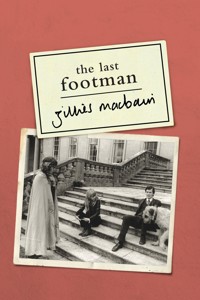
In the summer of 1964, twenty-one-year-old Gillies Macbain arrives in Dublin off the ferry from England with only his bicycle, a suitcase and a tent to his name. Young, handsome and charismatic, he begins work as a footman in one of the houses of the dying aristocracy. Thus begins his foray into the upper echelons of Irish society. The Last Footman is an intriguing narrative which describes a fading part of Irish society that Macbain subverts with wry humour. Macbain finds himself in a precarious niche: the borderland between upstairs and downstairs, and later on the borderland proper between Northern Ireland and the south. Here, he rubs shoulders with a cast of characters from the bohemian socialites to the chancer Sketchly and the hippies with their dewy-eyed morals. Among these is an encounter with Mick Jagger and Marianne Faithfull that epitomises Macbain's straddling of glamourous and workaday lifestyles. Macbain's memoirs run the gamut of Irish social classes, from his friendship with County Monaghan small farmers and tenants, to working with a dubious cast of actors and producers on a film set at Castle Leslie, to eventually marrying into the circle of the 'idle rich'. An irresistible story told by a charming storyteller, this memoir sheds light on an era of Irish domestic industry, and Irish social history, that has all but been forgotten.
Sie lesen das E-Book in den Legimi-Apps auf:
Seitenzahl: 458
Veröffentlichungsjahr: 2019
Das E-Book (TTS) können Sie hören im Abo „Legimi Premium” in Legimi-Apps auf:
Ähnliche



















THE LILLIPUT PRESS
DUBLIN
in memory of
miss synnott’s domestic employment agency – middle abbey street
CHAPTER ONE 1963–4
dublin
the bus that brought me from the mailboat pier in dun laoghaire into dublin was dark green, a double decker with an open platform at the back. i sat in the rearmost, sideways facing seats. the bus conductor rode standing, on the platform. at every stop he greeted each female passenger as they got on, with a kiss – nothing disrespectful, just a light kiss on the cheek. i was mesmerized. english bus conductors did not treat their passengers so. was he drunk? no. the women seemed to expect and cautiously accept it. we travelled a long meandering route through south dublin suburbs still sleeping in the watery winter sunshine. were we lost? no. did we hurry? not at all. at baker’s corner a dog lay asleep in the middle of the road.
this really happened to me on my first day in dublin. what would be the point of making it up? it happened, but what did it mean? i do not know. perhaps that is why i remember, when so much else is forgotten. it is a loose end in a tale of loose ends – in fact a loose end in a life of loose ends.
my first sight of ireland, that morning, had been of the tall painted houses of dun laoghaire, through a slight sea mist. i had come to dublin with no money, or to be more precise, with thirty shillings, most of which had gone on the single fare for the boat. before i could afford to travel on any further, or even eat, i had to make my way to the city centre. there in grafton street, on the corner of anne street, i found my way to the premises of louis wine, the jeweller. there on the glass counter above the antique rings and watches i laid my only valuables, a pair of gold cufflinks bearing my father’s initials. louis wine himself looked closely at this offering with an expression of sorrowful disdain, which at the time i found wholly convincing. he announced that he would give me four pounds.
i was twenty years old, but a very immature twenty. too inexperienced to haggle, i was quickly shown out of the door and on to the pavement again, with four pounds in my pocket.
dublin these days has become a sophisticated city, cosmopolitan and full of strangers. then it was an easy-going, rather run-down place with horses in the streets and the sounds of the gulls from the rooftops. they did things differently then. there were irish country barmen in the pubs, and irish country girls waitressing in the cafés. for me the past is not the foreign country – it is the present which is the alien place. the past is where i am from, the place whose ways and language i understand. the homeland i would long to return to.
i walked on down grafton street, hoping to find a bus to bray, to take me out of dublin and put me on to the road south.
nineteen sixty-three was one of the most severe winters of the twentieth century. two days earlier, in england, hitch-hiking in the dark over a pass in the pennine hills, i had travelled between banks of deep snow piled up higher than the cars. here, in ireland, as i hitch-hiked slowly southwards along the foot of the wicklow mountains, there was still snow, but the main roads were clear, and there were soon only thin drifts here and there in the shadow of the hedgerows.
as the day wore on, i made my way to wexford town, and then to waterford, obliged to go by whatever routes the drivers would offer me. finally, nearing dusk, i got down from my last lift, a gravel lorry, beside a pub familiarly called ‘the cats’ on the southern slopes of the knockmealdown mountains. my objective was the monastery of mount melleray.
i had read in a pre-war travel guide,in search of ireland, that the cistercian monks of mount melleray offered hospitality in the mediaeval tradition to anyone who knocked on their door. from ‘the cats’ bar i took the road up the hill in the gathering darkness, not knowing whether this tradition would still hold good thirty years after the book had been published.
at a cottage beside the road i saw a woman with a spade going in from her vegetable garden, and called out to ask her if i was going the right way.
‘the gate is up the road on the left,’ she said, ‘but hurry, the monks will be gone to bed.’
i hurried. i was sweating now, carrying a large suitcase, and clueless as to what i would do if refused admittance. i came to a wide stone gateway, went up a long avenue, and sensed rather than saw ranges of buildings in the wintery darkness. at a small gothic doorway was a single light, and a bell. now there was silence except for my own breathing. after a while, and from somewhere within, came the sound of shuffling feet. an old man in a brown habit opened the door and i began to explain that i needed somewhere to stay the night.
‘would that be one night?’ he asked, cutting short my story.
‘maybe more,’ i said.
he turned and gestured me to follow him down the stone passage. no other words passed between us. he put on a light in what seemed to be a sitting room or small waiting room, and asked me had i eaten. learning that i had not, he left me there to sit beside the dying embers of a small turf fire. i was twenty, tallish and lean, and suddenly, after two days and two nights of constant travelling, i was aware of deep silence. only now did it come home to me that i was going to leave england, for good. i was alone in the world.
after what seemed like ten or fifteen minutes the old monk returned. he put down at the table a tray, with poached eggs on toast, home-made brown bread, home-churned butter, home-made strawberry jam, and a steaming pot of tea. he closed the door silently behind him. i sat down in front of this feast, put my head in my hands, and wept.
mount melleray, county waterford
i awoke in the morning in a small bare room, not unlike the study at the boarding school that i had left three years before, except that this room was centrally heated. i had no idea of the time but felt that i had been allowed to sleep on. the gothic window opened out on to an enormous walled vegetable garden, and in the garden below me a man – a labourer, not a monk – was ploughing with two horses: a brown and a grey. beyond the garden wall were tall pines, and beyond that again to the south were low hills in a slight morning mist where i sensed lay the sea.
a soft knock came on the door and a voice summoned me to breakfast, informing me that if i wanted any i would have to come now. this was my introduction to brother declan. meeting him was a mild form of culture shock. a monk does not ‘meet you halfway.’ he remains embedded in an order and a routine that has been several hundred years in the making. he stays put. as a guest you enter his world, and if you are dressed as i was, your sports jacket and loud yellow tie suddenly feel ridiculous and out of place.
the cistercians were a silent order, but there were rules that allowed essential conversation to each monk, particularly in whatever was his particular place of work – the kitchen, the garden, the workshop, the farm or the bakery. of all the things that impressed me in those first few days, two things stood out – firstly that brother declan, though a vegetarian himself, could nevertheless cook meat and fish for the visitors to perfection.
the second thing was that no one asked me why i was there, or how long i intended to stay. not being at that time a catholic, i had somehow expected to be subjected to a little subtle or not so subtle catholic propaganda – but not a word. the cistercian hospitality appeared to be unconditional. this drew me in to the community’s way of life far more effectively than any attempt at persuasion could ever have done. by lunchtime i had decided that the way to acknowledge this kindness was not to behave as a bed and breakfast tourist, but to partake fully in the routine of the monks.
to the visitors, work in the garden or attendance at the services in the abbey church was optional, and by the time the visitors’ breakfast was served, the monks would have several hours of prayer and plainsong already behind them. my fellow guests were few in number, but included a couple of recovering alcoholics and a yugoslavian priest on retreat. the presence of this priest quickly taught me the differences between a priest and a monk, as this priest was a nervous, driven, and egotistical man, totally lacking the serenity of those who leave the world completely behind them.
so i began to follow the routine of the monastery, attending the services that punctuated the day just as they had done since the middle ages, and borrowing a brown habit to cover my own clothes while working in the garden. (the brothers wore brown habits, whereas the ordained priests, addressed as ‘father’, wore black and white.) father luke, the guestmaster, met me thus attired at the door to the garden and said teasingly –
‘they’d be starting to get worried at home, if they could see you now!’
if my first impression of the monastery had been of the deep silence, it was nothing as compared to the depth of silence of the abbey church in the small hours of a february morning. the monks filled the lighted stalls in the nave, while the balcony allocated to the guests – in which i stood alone – was in darkness except for the reflection of the soft light from below. after a period of prayer and plainsong there followed a period of meditation. there are few places as completely quiet as the knockmealdown mountains two hours before dawn in late winter.
i was fasting – not fasting from food, as i began to eat like a horse – but fasting from noise, from stress, from tension, frustration and confusion.
on the third or fourth day, i was taken for a walk around the flower garden by father luke, who engaged me in gentle conversation. not being a catholic and thus not availing of confession, i was tactfully being offered the chance to ask for counselling, or simply to ask for advice, or to get things off my chest. for this i thanked him, but i had not at that time acquired the habit of openly expressing my feelings. however, the chance to step out of my accustomed world had already served to give me a new perspective on my life. from this place and at this distance it was easy to see that my existence in england was shallow, self-centered, and congested. i was also feeling oppressed there by the constant burden of other people having ambitions for me that i would never be able to fulfill.
by the tenth day i had arranged for a little money to be sent to me by post, and received an envelope containing ten pounds. i was already resolved to go back to england, pack up my furniture and few possessions, and to return to ireland for good.
dublin, summer, 1964
i went back to england until the summer of the following year. i settled down to sitting all over again the examinations that i had failed when at school. to support myself while doing this i taught latin in a prep school as an (unqualified) assistant teacher. i also applied for a course in trinity college in dublin and was accepted, subject to achieving certain grades in my results.
as soon as the exams were over, i once again took the boat to dun laoghaire, being determined that by the time the results came out i would already be committed to life on the other side of the irish sea. this was a wise precaution, as it turned out.
this time i travelled with a bicycle that had my suitcase strapped on the back, as well as a small borrowed tent. on the morning of arrival i made my way inland through south county dublin to clonskeagh, which my map showed as open countryside. the map was one of those cloth-backed ones and must have been some years out of date, as clonskeagh turned out not to be the little village i expected, but a built-up continuation of the dublin suburbs. nevertheless, i found a place to pitch my tent on a grassy bank on waste ground behind a pub. in the morning i would ride into town and enquire about a job for the summer …
miss synnott
on the marble mantlepiece of miss synnott’s employment agency, a single room up three flights of stairs in middle abbey street, stood a faded, printed notice –
butlers £1
footmen 15/-
pantryboys, chambermaids, parlourmaids 10/-
these were the fees – or one-time fees – charged by miss synnott’s agency to the new employer when staff were found a position. miss synnott seemed to approve of me immediately. perhaps she simply saw me as young, fresh, and easy to place.
it was only much later that i learned how miss synnott was a power behind the scenes in the fading world of the big houses of anglo-ireland. to those whom she considered good employers (and her memory was known to be a long one), she sent proven domestic servants. these she met rarely, matching loyal and long-serving cooks with kind and considerate employers. the difficult and temperamental cooks she sent to the difficult and temperamental employers – those who were always quarrelling with their domestics and firing them. it was these latter, of course, who paid her fees most often and kept her in business.
miss synnott was a woman not to be trifled with. from the lips of disappointed and recently-dismissed servants she would know the below stairs politics of certain big houses better than did the owners themselves. she knew of the current goings-on in distant counties in which she had never even set foot. she was a power in the land.
thus it was that miss synnott, after drawing a blank with a club in saint stephen’s green that might need a waiter, telephoned sir dermot, in county wicklow, and got me accepted for a position as pantryboy, sight unseen. there was no need for an interview. in fact, later that same afternoon, when i pedalled my bicycle up sir dermot’s tree-lined avenue, he was not even at home.
it was late july. i had travelled nine miles on the bicycle. at the front of the house i came into gravel so deep that i had to dismount and push my bike from there to the stable yard. i was entering the world of those who wake on summer mornings to the sound of the gravel being raked beneath their bedroom windows.
sir dermot’s house was grand, but not exceptionally large. in its heyday, in edwardian times, it had had its own opera house, and even its own railway station. now the city’s housing estates had come out to meet it, but a golf course on one side, and the sea on another, and its own fields on a third, saved it from being swallowed up by the suburbs. it was at its core a georgian house but much altered and improved. it was the sort of house that estate agents, rather than architectural historians or romantic novelists, are inclined to admire.
in the absence of sir dermot i was let in by the kitchen door by seamus the houseman and maura the upstairs maid, a ‘girl’ of about forty or forty-five. ‘oh look what they’ve sent, would you!’ said seamus, clapping his plump little hands.
maura brought me down to the staff dining room in the basement. the comings and goings of temporary staff were nothing new to them.
on the staffroom table were the remains of teatime, several bowls of sherry trifle, all half-eaten, and a box of jacobs’ best assorted biscuits. seamus offered, and poured out, a teacup of fairly flat champagne. he talked all the while. there were several more bottles of champagne on a tray, all opened. they had very smart white and gold labels.
‘that stuff’d sicken you,’ said maura.
she and seamus each poured themselves a cup of tea. this was my introduction to woodstream house. i was immediately happy there. after an uncomfortable night in the borrowed tent, i was glad to settle for a bed, clean sheets, and three meals a day – with four pounds ten shillings wages, and half a day off, each week.
i slept that night in a store room. in the morning sir dermot had still not returned. seamus took me up the back stairs and into a long linen room high in the attics. there he rummaged about in long shelved cupboards full of sheets and table cloths and linen napkins, emerging eventually with a bundle of dark blue velvet.
‘you’ll have to see if these fit you,’ he said.
‘these’ turned out to be a pair of velvet knee britches that, as it turned out, i could only just manage to squeeze my bottom into. how on earth would i be able to breathe, let alone work, in these? it was not until seamus opened the door again, and maura poked her head around, and the two of them nearly burst themselves with squeaks and cackles of laughter – that i realized they were only having me on – footmen had not appeared in the dining room in full velvet livery for years and years. i had been hired, in fact, to be the pantryboy, but my promotion from pantryboy to first (and only) footman took place that very morning.
someone was reclining out on the lawn in the sunshine – fergus, the temporary footman. he was from county offaly. taking advantage of sir dermot’s absence, he was drinking his employer’s orange squash and stuffing himself with custard-filled biscuits. he too had no taste for champagne. as well as that, he was homesick. he had only been prevailed upon to stay on until my own arrival by the entreaties of lynch the butler, who had not wanted to be left to do a big dinner all on his own.
in smaller houses most butlers worked single-handed, and might even double as chauffeurs or (god forbid) gardeners, but the ground floor of a big house was traditionally run by several men. footmen appeared with the butler in the dining room, while the pantryboy polished glasses and silver and other such jobs behind the scenes, without emerging from the pantry. on the ground floor the housework too was done by men, upstairs the female staff were in charge, while the big kitchen in the basement was under the sole control of the cook. a cook might be a tyrant but only down within her own department, and a cook appearing upstairs was a sign of a dire emergency, like the oily-handed engineer of a ship suddenly appearing on the bridge.
sir dermot was a kindly man who took an interest in his staff. as soon as he arrived home, he sent for me, asked me questions about myself, and promised me a better bedroom in the basement of the main house.
‘i think there’s a room down here,’ he suggested, opening a door in the basement passage. i was flattered by his attention and very impressed by the idea that someone might not know all of the rooms in their own house. he liked things done properly. under his watchful eye i soon learned the ways of the dining room and the little servery beside it. the servery was entered by a narrow door which closed flush with the wall in the dining room. that wall was painted with italian scenes, so that when the door was shut it was hard even to see that it was there.
lynch the butler was temporary, as were almost all of the woodstream staff. like some of the house’s fine but threadbare linen tablecloths, lynch had been hauled out of retirement, to do just one more summer season. when the family upstairs sat down to lunch all together they were six, including the old french governess. downstairs we were thirteen – butler, footman, houseman, cook, chauffeur/gardener, and various maids. the servants’ hall always atebeforethe family upstairs. this put an automatic time limit on our lunch break, and avoided tensions if lunch or dinner upstairs went on longer than expected.
sir dermot was a diplomat, and spent only the long days of summer at woodstream. they had houses in other countries and he returned to ireland for only a few weeks each year. this was his old family home. his wife chose the menus, but on those occasions when he was at woodstream alone he had us serve the treacle puddings, rice puddings, and other nursery food of his childhood days. this was his self-indulgence. even when the food being served was simple, all plates had to be properly warmed and placed on the table from the left, with the pattern the right way up. tables were completely cleared and polished between every meal and the next, until they shone like glass. all cutlery and glasses were laid out in precise position and order. if for any reason i forgot to warm plates, lynch would send me to put twenty or thirty in scalding hot water in the servery, and immediately dry them again. occasionally, if no one had remembered to uncork wine in time to warm up naturally in the dining room, bottles of claret got the same treatment.
the knives at woodstream were plain steel knives. we are now so used to stainless steel knives that it is almost forgotten that knives were once, before these, of plain steel. such knives had to be scrubbed regularly with an abrasive powder to make them shine. i soon realised that these knives were a kind of statement. the reason for stainless steel knives is that they are labour saving. old knives make the opposite statement – that a family has been around for a while, and has enough servants that there is plenty of time to sacrifice in the afternoons to such routine tasks. unfortunately it was my task, and so it was my afternoons which were sacrificed.
there were perhaps fifty years in age between lynch the butler and myself. real life butlers, unlike their counterparts in fiction or in plays and films, are often nervous men, more intimidated than intimidating. they do not make judgments on their employers’ guests, indeed they are seldom even told who their employers’ guests are, so they assess them solely by the quality of the wine that is ordered up from the cellar to put before them. ‘twenty-four for dinner,’ lynch would say, ‘nine o’clock. the wine is sent up.’ the wine would be sitting waiting in the little wooden lift that conveyed the food and wine up from the kitchen and the cellar. that was all you needed to know. the longer the passages in a house, the more important it was to keep everything from going cold.
all butlers hate two things – one is surprise parties, which dismay the staff just as much as they delight the guests. the other is childrens’ high tea, which can leave a dining room table all crumbs and honey and jam an hour and a half before dinner. there is another thing that staff dislike, and it is the parties that are so successful that the talk in the dining room goes on and on, and the washing up can’t be started. all irish butlers have one anecdote. it is this: it is about footmen in a particular irish peer’s house who used to retire to the staff hall to play cards when dinner was over but the dining room still occupied, leaving the butler to keep watch upstairs. as soon as the gentlemen finally got up from the dining table the butler would shout down the lift shaft –
‘the buggers are out.’
one night when the talk upstairs was prolonged, and a footman off sick, the butler was persuaded to join the card players downstairs to make up a fourth, and failed to hear the dining room above being vacated. the butler was busy relieving the footmen of a portion of their wages when the voice of their employer came clear as a bell down the lift shaft –
‘the buggers are out.’
i have also heard this story toldupstairs.
it was mid-summer, and the two boys of the family were home from eton. their long-haired languid friends came and went, and when parties were held, pretty girls seemed to appear from nowhere, an endless supply of them.
at the dinner table sir dermot gave out advice to his sons, liberally – on their manners, on their friends, on sexual and financial matters, and on people and their peculiarities. he was open and frank, but if the conversation strayed into particularly sensitive territory, he would lapse into french in the belief that his irish servants would not understand what he was about to impart. servants anyway quickly lose interest in their employers’ conversation, even though it continues all around them as they wait at table. (the hot gossip often arrives at the servants’ hall first, in any case, carried there by visiting chauffeurs and others.)
sir dermot’s french was not fluent, but was exactly the same brand of english ‘public school’ french that i had acquired myself. so whenever i heard the phrase ‘pas devant la domesticité’ – (‘not in front of the servants’) – i stopped thinking my own thoughts and took notice. it meant he was about to come out with something really interesting.
sir dermot lived a life of disciplined pleasure. even after parties that went on late into the night he rose at eight o’clock in the morning. he took a full hour to get up, but this included a swim in the pool in the conservatory.
one morning i brought him his coffee in the library. he was opening his post, which was often large. he wore a dressing gown, but stylishly, as though it were a full dress uniform.
‘what are you going to do, gillies?’ he asked.
i had recently received the letter which informed me that my two examination results, although they were both passes, were not of sufficient grades to admit me to trinity college.
‘i think i will stay as i am sir, and be a butler.’
his paper knife paused in mid slice, but only fractionally. his own eldest son also had his name down and was destined to go to trinity.
‘you are either mad,’ he said, ‘or very wise. personally, i would love to be a butler.’
later in the summer i met him in the small drawing room on my way to close the shutters in the ballroom, tend to the fire, and replenish the ice bucket.
‘where are you going?’
‘fire and ice, sir.’
‘sounds very biblical.’ and then out of the blue, he said –
‘how would you like to work as a footman at buckingham palace?’
never expecting this question, but flattered, i said
‘yes, sir.’
(if i had stopped to think about the implications of this – going back to england, and worse, living in london – i would have said, ‘no, sir.’)
‘lord plunkett is a friend of ours in london, i will have a word with him.’
before the summer was over, lynch the butler gave in his notice, and as there were only a few weeks left, sir dermot suggested that i would be able to carry on alone, with a little help behind the scenes from seamus. i was willing, and suggested that i could press my own dinner jacket into service, but he would not hear of this and took me into the town of bray to have me measured for a suit. in fact one suit a year was part of the footman’s customary conditions of employment, along with the four pounds ten shillings and the half day off on tuesdays.
seamus himself never let sir dermot buy him a suit. he knew that without one, he could never be lured ‘temporarily’ back into serving in the dining room, which he disliked.
seamus was a backstairs person, and he had been at woodstream long enough to be known by most of sir dermot’s regular guests. one of these even had seamus trained to bring him grapes, on a silver tray, in his bath in the mornings. everything went everywhere on a salver, grapes as much as letters. you carried the salver with your hand flat beneath it. you never showed your thumbs. the baths at woodstream were those edwardian ones, with hoods, which are able to squirt hot or cold water at you from all directions. a jacuzzi effect. they had a mahogany rail around them.
in august came the dublin horse show. sir dermot was in the habit of block booking tickets in advance, and then giving away those of them that he wasn’t going to use as a bonus to the staff. we all got stand seats. i had heard of the horse show’s reputation for parties and hunt balls. i had decided to go one better than the other staff, and had bought myself a ticket to a ball in the shelbourne hotel that was to be held later on the same evening.
i enjoyed the first part of the day out, the afternoon at the horse show, but before i even went up the steps of the hotel that evening, i realized that it was a mistake to be heading for the ball. i would know no one, and the few people of my own age that i did recognize would almost certainly be friends or acquaintances of my employer sir dermot’s sons. but, to my surprise, the first face that i met in the hotel lobby was familiar, an english journalist with whom i had occasionally had a drink in my teaching days.
‘what are you doing here?’ he asked, astonished.
‘i am a domestic servant. i am going to be a footman in buckingham palace,’ – i said, triumphantly – ‘what are you doing?’
he trumped my ace – ‘i am william hickey.’ he replied.
‘william hickey’ was not his own name, but the name of the gossip column in thedaily expressthat he was that day representing. he had been sent over from england specially to cover the ball. like me, he knew of the dublin horse show’s reputation, but he had never been to ireland.
we sat on two high stools beside the door of the horseshoe bar, and settled down to watch the most beautiful girls in the country, whom we did not know (nor had much hope of knowing), come and go. we had a drink or two.
bit by bit, in the manner of his kind, he extracted my recent life story from me. he listened attentively, and at one point he said –
‘i think i could use that.’
we removed ourselves to the balcony of the ballroom where there were tables set for the dinner which was included in the ticket. while being careful not to disclose any personal information (except what was already public knowledge) i began to point out on the dance floor below some of the people that i had recently handed around the pudding to at woodstream, and in particular lady arabella coblington, who was staying for the whole week of the show. she was a beauty, a favourite of sir dermot and his sons and deservingly admired by all. the drink was taking its effect, and i was beginning to show off.
we did find partners to dance with in the end, but the third ‘dance’ (a tune which william hickey failed to recognize) was in fact the national anthem. the night was already over and my three guineas were spent and gone.
i sobered up on the nine-mile ride back to woodstream on my bicycle.
breakfast went on later than usual during the horse show week. breakfast was not served at table, it was just laid out in advance on a sideboard from which they all helped themselves as they came down, one by one.
two mornings after the ball, i was clearing away cereal bowls when i heard my name spoken – not someone asking for more milk, or fruit, or kedgeree – but my own name in conversation. somebody coughed, deliberately, and lady arabella stifled a giggle.
the morning paper was lying open on the breakfast table, and as soon as they had left the room, i took a look –
oh dear. i had always suspected that the gossip column in thedaily expresswas made up on a bar counter – now i knew for certain. over a large photograph was the headline – ‘lady arabella dances the night away’ – and under the photograph, further down but in two long columns, was a garbled version of my own life story – embroidered, misunderstood and misquoted, and with a fair helping of ordinary everyday misprints thrown in.
the younger members of the house party had gone off to the horse show, again, sailing down the avenue in a cream and open-topped vintage mercedes. they went to the show for a while every day that it was on, and were invited out to both lunch and dinner on most days. my own half day was already spent, and for me it was back to work for the rest of the week, and the weekend too. the house was quiet. lynch had gone. seamus was away on the bus to county laois, visiting his old mother. i would have the day to myself.
that same evening i was filling up the ice bucket in the small drawing room. sir dermot was to have a cold supper, alone. thedaily expresswas still there, open beside the drinks tray. some instinct told me that buckingham palace was off the menu for the foreseeable future. sir dermot saw me take away the newspaper. he said in his diplomat’s voice:
‘very amusing …’
(which actually meant –not amusing at all.) i suspected what was coming –
‘… but i don’t think they would take people who talked to the newspapers …’
that was all he said, but i knew what he meant, and nothing more was said on the subject of buckingham palace.
i told my story to seamus and maura down below over the usual tea and leftover flat champagne. seamus was scornful as usual.
‘they’re only mad because they weren’t in the feckin’ papers themselves, and them at the ball.’
maura said,
‘you’ll get a position someplace, don’t mind them.’
and seamus added encouragingly –
‘you have th’appearance.’
so here i was, the course of my life no longer dependent upon trying to pass exams. i would have to learn to live on my wits. i was destined to be a domestic servant – a clean and presentable appearance my only recommendation.
the yacht clonsilla
as the time for sir dermot to leave ireland for the winter drew near, his wife and her personal palestinian maid having gone on ahead, the house was winding down. ever since the retreat of the ancient lynch, i had been acting butler, but the duties were not difficult. the day came when the silver, which had been counted and checked out of the strongroom for the summer, was all to be counted back in.
sir dermot had found me a position in one of the few big houses in dublin that he himself did not know well – the household of lady honor, a daughter of the late earl of iveagh, and a director of the guinness family brewery. she was the owner of a small georgian house, phibblestown, on a stud farm, and a large motor yacht, and currently in need of a single-handed houseman. recently promoted to butler, i might have been reluctant to allow myself to be downgraded to ‘single-handed houseman’ had it not been for the outside chance of being asked to work on a yacht in the mediterranean.
i was engaged by lady honor’s secretary, on exactly the same terms as before – four pounds ten shillings per week, half a day off on a tuesday, a fortnight’s holiday and one new suit, each year. as a single-handed houseman, i still acted as butler, but in a much smaller household which had no other indoor staff. peggy the all-purpose house maid was a daily and came over on a bicycle. lady honor’s mother-in-law, who was elderly and spoke little english, lived with me in the basement and acted as cook. this was an awkward arrangement, as it breached the traditional upstairs/downstairs dividing line.
lady honor was a great traveller, but where she went i did not know. much of my role was to mind the house while she and her eastern european second husband were away. i sat out the autumn and winter, and waited in hope of an offer of employment at sea. lady honor was a reader of books, and on the quieter days when i had finishedthe irish timesi worked my way steadily through her library.
the life of a formal house, even a small one, is like a theatrical play at which the stagehands get to know the scenery and cues and occasional lines. working backstage, you know many intimate details of the performance, but are often in the dark as to the characters and the plot. why lady honor lived near dublin, i do not know. she did not seem to go there very much. she owned horses, here beside the house in the stable yard, but i never saw her out among them. she had one son by her previous marriage, but he came seldom, and though very polite, did not engage us much in conversation. he was in the british cabinet or something. why she was married to an eastern european refugee airman, why she kept her mother-in-law in the basement, why she wore a black velvet mask over her eyes at night, why she smoked when it made her cough in the mornings – all of these things were a complete mystery to me. perhaps life can become quite strange when you can afford to do anything that you want. by that i mean, do the things that you really prefer to do, not just those outward things which are done to impress other people or indicate to them your privileged status.
my only real friend in the household apart from the dogs was peggy, the maid. peggy lived out and came in at eight o’clock in the morning, and worked until ten o’clock at night, but went home in the middle of the day. she was married but had no children of her own. her twin sister had seven children, one of whom peggy had on a kind of permanent loan, which suited all parties. peggy’s ‘only child’ was well behaved, while her sister’s remaining six were more or less untamed. to quote peggy herself – they were always ‘flying wild on bicycles and into every kind of divilment.’
one late afternoon peggy was plucking a goose in the basement kitchen. i was idling away the time by threading goose feathers into her tightly rolled hair from behind her chair. every so often she pulled them out and said, ‘would you ever go on out of that.’ eventually i managed to thread in several so smoothly that she did not feel me doing it. but then, while i was momentarily out of the room, the bell rang from upstairs …
peggy appeared above in the drawing room where afternoon tea was in progress, to say ‘yes, milady?’ – with a halo of large goose feathers sticking out of the back of her head in all directions.
servants laugh about these things. their employers probably laugh about these things too – but not in front of the servants.
no comment was made. how to explain that? perhaps, even if you fear that your staff are going mad, you do not readily upset the ones you are used to, in case they have to be let go – and you are left having to train in new and unfamiliar ones, who then may turn out to be dishonest, or indiscreet – and indiscreet is considered a lot worse than just being mad.
in the spring the longed-for invitation came. would i like to learn to be the assistant steward on the yacht, now lying in tunis harbour? yes i would. so that was that. wages would be the same – fly out on friday. deal done.
lady honor went off to london, and her secretary was left to get me a seat on a flight to tunis. at this late hour, as it turned out, all flights were booked. the only available way to get to tunis that friday was from amsterdam, first class. i was downcast, sure that this would be the end of the adventure, but mrs beatty the secretary knew her employers better than that. the following morning without even asking them she put me on the aer lingus flight to amsterdam, to make the connection.
my weeks in the mediterranean were not happy ones. we sailed where the other yachts did not go. no sitting in the marina at monte carlo for us. we sailed southwards, down the featureless coast of tunisia. we sailed in the early hours of the morning, while the owners and their current guests were still asleep in their cabins, and we sailed every day.
the guests were english, irish, and american. the crew were maltese and greeks, and myself. the captain was a red-faced lancashire man, an alcoholic of the strictly controlled type. in the evenings he stayed up late to drink with the owners, and in the early morning, which he did not enjoy, it was my job to wake him. the owners got the benefit of his obsequious late-night charm, and i bore the brunt of his early morning foul temper.
the yacht was a modern steel one, and equipped with an electronic automatic pilot. if we travelled at night, the captain set the automatic pilot and went off to his bunk. the youngest maltese deckhand was left on watch, only to wake the captain if a cruise ship or oil tanker appeared to be on a convergent course. woe betide the watch if he made the wrong call and woke the captain unnecessarily!
we were an ill-assorted crew and ill at ease. the three greek deckhands did not speak english, but that did not mean that they could not have a blazing row with the maltese. they also had a comprehensive range of manual gestures which most mediterranean deckhands would understand. the greeks indicated by signs that they considered that the two maltese were thieves and homosexuals. i considered that they were probably right on both counts. the maltese steward and cook ignored them but pointedly dined on their own, in the galley. the owners and their guests ate in the saloon. the crew, including myself, dined below, and the captain dined alone on the bridge. four separate dinners on one one-hundred-and-fifty-foot yacht. it was not a happy ship.
‘this man very fucking captain’ was the opinion of the little greek engineer, who did have some basic english.
i learned never to empty wastepaper baskets off the upper deck, and i learned how to carry two bowls of soup at a time down a heaving ladder. (you come down frontways, sliding your elbows down the highly polished sides.) going up a ladder at sea, you can’t carry full bowls of soup, unless you have worked in the circus.
we wore white gear with short trousers, rather like naval officers do in the tropics. polishing the silver and polishing wine glasses went on much as back at home. in the calm waters of an anchorage the table was laid as formally as it would be on land. at sea, most breakable things lived in tight cupboards with rails to hold them in if we hit unexpected bad weather.
the north african heat, in a confined metal ship, is almost unbearable. i was immediately homesick for ireland, for cool damp fields to walk in in the afternoons. here the imprisonment was total. the yacht carried three smaller boats on the upper deck – a motor boat, a lifeboat also with its own motor, and a dinghy. the dinghy was for use as a platform for cleaning or painting the hull of the yacht by floating around the outside. in the more isolated places the yacht often dropped anchor a couple of hundred yards off a beach, and the owners went ashore for the day in the motor boat. i felt that i should still be entitled to my weekly half day off when at sea, but for me that couple of hundred yards might as well have been a couple of hundred miles, and i did not get it.
it was only later, when tied up at quaysides for water and diesel, that i had any chance of going ashore. once in sfax in tunisia we tied up behind a cargo ship registered in cardiff, and i went over for a bit of chat with the welsh deckhands, but they turned out to be all west indians and black. (these were still the days when manchester united and arsenal fielded teams of eleven local white men.)
lady honor, almost alone among her distinguished family, was a catholic – a convert. one of her more frequent guests in ireland and on the yacht was father philip caraman, a novelist and a jesuit priest. she had him flown out at her expense, and he shared in the pleasures of the voyage, but often sat and read on the shaded side of the upper deck in the afternoons, while other guests went in search of more worldly amusement ashore.
one day that we spent anchored off the palm-fringed island of djerba, far to the south of tunis, was a sunday. most of the crew, though of different nationalities, were catholics, or if not, they were greek orthodox. the steward was ordered to cover the saloon dining table with a cloth, to make an altar from which father caraman could say mass. it was blazing hot. for once the volatile and quarrelling greek deckhands were silent. sailors are often religious, not to mention highly superstitious. the participation of all present was genuine and fervent.
i think that i may have been suffering from mild sunstroke at the time. the mass in the saloon seemed strangely unreal – the white glare of the sky, the white glare of the sea, the motionless yacht with the ensign of an earl hanging limp at the stern, the crew bunched kneeling on the saloon carpet with heads bowed, the uneasy guests, and the thin, clever priest. how was he paid or persuaded to go along with this bizarre arrangement? on what terms did the church and his order release him to go cruising? and what did he make of the two elegant english guests who were clearly not married – at least, not to each other – and equally clearly sharing a tiny sweaty cabin?
over several weeks we sailed from tunisia to malta, and from malta to greece, and through the greek aegean islands to turkey. the places that we went to were invariably off the beaten track, and even where there was a quay the owners might decide, for quietness sake and to be away from harbour smells, to anchor a little out in the bay.
no one told us, the crew, where we were going, until the night before. we sailed each morning well before breakfast time (motored would be a better word), and did fifty nautical miles or so, and each afternoon we sweltered at anchor, rocking in the slight mediterranean swell. a free daily issue of ‘foster’s hop leaf ale’, an australian lager, went unopened. all the crew craved was ice-cold tea, made with water from a tap beneath a tank built in to the bottom of the enormous fridge. at a small aegean port in western turkey the owners and their guests were invited by the mayor of the town to go on a wild boar shoot. as usual we knew nothing of this until late in the evening, when a large boar was delivered to the quayside and we had to string it up by the legs, between lifeboat davits at the stern, until it could be butchered. in the mediterranean heat this butchering had to be done fairly promptly.
the following evening in the saloon the silver was polished, the table laid, and a quantity of pink champagne brought up as usual from the refrigerated storeroom below. the mayor, who was invited, was suitably impressed, and dinner was a great success. wild boar meat is darkish, somewhat more like venison than like pork.
in the days that followed, we the crew had to finish up what was left. the maltese steward, who was on a contract, wasted nothing. we had roast wild boar, wild boar stew, wild boar sandwich, and wild boar soup. wild boar quickly became as unpopular as the tins of sticky australian lager.
in due course we came to istanbul, by way of the sea of marmora, and moored in the bosphorus. so i have seen the great city of istanbul, but i have never set foot in it. we moored at a buoy just fifty yards offshore, near enough to hear the steward haggling on the owners’ behalf with the turkish taxi drivers. fifty yards of a bosphorus full of jellyfish and oil slicks – a great highway for an endless procession of russian tankers. it was fifty yards too far.
lady honor, unlike sir dermot, had no interest in her staff. even now, when she is long dead, i feel a slight disloyalty in saying so – but my loyalty was something that she had no particular need or wish to earn. had i accidentally fallen in among the jellyfish and oil slicks, she would have expressed regret, but then sent to mrs beatty in ireland for a replacement to be hired and flown out on the next available flight.
the maltese steward was employed on a contract. the system was that he had an allowance of so much money per month to feed the crew, thus anything he could manage to save could be kept for himself. this was the one-time system of the royal navy, which he had joined straight from reform school at the outbreak of the second world war. some way into our voyage i realized that he was seriously fiddling the rations and cheating the crew. when we docked in valetta, his home port on malta, he went ashore many times with mysterious boxes and packages. i foolishly voiced my suspicions to his cabin mate the maltese cook. would we report the steward to the owners?
the cook informed me that the steward had been reported to the owners many times already, and they did not want to know. it seemed that although they knew that he systematically cheated them, he was also a useful match for the roadside stall holders and taxi drivers and could haggle in either maltese, greek, arabic, or turkish on his employers’ behalf. when they had seen some desirable item in a bazaar, they could retire back aboard the yacht for drinks, leaving the steward behind for as long as it took to wear down the sellers on shore. this man could fill his bag from a food stall under the eyes of a delighted vendor, only to stack it all back again when he heard the price demanded. where there was no vocabulary in common, he had an expression of utter sneering disdain that could intimidate any haggler across any language barrier.
the steward came to dislike me. had the cook spilled the beans? the maltese people live on a mediterranean island crossroads, and can combine the best of the italians, the arabs, and the british armed services – or sometimes, as in his case, the worst. the captain disliked me too, particularly since the morning i had opened his cabin wardrobe by mistake and a clatter of empty gin bottles fell out. i wore my hair longish, like the students in dublin. in harbour on the island of rhodes he sent me to have it cut, knowing well that his greek barber would cut it almost to the bone and that i would have no way of communicating counter instructions. no doubt the captain and the steward had themselves suffered abuses in their time, and this was the only way they knew of relating to subordinates.
eventually came the day of my release. the voyage ended in piraeus, the port of athens, in greece. there in the sun-battered harbour i helped the steward serve lunch, and just had time to washup in the galley before we, the owners, and the luggage were put into a couple of taxis for athens airport. we flew from athens to london, and made the connection with an aer lingus flight for dublin, where two more taxis were waiting for us. as soon as we were back home at phibblestown, i had to go upstairs, lay the table for two, uncork the wine, and then announce and serve dinner as though nothing in particular had happened that day.
i never saw lady honor even mildly disturbed, even when the stabilizers on the yacht failed in a choppy sea and all the loose items started crashing around the saloon, and her husband and the captain were shouting at each other like lunatics. the rich are different, not only from the rest of us, but from each other.




