


Erhalten Sie Zugang zu diesem und mehr als 300000 Büchern ab EUR 5,99 monatlich.
- Herausgeber: Pitkin
- Kategorie: Sachliteratur, Reportagen, Biografien
- Sprache: Englisch
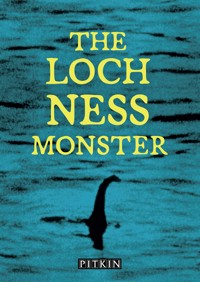
Step behind the scenes of the biggest mystery of the British Isles Loch Ness is one of the most popular visitor sites in the world. Its stunning beauty draws many, but far more come to experience the mystery of the monster that may lurk in its waters. Known affectionately as 'Nessie', this elusive creature has been chased with great zeal for over a century (it has been seen by over 1000 people) and this enthusiasm shows no sign of diminishing. A new edition, rewritten and with fresh new images, of a Pitkin classic that examines the evidence and the various sitings on this perennial mystery.
Sie lesen das E-Book in den Legimi-Apps auf:
Seitenzahl: 37
Veröffentlichungsjahr: 2019
Das E-Book (TTS) können Sie hören im Abo „Legimi Premium” in Legimi-Apps auf:
Ähnliche



















CONTENTS
Fact or Folklore?
The Largest Lake in Britain
Mysteries & Symbolism
Worms & Monsters
Loch Ness: Haunted by a Dragon?
The Natural World
The Unnatural World
Hidden Depths: Waves & Seiches
Roads, Canals & The Age of Tourism
Sightings & Research: Chronological List
Exploring Loch Ness
Gaelic Place Names & Meanings
Acknowledgements
FACT OR FOLKLORE?
Situated in the Scottish Highlands, Loch Ness is an awe-inspiring place with a mystery lurking in its gloomy depths: the Loch Ness Monster.
Belief in the reality of the elusive monster has persisted for nearly 1,400 years, from the Dark Ages to the present day, and through the centuries ‘Nessie’ (Niseag in Gaelic) – as the monster is affectionately known – has stubbornly refused to be dismissed as fiction. Modern science and technology have, if anything, deepened and complicated the mystery.
There are many possible explanations for the world-famous phenomenon, and 21st-century research benefits from the analytical tools at our disposal: modern zoology, wave physics, anthropology and psychology, supported by photo analysis, state-of-the-art imaging techniques, sonar and the latest developments in DNA sampling. Vital to the continuing search are the first-hand accounts of those individuals who claim to have seen the Loch Ness Monster and are in no doubt that Nessie does exist. Last but not least is the intrepid band of loners and eccentrics – the monster hunters.
Searching for Nessie in Loch Ness inevitably takes people into some dark places. All of them – from the scientific expert to the hopeful tourist – can be applauded for their perseverance and for giving hope to all lovers of mysteries.
THE LARGEST LAKE IN BRITAIN
Loch Ness is unique – a vast body of freshwater, with an estimated volume of 7 billion cubic metres, making it the largest lake in Britain. The loch is 39 kilometres long, stretching from Lochend at its northernmost point to Fort Augustus in the south. The steep sides of the loch and the gaunt crags and precipices give an impression of pressing in on one another above the surface of the water. The average width of Loch Ness is 1.5 kilometres and its waters very deep, plunging down to 228 metres, and 244 metres in the abyss by Urquhart Castle on its westerly coast.
The variation in colour and wave pattern of the lake surface gives Loch Ness its changing moods: deep azure under a bright blue summer sky can quickly change to inky black under dark clouds. The lake is cold: below 30 metres a more or less constant 5.5 degrees Celsius, although at the surface in summertime the temperature can approach 10–14 degrees Celsius. The water – brown because of the high peat content – plunges into darkness below 8 or 9 metres with zero visibility.
If some dark pagan deity set out to design the ideal environment for an elusive monster to live and have its being, it would be Loch Ness.
MYSTERIES & SYMBOLISM
Human beings like mysteries: we are fascinated by those things at the edge of our understanding. Mythology – our earliest stories and visual art – is filled with monsters, creatures from the unknown that may, or may not, threaten us. They are everywhere: in literature, in cinema and in folklore – the beliefs and stories which people of all cultures hand down through the generations. Often monster stories have some basis in reality. In Jules Verne’s science fiction novel Twenty Thousand Leagues Under the Sea, the Giant Squid which attacks the submarine Nautilus falls into the category of unlikely but not impossible. It bears some resemblance to the serpentine monster described by Aristotle in the 4th century BC. This hazard to Greek shipping is said to have capsized a trireme, the most powerful war and trading ship of the period. The famous Kraken (main picture) of Norse legend, which devoured Viking ships, exhibited the same anti-social behaviour. The new technology used in David Attenborough’s 2017 documentary series Blue Planet II shows how much science has yet to learn about the ocean depths and the creatures that live there.
‘Of course the Loch Ness Monster exists: it exists in our Collective Unconscious.’
Anonymous Jungian analyst
‘The inexpressible can only be expressed in terms of symbols and myth ….’
Carl Gustav Jung
In contrast to the vastness of the seas or oceans, inland lakes are part of our human landscape. A lake is also an alien world to terrestrial Homo sapiens




