


6,99 €
Mehr erfahren.
- Herausgeber: The History Press
- Kategorie: Sachliteratur, Reportagen, Biografien
- Sprache: Englisch
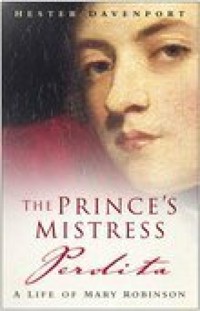
Mary Robinson, nicknamed 'Perdita' by the Prince of Wales after her role on the London stage, was a woman in whom showmanship and reckless behaviour contrasted with romantic sensibility and radical thinking. Born in Bristol in 1758, she moved to London with her family at a young age and was trained by Garrick for the theatre. After a royal command performance as Perdita in "The Winter's Tale", she was hotly pursued by George, the 17-year-old Prince of Wales, and she became his first mistress. He gave her GBP 20,000, a house in Berkeley Square, and another in Old Windsor; the popular press followed the affair with glee and gusto. But when he left her she blackmailed him for the return of his letters. A string of other high-profile lovers followed including Lord Malden, Charles James Fox and, most notably, Lt Col Tarlton. However, a miscarriage left Mary semi-paralysed and when her last lover deserted her to marry someone else, she wrote two novels in revenge. Her growing literary reputation brought in many friends, including Coleridge but her death saw the bailiffs trying to evict her from her cottage. This lively account of one of the most extraordinary women of her age is set against the social, literary, political and military background of the times.
Das E-Book können Sie in Legimi-Apps oder einer beliebigen App lesen, die das folgende Format unterstützen:
Veröffentlichungsjahr: 2011
Ähnliche



















Contents
Title
Preface and Acknowledgements
ONE
Bristol Belle
TWO
The Disastrous Marriage
THREE
Garrick’s Girl
FOUR
Enter the Prince
FIVE
Florizel and Perdita
SIX
‘Ye Old Infernal Cause Robinson’
SEVEN
Interlude: At the Portrait Painter’s
EIGHT
Reluctant Cyprian
NINE
Ill Health and Bad Debts
TEN
The English Sappho
ELEVEN
Discontent
TWELVE
Friends and Foes
Epilogue
Appendix: Mary Robinson’s Dramatic Roles
Select Bibliography
Copyright
Preface and Acknowledgements
In the churchyard of Old Windsor, not far from where I live, lie the remains of the beautiful Mary Robinson, actress, royal mistress, poet and novelist. The grave is shaded by trees on the north side of the church and the stone is green from damp; the area has a melancholy feel. This is not the only tomb on the shady side, but nevertheless it seems cut off from the crowded gathering in the sunshine, as if she is shunned by the morally righteous in death as in life. An old photo shows that wrought-iron railings once protected the tomb, but they disappeared in the Second World War. Shortly afterwards the inscription changed too; it originally read ‘Mrs Mary Robinson, Author of Poems and other Literary Works, died the 26th December, 1800, at Englefield Cottage, in Surrey, aged 43 years’, but in 1952 a great-great niece had it re-inscribed:
MARY ROBINSON
BORN 27TH NOVR 1758
DIED 26TH DECR 1800
‘PERDITA’
(BORN DARBY)
She imposed the nickname by which Mary is certainly best known, but which would not have been her choice for her monument. Two poems on either side of the tomb, one of hers and a tributary verse by a friend, Samuel Jackson Pratt, were renewed then and again more recently by an anonymous admirer. So ‘the lost girl’, as her nickname translates, is not forgotten.
It was therefore as a sort of neighbour that Mrs Robinson first claimed my attention, and I wrote a short article about her for a local history journal. Then, when researching a book about the novelist Fanny Burney at the court of King George III, I realised that a portrait of Fanny by her cousin, Edward Burney, was a mirror image of one by his tutor, Sir Joshua Reynolds, of Mary Robinson. Perhaps after the ‘good’ girl I should turn my attention to the ‘bad’?
There needs little justification for writing an account of such an interesting personality and dramatic life as Mary/Perdita’s, a woman whose lovers or admirers include some of the foremost men of the late eighteenth century: George, Prince of Wales, Richard Brinsley Sheridan, Charles James Fox, William Godwin, Samuel Taylor Coleridge. David Garrick tutored her in acting, and Sir Joshua Reynolds, Thomas Gainsborough and George Romney all painted her portrait. Of course her history has been told before, but early biographies were semi-fictional and sentimental, or, like Marguerite Steen’s The Lost One (1937), unacceptable; for Steen she is an empty-headed doll, a woman possessing neither ‘brains’ nor ‘strength of character’, and she is so patronising about Mary’s poetry that it is surprising she wrote about her at all. Philip Lindsay in both The Loves of Florizel (1951) and A Piece for Candlelight (1952) presents her as a saucy little madam. No full-scale biography has been published since Robert D. Bass’s 1957 The Green Dragoon: The Lives of Banastre Tarleton and Mary Robinson, in which Mary takes second billing to the man who was her lover for fifteen years, a British hero, Yankee villain, of the American War of Independence. Bass struggles to understand Mary and is naïve in taking her on her own terms, though his book is an invaluable source on Tarleton and includes a great deal of material about Mary; he prints many poems, letters and newspaper references in full. However, he is not always reliable. There have been scholarly short biographical studies in recent times; M.J. Levy, who also usefully edited Mary Robinson’s Memoirs, has an informative chapter in his The Mistresses of King George IV (1996), while Judith Pascoe’s biographical section in her introduction to Mary Robinson: Selected Poems (2000) is the best short account to date.
Mary’s relationship with the Prince of Wales ensured her place in history, though it destroyed her chance to be immortalised as an actress and arguably denied her the laurels of authorship too. Pascoe, in the introduction to the Selected Poems, writes that ‘It is probably impossible to overplay the role of Robinson’s affair with the Prince of Wales in her later literary and social reception’ (here). I have explored the relationship as far as records allow, looking beyond the stereotype image of scheming whore which appears in biographies of George IV and other histories into which she makes her way, if only in a footnote. But before she became the scandalous Perdita, there was Mary Robinson the serious actress whose career, if not a long or prestigious one, is of considerable interest in illustrating how a young woman could progress within the theatre. Because it was as Perdita that she caught the Prince’s eye, that is the role by which she is remembered, but she played many others; moreover, that she played Perdita in The Winter’s Tale does not convey to a modern reader that The Winter’s Tale in which she appeared was very different from the one performed today, and in very different theatrical circumstances. I have aimed to present these aspects of her life, and to correct a misconception which has found its way into articles about her. I have also been able to throw further light on her date of birth and on the writing of her memoirs, and have been fortunate to be able to print some previously unpublished material.
The publication of a modern anthology of her poems is an indication of the upsurge of interest in Mary Robinson the writer, the role she forged for herself after a devastating illness left her a helpless cripple. In contrast to dismissive accounts by historians, literary scholars have given serious consideration to her as Romantic poet, novelist, feminist and autobiographer; in 2000 an academic conference marked the bicentenary of her death. However, this is not a literary biography. I have not attempted to shift the emphasis from her social life to the literary one; for most readers it would be pointless to do so since her works are hard to come by. But I have tried to give some idea of their nature, to suggest how they were received at the time, and to use them to help understand and illustrate the life of a woman whose chameleon career encompassed so many different roles. Her fame as a writer mattered to her; at the end of her life she longed for literary recognition as she had once wanted theatrical applause. To that end she fought against the stigma of immorality with which she had been marked since her brief affair with the Prince of Wales. But though she allowed Coleridge and others to think her a penitent Magdalen, I do not believe that she was ever ashamed that once upon a time she had been wooed and won by a handsome Prince.
It has been fascinating to follow her life as it was presented in the newspapers of the day and these have been an important source of information. There are obvious comparisons to be made with today’s media treatment of celebrities (not to mention attention-seeking behaviour by such celebrities, royal scandals, the sale of royal love letters, and so on). But these I have left to the reader. When journalists and pamphleteers wanted an image for Mary Robinson at the height of her fame they looked to the heavens, comparing her to a comet, meteor, star or sun; I have tried to convey something of the brilliancy that so dazzled her contemporaries.
Many people have been of great assistance to me in preparing this biography. I owe a large debt to Dr Judith Pascoe of Iowa University, a most generous scholar, who helped enormously by sending across the Atlantic her copies of some of Mary’s and her daughter’s novels, and other writings unobtainable outside specialist libraries; she has answered queries and been consistently encouraging. I have also benefited greatly from her own exemplary and stimulating writing.
To many other friends I am likewise indebted. Dr Lorna J. Clark most kindly posted material which was hard to obtain here from Canada. I am very grateful to Catherine Dolman for her detailed commentary on the dresses worn by Mary in her portraits, and for answering other queries. Professor Katharine Worth has kindly checked the sections on the theatre. I am particularly grateful to Dr Lynn Mucklow for her careful analysis of Mary’s medical problems in so far as they are known, and for the expert suggestions of Dr Kerry Thomas and Kathleen Whelan.
Janet Martin was most helpful in undertaking preliminary research in Liverpool library into Tarleton family history. Geraldine Lillicrap kindly likewise looked for material in Bath library. I am very grateful to Dr Brigitte Mitchell who brought back historical material from Aachen and translated it for me. Lucy Norman checked some information in Brighton, and kept my computer healthy.
To Janet Kennish’s meticulous recording of her research I am indebted for the discovery of Thomas Robinson’s death. Graham Dennis of Blacklock Books in Englefield Green obtained books and gave valuable advice in trying to establish the whereabouts of Englefield Cottage. I should like to thank John Handcock for answering legal questions and for trying to find some record of Thomas Robinson at the Law Society.
I am most grateful to Jean Higgins for hospitality and company on an expedition to Talgarth, and to Edwina Higgins for information. I am likewise appreciative of the encouragement and many helpful suggestions made by Alison Haymonds. Ellen Dollery, Margaret Gilson, Jeanette Obstoj, Jasmine Tarry and Professor W.M.S. Russell all lent books or provided other valuable help. My daughter Olivia kindly allowed me to use her drawing of Mary’s grave.
I should like to express my very great gratitude to owners of private collections of material, including the manuscript of her memoirs, for allowing me access and giving me permission to quote from their holdings. Her Majesty The Queen has given gracious permission to quote from papers in the Royal Archives. Broadview Press, Peterborough, ON, Canada, has very kindly given permission to quote from Mary Robinson: Selected Poems, edited by Judith Pascoe, 2000; A Letter to the Women of England and The Natural Daughter, edited by Sharon M. Setzer, 2003; Walsingham, edited by Julie A. Shaffer, 2003. Peter Owen Publishers has generously allowed quotation from Perdita: The Memoirs of Mary Robinson (1758–1800), edited by M.J. Levy, 1994. The following institutions have also given permission to quote from their archive holdings: The Abinger Collection at the Bodleian Library; The Carl H. Pforzheimer Collection of Shelley and His Circle, The New York Public Library Astor, Lenox and Tilden Foundations; The Huntington Library, California; Hertfordshire County Council; Westminster City Archives.
I am also grateful for the help in various ways of Miss Pamela Clark, Registrar of the Royal Archives, Christopher Lloyd, Surveyor of The Queen’s Pictures, Dr Bruce Barker-Benfield at the Bodleian Library, Stephen Wagner and Laura O’Keefe of the New York Public Library, Alison Williams of Bristol Record Office, Ruth Hobbins and staff at Liverpool Library, Ali Burdon at the City of Westminster Archives, Rosemary Fisher of Worcestershire Library and History Centre, Frances Younson at Gwent Record Office, Angela Bolger of Taplow Court, Buckinghamshire, and Graham Snell of Brooks’s Club.
My biggest debt, however, has been to my husband Tony, patient reader and most valued commentator during the writing. To him, and to all friends who have helped and encouraged me, I dedicate the book.
ONE
Bristol Belle
She possessed surprising beauty, such as I have rarely seen equalled in any woman, and might well rescue her and my native city, Bristol, from the imputation of producing females deficient in that endowment.
(Nicholas Wraxall, Historical and Posthumous Memoirs)
According to her own note, it was on Sunday 14 January 1798 that Mrs Mary Robinson began to write her memoirs. A striking-looking woman in her early forties, tall and elegant, she was living with her daughter Maria at 1 Clifford Street in London’s fashionable West End. The furnishings of the room where she sat would have matched the elegance of her appearance. But she was not to be envied, for she was pitiably crippled. Even with crutches she could scarcely move around, and she was dependent on servants to carry her up and down stairs, or to her coach for an outing. Frequent bouts of illness incapacitated her further; only ten days later a newspaper, the Oracle, reported that she was in bed ‘with a nervous fever, which threatens the most serious consequences’.1 There are few women whose health is the subject of press bulletins, but Mrs Robinson was a celebrity, in the news for her fifth and most ambitious novel, Walsingham, which the Morning Post described as ‘one of the most entertaining [novels] ever published … full of interest, full of anecdote of fashionable life’, its satire rendering ‘a service to society’.2 The paper printed extracts, and on 3 January a ‘tribute of praise’ to her verse (which was also appearing regularly in the Post) by one ‘FRANCINI’, a pseudonym of the young Samuel Taylor Coleridge. Mrs Robinson sent him a set of the four-volume Walsingham by way of thanks.3
But she was only too aware that the Morning Post, the newspaper most loudly trumpeting her literary fame, had nearly two decades earlier been equally loud in vilifying her. In 1780 she had left her husband and her profession as an actress for an affair with the seventeen-year old George, Prince of Wales. Predictably it had not lasted, but the scandal while it did, Mary’s flamboyant behaviour and the liaisons she subsequently engaged in, had not only fuelled the gossip columns but had left a residual stain, however hard she sought to remove it through her poetry, and as a novelist peddling conventional morality and satirising the fashionable follies in which she herself had once indulged (though she had never been guilty of gambling, principal target of attack in Walsingham). She thought herself misunderstood, and planned her memoirs to be a ‘vindication’ of her life.4
The impulse for this self-justification may have stemmed from talking with William Godwin, whose Memoirs of Mary Wollstonecraft were published shortly after she began her own. Mary knew Godwin and had known his wife, who had died the previous autumn after giving birth to the future Mary Shelley. She too had had a notorious reputation, as a supporter of the French Revolution and as the author of the feminist A Vindication of the Rights of Woman (1792). Godwin thought that an honest presentation of his wife’s life story could not fail to rouse public sympathy; instead, his revelation that she had had an illegitimate child by an American businessman, Gilbert Imlay, that she had twice thereafter attempted suicide, and that she was pregnant before her marriage to Godwin, proved a disaster. Even former supporters were horrified, and the hostile press Godwin received may have given Mary pause. Too much honesty might be counter-productive. Nevertheless, she declared in the Memoirs that ‘These pages are the pages of truth, unadorned by romance’.5
Precept and practice are two different things however. Most autobiographers require some rose-tinting to the mirrors in which they observe themselves; memory is fickle, and ‘truth’ compromised when untruths have been claimed for years. The laudanum which she took to dull the pain of her illness must also have blunted her sense of reality. Memoirs of the Late Mrs Robinson, posthumously published, has to be approached with caution, though it is the primary source of most of the information about her early life. She once addressed a poem to a friend ‘who desired to have my portrait’, offering a verbal one instead. In it she recognised her faults and virtues – quick-tempered, ambitious, particular in friendship and unforgiving if betrayed, readily sympathetic, sometimes obstinate but never self-interested, a lover of Genius. All of this is true, but it is to a biographer’s raised eyebrows that she also declares:
E’en from the early days of youth,
I’ve blessed the sacred voice of TRUTH;
And Candour is my pride:
I always SPEAK what I BELIEVE;
I know not if I CAN deceive;
Because I NEVERTRIED.6
She had probably convinced herself of the truth of what she wrote: tales repeated often enough become established fact. And, of course, truth is to be found in the Memoirs; ‘unadorned’ however, her memories are not, in either content or style.
Bristol, where Mary’s story begins, was second only to London as a trading port, and likewise river-based; its ships fanned out to Ireland, France, Spain, Africa, America, the Baltic and the Caribbean, and it was better placed than London for the cross-Atlantic trade. It served as a distribution point for West Country raw materials and was itself heavily industrialised with glass manufactories and sugar refineries. Horace Walpole, who disliked its mercantilism, described the city as ‘the dirtiest great shop I ever saw, with so foul a river, that had I seen the least appearance of cleanliness, I should have concluded they washed their linen in it’.7 But Bristol had another identity, being also an ancient city; the towers of religious foundations matched the belching chimneys of its manufactories and the forests of masts in its river basins. Even Walpole admitted that the cathedral was ‘neat … and has pretty tombs’, and with prosperity the town was pushing out beyond the city walls and creating elegant squares and streets of houses. A further aspect of Bristol life and money-making was found a mile downstream where the Hotwells attracted invalids to drink the mineral waters, and fashionable society to attend its summer season. However, Bristol’s wealth had its sinister side; until 1747 when it was overtaken by Liverpool, it was the foremost port engaging in the slave trade. But Mary’s merchant father, Nicholas Darby, was unconnected with that trade of human degradation, making his endeavours in the chilly waters of the North Atlantic with its abundance of fish, furs and seal oils.
Mary says that her father’s family was originally Irish, with the name of MacDermott, altered to Darby for the sake of an estate. But Nicholas appears to have been born around 1720 in what is now Canada, then part of America.8 He engaged as a ship’s captain in the Newfoundland fishing trade, at some time coming to Bristol where he established himself, the town serving as a winter base. There was great rivalry with the French over the fishing gounds and, during what became known as the Seven Years War, Darby represented the Society of Merchant Venturers of Bristol (set up in 1552 and still in existence) in informing the British Board of Trade of French activities in the region. He made useful contacts with influential men, such as the elder Pitt, the Earl of Bristol, Sir Hugh Palliser (who was appointed Governor of Newfoundland), and the Lord Chancellor, Robert Henley Earl of Northington, who became Mary’s godfather. Nicholas was a fearless, single-minded man from whom Mary inherited her ambitious streak: her liaison with the Prince might be called her own bold merchant venture.
Mary describes her mother, Hester Vanacott, as the ‘mildest, the most unoffending of existing mortals’; she took her vivacious manners from her and, the other side of the coin, the melancholy which she stresses in the opening pages of the Memoirs. Hester came from Bridgwater in Somerset, though it was in the tiny village of Donyatt near Ilminster in the same county that, on 14 July 1749, ‘Hatty Venecot’ married ‘Mr Nicol’s Derby of Bristol’. In writing about her ancestry on her mother’s side Mary emphasises the female line, proud that ‘My mother was the grand-child of Catherine Seys, one of the daughters and co-heiresses of Richard Seys, Esq., of Boverton Castle in Glamorganshire’ (to the west of Cardiff, now demolished). She also makes much of a very slight connection through the marriage of Catherine’s sister with a nephew of the philosopher John Locke.9 This Catherine Seys, whose daughter (Mary’s grandmother) was called Elizabeth, must have married a man with the surname of Petit since on 30 July 1723 Elizabeth Petit married James Vinicot (spellings of surnames show much variation at this period) in St Mary’s Church Bridgwater; on 22 May in the year following Hester was baptised. A son, James, was born the following year. Mary was fond of her grandmother but says nothing about her grandfather or great-grandfather, probably because their births and occupations were nothing to boast of: Petits and Vinicots seem to have been small-town tradesmen in Bridgwater.10 She lets it be known, however, that the godmother of her grandmother Elizabeth was Lady Tynt of Haswell (south of Bridgwater), and that she spent her days in good works with her godmother, visiting the sick and indigent.
Nicholas and Hester went to live in Bristol, where John, their first-born, was baptised on 9 June 1752; a daughter Elizabeth was baptised 12 January 1755, but at only eighteen months she died of smallpox. She was buried on 29 October 1756, only three weeks after a Mary Darby had been interred, perhaps likewise a smallpox victim and possibly Nicholas’s mother; that would explain why the next daughter to be born was called Mary.11 After her would come two more brothers, William, baptised on 13 October 1760, and George, for whom no baptismal record was found.12 Except for William’s, all these births and deaths were recorded at the cathedral church of St Augustine the Less, and the family in fact lived in Minster House, hard against its walls; it was thought to have been the Prior’s lodging of the Augustinian Abbey, whose church became Bristol cathedral after the dissolution of the monasteries. This building straddled past and present in combining new construction with the old, and though Mary writes of it ‘sinking to decay’ in 1798, a painting of 1821 shows a cheerful little house with small front garden giving onto the Green, with a blend of Georgian sash and Gothic dormer windows. Minster House was demolished in 1868 when the cathedral was given a nave, which it had previously lacked.13
Mary herself would still recognise the chancel and transepts of the cathedral, its monuments and flagstone memorials, its cloister and ancient chapter-house, and it is these surroundings which she invokes when describing the night of her own birth:
In this awe-inspiring habitation … during a tempestuous night, on the twenty-seventh of November 1758, I first opened my eyes to this world of duplicity and sorrow. I have often heard my mother say that a more stormy hour she never remembered. The wind whistled round the dark pinnacles of the minster tower, and the rain beat in torrents against the casements of her chamber. Through life the tempest has followed my footsteps; and I have in vain looked for a short interval of repose from the perseverance of sorrow.14
That ominous storm is all too convenient to her theme. As many have observed, this is the language of a Gothic novel, and much in the mode of Walsingham whose eponymous hero-narrator declares: ‘I was born to sorrow; I was nursed with tears’.15
Mary’s date of birth seems innocent enough, but in this ‘world of duplicity’ it proves not so. In 2002 Alix Nathan published her discovery that Mary Darby was not born in 1758.16 She quotes a baptismal register of St Augustine’s which for 19 July 1758 reads ‘Polle Daugh+. of Nicholas and Hester Darby’, with the added note: ‘Born nov.27.th 1756’ (Polly is a diminutive of Mary). It thus appears that Mary took two years from her life, the assumption being that she wanted to suggest that at the time of her marriage she was only fourteen, scarcely out of the nursery and a passive participant in a ceremony into which she had been thrust by her mother. The problem with this, however, is that in the Memoirs she indicates that her age at marriage was fifteen (in 1773), while on her tombstone it is given as forty-three years, both of which imply a date of birth in 1757. It is then startling to discover that the date 1758, quoted above and for 200 years the accepted year of birth, does not appear at all in the manuscript of the Memoirs. Mary herself actually wrote that ‘during a tempestuous night on the twenty-seventh of november [sic], I first opened my eyes to this world of duplicity and sorrow’, giving no year at all.17 She is therefore not guilty of claiming that she was born in 1758, a date which must have been wrongly calculated by her daughter and added before publication.
Was Mary nevertheless lying in taking one rather than two years off her age by implying, if not stating, that she was born in 1757? The situation is further complicated because it turns out that what Nathan saw was a copy of the baptismal register, not the original which records the baptism on 19 July 1758 without any note of birth-date.18 There are a number of cases where the actual date of birth was considerably earlier than baptism (perhaps because fathers were away at sea); in these cases it is recorded in a line underneath, and the copyist follows that practice, except in Mary’s case where, because it was not in the original register, he squeezed it in as an afterthought at the end of the line. All that can confidently be stated therefore is that Mary Robinson was not born in 1758.
One has the choice consequently of believing her, or the copyist. The fact that no actual date was given in the original register might be taken as an argument that she was still a babe in arms at baptism. But since the copyist knew the day and month of Mary’s birth it would be logical to assume that he knew the year too; moreover, he had no reason to lie, while Mary did have reason to want to be thought younger than she was. The fact that she does not put 1757 as the year of her birth when it would have been logical to do so, has been taken in this biography as a strong indication that she shied away from telling an absolute lie, and that 1756 is accurate. But it is open to those wishing to exonerate Mary from deception to choose the later date.
This confused situation illustrates the difficulty in considering Mary’s childhood, since evidence apart from her own is sparse. She portrays herself, for example, as being different in both appearance and nature from her brothers. The boys were ‘fair and lusty, with auburn hair, light blue eyes, and countenances peculiarly animated and lovely’; she however was ‘swarthy’, with large eyes and ‘features peculiarly marked with the most pensive and melancholy cast’.19 Maybe, but she grew up with blue eyes and auburn hair like her brothers, and donated them to most of her heroines. (A further red herring is that she claims a ‘striking likeness’ to the family of her godfather, Lord Northington, as if hinting that he was her natural father; this must be counted part of a tendency to fantasise – in The False Friend (1799), written in the same year as the Memoirs, the heroine’s guardian does indeed prove to be her father.) Mary also conveys a marked difference of temperaments, her brothers outgoing and active while she was sensitive and inward-looking. When they played on the Green, she sought out the cathedral gloom, where she crouched under the eagle lectern and thrilled to the deep tones of the organ and the chanting choristers; after she had learned to read, her ‘great delight’ was of memorising the inscriptions on Walpole’s pretty tombs.
The mixture of modern commercialism and ancient spirituality, present both in the nature of the home and in the city at large, must have helped to shape the woman she became, but since she had been labelled a commercial adventuress she wanted in her memoirs to distance herself from the trading elements of her background. Claiming the studious cloister as her natural environment, she cast herself in the same childhood mould as her fellow-Bristolian, the poet Thomas Chatterton, born in 1752. He took the pillared aisles of St Mary Redcliffe as his boyhood playground, and later claimed to have found the poetic works of a medieval monk, ‘Thomas Rowley’, among its ancient lumber. These poems are remarkable creations, even if forgeries, and Chatterton’s apparent suicide in his London lodgings at the age of eighteen made him for Mary the model of neglected genius starving in an attic.20 She too was a Chatterton before she was a Nicholas Darby.
Nicholas was an indulgent father, however, and ambitious for his daughter. He engaged various tutors, including a distinguished organist, Edmund Broderip, who taught her to play and sing on an expensive Kirkwood harpsichord. Though she is vague about dates, she was also educated at a boarding-school, a popular alternative to a live-in governess or privately hired tutors.21 Such schools provided women teachers with an opportunity for independent income, but were hit-and-miss affairs for the pupils; had Mary been unlucky she might have found herself at such a one as the Bristol school where
YOUNGLADIES are genteelly boarded, and carefully taught to read their MOTHER-TONGUE with PROPRIETY and CORRECTNESS, and are also instructed in all kinds of NEEDLE-WORK, and every other branch of polite and useful Education; of which the forming their tender Minds in Sobriety and Virtue will be most strictly attended to.22
This was the kind of school where, as she wrote in Walsingham, a girl ‘read authors, whose works she did not comprehend; prattled a foreign jargon, without knowing the meaning of the words she uttered [and] finished needle-work which in half a century would only adorn the lumber-room of her grand-daughter’.23
Mary was fortunate, however. A highly-regarded ‘School for Young Ladies’ was then found at 6 Trinity Street, near the cathedral, which enabled her to sleep at home. It was run by the More sisters, Mary, Elizabeth and Sarah, who were later joined by Martha and Hannah. It had opened in 1758, advertising its curriculum as ‘French, Reading, Writing, Arithmetic, and Needlework’, that essential ‘polite’ accomplishment at least relegated to the bottom of the list.24 Hannah, the youngest and cleverest of the sisters, was to write plays, novels, works about female education, and as she grew older a stream of religious tracts; she became the friend of Dr Johnson, David Garrick and Horace Walpole, for whom she ‘redeem[ed] the credit of Bristol’.25 The irreproachable sisters were reputed to be less than pleased when in later life Mrs Robinson revealed that she had been their pupil, but Hester Thrale Piozzi was much amused to discover that ‘Hannah More la Devote was the Person who Educated fair Perdita la Pecheresse’; she asked Miss More if it was true and she ‘owned it as a fact’.26 Maria may have known of their embarrassment, for another discovery in the manuscript of the Memoirs is that several lines about the More sisters have been scribbled over and not included in the published version. Much can still be read however, and it is in no way offensive, merely noting that the five sisters each managed a ‘separate department with zeal, good sense and ability’ and that Hannah More the ‘accomplished authoress of Percy [her drama] divided her hours, between the arduous tasks of “teaching the young ideas how to shoot” and [exemplify ?] by works of taste and fancy’.27
At the time, bright little Mary must have been a star pupil. She loved to perform, reciting poems such as Pope’s ‘Elegy on the Death of an Unfortunate Lady’, which she claims to have known by heart before she was seven. It would have been a huge excitement when the Misses More, who were theatre enthusiasts, took the whole school to a performance of King Lear at Bristol’s newly opened Theatre Royal, with the actor-manager William Powell in the lead. It may seem a strange choice for young girls, but it cannot have been too disturbing as the eighteenth-century version of the play had a happy ending, with Cordelia saved from the hangman’s noose and Lear surviving too. Mary remembered the performance with sufficient clarity later to be critical of Powell’s wife for playing Cordelia with insufficient ‘éclat’.28 Powell’s daughters were at the school, and, among other players’ children, Priscilla Hopkins, daughter of the Drury Lane prompter, with whom Mary would later share the stage.
All seemed well at home. Nicholas Darby’s trading concerns had flourished and Mary was treated to fine clothes from London, and a bed furnished with ‘the richest crimson damask’.29 They had moved into a larger house in the area known as St Augustine’s Back; entertainment was lavish, and the household provided with ‘the luxuries of plate, silk furniture, foreign wines, etc.’, which created the pseudo-aristocratic life-style to which the merchant class aspired. But Darby was restless and ambitious (because he was American, thought his daughter), and in 1765 he embarked on a ‘wild and romantic’ scheme to set up fisheries for whale, cod, salmon and seal along the south coast of Labrador, a project made possible when the land was ceded to Britain in the Treaty of Paris of 1763. For his plans he obtained backers, including the Governor, Sir Hugh Palliser, but it would mean overwintering. Darby proposed leaving his three younger children in England (the eldest son John had been established in a trading business in Leghorn), but to take his wife with him. Hester, however, would neither consent to be parted from her children, nor to undertake the hazardous voyage. Nothing would deter her husband, and investing £8,000 in the venture he set sail with 170 men and, unknown to the family, a mistress willing to brave the venture. From this time Mary dated the ‘sorrows’ of her family.
However, for the time being the carefree life continued for Mary, and ‘To sing, to play a lesson on the harpsichord, to recite an elegy, and to make doggrel [sic] verses, made the extent of my occupations’.30 Letters from Labrador were reassuring as Darby established headquarters at Cape Charles. But then they grew infrequent, and Hester suffered a terrible blow when six-year-old William died from measles.31 Next year there was worse news: the Labrador scheme had failed when a marauding band of Inuit ‘most barbarously and treacherously … killed three of [Darby’s] men and drove the rest to the Mountains burnt and destroy’d his Boats Stages and Dwellings and wasted his Salt’. These words come from a petition to the King for compensation for his losses, amounting to £4,677 3s 6d.32 His ambitions ruined, Darby ordered his wife to sell the family home and all its contents. The subsequent auction took place over five successive days, from 7 to 11 March 1768; among the ‘elegant’ household goods offered were ‘two fine Pieces of India painted Silk, two beautiful Italian Marble Slabs in curious carved Mahogany Frames [and] a very curious Italian Marble Chimney Piece finely executed’.33 There was also ‘a very fine-toned’ Kirkman harpsichord.
A letter from her husband summoned Mrs Darby to meet him in London, bringing Mary and George with her. It proved a painful reunion, as Nicholas announced that he intended to live with his mistress, though willing to pay for his wife’s ‘board’ and the continuing education of his son and daughter. At the age of eleven, Mary found that her secure world was destroyed for ever; for the rest of her life she would be subject to constant changes of address and financial insecurity.
However apprehensive she felt about the outcome, it must have been exciting for Mary to go to the capital, the largest city in Europe. Standing on the south bank of the Avon she would have been able to see most of Bristol, population 50,000, spread over the hill opposite, and have a sense of it as a self-contained community; but London was vast and impersonal, its population over half a million and stretching some 5 miles from Hyde Park in the fashionable west to the wharfs, yards and foetid streets of Limehouse in the east. Growth was unrestricted, and it was spreading inexorably through the fields and market gardens with which it was fringed. It was a dirty, polluted city, dark with soot in winter, hazed by dust in summer, foul with the stench of street refuse. Noisy too; in a poem of the last year of her life, Mary would evoke its early morning sounds and activities:
Who has not wak’d to list the busy sounds
Of summer’s morning, in the sultry smoke
Of noisy London? On the pavement hot
The sooty chimney-boy, with dingy face
And tatter’d covering, shrilly bawls his trade,
Rousing the sleepy housemaid. At the door
The milk-pail rattles, and the tinkling bell
Proclaims the dustman’s office; while the street
Is lost in clouds impervious. Now begins
The din of hackney-coaches, waggons, carts;
While tinmen’s shops, and noisy trunk-makers,
Knife-grinders, coopers, squeaking cork-cutters,
Fruit-barrows, and the hunger-giving cries
Of vegetable venders, fill the air …34
Mary had been used to spending the summers in Clifton, famed for its pure air. Clean air was harder to find in London, but she and George were placed in a school in Chelsea, detached from the city and considered a healthy place for educational establishments.
Of Meribah Lorrington, her new teacher, Mary wrote that ‘All that I ever learned I acquired from this extraordinary woman’.35 This must be counted exaggeration, but Mary may have been thinking that it was from her that she had her introduction to classical learning, normally denied to girls, which had recently helped her to create a viable sense of Walsingham’s educational background.36 If Mrs Lorrington was an extraordinary woman, so was her father, an Anabaptist who frightened the children with his strange Persian robe and fierce look, but who had been a teacher himself and had given his daughter a ‘masculine’, classical education, which she passed on to her pupils. Mary became her favourite because of her capacity for study, and her enthusiasm for writing verses, tales of pastoral love and death in landscapes of crystal fountains and flow’ry meads (later published in her first volume of poems). But Mrs Lorrington had a weakness: addiction to drink, the consequence, she said, of widowhood. That and her father’s odd behaviour led to the school’s closure. Mary was sent to another, across the river in Battersea, but her father’s failure to keep up with remittances (he was again pursuing his American dream) worried her mother, and she took her daughter away.
Mrs Darby then had the bright idea of starting her own school, and found suitable accommodation in Chelsea. Mother-and- daughter combinations were quite common, and as well as engaging assistants Hester asked Mary to undertake the English teaching, read the lessons at prayers, and superintend the children’s dressing. Mary may have found some aspects of the new life tiresome: in her novel The Natural Daughter, the patience of the heroine Martha Morley is tested when teaching ‘by the stupidity of some; the infantine impertinence of others; the budding pride of the high-born [and] the pert vulgarity of the low’.37 According to Mary the school acquired ten to twelve pupils, but it did not survive Nicholas Darby’s return from another failed commercial venture; he had lost money again after being out-manoeuvred by local rivals, and in his embittered state felt the school an insult to his capacity as husband and father, and ordered its closure. Hester obediently took lodgings in Marylebone, and assistant-teacher Mary became a pupil again, at a nearby establishment called Oxford House.
Before the school closed, however, Mary had seen a sad sight. One evening, sitting at the window, she heard ‘a deep sigh or rather a groan of anguish’. Realising that there was a woman in distress Mary went to help:
She, bursting into tears, asked whether I did not know her. Her dress was torn and filthy; – she was almost naked; – and an old bonnet, which nearly hid her face, so completely disfigured her features that I had not the smallest idea of the person who was then almost sinking before me. I gave her a small sum of money, and inquired the cause of her apparent agony: she took my hand and pressed it to her lips.– ‘Sweet girl,’ said she, ‘you are still the angel I ever knew you!’38
It was Meribah Lorrington. Mrs Darby was not at home, but with the help of the French assistant Mary cleaned her up and gave her clothing. Mrs Lorrington refused to say where she was living, and years later Mary heard that she had died in the Chelsea workhouse. This Hogarthian history of descent from intellectual superiority and independent means to physical degradation provided Mrs Lorrington’s pupil with a different sort of lesson.
Mary’s sympathies could always be engaged; what she lacked was strong guidance in the ways of the world as her developing beauty became a magnet to men. She says that, being tall, she looked older than her years, and tells of a naval captain, a friend of her father’s, who drank tea with her and her mother one Sunday evening and was so taken with her that he afterwards made a proposal of marriage. Hetty asked how old he thought her daughter was; to his answer ‘about sixteen’, she replied with a smile ‘not quite thirteen’.39 Nicholas too was aware of his daughter’s attractions. He took Mary to call on the son of his old friend Lord Northington, who had died in January 1772; Robert Henley, the second Earl, became an astute politician, but like his friend Charles James Fox had the reputation of a rake. Mary says she received from him the ‘most marked attention and politeness’, but Darby no doubt noticed appraising glances. When he disappeared from England again, he left with a chilling threat to his wife: ‘Take care that no dishonour falls upon my daughter. If she is not safe at my return I will annihilate you.’40 We know nothing of what happened to Nicholas in the years that followed. Could he have found himself in jail in the far north for trading irregularities, on some charge of a rival? Or did he get caught up in the American War of Independence, perhaps on the Yankee side? Bristol merchants generally supported the Americans, for the sake of maintaining trade. All that Mary says of her father thereafter is that he was ‘out of the country’ when she was on the stage; there must be a reason for her silence.
Mrs Darby’s difficulties of chaperonage were no doubt compounded by her daughter’s inheritance of Nicholas’s strong personality. Mary loved her mother, but she would not have been meek and biddable; she liked attention and was beginning to feel her power to command masculine attention. It must have been with considerable agitation that after her husband’s departure Hetty heard a proposal that her daughter should make a career in the theatre. She had caught the eye of Oxford House’s dancing master, John Hussey; he was also ballet master at Covent Garden Theatre, and it was his suggestion that, with ‘her extraordinary genius’ for performance, she should make trial of the stage. The girl was wildly excited, contemplating ‘a thousand triumphs’; Mrs Darby was only partly reassured by those who could cite actresses who had preserved ‘an unspotted fame’ in a profession constantly the subject of scandal.41 One can readily imagine the cajolings, pleadings, tears, perhaps tantrums, with which the teenage girl sought to overcome her mother’s reluctance. Hetty eventually agreed to an audition before Thomas Hull, a Covent Garden stalwart of reassuring stolidity, though she may have winced at Mary’s pieces – speeches of Jane Shore from Nicholas Rowe’s play of that name, and the story of a repentant whore. Mary’s choice shows both her ambition and her confidence, for Jane Shore was one of the great roles for tragic actresses; she records that the actor ‘seemed delighted’ with her attempt. However it was not to Covent Garden Theatre that she went but, after an introduction by a mutual friend, to the Theatre Royal Drury Lane, and its great actor-manager David Garrick. (The 1737 Licensing Act permitted only two theatres in London for the main season, a measure brought in by Robert Walpole when drama was being used to attack his government.)
Garrick had recently moved into a grand house, part of Adelphi Terrace designed by Robert Adam, and it was in this impressive building, with painted ceilings and views over the river, that Mary auditioned again. Garrick had always encouraged new talent and in this same year of 1772 he put forward three aspirants. Success was not guaranteed however, and of one young woman given trial the prompter noted that ‘she is a piece of still life, sings out of tune and will never make an actress’.42 Mary would have to pass such hard-headed professional scrutiny if she were to make the stage her career.
Garrick himself had made a triumphant entry into the London theatrical scene in 1741, when his sensational performance of Richard III popularised a new ‘natural’ style of acting to replace the static, declamatory one of the previous generation. More importantly however for Mrs Darby’s peace of mind, he had as manager of Drury Lane (from 1747) purged the theatre of much of its disreputable image. He had written unexceptionable plays himself, and bowdlerised some of the grosser Restoration comedies; while he had not managed to rid the theatre of prostitutes touting for custom, he had stopped arrogant young bloods from seating themselves on the stage itself, or pursuing actresses back-stage; he had increased his company’s professionalism by insisting on rehearsals and encouraging ensemble acting. Through the example of his own scandal-free life after marriage, he had helped to give his profession respectability. His energetic little figure dominated the theatrical world; in entrusting her daughter to him, Mrs Darby must have hoped she had found a safe pair of hands (they were certainly more to be trusted than those of George Colman at Covent Garden).
Richard Brinsley Sheridan, Mary’s future manager, would have advised otherwise however, though at this time he was unknown. He had his first success in 1775 with The Rivals and also became known for his marriage to the beautiful singer Elizabeth Linley. Elizabeth had a seventeen-year-old sister Mary, and both theatre managers tried to obtain her father’s consent to her joining their companies; in 1775 Garrick thought he had been successful. But Sheridan was bitterly opposed, and he wrote a long, though unfinished letter to his father-in-law warning him against a stage career in language which would have unnerved Hester Darby. Not only does Sheridan (unfairly) declare Garrick ‘one of the most artful and selfish Men that ever imposed on Merit or Honesty’, but what he had to say about the ‘Indecency of the Profession’ shows how morally dubious the stage could still appear, even allowing for exaggeration to further his own ends. To safeguard this other Mary he wrote:
What is the modesty of any Woman whose trade it is eternally to represent all the different modifications of Love before a mix’d Assembly of Rakes, Whores, Lords and Blackguards in Succession! – to play the Coquet, the Wanton, to retail loose innuendos in Comedy, or glow with warm Descriptions in tragedy; and in both to be haul’d about, squeez’d and kiss’d by beastly pimping Actors! – what is to be the Fate of a Girl of seventeen in such a situation?43
Yet Mary Robinson was younger than Mary Linley when Garrick offered to engage her, and apparently made her something of a pet:
Garrick was delighted with everything I did. He would sometimes request me to sing the favourite ballads of the day; but the circumstance which most pleased him, was my tone of voice, which he frequently told me closely resembled that of his favourite [Susannah] Cibber.44
He wanted to appear with her himself for her first performance, and decided that she should play Cordelia to his Lear.
Garrick’s Lear was passionate and kingly, terrifying in the curse and storm scenes, moving to tears in his reconciliation with Cordelia. In the following year, 1773, Fanny Burney could not decide whether it was with ‘pain or pleasure’ that she had witnessed his ‘exquisitely great’ performance.45 But she regretted that she saw the play in its altered form, Shakespeare’s language interwoven with the inferior verse of Nahum Tate. He had re-written the play in 1681 to conform with neo-classical ideas of the unities, removing the Fool because comedy and tragedy should not mix, and giving Cordelia a larger role. In Tate’s version she does not marry the King of France and disappear from the action for a long time, but has a romance with Edgar and is given a companion, Arante, with whom she appears in the storm scene, declaring
Blow winds, and lightnings fall,
Bold in my virgin innocence I’ll fly
My royal father to relieve or die. [III, ii, 66–8]
Cordelia and Edgar, who had quarrelled, have a long scene of reconciliation which culminates in Cordelia’s calling ‘Come to my arms, thou dearest, best of men’ and embracing whatever ‘beastly pimping’ actor – in Sheridan’s terms – was playing the part. At the end of the play Cordelia and Edgar prepare to rule, while Lear plans a comfortable retirement with Gloucester. In fact the version which Fanny saw and Mary rehearsed had been ‘improved’ by Garrick, who restored much of the original poetry. Nevertheless he did not restore the Fool, and the happy ending was set in moral stone, for the eighteenth-century audience required virtue to triumph over vice, and Garrick’s King Lear was to hold the stage until 1838.
Unfortunately Mary says next to nothing about the preparations for her role, noting only that Garrick was ‘most sanguine in his expectations of my success, and every rehearsal seemed to strengthen his flattering opinion’.46 Nevertheless, it was not all honeyed sweetness; Garrick’s was the most powerful personality Mary had yet met, but to add to his ‘fascinating’ smile she found that he ‘had at times a restless peevishness of tone which oppressively affected his hearers’. Overworked and losing his health, Garrick was becoming something of a tetchy Lear himself. Maybe he was also losing his judgement. Given that Cordelia in this version is a more substantial role than the one we are familiar with, was it a wise introductory choice for a girl who only reached her sixteenth birthday in November? Or was the childless actor indulging himself with the company and admiration of a very pretty girl, aware that her mother’s opposition (and Nicholas Darby’s potential return) made a début uncertain? It does not sound as if these ‘rehearsals’ were on stage with other players.
Nevertheless Garrick encouraged Mary to frequent the theatre as much as possible, and probably provided tickets to his box. The stage-struck girl was only too willing, soon drawing attention to herself. In eighteenth-century theatres the audience was almost as much illuminated as the performers, and the framed boxes became miniature theatres themselves for the display of fashion and beauty. Mrs Darby’s anxieties multiplied as admirers, young and old, made their way to their seats. One handsome officer, denied admission by her mother’s frown, managed to slip the girl a passionate love-letter; he also subsequently ingratiated himself so well with Hester that she thought to save her daughter from the theatre by marrying her to him. It then transpired that the accomplished captain was already married. Neither mother nor daughter learned as much as they might have done from this lesson.
In the event, Mary did not make her mark on theatrical history by appearing with Garrick as his last Cordelia. Instead, answering a different cue, ‘Satan appeared to her in the form of an Attorney’s clerk, all glittering with spangles, and bedaubed with lace’.47 This fine fellow’s name was Thomas Robinson.
Notes
The following abbreviations have been used:
Angelina
Angelina; A novel, Hookham & Carpenter, 1796
Bass
Robert D. Bass, The Green Dragoon: The Lives of Banastre Tarleton and Mary Robinson, Alvin Redman, 1957
Biographical
Philip P. Highfill Jr, Kalmin A. Burnim, Edward A.
Dictionary
Langhams, A Biographical Dictionary of Actors, Actresses, Musicians, Dancers, Managers & Other Stage Personnel in London, 1660–1800, 16 vols, Carbondale, Southern Illinois University Press, 1991
Coleridge Letters
Samuel Taylor Coleridge, Collected Letters of Samuel Coleridge, ed. Earl Stanley Gibbs, 2 vols, Oxford, Clarendon Press, 1956
Correspondence
A. Aspinall, ed., The Correspondence of George, Prince of Wales 1770–1812, Vol. 1 1770 –1789, Cassell, 1963
False Friend
The False Friend: A Domestic Story, T.N. Longman & O. Rees, 1799
Garrick
Harry William Pedicord and Frederick Louis Bergmann (eds), The Plays of David Garrick, 5 vols, Carbondale, Southern Illinois University Press, 1981
Georgiana
Georgiana Cavendish, Georgiana: Extracts from the Correspondence of Georgiana, Duchess of Devonshire, ed. The Earl of Bessborough, John Murray, 1955
George IV
Christopher Hibbert, George IV, Harmondsworth, Middlesex, Penguin, 1976
Hawkins
Laetitia-Matilda Hawkins, Anecdotes, Biographical Sketches and Memoirs, F.C. and J. Rivington, 2 vols, 1822
Hubert
Hubert de Sevrac, A Romance, of the Eighteenth Century, Hookham & Carpenter, 1796
Letter/Natural
Letter to the Women of England and The Natural
Daughter
Daughter, ed. Sharon M. Setzer, Ontario, Canada, Broadview Press, 2003
Levy
M.J. Levy, George IV and his Mistresses, Peter Owen Publishers, 1996
London Stage 4
The London Stage 1660–1800, Part 4: 1747–1776, ed. with a Critical Introduction by George Winchester Stone Jr, Carbondale, Illinois, Southern Illinois University Press, 1968
London Stage 5
The London Stage 1660-–1800 Part 5: 1776–1800, ed. with a Critical Introduction by Charles Beecher Hogan, Carbondale, Illinois, Southern Illinois University Press, 1968
Memoirs
Perdita: The Memoirs of Mary Robinson (1758–1800), ed. M.J. Levy, Peter Owen Publishers, 1994
PRO
Public Record Office
RA
Royal Archives
Selected Poems
Mary Robinson: Selected Poems, ed. Judith Pascoe, Ontario, Canada, Broadview Press, 2000
Vancenza
Vancenza; or, The Dangers of Credulity, J. Bell, 1792
Walpole
W.S. Lewis et al., The Yale Edition of Horace Walpole’s Correspondence, Oxford and New Haven, Oxford University Press and Yale University Press, 1937–83
Walsingham
Walsingham; or, The Pupil of Nature, ed. Julie Shaffer, Ontario, Canada, Broadview Press, 2003
The Widow
The Widow; or, A Picture of Modern Times, Hookham & Carpenter, 1794
1.Oracle, 25 January 1798.
2.Morning Post, 2 December 1797.
3.See David V. Erdman, ‘Lost Poem Found: The co-operative pursuit & recapture of an escaped Coleridge “sonnet” of 72 lines’, in New York Library Bulletin 65, 1961, pp. 249–68.
4.Memoirs, p. 46.
5.Ibid., p. 62. See Eleanor Ty, Empowering the Feminine: The Narratives of Mary Robinson, Jane West, and Amelia Opie, 1796–1812, Toronto, University of Toronto Press, 1998, pp. 23–35 for discussion of MR’s self-presentation in the Memoirs.
6.‘Stanzas to a Friend, Who Desired to have my Portrait’, ll. 43–8, first published in Poems (1793). Selected Poems, pp. 139–42.
7.Horace Walpole to George Montagu, 22 October 1766, Walpole 10, p. 232.
8.Facts of Nicholas Darby’s life are mainly drawn from William H. Whiteley’s account in the Canadian Dictionary of National Biography.
9.Memoirs, p. 18.
10.A George Pettit was a mercer in Bridgwater in 1708, and a Jonathon Vinicott (James’s brother?), whose wife was called Ann, was a tinman, later wine merchant (Somerset Archive and Record Service, DD/DP 93/5). There was also a ‘Vinicott’s workhouse’ in Bridgwater in 1721. In this year too ‘John Vinicott the elder’ leased the Star Inn, Bridgwater (DD/X/SEA 1). Thanks to P.J. Hocking for this information.
11.Bristol Record Office, P/St.Aug/R/1(e)1 for John; P/St.Aug/R/(e)2 for Elizabeth’s baptism; P/St.Aug/R1(e)6 for Mary Darby’s and Elizabeth’s burials.
12.William was baptised at St Michael Without, Bristol Record Office, P/St.Aug/R/1(c).
13.See John Rogan (ed.), Bristol Cathedral: History and Architecture, Stroud, Tempus, 2000, p. 42 for the picture, p. 60 for Minster House’s history.
14.Memoirs, p. 18.
15.Walsingham, p. 41.
16.‘Mistaken or Misled? Mary Robinson’s Birth Date’, in Women’s Writing 9, No. 1, 2002, pp. 139–42. Thanks to Alix Nathan for replying so quickly to my query.
17.The manuscript is held in a private collection.
18.Bristol Record Office, P/St Aug/R/1(e). The copy is P/St Aug/R/1(f).
19.Memoirs, pp. 20–1.
20.See ‘Thomas Chatterton’ in Richard Holmes, Sidetracks: Explorations of a Romantic Biographer, HarperCollins (Flamingo Paperback), 2001, pp. 5–50. Holmes argues convincingly that Chatterton’s death was accident not suicide.
21.See ‘Women teachers and the expansion of girls’ schooling inEngland, c.1760–1820’, in Hannah Barker and Elaine Chalus (eds), Gender in Eighteenth-Century England: Roles, Representations and Responsibilities, Harlow, Addison Wesley Longman, 1997, pp. 101–25.
22.Felix Farley’s Bristol Journal, 16 February 1765.
23.Walsingham, p. 117.
24.Quoted in Anne Stott, Hannah More: The First Victorian, Oxford, Oxford University Press, 2003, pp. 9–10.
25.Walpole to Hannah More, 17 August 1788, Walpole 31, p. 277.
26.Katherine C. Balderston (ed.), Thraliana: the Diary of Mrs. Hester Lynch Thrale (later Mrs. Piozzi) 1776–1809, Oxford, The Clarendon Press, 1942, vol. II, p. 82.
27.The deleted passage is found on p. 18 of the manuscript.
28.Memoirs, p. 22.
29.Ibid., p. 25.
30.Ibid.
31.He was buried 17 October 1766 (Bristol Record Office, microfiche P/St.Aug/R/1E(6), frame 32).
32.PRO PC1/3185 (from which document also comes the sum invested and number of men engaged).
33.Felix Farley’s Bristol Journal, 20, 27 February, 5 March 1768.
34.‘London’s Summer Morning’, ll. 1–14, first published 23 August 1800 in the Morning Post. See Selected Poems, pp. 352–3.
35.Memoirs, p. 29.
36.See Julie Shaffer’s introduction to Walsingham, p. 27, and pp. 19–34 for relevant educational issues.
37.Letter/Natural Daughter, p. 214.
38.Memoirs, p. 32.
39.Ibid., p. 30.
40.Ibid., p. 34.
41.Ibid., p. 35.
42.Quoted in Ian McIntyre, Garrick, Harmondsworth, Allen Lane, 1999, p. 484.
43.R.B. Sheridan to Thomas Linley, undated but 1775, in Cecil Price (ed.), The Letters of Richard Brinsley Sheridan, vol. III, Oxford, The Clarendon Press, 1966, p. 297.
44.Memoirs, p. 37.
45.Journal entry for 19 February 1773, in Lars E. Troide (ed.), The Early Journals and Letters of Fanny Burney Volume I, 1768–1773, Oxford, The Clarendon Press, 1988, p. 242.
46.Memoirs, p. 36.
47.Town and Country Magazine, January 1781, p. 10.




