


Erhalten Sie Zugang zu diesem und mehr als 300000 Büchern ab EUR 5,99 monatlich.
- Herausgeber: The Lilliput Press
- Kategorie: Sachliteratur, Reportagen, Biografien
- Sprache: Englisch
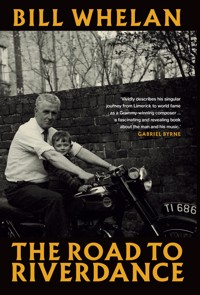
Riverdance exploded across the stage at Dublin's Point Theatre one spring evening in 1994 during a seven-minute interval of the Eurovision Song Contest hosted by Ireland. It was a watershed moment in the cultural history of a country embracing the future, a confident leap into world music grounded in the footfall of the choreographed kick-line. It was a moment forty-five years in the making for its composer. In this tenderly unfurled memoir Bill Whelan rehearses a lifetime of unconscious preparation as step by step he revisits his past, from with his Barrington Street home in 1950s Limerick, to the forcing ground of University College Dublin and the Law Library during the 1960s, to his attic studio in Ranelagh. Along the way the reader is introduced to people and places in the immersive world of fellow musicians, artists and producers, friends and collaborators, embracing the spectrum of Irish music as it broke boundaries, entering the global slipstream of the 1980s and 1990s. As art and commerce fused, dramas and contending personalities come to view behind the arras of stage, screen and recording desk. Whelan pays tribute to a parade of those who formed his world. He describes the warmth and sustenance of his Limerick childhood, his parents and Denise Quinn, won through assiduous courtship; the McCourts and Jesuit fathers of his early days, the breakthrough with a tempestuous Richard Harris who summoned him to London; Danny Doyle, Shay Healy, Dickie Rock, Planxty, The Dubliners and Stockton's Wing, Noel Pearson, Seán Ó Riada; working with Jimmy Webb, Leon Uris, The Corrs, Paul McGuinness, Moya Doherty, John McColgan, Jean Butler and Michael Flatley. Written with wry, inimitable Irish humour and insight, Bill Whelan's self deprecation allows us to to see the players in all their glory, vulnerability and idiosyncracy. This fascinating work reveals the nuts, bolts, sheer effort and serendipities that formed the road to Riverdance in his reinvention of the Irish tradition for a modern age. As the show went on to perform to millions worldwide, Whelan was honoured with a 1997 Grammy Award when Riverdance was named the 'Best Musical Show Album.' Richly detailed and illustrated, The Road to Riverdance forms an enduring repository of memory for all concerned with the performing arts.
Sie lesen das E-Book in den Legimi-Apps auf:
Seitenzahl: 568
Veröffentlichungsjahr: 2022
Das E-Book (TTS) können Sie hören im Abo „Legimi Premium” in Legimi-Apps auf:
Ähnliche



















THE ROAD TO
RIVERDANCE
Original handwritten score of Riverdance, 1994, showing the subsequent name change.
THE ROAD TO
RIVERDANCE
BILL WHELAN
THE LILLIPUT PRESS DUBLIN
First published 2022 by
THE LILLIPUT PRESS
62–63 Sitric Road, Arbour Hill
Dublin 7, Ireland
www.lilliputpress.ie
Copyright © 2022 Bill Whelan
Foreword © Fergal Keane
Index © Julitta Clancy, assisted by Elizabeth Clancy
Paperback ISBN 9781843518525
Hardback ISBN 9781843518600
Ebook ISBN 9781843518617
All rights reserved. No part of this publication may be reproduced in any form or by any means without the prior permission of the publisher.
A CIP record for this title is available from the British Library.
10 9 8 7 6 5 4 3 2 1
The Lilliput Press gratefully acknowledges the financial support of the Arts Council/ An Chomhairle Ealaíon
Set in 12pt on 16pt Granjon by iota (iota-books.ie) Printed in Spain by Castuera
For Dave and Irene who built the boat and for Denise, who always fills the sails.
Contents
Foreword
Acknowledgments
Prologue: The Point Theatre, Dublin, 1994
PART I: 1950 S – NEST AND NOURISHMENT
1. A Limerick Childhood – Home and Family
2. Pipe Bombs and Newsprint
3. The Nuns – Holy Disorder
4. Dave Whelan – Opening My Ears
5. Irene Lawlor – Love and Sacrifice
6. The Jesuits – Musical First Steps
PART 2: 1960S – GROWTH AND DISCOVERY
7. Comedy, Bands and Travel
8. Crime and Punishment – the Docket Book
9. Limerick’s Abbey Road – the Vortexion
10. UCD and a Crash at Lissycasey
11. College Life, Denise Quinn and London
PART 3: 1970S – LEARNING AND GRIEVING
12. Denise – the Second Sighting
13. Richard Harris, Bloomfield and the Limerick District Court
14. The King’s Inns and John Cosgrove
15. Dave Whelan – Leavetaking
16. Trend Studios and Down in the Pits
17. Denise in Belfast – Joining the Dots
18. Danny Doyle and Saturday Live
19. A Honeymoon
20. Stacc, the Jingles and the Springer Spaniel
21. The Dubliners, the Bards and Windmill Lane
PART 4: 1980S – HINTS AND EXPLORATIONS
22. What’s Another Year
23. Irene Departs
24. The Winds of Change, the ‘Galways’ and Planxty
25. Kate Bush
26. Van the Man
27. U2, Minor Detail and Dickie Rock
28. Noel Pearson, the Dublin District Court
29. New York – Beating the Golden Pavements
30. Seán Ó Ríada and Elmer Bernstein
31. Alcohol – the Yeats Festival
PART 5: 1990S – UISCE BEATHA – THE WATERSHED
32. An Eye on the Music and Seville
33. Trinity – Leon Uris
34. The Spirit of Mayo and Working with the Corrs
35. Riverdance – the Interval Act
36. Riverdance the Show
37. Reflections
Notes
Catalogue of Compositions by Bill Whelan
Index
Illustrations
FOREWORD
I have a bias. It is implacable. And remorseless. These pages are not the place to deny it. In fact, there is no place to deny it. If there was, you would not find me there. I belong to the Arch Confraternity of Bill Whelan Admirers (ACBWA) – a secret society of writers, musicians, dancers, chancers, Munster Rugby parking attendants, crubeen curers, dipsomaniac reverend mothers and the kind of people your in-laws would not want at the wedding. If you had a spare fiver, we would be on to you fast. And we know each other. A sly glance, a smart-alec remark, a sardonic snort half-heard. These are our rituals of recognition.
The Limerick evoked in this book was already vanishing when I lived there in 1979 as a reporter for the Limerick Leader. Bill brings it to life with verve and sympathy. We are shown the Limerick of Jesuits and convents, horses and hansom cabs, steam trains and coalmen, shawlies and hawkers. We visit places that have since disappeared, like Matterson’s bacon factory, Naughton’s chipper and Bill’s own family shop Whelan’s, where newspapers like the Irish Press were sold alongside The Beezer and School Friend. Always in the background are the acoustics of Bill’s formative years, the speech-music, accents and mannerisms of the Limerick people. We are taken through the sounds of the 60s where ‘Telstar’ sits comfortably alongside ‘The Walls of Limerick’ and where the teenage Bill (in his fledgling recording studio housed in the family attic) takes on the rock ‘n’ roll dreams of Limerick’s aspiring stars alongside a determination to compose and record his own music.
But there are hard realities to face when making a living as a musician in Ireland. Bill takes us through the joys and despairs that go with holding onto a dream while trying to survive in an industry that was second-guessing itself long before the explosive phenomenon of Riverdance. Whereas the likes of myself – a young singing-guitar player back in the day – drifted the way of many would-be stars where my talents were only called upon at social occasions where audiences were dulled by porter and grim wine, Bill stayed the course. Some might say this was because of his innate tenacity; he says it’s down to ‘luck, experience, and hard work’. But I think it’s because he loves what happens when he sits before a piano. It brings out a magic in him that he can’t name but that he knows belongs to him and him alone.
Thankfully for us, he has honed and shared this magic; his creative and collaborative instincts have taken him and Irish culture worldwide. In these pages, he has written a warm, affectionate hymn to Irish music and the men and women who gave it to the world. He is one of those rare figures who changed how Ireland felt about itself and how the world saw Ireland. He is one of our ‘greats’.
With reluctance, Bill was persuaded by the ACBWA to commit the stories of his life to print. He is a modest man. Nearly. In a life dedicated to music – and with the love of a great woman, Denise, four fine children, being blessed with the gift of friendship and having the occasional brush with enemies – he has much to tell us. The result is a mighty book. I laughed a lot.
Fergal Keane, August 2022
ACKNOWLEDGMENTS
To Kathy Gilfillan, who was the first to see there might be a book here, and who convinced and encouraged me to get up onto the bike. To Jennifer Brady, the most particular of editors, who combines the qualities of a microsurgeon with those of an evangelist – each time I looked up, there you were.
Thank you to Julia Kennedy, my researcher, who delved into the archival dust of Limerick newspapers, the King’s Inns, RTÉ and other sources, and who spoke on my behalf to so many figures from my past – you have made my job so much easier.
I am ever grateful to the first readers who pored over early versions of the text and came back with many helpful observations and encouragements: David Brophy, Gabriel Byrne, Aidan Connolly, John D’Ardis, Mary D’Ardis, Barbara Galavan, Teri Hayden, Andy Irvine, Fergal Keane, Lara Marlowe, Liz Nugent, Brian Palfrey, Barry Quinn and Darren Timoney.
To Antony Farrell at the Lilliput Press for all the advice and good counsel and to Ruth Hallinan, Bridget Farrell and Djinn von Noorden for so expertly guiding the boat into dock. To Niall McCormack for bearing up with the back-and-forth of the cover design. For the darker art of typesetting, thank you to Cillian and Marsha at iota-books.ie – together with the indexing work of Julitta Clancy and Elizabeth Clancy, all of you brought home the bacon (not Matterson’s).
To Barbara Galavan for overseeing the oversights and spotting the potholes. To Aislinn Meehan, ever the shepherd and goalkeeper and the best PA on earth. To Paul McGuinness for shouldering the wheel just when it was needed. To Padraic Ferry for his gimlet legal eye. To Peter O’Connell for skilfully ushering the book into the wider world of broadcast and print media. To Grant Howie at Grants for scanning the images.
To the following friends and colleagues who so generously took phonecalls, looked up diaries, adjusted my faulty recall and reminded me that I wasn’t the great fella I thought I was: Peter Ahern, Mavis Ascott, Robert Ballagh, Jean Butler, Maurice Cassidy, Pat Cowap, Joe Dowling, Colin Dunne, Julian Erskine, Anne Flanagan, Donal Fitzgibbon, Jim Flannery, Merle Frimark, Brendan Graham, John Halpin, Eileen Hudson, Cliona Lyons, Bill Myers, Brian Nolan, Aidan O’Connell, Paul O’Mahony, Peter O’Dowd, Peadar Ó Ríada, Aidan O’Sullivan, Roman Paska, Mick Reeves, Billy Sinden and Ged Spencer.
To Niall Connery, friend and lyricist, whose presence is threaded throughout this book. I was your Best Man, and you were mine – in so many ways.
In memoriam of my life-long friend Conor Gunne (1950–2022) and with sympathy to his love, Nessa.
And especially to Denise. And to David, Nessa, Fiona and Brian Whelan, whose influences are everywhere. To their partners Veronika Soumarova, Saad Filali, Darren Timoney, Eimear King and our grandchildren Riad, Aidan, Bill, Theo and Julian. I am blessed to have you all in our growing family – I hope you are only mildly embarrassed by what you read here.
To my Aunt Flo, for introducing me to harmony, now in her 99th year as I write this (and still singing).
Finally, to all in my wider musical recording and performing family. There is no way to bring what begins on the page to the eyes and ears of the audience without each of your gifted interventions and interpretations. I won’t say anything schmalzy like I love you all, but if love has a mix of wonder, empathy, attachment and admiration, I probably must do anyway. Thank you.
Bill Whelan, Roundstone, August 2022
PROLOGUE
The Point Theatre, Dublin, 1994
Dark-suited armed security men stand about twenty feet apart in front of the stage, arms folded, facing the audience, eyes scanning the crowd – impassive, watchful and seemingly impervious to what is happening behind them. For them, the show itself is not the focus; the attendees are: the Israeli delegation comes in for special protective attention; the Belfast/Good Friday Agreement is a few years away; who knows who might use the Eurovision as a platform for a spectacular political stunt? The theatre is at full capacity, including special guests, the President of Ireland, Mary Robinson, several TDs and dignitaries from many countries. The audience is high-spirited throughout the evening, waving flags and cheering. But the security team stand stock still, expressionless, a study in sphinx-like professionalism.
It is 1994, and the Point Theatre in Dublin is hosting the Eurovision Song Contest. Denise and I are in one of the front rows; the first part of the contest has just finished, and the juries are considering their verdicts – our moment has come: the interval act. The tension is unbearable. Four months of composition and intense rehearsal is about to be revealed before a 3000-strong audience in the theatre, but even more nerve-wracking, a TV audience of 300 million. Of course, it would be live. No margin for error. No safety net. Twenty-six dancers, led by the remarkable Jean Butler and Michael Flatley, are about to perform what has been endlessly rehearsed for weeks in sweaty dance studios.
With theatrical gravitas, the presenters, Gerry Ryan and Cynthia Ní Mhurchú, simultaneously announce: ‘Ladies and Gentlemen … “Riverdance!”’ Katie McMahon, soprano with the chamber choir Anúna, begins the choral introduction. In such an enormous venue, her pure ethereal solo voice commands attention and focuses the audience as a prelude to what is to come.
Over the next seven minutes, something unforgettable happens. The developments in Irish music over the preceding decades unite with the power of Irish dance in a celebratory and theatrical way that evokes a visceral response from the audience. It is as if we had been waiting for this type of performance for a long time, here it is at last and yet it catches everybody by surprise. The audience greets it with an exclamatory ‘YES!’ as if ‘Riverdance’ sprang from nowhere.
But ‘Riverdance’ did not spring from nowhere.
There’s a saying: luck is what happens when preparation meets opportunity. Luck, in this case, was the result of meticulous months-long prep, decades of experimentation in Irish music and technique and prowess in Irish dance and centuries of Irish culture.
As the last note sounds and the final footfall of ‘Riverdance’ pounds the floor, the audience jumps to their feet and rewards us with prolonged applause. I look at the security men, impassive, poker-faced and watchful. They are exactly as they were before the piece began.
But for the rest of us, everything has changed.
PART I
1950s – Nest and Nourishment
If we’ve lived in a city long enough to have given our truest and deepest feelings to its prospects, there comes a time when – just as a song recalls a lost love – particular streets, images, and vistas will do the same.
– Orhan Pamuk, Istanbul: Memories and the City
1. A Limerick Childhood – Home and Family
A voice. Late afternoon. Echoing round the streets of Newtown Pery.
‘Co-hole!’
Barely audible …
‘Co-hole!’
Two notes – as in the cuckoo’s song.
‘Chronny-co-hole … Haddle Limmry-Chronny-co-hole!’
Approaching the back lanes.
‘Pressaddled, Limmry-Chronny-co-hole.’
Jack Nash’s song floats around the Georgian corners of Limerick’s streets. The words sound like some esoteric chant, becoming clearer as he approaches, though their meaning eludes all who do not understand the local accent.
Pressaddled, Limmry-Chronny-co-hole is how Jack pronounces Press, Herald and Limerick Chronicle. His customary sales position is outside the Limerick Leader offices on O’Connell Street, where the newspapers are stacked in a nest of fruit boxes. But he also operates a mobile service, wandering jauntily through the streets and lanes, coat-tails a-flitter, singing the names of the sheaves of newsprint bunched under his arm. He is young and fit and wears a hat like the ones the Men of the West wear in a Seán Keating painting, though Jack’s is battered, greasy and often rainsoaked. On Sundays, his barker’s call is for the Press, Independent, Review, Dispatch and People delivered in plainchant style, and I remember that the ‘Pee-pul’ had a similar cuckoo two-tone cadence to the ‘Co-hole’ at the end of ‘Chronicle’.
I lie in bed in Barrington Street, the sun setting in the gap between St Joseph’s Church and O’Malley’s house next door, Jack doing his evening rounds. Early bed in summer means lying in dusky crimson light, listening to the aural fade of the city: older kids still playing in the lanes, swallows swirling round the eaves and the evening flights making their growling westerly approach to land at Shannon Airport. Soon all will be quiet, bar adult-murmuring from the kitchen. I will be left to my thoughts. I am drifting off, having said goodnight to my guardian angel:
Angel of God, my Guardian dear
To whom God’s love commits me here
Ever this day, be at my side
To light and guard, to rule and guide Amen
A kiss from my mother; curl into the sheets.
Sleep will not come; fears and terrors invade my mind. I have recurring horrors. One is that the end of the world is imminent; a car horn (Gabriel’s trumpet announcing the Apocalypse?) sets off panic. Another is that time will pass too quickly. My parents will die. I’ll be abandoned. (In time, this did happen, and neither my guardian angel nor I could do a thing to stop it.) But my absolute tongue-biting, stomach-clenching horror is especially reserved for a concept:
ETERNITY
When I allow my imagination to pore over the notion that conscious experience might never end, the sheer size of that thought, and the inability of my brain to accommodate it, propels me with a whiplash-like force, upright in the bed, eyes wide, breathless, close to vomiting. My parents find me back down with them in the kitchen on nights like this, shivering and mute; these sporadic moments of terror punctuate my early memories.
Our sense of place defines us; growing up when, and particularly where I did in 1950s Limerick, profoundly affected how I perceived the world and my position in it. Our house, 18 Barrington Street, presented contrasting impressions depending on which exit you used. From the front door, you got Limerick’s version of Harley or Wimpole Street. Private nursing homes (mostly maternity) and medical practices implied security and care. Doctors and dentists ran their clinics from the ground floors of their five-storey Georgian homes, lived upstairs with their families and parked their swishy cars outside. (Dr McDonnell, for example, had a massive imported American Buick.) St Michael’s Protestant church and school at the end of the street implied solid sensibility and conservative gentility. From the back door, the picture was dramatically different. Little Barrington Street (or School House Lane) comprised a terrace of tiny two-storey cottages where cramped living conditions and poor facilities made for a more frugal kind of living; nevertheless, these homes accommodated large families. The Tobins, directly behind our house, had so many children I never got to know them all; they were coming and going, day and night. An open sewer ran the length of the lane and emptied into a shore-hole covered with a slate slab where you would see rats foraging among the eggshells and potato skins.
Ab Sheahan, uncle to Frank and Malachy McCourt Jr, lived in one of these houses.1 The McCourt family had emigrated at that stage, and Ab lived alone. When Ab became frail, and even his customary lopsided gait deserted him, my mother sent me to his house with his lunch every day. His kitchen was dark. Sooty grime covered the walls from the open fire where he cooked. The house was lit by candles, and while I never knew what Ab’s toilet arrangements were, I knew that the house next door had none.2
At the end of the lane were the Lillises, who kept chickens and geese that wandered freely around the street. Beside the Lillises was a place of particular significance: the house of Imelda Lyons and her two beautiful daughters, Sylvia and Phyllis. I never knew where their father was. England, somebody said. Being a few years older than me, Phyllis was the subject of many boyhood fantasies. She had long hair, a luminously beautiful face, big eyes and a full mouth. She wore red lipstick, hooped gypsy earrings and clothes that recalled Carmen or one of those exotic women from my father’s films. I once overheard my father say that her sister, Sylvia, had a ‘beautiful carriage’. When I asked where she kept her horse, my father laughed and told me to run and play.
Occasionally, I was left in the care of Imelda, their mother, who also did some cleaning in our house. We called her Lyonzie, and I doted on her. Not only was she great fun to be with, but she took me for walks down Parnell Street, where all the pigs and bacon shops were. We’d pass the side of Matterson’s on Lady’s Lane, where through a small, barred window, we’d see pigs squealing and screeching down the narrow corridor on the way, Lyonzie told me, to becoming sausages. I was spared the details of how this transformation was achieved, but I certainly relished the results.
On the way home, Lyonzie would bring me into Naughton’s chip shop and buy me a bag of greasy sausage and chips with lashings of salt and vinegar. I devoured these with the kind of delight my mother never saw over her carefully prepared dinners. These extra-gastronomic excursions were not encouraged, but their clandestine nature brought extra relish to the taste.
‘Why aren’t you eating your dinner, Billy?’
‘Not hungry, Ma.’
‘Hmm … were you out with Lyonzie for a walk today?’
Silence.
In those days, goods and products were transported around the city by horse and cart. Each house on Barrington Street had a manhole with a cast iron cover concealing a cellar. The coalman arrived with his horse and dray, removed the cover and, hefting the big bags one by one onto his shoulder, emptied them down the manhole. I loved the sharp crack as the heavy inverted sack hit the path and then the long, shivering shower of coal spilling into the chasm, twelve feet below, the sound bouncing off the curving cellar walls. To protect his coat, the coalman always put a disused bag on his shoulder first, pointless since the coat was grungier than the bag. When I got older, I was sent to the front window to count the bags, to make sure we were getting what we had ordered.
We were so accustomed to horses on the streets in the 1950s I even have a foggy recollection of going to a Whelan family funeral in a growler or hansom cab. Horses were everywhere, as was evidence of their passing with its distinctive and evocative horsey smell. Bertie Hogan drove the horse and cart for the Tinsleys and the McMahons, the timber people. He also did nixers for my parents, for example, if they wanted something like a piece of furniture moved. Bertie was almost deaf, which meant you had to shout at him before he heard the request. Otherwise, he’d nod his head as if he understood, then ignore what you thought you’d asked him to do. Even if you were right beside him, you’d have to roar as if he were three fields away.
One day I was kicking a football with Mick Fraser, who lived in the tenement end of Barrington Street where five houses were let out in flats when our brave horseman Bertie passed by on his bike.
‘Hey Bertie,’ Mick roared, ‘will you be carryin’ down the horse?’ ‘I’ll be goin’ below to the yard in a while,’ says Bertie.
‘Will you give us a jant, will ya?’ bellowed Mick. ‘Ah g’wan, will ya?’
Bertie cycled off down the hill of Schoolhouse Lane and reappeared as promised, with his old brown mare pulling the big red low-loading dray behind him. As he turned into Barrington Street, he gave Mick a nod. We jumped onto the cart, and off we went, two outlaws on the streets of Laramie, with Champion the Wonder Horse trotting unevenly over the teeth-shattering cobbles, ready to fight any sheriff or redskin varmint we might encounter. We were, as the old Dublin saying goes, ‘in our Grannies’ – the place where anything is possible, and all is permitted.
There were many such opportunities in 1950s Limerick for young adventurers. The arrival of health and safety regulations changed that. Sensibly, these exploits would now be deemed hazardous, but back then, nobody seemed concerned. My boyhood pal, Leo McDonnell, and I occasionally wandered to the railway line at Limerick station while our mothers thought we were playing in the park on Pery Square. The romance of rail travel was magnetic, and we picked our way over the sleepers to where the massive steam engines were shunting goods-carriages and hitching up cars from the cement factory in Mungret. The trick was to place ourselves at the steam engines when they paused, hissing and belching like Bertie Hogan’s horse after climbing Barrack Hill. We’d look pleadingly at the driver and make signs with our thumbs like we’d seen hitchers do on O’Connell Avenue looking for lifts to Adare or Cork. Eventually, a driver would melt to our charms, reach down and lift us into the cabin: ‘Right lads, only a short run now. That’s all ye’re getting.’
He’d put his hand on the iron throttle and turn it to the right. Then we’d hear the powerful whooshes of steam from underneath us as the engine moved slowly through a curtain of vaporous haze and a chorus of screeching steel and iron. Off we went, out along the shunting spur line to Rosbrien. Sometimes the driver let us pull the chain, and the whistle’s reverb sounded around the houses of Roxboro Road. At Rosbrien, we’d reverse down a siding, pick up extra railcars, and then back to Limerick station and the shunting yard. The odd time, the driver let us put our hands on the throttle or shovel some of the oily coal into the fiery mouth of the furnace. I wondered if hell could be hotter than it was in there. Years later, when I heard Warren Zevon’s ‘Nightime in the Switching Yard’, these days were brought vividly to life. Finally, the driver would lower us back down onto the shingle around the rail track near Limerick station: ‘Now, feck off home with ye, and tell no one ye were out in Rosbrien, or I’ll be murdered.’
His secret was safe.
I recently read Orhan Pamuk’s engaging story of his early life, Istanbul: Memories and the City, and was taken by a similar experience to his I had as a boy in 18 Barrington Street. In one of our bedrooms, rarely used, was a piece of furniture with a central full-length mirror and wing mirrors that swivelled on hinges. Like Pamuk, whose mother had a similar piece in her room, I could arrange the side mirrors in such a way as to see a million images of myself echoing off into the distance. I’d stare at this illusion, overtaken by existential panic akin to the feeling I had when I thought about eternity.
It was one of the many times as a boy, alone in that big house, I faced intimations of the incomprehensible nature of the self. I’d hear myself say: I am me, not anyone else! And this realization was profoundly upsetting. Often, my instinct was to run; find something to distract me from the dizziness of it. It was like staring down a bottomless well. Times like these I wished for a brother or sister.
My parents – Dave Whelan and Irene Lawlor – were late to child-bearing. He was forty-four and she was thirty-five when they married on 29 June 1945. I was an only child. They lost a baby before I arrived on 22 May 1950. All I knew about the baby was that his name was Stephen, and that he died during, or shortly after, childbirth.
Their backgrounds were diverse. Both came from families who began life in Dublin but moved to Limerick for different reasons. My mother’s family, the Lawlors, left Dublin because my grandmother Mary, née Hughes, was unhappy living in a turbulent city of riot and revolution in the early 1900s. She was originally from Monaghan and feared the Irish Republican Army (IRA), the Irish Republican Brotherhood (IRB) or any nationalist organizations active at the time. She persuaded my grandfather, Michael, a tailor at McBirneys in Dublin,3 to apply for a position as a cutter in Todds of Limerick. He got the job, and the family moved south. The Lawlors were physically small, middle class and lived in swanky-ish Ballinacurra. Their children were expected to head for careers in religion or the professions.
The Whelans, by contrast, were tall, came from trade (fitters and labourers), were early school-leavers and were marked with Limerick working-class signifiers – accents, for example. My father called me Willum; to my mother, I was Billy. Before advancing to serious competitive rowing, my father was a member of a junor rown club; to my mother, he was a member of a junior rowing club – those extra syllables or elisions said much about where you came from. The native Limerick accent has a distinctive music to it. It is spoken slowly, largo, as opposed to the clipped staccato of Kerry or Belfast. Despite its unhurried pace, syllables considered unnecessary are dispensed with: junior becomes junor. And William becomes, well, Willum.
When I heard WILLUM bellowed in the house, I knew things were amiss. This was not often. My father, Dave Whelan, was mildmannered, and (this may seem odd in the context of today’s style of parenting), he only hit me once. I don’t recall what it was about; we were in the kitchen, him leaning over the sink washing dishes, when he turned suddenly and whacked me on the shoulder. The shock. A stream of hot pee coursed down my leg. I was so winded I couldn’t cry.
Time stopped ticking.
I can still see the blue tiles behind the sink, the yellowing cracked plaster, the Ascot geyser running hot water into the basin, and my father’s face furrowed, frowning: ‘Go upstairs and change your pants, Willum.’
Time started ticking again.
Now, when my daughter or her husband threatens our grandson Riad with ‘time out’, I remember what ‘time out’ meant to me that day at the sink in Limerick. A rare display of anger from my father. I had rattled his cage about something. Mostly, he was the peacemaker between my mother and me. She had easy recourse to the wooden spoon: my scarlet legs were a testament to the creative uses of kitchen utensils.
The Whelans were in Limerick because my grandfather had a chequered history with the British authorities. Dave Whelan was born in 1901 in Limerick. His father, William Whelan, a Dubliner, was born in 1853. It only dawned on me recently that my grandfather was a baby around the Famine years, a realization that draws that genocidal period closer than it seemed in history class. As a youth, Grandfather William (Bill, as he was known) was a member of or closely associated with the Invincibles – a nationalist group splintered from the IRB. His brother Daniel was arrested and imprisoned in Kilmainham Gaol in 1882 for conspiring to distribute ‘large quantities of arms and ammunition to disloyal persons and other illegal abuses’. 4Bill himself was incarcerated in Harold’s Cross Gaol, aged fourteen, for some anti-British offence. When he was released, he couldn’t find work in Dublin because of his republican record. So, he moved to Limerick, where he found more appreciation for his past achievements. He met Mary Campbell (my grandmother) there and married her in 1884.
Obituary from a Glasgow newspaper for grandfather William Whelan.
My father’s side of the family observed an omertà on all matters to do with 1916, the subsequent War of Independence and the Civil War. His three brothers and four sisters were a reserved brood that kept mainly to itself. This reticence to engage in too much sociability may have sprung from living during the Irish struggle for independence, where a stray word could have disastrous consequences. I only found out recently that as a teenager, my father was involved in blowing up two bridges: one in Annacotty in County Limerick and the other in Bunratty, County Clare. I never realized he was so active. However, bubbling under this opaque exterior was a gentle humour: wry, ticklish and sharp, that occasionally stretched to the scatological, delivered with winking schoolboy mischief, evoking eye-rolling mock annoyance from my mother.
My father’s two sisters, Celia and Kathleen, were kind and lavished attention on me, their nephew. I was the only Whelan offspring to keep the name alive: none of my father’s three brothers produced heirs. One brother, Willie, was a monk in Roscrea. He was gentle and, like the rest of them, so tall, I was convinced he could touch the clouds. As a boy, I accompanied my father on his yearly visit to the monastery where I learnt what a vow of silence meant. I witnessed my uncle Willie communicating with the monks by sign language, though he was allowed speak to us. Another brother, John, taught at the Municipal Technical Institute on O’Connell Avenue. I have no memory of him except for a vague image of a moustache.
Celia and Kathleen ran a sweet and newspaper shop on Wolfe Tone Street under the name Pádraig Ó Faoláin.5 My uncle, Pat Whelan, had owned the shop, but as he became more involved in Limerick political life, his sisters took over the running of it. I was fond of Uncle Pat – he’d an upright, military bearing and a bulbous nose advertising familiarity with whiskey and late evenings; he conducted much of his political business from Mulcahy’s pub on High Street. I remember being sent there to give him a message and was struck by the dark, musky atmosphere oozing from the wooden barrels in the conspiratorial sawdust.
For all the Whelans’ habitual silence on matters historical, I discovered via the Bureau of Military History (BMH) that my uncle Pat served his country well during the revolutionary period around 1916.6 One of the most striking stories from his witness statement concerned his membership of the IRB, a revolutionary organization bound by an oath of absolute secrecy. One evening he attended a clandestine meeting of the IRB in Limerick. He arrived at the appointed house and, looking around the room, saw a few faces he recognized. One of the senior men present was his own father. He had no idea until he saw William Whelan sitting there that they were members of the same underground organization.
Given that both men lived in the same house, this was a testament to their absolute and strict observance of secrecy. Pat was active up to and including the War of Independence 1919–21. My father told me that he was regularly pulled out of his house at night by the Black and Tans. He was sometimes blindfolded, put on a truck with a gun to his head, and driven around the city as a human shield into areas of Limerick where the Tans knew they’d be targets. He continued his active involvement in the IRB, but a murkier silence descended when the Civil War ensued (1922–3). I have no idea what he got up to then. Given their Labour affiliations, I suspect all the family took little or no part in proceedings. Pat did not reappear until his involvement in Limerick local politics later when he later ran unsuccessfully for mayor.
Pat, Celia and Kathleen lived together in the Whelan family home, Celtic Villa, on a terrace of neat houses on O’Connell Avenue, suitably middle class – distinct from the nouveau riche in emerging Ballinacurra or the old merchant money on the Ennis Road.
On the rare occasions when my mother and father went to the ‘pitchers’ at one of Limerick’s many cinemas, my two maiden aunts, Celia and Kathleen, babysat. They arrived, pockets full of sweets or biscuits, which I happily stuffed into myself, only to return them later via an explosive semi-digested spume having had some nightmare involving banshees or the boogeyman. The challenge then, for all three of us, was to get the puke cleaned up and me back into bed before my parents returned from an evening with Greta Garbo or James Cagney.
The rest of my father’s family remains a mystery to me. I remember when my uncle Willie died in the Cistercian Monastery in Roscrea. My father returned from Willie’s funeral having witnessed his brother being buried in a sack. Willie’s possessions came back to Limerick in a shoebox. In it were rosary beads, a penknife and a prayerbook – nothing else. As a boy, I often pulled out this box, examined the contents and wondered how a man got through life owning just three things. Well, four if you include the box.7
2. Pipe Bombs and Newsprint
BANG! The explosion echoed around the red-brick walls of Newtown Pery, the Georgian Quarter of Limerick. Here, amongst the halfbuilt or abandoned houses, is where we climbed, explored and got up to mischief – Cowboys and Indians; Germans and GIs, Japs and Geronimos peopled these urban theatres. Our young minds gave free rein to imagination and enacted mayhem and havoc. From time to time, as a break from the fantastical, they strayed into the real world.
‘Reeves knows how to make a pipe bomb,’ said Blookie Coughlan, removing his brother’s FCA helmet and laying down his wooden machine gun, which doubled as a hurley. We’d just had a ferocious gun battle with the Japs in the hot streets of Mandalay.
‘What?’ we all stared at him.
‘Yeah, he told me last night. Just a mixture of weedkiller and sugar, a fuse, and a length of copper pipe. Fill the pipe with the powder mix, shove in the fuse, hammer both ends closed, stick it in a brick wall, light the fuse and stand well back.’
Our mouths were open.
‘My da has loads of weedkiller in the cellar,’ I offered.
‘And I can get any amount of sugar from our pantry,’ said an excited O’Connell.
‘No problem with the copper piping,’ said Wirey Spencer, whose father had a plumbing business.
The four conspirators sat and considered the plot. ‘The fuse,’ said O’Connell. ‘We have no fuse.’
‘Sully will know,’ said Blookie. ‘I’ll be seeing him tonight. The rest of you bring your stuff, and let’s meet here tomorrow after Benediction in the Jesuits.’ He flipped his helmet on and headed back into the killing streets of Mandalay.
The following day at the appointed time, the deadly gang had morphed from soldiers in the heat of Burma to explosive experts planning to blow up the English Parliament. We assembled in the old, ruined buildings at the back of Verona Villas. There was still a perfume of ecclesiastical incense about us after our half-hour of devotion to the Blessed Sacrament. The puzzle of the fuse was solved by the ever-resourceful Sully, who fashioned a suitable charge with one of his uncle’s pipe-cleaners and some Airfix glue from a model aeroplane kit.
Fireworks were illegal in Ireland (still are), the government deeming it too dangerous to leave explosive material in the hands of its volatile citizenry. So, we were forced to make our own. Following Reeves’s instructions, we set about mixing the materials, stuffing the pipe, and inserting the fuse. Then the bombers picked a vulnerable spot in the ‘parliament’ building, crept up and planted the delicate device. Sully lit the fuse. We ran behind a wall and waited. It took so long to ignite we were nearly tempted to go back and see what had gone wrong when the blast happened. It wasn’t the cataclysm we’d hoped for, but there was a satisfaction in picking up the fragments of shattered bricks and dried cement that littered a small area around the parliament walls.
The young guerrillas retired for the day, vowing to return for more of the same exciting adventures the next day. Which we did, several times, until Mrs Slattery, who lived on Verona Villas and sat staring out the window all the time, told our parents. That was the end of the explosive careers of the bold Verona Villa Bombers, most of whom got their arses reddened for their trouble.
My parents, Dave and Irene, spent their married life working alternating shifts in our shop. Positioned at the top of William Street, it sold, well, everything from newspapers and comics to what was referred to as ‘fancy goods’ – from sweets to watches and jewellery. Adjacent to the main shop was a smaller premises we opened occasionally. At Christmas, we sold toys here, and when the big Munster Gaelic football or hurling games were on, we got up early, made ham sandwiches and sold them to the crowds on their way to the match.
The main shop operated 364 days, 7.30 a.m. until 10 p.m. We were closed on Christmas Day, the only time my parents and I sat together to eat. Normally, I had lunch (or dinner as the midday meal was called) with my mother and supper (or tea) with my father before he returned to the shop for the evening shift.
The shop dominated our lives. We never took a family holiday. I can’t remember either of my parents taking time out. My mother did go to Kilkee once with Betty Smith, my godmother, but that’s about it. The shop was our anchor. It rooted us geographically and adhesively to the source of our livelihood. Every morning at 7.40 a.m., a man I called Browncoat – he wore the same brown coat every day tied around the waist with a string – pulled up outside on his bicycle, entered the shop and bought The Cork Examiner and twenty Woodbine. He never spoke a word as he took the newspaper from the counter and pointed at the cigarette display. It was essential to be there for him in case he went across the street to Nellie Woods, the competition, and we’d lose a customer.
More than anywhere else in my young life, the shop introduced me to the strata of Limerick society. Our customers included local politicians, bankers, tweedy county types, labourers, scrap-metal merchants, coalmen, teachers, farmers, lawyers and shawlies – women who looked like they’d wandered off a page of history, dressed in black shawls, who sold things like molluscs, periwinkles and seaweed from handcarts on street corners. My memory of this colourful collection of Limerick folk is strong. I became aware of the speech-music, accents and mannerisms particular to each group. I was also introduced to the off-handed style of Limerick humour, still in evidence today – slightly mocking but ultimately warm.
There were three principal daily newspapers: the Irish Press, the Irish Independent and The Irish Times. The Irish Press was run by the de Valera family, and it was the organ of the establishment party: Fianna Fáil. The Irish Independent was the mouthpiece of the opposition party, Fine Gael, which had taken a pro-Treaty stance during the Civil War. The Irish Times in those days was the paper for a Protestant and somewhat West-British viewpoint. In the 1950s, our shop stocked hundreds of the Irish Press and Irish Independent and about ten of The Irish Times. It’s interesting that nowadays, the Irish Press no longer exists, the Independent Group has become powerful, and The Irish Times is distributed in large quantities to every town and village in the country.
Besides these daily publications, my father insisted on stocking nationalist papers like the United Irishman, Rosc, An Phoblacht, Aiséirí and the occasional left-leaning pamphlet. We also sold a wide selection of children’s comics: to this day, I still meet people in Limerick who were brought to Whelan’s to buy The Beano, The Dandy, The Beezer, The Topper, School Friend, Bunty, Judy, The Hotspur or one of the American Dell series comics.
3. The Nuns – Holy Disorder
The crude wooden box was wheeled into the classroom on wobbly castors. Sister Raphael took a ring of keys that hung beside the rosary beads beneath her voluminous habit, put a key into the brass padlock, and snapped it open. She swung back the door. Out tumbled a pandemonium of tambourines, triangles, snare drums, cymbals, whistles, recorders and maracas. The excitement, the sense of possibility this little bandbox contained when Sister Raphael released its frolicsome contents, is among the more evocative memories from my days in the Presentation Convent School; another is the vinegar tang of the sour milk distributed at school lunch. The remaining memories are a collection of incoherent impressions I wouldn’t describe as particularly happy – more neutral and impermanent. There was a vague feeling of being set apart from the boys in my class; I recall being mildly bullied by older boys from places like Roxboro, Pennywell and Garryowen. That my aunt Flo (Sister Alphonsus as she was known) was a teacher in the affiliated girls’ school gave me some advantages that had the unfortunate side-effect of making me different to my classmates. Not belonging was something I didn’t like. I wanted to be accepted by my peers, not particularly by the nuns.
‘Billy, come on now, leave that train set,’ said my mother. ‘We’ll go up and visit Auntie Flo for the afternoon.’
I knew what was ahead of me.
My mother dressed me in my Sunday best, and because my legs were so thin (and she was ashamed of them), she insisted I wear long trousers, which was an anomaly for a boy in the 1950s – you didn’t wear long trousers till you were a teenager. So, I was dressed like a little man for the outing.
At the convent, a nun showed us into the parlour and rang Flo’s bell – each nun had a distinctive pattern of rings. Flo arrived, breathless from halls and stairs. She was my mother’s youngest sister and occupied an important position in my early life. She trained a small singing trio, and it was with Flo I heard harmony for the first time. I still recall the feeling that came over me as those three voices separated and combined into something profoundly beautiful – an early glimpse of the exquisite.
The parlour, like the rest of the convent, was spotless. Not a speck of dust, parquet floors buffed and shining and the perfume of beeswax.
‘How are you love?’ my mother greeted Flo.
‘Oh, fine,’ she said. ‘And how’s my favourite nephew?’ Flo had many nephews, but the one in the room was always her favourite.
‘I’m fine, Aunty Flo,’ I said.
She planted a kiss on my cheek. It was a pleasure being kissed by my young aunt Flo. She was pretty, unlike some of the more gnarly nuns in the convent. Flo reached into the sleeve of her tunic and, with an abracadabraesque flourish, produced a bar of Cadbury’s Dairy Milk.
My mother and Flo got down to some adult conversation while I made inroads into the chocolate, staring at pictures of saints with holes in their hands, arrows in their chests, bleeding hearts and other physical wounds of the kind that fascinate the imagination. My aunt Flo’s sweetness and harmonic musicality were at odds with these images of suffering.
The rest of the afternoon involved walking slowly behind Flo and my mother around (and around) the endless oblong convent garden. To my squirming embarrassment in later life, Flo loved telling how I stared up at the statue of the Infant of Prague who stood in kingly attire, one hand holding a globe, the other raised in a posture rather like that of an orchestral conductor: ‘Gimme the ball,’ I demanded.
The statue stared beyond me towards some celestial horizon.
‘Gimme it,’ I insisted.
Still no response.
‘You can’t conduct. You’re not able to conduct!’ I shouted at the unfortunate infant. ‘Gimme that ball!’
We moved on, passing St Patrick with his crozier and his collection of nervously departing snakes, and onwards to the beatifically beautiful and serene statue of the Blessed Virgin, eyes downcast, her expression showing how serenely and sadly she carried the sorrows of the world.
Multiple circles around this devotional space ensued, a few additional visits to the glasshouses and vegetable gardens thrown in for luck, plus several encounters with Flo’s ‘sisters’. Finally, when both my chocolate and patience were long exhausted, I resorted to the effective repetition of that well-known children’s refrain while tugging on my mother’s sleeve: ‘Will we be going soon?’ This song was delivered in what my mother referred to as my ‘cry-nawny’ voice designed to grate on the nerves of the most tolerant of adults.
At last, escape was near. We were saying goodbye to Flo in the main hallway when, through some miraculous semaphore, our departure was signalled to the community, who now appeared from the labyrinth of quiet nooks and corridors to say goodbye. I was put sitting on the hall table, and the comforting faces of Sister Raphael and Sister Berchmans, who taught me in kindergarten, appeared. All was going fine in the farewell ritual until out from the forest of wimples and veils, belted habits, crucifixes and rosaries appeared this large elderly nun I hadn’t seen before. She was clearly someone important since a path appeared through the crowd so she could reach me. In her hand, she’d some Cleeve’s toffees. She held them out to me and, just as I was about to take them, put her face up close to mine. There was a whiff of snuff and onions about her, and she’d the beginnings of a moustache like my uncle John Whelan’s.
‘What do you say, Billy?’ she asked.
I looked at my mother for a hint. She was nodding and smiling as if I should know. The big nun’s face drew closer, obliterating all else from my vision. ‘What do you say?’ the nun’s cheek was a millimetre away from my lips. The pong of Lifebuoy soap joined the scent of onions.
I panicked. I was not going to kiss this strange face. I pulled away and heard myself say: ‘I am sick and tired of bloody nuns!’
I looked around for support.
A moment of silence was followed by sharp intakes of breath from the older nuns, and titters from the younger ones. The old nun seemed amused and, pressing the toffees into my hand, gave me a little hug. ‘Oh, you’re a real ticket,’ she said and looked sadly at my mother.
I was hurriedly gathered up like an embarrassing bundle of laundry and propelled along Sexton Street and home to bed early – without tea.
4. Dave Whelan – Opening My Ears
The Minstrel boy to the war has gone,
In the ranks of death you will find him;
His father’s sword he hath girded on,
And his wild harp slung behind him;
‘Land of song!’ said the warrior bard,
‘Though all the world betrays thee,
One sword, at least, thy rights shall guard,
One faithful harp shall praise thee!’1
My father was on the Wurlitzer organ in our music room, which we called the drawing room for some reason. With his limited technique, he one-handedly picked the tune out on the keyboard like somebody rooting in a rattle-bag for jewels. I never hear the melody of ‘The Minstrel Boy’ without feeling an emotional twinge. The beautiful melodic structure of the tune evokes the brave and noble self-sacrifice that motivated those who fought in 1916. Though written for the fallen in the 1798 rebellion, Thomas Moore’s lyrics still carries feelings of the altruism, anger and desperation that drives men and women to extreme action in the name of their home place and tribe.
I’ve many memories of my father’s influence on my love of music, although he was long gone before I appreciated it. It was as if he’d slipped these gifts into my pockets without my knowing, only for me to discover them in later years. His harmonica-playing was better than his struggles with the keyboard. I used to sit under the kitchen table with two knives and a biscuit tin and drum along to his renditions of ‘Scotland the Brave’ on the mouth harp. Later, I added a spoon to the biscuit tin lid to give it a rattle like a real snare drum. He sometimes appeared in my room if I was sleeping late, playing a tune with the harmonica in one hand to wake me up, the other hand beating out the tune’s rhythm on the resonant wooden doorframe.
He was a one-man band on these occasions. Mad improvisational possibilities transfixed my musical brain. Whether on biscuit tins or hot-press doors, music-making was available everywhere. He would take me to the rehearsals of the Limerick Pipe Band in a small house on the Boherbuoy beside the People’s Park. I’d sit beside the drummers in this tiny room as red-faced pipers blew into their bags and tore into a selection of marching tunes. I can see how they were called ‘war pipes’ – the noise was thunderous and stirring. The crisp detail of the drumming got me going – all those complex cross patterns.
Once my father called me down to meet Mick Dunne, a commercial traveller who sold miscellaneous items to the shop. Mick, a keen amateur drummer, always had his sticks with him. He taught me the correct way to hold them and introduced me to the rudiments of drum rolls and paradiddles. I was mesmerized by how the two-handed pattern of ‘mama-dada mama-dada’ turned into a seamless drum roll on the counter of our shop when he upped the tempo.
In 1959, days before my ninth birthday, an amazing South African group called the Golden City Dixies2 were on tour and played at the superb Savoy Theatre in Limerick. The Savoy was a cinema, but it had a great performance stage, with a massive organ set into the structure of the building, which seated 1500 people. The Dixies were distinguished not only by their excellent music but also because they were black South Africans, unlike the blackface acts that proliferated in the UK at that time. My dad took me to see this show; I was open-mouthed throughout the performance.
A friend of his, Jim Carroll, was in the orchestra pit recording the show. When it was over, we went down to the pit, and my dad asked Jim if we could have a copy of the recording. Sure enough, a couple of days later, my dad appeared with a BASF reel-to-reel tape recording of the whole evening. I listened to it daily on our Philips tape machine for months and had it nearly off by heart. I even learnt a couple of their South African songs phonetically (in Xhosa or Zulu), as well as the anthemic ‘Marching to Pretoria’.
By now, I’d learnt a bit of banjo and ukulele from my uncle Harry and had performed the three Dixies pieces on the stage of the Crescent College Mission Concert. I had to stand on boxes to reach the mic, which was suspended from the ceiling – nonadjustable. I still think the audience wasn’t sure if this was a musical item or a circus balancing act. I suspect my lifelong discomfort with heights began here at this, my very first public performance.
Dave Whelan’s interests were broad. He was an amateur photographer (I still have many of his photos) and converted a pantry in our house into a darkroom where he installed a Durst enlarger and stored chemical accoutrements for developing film. This room was kept locked in case curious young hands found their way to the bottles of toxic developers or fixers. It was a magical place. I used to sit on the counter with him in the amorphous bordello-red gloom and watch the ghostly images slowly and miraculously materialize on the printing paper. He was constantly experimenting with different cameras. His friend John Ryan had a camera shop and allowed him to exchange, try out or trade in cameras as new models became available. At various times there were Hasselblads, Nikons, Rolleiflexes, Minoltas and Leicas, and a raft of accessories in the house. It was a source of endless puzzlement to me later how my father managed to pay for these things, given that our shop wasn’t exactly a major retail outlet.3
One example of his creativity around financial matters concerned an oil painting by Seán Keating. Both parents were interested in art. They went to evening auctions in Limerick to acquire Irish paintings to hang on the walls of our house. My father also made regular visits to local galleries to keep an eye on what might come on the market. One day, he made an appointment to meet the manager of the Munster and Leinster Bank on O’Connell Street in Limerick. He arrived at the office, spruce as always – bow tied and suited.
‘Well, Dave, nice to see you,’ said the manager as they sat down. ‘What can I do for you today?’
‘I wanted to see about a small loan,’ said my father.
‘I see. And how much are we looking for?’
‘Eh, I was thinking about £400?’ He was trying to sound casual.
‘Holy God, Dave, that’s not a “small” loan. Are you buying a car or something?’
(We never had a car – the Whelan family went everywhere on bicycles.)
‘Ah, no,’ said my father. ‘You see, we’re having some trouble with the drains at the back of the house – dampness seeping into the walls, d’ye know? I wanted to install new chutes and down-drains and replaster the back wall.’
They talked it back and forth, and finally, having been assured that business was good in the shop and Christmas was coming, the loan was approved.
Later that day, the manager closed the bank as usual and went on one of his regular strolls around Limerick, calling in to see his various clients along the way. One of those clients was the Goodwin Gallery on O’Connell Street. He browsed around the gallery floor, looking at the paintings, and encountered the owner. They exchanged pleasantries, and then the bank manager inquired: ‘I notice that the Seán Keating painting has gone. A great piece, wasn’t it? When did you sell it?’
‘Funny you ask,’ said the delighted owner. ‘Only this very morning.’
‘Ah, go on,’ said the manager. ‘And may I ask who bought it?’
‘You know Dave Whelan?’
The manager’s eyes widened. He nodded.
‘Dave’s been in and out looking at it for weeks, and didn’t he appear about three hours ago and bought the bloody thing!’
‘Did he now?’ said the manager, barely smothering his ire. ‘And what did it go for, can you tell me?’
‘The asking price,’ said the proud gallerist with a big smile, ‘£400.’
My father struck the Munster and Leinster Bank off his list for future potential loans. And anyway, he fixed the drains and did the plastering himself.
My dad was fifty years older than me. While we didn’t play football or engage in father-son physical activities together, he did stimulate my auditory imagination with an eclectic range of music. His record collection included jazz musicians Thelonious Monk, Art Blakey, Dave Brubeck, Wynton Kelly, Duke Ellington, Glen Miller and Johnny Hodges; opera greats like Jussi Björling, Joan Sutherland and Renata Tebaldi; boogie-woogie and ragtime artists like Winifred Atwell; folk singers like Connie Foley, and the Clancy Brothers; music-hall, variety and vaudeville artists like Harry Lauder and Victor Borge. And that was just the vinyl. He had a massive collection of 78s that I still haven’t had the nerve to examine.4 Later, rock ‘n’ roll came into the mix with Bill Haley and the Comets, Elvis Presley, Johnny Kidd and the Pirates, Emile Ford and the Checkmates and Tommy Steele. His musical curiosity was restless, scanning for what was new and interesting.
And then there was film.
One day, my mother came in for lunch to find my father and his friend, Fr Jim Fitzgerald in their shirtsleeves mixing sand and cement. They were converting the pantry adjacent to what we called (grandly) the breakfast room into a projection booth. They’d drilled two holes in the wall, one for projecting and one for the projectionist to view the movie. He had a 16 mm Bell and Howell projector on a stand he’d made himself. A bedsheet, eventually to be replaced by a snazzy foldable screen, displayed the movies in the breakfast room. To my mother’s patient resignation, exit breakfast room, enter home cinema. Now they could go to the ‘pitchers’ whenever they liked.
Every second Friday, my father cycled to Limerick railway station and collected a box of films rented from a company in Dublin. They had to be returned on the Monday train. So, on those weekends, we gorged ourselves on Charlie Chaplin, Buster Keaton, Harold Lloyd, Laurel and Hardy, Abbot and Costelloe and feature films with famous English or American film stars fighting heroic battles against Red Indians, Japanese, Nazis, Russians or Mexicans. Often these kinds of action films disappointingly descended into boring talking and kissing with glamorous swooning women, something I hadn’t come to appreciate yet. If things ever got steamier, my mother said: ‘Billy, go upstairs and get into your pyjamas,’ or some similar diversionary tactic.




