


Erhalten Sie Zugang zu diesem und mehr als 300000 Büchern ab EUR 5,99 monatlich.
- Herausgeber: The Lilliput Press
- Kategorie: Sachliteratur, Reportagen, Biografien
- Sprache: Englisch
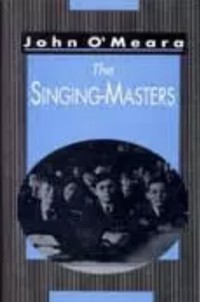
This essay in autobiography opens in Eyrecourt, east Galway, and describes an early schooling at Rockwell and the experiences of a Jesuit novice at Emo Court, Co. Laois, and Rathfarnham. John O'Meara read classical studies at University College, Dublin, and after a spell of teaching at Clongowes Wood left in 1942 on a travelling studentship to Oxford, where he gained a doctorate three years later. In 1947 he married Odile de Montfort, whom he met in Dublin. The Singing-Masters is written with singular clarity and leaves an abiding impression of Ireland between the wars – the hothouse atmosphere of a diocesan seminary, the lure of the Irish countryside (Eyrecourt in summer, Tullabeg in winter), a fledgling state increasingly dominated by the Church – drawn into perspective by a visit to Lourdes and by the author's self-questionings. In wartime Oxford, where he met Lutyens, Waugh and Belloc, Dodds and Father D'Arcy, O'Meara comes of spiritual and intellectual age, linking Ireland once more to the traditions of theological Europe, and finding his singing-masters in Augustine, Eriugena and the Neo-Platonists. With this quiet celebration of selfhood, and in its limpid recall of time gone, John O'Meara has created a classic of its kind
Sie lesen das E-Book in den Legimi-Apps auf:
Seitenzahl: 191
Veröffentlichungsjahr: 1990
Das E-Book (TTS) können Sie hören im Abo „Legimi Premium” in Legimi-Apps auf:
Ähnliche



















THE SINGING-MASTERS
John O’Meara
LILLIPUT PRESS
DUBLIN
For my wife Odile and our children Dominique, Catriona and Odile
[Your letters] will speak to me of
Christ, of Plato, and of Plotinus.
– Augustine, Letters VI. 1.1.
O sages standing in God’s holy fire
As in the gold mosaic of a wall,
Come from the holy fire, perne in a gyre,
And be the singing-masters of my soul.
– W. B. Yeats, ‘Sailing to Byzantium’
Contents
Title Page
Dedication
Epigraph
PROLOGUE
ONE
TWO
THREE
FOUR
FIVE
SIX
EPILOGUE
Copyright
PROLOGUE
THIS is not only some account of my earlier life: it is also some account of the formation of my mind and its preoccupation, from early consciousness, with ideas that can be described as Platonic and Christian. The method of the book is not that of prolonged analysis of a psyche: the matter is approached through action, through the recounting of episodes and anecdotes that are frequently far from solemn. Did not even Socrates address himself to serious matters with light-heartedness, and a touch of irony? Wordsworth’s ‘Ode on Intimations of Immortality from Recollections of Early Childhood’ supplies a text for each of the chapters.
ONE
Heaven lies about in in our infancy!
MY FIRST shadowy recollection is of my father pausing at the end of my brass and iron cot at night to look at me. The recollection must indeed be shadowy, since he died on the 29th of December 1915, when I was just over ten months old. Doubtless this is a projection of something told later to me by my mother, who had a tendency to rehearse the past and the capacity to make one relive it with awed attention. My earliest firm recollection, however, is of my ‘realization’ that I was encompassed by an insubstantial world. What I saw before me – people, houses, trees – was but an image which disappeared when I turned around, to be replaced by a new image at my back. The ‘world’ fell away immediately behind and immediately beneath me. It was a frightening thought, but fortunately I was not always occupied in thinking. What was uppermost in my mind, however, when I did think, was the knowledge that I was on trial and was usually found wanting. This was discouraging. All the beings around me, principally my mother, my aunt, and my younger brother Patrick, the maid, and the yard-man, were agents of some Great Being who manipulated all. They too, however consistent and continuous, were images that appeared and disappeared. I was alone in this particular imaginary cosmos, although I did not presume that it was the only such cosmos. I did not think of this.
Looking back on it I can see that the Christian teaching on God, the angels (and demons), and the individual soul, as interpreted to a child of three years old by his Catholic family, priests and nuns in East Galway towards the end of the First World War, had some part to play in the building of such a Weltanschauung. Although the Great Being seemed more impersonal than the Christian God, and his agents more insubstantial than guardian angels or the wicked spirits, who (according to the prayers of Pope Leo XIII recited aloud at the end of Mass) ‘wander through the world for the ruin of souls’, yet a child might be influenced by one picture in the construction of another. I was on trial. Failure involved punishment. Could God both love and punish what He made? I could not answer.
Ireland was then in a ferment. The sequel to the Easter Rising of 1916 was the gradual withdrawal of much of the population from co-operation with British Rule, the establishment of Self-Rule (Sinn Féin) through an independent Assembly (Dáil) and courts, and, in reaction, the British use of the notorious Black and Tans and Auxiliaries to intimidate the people into submission. I was certainly frightened by the threatening soldiers. It was not merely that I remember rushing from the narrow dusty roads, and climbing desperately with my mother or my aunt over the low walls or fences to escape the attention of the rampaging Tans in their noisy tenders; but I saw a sturdy blacksmith being pulled by them from a lorry at the end of a rope along the stony village square. This happened after Mass on Sunday, when the operation would be seen by most and have most effect upon the people. He was later dumped in a river two miles away. And I remember a troop of Auxiliaries riding into the town with a ferocious swagger and, although I must have been no more than about six years of age at the time, being among those who carried buckets of water for their horses to drink. The children led a military life too. As our seniors did, so we drilled and practised signalling in the fields, carried rounds of spent ammunition in our bandoleers, and engaged in battles with stones. This psychological environment cannot but have contributed to excitement, at least, and make-belief.
But the pressure at home was, perhaps, greater. My father, Patrick, whose father, also called Patrick, had crossed the Shannon from the island of Ilaunmore on Lough Derg into East Galway, had just started a business in the village of Eyrecourt when, at the age of thirty-three, he died. My mother, Mary Donelan, was about nineteen at the time, bearing her second child, my brother, who was born within seven weeks. Shortly afterwards her younger brother was killed fighting in Dublin on Easter Monday 1916. Her mother died young in the flu of 1918. My mother had to have a serious operation in Dublin which necessitated a stay there for a number of months. Her sister came from London to look after her two infants. Our home was raided by the Tans on a number of occasions, the floor-boards torn up and furniture broken in the vain search for guns. My aunt became the ‘mother’ of the family, remaining with us all her life, whilst my mother had to look after affairs, which she did with increasing success. But the strain of those harrowing years left her highly nervous. As life went on her nervousness became less.
My mother’s condition made it more difficult for her to cope with me for I constantly got into trouble. This greatly excited her so that, certainly as I grew older, she punished me quite severely from time to time. This induced in me some brooding and some solitariness that made me feel miserable and alone. All the same I admired my mother for her looks, her ability, her courage, her devotion to us and her love. She had flattering offers of remarriage, especially from a family friend, who pressed his claim year after year (much to the approval of her children); but she was determined to make a life on her own for herself and her family. She was ambitious; she did not however break free from the tight restraints that frustrated that ambition. In the meantime, although I felt at ease with my aunt who was a placid, affectionate, totally dependent and wholly unambitious person, I could not but continue to think of myself as somewhat isolated, being on trial, and failing to do what I should do. Solipsism endured, even if I was not always conscious of it.
One knows that ideas of another, generally unseen but truly real, world are far from being uncommon. But one wonders if the imaginative propensities of the Celts, a people relegated over the last two thousand years to the fringes of Europe, and long in subjection to other peoples, may not have sought insistently some release in the apprehension of a world other than and a refuge from this. Saga and myth in ancient Ireland implied the existence of a spirit folk that dwelt normally unseen by men in the hills beside them. They are the áes síde of Old Irish tradition, known in spoken Irish as the slua sí and in English as the fairies. They lived either in certain hills or in faraway islands, or beneath the waters of the sea or of lakes. To the learned they were known as the Túatha Dé Donann (later Dannan), the Peoples of the Goddess Donu. Sometimes they were historicized as the former occupiers of Ireland defeated by the invading Goídil or Gaels. Fairies could be active in our lives and could be both good and evil.
Then there are the Immrama, a genre of Irish literature describing voyages in the discovery of Tír na nÓg, the TírTairngire, the Promised Land, the land of heart’s desire, and (in Christian terms) the Promised Land of the Saints. There were secular and ecclesiastical versions of these journeys with considerable overlapping in contents, even in relation to the kind of heaven to be gained.
The most famous of these Immrama is the Voyage of StBrendan, my translation of which was beautifully published by the Dolmen Press in 1976. The voyage was conceived by Brendan at Clonfert on the Shannon, his major monastic foundation, part of my native parish. Brendan and his companions are accompanied on the last stage of his journey by a personage (angel?) whom he calls a steward:
The steward went to the front of the boat and showed them the way. When the forty days were up, as the evening drew on, a great fog enveloped them, so that one of them could hardly see another. The steward, however, said to Saint Brendan:
‘Do you know what fog this is?’
Saint Brendan replied:
‘What?’
Then the other said:
‘That fog encircles the island for which you have been searching for seven years.’
After the space of an hour a mighty light shone all around them again and the boat rested on the shore.
On disembarking from the boat they saw a wide land full of trees bearing fruit as in autumn time. When they had gone in a circle around that land, night had still not come on them. One day they came upon a great river flowing through the middle of the island. A youth met them and embraced them with joy and, calling each by his name, said:
‘There before you lies the land which you have sought for a long time. You could not find it immediately because God wanted to show you his varied secrets in the great ocean.’
The description of the promised land is something of an anti-climax. Time was suspended there: there was no night, no hunger, no fatigue. But the marvellous incidents of the voyage itself, which take up almost the whole of the narrative, make up the real story: this was a series of trials in which angels and devils guided the action. The concentration was on getting there, on dealing with agents and appearances – with a devil that had possessed a fellow monk, a soporific well, a coagulated sea, a devouring beast, a gryphon, a crystal pillar in the ocean, a fiery mountain, and so much more.
The foregoing reflections may help in understanding why Platonism later became a natural attraction for me: the notion of two worlds, a real world of Intelligence and a shadow world of sense, in which latter we are at present enmeshed. The body is our tomb. Let us assert our nous, our intelligence, our true self, and seek union with Intelligence. Neoplatonism – a revival of Platonism (with some accretions) by Plotinus in the third century – was particularly appealing. One may note that a most remarkable translation into English of Plotinus’ Enneads, six groups each made up of nine essays, was done by the Irishman Stephen MacKenna, and that one of the great exponents of Neoplatonism in modern times, Eric Dodds, formerly Regius Professor of Greek in Oxford, was also Irish – as are a disproportionately high number of more recent academics working in this field.
In the meantime I grew up in a rather dreamy environment. Eyrecourt, as Ida Gantz tells us in Signpost to Eyrecourt (1975), to which I am indebted for much of what follows, drew its name from the Eyre family which originated, it was said, at the battle of Hastings. William the Conqueror, having been flung from his horse and suffering suffocation from his displaced helmet, was rescued by a Norman soldier called Truelove. Thereupon, according to the legend, William renamed him ‘Eyre, because thou hast given me the “air” I breathe’. Eyre lost his leg and thigh in the battle, whence the thigh and leg appear on the Eyre coat of arms. William gave him lands in Derbyshire. Much later Charlotte Brontë was to find some of her inspiration for JaneEyre in North Lees Hall on the Derbyshire-Yorkshire border, one of the earliest of the Eyre properties.
In due course Eyres appear in Wiltshire and it is from these, from Brickworth, that two sons, John and Edward, came to Ireland in the service of Cromwell around 650. The efforts of the elder, John, were rewarded with a grant of land which he was allowed to retain at the Restoration. He lived first in the palace of the dispossessed Catholic Bishop of St Brendan’s See at Clonfert, a place occupied in the early fifties by Sir Oswald Mosley. Having consolidated an estate of some 30,000 acres, largely in Galway, but also in Offaly and Tipperary, he built his house, known later as Eyrecourt Castle, in the district of Donanaghta (‘the fort of the breast’), the name now used (Dúnan Ochta) in Irish for Eyrecourt. This was in the early 1660s. The house survived until after its auction in 1926 when its new owner, being interested only in the land that went with it, allowed it to fall gradually into ruins. I was in it a few times when the Eyres still lived there and later, with grave risk, often ran up one of its crumbling stairs to view the countryside from its unprotected roof.
The demesne and village were the mise en scène of my early life. The public had almost full access to the former. This, by now much reduced, lay on the sunny slopes of Redmount Hill (422 feet high) in the direction of the Shannon, which spread out to encompass many islands at Meelick some two miles away. In the distance one could see the Slieve Bloom mountains, often in a blue haze. Before the castle lay a large undulating park with occasional spreading trees. There, within sight of the great house, young men of the village played hurling, hitting the leather ball at what seemed to a small boy, imprudently participating, bewildering speed. To the east of the park, beside the Great Gate that led to Banagher and Birr, was a fox covert, where the followers of the East Galway hounds, now including some Catholic priests and ‘strong’ farmers, met from time to time. Behind the castle was a wood mainly of beech trees, but with some ash and hazel scrub, springs, a river, an ornamental pond, and a formal garden. I spent many happy hours wandering through the soggy ash scrub and the more open beechwood where the ground was covered in season with snowdrops, daffodils, bluebells and anemones. Near the castle, over the ornamental pond (which thereby suffered badly), there was a very large heronry, swaying recklessly on the top of the beeches in high winds. For a period I counted the herons each year for a society engaged in making a national inventory of these and other less common birds. But my most exciting experience in this wood was coming upon an old postern door beside overgrown yews in a high wall. I pulled myself up to look through the rusty grill at the top. There I gazed upon the formal garden with its heavy-smelling box hedges, herbaceous border and plum trees. They were all rather untidy, it is true, but I thought I had stumbled upon Paradise, a ‘walled-in place’ of pleasure. On that breathless occasion I also felt that I was on my own, but that for some reason unknown to me I was being rewarded, or, maybe, tempted.
The castle itself was a minor great house, the main part of which was of two stories with a dormer storey in the sloping roof. There was a pediment over the main, north-facing, entrance which contained a door in a large and quite unusual wooden frame. Over the door was inscribed ‘Welcome to the House of Liberty’. The builder of the house, John Eyre I, may have had in mind the liberty from royal oppression maintained by his Wiltshire father (although Charles II is alleged to have danced in Eyrecourt Castle). John Wesley, who visited and preached in Eyrecourt many times, asked uncertainly if it meant liberty from sin? The mullioned windows were later said to have been of Waterford glass.
Internally there were a few fine rooms, including the salon, a ball-room and a dining-room, in the centre of the remarkable ceiling of which was a Tudor rose, to remind guests that conversation here was confidential, sub rosa.
But the pièce de résistance in Eyrecourt Castle was the truly noteworthy staircase. This approached the first storey from the end of the hall in two flights which came together at a landing and continued as one to the floor above. It was carved of chestnut and oak in Holland, with pedestals carrying vases of fruit and foliage, painted, it is said (but this is not my recollection), in pastel shades. It was the wonder of Connacht. I well recall that after the auction it was taken to pieces over a period of several months by a bowler-hatted Cockney, put in packing-cases, and then shipped to America, ultimately to the Detroit Institute of Arts. There it remained, unpacked, at least fifty years later.
John Wesley, having admitted that the staircase was grand, as were two or three of the rooms, remarked on the ruinous outhouses and other appointments as seeming to indicate the owner’s apathy. The owner then, in 1775, was John Eyre, Baron Eyre of Eyrecourt since 1768, and a member of the Privy Council which effectively ruled Ireland. The family had reached its greatest glory. But Baron Eyre had no issue and his life ended sadly in 1781. Richard Cumberland in his Memoirs, published in 1807, describes his declining years:
His Lordship’s day was so apportioned as to give the afternoon by much the largest share of it, during which, from an early dinner to the hour of rest, he never left his chair, nor did the claret ever quit the table. This did not produce inebriety, for it was sipping rather than drinking that filled up the time, and this mechanical process of gradually moistening the human clay was carried on with very little aid from conversation, for his lordship’s companions were not very communicative, and fortunately he was not very curious. He lived in an enviable independence as to reading, and, of course, he had no books. Not one of the windows of his castle was made to open, but luckily he had no liking for fresh air, and the consequence may be better conceived than described.
One window on the ground floor, at least, opened by 1926, for I went in and out through it from an overfull auction room. I do not recollect a library or the presence of many books.
Some of the Eyres over the centuries had a little education; some of them had great fortunes; and clearly some of them had taste. But generally they concentrated rather on sport, hunting, dancing and social entertainment, and so sometimes found themselves short of funds. The most notorious of them was Giles Eyre, who had £20,000 a year, wasted £80,000 on an election (which he lost) in Galway and spent years in a debtors’ prison. He is the original of Charles Lever’s Charles O’Malley:
To drink a toast
A proctor roast,
Or bailiff as the case is,
To kiss your wife
Or take a life
At ten or fifteen paces,
To keep game-cocks, to hunt the fox
To drink in punch the Solway,
With debts galore, but fun far more –
Oh! that’s ‘The Man for Galway’.
Giles Eyre was illiterate. The estate, which grew to 85,000 acres at one period, was leased and sold in various portions at one time or another, until in the end no more than a few hundred acres went with the castle. Fecklessness had left a romantic fantasy of neglect and ruins. This was the sensuous background to my dawning years. When last I saw the castle, fat bullocks were congregating before the House of Liberty defiling its granite steps.
To the west of the demesne developed the village which came to be known as Eyres’ Court. An avenue lined with elms beside a ruined church, built by the first John Eyre and where Giles Eyre is buried, leads through an unpretentious gate out into the Mall and thence to the gently curved Main Street, which is distinguished in having a large number of three-storey Georgian houses, of which ours was one. They must originally have been built for various Agents of the Estate. Some six of these in the village were in my young days in total ruins, exciting and dangerous areas as playgrounds for hide-and-seek and other vigorous games. Two buildings stood out among all others, the house used by the parish priest and the theatre, known locally as the Synagogue. The former was distinguished not only by elaborate entrance steps and pillars crowned by eagles: it also had a ‘hanging’ garden, suspended on high arches, at the back. There the Big Man, as the parish priest was known both familiarly and in fear, regaled me once in a hammock with oranges and a honeycomb. The house also had a painted ceiling (which, naturally, was alleged to have been done by Angelica Kaufmann) and a curved corridor leading into the organ loft of the nearby chapel, a corridor sometimes used for storing wool. This house once belonged to the Martyn family, of whom Edward was a friend of W. B. Yeats and a collaborator in the Irish Literary Renaissance at the beginning of the century. The house faced the broad Market Square which had two plots of grass and two large trees with high circular stone surrounds. A theatre was built here, a miniature in cut limestone of what a theatre should be: a Parterre with benches upholstered in red cloth; behind it a Pit for those who stood only; and above this a Gallery for the ‘Gods’ with plain wooden benches. The stage with its flies and curtain, painted with a scene from the ColleenBawn, were of proportionate size, and there was a decent dressing-room. Here were held plays and films (I remember only Charlie Chaplin) and concerts, in one of which I played on the piano a piece called ‘Corps de Ballet’, the pronounced rhythm of which provoked such time-beating in the feet of the audience that the piece could hardly be heard even by me. Later the slate roof of the Synagogue fell in and the building became a zinc-roofed dance-hall. The Big Man, disapproving of its clients who came there from outside the parish, put a short end to the dancing by parading up and down outside the door with his blackthorn stick. That was the way it was!




