


Erhalten Sie Zugang zu diesem und mehr als 300000 Büchern ab EUR 5,99 monatlich.
- Herausgeber: The Lilliput Press
- Kategorie: Sachliteratur, Reportagen, Biografien
- Sprache: Englisch
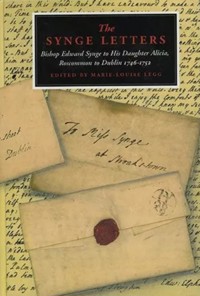
Edward Synge wrote 221 letters to Alicia, his daughter, betweeen May and October of 1746 to 1752. He was an adoring though not uncritical father, advising, gossiping and instructing her from his country estate. Synge was a wealthy man and Alicia a considerable heiress; his concern about her need to marry well and her motherless condition is a running, if tacit, theme of the letters.While writing of his life in the diocese, he counsels Alicia on her conduct and mode of life in Dublin; deals with manners and reading matter; with food (how to make good bread) and drink; discusses the false modesty of women and menstruation. He advises her about how to talk to doctors and on matters of taste, house-building and decoration; instructs her on methods of dealing with Dublin tradesmen, the upkeep of his garden and the correct way to plant a border. Throughout this correspondence he describes his Roscommon neighbours and life in the Irish provinces in fascinating detail. These vivid, wide-ranging and sympathetic letters from father to daughter open a window onto social and domestic life in the mid-eighteenth century, revealing lost worlds with the illumination of a Vermeer or a Montaillou. Immediate and richly detailed they constitute a major new source for the history of eighteenth-century Ireland and – in a great age of letter-writing – form an exciting contribution to that most intimate of genres. The letters are fully annotated and accompanied by a biographical register, maps, index, bibliography, and appendix on Synge property and wealth. They will delight the scholar and general reader alike. Bishop Synge was a member of a formidable clerical dynasty dominating social and ecclesiastical life in Ireland for several generations. Born in Cork in 1691 of a family that included an archbishop and four bishops, Synge was Chancellor of St Patrick's Cathedral from 1726-30, Bishop of Clonfert and then Cloyne 1731, Ferns in 1733, and Elphin in 1740. During the summer he lived at Elphin, Co. Roscommon, and during the parliamentary winter term at his large house in Kevin Street, Dublin. He had six children by Jane Curtis, of whom only one, Alicia, survived, before he was widowed. A busy public figure in Dublin, he was Commissioner of the Tillage Act, Governor of the Workhouse, of Dr Steevens' Hospital and of the Blue Coat Hospital, and Treasurer of Erasmus Smith's Schools. He attended the first performance of Handel's Messiah and corresponded with the composer. He died in 1762, and is buried in St Patrick's Cathedral. These letters to his daughter form his most enduring legacy.
Sie lesen das E-Book in den Legimi-Apps auf:
Seitenzahl: 1416
Veröffentlichungsjahr: 1997
Das E-Book (TTS) können Sie hören im Abo „Legimi Premium” in Legimi-Apps auf:
Ähnliche



















THE SYNGE LETTERS
Bishop Edward Synge to His Daughter Alicia Roscommon to Dublin
1746-1752
Edited by Marie-Louise Legg
THE LILLIPUT PRESS in association with the Irish Manuscripts Commission DublinMCMXCVI
In Memory of
Joshua Edward Synge Cooper
(1901-81)
Poet, linguist and translator from Russian
and
Arthur Cooper
(1916-88)
Poet, linguist and translator from Chinese
Contents
Title Page
Dedication
Illustrations
Introduction
Synge Pedigree
Editorial Principles
Acknowledgments
Biographical Register
–
LETTERS 1–43July1746–September30,1747
–
LETTERS 44–81May1749–October3,1749
–
LETTERS 82–129May16,1750–October24,1750
–
LETTERS 130–178May15,1751–October22,1751
–
LETTERS 179–221May19,1752–October25,1752
‘To Miss Synge’
Sources and Bibliography
General Index
Letters’ Index
Copyright
ILLUSTRATIONS
2
Manuscript of Letter 148.
4
The Bishop’s Palace, Elphin, in 1813 and c.1870, after alteration (sketch from William Hampton’s Road Survey Book of Co. Roscommon, courtesy the National Library of Ireland; photograph courtesy the Irish Architectural Archive).
94
‘Great care must be taken of your Grandfather’s picture’ (Letter 49): Edward Synge DD, archbishop of Tuam 1738 (by ‘A. De L.’, in private possession).
176
Sketch map of Swift’s ‘Naboth’s Vineyard’, 1749 by Roger Kendrick, showing the location of Edward Synge’s garden backing onto Long Lane (courtesy Governors and Guardians of Marsh’s Library).
268
‘… the rabble amongst whom you do, and I must live’ (Letter 138): ‘The Surroundings of St Patrick’s Cathedral, Dublin’ (watercolour by John Nixon [c.1750-1818], courtesy Agnew’s of London).
392
Edward Synge’s house and garden, Kevin Street (detail from John Rocque’s ‘An exact survey of the city and suburbs of Dublin’, 1756; the area is denoted in bold).
493–4
Maps of the diocese of Elphin in the mid-eighteenth century and Ireland in the 1740s (by Martin Rowson, 1995).
Introduction
‘Itwouldnotbeamissifyounowandthenemploy’daleisurehourinreadingovermyletters. … Idesign’dthemtobeinstructionsforlife.’1
The difficulties posed to historians of Ireland by the partial survival of its archives has been compared to peering through a keyhole at a ballroom and watching a group of dancers. Occasionally a couple moves into focus. But for all one knew, just out of sight, there could be a group of naked men and women, dancing the Lancers.2 The gaps in our knowledge and our understanding of how society worked – the loss of assize records, visitations, the records of the operation of local justice – are enormous. Their loss is why the two hundred letters written by Edward Synge to his daughter Alicia are so valuable. Covering five years from 1747 to 1752 and written in the summer months when Synge was in his diocese, they are the letters of a rich man, a widower, to his only surviving child. Like Jonathan Swift’s letters to Stella, they are one-sided; like Swift to Stella, they are critical, humorous and lively. We know something of one segment of Synge’s society from the letters of Emily, duchess of Leinster3 and the ubiquitous Mary Delany,4 and from travellers like chief baron Edward Willes.5 But Synge’s preoccupations were not those of Emily Fitzgerald, and his social round was more varied than that of Mrs Delany. Emily Kildare’s circle was grand; Mary Delany was childless. Both women were English by birth and their letters from Ireland were, in the main, from Dublin to England. Synge’s world is centred on Ireland.
Written from Elphin, Co. Roscommon, to Kevin Street, Dublin, Edward Synge enlarges our knowledge of day to day life in the capital and the provinces. By 1747, Synge had been a bishop for nearly twenty years. He moved easily in high politics, but politics do not occupy him here. He lived with his daughter, his niece Jane and their French governess. Many years later, he referred to the hazards of living in a house with ‘a parcel of romping girls’.6 He writes of gardening and the servant problem, of visits to tailors and dressmakers, manners and books, of ironmongers and wine merchants, of transactions with his banker and lawyer, of formal calls and sending gifts of melons and grapes to prominent acquaintances. His Roscommon news is of the building and furnishing of his new Palace, of visitors, harvests and the weather, of food and drink. Synge’s account of his new house in Roscommon illustrates how dependent the provinces were on Dublin trades and Dublin taste. He writes spontaneously, and he encourages his daughter to write freely in return: ‘Sauvevotremodestie I must see you naked’, he urges; ‘Give your thoughts free Scope, and Scrawl away.’7 Synge’s vivid prose, his lack of formality, his intimate portraits of his neighbours, his clergy and his servants open up a view of Irish society that we have only glimpsed elsewhere. When he writes about his servants, their voices too are heard. The words of Jennet, the still-room maid, recounting her problems making barm for bread come straight from Maria Edgeworth:
Indeed, My Lord, says she, I get Barm sometimes as red as a Fox, sometimes black, full of Hop-leaves, Bog-bane, Wormwood, Artichoak leaves … By straining I get rid of all these; and the first Sheering, so she calls pouring, after the liquor has stood about quarter of an hour, frees it from the great dross, which remains in the bottom, red like brick-dust, or darker; the Second, after standing a night, gives me barm as white and as tough as Starch. With this, My Lord, I make all your bread, and Many a hard shift I make to get it.8
But Edward Synge is more than this. His expression of his love and concern for his adolescent daughter, by turns stern, relaxed and teasing, augments our understanding of the relations between parents and children and between men and women. His concern for Alicia’s education and, as she matures, his insistence on her independence give us new insight into women’s place in Irish society.
Edward Synge was a member of a great dynasty of Irish clerics. He was the son of an archbishop, the grandson and great nephew of bishops; the brother of a bishop, the nephew of a dean and the uncle of an archdeacon. (His brother, Nicholas Synge bishop of Killaloe, was the direct ancestor of the playwright J.M. Synge.) The Synge9 family first arrived in Ireland when George Synge, from Bridgnorth, Shropshire, the son of Richard Synge a bailiff, went to Armagh in 1621. George Synge became bishop of Cloyne in 1638, but lost all in the rebellion of 1641.10 By 1652 he had returned to Bridgnorth to die. George Synge’s younger brother, Edward (Edward Synge’s grandfather) was born in Bridgnorth in 1614, but he was educated at Drogheda and entered the ministry of the Church of Ireland. In 1661 he became bishop of Ardfert, and in 1663 was translated to Cork, Cloyne and Ross. He had two sons, Samuel and Edward, and five daughters. Samuel Synge became dean of Kildare, married the daughter of Michael Boyle, archbishop of Armagh and had two children, Michael and Mary. Samuel Synge was wealthy, and his will had important consequences for his nephew, Edward, since the estate of the former eventually passed to the latter.11 Michael Synge did not marry and died young. Edward Synge senior inherited the income from his brother’s estate during his life and this then passed to his elder son. Samuel Synge’s estate helped to make the younger Edward Synge rich, and its existence made Alicia, his only surviving child, a considerable heiress.
Edward Synge the elder, Samuel Synge’s brother, was born at Inishannon, Co. Cork, in 1659. He was a commoner at Christ Church, Oxford, and completed his education at Trinity College, Dublin. He married Jane Proud, the daughter of a Cork clergyman, Nicholas Proud, and was vicar of Christ Church, Cork, when his eldest son, Edward was born on 18 October 1691.
George Synge was the last member of this branch of the family to be born and educated wholly in England and, by the middle of the eighteenth century, the Synge family appears to have lost close touch with England. There is no record in Edward Synge’s father’s will, his own marriage settlement or his own will that he had property in England. He seems not to have visited England, and there are only half a dozen isolated references to English place-names in his letters. On T.C. Barnard’s analysis of Irish Protestant identity, Edward Synge should be classified, not as an Anglo-Irishman, but as an Irish Protestant.12 Educated in Cork by a Mr Mulloy, Synge entered Trinity College, Dublin, in 1706 and took his BA in 1709. In 1710 he became a Fellow of the College and Junior Dean in 1715.13
Successful careers are owed in part to chance. In 1714 the younger Synge was twenty-three and on the threshold of his career. Queen Anne died and the Whigs came in: he was in the right place at the right time. Synge’s father was the first in the family to benefit from the change of government. The writer of numerous popular religious tracts, Edward Synge senior was regarded as ‘learned, prudent, pious and active’. Although ‘it was owned that none was better fitted for a bishop’,14 his politics until now had been a fatal obstacle to his promotion. (His personal wishes too, played a part in the long wait for preferment: he had refused the deanery of Derry in 1699 because his elderly mother did not wish to leave Cork.)15 In 1705, he became Chancellor of St Patrick’s; in November 1714 he was consecrated bishop of Raphoe and in June 1716 translated to the archbishopric of Tuam. This elevation, and his close relationship with William King, archbishop of Dublin, now made the advancement of his son’s interest possible. The new Lord Lieutenant, the duke of Bolton, made the younger Synge his chaplain. It was noted that Bolton was anxious to assist the younger Synge as his father’s son, ‘they seem inclined to oblige a man that is a son to a person they think very rising’.16 In 1719 he obtained the living of St Audoen’s, Dublin, and a prebendal stall in St Patrick’s cathedral. St Audoen’s church was used by the lord mayor and corporation of the city; as incumbent Edward Synge was well placed to be noticed by the city, and he was made a Freeman in 1722. It was not a rich living, however, and in 1720 Synge had married. His father, now aged sixty-one, was anxious that his son should be preferred and that he himself should receive help in Tuam.
Preferment was an elaborate dance, involving many partners. When Archbishop Synge wrote to the archbishop of Canterbury, to suggest that his son should be appointed provost of Tuam, he phrased it in terms of several removals: ‘His present preferment (for which he quitted his Fellowship of the College) is the Parish of StAudoens in this City, worth at utmost, as I compute, 170 pounds per annum, over and above the maintaining Two to assist him in the discharge of the Cure … the Deanery of Lismore, worth near 4001 a year, being now vacant. If my Lord Lieutenant would be pleas’d to remove the Dean of Tuam thither, and give that Deanery (worth between 200 and 300) to my son, both he and I should take it as a very great Favour … it will be a great comfort to me, in my old Age, sometimes to have my son’s company there.’17 But temporarily, the archbishop had fallen out of favour. With King he had spoken strongly against the Toleration Act of 1719 on the ground that it would endanger the state by allowing dangerous sects to flourish,18 and his suggestion was disregarded. Synge acknowledged the possible consequences of his actions on his son, hoping that ‘the suppos’d Mistakes of the Father, will not fall heavy upon the Son, who had no hand in them’.19 The younger Synge had to wait until 1726 for his provostship.20 In 1727 he was appointed to be Chancellor of St Patrick’s, like his father before him.21 At the beginning of 1729, his name was mentioned for the diocese of Clonfert,22 and on 7 June 1730 Edward Synge was consecrated by his father in St Werburgh’s, Dublin, his brother Nicholas preaching the sermon.23 A year later, he was translated from Clonfert to Cloyne. This was partly because no-one else on the bishop’s bench wanted the diocese, but partly because it would be agreeable ‘as he has some estate in the neighbourhood of Cloyn, [he] will be obliged by being sent thither …’.24 Synge no longer suffered from any taint of disloyalty; he was described as one of a number ‘zealously affected to his Majesty and family’.25 Two years later, in February 1733, he was sent to Ferns and Leighlin where he stayed for six years. In May 1740 he was translated to the diocese of Elphin and he remained there until his death in 1762.
Synge’s personal characteristics were marked. Physically large, a doggerel poem described him as ‘a priest of six foot and more’. Mrs Delany told her sister, ‘On Saturday I was reading in the portico at the farthest end of our garden … I saw stalking up the walk a huge man. Upon nearer approach I saw it was the bishop of Elphin.’26 Like his father he had an independent mind which he asserted when, as a young College Fellow, he declined to conform to the orders of the Vice-Provost and be dragooned into assembling with other College office holders to go to the Tholsel and vote for the Recorder and Alderman Burton, the Whig candidates in the parliamentary election of 1713. He voted for them the following day.27 Despite their different politics, Synge partly owed his promotion to Jonathan Swift, who recommended him as one of a number of Dublin clergymen ‘the most distinguished for their learning and piety’, adding that this recommendation was made ‘without any regard for friendship’. Letitia Pilkington reported that Swift told her he had recommended Synge because he wanted a living for Dr Patrick Delany, ‘and Pox take me if I ever thought him worth my Contempt, till I had made a Bishop of him’.28 Chesterfield, Lord Lieutenant from 1745 to 1746, said that the younger Synge was ‘without dispute equal, if not superior, in abilities to any on the Bench; and who is also the Speaker and the efficient man in the House of Lords’.29 Although known in Dublin as ‘Proud Ned’,30 he disliked honours. Mrs Pilkington, who claimed kinship with the Synge family, said that Synge told her that ‘his Honours did not sit easy on him, and that he would willingly dispence with his Friends not saluting him with his Title of Lord, as it always made him uneasy’.31 He disliked promotion just for the sake of honour, and claimed to have retracted a request he had made to the Lords Justices, saying ‘He who has views of ambition, can never act freely, seldom virtuously.’32 In his will, he asked that his sermons be burnt and his body put in a plain oak or deal coffin with a black cloth covering it and no ornament except his name and age.33
Wealth made pious and disinterested actions possible; both Synges used their income to improve the ministry. Archbishop Synge had gained great respect in Tuam for giving a quarter of his tithes, the quartapars episcopalis, to his clergy to make up the incumbent’s stipend in return for resignations from plural livings.34 His son confronted the resistant owners of land increasingly set to grazing, and tackled the problem of tithe agistment (the collection of tithes on dry and barren cattle) by taking them to court.35 He pointed out that his insistence on its collection was not for personal gain but rather to improve the ministry in his diocese of Ferns. ‘I freely own, that my Revenues in the Church are very considerable; and I hope I know how to make a proper, and a Christian use of them.’36
Church of Ireland preachers during the years after 1661 annually emphasized the horrors faced by the country during and after the Rebellion, and on the need for vigilance against the possibility that these dangers should recur.37 Edward Synge the younger is best known for a sermon which, as the Lord Lieutenant’s chaplain, he preached to members of the House of Commons on 23 October 1725 to commemorate the 1641 rebellion.38 Using a text from Luke’s Gospel, ‘Compel them to come in’,39 Synge was critical of those parts of the penal laws which had been passed to preserve the security of the state, but whose effect had been to invade Roman Catholics’ liberty of conscience. Referring to the ‘late times of confusion’, he believed that the present cause of ‘the enmity’ between Protestants and Roman Catholics had ‘always been due to a furious and blind zeal for Religion’. However expedient these laws might have been, they were unjust and should not be continued.40 Making a clear distinction between legislation to ensure public order, and the regulation of private affairs, he pointed out the uncomfortable fact that, by enforcing obedience in religious worship, Protestants had themselves fallen into ‘Romish practices’.41 Conversion through education was, he believed, the best way and he pressed for the education of Roman Catholic children in Protestant charity schools.42
He shared his abhorrence of religious persecution with his father. In 1721 the elder Synge had told his congregation that men who were told they were eternally damned for practising their beliefs would ‘run hazard to do it; [if you] drive them from cities and places of resort, they’ll meet in fields or in the desert’.43 They both concluded that those who live peaceably in society had a right to worship God according to their consciences. At the same time, they did not approve limitless toleration. The younger Synge did not advocate the repeal of the penal laws, and nowhere suggests that they should be amended to allow Roman Catholics to own property. Underpinning this stance was the fear that the land that had been so hard won by 1690 might yet be reclaimed. In 1740 Synge was the writer of a report by a Lords Committee set up to examine the state of the public records. Here, he expressed anxiety about the safety of archives in the King’s Bench Office. Stored in a building considered insecure, the records contained ‘several Outlawries and attainders; those particularly of Papists, on Account of the Rebellions in 1641 and 1688’. Synge feared that, if these were destroyed, Protestants’ possession of land would be at risk and they would be open to ‘vexatious Lawsuits to Defend and Establish their Titles to many forfeited Estates’.44
Synge’s interest in toleration was reinforced by his close friendship with Francis Hutcheson, the Presbyterian philosopher, Hutcheson had come from Armagh to Dublin at the invitation of a number of dissenters anxious to start an academy in the city.45 Hutcheson’s arrival in Dublin in about 1720 may have been one of the reasons for Synge’s reluctance to leave the city in 1719. No correspondence between Synge and Hutcheson has survived, but Hutcheson acknowledged his debt to Synge, and their friendship, in the Preface to his InquiryintoBeautyandVirtue.46 They were both members of the group which gravitated towards the nominally Anglican Irish peer, Robert Molesworth. George Berkeley, another of Edward Synge’s close friends, was on the edge of this group.47 Hutcheson shared some of Edward Synge’s qualities; he was said to have been ‘utterly free of all stateliness or affectation’.48 Hutcheson’s doctrine was far from Presbyterianism’s emphasis on sin and reprobation. God was benevolent, and the object of all law was human happiness through virtue. He believed, with Synge, that it was hypocritical to coerce men’s religious beliefs, and unjust for them to be punished for doctrines which did not threaten the state. ‘Such persecution is the most horrid iniquity and cruelty.’49 Although Synge’s letters never refer directly to Hutcheson’s ideas, it is possible, without forcing the text, to perceive points on which both men agreed. Hutcheson stresses the importance of instruction for young minds on the existence and providence of God; and to his daughter Synge reiterates God’s providence. Hutcheson and Synge are at one on the duty of children to their parents. Hutcheson says, of parents’ duty to their children, ‘Generation no more makes them a piece of property to their parents, than Sucking makes them the property of their nurses … the child is a rational agent, with rights valid against their parents.’50 Of an arranged marriage, Synge tells Alicia, ‘Parents may, they ought indeed to, controule their children’s imprudent inclinations. But to abuse or force them to compliance, against so setled an aversion is cruel, is Wicked. …’51 Synge’s emphasis on the education of children echoes that of Hutcheson who said that married couples should ‘consult the prosperity of their family, and chiefly the right education of their common children’.52 Regretting the marriage of a flighty young woman, Synge reminded his daughter that the girl probably knew no better: ‘perhaps she is not so much to blame as her Education. Few young persons have the advantage which you, My dearest, have had of an early opening of their minds. …’53 Hutcheson stresses the importance of children ‘obtaining their liberty as soon as they can safely enjoy it; since without it they cannot be happy. …’;54 Synge urges his daughter not to consult him; to be independent and take decisions for herself.55 Hutcheson left Ireland in 1730 and did not return. His SystemofMoralPhilosophy was posthumously published in 1755, and Synge bought ten sets.56
When both Synges defended the right to liberty of conscience, they were undoubtedly influenced by their close relationship with members of the Huguenot refugee community. In 1692, after the Revocation of the Edict of Nantes, an act of parliament provided for a charter of refuge to encourage foreign Protestants to settle in Ireland. Uniquely, this guaranteed their freedom of worship,57 and in the last decade of the seventeenth century, a large group of Protestant refugees arrived in Dublin.58 Many French families settled in the parishes of St Peter’s and St Kevin’s, on the Synges’ doorstop.59 The Synges’ reiteration of the horrors of religious persecution and its consequences should be read in the light of their own family association with the Huguenot community in Dublin. The word ‘desert’ used by Archbishop Synge in his sermon of 1721 has Huguenot resonances. ‘Ledésert’ can mean a refuge, and ‘LaperiodeduDésert’ was the time spent by Huguenots in hiding after the Revocation of the Edict of Nantes.60 The Synges knew Elie Bouhéreau, the first Keeper of Marsh’s Library, and their close neighbour in Kevin Street. Bouhéreau’s daughter married a fellow Huguenot, Jean Jourdan, who subsequently became the Church of Ireland rector of Dunshaughlin, Co. Meath. Their daughter Blandine was Alicia Synge’s governess and companion Mrs Jourdan.61 French influence in the Synge household is apparent. French was used in day-to-day correspondence,62 French books were read,63 and French food was eaten.64
Synge was a member of the political circle65 around the Speaker, Henry Boyle, which included the earl of Kildare, the Gores and Thomas Pakenham, who figure on the margins of the letters.66 These men were in opposition to the group around Primate Stone, the Lord Lieutenant, the Duke of Bedford, and his son and private secretary, Lord George Sackville. Synge was active during the dispute on the Money Bill, which legislated to apply the surplus Irish revenue to reduce the national debt, and was defeated by the Irish House of Commons in December 1753. He reacted sharply to the measures taken after the rejection of the bill by Holderness, the southern secretary, who on behalf of the king prorogued the Irish parliament and removed a number of advisors. The tone of Holderness’s letter written after the vote, shocked Synge. ‘I own the style choked me. Except for four years, it has not been much in use since the Revolution.’67 To Lord Limerick he tellingly quoted ‘a French Apothegm’, Ilfautsedefendreduprejugédeconfonderl’esclavageaveclafidelité– One must guard against confusing slavery with loyalty.68 But Synge sat easy under Ireland’s constitutional arrangements, and wrote of the mob celebrating the defeat of the bill that ‘Angry Patriotism was not for the Meridian of Ireland’. The best policy was to ‘leave to time and future dutifull and loyal Conduct to shew that the discipline was undeservedly apply’d’.69 He was no radical, and was himself adept in using the system to his own advantage.70
Edward Synge married Jane Curtis, daughter of Robert and Sarah Curtis of Roscrea, Co. Tipperary, in 1720. Robert Curtis, MP for Duleek, Co. Meath, was a rich man who had bought leases from the Ormonde estate. In 1703 he bought 2867 acres in Roscrea for £3399, which he sold in 1722 for £22,000.71 Synge’s marriage settlement was advantageous,72 and from it he could now expect an annual income of about £800. When his father died in 1741, he inherited the income from Samuel Synge’s estate, the product of a hundred years of investment in good quality land in Cork, improved by the judicious setting of leases. Fate played its part. His mother was dead,73 and with the death of his wife and all his children save Alicia, he had no need to provide jointures for a widow, pin money or to provide and supplement marriage settlements for numerous children.74 With his personal income and his episcopal income from successive dioceses over thirty years, Edward Synge became rich. He was said to have recommended his daughter Alicia and her husband, Joshua Cooper, to follow his own policy and ‘buy up always all the land that they could’.75 In 1762 Edward Willes said that the net episcopal income of Elphin was £3500 a year and that Synge was worth £100,000, this was ‘all of the acquisition of the church’.76
Edward’s and Jane Synge’s married life was visited by repeated sorrows. Often, in his early letters, Edward Synge refers to them. Reflecting on his parting with Alicia in 1747, he thought back to an earlier parting: ‘You were then an infant, and could give me pleasure only by looking at you. … But I had then other objects of my tenderest affection. You only now remain.’77 The Synges had six children; Edward was born in 1722 and died in 1739. Sarah was born in 1722/23 and died two years later. Jane also died in 1724. It is not known when Catherine and Mary were born; they both died in 1733/34. Robert was born in about 1725; he was admitted to TCD in 1742/3, but was dying when the letters open in July 1746. Alicia was born on 12 December 1733 and she alone survived. When her mother died in December 1737, Alicia was just four years old.78
All but a handful of Edward Synge’s letters were written from Elphin to Dublin. Despite that, his house in Dublin is almost as vivid as that in Elphin. The Kevin Street house and land had been bought by Archbishop Edward Synge, his son and Michael Synge from the Rev. Philip Ferneley in 1726. In 1667 lieutenant colonel Philip Ferneley had leased land from the dean and chapter of St Patrick’s for sixty-one years. Part of this land, later known as ‘the Cabbage Garden’, was appropriated by the dean and chapter to create a new burying ground for the parishioners of St Patrick’s. The remainder was divided between Swift, who there created his ‘Naboth’s Vineyard’, and the Synge family. The house was of rendered brick and built around a courtyard,79 with large doors facing on to the south side of Kevin Street.80 There were stables, a coach house, brew house and wash house, and it was later described as ‘a very airy, large handsome and spacious house’.81 Edward Synge writes of a great parlour, a blue parlour, an outer study and his inner study. In 1812 there was a large dining parlour and two other parlours on the ground floor. Panelled and papered, and decorated by the master carver, John Houghton,82 the interior was clearly well-appointed. The rooms on the ground and the upper floors had views of the Dublin mountains.83 Two Irish acres of grounds were bounded by a high wall running along Liberty Lane and St Kevin’s churchyard on the east, Long Lane on the south and land belonging to St Anne’s Guild on the west.84 A door in the garden wall led on to Long Lane at the rear. At the end of the gardens, fields stretched away towards the mountains.85 The plot was divided into two gardens,86 with flower borders, a vegetable garden and an orchard. It is clear from Synge’s frequent references to melons and grapes that he must have had hot beds and a glass house. In the 1720s society had moved away from the old city, crowded around the castle and the two cathedrals. Fashionable Dublin was now centred on St Stephen’s Green and the surrounding streets to the north developed by Joshua Dawson and by Edward Synge’s friend, Edward Nicholson.87 On the edge of the Liberties, the Synges and their neighbours, the archbishop of Dublin at the Palace of St Sepulchre and the Deanery of St Patrick’s, were surrounded by the weavers, dyers, clothiers, and brewers on the Meath estate.88 Sectarian and recreational faction fighting frequently broke out on their doorstep.89 To his daughter, Synge referred to local inhabitants as ‘your low neighbours … the rabble among whom you do, and I must live’.90
When Edward Synge’s letters open in 1747, he is building a new house at Elphin. The cult of improvement which informed eighteenth-century Ireland – the building and decoration of houses, the purchase of furniture, china and garden plants, the acquisition of paintings – has been extensively explored through letters, inventories, account books, diaries and travel writing.91 Clergymen responded to the impulse to build because of the pressure on them to live in their parishes; bishops had to make a substantial presence in the diocese.92 If bishops were the active part of the House of Lords, they were also the active men in the country.93 An observer wrote that the ‘the Diminution of the Power of the Nobility has made the Lay-Lords here careless of Improvement, and of preparing themselves to support with Dignity that which remains to them’.94 Primate Boulter said that the prevalence of absentee landlords meant that ‘in many places one fourth or one fifth of the resident justices are clergymen for want of resident gentlemen’.95 A bishop, residing in his diocese during the summer months, in a substantial house with a good table, entertaining visiting clergy, officers, judges on assize and carrying out his annual Visitation, made up for deficiencies in the local gentry. In the first half of the century see houses were non-existent or grossly inadequate. Archbishop Synge lamented the absence of a proper house at Tuam: ‘If I had but any Sort of Habitation at Tuam, it would not only be great Satisfaction to me, but enable me with much less trouble than now to discharge my Duty; but until I build a House for the Archbishop (which I resolve as soon as may be to do) I must be forc’d to take up with a Lodging in a thatch’d cabin. …’96 Of Elphin, the archbishop told Wake that Bishop Hodson had begun to build a ‘very good Episcopal house’ in Elphin in the 1680s, but by the 1720s it had become derelict.97 Robert Howard, Edward Synge’s predecessor, who had succeeded to Elphin in 1730, told his brother that he had found there ‘a very bad, ill-contrived house, for some of my predecessors were very indifferent architects’.98 Edward Synge himself wrote of floods and damp in the old house; by 1747 he had started to build.99
There are no contemporary pictures of Edward Synge’s new Palace. The house itself has gone and only the ruined offices remain. Described by Edward Willes as ‘an extreme[ly] good gentlemen’s house of six rooms on a floor’,100 it was built on high ground on the road to Boyle near the cathedral, now in ruins.101 It had a three-storey central block linked by sweeps to two-storey offices on either side, making a hollow square. Its design was similar to many other eighteenth-century Irish houses, such as Sherwood Park, Ballon, Co. Carlow, and grander examples at neighbouring Strokestown Park and Frenchpark.102 Its exterior was faced with plaster, with a round-headed door with side-lights at the top of a shallow flight of steps and with a ‘Venetian window’ above.
The name of the architect is not definitely known, but there is a strong case for believing that it was Michael Wills, and that he is the Dublin ‘Mr Wills’ to whom Synge frequently refers in his letters of 1747. Michael Wills was a son of Isaac Wills, a carpenter who had worked on the building of St Werburgh’s church, Dublin.103 The younger Wills was clerk of works during the building of Dr Steevens’ Hospital between 1721 and 1723 and he competed unsuccessfully for St Patrick’s Hospital in 1749. In 1754 he was employed by the Committee for repairing St Werburgh’s after a disastrous fire, and he supervised the rebuilding of St Peter’s between 1750 and 1752.104 Michael Wills carried out a survey of the Palace for probate after Edward Synge’s death in 1762.105 There are two reasons for assigning the design to Michael Wills. In 1745 he submitted an album of ‘Designs for Private Buildings of Two, three, four, five and six Rooms on a Floor And one of Eight rooms. Dublin 9th May 1745’ to a competition, describing them as ‘Vitruvian Designs in the Oeconomique Style’.106 A set of plans made in 1873 show the ground plans of the Palace and proposals for their alteration.107 Here, the ground plans of the house follow the ground plans of ‘House No.2’ in the drawings of 1745. The elevation of the house is, with one exception, very close to the elevation of the Palace as shown in a drawing of the exterior, dated about 1813.108 The exception to Michael Wills’s 1745 drawings is the insertion of a rather awkward third storey. This may be the ‘attic storey’ to which Synge refers in 1747.109
The western dioceses of the Church of Ireland were unpopular with the clergy. The distance from Dublin and the small numbers of Protestant gentry meant few congenial neighbours, and non-residence was frequent.110 Even the eastern half of Roscommon was two days or more travel from the capital, and temporal pleasures foregone were compounded by pastoral difficulties. An absence of bookshops and printers meant a lack of bibles and prayer books, and the lack of tailors led to shabby dress.111 The diocese of Elphin exhibited the want of Protestants and want of churches which were one of the many problems faced by the Church.112 The diocese covered most of Co. Roscommon, a large part of Sligo and Galway and a small part of Co. Mayo. There were seventy-five parishes of which the bishop presented to seventy-two; the parishes were large, and the churches were often absent or ruinous.113 The population was overwhelmingly Roman Catholic; in 1732 in Co. Roscommon alone there were 790 Protestant families to 7312 Catholic families.114 Synge used a Catholic apothecary, and refers to a few Catholic doctors, but Alicia had to remain in Dublin during the summer in order to be close to a Protestant physician. There was a sprinkling of Catholic gentry, like the antiquarian Charles O’Conor of Belanagare, who had managed to hang on after the confiscations of the seventeenth century. But even poor Protestants were still economically and socially the superiors of the growing Catholic tenant-farmer class.115 In 1720 Synge’s father said that it needed ‘an active Bishop’ and required ‘some time to bring it into that tolerable order of which it is capable’.116
Elphin117 may have been a rich bishopric, but the town itself was poor. Synge’s predecessor, Robert Howard, wrote that it was in ‘a very rich deep country, the roads bad, the country pleasant enough, a good demesne, but a bad dirty Irish town’.118 Away from the Palace, the schoolhouse and the deanery, the poor of Elphin lived in cabins, ‘built of sods and covered with rushes, flax-shoves, or the like, not sufficient to keep out a shower of rain … inhabited by eight or ten men, women and children half-naked’.119 The land surrounding Elphin was of rich, loamy soil overlying a stratum of limestone which was dug out and laid as a top dressing to counteract the soil’s peaty acidity. In the 1740s it let for about 25 shillings an Irish acre.120
Synge’s life in Elphin was not just devoted to pastoral duties and hospitality. In 1731 Robert Howard had an income of £1433.13s.3d from leases and rentals on the demesne land.121 Synge was an improving farmer and would have considerably increased his income with monies from the sale of stock, crops and linen. He was influenced by the agricultural reformer, Charles Varley, whom he had met about 1746. Varley (c.1725-96) had come to Ireland from Yorkshire to seek his fortune. Edward Synge introduced him to ‘the heads of the Kingdom’ and was instrumental in arranging for him to lease land in Co. Leitrim and receive premiums from the Linen Board. Varley wrote of Synge that he was his ‘benefactor, tutor and father … his house and stables were open to me … his library for my education and his advice for my guide’. Varley’s description of a day spent with Synge riding around his demesne echoes closely a similar description recounted by Synge to Alicia in 1747.122 For a brief while, Varley took the place of Synge’s lost sons.123
Varley thought that the quality of the land in Ireland made the landlords idle; with a few exceptions, they were ‘great slovens in husbandry … turn it up in any fashion, and corn must grow’.124 Roscommon’s economy was held back by the domination of the graziers over tillage and in the production of linen by the large numbers of spinners and the small number of weavers. Varley shared Synge’s concern about the imbalance between grazing and tillage, and he attributed Ireland’s prevalent evils of poverty and begging to the ‘great graziers … the chief and real bars to the riches, prosperity, improvement, industry, good morals, regularity, cloathing and feeding of the poor in Ireland’.125
When Varley arrived in Ireland, Edward Synge was a Trustee of the Linen Board. Varley, who came from Rotherham where flax was grown widely, noticed that the combination of the land and the climate in Ireland, together with the premiums offered by the Board, made the growing of flax potentially lucrative. Irish flax was thought to be far superior to foreign flax and, unlike imports from Germany and the Low Countries, imports of linen into England were free of duty.126 The Roscommon soil was particularly good for flax growing, and the Board made grants to local contractors to buy looms. Synge makes clear his dependence on Varley’s advice when it comes to growing flax,127 and his letters have many orders for hatchels, scutching boards and parts of looms to be sent from Dublin. However, reports to the Linen Board on the state of the industry in the late 1750s, said that in Roscommon particularly, the easy production of flax was countered by difficulties in its processing into cloth. In Roscommon the poor were thought to benefit little from the high quality of the yarn produced by local spinners. There were too many spinners, an unskilled trade generally carried out by women, and not enough weavers, a skilled job carried out by men. This imbalance impoverished whole families.128
Our knowledge of the social structure of the diocese of Elphin owes much to Edward Synge himself.129 In 1749 he ordered a census of the diocese which greatly extended the counts of papists and mass houses made by earlier incumbents of Elphin.130 Each of Synge’s clergy was commissioned to list everyone in their parish including not just Roman Catholics but also Protestants, Presbyterians and Quakers. The survey listed by parish, place of abode, head of household, religion, their profession or trade, children over or under fourteen, and servants, male or female, Catholic or Protestant. The extent and completeness of Synge’s census may have been the result of discussions with Charles Varley, who later wrote a pamphlet recommending a census with similar headings.131
The 1749 census says that Synge had seventeen servants in his household, twelve men and five women. They were all, at least nominally, Protestant.132 He can be irritated by their performance: he curses Tom for shaving him badly, Shannon for breaking all his water glasses ‘at one slap’ and the grooms for taking out his horses and getting fuddled in his neighbours’ kitchens, but still to him they are ‘My Family’. He chooses his upper servants with care – the interviewing of a potential steward and his wife takes up a dozen letters – but once hired, they are cared for, educated and sent to the Mercer’s Hospital in Dublin for treatment. Many of his comments on his servants’ performance and about household disasters, such as lost keys, broken bottles and ‘the new House all going to Ruin before it is finished’, are identical to those of Swift.133 In 1750 Synge says he is determined to get rid of his house steward Shannon, but despite his determined resolution Shannon is still there in 1752. Some of his comments on his servants and the peasantry are brutal. He himself recognizes this when he says to Alicia, ‘You know me to be strict and severe with regard to the conduct of servants. This is not the effect of temper but prudence. Harshness, irksome to myself, I find necessary to keep them in order.’134 He may be harsh too when he says of their grief at a death that the peasantry are ‘not agitated with so strong passions as We are’ but, he continues compassionately, ‘it is owing to their Condition, in which their is no variety, little highly pleasing, and of consequence less distress. … All is soon over, and they return to their usual Employment. Their necessitys oblige them to it; and as they have not leisure to grieve, the impression soon goes off.’135 Persuading Alicia not to criticise the appearance and manners of her new maid, sent from Elphin to Dublin, he writes, ‘Reflect, My Dear as often as you see her, that had you been neglected as she has been, you might have been as she is: Bless God for the advantages you have had and have, and make a right use and improvement of them.’136 Irish, to Synge, denotes a lack of manners or ignorance; Dr Dignan, a local man without the qualifications of a Dublin doctor, is characterized as ‘Irish’ for presuming on hospitality, and Alicia’s errors in spelling are sharply corrected with the words ‘’Tis brogue’.137
Synge took book catalogues and read booksellers’ advertisements in the Dublin papers. Synge was sarcastic about the books in his predecessor’s library. He marked Robert Howard’s inventory, commenting on copies of Euripedes Tragedies, ‘mighty bad’, Straboni’s Geographica ‘1 vol. a very old Bad edition’ and Pearson’s ExpositionoftheCreed ‘miserably abused’.138 His English books, although naturally dominated by theology, included Aubrey, Berkeley, Milton, Prior, Shakespeare, Swift and Wycherley. He was fascinated by Roman Catholic doctrine and the Catholic apologetics. Using the Catholic apothecary as an intermediary, he borrowed books critical of Protestant historians of the rebellion of 1641 from his neighbour Charles O’Conor.139
Synge played the harpsichord and took a close interest in the music in his church.140 As Chancellor of St Patrick’s, he was ‘minister in musicis’ at the cathedral, where he was a good judge of singing. At the same time, as rector of St Werburgh’s, he suspended the organist ‘for many irregularities and for prevaricating with the Minister’.141 Synge’s musical ability made a strong impression on Handel when the composer was in Dublin. To his librettist Charles Jennens, Handel wrote of Synge as ‘a Nobleman very learned in Musick’.142 With his letter, Handel enclosed Synge’s impressions of the first performance of TheMessiah in the New Musick-Hall in Fishamble Street on 13 April 1742. Synge wrote that it was ‘A Species of Musick different from any other – the composer is very Masterly and artificial, yet the Harmony is So great and open, as to please all who have Ears and will hear, learned and unlearn’d.’ He was impressed by the attention of the audience, and remarked that ‘to their great honour, tho’ the young and gay of both Sexes were present in great numbers their behaviour was uniformly grave and decent’.143 The moral dimension of Handel’s music and the object of its performance would have appealed to Synge. Unlike London, where music was performed commercially, Dublin had a tradition of performances for charity, and proceeds from TheMessiah were to be shared ‘by the Society of relieving Prisoners, the Charitable Infirmary and Mercer’s Hospital’.144 Synge suggested that Handel might write a sequel, called ‘The Penitent’, but Handel never took up his proposal.
Synge can unquestionably be tiresome and pedantic in his letters to Alicia, returning frequently to her writing, her grammar, her spelling and her pen nibs. After the first few references, our eyes may glaze over his comments, but his purpose was clear. She had to take her place in society as his daughter, and he confesses, ‘I love to teach you in trifles with Exactness which may be of real use in affairs of more importance.’145 He despises children who care only for dress and diversions, and blames their parents, ‘If their chief point all their lives has been to please, no wonder … they resolve at once to make the most of it.’146
Alicia remains a shadowy figure, and no known portrait of her survives. We know that like her father she was tall,147 but of her character and temperament we know nothing. She was certainly encouraged to be independent. After a mob attempted to storm Kevin Street and a man was shot dead, Edward Synge told of a girl, ‘One of the finest young Women of her time … when about your Age, a Maiden, defended her Father’s Castel … against robberys, and not only plaid the Gentleman well, but her self fir’d the great Guns and beat them off. I would have you like her in Courage, tho’ I don’t wish it may ever be so try’d.’148
Mrs Delany met Alicia at a dinner given by her father in Dublin in early 1752, and wrote that she ‘will be a vast fortune and is brought up like a princess; she is a fine young woman about nineteen, all the young men have already proposed’.149 There is no evidence in her father’s letters of Alicia’s many suitors, but Synge is clearly careful (which he could well afford to be) that she should not marry for the sake of money. Of a young woman whose parents forced her to marry, he said, ‘I can’t find terms strong enough to express my detestation of the behaviour of the parents to sacrifice a Child to Convenience and County interests.’150 He said that he would not listen to any proposal of marriage until Alicia was twenty-one years old, and she was twenty-five when she married Joshua Cooper of Mercury (now Markree Castle) Co. Sligo in June 1758.151
With one exception, a single stray letter from 1746, Edward Synge’s letters to Alicia run from May to October for each year from 1747 to 1752. Those written in 1748 are missing, although we know that he was in Roscommon that summer.152 The remains of stitching on the fold of the paper is evidence that they were bound by an amateur at some time in their early life. The letters have been in the Cooper family since 1758, and form part of a corpus of papers which included deeds and leases for Synge lands in Tipperary and which were inherited by Alicia’s great grandson, Richard Cooper. In 1866 he married his first cousin, Alicia’s great granddaughter, Cicely Cooper, and they lived in England. The letters have been in England since then and are now in Trinity College, Dublin.
Edward Synge died on 27 January 1762, aged seventy-one, and was buried in the Synge vault in the old churchyard of St Patrick’s, just under the wall of Marsh’s Library.153 Alicia and Joshua Cooper’s marriage lasted for over forty years, but it was accompanied by sorrow. They had three sons and a daughter, but two of their children died in infancy. Joshua Cooper died in 1800, and in 1804 his heir, Joshua Edward, was declared mentally deranged and the Cooper estates put into the hands of the Masters in Lunacy. As her father told her, ‘The happiest marriage brings cares &c. It was a saying of your Grandmother’s when a young Damsel was gay and cheerfull. The Black Ox has not yet trod on her foot. An homely image of Matrimony, but too too often a just one.’154 Alicia died at Kevin Street in 1807, it was said of a broken heart.155 She was buried near her father.156
NOTES
1. Edward Synge to his daughter, Alicia. Letter 136.
2. David Hayton, Irish history seminar Hertford College, Oxford May 1993.
3. Brian Fitzgerald (ed.), CorrespondenceofEmily,duchessofLeinster1731-1814 3 vols (Dublin 1948-57).
4. Lady Llanover (ed.), TheAutobiographyandCorrespondenceofMaryGranville,MrsDelany 6 vols (London 1861).
5. James Kelly (ed.), TheLettersofLordChiefBaronEdwardWillestotheEarlofWarwick1757-1762 (Aberystwyth 1990).
6. Edward Synge to the Duke of Bedford, Elphin [undated] 1758 PRONI, T. 2915/6/7.
7. Letter 3 and 68.
8. Letter 152.
9. The family name was originally Millington. Henry VIII (or Queen Elizabeth) was supposed to have heard one of the family as a choir boy in Rochester cathedral and to have said that his name should not be Millington, it should be Sing. There are variants of this account. K Synge, TheFamilyofSyngeorSing (privately printed 1937) p.v.
10. Synge, pp.xi-xii.
11. He left land in Limerick and a house at Finglas to his wife Margaret for life, and after her death to his son, Michael, for life and to his heirs male. Failing these, the lands were to pass to his nephew, Edward Synge, for life and to his heirs male, and failing these to his nephew Nicholas and his heirs male. Will of Samuel Synge, dean of Kildare, 29 August 1706. Copies of Synge Wills made by R.A. Synge from Four Courts Records in 1902. TCD ms 6199.
12. T.C. Barnard, ‘Crises of identity among Irish protestants 1641-1685’ Pastand Present 127 (1990) pp.39-83.
13. G.D. Burtchaell and T.U. Sadleir, AlumniDubliniensis (Dublin 1935), pp.797-8.
14. King to Wake 30 September 1714. C.S. King (ed.), AGreatArchbishopofDublin:WilliamKing DD;1650-1729 (London 1906), p. 172.
15. Entry for Archbishop Edward Synge. DictionaryofNationalBiography (Oxford 1975).
16. T.W. Moody, F.X. Martin and F.J. Byrne (eds), NewHistoryofIreland Vol: 9, Maps,Genealogies,Lists:ACompaniontoIrishHistory (Oxford 1984) p.492; Robert Howard to Archbishop William King 4 July 1717, Archbishop King Papers, TCD Mss 1995-2008.
17. Synge to Wake 12 April 1720 TCD Stephens/Synge Papers ms 6201.
18. R. Mant, HistoryoftheChurchofIreland 2 vols (London 1849) Vol. 2, pp.334-43, 341.
19. Synge to Wake Dublin 12 April 1720 TCD ms 6201.
20. Hugh Boulter, archbishop of Armagh to the Lord Lieutenant, Lord Carteret 20 August 1726, LetterswrittenbyHisExcellencyHughBoulterDDLordPrimateofallIreland 2 vols (1770) Vol.1, p.80.
21. Boulter to Carteret 18 September 1727, Letters Vol.1, p.161. Synge the younger was instituted as Chancellor on 28 March 1727. H.J. Lawlor, TheFastiofStPatrick’s (Dublin 1930), p.65.
22. Boulter to the duke of Newcastle 10 January 1728/9 Letters, p.278.
23. Synge’s former patron the duke of Bolton pressed Carteret’s nomination on Newcastle. Henry Maule, bishop of Clonfert, to Edward Synge 29 May 1730, loose in a volume of the personal and household accounts of Edward Synge, archbishop of Tuam 1717-22 NLI ms 2173.
24. Duke of Dorset to the duke of Newcastle 9 February 1731/2 PRONI T.722/1 pp.30-31.
25. Ibid.
26. The inscription on the grave of George Synge, bishop of Cloyne, Edward Synge’s great-uncle recorded that he too was a tall man. AnExcellentNewSong,ToagoodOldTune (Dublin 1726); Mrs Delany to Mrs Dewes 8 June 1753 Delany, Vol.1, pp.233-4; Synge, p.xii.
27. E.H. Alton, ‘Fragments of College History’ I, Hermathena 57-8 (1941), pp.25-58, 121-65.
28. Swift to Lord Carteret 3 July 1725 H. Williams, (ed.), TheCorrespondenceofJonathanSwift 5 vols (Oxford 1965) Vol.5 p.124; Vol.3 p.71.
29. Chesterfield to the duke of Newcastle 20 November 1745 B.L. Add.Mss 32,705 f.393.
30. J.T. Gilbert, ‘The Streets of Dublin – III’ IrishQuarterlyReview 2 March 1852, p.55.
31. She was related to the Synges through her mother’s cousin Dean William Meade of Cork who married Helena Townshend, a relation of the Synge family through Archbishop Synge’s sister Mary, who married Bryan Townshend of Castletownsend, Co. Cork. Text from the original edition Vol.3 (Dublin 1754) pp.61-2. A.C. Elias, Jr., MemoirsofLaetitiaPilkington (pending University of Georgia Press). I am most grateful to Mr Elias for information on the Pilkington/Synge connection.
32. Letter 208.
33. Will of Edward Synge, bishop of Elphin, 31 July 1761. PRO PROB11/894/563.
34. Mant, Vol.2, p.314.
35. He successfully filed eight cases against landowners in the court of Exchequer in 1735. For an account of the tithe agistment controversy, see L. Landa, SwiftandtheChurchofIreland (Oxford 1954) pp.135-50; and on the system of tithes, M.J. Bric, ‘The Tithe System in Eighteenth-Century Ireland’, ProceedingsoftheRoyalIrishAcademy Vol. 86, Sect.C. (1986) pp.271-88.
36. Mant, Vol.2, p.555; Edward Synge, lord bishop of Ferns and Leighlin, TwoAffidavitsinRelationtotheDemandsof TytheAgistmentintheDiocesofLeighlin;withanintroduction (Dublin 1736), p.6.
37. For an analysis of the sermons preached on the anniversary of the 1641 rebellion, see T.C. Barnard, ‘The uses of 23 October 1641 and Irish protestant celebrations’, EnglishHistoricalReview Vol.106 (October 1991) 421, pp.889-920.
38. Edward Synge, TheCaseofTolerationconsideredwithRespectbothtoReligionandCivilGovernmentinaSermon … preach’donSaturday23rdOctober1725 (Second edition 1726). Two recent historians have, understandably, wrongly attributed this sermon to Archbishop Synge. F.G. James ‘The Church of Ireland in the early eighteenth century’, HistoricalMagazineoftheProtestantEpiscopalChurch Vol.48 (1979), p.450; Thomas Bartlett, TheFallandRiseoftheIrishNation (Dublin 1992), p.26.
39. ‘And the Lord said unto the servant, Go out into the high ways and hedges, and compel them to come in, that my house may be filled.’ Luke 14:23.
40. TheCaseofToleration … p.2.
41. TheCaseofToleration … p.12.
42. Synge’s sermon led to an attack by the Rev. Stephen Radcliffe, in ALettertotheRev.Mr.EdwardSynge … occasion’dbyaLateSermon (1725). Radcliffe vehemently attacked Synge for being ingenuous about the nature of Catholics and Catholicism. Synge replied in AVindicationofaSermon … in AnswertotheRev.MrRadcliffe’sLetter (1726), saying that as Radcliffe’s diatribe was so confused it was impossible for him to reply. The efforts of Archbishop Synge and his son to find oaths of allegiance suitable for Catholics to take and of the younger Synge in sermon and pamphlet controversy is examined in Patrick Fagan, CorneliusNary:Dublin’sTurbulentPriest (Dublin 1991), pp. 122-5 and 166-74.
43. Edward Synge senior, SermonagainstPersecutiononaccountofReligion,Preached … Octoberthe23.1721 (Dublin 1721).
44. Although he could be pugnacious on this subject in public, in private Synge was lenient. He continued to lease a house in Dublin to a man whom he believed to be a Roman Catholic, saying that although he could have consulted a lawyer to see whether the lease was valid, and ‘the Popery Acts might give an open for doing it’, he would not attempt to overturn it and eject his tenant. [Edward Synge, bishop of Ferns] AReportfromtheLordsCommitteesAppointedtoInspectintotheStateof the PublickOfficesofRecordinthisKingdomandinwhatMannerandPlacetheSamearenowkept (1740); Edward Synge’ s tide to different lands and tenements in the counties of Cork, Tipperary and Dublin NLI ms 2101.
45. Ian McBride, ‘The School of Virtue: Francis Hutcheson, Irish Presbyterians and the Scottish Enlightenment’ in D.George Boyce, Robert Eccleshall and Vincent Geoghegan (eds), PoliticalThoughtinIrelandsincetheSeventeenthCentury (London 1993), pp.79-80.
46. Hutcheson spoke of his ‘Obligations to the Reverend Mr. EDWARD SYNG; not only for revising these Papers, when they stood in great need of an accurate Review; but for suggesting several just Amendments in the general Scheme of Morality. The Author was much confirm’d in his Opinion of the Justness of these Thoughts, upon finding, that this Gentleman had fallen into the same way of thinking before him; and will ever look upon his Friendship as one of the greatest Advantages and Pleasures of his Life.’ Preface to the second edition of Francis Hutcheson, AnInquiryintotheOriginalofourIdeasofBeautyandVirtue (London 1726), p.xx-xxi.
47. Synge wrote to Berkeley’s son after the bishop of Cloyne’s death in 1753, ‘It will always give me pleasure to be consider’d as your good Fathers friend. I have been so these 43 years, with exquisite pleasure and great advantage to my self, while we were together, but with much regret and uneasiness, since the distance of our situations and his constant residence interrupted all intercourse except now and then by letter.’ David Berman has pointed out that Synge was probably the link between Hutcheson and Berkeley, who were both teaching in Dublin in the 1720s. Synge, as well as Berkeley, would probably be one of the ‘few speculative friends in Dublin’ mentioned by Berkeley in 1727. Edward Synge to George Berkeley, 26 January 1753, BL Add.Mss. 39,311, f.70; David Berman, ‘Dr Berkly’s books’, Francis Hutcheson Supplement to Fortnight July/August 1992, p.23.
48. William Leechman, introduction to Francis Hutcheson, ASystemofMoralPhilosophy (London 1755), pp.xxviii-xxix.
49. Hutcheson, ASystemofMoralPhilosophy Vol.1, p.315. See also the passage on the ‘Useful Refugee’ AnInquiry …, p.117.
50. Hutcheson, ASystemofMoralPhilosophy Vol.1, p. 192.
51. Letters 152 and 189.
52. Francis Hutcheson, AShortIntroductiontoMoralPhilosophy (Glasgow 1753) p.248.
53. 12 June 1752.
54. AShortIntroduction …, p.254.
55. Letters 133 and 136.
56. The list of subscribers contains clues as to which of Synge’s friends mentioned in the letters were part of Hutcheson’s circle: Thomas Adderley, Brabazon Disney, Henry Hamilton, Lord Chancellor Newport, John Lawson, the Rev. Arthur Mahon archdeacon of Elphin, Dr Ezekial Nesbitt, the Rev. John Owen dean of Clonmacnoise, and Synge’s close friend, Godfrey Wills, were all subscribers.
57. J.-P. Pittion, ‘Religious Conformity and Non-Conformity’ in C.E.J. Caldicott, H. Gough and J.-P. Pittion (eds), TheHuguenotsandIreland (Dublin 1987), p.289.
58. Around 1800 people – 452 families – arrived between 1692 and 1701. Raymond Hylton, ‘The Huguenot Communities in Dublin 1662-1745’ (Ph.D National University of Ireland 1985), p.85.
59. Hylton, p. 144.
60. Ledésert:entantquelieuderefuge. Paul Imbs (ed.), TrésordelaLanguefrançaise (Paris) 1978; entry for Ferrières, Michelin Guide GorgesduTarn (Paris 1989), p.81.
61. Jourdan, ‘the old man of Dunshaughlin’ who figures in Synge’s letters, had been chaplain to Henri de Ruvigny, the first Lord Galway, on his mission to Portugal in 1703. Edward Synge’s first important patron, Charles Paulet, later duke of Bolton, had accompanied de Ruvigny when he came to Ireland as a Lord Justice in 1697. See Biographical Register. Patrick Kelly ‘Lord Galway and the Penal Laws’, in Caldicott, Gough and Pittion, p.244.
62




