


Erhalten Sie Zugang zu diesem und mehr als 300000 Büchern ab EUR 5,99 monatlich.
- Herausgeber: Swift Press
- Kategorie: Sachliteratur, Reportagen, Biografien
- Sprache: Englisch
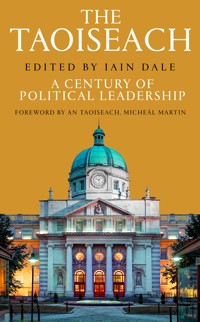
'It's one of those books that you can either read chronologically from front to back cover, or dip in and out of at leisure. It should keep many a dad happily occupied over Christmas' The Irish Independent Ireland, under both the Irish Free State and after full independence, has now had just over 100 years of autonomous national political leadership. This book, based on Iain Dale's blockbuster podcast, tells the story of Irish politics over the past century by examining the lives and actions of each Irish Taoiseach, from W.T. Cosgrave to Micheál Martin. 15 leading Irish historians, journalists and politicians write essays on each of these figures, showing in the process how Ireland developed from a poor ex-colony to a successful, modern country at the heart of the European Union. In the process, the contributors examine the importance of topics such as the power of the Roman Catholic Church, changing social mores, Ireland's relationship with the UK, and its economic development. This is a must read for anyone interested in Irish politics at a time of potential far-reaching change for the republic.
Sie lesen das E-Book in den Legimi-Apps auf:
Seitenzahl: 617
Veröffentlichungsjahr: 2025
Das E-Book (TTS) können Sie hören im Abo „Legimi Premium” in Legimi-Apps auf:
Ähnliche
















Also by Iain Dale
The Prime Ministers, 1721–2020: Three Hundred Years of Political Leadership
The Presidents, 1789–2021: 250 Years of American Political Leadership
Kings and Queens: 1200 Years of English and British Monarchs
Dictators: 64 Dictators, 64 Authors, 64 Warnings from History
British General Election Campaigns, 1830–2019: The 50 General Election Campaigns That Shaped Our Modern Politics
Why Can’t We All Just Get Along
On This Day in Politics: British Political History in 365 DaysMargaret Thatcher
Contents
Notes on Contributors
List of Abbreviations
Length of service
Preface by Micheál Martin
Introduction by Iain Dale
1. The office of Taoiseach by Eoin O’Malley
2. W. T. Cosgrave by Ciara Meehan
3. Éamon de Valera by David McCullagh
4. John A. Costello by Charles Lysaght
5. Seán Lemass by Bryce Evans
6. Jack Lynch by Stephen Collins
7. Liam Cosgrave by Deirdre Foley
8. Charles Haughey by Gary Murphy
9. Garret FitzGerald by Eoin O’Malley
10. Albert Reynolds by Martin Mansergh
11. John Bruton by Matthew Dempsey
12. Bertie Ahern by Mick Clifford
13. Brian Cowen by Theresa Reidy
14. Enda Kenny by Harry McGee
15. Leo Varadkar by Philip Ryan
16. Micheál Martin by Gavan Reilly
17. Simon Harris by Pat Leahy
For Deborah and Mike Slattery
‘We, of our time, have played our part in the perseverance, and we have pledged ourselves to the dead generations who have preserved intact for us this glorious heritage, that we, too, will strive to be faithful to the end, and pass on this tradition unblemished.’ – Éamon de Valera
‘You know, I have a theory about Charlie Haughey. If you give him enough rope, he’ll hang you.’ – Leo Enright
‘That’s fine in practice, but will it work in theory?’ – Garret FitzGerald
‘The public are entitled to have an absolute guarantee of the financial probity and integrity of their elected representatives, their officials and above all of ministers. They need to know that they are under financial obligations to nobody.’ – Bertie Ahern
‘Geographically, we are at the periphery of Europe, but I don’t see Ireland in that way. The way I see us is as an island at the centre of the world.’ – Leo Varadkar
‘I want to bring new ideas and new energy and, I hope, a new empathy to public life. Time is certainly short, and there’s a lot to do.’ – Simon Harris
Contributors
Mick Clifford is Special Correspondent with the Irish Examiner newspaper and co-author, with Shane Coleman, of Bertie Ahern and the Drumcondra Mafia (2010).
Stephen Collins is a columnist with, and former political editor, of the Irish Times. He is the author of numerous books, notably The Power Game: Ireland Under Fianna Fail (2001), co author with Ciara Meehan of Saving the State, Fine Gael from Collins to Varadkar (2020) and Ireland’s Call: How Brexit Got Done (2023).
Matthew Dempsey was Editor and Chief Executive of the Irish Farmers Journal until 2013, has been President of the Royal Dublin Society, was awarded an honorary Doctorate from University College Dublin and contested the recent Senate (Seanad Eireann) elections.
Bryce Evans is Professor of Modern World History at Liverpool Hope University. Among his books are a biography of Seán Lemass, Seán Lemass: Democratic Dictator (2011), and Ireland during the Second World War: Farewell to Plato’s Cave (2014).
Deirdre Foley is a historian of modern Ireland and has published widely on the social, legal and economic status of women. She is a Research Ireland fellow at the Department of History, Trinity College Dublin.
Pat Leahy is Political Editor of the Irish Times. His books include The Inside Story of Fianna Fáil in Power (2009) and The Price of Power: Inside Ireland’s Crisis Coalition (2013).
Charles Lysaght is an Irish lawyer, biographer, obituarist and occasional columnist. He contributes entries to the Dictionary of Irish Biography and has written a biography of Brendan Bracken (1979).
David McCullagh is an award-winning Irish journalist, author and news presenter with RTÉ. He has written several books including A Makeshift Majority: The First Inter-party Government, 1948–51 (1998); a biography of John A. Costello, The Reluctant Taoiseach (2010); and a two-volume biography of Éamon de Valera. The first volume was titled Rise, 1882–1932 (2017) and the second, Rule, 1932–1975 (2018).
Harry McGee is political correspondent of the Irish Times and the author of The Murderer and the Taoiseach (2023).
Martin Mansergh is a former Fianna Fáil politician who served as a Minister of State from 2008 to 2011. He served as a Teachta Dála (TD) for the Tipperary South constituency from 2007 to 2011. He was a Senator (Agricultural Panel) from 2002 to 2007. He played a leading role in developing Fianna Fáil policy on Northern Ireland. He is the author or editor of several books including The Legacy of History for Making Peace in Ireland (2003).
Ciara Meehan is Dean of Students at the University of Galway. Her books include The Cosgrave Party: A History of Cumann na nGaedheal, 1923–1933 (2010), A Just Society for Ireland? 1964–1987 (2013) and Saving the State: Fine Gael from Collins to Varadkar (2020), which she co-wrote with political journalist Stephen Collins. Most recently, she authored A Woman’s Place? Challenging Values in 1960s Irish Women’s Magazines (2023).
Gary Murphy is Professor of Politics at Dublin City University and an expert on Irish electoral history. He is the author of the definitive biography of Charles Haughey, Haughey (2021).
Eoin O’Malley is Associate Professor of Political Science at Dublin City University. He has co-edited six books on Irish politics. The most recent book is Charlie vs Garret: The Rivalry that Shaped Modern Ireland (2025). He is a weekly columnist with the Sunday Independent.
Theresa Reidy is a political scientist at University College Cork and Co-editor of the International Political Science Review. She has given expert evidence to parliamentary committees, the Constitutional Convention and the Citizens’ Assembly and is a regular contributor to radio, television and the print media.
Gavan Reilly is a political journalist and presenter at Virgin Media Television in Dublin, and is the author of Enda the Road: Nine Days that Toppled a Taoiseach (2019) and The Secret Life of Leinster House (2025).
Philip Ryan is a journalist with the Irish Independent and co-author of a biography of Leo Varadakar, Leo (2018).
Abbreviations
AIB: Allied Irish Banks
AG: Aktiengesellschaft (public limited company)
BSE: bovine spongiform encephalopathy
CBS: Christian Brothers School
CGT: capital gains tax
CIÉ: Córas Iompair Éireann
EC: European Community
EEC: European Economic Community
EFTA: European Free Trade Area
ETA: Euskadi Ta Askatasuna
EU: European Union
FDI: foreign direct investment
GAA: Gaelic Athletic Association
GDP: gross domestic product
GPA: Guinness Peat Aviation
GPO: General Post Office
HSE: Health Service Executive
IDA: Industrial Development Authority
IFSC: International Financial Services Centre
IMF: International Monetary Fund
IRA: Irish Republican Army
MEP: Member of European Parliament
NAMA: National Asset Management Agency
NATO: North Atlantic Treaty Organization
NFA: National Farmers Association
NGO: non-government organisation
NPHET: National Public Health Emergency Team
PD: Progressive Democrats
R&D: research and development
RTÉ: Raidió TeilifÍs Éireann
SDLP: Social Democratic and Labour Party
SJ: Society of Jesus
TD: Teachta Dála
UCD: University College Dublin
UN: United Nations
UNRWA: United Nations Relief and Works Agency
UTV: Ulster Television
UVF: Ulster Volunteer Force
VAT: value added tax
Length of service
Éamon de Valera: 21 years, 2 months, 1 day
Bertie Ahern: 10 years, 10 months, 11 days
Jack Lynch: 9 years, 9 months, 12 days
W. T. Cosgrave: 9 years, 3 months, 4 days
Seán Lemass: 7 years, 4 months, 17 days
Charles Haughey: 7 years, 2 months, 2 days
Enda Kenny: 6 years, 3 months, 5 days
John A. Costello: 6 years, 3 days
Garret FitzGerald: 4 years, 11 months, 3 days
Leo Varadkar: 4 years, 5 months, 3 days
Liam Cosgrave: 4 years, 3 months, 25 days
Albert Reynolds: 2 years, 10 months, 2 days
Brian Cowen: 2 years, 9 months, 30 days
John Bruton: 2 years, 6 months, 12 days
Micheál Martin: 2 years, 5 months, 20 days (as at 23 January 2025)
Simon Harris: 9 months, 14 days
Preface
An Taoiseach
Micheál Martin
If you look at a map of Europe from December 1922, you will find newly independent states stretching in one continuous stripe from the Arctic Circle to the Adriatic – from Finland down to the short-lived Kingdom of Serbs, Croats and Slovenes. On the far left of the map, you will see on the island of Ireland the only other new state, founded during what was the greatest period of state formation in the history of Europe.
Partitioned – against the will of the majority – into uneven parts, one part bore a curious name: it was not a ‘republic’ nor a ‘kingdom’ but a ‘free state’. It was the only new state to emerge from the lands of a power on the winning side of the First World War. It was also the only state to retain any form of connection to the state that formerly controlled it – a connection that was central to the civil war still underway in December 1922.
The new Irish state also drew on a very specific nationalist and republican history which distinguished it from the others. While it stood physically apart, it shared many of the same issues such as legal and administrative continuity, economic crises, civil conflict, evolving state symbols, nationals living outside the state border and insecure minorities living within the state border. One of the poorest independent states in the world, and with few natural resources or developed industries, the new Irish state faced quite dramatic hurdles. Yet, if you were to look at that same map of Europe in 1942, the now unambiguously republican Irish state was the only new state that remained intact and democratic.
Ireland is today one of the world’s longest continuous democracies. It has the first constitution adopted through a free referendum. It has dramatically reversed its economic fortunes, and its population has risen significantly. We have many social, economic, political and environmental challenges that confront us and an urgent need to show that we retain the ability to deliver sustained progress. However, no one can seriously question the scale of the progress achieved and sustained since Independence. In this populist age, where so many people would rather undergo torture than admit that governments and political leaders can make a positive contribution, the facts of modern Irish history show the central role that politics played in securing progress.
I don’t believe in trying to personalise everything to ‘great men’ over time. This is a form of history writing that has rightly fallen out of fashion. However, I think that we have been lucky in the remarkable leadership we have often seen from Taoisigh. For me, certain moments of leadership from Taoisigh still resonate. Éamon de Valera’s actions in the 1930s, in particular, remain almost breathtaking for the assertion of sovereignty involved and the complete rejection of the extremism of the time. He not only faced down those who were inspired by European fascism, he took a path of democratic republicanism that remains the dominant political attachment of people irrespective of party allegiance.
De Valera’s governments of the 1930s saw the only recorded example in Europe of a defeated revolutionary group coming to power and then introducing new and rigid limits on its own powers. The 1937 Constitution removed the ability of a governing majority to decide the fundamental law of the country, reserving that right to the people through referendums. It strengthened judicial independence and extended protections to all groups. At that time, and in the context of dramatically rising international tensions, for any state to include in its basic law a requirement that the state respect international law remains inspiring.
While many achievements by leaders can reflect the luck of being in office at the right time, the archives show the direct personal leadership of de Valera in drafting this new constitution. The first draft, written out in pencil on squared mathematical paper, is in de Valera’s handwriting and involves all of the major decisions subsequently adopted by the people in a free referendum.
I have also always been inspired by Seán Lemass’s time as Taoiseach. A man who had fought in the 1916 Rising, and who had been central to the republican cause, ended his career 50 years later driving forward a new modernising energy and the effort to root Ireland fairly within what is now the European Union. Above all others, he was a leader in the cause of Irish independence who had a broad conception of national sovereignty. He saw joining Europe as securing Irish sovereignty not threatening it.
I know that there are those who are impatient with the idea of Lemass changing the national mood. I think they are quite simply wrong and that the evidence for this is overwhelming. Leaving aside the facts of radical new policies in fundamental areas like trade and education, I think the reflections of Heinrich Böll, the German Nobel Prize for Literature laureate, make the case very well.
Böll published his Irish Journal in 1957, just before Lemass became Taoiseach. It presented a picture of Ireland so downbeat and depressing that Böll was banned from attending receptions at the Irish embassy in Bonn. Ten years later, Böll published a second edition of what had been a very successful book. This time, he added an extra chapter in which he explained that in his visits to Ireland in the 1960s he had noticed a new spirit in the country – one that was becoming more international, confident and optimistic.
The period in which Lemass held the office of Taoiseach was a lesson to all about the role of political leadership. In practical terms, membership of the European Union has meant that Taoisigh spend a very large amount of time on matters which are of little interest to those who focus instead on the issues of the current news cycle. However, this in-depth engagement with European leaders is central to the ability of our small and geographically peripheral state to influence a wide range of issues.
This engagement with Europe has been a two-way process, which has included a range of substantive achievements during Irish presidencies of the Council. For example, during Liam Cosgrave’s term, he, together with his Minister for Foreign Affairs and successor Garret FitzGerald, began the holding of regular European Council summits, with the first official Council meeting taking place in Dublin in 1975. During the 1990 presidency, Charles Haughey played a central role in helping the German Chancellor, Helmut Kohl, to secure support for German reunification – a fact generously and repeatedly acknowledged by Kohl. During the 2004 presidency, Bertie Ahern’s skill in leading the enlargement process and a series of tricky negotiations was reflected in him being asked to lead the Commission – an offer which he turned down.
Significant and positive actions can be seen in every Irish presidency, and this speaks to the role of the Taoiseach in giving Ireland the ability to be an important participant in critical debates. Also significant is that the leader of the Irish government spends more time in the national parliament answering questions and speaking in debates than any other European leader. In contrast to Westminster, for example, the Taoiseach handles business questions and is expected to answer questions in depth at least twice a week. This has evolved over time, but it means that the Taoiseach is very closely engaged with the issues of the moment.
Unfortunately, this can have a distorting impact on the nature of political coverage and debate. Over time, the amount of political content in the media has grown steadily, but the breadth of that coverage has significantly narrowed. Most of the time it seems that the bulk of political news is focused on the opening of each parliamentary day when the leaders of the opposition set the agenda through a series of opportunities to raise questions on any issue. Over time, the role of detailed speeches and initiatives in political coverage – or even non-partisan discussion – has declined quite dramatically.
My staff have for many years tried to persuade me out of accepting invitations to give speeches on policy or history, arguing that the most effective way of staying out of the media is to give a substantive speech. I think they are exaggerated in this, but there is no doubt that political discourse in Ireland has moved overwhelmingly to a more aggressively partisan and short-term framing. This is particularly evident when you look at how much of what we know about the intentions of Taoisigh of the first half of our independence comes from speeches rather than political commentary.
Ireland today is a diverse European democracy. We have a multi-party system which will always require coalitions to be built before a government can be formed. As such, the work of the Taoiseach has and will continue to evolve. You must both hold a diverse government together and work to ensure that it addresses both immediate and longer challenges effectively. This requires standing against broader tendencies in politics where public debate increasingly tends towards trying to impose a binary – for or against, us or them – framing.
The role and importance of the office of Taoiseach has evolved constantly over the past century, and I have no doubt that it will continue to evolve. One thing that will never change is that to hold the office of head of government of a free, democratic and liberal republic is a deep honour.
Introduction
Iain Dale
Back in 2021, I edited a book called The Prime Ministers. It was a collection of 55 essays, each written by a different historian, politician or journalist, on the 53 men and two women who had held the office of British Prime Minister in the 300 years since Sir Robert Walpole came to power in 1721. I followed it up with a similar book on American Presidents, one on English and British Kings and Queens and, in 2024, a collection of essays on 64 of the world’s most infamous dictators.
So what next, I thought to myself? I considered Australian Prime Ministers, French Presidents and German Chancellors, but then I thought about looking at the (then) 15 men who had served in the office of Irish Taoiseach. Initially, I assumed that someone in Ireland would have beaten me to it, but a quick Amazon search showed that no one had.
In recent years, I had become a little bit obsessive about learning more about Irish history and contemporary politics. It had always been a mystery to me that people in Britain know comparatively little about their nearest neighbour, despite a shared history and language. I remember watching the RTÉ drama Rebellion a few years ago and thinking about the fact that the Easter Rising and the War of Independence did not feature in the core history curriculum in UK schools. From then on, I started reading more about the history of Britain and Ireland. I tried to buy autobiographies of leading Irish politicians. That proved to be more difficult than I thought. In Britain, it is almost a constitutional duty for ex-Prime Ministers to write their memoirs. In Ireland, only Garret FitzGerald, Albert Reynolds, Bertie Ahern and now Leo Varadkar have put pen to paper.
I will also be honest and admit that I barely knew anything about several of the 16 Taoisigh (pronounced Teeshig, the plural of ‘Taoiseach’), but then again I knew nothing about some of the earlier British Prime Ministers before embarking on recruiting authors for that book.
My agent tried to find a publisher for the book in Ireland, but not a single Irish publisher was interested. I was astonished. Was it because I was a Brit, with no immediate links to Ireland? If so, they were too polite to say. I don’t give up that easily, though. I then decided to launch a podcast called The Irish Taoiseach (still available from wherever you get your podcasts) and set about contacting potential interviewees for the 16 episodes. They included a Senator, several biographers of Taoisigh and political journalists. The interviews were very conversational and lasted between 30 and 90 minutes. The episodes were recorded and released in 2023 to some excellent reviews.
It was then that I met the then commissioning editor for Swift Press, George Owers, who instantly saw the potential for the book. We agreed terms very quickly, and this book is the result. Thanks to the editor, Lucie Ewin; copy-editor, Liz Hudson; and publicists Rachel Nobilo and Declan Heeney.
I wanted this book to appeal to the general reader and asked the contributors to write in an accessible manner and to avoid the usual academic niceties, such as footnotes. Each author was encouraged to be opinionated while outlining the personal and political lives of the Taoiseach they were writing about. I am grateful to the Royal Irish Academy’s Dictionary of Irish Biography for permission to reproduce its entry on Albert Reynolds by Martin Mansergh.
If you spot any errors, please do let me know at [email protected], and they will be corrected in any future edition. I hope you enjoy reading this book as much as I have enjoyed editing it.
Iain DaleTunbridge Wells, August 2024
1
The office of Taoiseach
Eoin O’Malley
Not long before she became UK Prime Minister, the then British Foreign Secretary, Liz Truss, wished to ‘strongly encourage the Irish tea sock to discuss [the Northern Ireland Protocol] with the EU’. Her mispronunciation of the title Taoiseach was hardly new – for some in Northern Ireland, it is almost a point of principle. Truss’s was no doubt a genuine attempt to pronounce it correctly: many others in her position would merely state the ‘Irish Prime Minister’. The unusual title gives the office a romantic air, a sense of exceptionalism, and suggests an ambiguity about the nature of the office that needs to be decoded. But as much as some find the term unpronounceable, the office is certainly not unusual compared to other European heads of government.
Before adopting the title Taoiseach, Ireland used phrases like ‘Executive Council’ for the government or cabinet and ‘President of the Executive Council’ for the head of the government or Prime Minister. The decision to not use these terms, common in other decolonised countries formerly under British control, might not have been a deliberate rejection of the British practice. The adoption of President for the head of government appears to have been done during Éamon de Valera’s – or Dev’s, as he was known – tour of the USA in an attempt to relate better to US audiences. In fact, the functioning of the cabinet and the role of the President were more similar to the British practice than that of any other European country. The rest of the political system adopted Gaelicised names, such as Dáil Éireann and Oireachtas (parliament), but these too adopted the norms and practices learnt from the Houses of Parliament in London.
It was hardly a surprise, then, in the mid-1930s, when a new constitution was mooted, that the drafters would reconsider the title of the President of the Executive Council. There was a shift to the title ‘Prime Minister’ at this time. The introduction of new Irish titles to the draft English editions of the Constitution was clear in 1936, but still these were direct translations, with An Priomh Aire for Prime Minister and AnLeas-Phríomh Aire for Deputy Prime Minister. It was only in the final draft in February 1937 that the titles An Taoiseach and An Tánaiste were introduced. These were then standardised in following (substantially unchanged) copies. Still, in debates on the Constitution, many speakers referred to the proposed office of ‘Prime Minister’.
Given the times, and the suspicion over de Valera’s democratic credentials, there was an assumption that An Taoiseach, which can be translated as ‘The Chief’, was reflective of something like Der Führer in Germany or Il Duce in Italy. It would also have been entirely within the Irish political culture, where mass movements were often sustained by charismatic individuals – Daniel O’Connell and Charles Stewart Parnell – leading personalist political organisations.
The revolutionary period in Ireland from around 1912 to when the state was founded in 1922 had revealed some remarkable leaders and had buried some others. Of those who emerged, most of the leaders of the 1916 Rising were executed, and the remaining political leaders all came from the revolutionary tradition. Constitutional nationalists were largely discredited, or at least Irish politics had passed them by. De Valera, Michael Collins and Arthur Griffith were the clear leaders left on the field as the new state was being formed. De Valera lost out as the Anglo-Irish Treaty was accepted by Dáil Éireann. The deaths in quick succession of Griffith and Collins left W. T. Cosgrave as a third- or even fourth-choice leader for the pro-Treaty side. Cosgrave was not a charismatic leader, and he did not try to be when he took over as the first head of government or President of the Executive Council in the newly independent Ireland. He retained the government team he inherited and in Richard Mulcahy and Kevin O’Higgins had significant colleagues who could rival him for the job.
By comparison, de Valera – commonly addressed as ‘Chief’ well before the title Taoiseach was suggested – was the undisputed leader of his party. Opposition politicians at the time feared Dev had ambitions to concentrate power in the office. But while Dev did see the Taoiseach as a leader of the government, who spoke for and acted for the government as a whole, he did not have totalitarian ambitions, even if he gave the head of government a name that might have connoted these.
In a famous book on the office of Taoiseach, Brian Farrell distinguished between ‘Chairman or Chief’. He argued that some holders of the office were instinctively chairmen and others chiefs. But the analysis of the holders showed that those instinctive chiefs behaved as chairmen. Later holders, such as Charles Haughey and Garret FitzGerald, who were temperamentally chiefs, were forced by their political circumstances to resign themselves to chairing their governments. Still, the office is often seen as one of the more powerful head-of-government positions in the democratic world. It is usually ranked with the UK and former British colonies such as Canada and Australia in having an exceptionally powerful head of government. We might expect that that power emanates from political institutions: the Constitution and the Department.
The main change that the new constitution proposed in 1937 was that the Taoiseach, unlike the President of the Executive Council, could hire and fire his ministers and could dissolve the Dáil, that is, call an election. The earlier version, the Irish Free State Constitution, did not give these powers to the President. But de Valera appeared to be a ‘chief’ in selecting his cabinet; he did not depend on the Constitution for that power before 1937. The changes made no discernible difference to the way a Taoiseach was selected. Before and after 1937, the Taoiseach was usually the leader of the largest party that could command a majority in Dáil Éireann, either by itself or in coalition with others.
A key question, then, should be whether the power of the Taoiseach stems from the office or do the holders of the office bring a power to the office? When John A. Costello took on the office of Taoiseach, it revealed a great deal of the nature of the office. Costello was not the leader of Fine Gael, the largest party in that government. Nor was he even selected as Taoiseach before the parties had agreed the formation of the government. So, although the Constitution gave him that power, the selection of ministers was something effectively held by party leaders.
In the early iterations of the state, when names and titles were fluid, the Department of Finance was where power lay. This might have been a result of Michael Collins’s energy and focus as a minister building up that department. When he was briefly the chair of the Provisional Government, he both held that office and kept the Finance portfolio. Finance retained this power and centrality to all government decision throughout the history of the state.
By contrast, the Department of the President of the Executive Council, and later the Department of the Taoiseach, was really just a secretariat, a glorified private office for the Taoiseach. The department that supports the Taoiseach is not very large. In 1938, there were about 20 people employed there, excluding messengers and cleaners, 10 of whom were clerical staff. The office provided a coordinating function and kept the Taoiseach abreast of the activities of all the departments and their ministers, but it did not control them. The coordination function was primarily and legally held through the operation of cabinet meetings. The Department of the Taoiseach, then, was the ‘post office’ that took in information for cabinet to consider and sent out decisions once taken.
The Secretary to the Department was also Secretary to the Government, and one holder took pride that he was there to serve the government as a whole and not an individual Taoiseach. Any new issues not already assigned a department automatically ended up in the Department of the Taoiseach, and Taoisigh could assign themselves any issue they wanted to. Still, most ministers saw the Taoiseach as a consensual, coordinating figure rather than a dominating one. The Taoiseach consulted and advised ministers but did not direct them.
Even though a story has Seán Lemass explaining Dev’s power to a British minister that if Dev was in a minority in cabinet, ‘the cabinet then takes its decision by a minority of one’, this was true of ‘chiefs’ like de Valera as well as the less obviously dominant Taoisigh. Dev did not always get his way, and Lemass was much more forceful in contrast to de Valera, who tended to proceed at the pace of the slowest man.
If one of a Taoiseach’s roles is to facilitate government decisions, they also have to lead a party in parliament and in the country, to maintain the confidence of the Dáil by holding the party together. This might have seemed easy: government Teachtaí Dála (TDs) – members of the Dáil – rarely if ever rebelled. It was not necessary to be a great orator to hold your government together: indeed, none of the holders of the office can be identified as exceptional public speakers. This might also have been because of the conservative nature of the political leaders. But this was hardly true of Lemass, who introduced some radical changes of policy in the 1960s in spite of scepticism within his party. His position as a leader came at a time when there was a changing of the guard from the revolutionary generation. ‘Ordinary’ political leaders took over from nation-building leaders, and his cabinet was predominantly made up of a generation without first-hand experience in the revolution. With them came a willingness to challenge the Taoiseach – even within Fianna Fáil. Though we see the new generation leaders, Jack Lynch at the forefront, being challenged within their party, the political culture still exalted the leader. Fianna Fáil’s 1969 campaign centred on ‘Let’s back Jack’. Liam Cosgrave, who led a cabinet ‘of all the talents’, was still the most recognised and respected leader in that government.
Another role of a Taoiseach is to communicate with the public, and in Ireland there was a vast difference in coverage devoted to Taoisigh compared to other ministers. Even if their parties thought of Taoisigh as ordinary politicians, the public still treated them with respect and expected them to have solutions to emerging social problems. By the 1970s, those problems were growing, or at least more prominent.
There was something of a change in the office in the 1970s. Jack Lynch had commissioned a report on the prime-ministerial office in Belgium from the Irish Ambassador. When Lynch asked whether he could get an economic adviser, his secretary responded that that was what the Department of Finance was for. But Lynch, a former minister in that department, said that was exactly why he needed separate advice. The Department, almost as small as it had been in the 1930s, now started to expand its policy-analysis role. The European Economic Community (EEC) necessitated a more visible Taoiseach, and the emergence of the Troubles meant that Northern Ireland could no longer be ignored. There was an expansion of the Department, and civil servants such as Dermot Nally were brought into senior roles. The Government Information Service was expanded, giving the Department a greater role in the relationship with a more assertive media covering politics.
A sea change occurred from 1979 when Charles Haughey took over. If anyone was temperamentally a chief, it was Haughey. A keen student of government and an exceptionally efficient administrator, Haughey closed an economic planning department and merged much of it into the Department of the Taoiseach. He created the first explicit sections within the Department, including an expanded private office. By 1980, there were 45 staff (115 including clerical staff, messengers and cleaners). Within a year, that 115 rose to 187. These numbers fail to reveal that the Department was by now also heavily laden with senior staff who had policy functions. This reflected Haughey’s desire for policy control and for the Taoiseach to be more directive than ever before. If there had been fears of the ‘presidentialisation’ of the office in the 1930s, we saw it in the 1980s. Haughey assumed many new functions and even informally took on the budgetary negotiations with line ministers instead of the Minister for Finance.
Haughey’s successor, Garret FitzGerald, was as active as Taoiseach, with an interest in all policy areas and opinions on all of these. The two men, who dominated politics in the 1980s, expanded the Department, including, by 1990, the refurbishment and expansion of the building that it had occupied since Independence. This enabled it to house the growing department in more appropriate surroundings.
The expansion of the Department probably took place in response to the increasing complexity of policy-making, the greater constraints on political leaders as a result of a more globalised and more sophisticated economy, the membership of the European Union (EU) which controls a large number of policy areas, the increased willingness of the courts to involve themselves in policy-making, and a more aggressive, attentive and insatiable media. All these have possibly made Taoisigh less powerful than they once were. Certainly, Taoisigh do not tend to last as long in office as they once did. While just five men held the office in the first 50 years of the state, 10 did so in the 50 years that followed. Taoisigh no longer seem to be the big beasts that dominate the political scene.
The expansion of the Department continued under the successors to Haughey and FitzGerald. When Albert Reynolds formed a coalition with the Labour Party under Dick Spring, a new innovation was the introduction of ‘programme managers’. These were appointed to each department by their line minister with the purpose of pushing the Programme for Government agreed by the two parties. It freed up time for the Taoiseach since many easier decisions that used to take up time at cabinet no longer needed to be discussed there. Where a Taoiseach’s job might once have been to lead or mediate discussions to generate a decision, now the role was becoming one where the Taoiseach was just one of the actors negotiating their position. That is not to say that the Taoiseach does not have significant structural advantages. Being able to control the agenda of the cabinet meetings still affords them important control.
Another significant change was the increased use of cabinet committees under Bertie Ahern. There had been suspicion of cabinet subcommittees because of their uncertain role in the Arms Crisis scandal in 1970, but by the 1990s it was found that cabinet meetings alone were insufficient to provide coordination function and that some agreed plans got stalled in departmental silos. More recently, crises saw the setting up of powerful subcommittees. The Great Recession and its aftermath led to an Economic Management Council of the two main economic ministers, Michael Noonan and Brendan Howlin, with Taoiseach Enda Kenny and Tánaiste Éamon Gilmore (both coalition party leaders) and some officials. A similar committee was used again during the COVID-19 pandemic, which some complained curtailed the authority of cabinet.
These changes were introduced in part as a result of the normalisation of coalition government. From 1989, there were no longer any single-party governments, and the prospect of a single-party government in Ireland is remote. The party system has been upended, especially since 2011. There are no longer large parties that can command 40 per cent of the vote. As a result, Taoisigh are no longer like the UK Prime Minister, on which the office was modelled. Having to satisfy the needs of coalition government essentially redrafts the role of the Taoiseach. If before a Taoiseach was the ‘captain of the team’, now they have a powerful co-captain, who controls a group of players that can walk off the pitch at any time. One Taoiseach, John Bruton, did not see his role to drive Fine Gael policy through government but to achieve, support and maintain a government policy.
The sense that the Taoiseach was no longer the chief became most pronounced by the time of the coalition government between Fianna Fáil, Fine Gael and the Green Party. The similar size of the first two parties meant that neither party had an obvious claim to the office of Taoiseach. The two parties agreed to share it by rotating who held the offices of Taoiseach and Tánaiste between Micheál Martin and Leo Varadkar halfway through the lifetime of the government. (Technically, of course, it was a new government.) For the first time, someone who had served as Taoiseach was now a minister in the government. Although it is hard to tell from this juncture, it must have changed the relationship between Taoiseach and Tánaiste and the way civil servants treated each of them. Although both were conscious not to step on each other’s toes, both were party leaders holding senior executive office and so the Tánaiste at either time was not going to limit himself to his departmental responsibilities. It is likely to have temporarily developed into a dual premiership. That the rotation of the office continued after the 2024 election might mean this is a more permanent norm.
As well as the dilution of the authority of the office of Taoiseach as a result of coalition, there has arguably been an abandonment of political power by the political elites. Though the idea of social partnership – a mechanism to agree pay rates and industrial policy between unions, employers and government – was an example of political authority, over time it lost much of this, becoming instead a mechanism for government to buy off the trade-union movement. It was later extended to include other social groups and policy in more areas. This was later criticised as reducing the authority of cabinet to set policy.
Other forums were set up that removed from politics certain functions that were once inherently political. The accountability function of the Oireachtas has been eroded by court decisions, and tribunals of inquiry are now seen as the preferred route to inquire into significant policy failures. These have been slow, expensive and indecisive, often reporting only well after the issue has lost its relevance. What might have been once part of day-to-day politics is also shifted to a host of other accountability bodies including, for instance, the Ombudsman, a Fiscal Advisory Council, a Media Commission, etc. Other bodies, non-governmental organisations (NGOs), have received increased state funding and now actively lobby the state, setting a policy agenda in ways that the Taoiseach and government used to do. These depoliticise policy-making in ways that might not be good for Irish democracy.
There has also been a shift to making decisions by referendum. Most of these are necessitated by the Irish Constitution, but their increased use in areas untested by the courts might indicate an unwillingness on the part of the executive, and the Taoiseach as its head, to directly take on issues. Another innovation in Irish democracy that has won plaudits is the use of citizens’ assemblies. However, again, it might be seen as an abdication of political leadership to outsource to a small group of people the testing and even sourcing of new policy ideas.
Looking back at the office of the Taoiseach over the past century, we are seeing it at a time of decline in power. Having taken control of Ireland’s policy-making through achieving independence, one generation successfully built a state and a relatively settled, peaceful nation. The path to economic prosperity and the solutions to the tragedy of Northern Ireland were probably put in place in the 1980s and 1990s, which might be seen as the apogee of political power for the Taoiseach. Since then, the office’s power has diminished. It might take a new generation of political leaders to ‘take back control’.
2
W. T. Cosgrave
1922–32
Ciara Meehan
Full name: William Thomas Cosgrave
Date of birth: 5 June 1880
Place of birth: Dublin
Education: St Joseph’s School, Marino, Dublin
Date of death: 16 November 1965
Site of grave: Goldenbridge Cemetery, Inchicore, Dublin
Married to: Louisa Flanagan (m. 1919)
Children: Liam and Míceál
Assumed office: Formally elected President of the Executive Council, 6 December 1922
Date of resignation: 9 March 1932
Length of tenure: 9 years, 2 months, 23 days
Quotation: ‘I feel intensely proud to be the first man called to preside over the first government which takes over the control of the destiny of our people.’
In the newly official corridors of power in Leinster House, W. T. Cosgrave emerged in August 1922 as the steady hand who would guide the nascent Irish Free State through its formative years. By the time he was elected the first President of the Irish Executive Council – the forerunner of the office of the Taoiseach – in December that year, the country had endured the Easter Rising and War of Independence, leading to a treaty with Britain after centuries of conflict, and it was in the midst of a civil war. The ‘natural’ leaders, Arthur Griffith and Michael Collins, had died within 10 days of each other in August, and so the task of state-building fell to the 42-year-old Cosgrave. The Irish Times described him as having a ‘thoroughly conservative face’ and noted how his tendency to wear clothes in sombre hues, accompanied by a bowler hat, made him look like ‘the general manager of a railway company’. This depiction implied a certain level of stability and adherence to tradition without conveying much dynamism. The article also recognised him to be the ‘most capable man’ in the parliament. Anyone who harboured doubts about his abilities soon had them dispelled.
Born in Dublin on 5 June 1880, William Thomas – typically referred to as W. T. throughout his political career – was the second of Thomas and Bridget Cosgrave’s six children. Following Thomas’s death at the age of 33, Bridget married Thomas Burke and had two additional children. W. T. was educated by the Christian Brothers, and, not unlike other boys of his age in the 1890s, he left school just before his 15th birthday. Though this early exit from formal education was not unusual, his experience did contrast with such future cabinet colleagues as Kevin O’Higgins and J. J. Walsh who were graduates of University College Dublin (UCD).
The Cosgrave family owned two pubs and a grocer’s shop on James’s Street, and, shortly after leaving school, W. T. went to work in the family business, harnessing his aptitude for figures. Speaking at the unveiling of a commemorative plaque at the site of one pub in October 2013, his son Liam observed, ‘he made a good job of it’, helping to improve the pub’s financial fate. Born in 1920, Liam was W. T.’s first-born child, resulting from his marriage to Louisa Flanagan on 24 June 1919. The couple had a second son, Míceál, in 1922.
W. T. was a devout Catholic, and his deep religious faith was engrained in him as a child. He carried this with him throughout his life, even having a private oratory in his marital home. He served Mass in retirement right up to the day before he died. The influence of this profound faith on his thinking can be seen in his approach to policy-making while in government. In the area of divorce, for example, he took advice from the bishops, subsequently introducing a motion that would prevent applications for divorce, which had been possible under British rule, in the Free State.
Politics was part of the Cosgrave household before W. T.’s involvement. His father was active in local politics and was a member of the Board of Guardians of the South Dublin Union. While W. T. attended the first meeting of Sinn Féin in 1905, his formal political journey began when he was elected as a councillor on the party ticket to Dublin Corporation in 1909. To appreciate why the Irish Times could so confidently describe Cosgrave as the ‘most capable man’ in government in September 1922, it is essential to go right back to this point when he began developing and refining his skills as a politician. He earned a reputation as an active councillor, advocating for the working classes, especially in the area of housing, and he was well regarded. Though he did not know it at the time, local government was the training ground that prepared him for political leadership.
Like many of his contemporaries, he had a dual involvement in political life and physical fighting. He joined the Irish Volunteers – founded in response to the establishment of the Ulster Volunteers, which had been created to protect against any forced imposition of Home Rule – in 1913. The following year, he participated in the Howth Gunrunning, in which arms and ammunition were imported for use by the Volunteers. The Irish Republican Brotherhood, which predated the Volunteers, coexisted with this new movement and even shared some members. Cosgrave, however, never sought membership, despite being invited to join. As his biographer Michael Laffan explained, like many Catholics, he did not approve of secret oath-bound societies.
Cosgrave participated in the Easter Rising, taking his place alongside the Volunteers who occupied the South Dublin Union under the command of Éamonn Ceannt. In many ways, though, he was a reluctant Volunteer, considering such action to be ‘little short of madness’. Any symbolic strike against Britain was, in his view, pointless. Cosgrave was arrested for his part and was sentenced to ‘death by being shot’, which was later commuted to life imprisonment. ‘Life imprisonment’ translated into a temporary prison stay, and Cosgrave was released in 1917.
Thereafter, his focus was solely on politics. His victory in a by-election in Kilkenny City in August 1917 was part of a series of by-elections held in 1917 and 1918 that saw Sinn Féin triumph in most, foreshadowing the party’s routing of the Irish Parliamentary Party at the 1918 general election. Cosgrave was elected to Kilkenny North at that election, and he was returned at every subsequent election he contested until his retirement in 1944.
In the aftermath of the general election, Sinn Féin abstained from Westminster and instead set up the Revolutionary Dáil in which Cosgrave was Minister for Local Government, and where he built on his experience in local politics. He was assisted in the Department by Kevin O’Higgins, later to be his Vice-President after Independence. Like all the revolutionary departments, Cosgrave’s operated under difficult circumstances, and he was often on the run, but his still earned a reputation as one of the most successful. He garnered support for Sinn Féin across the county and borough councils so that the majority recognised his department almost a year and a half before the Treaty was signed. Central to his achievements was a successful undertaking to redirect rate payments to his department instead of to Britain. Such recognition and activity helped legitimise the Revolutionary Dáil. As Diarmaid Ferriter has noted, by mid-1920 even Southern unionists were impressed by the Department’s efforts, even if their cooperation was sometimes coerced by fear.
This work was taking place against the backdrop of the War of Independence. When a ceasefire was eventually declared and a team of Irish plenipotentiaries was assembled to travel to London for negotiations, Cosgrave was not considered. He was critical of Éamon de Valera’s decision not to directly participate, and a rift between the two men would emerge during the debates when Cosgrave took a more pragmatic line, to the disappointment of de Valera. The rift was never healed, and when the two men passed one another in the corridors of Leinster House after Independence, it is said they would not acknowledge each other.
The Anglo-Irish Treaty was signed on 6 December 1921. The benefits, as presented to the Dáil, did not garner unanimous acceptance, and Sinn Féin split. The Treaty was approved, however, and Cosgrave played a critical role in this, further demonstrating his leadership abilities. Tragically, the split in Sinn Féin was mirrored in a split in the armed republican movement, and in this acrimonious environment Ireland was drawn into civil war. By the time the Free State came into formal existence on 6 December 1922, how or when the fighting might end could not be easily predicted. Furthermore, in August, Arthur Griffith had died unexpectedly, and, 10 days after his death, Michael Collins was killed in an ambush in his native Cork. Cosgrave became Chairman of the Provisional Government.
When the Dáil gathered on 6 December 1922, exactly one year after the Anglo-Irish Treaty had been signed, to mark the first formal meeting of the Free State, there was no fanfare or pageantry. Protestors might have added some colour to the event, but road barriers ensured that those who would demonstrate their opposition were unable to gather in the vicinity. The only indication that the new state had been born manifested in a muted symbol of Independence: a Tricolour flew above Leinster House. Inside, as politicians meandered through the corridors with an air of anticipation, en route to the Dáil chamber, the mood was sombre.
The Irish Times reported that ‘the opening meeting of the Free State was a very dull affair’. The first hour was consumed by tedious formalities. The official record recounts that Michael Hayes, explaining he had been authorised by the Governor General, administered the Oath individually to those 79 TDs present. Cosgrave was the first to adhere to the requirement. Although one of the most controversial elements of the Treaty, even that process of complying with the Oath did not inject any drama into the proceedings as anti-Treaty TDs continued to apply the policy of abstention from Westminster to the Free State Dáil.
Although those who opposed the Treaty were not physically present in the chamber, their presence could be felt in the government speeches. Nominating Cosgrave to be President of the Executive Council, Peter Hughes, TD for Louth, suggested, ‘He is going to have during his term of office, perhaps, a troublesome, and perhaps a stormy time.’ Cosgrave would experience that stormy time personally when his home in Beechpark was targeted and burnt down by republicans in January 1923.
Cosgrave’s first official words as the inaugural President of the Executive Council are worth recalling in full:
On this notable day when our country has definitely emerged from the bondage under which she has lived through a week of centuries, I cannot deny that I feel intensely proud to be the first man called to preside over the first government which takes over the control of the destiny of our people, to hold and administer that charge, answerable only to our own people and to none other; to conduct their affairs as they shall declare right without interference, not to say domination, by any other authority whatsoever.
These remarks were a continuation of the arguments that had been advanced in favour of the Treaty when the document was being debated in the weeks after it was signed. Cosgrave also used his speech to criticise the ‘mad efforts’ of those who opposed the Treaty.
The threat of danger hung in the air. The following day, fears became a reality when Seán Hales, a government TD, was shot dead and Pádraig Ó Máille, the Leas Ceann Comhairle (Deputy Chairperson), was wounded in an attack by anti-Treaty supporters. Remaining resolute and calm, Cosgrave’s leadership was crucial in steadying the nerves of panicked colleagues.
The attack on its own was shocking, but the unfolding aftermath proved equally astounding. Four republican prisoners – Rory O’Connor, Liam Mellows, Joe McKelvey and Dick Barrett – were taken from their cells in Mountjoy Prison and executed in retaliation for Hales’s death. Since all four of the men had been imprisoned in July 1922, they could not, in any way, have been responsible for the murder. The government had clearly stepped outside the rule of law. But Cosgrave was defiant. He told the Dáil there was a ‘diabolical conspiracy afoot’ that needed to be crushed. This theme of being tough on law and order became a central tenet of Cumann na nGaedheal’s identity and one that was a mainstay also of its successor party, Fine Gael.
The four Mountjoy prisoners are the most famous of those executed, but they were not the only individuals to face such a fate. Executions, often carried out without trial, were the government’s favoured method to break the republican campaign. The government presented these executions as necessary and justifiable acts, carried out in defence of the state during wartime. But no matter the threat to the state, real or perceived, executions were not easily accepted as a legitimate tactic to bring the Civil War to an end. Tom Johnson, leader of the Labour Party, was damning in the Dáil, telling Cosgrave, ‘You have killed the new state at its birth.’ He may have overstated his case, but he was certainly correct that the creation of the state had been marred. The memory of those executed cast a long shadow, informing propaganda and fuelling demands in the intervening years for a state apology.
As fighting, reprisals and intimidation punctuated life during the Civil War, the Roscommon Herald reported that Cosgrave’s physician had recommended he give up the Presidency and retire to the South of France for health reasons, estimating that he would die within the year if he failed to do so. This obviously did not happen – he lived to the age of 85 – and Cosgrave is alleged to have said, ‘They will call me a coward if I give up now. My work is in Ireland.’
Under his leadership, the government embraced the practical task of building the new state. Simultaneously, a new political infrastructure had to be built around the pro-Treaty faction of the Sinn Féin split that now occupied the government benches. Cumann na nGaedheal was inaugurated on 7 December, and Cosgrave saw it as a party of ‘nation builders, who would rear the new Ireland in the light of the old ideals’. This description, coupled with the choice of name, firmly and deliberately positioned Cumann na nGaedheal in the tradition of the ‘old ideals’ of Gaelic Ireland.
As an in-depth analysis is beyond the scope of this chapter, Cumann na nGaedheal, in summary, can be described as having functioned as a government first and a party second. This ordering would especially put it at a disadvantage after Fianna Fáil emerged in 1926 and focused energies on building an extensive branch network that would become legendary.
The statute books for the first few years of Independence document a flurry of activity. Though some structures, including the civil service, were retained from British rule, there was much about the functioning of the state that had to be decided and implemented. This included the creation of an unarmed police force, a risky move at a time of civil war, and a revision of the army to better represent peacetime conditions.
Cosgrave’s government faced significant financial challenges. The Easter Rising, the War of Independence and the Civil War all did financial damage. The physical fighting that impacted the landscape had a knock-on effect for businesses and for the economy in general. Easily the most famous of the austerity measures was Ernest Blythe’s decision to cut the old-age pension by one shilling in 1923. Although it was reinstated in 1924, the cut went into political folklore, doing significant damage to Cumann na nGaedheal and handing opponents a potent tool to periodically assail the party’s successor, Fine Gael, in the decades that followed.
Because of the constraints on spending, there was little room for creativity. There were two very notable exceptions that demonstrated that, when needed, the government could take risks and think big. The first of these was the Tailteann Games, an Irish version of the Olympics, that brought together more than 5,000 entrants competing for 1,000 medals across 23 different categories over 16 days in August 1924. The presence of some of the world’s biggest sporting names, who travelled on to the Free State after the Paris Olympics, lent prestige to the event and brought the attention of international journalists. The Times, the New York Times and the Sydney Morning Herald were among those newspapers that reported favourably on the proceedings.
The Shannon electrification scheme was the other major financial investment of this period. The government resisted pressure from the opposition benches to refine the scheme to focus instead on the River Liffey in Dublin, deciding on the bolder option of harnessing the River Shannon as the scale of the project had the potential to deliver a cheap supply of electricity across the Free State rather than the capital alone. Advocating for the scheme in the Dáil, Patrick McGilligan, Minister for Industry and Commerce, spoke of how economic freedom was as important as political freedom.
These flagship projects were part of an image-building strategy, intended to affirm that the Irish were capable of self-government and that the new state was a success. The state’s successful application to join the League of Nations was also part of that strategy. The basic requirement for membership was that the applicant had to be an autonomous state; that the Irish application was approved served as international recognition of the new state’s status.
As they were driven by various ministers, such achievements cannot be solely attributed to Cosgrave. But, as President of the Executive Council, his legacy is closely intertwined with that of the governments he led. Cosgrave should receive credit for the way in which he managed his cabinet, empowering those around the table. To use Brian Farrell’s classic characterisation of Irish leaders, he was a chairman rather than a chief. This meant that he delegated authority, providing the space for his ministers to develop projects. Later in life, Blythe recalled that Cosgrave never hurried a decision at cabinet meetings, allowing ministers time to voice their various opinions, but once he reached a conclusion, it was usually accepted by the rest of the cabinet. Indeed, Cumann na nGaedheal would come to be referred to as ‘the Cosgrave party’ by the late 1920s by both the national and regional newspapers – a clear indicator of the strong association in the public mind of the party with his leadership and of his significant influence.
His handling of the Army Mutiny is a pertinent case study of how he asserted that influence. In brief, Major General Liam Tobin and Colonel Charles Dalton – representing the Irish Republican Army Organisation, a faction within the Free State Army that was loyal to Michael Collins’s legacy – issued an ultimatum in March 1924 in response to the restructuring of the army. They wanted the Army Council, including Minister for Defence Richard Mulcahy, removed and for the government to do more to achieve a republic. The ‘mutiny’ did not amount to anything (although Mulcahy did resign), but the episode showed that civilian control had been firmly established.




