


Erhalten Sie Zugang zu diesem und mehr als 300000 Büchern ab EUR 5,99 monatlich.
- Herausgeber: Origin
- Kategorie: Sachliteratur, Reportagen, Biografien
- Sprache: Englisch
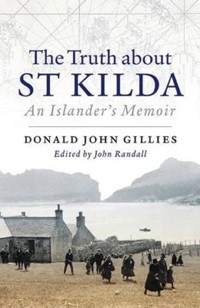
The Truth about St Kilda is a unique record of the isolated way of life on St Kilda in the early part of the twentieth century, based on seven handwritten notebooks written by the Rev. Donald Gillies, containing reminiscences of his childhood on the island of Hirta. It provides a first-hand account of the living conditions, social structure and economy of the community in the early 1900s, before the evacuation of the remaining residents in 1930. The memoirs describe in some detail the St Kildans' way of life, including religious life and the islanders' diet. The puritanical form of religion practised on St Kilda has often been interpreted by outsiders as austere and draconian, but Gillies' account of the islanders' religious practices makes clear the important role that these had in reinforcing the spiritual stamina of the community. This book is a lasting tribute to the adaptability and courage of a small Gaelic-speaking society which endured through two millennia on a remote cluster of islands, until its way of life could no longer be sustained.
Sie lesen das E-Book in den Legimi-Apps auf:
Seitenzahl: 345
Veröffentlichungsjahr: 2017
Das E-Book (TTS) können Sie hören im Abo „Legimi Premium” in Legimi-Apps auf:
Ähnliche



















The Truth about St Kilda
The Truth about St Kilda
An Islander’s Memoir
REV. DONALD JOHN GILLIES
EDITED BY
John Randall
First published in Great Britain in 2010 byJohn Donald, an imprint of Birlinn Ltd
West Newington House10 Newington RoadEdinburghEH9 1QS
www.birlinn.co.uk
ISBN: 978 1 780272 08 5
Reprinted in 2010This edition reprinted in 2014 by Birlinn Ltd
Text Copyright © The Estate of the Rev. Donald John Gillies 2010Editor’s Introduction Copyright © John Randall 2010Foreword Copyright © Harry McGrath 2010
The right of Donald Gillies to be identified as the author of this work has been asserted by his estate in accordance with the Copyright, Designs and Patents Act, 1988
All rights reserved. No part of this publication may be reproduced, stored, or transmitted in any form, or by any means, electronic, mechanical or photocopying, recording or otherwise, without the express written permission of the publisher.
The publishers gratefully acknowledge the support of the Scotland Inheritance Fund towards the publication of this book
British Library Cataloguing-in-Publication DataA catalogue record for this book is available on request from the British Library
Typeset by Antony GrayPrinted and bound in Italy by Grafica Veneta
Contents
Foreword Harry McGrath
Editor’s Introduction
Brief Chronology for Rev. Donald John Gillies
THE NOTEBOOKS
Select Bibliography
Foreword
In 2003 the Centre for Scottish Studies at Simon Fraser University started to collect and archive material related to the history of the Scots in British Columbia. The project appealed immediately to the Scottish community. I soon found myself rooting through the dusty recesses of the Scottish Cultural Centre in Vancouver, recovering photographs associated with the long and storied history of piping in the province. Later, I combed the minute books of various Sons of Scotland camps in British Columbia, and examined one of the few remaining copies of a souvenir booklet produced by the United Council of Scottish Societies in 1928 to commemorate Ramsay MacDonald’s unveiling of the Burns Statue in Vancouver’s Stanley Park.
The Scottish community in British Columbia was, and is, very close-knit, and many of the collected items were brought to my attention through a chain of association. Such was the case with the memoirs of Reverend Donald John Gillies. The process of discovery stretched back to St Kilda itself and visits made there between 2001 and 2003 by my friend Professor James Russell of the University of British Columbia. These visits stimulated Professor Russell’s interest in the archipelago and its former inhabitants and, back in Vancouver, he started giving lectures on St Kilda.
In late 2003, James Russell attended a concert organised by the Gaelic Society of Vancouver and a Mrs McIver, originally from the Island of Lewis, told him of Reverend Donald John Gillies. Reverend Gillies, she explained, was a widely admired Gaelic Presbyterian minister, who was born and raised on St Kilda before migrating to Canada. He died in Vancouver in 1993. James mentioned Reverend Gillies at a subsequent lecture on St Kilda and was gratified to find Lew Ross in the audience. Lew is a personal friend of Reverend Gillies’s daughter Peggy Askew and it was he who made the initial contact with Peggy and reported that ‘we had struck gold’ for our archive project.
Soon thereafter James Russell and I found ourselves sitting in Peggy Askew’s house in Coquitlam, British Columbia, enjoying her hospitality and going through seven ‘jotters’ filled with the stories of her father’s long life. Peggy later told me that she remembered her father sitting at the dining room table over several winter months in the mid 1980s (when the Reverend Gillies was in his eighties) and ‘writing his memories of St Kilda’. He seemed, she said, ‘very committed to the job at hand’. On first reading the journals, I could sense this commitment – the author wringing memories from a tiring mind; his handwriting tailing off towards the end of a long shift and the story taken up again after a break, often with a pen of a different colour: blue followed by black followed by green. James soon turned the contents of the notebooks into a particularly diverting lecture and brought Reverend Gillies’s words to life for local audiences. I was fortunate enough to hear him deliver such a lecture at Brock House in Vancouver, a few months after we visited Peggy.
I left Vancouver in 2007 and returned to live in Scotland. Peggy gave me permission to take her father’s notebooks with me. We hoped that they could be made available through preservation and publication to the ever-growing army of scholars, writers and members of the public with an interest in the history and culture of St Kilda.
In November 2008, through the good offices of Curator Maria Castrillo, the notebooks were acquired by the National Library of Scotland. An extract from one of them was later used in a major NLS exhibition entitled ‘The Original Export: Stories of Scottish Emigration’. Finally, in May 2009, Mairi Sutherland of Birlinn publishers in Edinburgh wrote to inform me that a grant had been acquired from The Scotland Inheritance Fund and that the Gillies memoirs were to be prepared for publication.
My thanks go to Neville Moir of Birlinn for recognising the value of the Gillies notebooks when they were first shown to him and to Mairi Sutherland for the hard work and perseverance that led eventually to their publication. Thank you also to John Randall. His vast knowledge of St Kilda is most impressive and his sensitive editing of the journals much appreciated.
In British Columbia thanks are due to Professor James Russell for initiating the entire enterprise and for the generous help and advice he provided to me from my first viewing the memoirs in 2004 through to their publication in 2010. Thank you to Lew Ross without whose intercession the connection to Peggy Askew may never have been made and to Professor Ian Ross for the letter he wrote testifying to the importance of the memoirs and urging their publication. Above all, thank you to Peggy Askew (née Gillies) and her husband Don for their patience, kindness and support during a long but, I hope, ultimately satisfying process.
HARRY MCGRATH
Chairman of Cultural Connect Scotland.
Former Co-ordinator of the Centre for Scottish Studies atSimon Fraser University, British Columbia, Canada.
Editor’s Introduction
Writings about St Kilda
Such is the worldwide fascination with St Kilda that over 700 books or articles have been written about it (see the bibliography in ‘Revised Nomination of St Kilda for inclusion in the World Heritage Site List’, Scottish Executive, 2003). This is a remarkable and possibly unique quantity of writing about one small group of islands. Moreover, the flood of publications shows no sign of drying up – rather the contrary.
Perhaps even more remarkable is that, with just a small handful of exceptions, almost all this writing has been by outsiders rather than by native St Kildans, and almost all in English rather than in Gaelic, the language of the St Kildans. Many of the books have been written by people who have only set foot on St Kilda for a short time, if at all, and many have repeated uncritically views or apparent facts set out by previous authors.
It is possible to see a process of myth-making at work. As I have argued elsewhere, myths may of course contain elements of truth, but tend to be over-simplifications of reality and frequently owe their survival to the fact that they appeal to the popular imagination (St Kilda – Myth and Reality, The Islands Book Trust, 2007). From at least the time of Martin Martin, whose ‘Late Voyage to St Kilda’ was first published in 1698, ideas and theories about life on St Kilda have been promoted (sometimes consciously in pursuit of political or other agendas) which have shaped the pre-conceptions of subsequent visitors and writers.
For example, a pervading notion (which may be called the ‘Myth of the Noble Savage’ – see St Kilda – Myth and Reality) is that, prior to its corruption and undermining by the outside world, St Kildans lived an idyllic life in harmony with nature and other members of their small self-contained community. The following quotation from Martin Martin has echoed through the centuries: ‘The inhabitants of St Kilda are much happier than the generality of Mankind, being almost the only People in the World who feel the Sweetness of true Liberty. What the Condition of the People in the Golden Age is feigned by the Poets to be, that theirs really is, I mean, in Innocency and Simplicity, Purity, mutual Love and cordial Friendship, free from solicitous Cares, and anxious Covetousness; from Envy, Deceit and Dissimulation; from Ambition and Pride, and the Consequences which attend them.’
Other myths about St Kilda are more recent in origin. For example, as shown by Michael Robson in his meticulously researched St Kilda: Church, Visitors and ‘Natives’ (2005), popular conceptions of the St Kilda ‘Parliament’, the St Kilda ‘mail-boat’, and indeed the role played in St Kilda in the second half of the nineteenth century by the Free Church of Scotland and particularly the Rev. John Mackay, owe much to the personal interests and eye for a good story of the journalist John Sands (‘Out of this World; or, Life in St Kilda’, 1876 and 1878). The conventional wisdom has become that the part played by religion, particularly in the nineteenth century, was a contributory factor if not a leading cause of the plight of the islanders, which eventually caused them to give up the struggle for survival and request evacuation (The Life and Death of St Kilda, Steel, 1965).
Now is not the time to enter into a detailed discussion of the various myths about St Kilda, how they have come about, and what relationship they bear to factual evidence. The key point is that the historiography of St Kilda consists mainly of writings from the outside, often with little first-hand knowledge of the subject under discussion, sometimes with a clear political or religious agenda, and frequently doing little more than repeating the conventional wisdoms of previous writing. In such circumstances, it is hardly surprising that myths are created and perpetuated.
In passing, we may contrast this situation with that of the Great Blasket Island off the Dingle peninsula in County Kerry, Ireland. The Blasket islands, evacuated in the 1950s, in some ways occupy a rather similar iconic status in Irish history to that of St Kilda in Scotland. But there is one huge difference. Our knowledge of life on the Great Blasket comes not only from the outside, but from a whole library of books written by the islanders themselves, many in Irish Gaelic: for example, by Tomas O’Crohan, Maurice O’Sullivan, and Peig Sayers. The reasons for this contrast merit deeper study, since they seem to reflect not only the obvious differences of religion, but more importantly the very different ways in which the culture of the Great Blasket and St Kilda were regarded, and valued (or not), by the respective Governments and societies of the two countries prior to the evacuations.
It is against this background that the significance of the present volume can be seen: the memoirs of the Rev. Donald John Gillies, who was born on St Kilda in 1901 and left the island in 1924, emigrating to Canada to pursue his missionary calling in 1927. Also included are some memories by his elder brother, Neil, who was born in 1896, and left the island in 1919, but returned regularly during the summers of the years 1931 to 1939 following the evacuation in 1930 to look after the island for the new proprietor, Lord Dumfries. There are descriptions of Neil Gillies during his spells on the island as ‘watcher’ at this time in other books (see Island Going, Robert Atkinson, 1949).
These are some of the few accounts of life on St Kilda from the inside, by native St Kildans, albeit written in English – as is the other comparable autobiographical account by Calum MacDonald (1908–1979), extensive extracts from which have already appeared in David Quine’s St Kilda Portraits (1988) and which is to be published in its entirety by The Islands Book Trust in 2010. Also of note are the memoirs of Calum or Malcolm MacQueen (1828–1913), one of the St Kildans who emigrated to Australia in 1852, as dictated to his son in Australia and published in part by both David Quine and Calum Ferguson, and by the Scottish Genealogy Society (1995). Calum Fergusson’s Hiort – Far na laigh a’ghrian(1995) is remarkable for being written in Gaelic, although not by a native-born St Kildan, and contains many St Kildan songs and stories. A selection of St Kildan songs has been recorded by Anne Lorne Gillies. However, it is inevitably difficult to be certain how far some of the songs and stories, even where it seems clear that they were first composed by St Kildans, may have been amended over the years by others.
The Family of Donald John Gillies and his brother Neil
Details of the ancestry of Neil (1896–1989) and Donald John Gillies (1901–1993) are given in Bill Lawson’s Croft History – Isle of St Kilda (1993). Some of their other brothers (for example, Donald) are mentioned in the manuscript. They were the sons of John Gillies (1861–1926) and his second wife Ann Ferguson (1865–1952) of Croft No 15 Hiort, situated close to the west end of the village street, at a distance from the church and school.
The Gillieses occupied this croft ever since the new village and crofts were laid out in 1836, replacing the former settlement to the north of the graveyard and the previous run-rig system. Neil and Donald John’s great-grandfather, John Gillies, is recorded in the first unofficial census of St Kilda taken by the Rev. John Mac-Donald of Ferintosh (‘The Apostle of the North’) in 1822. It would appear that the Gillieses were one of the families from Skye which re-populated St Kilda after an epidemic of smallpox almost wiped out the community in about 1727. On their mother’s side, Neil and Donald John were descended from the Fergusons of Crofts Nos 4 and 5 Hiort, whose ancestors moved to St Kilda from Berneray in Harris after 1727.
Through both sides of the family, the brothers were related to individuals who played an important part in the history of St Kilda. One of their great-grandfather’s brothers was the colourful and much-travelled Ewen Gillies, who emigrated to Australia in 1852, and then returned to St Kilda to re-marry before emigrating again (to Canada) in 1889. One of their mother’s brothers was Neil Ferguson, the St Kilda postmaster, and their mother was descended from both Donald and Neil Ferguson, elders who had played a prominent part in previous disputes with the Free Church Minister and catechist on the island. So there can be no doubt that Neil and Donald John came from families at the centre of St Kildan life, and are therefore well-placed to give accounts of island life from the inside.
The Manuscript
The circumstances of the discovery of Donald John Gillies’s manuscript in Vancouver, after his death in 1994, are outlined in the contribution by Harry McGrath. Clearly, we owe a great debt to Harry McGrath and Jim Russell, and also to John Donald publishers for undertaking the present publication.
The accounts included in this volume are edited versions of the original manuscript written in long hand in seven notebooks by the Rev. Donald John Gillies. The notebooks used were standard school exercise books (entitled Hi Class, by Hilroy, made in Western Canada) consisting of blank sheets of paper with 8mm wide ruled lines. The notebooks are numbered 1–7, and have brief notes on the cover indicating what they contain, but otherwise the narrative flows from one notebook to the next without any clear break.
Indeed, there is little attempt made by the author to structure the memoirs, just a few section headings but no chapter headings. Moreover, the text moves in an apparently unplanned way from subject area to subject area, frequently digressing and repeating itself, and shifting erratically from one time period to another. The narrative appears to be interspersed with extracts from newspaper articles from time to time, although these are not clearly identified as different from the author’s own observations. Even the distinction between Donald John’s memoir and what appears to be a section by or about Neil in the first part of notebook 7, but written in the same hand-writing as the rest of the manuscript, is unclear; and it has been necessary to make assumptions about the authorship. A section in notebook 7 apparently recording an interview between Neil and a Mr Hamilton on the island in the 1930s shortly after the evacuation is particularly confusing.
In editing the manuscript, a ‘light hand’ has been used in order to preserve as much as possible of the original style while correcting definite errors of grammar, spelling and punctuation. The guiding principle has been to try to make the flow of words intelligible to the reader, breaking undifferentiated text into sentences, inserting some extra section headings (which have been marked as such), and introducing punctuation where this is necessary to make clear the meaning. The names of ships and Gaelic words have been set in italics, to conform with usual style. Without these amendments, much of the text would frequently be difficult or impossible to decipher.
Nonetheless, the text remains largely in the form written down. It contains some incomplete sentences, repetition, and examples of what to a contemporary eye would be regarded as unusual construction and composition. Unusual spellings of place-names (for example Connacher and Stac Birroch or Birrock, instead of the more normal Conachair and Stac Biorach) and proper names (for example SS Dunra Castle instead of SS Dunara Castle) have normally been retained since these may be of interest. Donald Gillies’s use of ‘St Kildians’ (rather than ‘St Kildans’ in more common use today) has been kept throughout. Other stylistic points, such as his references to ‘the wife’, and the attachment of the term ‘Scotland’ to most place-names on the Scottish mainland, have also been retained.
It seems at first sight strange that a Minister like the Rev. Donald John Gillies should write in this way. It should be borne in mind, however, that he was in his mid 80s when he was writing much of the memoir and this may account for some of the repetition and loose style. Part of the explanation may also be that he is a native Gaelic speaker writing in an acquired language. Certainly, there are spelling errors which can be attributed to this, for example, the fairly systematic rendering of ‘contended’ for ‘contented’. More generally, sentence construction often tends to reflect Gaelic ordering and styles of speech. But the issue goes deeper than this. It is difficult to escape the conclusion that Donald John Gillies, while no doubt a fluent speaker and preacher, was uncomfortable when attempting to commit his thoughts to paper, whether in Gaelic or English. So even Gaelic words are sometimes recorded phonetically rather than as written, for example ‘sho’ for ‘seo’ (meaning ‘this’). It is perhaps easier to interpret the manuscript as an attempt by someone brought up in an overwhelmingly oral culture to write down his thoughts in an unfamiliar medium. The challenges faced by Gaelic-speaking islanders who may lack the confidence to write in Gaelic, and write down in English exactly as they speak in Gaelic, with Gaelic idioms unconsciously interwoven, has been described by Donald Meek (2007).
The centrality of oral culture to Donald John’s upbringing, as to life on St Kilda more generally, may also help to explain the rambling and repetitive written style, and the frequent diversions in the narrative. So what starts out as a description of a drowning or a fall from the cliffs is side-tracked into an account of the family history or character of the people concerned, even if this information may already have been provided several times before. Just as oral story-tellers rely on frequently repeated motifs or phrases to stimulate the memory, so particular facts associated with a person or place are rehearsed whenever the name is mentioned, for example the Rev John MacDonald’s initial landing at Glen Bay on the north side of Hiort rather than Village Bay because of the weather conditions. There are also some discrepancies over dates, which have been left as in the original.
Insights into St Kildan Life
But despite these idiosyncracies, the manuscript is of great interest, often absorbingly so. Its value lies in the rarity of first-hand accounts of life on the island from the inside, rather than the observations of visitors. A few fundamental points can be selected.
Perhaps first and foremost is the overwhelming importance and pervasiveness of religion to life on St Kilda. Even allowing for the fact that Donald John Gillies became a Minister and could therefore perhaps be seen as unrepresentative, there can be no escaping the central role which Presbyterian religion, and the view of the world which it embodied, played in St Kildan life. From the very first pages of the narrative to the last, there is no doubt that the purpose of life, and the values which are to be treasured and upheld, derive from Christianity and the teachings of the Bible. Donald John’s mother only read religious books and had an unwavering faith in the truth of the Bible. Donald John’s father, like other prominent members of the community, had a deep knowledge of the Bible. The standing of men depended to a considerable extent on their ability to quote from and interpret the Bible, for example on La Ceist at the communions. A large number of the stories told by the St Kildans seem to have been derived from the Bible, or have biblical allusions, to which Donald John draws attention.
And there is no suggestion that this was in any sense a dogma forced on the people by dominant Ministers or elders, as some of the popular caricatures of St Kildan life would suggest. On the contrary, religion was the vital integrating force of community life, apparently accepted and wholeheartedly endorsed by the great majority of St Kildans. Christianity was at the heart of their culture, a culture worthy of respect and acclaim rather than criticism and ridicule, as Professor Donald Meek has pointed out in the sermon he preached at Greyfriars and Highland Tolbooth Kirk in Edinburgh in August 2009. Family worship was central to daily life. Sundays were observed universally and unquestioningly as the Lord’s Day. The values of humility, love and kindness, and the need for salvation, were celebrated and accepted. In all of this, it is doubtful whether St Kildans were so different from many other rural Gaelic-speaking communities at that time in the Presbyterian parts of the Outer Hebrides. Outside observers, many of whom had never visited other places in the Hebrides, saw St Kilda as a place apart when in many ways its customs and beliefs were typical of a much wider area.
A further fascinating and important point is Donald John’s analysis of the reasons for St Kilda’s decline and eventual abandonment. In his view, and those of others whom he spoke to after the evacuation in 1930, the basic reason was lack of manpower to carry out community tasks, a gradually worsening predicament which he traces to the impact of the First World War. The stationing of military forces and installations on the island during the First World War led to a greater understanding by many of the younger generation of St Kildans of the perceived benefits of life outside the island. Once a few families and younger people migrated, it became progressively more difficult for the community to sustain itself.
Nor was this decline and eventual evacuation seen by most of the St Kildans as a source of regret. While there was inevitably and understandably nostalgia for the old days, and certainly a feeling that many valuable things had been lost, it is striking that all those interviewed by Donald John and his brother on the mainland following the evacuation were of the view that the move had been inevitable and indeed on balance beneficial. Apart from criticism that the Government had failed for many years to supply a postal service to the island, there seems to have been no resentment at the community’s treatment by the authorities – indeed at several points Donald John is at pains to emphasise how well the St Kildans were treated both before and at the time of the evacuation.
Beyond these general conclusions, the manuscript sheds invaluable light on many day to day or year to year customs and beliefs. For example, the periodic excursions of men to Boreray to see to the sheep and cut peats is outlined in a matter-of-fact and unsentimental way which adds to our understanding of the economic functions which Boreray (and also Soay and Dun) played in St Kildan life. The various underground dwellings on Boreray, each belonging to a particular family, are described, along with the system of sending messages from Boreray to Hirta involving the cutting of turf patches at particular spots on Boreray visible from the main island. And the role of the St Kildan Parliament, sensationalised and exaggerated by the journalist John Sands in the 1870s, is clarified. It did not meet on a daily basis, and its key role during Donald John’s childhood was to decide on the allocation of birds and bird-cliffs between the various families on the island. Like the role of the Church, one doubts whether the Parliament was so different from gatherings in many other islands or rural areas where communal activity of one sort or another was vital to the economic functioning of the community.
And intriguingly, Donald John at one point regrets that no writer had visited St Kilda, as John Millington Synge had visited the Aran islands (and others had visited the Blasket islands) in Ireland to record the history and stories of the island before it was too late. While one wonders how far this was a view original to Donald John, this was indeed a tragedy, because it appears clear that it was the influence of outside scholars and writers which stimulated the native people of the Blasket islands to write down their own memories. That nothing of this kind happened on St Kilda ultimately reflects the fact that the culture of St Kilda was not valued by the outside world before it was too late. Far from being seen as a source of cultural inspiration, the St Kildans were widely regarded as a curious and anachronistic phenomenon by both journalists and tourists from an assumed superior society, to be patronised or ridiculed rather than valued. As a result, we have no native St Kildan ‘Library’ of writings, merely fragments of songs and memories, and a very few longer accounts of life on the island, of which Donald John’s valuable manuscript is one.
‘Truth’ is a multi-faceted concept and, as with any community, it is impossible for any written account to encompass all aspects of the truth of life on St Kilda. But as we search for the ‘truth’, it is surely important to pay particular attention to the views of people like Donald John Gillies and his brother, who actually lived on the island as part of the St Kildan community for many years. While it cannot be ruled out that to some extent the Gillieses may have been repeating views about the island which were derived from other writers, or others they had met from outwith the island, it is reasonable to suppose that on central issues such as religion and attitudes towards the evacuation, they are likely to be reflecting the beliefs and assumptions of the community. What they have to say may not support the romantic, fashionable, or critical views of outside observers, but on many topics it is likely to be authentic and therefore worthy of respect by those who are seeking ‘the truth’.
Finally, I am grateful for assistance in the editing task from Alison Kennedy, a Gaelic placement student who worked for The Islands Book Trust during Summer 2009. I am also grateful for helpful comments on this introduction while in draft from Bill Lawson, Donald Meek and Michael Robson, none of whom share responsibility for any remaining errors or the views expressed.
JOHN RANDALL
Chairman, The Islands Book Trust
Publisher’s Note
As indicated in the editor’s introduction, idiosyncratic or inaccurate spellings of some names (even when these are inconsistent with modern usage), and repetition of some parts of text, have been retained in the effort to be faithful to an original piece of testimony.
Brief Chronology for Rev. Donald John Gillies
1901
Born St Kilda, 29 May 1901.
1916
Left school after Grade 6 at age 15.
1924–27
Left St Kilda for Glasgow. After a year working as a deckhand on a dredger in the River Clyde, he began preparing himself to become a missionary by taking courses at the Bible Training College in Glasgow, and a course to improve his English. In 1926 he applied to become a student of the Presbyterian Church of Canada and was accepted early in 1927.
1927–33
In April 1927 he sailed from Glasgow to Quebec City to take up a summer mission charge at North River, Cape Breton, Nova Scotia. In September he began studies at the Presbyterian College in Montreal (McGill University) while fulfilling short-term missionary engagements each summer, first at North River and later in rural charges in Ontario and Quebec.
1933–42
On completion of his divinity degree in 1933 he was ordained in Knox Presbyterian Church, Carberry, Manitoba, where he met his wife, Lillian Gilmore, whom he married on 29 May, 1935. Shortly after this he received a call from the church of North River/North Shore (where he had previously served as missionary) and four years later in September 1939 he was inducted to the neighbouring Cape Breton charge of Mira Ferry/Catalone.
1942–46
Enlisted as an army chaplain with the Pictou Highlanders at Sydney, Nova Scotia, in April 1942 and after service in various parts of Canada was transferred to England early in 1944 to become chaplain for a brief period at the military hospital, Aldershot. He sailed to France later in 1944 to join the 27th Canadian Armoured Regiment as senior protestant padre with the rank of Captain. He served with that regiment in campaigns through Belgium, Holland and Germany where he remained at Wilhelmshaven for six months after hostilities ended in May 1945. After further service in England he returned to Canada in February 1946 and received honorable discharge in Vancouver.
1946–69
His subsequent career as a civilian was spent in British Columbia, first as minister of Vancouver Heights Pres-byterian Church from April 1946 until 1952 when he accepted an appointment as Prison Chaplain at the New Westminster Federal Penitentiary. On retirement from this position in 1966 he was inducted as minister of Knox Church, Sooke, British Columbia, where he remained until his retirement from full-time pastoral work in 1969.
1969–93
In his later years he undertook various part-time assignments for the Correctional Division of the Royal Canadian Mounted Police for several years and as Chaplain of the Royal Canadian Legion, Chapter 148 (North Burnaby). He also travelled widely and maintained close contacts with the surviving inhabitants of St Kilda, including visits to Australia and New Zealand where he met various descendants of St Kildan residents. He also took an active part in the St Kilda Club and corresponded regularly with historians and others interested in St Kilda. In August 1980 he returned to St Kilda for the rededication of the recently restored church on the 50th anniversary of the evacuation of the island and preached the sermon in the service to celebrate that occasion.
He died in Vancouver on 5 November 1993 at the age of 92.
The Truth about St Kilda
The Early Years of Our Lives
In our early years we are interested chiefly in the things of the present and those with whom we work and play. Ours is a world of fact and realism, where little or no attention is given to the pages of history but as we grow older and the morning of life reaches high noon, the mind begins to dwell more on the past and to contemplate the future. There comes a desire to know something more than the cross-section of life we call ‘Today’. We are no longer satisfied to enjoy years of quiet contentment in the shade of the family tree, without acquainting ourselves with its roots and branches. Delving into the past, we find our early indifference has robbed us of much we would like to know. Parents and grandparents are gone, and with them so much of family history that cannot be recalled.
In my early days I can recall religion and the exercise of the sanctuary were not confined to the House of God and to his Holy day. Their religion was for weekdays as well as for the Sabbath in all the homes on the Island. The family altar was early erected. Here, both morning and evening, gathered the household, each taking part in the singing of the psalms and at times in reading of the Scriptures, then kneeling down to Heaven’s Eternal King, the father leading the family in prayer. In reference to the history of the St Kilda congregation, the morning and evening service was conducted wholly in the Gaelic language. Should the missionary discover that some were present who could not understand him in Gaelic, he would give a synopsis of the sermon in English. There was no instrumental music, nor were hymns used. Psalms only were sung in all services, with the exception of the Sabbath School.
The St Kildians owe a great gratitude to one outstanding theologian called the Apostle of the North, Rev. Dr John Mac-Donald, minister of Ferintosh in the Black Island in the early nineteenth century. He was the first missionary that brought the true message of salvation to the Island according to what I heard discussed on many occasions by my father and grandfather Donald Ferguson at our own fireside. Dr MacDonald made four trips to the Island. His first visit he experienced a very rough crossing from the Sound of Harris to St Kilda which is approximately 55 miles from shore to shore. He could not land on Village Bay so he landed on the north side of the Island which is called Glen Bay. Some Islanders met him and welcomed him to the Island. About seventy feet from where he landed there was a spring of water gushing from a rock. He removed his hat and drank out of this well. The Islanders built a cleit over this well and it is still standing and they called the well Eternal, Tobar Na Mauich, around 16th September 1822. This was his first visit to St Kilda. On his arrival MacDonald found neither an organised church nor a strong Calvinist religion. There was no house for a missionary, neither a church or a chapel.
‘During my stay in the Island’, wrote MacDonald, ‘the people gathered in a barn’. He preached eleven times and the people responded to his message. I heard it said on more occasions than once that he was shocked at the state of Christianity on the Island. Swearing and taking the Lord’s name in vain seemed to be the way the Islanders expressed themselves. A friend of mine who I’m greatly indebted to sent me a copy of a letter by Dr MacDonald to his brother who was a minister at Helmsdale, Scotland.
The First Examination in St Kilda School
The letter goes on to say on one occasion, while staying on the Island for a period, Dr MacDonald visited the day school to examine the pupils. This examination was in the Gaelic language and he describes his experience as follows: ‘After examining the more advanced classes among them on the principles of Christianity and particularly the leading doctrines of the gospel, in all of which they gave me much satisfaction, I confined my examinations to the chapter which they had just read and which happened to be the 7th chapter of Luke. I must say that I was astonished to find how smartly and correctly the greater part of them answered the questions put to them, having had no previous notice of my intentions as to the sort of cross examination and therefore no opportunity afforded them of preparing themselves.
My notes on this subject run thus: ‘On what message did John the Baptist send his disciples to Christ?’ A boy of about fourteen replies: ‘To inquire if he was the person who was to come.’ ‘What do you mean by the person who was to come?’ ‘The promised Saviour’ says he. ‘And what reply did Christ give them?’ ‘He was working miracles at the time and He bade them go and tell John the things that they had seen.’ ‘How did the miracles which he wrought prove that this was He who was to come?’ ‘Because’, replies another boy, ‘none but God could do these things and none except God was with Him’. ‘But did not others work miracles as well as Christ?’ ‘Yes’, replied the first boy, ‘but not in their own strength. Christ wrought them by His own power’. ‘Who is Christ?’ ‘The son of God’, replies a third boy.
He continued to examine the pupils on the love of Christ. This examination was addressed to the senior boys and girls. Thus ended the exercise, and after delivering a short address to the children and parents, he concluded his visit to the school with prayer. One can imagine the expression of satisfaction on Dr MacDonald’s face and also on the faces of those parents who obviously were present when the St Kildian children did so well. So this finished the first school examination that took place on the Island well over a hundred years ago.
A Sketch of my Life from Boyhood Days on St Kilda
I was born on the Island of St Kilda on 29th May 1901 at 3 a.m. in a three room cottage consisting of a kitchen and two bedrooms. In the master bedroom there was a fireplace. On exceptionally cold nights fire was lit, which at least took the chill off the room but in the kitchen the fire never went out summer or winter.
There was a long chain coming down the chimney. There was a special hook used for the kettle, pots with handles and also the girdle. The girdle was used everyday of the week to bake scones, with the exception of Sunday. Saturday double dose was baked.
My first recollection of a missionary was at the age of five. I remember him coming to our home at 15 Main Street St Kilda and giving me a candy. His name was John Fraser and strange as it may appear, I met Mr Fraser here in Vancouver 1947. He told me that he had a very happy ministry in St Kilda for three years. He thought a great deal of the Islanders and he paid a great tribute to my father for his devotion to the cause of Christ on the Island. He had a niece of his from Obbe, Harris who stayed on the Island with them in 1906. This niece married a Peter Ross from Embo, Scotland. Peter was a faithful elder here in the Free Church of Scotland Vancouver. Mrs Ross had a heart of gold and she spoke to me time and time again of the happy year she spent on St Kilda. She maintained that the St Kildians were the most hospitable people in the world. A year ago I officiated at her funeral service. She arrived at the age of 91 years. She was laid to rest in the Burnaby Masonic Cemetery, British Columbia.
I started school in the year 1906. As the church was responsible for the education in the school, the missionary and his wife worked as a team in this direction. So my first team teachers were Mr and Mrs Peter MacLachlan who with his charming wife remained on the Island of St Kilda for three years. Peter MacLachlan was an evangelist whose work was closely connected with that of Moody and Sankey. He was a native of the Isle of Mull. Peter would spend the a.m. teaching period. In the afternoon, two to four, his wife would take over. She was a tall woman, kind hearted and well educated. I believe that she was educated at Lincoln and had spent sometime teaching small children at York before marrying Peter MacLachlan at the age of 25.
In 1906 I remember the first school inspector who came to the Island on the passenger steamer SS Hebrides, one of MacBrayne’s boats. Mr Peter MacLachlan summoned the children to school. I still remember the examination questions that were asked: for standard one, a simple addition, a multiplication and reading the alphabet. I was recommended to standard two. The schoolhouse was attached to the church.
The Method of Heating the School




