


Erhalten Sie Zugang zu diesem und mehr als 300000 Büchern ab EUR 5,99 monatlich.
- Herausgeber: Spellmount
- Kategorie: Sachliteratur, Reportagen, Biografien
- Sprache: Englisch
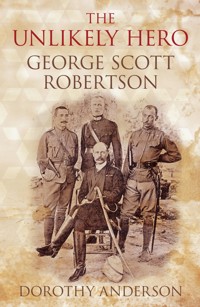
An Unlikely Hero is not only the story of an extraordinary life but also a unique insight into the 'Great Game' played out in Afghanistan in the late nineteenth century. Beginning his career as a British Surgeon Major in Afghanistan, George Scott Robertson found himself defending Chitral Fort in 1895 against a besieging force of thousands of tribesmen. He was celebrated as a hero, but this was only one chapter in what was an extraordinary life. This book is the story of an adventurer, ethnographer, and soldier.
Sie lesen das E-Book in den Legimi-Apps auf:
Seitenzahl: 546
Veröffentlichungsjahr: 2008
Das E-Book (TTS) können Sie hören im Abo „Legimi Premium” in Legimi-Apps auf:
Ähnliche



















Contents
Title
Background and Beginnings
Medical Service in War: Afghanistan 1878–1880
Medical Service in Peace: India 1880–1888
The Career Change: Gilgit and the North West Frontier, 1888–1889
The Scientist: The Kafiristan Experiences 1889–1891
Gilgit and Hunza-Nagar 1889–1891: Durand, Younghusband, Robertson
Gilgit, Chitral, Chilas: September–December 1892
Chitral, Mastuj, Gilgit: 1893
Conspiracies: Gilgit, Chitral: October 1894–February 1895
Assessment and Reconnaissance: Chitral 2–3 March 1895
The Siege: Robertson’s Story, March 1895
The Siege: Robertson’s Story, 1–19 April 1895
Aftermath of the Siege: April–May 1895
A New Life, New Careers: 1896–1905
The Member of Parliament, 1906–1915
His Legacies
Sources
Bibliography
Copyright
CHAPTER 1
Background and Beginnings
Sir George Scott Robertson, K.C.S.I., was born on 22 October, 1852, at 1 New Park Street, Southwark, London, and died on 2 January, 1916, at 14 Cheyne Walk, Chelsea, London. A memorial service for him was held on 7 January in St Margaret’s Church, Westminster. It was fitting recognition of what had been a varied, sometimes unpredictable, but always successful life, with careers as surgeon, political administrator, businessman, and Member of Parliament.
Robertson’s family background was modest, unassuming, not landed nor professional, but commercial, with his father engaged for many years in a business of little social standing, barely respectable. But this family, all born and brought up in London, had a geographical background and history which was important in structuring its approach to society and behaviour.
Some thirty years earlier, Robertson’s grandfather, Thomas, had fled from the Orkney Islands, escaping from the press gang to take refuge in London. He settled in Southwark, married Catherine Long, also from the Orkneys, who kept the Shovel Public House in Stepney, and it was there in 1822, that Robertson’s father, Thomas James, was born. The family moved south to Southwark, to the Moonrakers Public House in Great Suffolk Street. Thomas died early in 1823.
Catherine, with baby son, stayed on in Southwark as publican of the Moonrakers, which supported a reasonable livelihood for the two of them, and established a meeting place for the Orcadian community gathered about south London. There were also the visitors from the Islands. Many, including her brother, were with the Hudson Bay Company, calling every three years on reaching London. Some, who saw themselves as refugees from the Islands, presented problems, and there were several to whom she gave financial support. There were other more prosperous visitors, a cousin who reputedly owned his own ship, and another, captain of an East Indiaman. Over the years she proved a successful manager of the Moonrakers, with additional income provided from the ownership of tenement flats.1
This was background in which Thomas James grew up, a busy, bustling life, with a strong commercial emphasis, enlivened and enriched by the visitors who brought with them colour and tales from outside south London, of ships and sea, and of the Islands far to the north. By the early 1840’s he was ready to embark on his own business, setting up as a pawn-broker, and, shrewdly acknowledging the experiences of his mother, establishing his office at 1 New Park Street, next door to the Noah’s Ark Public House.2 He married Robina Corston Scott at St Mary’s Church, Lambeth, on 3 November 1847. His wife had a family background similar to his own, born in London, where her parents had settled after their marriage in 1815 in Kirkwall. The pawnshop prospered, and their family of eight, three sons, five daughters, were brought up, not in affluence but in comfort.
Pawn broking was a not a business held in high regard, nor had the pawn broker any particular social status. By the 1850s, however, the trade had been regulated by law, and the old sleazy image was fading. Many pawnshops had become well organised financial businesses which included among their functions those of bankers to the working classes, providing services now much in demand. For the businessman, who could act with caution, had skill and patience in dealing with people, and could listen to tales of much woe while believing only so much, pawnbroking offered financial success: it was a business which required shrewdness, perspicacity, an eye for detail, and mental toughness.3
All these were qualities which Thomas James Robertson had inherited, and, as a pawnbroker, were disciplined and strengthened. After twenty years he was ready to utilise his business experiences in another more specialised undertaking. The pawnshop was sold, and there was a move north to Hanover Square, and in that more affluent locality, he established a new business, as silversmith and jeweller. It was to be a family business: according to the 1871 census returns, his wife was also working as a silversmith with his eldest son as watchmaker. Within ten years there was another move, away from Belgravia, to Hammersmith. It is probable that this was not because of particular difficulties in managing a jeweller’s establishment, but more likely the choice of a less stressful occupation, the beginning of retirement. In the 1881 census returns, when both Thomas James and his wife were fifty nine, they were living in Hammersmith, and Thomas James’s occupation was now that of clerk, his eldest son an accountant: Linton Villa, 114 Netherwood Road, Hammersmith, was to be their address until 1890. The transition from pawnbroker to commercial business man had, indeed, been a success, financially and socially; for his family as they grew up, there had been the bigger houses, better addresses, a measure of affluence, an improvement in social status, and opportunities for professional education.
The Orkney background was not forgotten, and through the Scott family, there were other tales (of Sir Anthony Scott and his son John, refugees from Culloden) and more family connections in the Islands and Scotland. All of these were reflected in Thomas James’s family, in the upbringing of his eight children, and the close sibling relationships. From that background was inherited independence, self reliance, discipline, a demand for education; and also social dignity, a consciousness of personal value.
These two strands, the inheritance of his Orkney background and the everyday practicalities of commerce and careful husbandry, comprised the family background of George Scott Robertson, and were to be with him all his life, serve him throughout his career.
He was the second son, the third child. His early education and that of his brothers was at school in London and in Edinburgh, under the care of an Orkney relative. His early decision was for a career in medicine. In London, in October 1869, aged seventeen, he was apprenticed to the Apothecary Beer, in Dover Street, Piccadilly, and by July 1876 he had completed his training, submitted to the examination, and obtained his diploma as Licentiate of the Society of Apothecaries (L.S.A.). He had also been attending lectures at the Westminster Hospital Medical School, and qualified as a Member of the Royal College of Surgeons in 1877 (M.R.C.S.). In all he had studied and trained for seven years.
The next step was to decide his future as doctor and surgeon, in which field of medicine to work. His choice was to enter the Indian Medical Service, to make use of his qualifications and training as an army surgeon.
Notes
1 Information about the Robertson family is from the notes and jottings of GSR, in which he set out his own family research, with recollections and details as told by his parents; a copy of these notes was received from Ian Robertson, of Norfolk, whose grandfather was GSR’s brother. The notes have proved invaluable in revealing family movements between the Orkney Islands and south London. Much of the detail of names and dates in the notes has been confirmed with research into rate books, church baptism records, and early maps, through the assistance of the Southwark Library Local History Archivist, and local researchers. Other information has come from the Orkney Family History Society.
2 Listed as a registered pawn-broker in the London Trade Directories, 1845.
3 See Hudson, K., Pawnbroking: an aspect of British social history (1982); Tebbutt, M., Making ends meet: pawn broking and working-class credit (1983)
CHAPTER 2
Medical Service in War: Afghanistan 1878–1880
It was perhaps a surprising choice. From the Orkney background there were the constant reminders of distant places, of ships and seafarers, of oceans crossed, westwards, the Atlantic, in the service of the Hudson Bay Company, south and eastwards towards India and the Pacific. It would have seemed more likely that Robertson, in wishing to follow his medical career abroad, would have looked for a position as surgeon in the navy.
There may have been the lure of distance, of India, exotic surroundings; and service for the British Empire, and among the more distant relatives, there was the story of one cousin who had entered the Indian Civil Service. After seven years of study, Robertson, who had so far shown little inclination towards imaginative or rash endeavours, wanted to break away from daily routines in London hospitals. Some awareness of medical service in India had reached him through hearing of the experiences of one of his tutors at Westminster Hospital.
There were also very practical reasons: in 1877 entry into the Indian Medical Service (IMS) was straightforward and immediate, offering a secure position, a reasonable salary, and, long-term, a pension. Originally entry had been by competitive examination, but towards the end of the 1870’s there was an urgency in approving the entries of medical officers into army services in India. There was the threatening possibility of war, not just the small matter of a limited skirmish or localised expedition within the boundaries of British India, but an extended campaign against a country beyond British rule, high in the north west mountains, Afghanistan.
Throughout the second half of the nineteen the century, the diplomatic policies of the British and Indian Governments, and their manoeuvres, in all matters relating to the north west frontiers of British India and the countries adjacent to those frontiers, or were seeming to approach those frontiers, were complex, inconsistent, at all times expensive, and often less than practical. Memories of the disastrous war of 1840–42 in Afghanistan, when the British and Indian armies had been ignominiously beaten in retreat, were reflected in the attitudes and decisions of the politicians and diplomats of the Indian Government.1
By the 1870’s, in its diplomatic dealings with Afghanistan and its Amir, Sher Ali, the Indian Government was pursuing two approaches, one defensive, the other aggressive, and together they were combined in what was to become the Government’s ‘forward’ policy. By the end of the decade there were additional complications relating to the security of the British in India, increasing anxiety about the expansion of Russia, with its diplomatists, scientists, and exploratory armed expeditions advancing across the mountains and wastes of central Asia. In Kabul the Russian parties were welcomed by the Amir, whose relations with the Indian Government were less than cordial since the British had failed to provide guarantees for his protection. He was now prepared to acknowledge Russian influence and negotiate for Russian aid.
Fear of continuing Russian infiltration over the Pamirs, through Afghanistan, and across the north west frontiers of India, was the defensive side of the ‘forward’ policy. Its long term approach was aggressive, one of not just extending British influence through subsidies and diplomatic agreements, but of threatening direct military action as a necessary measure to overcome the Amir’s unwillingness to welcome the British. Its underlying motivation was to bring Afghanistan directly under British Indian control. There was the recognition that this aspect of the ‘forward’ policy could lead to war; and this approach, advocated with vigour by Lord Lytton after he became Viceroy in April 1876 (and promoted and approved by the Conservative Government in London), led to the conclusion that the invasion of Afghanistan was inevitable and necessary. There was a natural corollary, that, for the successful pursuit of the policy, the British and Indian armies must be ready and up to strength.
There was acknowledgement by army commanders of the difficulties of entry into a country of such physical extremes – harsh climate, mountains and ravines, two or possibly three narrow passes, long distances – and maps of that earlier war were available for study. There was recognition that in 1877 there were still serious deficiencies in organization, equipment and communication within the army in pursuing any long term campaign. In a landscape of ravines where there might be tracks but no roads, there was little practicality of wheeled transport, not even the basic bullock. Instead there was the need for increased numbers of transport animals, ponies, horses, mules, elephants, camels; and with many more animals came additional requirements, their feeding, the forage that they had also to carry, and their frequent replacements. The first step in planning the campaign was basic, how to transport troops from all over India to the north west. There was the network of railways that crisscrossed India, but in the north west the river Indus was the barrier with no railway bridges. From the south, troops came to Quetta, and from the east from Bengal where the railway stopped at Rohri and there was one steam ferry to cross the river.2
Those were the physical and practical problems. There was also the matter of accumulating and organizing an effective fighting force. There was no Indian unified army: instead there were the three Presidency Armies, of Bengal, Bombay and Madras, each with its own Commander-in-Chief, and with each army made up of British regiments posted to India and Indian troops from different races, differing religions, and differing levels of manning, training and efficiency. There were layers of bureaucracy within each army, multiplied threefold in all joint communications; and overall there was the higher ‘Commander-in-Chief in the East Indies’, who also happened to be Commander of the Bengal Army. Independent of the Presidency Armies there was the most experienced of the fighting forces in India, the more independent and better trained Punjab Frontier Force under the authority of the Lieutenant Governor of the Punjab. To add to the communication difficulties, there was the Military Department, responsible for financial matters and supplies of men, stores and equipment; and the head of that Department had no connection with the Presidency Armies but served as a full member of the Viceroy’s Council.3 It was not surprising that within such a complexity of organizations with so many layers of responsibility there was inevitable friction, loss of information in a multitude of papers, loss of momentum in decision making, too many delays in approvals, too many rejections; the surprise was that a system which was so obviously slow and inefficient worked at all; and it did, unwieldily and slowly.
Diplomatic negotiations with the Amir in Kabul, and manoeuvres which were less than diplomatic were pursued through 1877 and on into 1878, which should have given some time for Commanders, Council members, Lieutenant Governors, Quarter-Master Generals, and all others in less superior posts to heed Viceroy Lord Lytton’s insistence on army improvements, at least in respect of men, weapons, transport. But it was not until August 1878 that the Commander-in-Chief was asked to advise on the necessary forces and organization for a campaign in Afghanistan. By then an invasion was inevitable, its timing very close. In August the Amir Sher Ali had signed an agreement with Russia and welcomed the entry of a Russian mission into Kabul. The Indian Government demanded that in similar fashion a British mission be permitted into the country. In anticipation of – or as a measure of imposing acceptance – an advance party of the mission approached the Khyber Pass, and there was a refusal, the threat of firing from the commander of the Afghan border post, Ali Masjid. That was on 21 September 1878. Two days later the Viceroy approved the immediate formation of field forces, with the gathering of troops, decisions on the routes and strategy. An ultimatum, sent to the Amir on 31 October, demanding the establishment of a permanent British mission in Kabul, and requesting a response by 20 November, was ignored.
The Amir was now a declared enemy, and the invasion of his country began: three British and Indian columns began the marches, in the north to penetrate the Khyber pass; in the south through to Kandahar, and in the centre through the Kurram Valley.
* * *
On 7 November 1878 Robertson had arrived in Allahabad, the overall centre for the Bengal Army in the United Provinces, and on 19 November acknowledged his first posting as Surgeon attached to the 35th Bengal Native Infantry.4 In all it had been an eventful year for him.
In October 1877 he had applied to enter the Indian army medical services, and as the competitive examinations had been set aside, his Declaration and schedule of qualifications was accepted as evidence of the necessary qualifications in surgery and medicine. He joined the Army Medical School at Netley in Hampshire at the end of January 1878.
It was an extensive training of four months, an introduction to all that might be expected by the army medical officer, and courses covered hygiene, clinical and military medicine and surgery, and ‘pathology of diseases and injuries incident to military service’.5 It was recognised that what might have seemed the most obvious demand, caring for wounded on the battlefield, was not usually the most frequent in the life time career of a medical man in India; but, with the threat of war in Afghanistan, it was recognised that these 1878 entrants might well have a different professional introduction. The limitations of immediate surgery were acknowledged and discussed; antiseptics and anaesthetics, such as chloroform, were available for amputations, but with limited recovery success, more likely to be followed by gangrene; and there was little possibility of survival from chest or abdomen wounds. Sickness was with the regiments always, necessitating the daily inspection of all troops, with the regular assessment of loss of manpower. There were the persistent and distinct disabilities of the infantry and cavalry, and within the barracks, even with improved sanitation, there were constant attacks of fever and dysentery; but malaria could now be kept in check with quinine. Always in the background was the threat of epidemics sweeping through a regiment, cholera, typhoid, pneumonia, for which there was no known cure.6
Also at Netley in those four months, every effort was made to provide an introduction to India and its people, some basic language instruction, the necessity of acclimatization, immediate awareness of the health risks of heat and humidity, and of the diseases that flourished in heat and squalor. There was also the need to provide background about the structure of Indian army regiments and of the races, religions, and characters of men in different regiments. Most of the Netley instructors had previous careers in the Indian army medical services, and they were industrious in trying in those four months to cram something of their knowledge, experience and awareness of the country into the minds of each new batch of army medical entrants. The majority of instructors had acquired a sympathy and affection for the troops they treated, and an interest and knowledge of the cultures of the country.
After Netley, there was a short period of leave, making the practical preparations for the voyage and the new life, the purchase and accumulation of baggage and equipment; and farewells to family and friends. When five years of service was required before there could be a return from India with a furlough of one year, there was much to gather, much to anticipate, and much to discuss in making those farewells. There was the voyage of one month through the Suez Canal, arrival in Bombay, and then the first journey by rail across India to the army cantonments at Allahabad.
The advent of the war added urgency and excitement to every aspect of Robertson’s introduction to his professional life in Allahabad, the demand to rush through the training, to absorb as quickly as possible language skills, culture awareness and barriers; and to wait for news of what was happening on the other side of the country, to hope that the war would last long enough for a new officer to be there, on the spot; to hear what was happening to the Bengal Army troops that had already entrained for Peshawar, Quetta, the Khyber pass; and to wonder whether his regiment would soon follow.
First was the necessity to adjust to the discipline and unravel the complexities of military life in the Bengal Army. As the largest of the three Presidency Armies, consisting of fifty Indian and thirty two British infantry regiments, nineteen Indian and six cavalry regiments, its population, encompassed within the spread, depth and length of the cantonments, was a world in itself, separate, self-contained, a multitude of troops, animals, and that other force, the camp followers, more numerous than the troops. Then there was the need to familiarise himself with the intricacies of regimental and officer hierarchy, and to recognise his position as a surgeon. More intimately was acceptance of smells, food, and the learning relationships with fellow officers and with the soldiers of his regiment. There was the company of the other medical officers, with the allocation of three to each British and one to each Indian regiment. But there were also two medical services, the Army Medical Department (AMD), and the Indian Medical Service (IMS). Belonging to the second, Robertson was able to call on the assistance of other professionals, Indian doctors and pharmacists.
It was true that the army and its cantonments existed as a separate world, but India could not be ignored, and Allahabad provided an introduction. The first impressions were of extremes. There was the vastness of everything that encompassed the land: the wide stretches of the central Indian plain, the sweeping extent of skies, the grandness and volume of the rivers, and even the width and length of sand banks Then there was the contrast, the multitude who peopled that landscape, in the bazaars, boats and fishermen on the rivers, men and animals labouring in fields, darkness of robes, vividness of saris, the pressure all around of feet, bodies, voices, sounds; and the railway. Four months in Netley could not adequately prepare eye and ear and nose for the realities of a large Indian city. And Allahabad was large, in the centre of the United Provinces which in territory and authority stretched from Agra and Oudh, the Punjab, and the Central Provinces.
Robertson had arrived early in November, and the winter months through to March were relatively easy for the acclimatization experience. At the end of March he was transferred as medical officer in charge of the 15th Bengal Cavalry, which was to be attached to the Kabul Field Force. Preparations began for the movement of the regiment from the cantonments in the plains to the high mountains of Afghanistan, to become part of General Roberts’ Kurram Valley Field Force. But there were delays in the regimental orders.
* * *
In Afghanistan the campaign commenced badly and continued intermittingly. Decisions and preparations which were supposed to have been carried out in the past two years on such matters as necessary military forces and their deployment, geographical understanding of the country and its climate, estimated transport requirements for access to Afghanistan, continuing supplies for troops, followers, animals, improved physical conditions and medical care for troops, all proved inadequate and ineffective. In some matters no efforts at improvements had been made. There were other problems, disagreements between the military and the political on the actual size of the forces in relation to their financial cost. There was at least agreement that the three pronged invasion, instead of marching on Kabul and seizing the Amir, was to overrun the frontier regions and destroy his army.
There had also been the decision that the invasion must begin immediately: and November was not a good month to enter Afghanistan. There was acceptance of the overall difficulties of moving an armed force in winter weather, ice and snow, blocked passes, impassable tracks; but not sufficient recognition of the overall effects of cold and damp on men and animals. Throughout, there had been inadequate intelligence, a lack of information about the enemy, the fighting strength of its army, the efficiency of its weaponry, nor proper awareness of the availability of the other fighting groups, the tribesmen in the hills, experienced, skilful when attacking and always ready and eager to do so.
The first troop movements followed immediately on the decision to invade. On 20 November in the north the two divisions of the Peshawar Valley Field Force, under the command of Lieutenant General Sir Samuel Brown, entered the Khyber Pass, was immediately attacked, and withdrew. The next day the Force took the fort of Ali Masjid, which the Afghans had abandoned, and continued on to occupy the city of Jalabad on 20 December.
The Kurram Valley Field Force, under the command of Major-General F.S.Roberts, moved slowly through difficult terrain, with intense cold and snow. After Kurram fort came a difficult but successful advance over the pass at Peiwar Kotal which the Afghan forces, at least four thousand, had held in what had seemed an impregnable position. There was a further advance to the Shutargardan Pass, a return to Kurram fort in mid December. The Force was attacked, this time by several thousand tribesmen, and successfully repulsed. From the end of January 1879 on into the early spring the Kurram Valley Field Force remained firmly entrenched within the fort.
The two divisions of the Southern Afghanistan Field Force, originally named the Kandahar Column, under the command of Lieutenant-General D.M.Stewart, encountered difficulties in preparing the route into Afghanistan, and it was not until 1 January that the Force left Quetta, entering Kandahar on 8 January. There was no firing: the city had been abandoned by the Afghan army, and the population accepted its invasion without hostility. The Force camped outside the city walls, with a token body of troops inside.
There were no further major engagements with the Afghan army, but skirmishes, some with groups of more than one thousand tribesmen. The last serious attack took place on 27 March. By then, it had become apparent that the new Amir, Yakub Khan (the son of Sher Ali who had died in February), was interested in a negotiated peace. In a flurry of display and show of power the Treaty of Ganamak was signed on 26 May 1879. The Amir accepted defeat and an annual subsidy. He did not lose any territory, but the Kuram Valley was to be under British administration, the Khyber Pass was placed under British control, and he was given guarantees against aggression (the possibility of Russian interference). A British Resident was to be established in Kabul. The appointment was made, and Sir Louis Cavagnari, as Resident, with a support force of Guides, reached the city on 24 July. In all, the Treaty was as Lord Lytton had wished, its terms seemingly generous.
With the Treaty signed, the immediate need was to withdraw the British troops (nearly sixty thousand) as quickly as possible. The war had been short, but its financial and economic cost to the Indian Government had been considerable: the insatiable demands of the army for transport animals, supplies and foodstuffs, had drained the provinces of the Punjab and Sind, damaging agriculture and commerce. But a speedy withdrawal presented problems: the Afghan climate in June was as inhospitable to mass movements as in November, stifling dry heat beating up from the ravines in the Khyber and baking earth and waterless deserts on the routes from Kandahar (temperatures well over 100 degrees Fahrenheit). In the Kurram Valley it was cooler and greener. An early decision was made that the withdrawal of the force around Kandahar would be postponed until the end of the hot weather in September. The second decision was to retain troops as a garrison in the Kurram Valley, now under British control, making the excuse, the installation of the telegraph to Kabul.
Planning for the withdrawal of the third force presented other specific problems. Cholera epidemics had broken out in the Punjab and in Peshawar, and by May were spreading through the Khyber Pass to Jalalabad, moving towards Kabul. It was an occasion when military and political decisions must take account of medical consequences and the health of the troops. A Medical Commission of four doctors was set up to advise: should the troops be withdrawn immediately, or should withdrawal be delayed until the cool season when the epidemic would be waning. Surgeon-General Ker-Innes summed up the medical dilemma: troops returning to India marched into cholera; if withdrawal were postponed, cholera would soon reach their encampments, with the possibility that typhoid would also erupt. The preferred choice would be to delay the withdrawal until October when the disease would have died away. The medical officers, balancing medical risks against the pressure of political and financial demands, made the unhappy decision, that the withdrawal could proceed.
It started on 8 June and was carried out with speed and a certain degree of efficiency, moving nine thousand men through the Khyber Pass, in extremes of heat, dust and thirst; with each day fresh cases of cholera. By 25 June there had been more than three hundred cases, and almost two hundred deaths. The troops that made the final marches to reach Jamrud were in a pitiable state: Ker-Innes’ report was graphic:
...their distress very apparent ... clothes stiff and dirty ... great nervous exhaustion ... the eyes injected, and even sunken ... skin, black with the effects of sun and dirt ... dry tongue ... a weak voice ... many of these men staggered ... Nor did the officers appear to be in any better plight.
There was bitterness in its tone, the acknowledgement of a medical man of the helplessness of his profession in dealing with a disease when they were ignorant of its cause.7
Politically the Treaty seemed a successful conclusion to what had been a short and not too disastrous war; not too much damage had been done to the Afghan people nor to their country, and British prestige in Europe had benefited. More importantly, Russian influence in Kabul had been eliminated, a British Resident was established there, and the three major entry points from India into Afghanistan (should the need arise in the future) were now secure in British hands. There were congratulations to the generals who had contributed to the success (Roberts was promoted to Lieutenant-General) and the award of various honours; a special medal was issued for those who had been in action between 20 November 1878 and 26 May 1879.
* * *
In Allahabad Robertson had waited. The anticipated movement of his regiment, the 15th Bengal Cavalry to Afghanistan, scheduled at the end of March, was postponed as the situation changed. There was depressing work for him and the other medical officers as the troops who had been in action arrived back, all exhausted and many still suffering the medical aggravations of heat, long marches, poor sustenance, dysentery, accidents. In the humidity of the plains in the summer months, medical attention was stretched, and treatment was difficult to maintain, repairing weakened bodies and restoring overburdened minds to the routine of peacetime regimental life. For those like Robertson, this was a second hand learning experience of the aftermath of war. But with the Treaty there was peace, and they could contemplate once more their careers as army medical officers, serving a regiment in cantonments somewhere in India.
* * *
That peace in Afghanistan was short lived. On 3 September the Residency in Kabul was sacked and the Resident, Sir Louis Cavagnari, and his escort of Guides were massacred. The Viceroy, Lord Lytton, took quick decisions when the news reached Simla, and the Kurram Valley Force, the only one still operational, was ordered into immediate action, and, with General Roberts back in command, moved swiftly through the Valley to the Shutargardan Pass. In the south, the Force under Sir Donald Stewart, reassembled in Kandahar. In the north, there was the mobilisation of troops at Peshawar ready to enter the Khyber Pass. It was not quite a year since the November 1878 invasion, and from its beginning, this invasion was very different: there was a sense of urgency and bitterness, the objective, a speedy attack on Kabul, revenge for the deaths of Cavagnari and the Guides.
On 12 October Roberts’ troops entered Kabul and the new Amir, Yakub Khan, abdicated. A decisive and aggressive policy had been determined, that there would be severe reprisals: two commissions were set up, a political one, to assess the reasons for the massacre, and a military, to examine culprits and administer punishment. Winter arrived, the snow heavy, the cold intense, and the troops, still under canvas, suffered. On 1 November the decision was made to move the force into the fortified cantonment of Sherpur, a mile and half to the north of Kabul. The Amir Sher Ali had begun its construction to house all his army, and it was vast, a mile and half in length, deep in rooms and passage ways, and with a barrack square broad enough to parade twenty thousand men. It was incomplete, unfinished rooms and walls, blocked waterways, but could be made into a base that would be secure from the enemy and from the winter.8
A preliminary inspection of the building was made by the medical officers, who were stunned by its complexities and overwhelmed by its filth and stench. Much work was required before troops could be accommodated healthily and even reasonably comfortably. Teams of masons, carpenters, coolies swarmed through the rooms. First came fumigation and cleaning, then the structural work, laying new floors, new plaster, whitewash on the walls, fireplaces cleared, and charcoal burners found; all of these were the basic necessities to make the rooms habitable for the winter. The British troops were allocated quarters in the existing structure, and priority was the building of hutments for the Indian troops along the back walls. The camp followers were out in the open spaces at the rear. Comfortable shelter and warmth had to be found for the transport animals before they died of cold.
There was room for all. In November 1879 the Kabul Field Force (as it was now named) comprised nearly two hundred British officers, two thousand five hundred British other ranks, nearly four thousand Indian troops, six thousand camp followers, and three thousand five hundred transport animals. This was a fighting force of less than seven thousand, a number which, according to one gloomy military assessment, was too small to hold the fortress, with insufficient men to man the walls or withstand an attack. There were also the practicalities of how the force was to be maintained, of the organization of the supply trains with essential supplies, and of the caravans of animals and their forage.
Some returns to normality were soon apparent. By 19 November the telegraph line with Peshawar was restored and postal deliveries began to arrive. The route through the Khyber Pass was considered safe for the first convoy of sick and wounded to leave Sherpur, accompanied by non-essential transport animals, including the elephants. Some of these had already died from the cold, and the disposal of their carcasses presented practical and health problems.9
Taking into account the experiences of the previous winter and in an effort to improve medical services, a new arrangement for medical officers’ responsibilities was agreed. The old regime of medical officers attached to a regiment was set aside with the organising of field hospitals and field ambulances which would attend to all as they were wounded. First priority was to establish medical quarters and a hospital among the ramifications of rooms within Sherpur. There was no difficulty in finding sufficient rooms, but it was a matter of choosing those along a passageway, near to entrances and doors, easy for access for both sick and wounded; and then, with fumigation and whitewash, much carpentry and labour, prepare a hospital with sufficient beds for an unknown number of patients; and, close by, to set out rooms for other medical requirements, a surgery, dispensary, clinics, where the medical staff, attendants, orderlies, pharmacists, could examine, consult and attend.
There was plenty of experience among the medical officers with the Kabul Field Force of such occupational tasks, and some, having been in action the previous year, were very aware of the drain upon all their resources as a result not of enemy action, just the Afghan winter. While this was under way within the fort, in a far corner of the vast area at the rear, among the scattering of houses, huts, ditches, a field hospital was set up for the Indian regiments. As a gesture of conciliation, a hospital and dispensary opened in Kabul city on 21 November, with separate rooms for men and women (the most frequent patients). The most common complaints were eye problems, and it was fortunate that the attending British surgeon was a skilled oculist.
Robertson, relieved of regimental duties, was made Superintendent of the Sherpur Field Ambulance Corps. It was a responsible appointment that gave opportunities for his organisational skills, satisfied his ambitions for more action, as well as bringing him to the attention of higher ranked officers, which might well advance his career. Alongside the field hospital, a house was set aside for the Field Ambulance, its Superindent, and accompanying dressers, and apothecaries. Gathered all around was the bulk of the ambulance corps, the nine hundred non-combatants, the ‘Kahars’ and ‘doolie’ bearers (six bearers for each litter), the donkeys; but no wheeled form of transport.
There was work in plenty for Robertson well in advance of any indication of enemy action. The ambulance corps was numerous and willing, but untrained, and the lack of training extended from knowledge of how to position or aid a patient on a doolie, how to carry it, to what might be expected when entering a battlefield. But they were willing, and Robertson and his team worked hard with the training, and were as successful as might be expected prior to action. There were also immediate problems in organising the corps in the practical matters of its welfare. It had been assembled close to the field hospital but without shelter, and Robertson was immediately occupied with the force’s bureaucracy, trying to obtain supplies of warm clothing and sufficient food, and insisting on the erection of adequate shelters.
* * *
Throughout November there was evidence of mounting Afghan hostility, pressure upon Sherpur from the hills all around Kabul. Intelligence reports were inadequate, all described the strengthening of Afghan opposition, but none gave information about three Afghan armies approaching Kabul with ten thousand men. Roberts, with the telegraph restored, was well informed of the political and diplomatic manoeuvres of the British Cabinet and the Indian Government, and, accepting that occupation of Kabul might be lengthy, was intent on ensuring that there were sufficient supplies in Sherpur to maintain the force for at least five more months. The search for animal supplies was an essential day-to-day operation, troops foraging widely around the hillsides and villages.
The 8 December was the last day of peaceful activity. It started in grand style with a durbar on the plain near the lake, with the whole garrison present. Thereafter the action agreed by Roberts and his senior officers began. Three brigades, each of about one thousand, set out, one going south, two north, with the ostensible objective the continuing search for supplies. In reality, the plan was for aggressive action, the three forces to meet, encircling the Afghans. Within the garrison less than three thousand troops remained to protect building and stores.
The action over the next three days did not go according to that plan. There was some success, but also errors in following out the General’s orders; and there was the unexpected factor, those ten thousand approaching Afghans. Instead of attack, there was the necessity of defence, a retreat to Sherpur. Another attempt to take the initiative, the following day, 12 December, also failed: two defeats in two days. More and more tribesmen were surrounding the fort and attacking the unprotected rear. A desperate and successful effort was made to dislodge Afghans in their key position on a conical hill, which was immediately retaken, and Afghans were all around. By early afternoon the troops had accepted defeat, fleeing through alleys and orchards, abandoning spiked guns, savagely pursued. By nightfall all the retreating troops were within Sherpur.
The week, 8–14 December, had been a disastrous learning experience, and a heavy blow to British prestige. There had been nearly three hundred casualties, eight officers killed, twelve wounded, heavy losses for no gain nor purpose. There had been inadequate intelligence, and, more significantly, no recognition of the Afghan strengths, their fighting traditions and skills.
It was imperative that Sherpur be strengthened. At the rear, the whole interior of the building was exposed to tribesmen on the hillsides. First necessity, to fortify that rear, to connect the eastern and western walls, began immediately, building mud forts and breastworks. In the south eastern corner the small fort that had become the field hospital was sandbagged and strengthened.
Equally urgent was coping with the cold, the damp, the snow. Sentries on the ramparts became whitened figures as the snow on their greatcoats settled and froze. In the transport areas, despite crowding and body heat, animals laid down and died. For the British troops, four blankets, an overcoat, hot soup and cocoa were not sufficient to overcome the cold and frostbite; and for the Indian troops the allocation of clothing and food was less. The hospitals were crowded, the medical staff overworked. For all, there was the overall physical weariness of that week, the mental exhaustion from continuous noise, the usual disabilities of cavalry and infantry inflamed. There was the dismal recognition of failure, acceptance that they were under siege.
Tiredness and depression were enhanced by memories of the 1841–2 disaster in Kabul. But the situation was different, and officers and troops concentrated on those differences. The garrison was well stocked, food and ammunition for four months, forage for six weeks, and newly dug wells were producing an adequate water supply. There were other British forces within Afghanistan (one of twelve thousand within forty miles of Kabul), and, most reassuringly, the message requesting relief had been sent on 16 December before the telegraph line was cut. There was also the matter of leadership, and the high regard of the troops for General Roberts had not been damaged by the week’s failures. Roberts was their General, and he emphasised this to the full, making the rounds of the field hospitals, inquiring of the wounded ‘with his usual kindness and consideration’.10
With the further strengthening of walls and the rear wasteland, Sherpur provided a secure garrison; but within its accumulation of corridors, galleries, stables, there could be little comfort, much discomfort. There was the lack of warmth, the inadequate nourishment, noise, poor sanitation, stench. For the medical staff, there were the accumulating sicknesses, fevers, colds, dysentery, and the dread that at any moment there could be outbreaks of cholera, typhoid, pneumonia. The longer the siege, the more likely infections and disaster.
They were fortunate: the siege ended on 23 December. The Afghans did not follow their successes with an immediate attack on Sherpur, and reinforcing and re-building continued throughout a week of bitter cold and snow. The nights were worse, the cold even more intense, the constant anxiety of a night attack, the concentrated watchfulness when there was so little visibility. With the telegraph out of action, there was no news of a relieving force. On 22 December came a secret warning, timely and accurate intelligence: the Afghans planned an assault early next morning.
The lighting of a bonfire on the heights above Sherpur was the signal, revealing to the waiting troops a hillside of snow, speckled dark with the massed shapes, a gathering of tribesmen (sixty thousand was Roberts’ estimate), prepared and confident. Their main attack was at the weakest corner, near the field hospital, and after three hours they were almost through the perimeter walls, but came no further. After four hours their attack slackened and they began to retire (the news had reached them of an approaching British relief force).
By afternoon the initiative was with the British troops; cavalry and lancers, sappers and miners, swept out from Sherpur, and the Afghans retreated. By late afternoon the troops were safely back, and it was another night of readiness and waiting: but there was no further attack. Early next morning the relief brigade from the east marched into Sherpur. It was possible now from the high walkways to survey the landscape all around, to look ahead at an empty battlefield, and down towards Kabul city, shattered houses and empty streets; at the rear and beyond on the deserted hillside, ruins and destruction from the earlier attack; and, in the centre of the open arena, there was Robertson’s ambulance headquarters, the house still standing, its walls spattered, ‘afforded quite a quaint collection of bullets’.11 In the night the tribesmen had slipped away. It was a surprising victory, the discipline and strength of the British and Indian troops against vastly superior enemy numbers; the Afghan losses had been heavy, an estimate of three thousand, while the British losses were meagre, five killed, twenty eight wounded.
Christmas Day was celebrated quietly. The next day, the small hospital and dispensary in Kabul city was re-opened. It had been restored, rooms cleaned, medical instruments retrieved, a small store of medicines found: there were eighteen patients. Among the troops in Sherpur there was a sombre assessment of the December humiliation, and speculation about an uncertain future. For the troops, the immediate question was how long were they to stay in Kabul; and for General Roberts, the telegraph repaired, again in contact with the Indian Government, and by proxy with the British Cabinet, his two questions required an answer: ‘What was to be done with Afghanistan now that we had got it, and Who could be set up as Ruler with any chance of being able to hold his own?’.12 But the British political situation was uncertain, and decisions relating to British and Indian armies in Afghanistan were delayed and contradictory.
While they waited, building work continued: troop accommodation within the building was improved, and, at the rear, the quarters for the Indian troops and the camp followers were completed and properly weather proofed. There was a particular urgency in improving the hospital. There was reaction after battle tension, with the day-to-day problems of massed men in a static situation, facing inaction and debility. The number of patients had risen to eight hundred.. The medical staff counted out diminishing medical supplies, checked for spreading infections. There had been more deaths among the wounded, from ‘mortification’ (gangrene). Twelve officers had died, eleven were still recovering.
It was still an Afghan winter, but with January and February there was weather cold but bracing, encouraging open air activities, skating on the lake, duck shooting. It was surprising how soon a measure of normality was reached, and daily life in Sherpur became almost the same as in peacetime barracks in India. Postal services were restored, and within six weeks shattered houses within Kabul were rebuilt as shop keepers came back from India. A few weeks later, there was boating on the lake, and polo and cricket grounds prepared.
There was time, too, for social activities, for relaxation in the mess halls. For the officers there was the inevitable (and given the dimensions of Sherpur the necessary) establishment of the Kabul Club, an inelegant structure of canvas and mud walls, which became a haven for reading, card games, and some equality, junior officers mixing with veterans, with reminiscences of other wars, discussions on the immediate past and possible future.
* * *
For Robertson, with the ambulance service no longer an immediate necessity, there was an easing of responsibilities, and at the end of February, he was once again a regimental medical officer attached to the Punjab Frontier Force Artillery, No.4 Hazara Mountain Battery. The Frontier Force had been in Afghanistan since November 1878, was well trained, and with a regimental background of experience in warfare.
It was an opportunity to be away from the confined rooms of Sherpur. He found his duties with the Frontier Force less stressful than his ambulance role, the company of the Pathans and Sikhs congenial, and he was prepared to listen to their tales and absorb their views. Since leaving Allahabad he had had little time to reflect on where he was or on his career in the IMS. Now he could examine the Afghan landscape and learn something of the country and its people. Robertson became aware that he had an affinity with mountains, that his imagination (and he had never before been aware that he had one) reached out in wonderment at peaks and skies, as he reflected on the intricacies of valleys, rivers, and ravines that made up the jigsaw of the land. With these observations came a new interest, not just in the history but in the myths of the country, the stories of Alexander the Great and his army marching through the mountains; and of the regiment left behind, the lost valley where the people were white skinned and blue eyed.
He had time, too, to learn more about his colleagues, to observe and listen to the experiences of other medical officers. Among the surgeons, both those in the AMD and in the IMS, there was a measure of conflict over hierarchy and some distinctions in attitudes. Acceptance in the AMD, and its auxiliary staff, was restricted to ‘men of unmixed European extraction’, while the IMS was open to ‘all British subjects without distinction of race’, and included Indian doctors, apothecaries, and other attendants.13 But when they gathered in the Kabul Club, there were the possibilities for some professional exchange of views, and the continuing anxiety over how long the medical supplies would last, the possibility of epidemics. For some of the junior surgeons, there were still nightmares, their memories of the aftermath of military action, of the shambles of overcrowded rooms, bearers and doolies and their burdens of shattered bodies, the desperate need for speedy attention. Robertson had been fortunate in his position with the ambulance, which had been exhausting, but he had been involved in decisions, in immediate action, and his organisational talents had flourished.
The most highly regarded of the senior colleagues was Surgeon-Major Henry Walter Bellew. Everything about him and his career was remarkable, and his background of service in India was impeccable. His father had been with the Bengal army in the retreat from Kabul in 1842. He himself had served as a surgeon in the Crimea, had been with Lumsden and the Guides at Kandahar during the Mutiny, had been sanitary commissioner in the Punjab; and in 1873 had been attached on political missions to Kashgar and Yarkand, followed by the appointment as chief political officer in Kabul. He had been a member of the political commission set up by General Roberts to investigate the Cavagnari massacre, but he had become ill during the siege and had been forced to resign as political officer (his position was not filled until March when Lepel Griffin arrived in Kabul). He had proved himself as a scholar, linguist, explorer; he had written of his travels, produced a pamphlet on the treatment of cholera, a grammar of the Pushtu language, and in December 1878 had written ‘a little pamphlet’ (230 pages) on the history of Afghanistan and its people.14 Bellew, the man, and his career were to be admired, and the extended interests, skills and responsibilities of that career to be considered. It would seem that there could be opportunities for an officer in the IMS. Robertson, quiet, self contained, ambitious, looked at the high peaks, and considered his career possibilities.
* * *
Memories of the siege slipped away, but they remained, ‘the British army of occupation’, in Afghanistan, stranded, it seemed, ‘a ship at sea without orders’. Even with Sherpur almost impregnable, they were always conscious of insecurity, with the harrying of every small force that went out, and of attacks along the route to Peshawar. More troops arrived, with increasing pressure on supplies, transport, forage, sanitation and health. By the end of March there were twelve thousand troops in and around Sherpur. But there were only eleven thousand transport animals, many useless, and Roberts’ estimate for another thousand camels was considered inadequate, a more accurate figure was five thousand.15
The future of the Kabul force – and the other British forces scattered along the route to Peshawar, in the Kumar valley, and south at Kandahar – depended on political decisions in India and London. The agreed political objective in determining Afghanistan’s future was to establish as Amir, Abdur Rahman, if he could be persuaded with promises of backing and subsidies from the Indian Government, and if he would be accepted in Kabul. Then the withdrawal of the army would begin. The occupying force in Kandahar would stay, and that part of the country would be separated from Kabul. Another decision, ‘necessary from the political point of view’, was that General Sir Donald Stewart, in command of the Kandahar force, would take over in Kabul as commander-in-chief from Roberts (Stewart was the senior officer), bringing with him the larger part of his force, leaving only a small garrison in Kandahar.
From Sherpur a carefully selected column, nearly four thousand men, set out on 17 April to march forty miles south, planning to meet General Stewart’s column at Sheikabad. With the column was the 4th Hazara Mountain Battery, and Robertson was there as its medical officer. Their route proved more difficult than anticipated, with hostile villagers, the failure of a foraging party, a reconnaissance expedition fired upon and forced to retire. There was an immediate response from the column, with the artillery sent into the villages to blow up buildings. That action proved sufficient, and the column carried on beyond Sheikabad to reach Saidabad on 23 April. Then news came via the heliograph – a message that had travelled fifty miles – that General Stewart’s column had gained ‘a great victory’ at Ahmed Khel near Ghazni, with nearly one thousand dead Afghans counted on the plain.16 The two forces met, and together made a leisurely march to Kabul.
By the beginning of May in and around Sherpur there were now twenty thousand troops, with the accompanying camp followers, cavalry horses, transport animals, including elephants which had come from Kandahar. But the anticipated appointment of a new Amir had not ensured stability, and all around Kabul the country simmered. The constant demands of the army for supplies and forage, fuelled hostility, and other supplies, sent through the Khyber, had to be escorted all the way. There was the overall awareness of rifles and snipers on every hillside.
The spring weather of those months was pleasant – days when the harshness of the Afghanistan landscape had taken on a ‘prettiness, almost English-like’ – but was soon followed by the intensity of summer heat which weighed down every action. Thunder storms and dust whirlwinds swept across the valley, penetrating every crevice of Sherpur’s long corridors. For the troops it was a daily endurance trial. They waited, filling in the days, for the decisions on withdrawal.
At the beginning of June the Frontier Force, with Robertson in attendance, was part of a substantial force which set out for Kohistan, north of Kabul on the route to Turkestan, to continue the search for fresh supplies and actively discourage rising agitation. The Kohistanis were being particularly aggressive in encouraging other tribesmen in attacks on British troops, and responded to the arrival of the British force with immediate firing. But then, as had happened before, they suddenly retired, and there was no further resistance. The British force stayed on at Karez-i-Mir quietly through the heat of June on into July. It was a relief to be away from Sherpur.
* * *
For the Generals, it was waiting for the negotiations with Abdur Rahman to be resolved, and adjusting to the changed political scene in London. There had been a general election on 23 April, with the return of a Liberal government and Mr Gladstone as Prime Minster (and reports from India of British army atrocities in Afghanistan had supposedly influenced the electorate). Lord Lytton tendered his resignation, and Lord Rippon, one of the Liberal Party’s experts on India, was sent as Viceroy to settle the Afghanistan situation, extract the army, end the war, and terminate the ‘forward’ policy.17
Everything about the presence of the ‘British army of occupation’ was now identified not in military but in financial terms, and as a consequence the politicians could no longer argue with Abdur Rahman, but rather request his acceptance of their terms. On 22 July the first agreements were reached, that he was to be recognised as Amir of Kabul, and, as a corollary, that British and Indian troops would have withdrawn by 16 August.
The withdrawal was not to be straightforward. On 29 July came telegraphic news of a battle at Maiwand near Kandahar, with the British force almost annihilated, those still alive retreating to Kandahar. In Kabul the final negotiations with Abdul Rahman were completed, and on 3 August he was formally installed as Amir. On the same day, military action was agreed, that a division of four brigades would be sent to the relief of Kandahar. General Roberts was in command and picked the troops for what was to be a flying column, ten thousand men, seven thousand eight hundred camp followers, eight thousand horses, ponies, donkeys.
In Kabul the evacuation of the army had begun, with the first convoys of sick and wounded sent on 28 and 29 July, and the final convoys on 9 and 10 August. Last of all, the remaining six thousand troops, those not selected by Roberts, left; and that agreed date, 16 August, was kept. The final act heralding the new regime had taken place on 11 August, when the new Amir with his officials took over Kabul and Sherpur.
On 31 August Roberts and his column reached Kandahar. They had carried out what was to become one of the famous marches in military history, three hundred and twenty miles in twenty one days, averaging fifteen and one quarter miles a day. On 1 September they engaged in battle and the Afghans were beaten and retreated, and the town was occupied. Through October and November tribes involved in the fighting at Maiwand and Kandahar were ‘punished’, and by the end of December 1880 the force was back in India, with a garrison left in Kandahar.
The Second Afghan War, in its two phases from November 1878 to December 1880, if it had not been as disastrous as that of 1841–2, yet, for the Indian Government and British policy, was less than a triumph or even a success. Its costs had been enormous, financially, over £17 million, in the loss of troops, including more than one thousand killed in the one battle at Maiwand, in reputations, and in revealing the weaknesses of the complexities of military administration. Among the soldiers and the politicians who had been involved in the two years of muddled and sometimes reckless decisions, reputations were tarnished. Sir Frederick Roberts was the only General to emerge as a hero figure, the thrill and success of the march to Kandahar appealing to public imagination.
The particular weaknesses of the army medical services, revealed over the two years, in every aspect of the health of sick and wounded troops, were set out in an appendix to the official account of the war. Surgeon-General T.Crawford’s report was short and devastating, citing administrative complexities, mindless regulations, unwitting officialdom. His recommendations were almost commonplace and very basic, that Indian troops should be as adequately fed and clothed as the British, and that warm clothing should be issued before moving from a hot to a cold climate; also that the training of an ambulance corps should begin before involvement in any action.18 A reconstruction of the Indian army medical services was to follow.
* * *




