


3,49 €
Mehr erfahren.
- Herausgeber: BookRix
- Kategorie: Sachliteratur, Reportagen, Biografien
- Sprache: Englisch
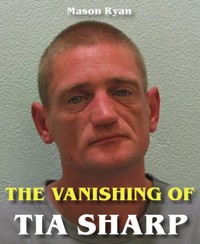
The murder of Tia Sharp by Stuart Hazell in 2012 was such a sad and grim tale that even hardened court reporters were left shaken and upset at the conclusion of the Old Bailey trial. Why was Hazell so trusted by Tia's family? How much did the police suspect Hazell? Did the support of the Sharp family make Hazell less suspicious to the police? Was he always destined to kill Tia? What actually happened the night she died?
All of these questions and more will be examined and discussed in The Vanishing of Tia Sharp.
Das E-Book können Sie in Legimi-Apps oder einer beliebigen App lesen, die das folgende Format unterstützen:
Veröffentlichungsjahr: 2021
Ähnliche

















The Vanishing of Tia Sharp
BookRix GmbH & Co. KG81371 Munich.
The Vanishing of Tia Sharp
by Mason Ryan
© 2021 Mason Ryan
Other Books by Mason Ryan:
Everything You Always Wanted To Know About Serial Killers (But Were Afraid To Ask)The 100 Deadliest Serial KillersThe 100 Deadliest Female Serial Killers
Dennis Nilsen - The Necrophile Civil Servant
Contents
Author's Note
Preface
Chapter One
Chapter Two
Chapter Three
Chapter Four
Chapter Five
Chapter Six
Chapter Seven
Chapter Eight
Chapter Nine
Chapter Ten
Chapter Eleven
Chapter Twelve
Afterword
References
AUTHOR'S NOTE
A list of references and sources used in the research of this book can be found at the conclusion of the final chapter.
PREFACE
The murder of Tia Sharp in 2012 was such a sad and grim tale that even hardened court reporters and journalists were left shaken and upset at the conclusion of the Old Bailey trial. There were two salient questions most people had in relation to this terrible case. The first is why Tia's family trusted Stuart Hazell and allowed him to essentially become her babysitter at weekends. In light of what we now know about Stuart Hazell, it seems incredible that this vile man was allowed to forge such a close relationship to a child and even be left alone with her for hours and days at a time.
As we shall see though in the story that follows, it was quite simply lot more complicated than that. Stuart Hazell did not turn up out of the blue one day and then become appointed Tia's surrogate 'grandfather' and babysitter in a matter of days or weeks. Hazell had known the Sharp family for longer than Tia had been alive and no one in the family ever had reason to suspect that he was a dangerous predator. Sadly, this awful man was able to hide in plain sight all along.
Stuart Hazell's long criminal record was actually revealed in the media even before his arrest (and during the active search for Tia) but his past crimes had nothing to do with children or sexual misconduct. They were mostly drug offences with some theft and assault thrown in for good measure. Ian Huntley's criminal history (which, in contrast to Hazell, did NOT come to light during the search for the missing girls in Soham) displayed a clear deviant interest in underage girls. Hazell's criminal record did not.
Stuart Hazell's dark nature was something that he had managed to cloak from his friends and the Sharp family. Even at the height of the intense (and highly negative) media spotlight on Hazell during the search for Tia, none of Hazell's friends, work colleagues or relatives cast any doubt on his character nor questioned his innocence. The Sharp family in particular were highly irritated by the media and public pointing the finger of suspicion at Hazell. During the search for Tia, the Sharp family even issued public statements in which they begged the media and public to stop the dark rumours and leave Stuart Hazell alone.
The media and the general public displayed, in hindsight, a more uncanny sixth sense when it came to Hazell. Most of the media and public considered him highly suspicious (and downright repulsive) right from the start. They were almost certain that Hazell had something to do with Tia's disappearance. While this sixth sense proved entirely accurate and justified in the end, the police obviously cannot charge and convict people because of hunches on the part of amateur detectives and the court of tabloid and public opinion. They needed a lot more evidence than the simple fact that Stuart Hazell seemed twitchy, evasive, creepy, and dodgy.
The police may well have recalled the case of Steven Wright in 2006. Wright became known as The Suffolk Strangler after he murdered five women in eastern England. The police already had a suspect in custody when they deduced that Steven Wright was The Suffolk Strangler. The suspect (who was of course innocent) was actually a man suggested to the police by the media pack in East Anglia. The media had noticed this man hanging around a lot and didn't like the look of him. This amateur detective work on the part of the media was very wide of the mark. It was a good example of why detective work should be left to the professionals. The police involved in the Tia Sharp case also had to factor in the staunch support the Sharp family gave Stuart Hazell when Tia was missing. The Sharp family seemed to think the very notion of Hazell as a suspect was preposterous.
One of the most haunting images in this case was painted by the CCTV footage of Hazell and Tia shopping together in a supermarket only hours before her death. If you watched this footage completely oblivious to the wider context of the case you would never in a million years suspect that Hazell posed any danger to Tia. There is nothing at all in Tia's body language or conduct to suggest she is unhappy or wary of this man. She seems relaxed and happy as she chats to Hazell and then whirls away to go and read a magazine. The CCTV footage was visual evidence that Tia Sharp not only liked Stuart Hazell but completely trusted him.
The second most common question people had in relation to this case concerned the baffling inability of the police to investigate the loft in the house that Hazell shared with Tia's grandmother Christine. Baffling is the only word for this incompetence. The investigation into Tia's disappearance was a great embarrassment to the Met Police. The solution to the mystery of Tia's disappearance resided in literally the first place any sensible person would look! It should have taken the police about an hour to solve this case once they arrived at that tiny house in New Addington.
We shall see in the book that follows how the police somehow managed to miss the obvious and then become sidetracked by a bogus eyewitness statement. The police investigation into Tia's disappearance is genuinely perplexing and confusing at times. How much did the police suspect Hazell? Did the support of the Sharp family make Hazell far less suspicious to the police? How damaging was the false eyewitness statement of the neighbour Paul Meehan (who claimed to have seen Tia leave the house the day she vanished)? Meehan, unwittingly, simply corroborated Stuart Hazell's untrue statements to the police and media.
And then there is the central character in this tragic drama. Stuart Hazell himself. Was he always destined to kill Tia? What really happened the night that she died? How long did Hazell think he could evade suspicion and did he ever make any plans to dispose of the evidence or escape? All of these questions and many more will be examined and discussed in the book that follows.
CHAPTER ONE
Wakefield Prison, located in West Yorkshire, is the biggest high security prison in the United Kingdom. Behind the red facades of this Victorian looking building you will find around 750 prisoners in four units. They are, in the main part, offenders who have been incarcerated for the most serious offences against women and children. Milly Dowler's killer Levi Bellfield served part of his sentence in Wakefield. Other past or present inmates include Mark Bridger (sentenced to life in prison for the abduction and murder of the child April Jones), the highly eccentric and highly violent Charles Bronson (often called Britain's most notorious prisoner), Harold Shipman (the mild mannered GP who was found to be killing hundreds of his elderly patients by administering lethal doses of diamorphine), and Ian Huntley (a school caretaker who unfathomably murdered the schoolgirls Holly Wells and Jessica Chapman in the village of Soham in 2003).
You will also find a 45 year-old man named Stuart Hazell in the prison the media love to call Monster Mansion. Hazell is not as well known as the more infamous criminals who have resided at HMP Wakefield over the decades but he is no less evil. Stuart Hazell was not a man who came out of the dark to commit his awful crime. He did not target a stranger - nor was he a stranger himself. Hazell's crime involved a family that had more or less allowed him to become a part of them. He abused their trust in the worst way imaginable after nearly a decade of appearing placid, trustworthy, and decent in their company.
At the start of August back in 2012, the focus of the media and much of the public was on the Olympic Games taking place in London. Few will forget that magical night of wonder when Greg Rutherford, Mo Farah and Jessica Ennis all secured Gold medals in the space of a few hours. Great Britain won a spectacular twenty-nine Gold medals during the Olympics - turning the event into a happy party for the capital city. As the heroic feats of athletes from around the world gripped global television audiences, a twelve-year old girl named Tia Sharp was reported to have gone missing in New Addington. New Addington is an area in South London with (whether fair or unfair) a tatty reputation and the usual problems of unemployment, urban decay, poverty and crime.
Tia Sharp's grandmother, a 46 year-old woman named Christine Bicknell, lived in New Addington and Tia frequently came over to stay at weekends. It was while she was staying with her grandmother that Tia had gone missing. Tia and her family lived in the small residential district of Pollards Hill - a place that bridges the south London boroughs of Croydon and Merton. Tia lived in Pollards Hill with her 31 year-old mother Natalie, stepfather David Niles, and two younger brothers (three year-old Jack and one year-old Harry). The family lived in a small flat in a low-rise block and Tia slept on the sofa in the living room because there were only two bedrooms.
With no bedroom of her own and two younger siblings in the house, Tia Sharp enjoyed staying with her grandmother. There was relative peace and quiet and she had her own room at Christine's house. Tia would often beg her mother to be allowed to spend weekends in New Addington with her grandmother. Not that Tia was unhappy at home - far from it. Tia was loved by her family and although money was tight she didn't want for anything. She simply enjoyed the freedom of having her own room at her grandmother's house. Tia had also developed good friendships with some of the local children in New Addington so she enjoyed her weekend visits for this reason too.
Christine lived in her small house in New Addington with Stuart Hazell - who was almost ten years her junior and 37 years-old in August 2012. The house that Christine shared with Hazell was number 20 the Lindens. A small house in a suburban area close to some woodland. According to Hidden London, 'New Addington is a disadvantaged settlement situated in the far east of the borough of Croydon, set on a steep hillside rising into the North Downs by nearly 200 feet along its north-south axis. The centre of New Addington lies 2½ miles south of the nearest train station, at West Wickham, and about 4½ miles from the heart of Croydon. Its inaccessibility was a major reason for the creation of Croydon Tramlink, which arrived here in 2000. Fieldway and New Addington are the borough’s first and second most deprived wards and are the principal recipients of its regeneration funds. A 2001 planning document declared the council’s aim to counter the perception that “if you come to live in New Addington, you’ve failed.”'
Stuart Hazell had known the Sharp family for a long time. Christine met Stuart Hazell when she was working as a barmaid and a relationship soon evolved. Tia Sharp had known Stuart Hazell almost her entire life. He was always there in the background somewhere. The media later made a lot of the fact that Stuart Hazell was supposed to have been in a relationship with Tia's mother Natalie but then ended up with Christine. They made it seem like he had dumped the daughter and moved onto the mother as if life in the Sharp family was like a melodramatic episode of EastEnders. This was somewhat exaggerated. Natalie Sharp had known Stuart Hazell for years but they were never lovebirds in the way that the media sometimes made out. They were more like friends or just people who knew each other well because they lived in the same area.
Natalie Sharp couldn't have cared less that Stuart Hazell was now living with her mother. It wasn't as if she was ever engaged to him or anything. Natalie Sharp DID care that the person living with her mother was trustworthy and decent to Christine and in this she had no complaints about Stuart Hazell. Christine also had no complaints about Stuart Hazell and neither did anyone else in the Sharp family. The Sharp family (foolishly and tragically as it turned out) had an unshakable trust in Stuart Hazell. They simply refused to believe he was capable of doing anything bad to them - even when he became the obvious prime suspect in the disappearance of Tia.
Stuart Hazell was born in Kingston-upon-Thames in 1975. His life had been difficult but he wasn't the sort of person who ever inspired a generous portion of sympathy. He had spent time homeless as a teenager and also in the care system growing up when his father was in prison. Hazell's mother and sister later said they found Stuart Hazell untrustworthy and creepy and that he stole from them whenever he got the chance. If something wasn't nailed down, Stuart Hazell would steal it. That was their abiding memory of him. They regarded him to be workshy and someone who lived day to day through thieving and drug dealing.
However, it should be noted that when Tia was missing, Stuart Hazell's mother and sister never said anything bad about him at all. After his arrest, people were lining up to say they'd never trusted Stuart Hazell and always thought he was obnoxious but these people were conspicuous by their silence when Hazell was living with Christine and Tia was missing. Stuart Hazell, amazingly in hindsight, enjoyed practically unqualified support from everyone who knew him during the search for Tia Sharp.
Stuart Hazell was - to put it mildly - no stranger to the police. He had many past convictions. Disorderly behaviour, racially aggravated common assault, cocaine dealing, cannabis possession, possession of a machete in a public place, grievous bodily harm, burglary, theft. Hazell had been in prison more than once and seemed like the last person in the world you would want to become part of your family.
Hazell was arrested for the first time when he was only fourteen. Other reports said he first became known to the police when he was just twelve. Twelve is also cited as the age when he began to drink alcohol on a regular basis for the first time. A former neighbour of Hazell at the Lindens later said that her abiding memory of him is that he used to drunkenly hang out of the window at night loudly singing Frank Sinatra songs.
Hazell was once part of a South London gang of crack cocaine dealers the police said operated with no moral compass. You wouldn't really expect a gang of drug dealers to have a moral compass but - even so - this gang was a thoroughly wretched affair by all accounts even by the dodgy standards of their own illegal profession. If you were to conjure in your mind's eye an artist's impression of a stereotypical criminal then the sketch would look a lot like Stuart Hazell. Stuart Hazell was like Dorian Gray in reverse. It seemed as if every criminal misdeed in his past had etched itself into his face and manner. His hair was always shaved like someone in a Gulag, his eyes were narrow and sinister, he seemed incapable of smiling, and his lined weary face made all expression come out as a pained grimace.
Stuart Hazell was a man who always seemed to be looking over his shoulder. A life of crime had recoded his body language and made him appear deceitful at all times - even when he was innocent. Hazell couldn't even buy a newspaper or walk the dog without looking shifty and up to something. If you saw Stuart Hazell walking up your path your first instinct would be to lock the door. The first impressions of Hazell when the Tia Sharp investigation became national news were dismal. Stuart Hazell looked guilty. He looked like the sort of person you would not trust in a million years. He radiated sleazy oscillations.
Christine and the Sharp family knew that Stuart Hazell had been in prison in the past. The family knew all about his history as a drug dealer. It was water under the bridge to them. They took Stuart Hazell as they found him. He never stole from them, they never saw any sign of violence or a short fuse, and they trusted him with the children. This was not a snap decision. Stuart Hazell had to earn his position of responsibility in the Sharp family by his conduct over a number of years. Not necessarily his conduct to outsiders (the Sharp family never showed too much interest in things Hazell had done that did not involve them) but his conduct with the Sharp family. In that he had been exemplary.
Christine clearly loved Stuart Hazell. Tia Sharp loved Stuart Hazell. Tia's uncle David Sharp liked Stuart Hazell. Tia's biological father Steven Carter had no opinion one way or the other because he'd never met Stuart Hazell. Natalie Sharp must have liked and trusted Stuart Hazell because she not only allowed Tia to stay with Hazell and Christine but relied on Stuart Hazell to be Tia's guardian on her journey to and from Pollards Hill to New Addington. Stuart Hazell had earned their trust over a very long period. Hazell was in the end more or less a weekend babysitter to Tia half the time. Nothing could more illustrate the absolute confidence the Sharp family had in Stuart Hazell more than this.
Hazell - a jailbird - had endured many periods of unemployment in the past but now had sporadic work as a window cleaner and painter and decorator. He was never going to be rich and money was always tight but he was at least making an effort and helping Christine (who mostly worked as a carer for children with autism and also elderly people) to pay the bills. It would be generous and naive though to say that Hazell had completely turned his life around. His convictions for the possession of a machete and grievous bodily harm had been in 2010 - only two years ago at the time. It wasn't as if this all happened two decades ago when he was an obstreperous teenager.
The machete incident occurred when Hazell had been thrown out of a local pub (the Randall Tavern in Fieldway, New Addington) after some sort of altercation or argument. The landlord Peter Wilson later noticed Hazell, who clearly had vengeance in mind, striding up the street back to the pub with the offending weapon. The landlord immediately locked the doors and called the police. What sort of crazy person owns a machete in the first place? It was a question the Sharp family didn't bother to ask. Peter Wilson later said of Hazell - "He was vile. A horrible bully. He wasn't a regular here, but he was not liked around here at all. I did not want him in my pub. This estate is full of good people and he made this place look like a slum, which it is not at all."
Stuart Hazell was a thin, wiry man and although slender he was also tall and physically strong with a proven history of violence and racism. Stuart Hazell wasn't the sort of person you would want to get in a confrontation with. He was a highly dangerous man but the Sharp family were seemingly oblivious to this. Christine said that Hazell was a calm and gentle person in all the time they spent together. She'd never even heard him raise his voice let alone show any sign of anger or a bad temper.
Christine had though banned Hazell from drinking vodka in the house. The only time she ever saw his mood threaten to change was when he drank vodka. Hazell would become slightly argumentative when he drank vodka. He was therefore restricted to drinking the less combustible beverage of lager in Christine's house. Hazell was a big drinker but he was not an alcoholic. Hazell had clearly learned to moderate his consumption to placate Christine. He drank more slowly in the house to avoid becoming paralytic.
Stuart Hazell was good with the children in the Sharp family and had formed a close bond with Tia. Hazell was the person who Tia always texted to arrange visits to New Addington and it was his task to make sure she safely navigated the tram journey. It might be a stretch to say that Stuart Hazell had become Tia's surrogate grandfather but she had known him for most of her life. He was more or less a relative from her perspective. Tia Sharp trusted Stuart Hazell and enjoyed his company.
Hazell had a games console that Tia enjoyed playing on and he would allow her to stay up very late to watch television. He was more informal and relaxed than the more traditional adult role models in her life and so Tia Sharp liked Suart Hazell. It was fun for Tia to go to New Addington and stay up until midnight playing computer games and watching television. Best of all was the end of the night when Tia had the rare luxury of sleeping in a bed.




