


10,99 €
Mehr erfahren.
- Herausgeber: Parkstone International
- Kategorie: Geisteswissenschaft
- Sprache: Englisch
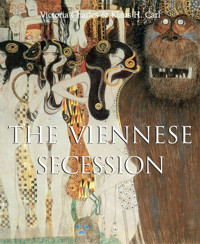
A symbol of modernity, the Viennese Secession was defined by the rebellion of twenty artists who were against the conservative Vienna Künstlerhaus' oppressive influence over the city, the epoch, and the whole Austro-Hungarian Empire. Influenced by Art Nouveau, this movement (created in 1897 by Gustav Klimt, Carl Moll, and Josef Hoffmann) was not an anonymous artistic revolution. Defining itself as a “total art”, without any political or commercial constraint, the Viennese Secession represented the ideological turmoil that affected craftsmen, architects, graphic artists, and designers from this period. Turning away from an established art and immersing themselves in organic, voluptuous, and decorative shapes, these artists opened themselves to an evocative, erotic aesthetic that blatantly offended the bourgeoisie of the time. Painting, sculpture, and architecture are addressed by the authors and highlight the diversity and richness of a movement whose motto proclaimed “for each time its art, for each art its liberty” – a declaration to the innovation and originality of this revolutionary art movement.
Das E-Book können Sie in Legimi-Apps oder einer beliebigen App lesen, die das folgende Format unterstützen:
Seitenzahl: 170
Veröffentlichungsjahr: 2014
Ähnliche
Author:
Victoria Charles
Klaus H. Carl
With detailed quotations from Hermann Bahr and Ludwig Hevesi
Layout:
Baseline Co. Ltd
61A-63A Vo Van Tan Street
4th Floor
District 3, Ho Chi Minh City
Vietnam
Library of Congress Cataloging-in-Publication Data
Carl, Klaus H.
[Wiener Secession. English]
Viennese Secession / Klaus H. Carl. -- 1st ed.
p. cm.
Includes bibliographical references and index.
ISBN 978-1-84484-845-4
1. Wiener Secession. 2. Art, Austrian-Vienna-20th century. I. Title.
N6494.W5C3713 2011
709.436’1309041--dc23
2011028283
© Confidential Concepts, worldwide, USA
© Parkstone Press International, New York, USA
© Charles Robert Ashbee
© Charles Francis Annesley Voysey
© Ludwig von Hofmann
© Bertold Löffler
© Fritz Lang
© Eduard Josef Wimmer-Wisgrill
© Nathan Murrell
© Henry Van de Velde
© Victor Horta/Droits SOFAM - Belgique (pp. 173, 174, 175, 176)
© Hector Guimard (pp. 178, 179)
© Jürgen Schreiter (p. 189)
© Friedrich König (p. 192)
All rights reserved.
No part of this publication may be reproduced or adapted without the permission of the copyright holder, throughout the world. Unless otherwise specified, copyright on the works reproduced lies with the respective photographers, artists, heirs or estates. Despite intensive research, it has not always been possible to establish copyright ownership. Where this is the case, we would appreciate notification.
ISBN: 978-1-78310-394-2
Victoria Charles & Klaus H. Carl
Table of contents
PREFACE
VIENNA IN THE SECOND HALFOF THE 19thCENTURY
The World Fair of 1889
Art in England at the End of the Century
Art on the Continent at the End of the Century
THE PRECURSORS OF THE VIENNESE SECESSION IN MUNICH AND BERLIN
Munich
The Artists of the Munich Secession
Artists of the Berlin Secession
THE VIENNESE SECESSION
Vienna at the Turn of the Century
The Künstlerhaus
TheVer SacrumMagazine
The Secession II
The Exhibition Centre of the Viennese Secession
TheBeethoven Frieze
The Secession III
ARTIST OF THE VIENNESE SECESSION
Gustav Klimt (Baumgarten, 1862-1918, Vienna)
Koloman Moser (Vienna, 1868-1918)
Alfred Roller (Brno, 1864-1935, Vienna)
Egon Schiele (Tulln, 1890-1918, Vienna)
Other Viennese Artists
WIENER WERKSTÄTTE
The Most Important Artists of theWiener Werkstätte
ARCHITECTURE IN THE SECOND HALF OF THE 19THCENTURY
Foreword
England and Belgium
William Morris (Walthamstow, 1834-1896, London)
Philip Speakman Webb (Oxford, 1831-1915, Worth/Sussex)
Henry van de Velde (Antwerp, 1863-1957, Zurich)
Victor Horta(Ghent, 1861-1947, Etterbeek)
France
Hector Guimard (Lyon, 1867-1942, New York City)
Austria
The Architecture of the Ringstraße in Vienna
Otto Koloman Wagner (Penzing district of Vienna, 1841-1918, Vienna)
Joseph Maria Olbrich (Troppau, 1867-1908, Dusseldorf)
Adolf Loos (Brno, 1870-1933, Kalksburg)
BIBLIOGRAPHY
LIST OF ILLUSTRATIONS
Charles Robert Ashbee, Chimneypiece,
executed by Arthur Cameron for the Magpie and Stump (Pub),
37 Cheyne Walk, London, 1893.
Plain, repoussé and enamelled copper tiles, 215x201.5cm.
PREFACE
To write a text on the Viennese Secession – an art movement that, despite its short creative period of barely ten years, had an enormous impact in the development of modern art – without consulting the contemporary witnesses of that period would be a futile venture. For this reason, this book will feature the writing of two contemporaries of the Secession artists, both believable and competent columnists whose testimonies are as relevant today as they were in the early 20th century. Excerpts from their commentaries have been carefully translated from the variety of German that was used before the Second Orthographical Conference in 1902. The two experts in question are Hermann Bahr and Ludwig Hevesi.
The Austrian Hermann Bahr, born 1863 in Linz, was a poet, outstanding essayist, influential art critic, and expert of contemporary literary movements from naturalism to expressionism, as well as one of the most important comedy authors of his time. Furthermore, he was a spokesman for Jung-Wien (Young Vienna), a group of writers and literary critics, who called themselves “Viennese coffeehouse writers” and used Die Zeit, a weekly literary magazine owned and published by Hermann Bahr between 1894 and 1904, as a mouthpiece for their ideas. He lived for over twenty years in Berlin, where he mainly worked with theatre manager, director, and actor Max Reinhardt (1873-1943). After two decades in Berlin, he left Germany for Austria to work in Salzburg and Vienna. In 1922, he returned to Germany to settle down in Munich, where he died twelve years later. Beyond his collection of critical essays and his activities as playwright of comedies, he also composed several works of prose and drama. To list every of Bahr’s accomplishments would go far beyond the scope of this preface.
Ludwig Hevesi (1842-1910), born under the name Ludwig Hirsch in the Austro-Hungarian town of Heves, was a journalist and writer. He began his professional career in a Hungarian daily newspaper when he was 24-years-old and was shortly after promoted to report for the arts and culture section of the Viennese Fremdenblatt. During the reign of Franz Joseph I (1830-1916), ruler of the multi-ethnic Austro-Hungarian Empire, Hevesi worked especially for the Secession as columnist and art critic. He once wrote:
[...] “Indeed, there is no guidebook to the Secession.” That was my response when a young art enthusiast, confronted with the first success of the new movement, asked me whether there was a book that he could consult to better understand the uncomfortable paradigmatic shift that he was faced with. If someone would put this question forward today, I would recommend the following book […].
The Viennese Secession was not a singular event that came from nowhere. The movement had precursors and, naturally, also successors, and soon other, younger artists from other associations started rebelling against the rigid predominance of the established and generally rather conservative artists, who confronted all these new ideas for the training and education of artists with an uncompromisingly defensive attitude. Having no chance to exhibit their works together with already recognised artists – their work didn’t usually clear the stage of pre-selection that was supervised by a jury which was evidently composed of these very artists – thus deprived them often of the opportunity to find buyers for their work.
In order to generate a holistic depiction of the Viennese Secession, a brief overview of the most important precursors of the movement is necessary.
Ditha Moser, Folding calendar, 1907.
Donation from Oswald Oberhuber,
Collection and Archive, Universität für
angewandte Kunst, Vienna.
Gustav Klimt, Gnawing Sorrow (detail from second panel of The Beethoven Frieze), 1902.
Casein on plaster, height: 220cm.
Secession, Vienna.
VIENNA IN THE SECOND HALF OF THE 19TH CENTURY
Even though the Viennese upper class were passionately fond of dances, the opera, theatre, and music, they remained extremely conservative. Strict Catholicism accompanied by rigid social morals made them seem, at least in appearance, unmoving and close-lipped. While the rest of society was only too happy to embrace all sorts of pleasures then deemed sensual, for example the waltz, the so-called “good” society rejected any topic that was unaesthetic, erotic or even mildly sexual. Thus different standards were applied to different strata of society, which is telling about the dominant concept of morality in Vienna in particular, and the Austro-Hungarian Empire in general, at the end of the 19th century.
In these decades, Vienna was a city at the zenith of its power and influence. Kaiser Franz Joseph I was the monarch of an empire of over fifty million people, encompassing several dozen constituent kingdoms and duchies from Bohemia to Serbia. However, at the end of World War I, at the beginning of 1918, the empire only had several months of existence left. With Kaiser Karl’s failed attempt to conserve the empire in the form of a federal state, Austria suddenly became a small nation of seven million inhabitants, of which three million lived in and around Vienna. Barely twenty years later, Nazi Germany under Adolf Hitler (1889-1945) would annex the Republic, thus sealing its fate in the tumultuous years to follow.
However, the decline of Austria had begun long before the events of 1918 or 1934. A succession of military defeats were already a clear warning sign that the prolonged existence of the empire was not guaranteed. Furthermore, the rising impoverishment of thousands of Czechs, Hungarians, Poles, Jews, Romanians, and Romani led many to leave the poorest parts of the empire to look for work in the capital. However, their lot did not improve as the city could not provide enough work and accommodation, which led them to live in worse conditions than before. These social problems were ignored by the rich and influential citizens of Vienna who decided to blind and distract themselves with a true flurry of pleasure-filled activities instead.
These developments also influenced the decorative arts, which witnessed a lot of change and upheaval between the decline of the influential French style and the World Fair in Paris in 1889, which was held in honour of the hundredth birthday of the French Revolution. There was no simple and fluid transition from one style to another. Between the rise of new ideas and artistic techniques, older styles were consistently resurrected. Even as late as 1900, artistic influences popularised during the time of the European Restoration, or French art during the reign of Napoleon III (1808-1873), could still be seen in the exhibits of the World Fair. However, the imitation of these styles was not consistent enough for a coherent movement to form, mainly because there were many artists who wanted to distinguish themselves from their predecessors by expressing their own decorative ideals.
Despite their novelty, these new movements were not isolated from the influences of their predecessors. They were characterised by weariness from seeing the old forms and patterns repeated over and over again, from having to face the infinite imitation of furniture from the time of the French kings that all answered to the name of “Louis”, beginning with Louis XIII (1601-1643), followed by Louis XIV (1643-1715) to Louis XVI (1754-1793). They also were characterised by a general dismissal of the common shapes and pattern of the Gothic style and the Renaissance. In essence, this new movement stood for the acceptance of a new art that was grounded in the modern age and not dependant on previous influences for credibility.
Émile Gallé, Orchid Vase.
Glass with inserted ornaments and relief.
Private collection.
Louis Comfort Tiffany,Fluted Flower-Form Vase,
between 1900 and 1905.Lead glass.
Before 1789, the year that marked the end of the Ancien Régime, different styles usually developed with dependence on the monarchs; this new century wanted its own style. The desire for freedom from art and fashion dictated by rulers and sovereigns was not only perceivable in France but also beyond its borders. Many countries in Europe witnessed the slow awakening of proud nationalism that was rooted in the wish for literature and art that could be called their own. In short, this desire created an emergence of new understanding and appreciation of art that was not a servile copy of past glory and even less an imitation of foreign influences. In addition, contrary to previous decades, the need for applied art skyrocketed, mainly because this branch of art had nearly died out in the 19th century. In the past, everything was richly decorated: from home décor and dresses to weapons and simple household objects. Every object possessed its own ornaments and its own beauty and elegance. The 19th century, on the other hand, essentially looked for functionality rather than elegance. Beauty, elegance and ornaments became superfluous. This century, which began with a totalitarian inde\ifference towards decorative beauty and elegance and ended so sadly in the drutal disregardof international human rights, was characterised by a paralysis of taste and aesthetics.
The return of the exiled concept of aesthetics was also at the heart of the Art Nouveau movement and its Austro-German manifestation, the Jugendstil. In France, people began to feel the absurdity of the situation and started to demand creativity, innovation and authenticity from cabinetmakers, decorators, stucco specialists, and even architects. This gave rise to a form of applied art that directly catered to the need of a new generation.
The World Fair of 1889
The multiple artistic trends that would lay the foundation for a new holistic style of art should manifest themselves on the Paris World Fair of 1889 first. The English exhibitors showcased their very own taste in furniture. The American silversmiths Graham and Augustus Tiffany decorated the products of their workshops with fascinating new ornaments while Louis Comfort Tiffany (1848-1933) showed the products of his revolutionary technique for the creation of stained glass.
An elite group of French artists exhibited individual pieces that also marked a progress in the spreading of the popularity of applied art in France. Émile Gallé (1846-1904) put furniture and coloured vases of his own design on display while Clément Massier (1845-1917), Albert Dammouse (1848-1926), and Auguste Delaherche (1857-1940) could convince the visitors of the world fair with mottled earthenware in hitherto rarely used brilliant colours and daring shapes. Henri Vever (1875-1932), The House of Boucheron, and Lucien Falize (1839-1897) presented intricately designed jewellery and silverware. The new trend towards elegant and capillary-thin ornaments was technically advanced to such a high degree that Falize even presented commonplace silverware with complex herbal designs.
The new ideas that were presented at the World Fair soon blossomed: everyone pushed towards a revolution in art. They sought liberation from the ideals and prejudice of the so-called ‘exalted’ art, and thus artists all over Europe began searching for new forms of artistic expression. In 1891, the Societé Nationale des Beaux-Arts created a new department for applied art, which was initially not held in very high esteem but at least managed to participate in the Salon with pewterware by Jules Desbois (1851-1935), Alexandre Charpentier (1856-1909), and Jean Baffier (1851-1920). In 1895, the rising popularity of applied art forced the Société des Artistes Français to accept the creation of a department solely dedicated to this newly revived branch for the annual Salon exhibitions. Later that year, the Hamburg-born Siegfried Bing (1838-1905), after returning from an assignment in the United States, opened a shop which he called “Art Nouveau”.
Henri Vever, Vase with Crickets.
Bronze and enamelled silver.
Exhibited in the Salon of the National Society
of Fine Arts in 1904 in Paris.
Robert Zehil collection.
Edward Burne-Jones and Kate Faulkner (design) and John Broadwood (production),Grand piano, 1883.
Oak, stained and decorated with gold and
silver-gilt gesso,266x140.5x45.7cm.
William Morris, Tapestry.
Émile Gallé, Vitrine with Artistic Vases.
Marquetry and glass.
Macklowe Gallery, New York.
Eugène Grasset, Salon des cent, 1894.
Print for a colour poster.
Victor and Gretha Arwas collection.
Walter Crane,Swans, wallpaper design, 1875.
Gouache and watercolour,53.1x53cm.
Victoria and Albert Museum, London.
Art in England at the End of the Century
The rise of Art Nouveau was no less remarkable in other countries. In England, the popularity of venues such as the Liberty & Co. Department Store, the Merton-Abbey Workshops, and the Kelmscott-Press, which was managed by William Morris (1834-1896) and supplied with designs and ideas by the two painters Edward Burne-Jones (1833-1898) and Walter Crane (1845-1915), rose steadily. This trend even reached London’s “Grand Bazaar”, Maple & Co., where the customers were offered Art Nouveau while the house designs fell more and more out of favour.
The main representatives of this new movement of applied art were, already mentioned, William Morris and John Ruskin (1819-1900). John Ruskin – more of a predecessor to the Arts and Crafts Movement – was well known for being a staunch believer in art and beauty, almost to such a degree that his concept of art began resembling a religion on its own. Similarly, Morris was not simply an artisan but also a true artist and poet. His wallpapers and fabrics revolutionised home décor and their success enabled him to build a factory dedicated to the production of these products. Beside his artistic efforts he was also a politically active member of several socialist movements and parties.
Ruskin and Morris were, of course, not the only leading figures of the movement. There was also the architect Philip Speakman Webb (1831-1915) and the painter Walter Crane, who could rightfully be called the most creative interior decorator of his time, possessed as he was with an impeccable sense of elegance. They were a beacon for a whole generation of outstanding architects, designers, decorators and illustrators who flocked to their banner to realise their dreams of a new art together. Their artistic prowess is beyond comparison: like in a pantheistic dream they composed a fragile melody of ornaments that fused flora and fauna into a transcendent whole. This ornament-based art, with its filigreed patterns and arabesques, was reminiscent of the exuberant ornament-artists of the Renaissance. Not by accident either. The English artists intricately studied the elaborate engraving techniques – which today are rather under-appreciated – from the 15th and 16th centuries. In a similar manner they studied the wood, copper and niello artwork of their contemporaries from the Munich school.
Despite using the art of the past as direct inspiration, the designers of the English Art Nouveau never copied it reverently, afraid of creating something new; quite the opposite, they enriched this art with the pure joy of new creation. One simply has to skim through old editions of The Studio Magazine, The Artist, or The Magazine of Art[1] and marvel at the designs for decorative book covers and various other ornamented media in order to see the immense creativity that animated the movement. It is quite fascinating to see how much young talent – among these talented artists were also quite a few girls and women – was unearthed in the art competitions that were organised by The Studio or South Kensington[2]. The new prints, fabrics and wallpapers which changed the traditional way of home décor, created by Crane, Morris and designer Charles Voysey (1857-1941), might have been inspired by patterns seen in nature itself but it also referenced the traditional Oriental and European principles of ornament taught by authentic decorators of the past.
William Morris or Edward Burne-Jones,Light and Darkness, Night and Day (detail from TheCreation), 1861.
Stained glass window.
All Saints Church, Selsley, Gloucestershire.
William Morris or Edward Burne-Jones,Heaven, Earth and Water (detail from The Creation), 1861.
Stained glass window.
All Saints Church, Selsley, Gloucestershire.
The architecture in England was clearly dominated by the formal classicism based on Greek, Roman, and Italian models. With the Arts and Crafts movement, England finally rebelled against this conformism and rejuvenated English art. At the frontlines of this revolution were, first, architects like Augustus Welby Northmore Pugin (1812-1852) who participated in creating the design of the Houses of Parliament and, later, a group of Pre-Raphaelite artists, who preferred their contemporary art more than the art of the 16th century and the classicism that was so foreign to the English tradition.
Architects were also responsible for reviving old English art by applying the simple, elegant workmanship of 16th and 17th century English architecture from the times of Queen Anne (1665-1714) to contemporary tastes. Old English art was not the only source of inspiration they sought. Given the similarity in climate, manners, and a certain degree of ethnic cousinship, it was only natural for them to use North European influences as well. From the colourful architecture of Flanders to the red brick buildings of Frisia, Denmark, and the north of Germany, they were given a multitude of inspiration.
The majority of these architects did not feel diminished to also work as interior decorators. Quite the opposite – they could not imagine it any other way. How else could it be possible to achieve perfect harmony between the outside and the inside of a house? In the interior they sought the same harmony that was apparent on the outside. With tapestries and furniture they composed an ensemble of shapes, patterns, and muted colours in which every single component was perfectly attuned to each other.[3]




