


9,59 €
Mehr erfahren.
- Herausgeber: Seren
- Kategorie: Sachliteratur, Reportagen, Biografien
- Sprache: Englisch
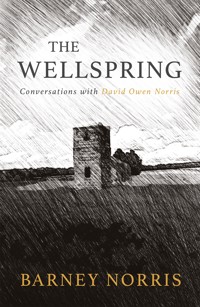
'A rare duet, in which father and son rediscover a whole world through the redeeming power of art.' – Declan Kiberd In The Wellspring acclaimed novelist and dramatist Barney Norris conducts a conversation with father, the pianist and composer David Owen Norris – 'quite possibly the most interesting pianist in the world' (Toronto Globe and Mail) and 'a famous thinker/philosopher of the keyboard' (Seattle Times). Norris senior is also a television and radio broadcaster who has worked with a huge range of musicians, conductors and composers in the concert hall and the studio. Divided into three parts – 'Listening', 'Playing' and 'Writing' –The Wellspring is the first book to explore Norris's fifty-year career and discover how his background (non-metropolitan, C of E, literary) influenced his choices and his music. The book becomes a study of the relationship between his Englishness and his work, of his inheritance and how it is projected forward into new compositions and new performance. In the process the reader encounters a fascinating world of concerts, prizes, collaborations, and inspirations, in which Norris, always open to the different, has lived. This variety includes Norris's devotion to Parry and Elgar, his musical discoveries made playing the square piano of the nineteenth century, and the opportunities resulting from the pressurized world of competitions. In addition to exploring the career of this renowned musician, the father-son conversation also reveals Barney Norris's experience of working in English theatre over the last ten years and of his practice as a novelist with a growing reputation. Their combined experience, in two fields, in two different generations, provides a thought-provoking discussion of how a place and a culture inform artistic work, and how England and Englishness have evolved during the past half century. Informative, entertaining, at times provocative, The Wellspring will become a classic investigation of creativity, of Englishness, and of the changing world.
Das E-Book können Sie in Legimi-Apps oder einer beliebigen App lesen, die das folgende Format unterstützen:
Seitenzahl: 388
Veröffentlichungsjahr: 2019
Ähnliche

















THE
WELLSPRING
‘Keep at a tangent.
When they make the circle wide, it’s time to swim
out on your own and fill the element
with signatures on your own frequency,
echo soundings, searches, probes, allurements,
elver-gleams in the dark of the whole sea.’
Seamus Heaney, ‘Station Island’
Seren is the book imprint of
Poetry Wales Press Ltd
57 Nolton Street, Bridgend, Wales, CF31 3AE
www.serenbooks.com
facebook.com/SerenBooks
twitter@SerenBooks
© Barney Norris, 2018
The right of Barney Norris and David Owen Norris to be identified as the authors of this work has been asserted in accordance with the Copyright, Designs and Patents Act, 1988.
ISBNs
Hardback – 978-1-78172-464-4
Ebook – 978-1-78172-463-7
Kindle – 978-1-78172-468-2
A CIP record for this title is available from the British Library.
All rights reserved. No part of this publication may be reproduced, stored in a retrieval system, or transmitted at any time or by any means, electronic, mechanical, photocopying, recording or otherwise without the prior permission of the copyright holder.
The publisher acknowledges the financial assistance of the Welsh Books Council.
Printed by TJ International, Cornwall.
Cover artwork: © Dave Evans
www.flickr.com/photos/dave-cool/
Contents
Prologue
Listening
Playing
Writing
Epilogue
Appendix
Acknowledgements
Chronology
Index
Prologue
An abiding preoccupation with permanence and change, tradition and change, the cycle, the return, is what makes the music of David Owen Norris profound to listen to. The value of its statement lies first of all in the perspective of its composer, whose experience of the world we’re in now is focused by a keen awareness of the time that passed before us. In his music, the two are held and considered in relation to one another – not reconciled, but shaped into a chord where both worlds speak together.
This is the work of an Englishman, born in 1953 into a rural village community, whose culture’s dissolution represents a profound reimagining of the life of these islands, and who has worked to express that change through music. The roofbeams of Norris’ work are what became of the Anglican tradition and its cultural referents: the meat-and-two-veg diet, the long walk, the doffed cap, the quiet life. In the music he makes, Norris hears and documents the passing of a world that has formed and informed us all, the once deafening root note of our culture, now sounding like a river in another valley.
When England was in flood, the England remembered in Norris’ work, it told a story about itself calculated to drown any other voices that might have tried to be heard alongside. Its red coated soldiers, its Pomp and Circumstance Marches, its rugby football coalesced into an idea that shaped and governed an extraordinary volume of human activities and decisions, for an extraordinarily long time.
During the course of Norris’ lifetime, that image has dissipated, and been replaced by a new and richer plurality. It feels increasingly difficult to remember how the story of England once went – how we could ever have been proud, as a culture, of much that our ancestors seemed to value. We recognise ever more clearly that while the narrative of England was in the ascendant, infinite others were cast into shadow, and went unexplored, and that infinite consequences unfolded from that. Haltingly, we have begun the process of seeking to excavate some of the tracks that were covered over by the river of England when it was in spate.
This does not mean, though, that we should forget the story of England as it’s glimpsed in Norris’ work. It is a narrative that has organised so much of the history of our culture, and continues to do so. It shapes so many of the decisions we make in our lives. It merits study, if we are to try and understand ourselves. And it is perhaps uniquely interesting to think about this narrative now, when the idea of its primacy is overturned, and it can be seen as one thread of story intertwining endlessly with countless others. It seems particularly interesting to me to be able to examine the memory of England now we think of it as only one of the songs we might choose to sing.
That’s what I find compelling in the music of David Owen Norris. He finds ways to ask what this idea of England used to mean, and what it might mean for us now. He documents the disappearance of a world. Crucially, though, he is capable of sufficient ironic detachment from his theme to connect that sensation of disappearance to the hills-old human need to always see the world as ending, our continual conversation with our mortality. So listening to his music leads to much more than simply thinking about England. The countries, towns, streets, houses we live in come to seem incidental when set against the value we place on the lives we lived while we occupied those spaces, and we quickly realise the furniture and scenery of our lives weren’t what mattered at all. Places are vessels into which we pour our lives, and though they shape them, they never become them. Our lives are elsewhere. The real reason someone might take an interest in England is because it was where they were young – the place is secondary to that. So Norris’ music shows us that to begin to consider the memory of an identity – Englishness – is very quickly to begin thinking about the memory of your own identity, your unique and personal experience of being in the world – and indeed of all identity: the way it gathers together, the way it frays.
Through Norris’ preoccupation with his cultural hinterland, he allows his work to speak to more than just the millenarian in each of us, but more meaningfully to the universal experience of death in life and life in death that is at the centre of who we all are. In his work, the ineluctable diminution of the sacredness of Sunday that all of us have lived through since shops changed their opening hours, and everyone stopped getting married in churches, is not treated as a subject in itself, but as a window into thinking about our real lives. He is able to remind us that the world is always ending; even within the fast-bound unit of a family, each successive generation is a unique iteration, never to be repeated, a pattern almost immediately sublimated back into the endless, Darwinian delta of life as it flows through time. In Norris’ work we are reminded that everything you ever put your finger on is always being subsumed into something else, like patterns in clouds or shapes in a coal fire, even as you try to treat it as a constant, as fixed: the only thing that’s permanent is change.
Across the distance of this perspective, Norris’ elegies for his own hinterland are transmuted into acts of celebratory commemoration. He is able to envisage not only a continuation but also an expansion of the essential, underlying meaning of his cultural inheritance even as it disappears, as it is absorbed into new forms, new worlds, new societies. So the evocation of that inheritance in his music becomes a powerful social action, as listeners are reminded who they are – or rather, of some of the places they came from. In its style, its interests, its stances, all of which place him outside the main stream of our contemporary culture, among gestures which could be termed anachronistic but which I choose to read as a deliberate curation of source material, his output takes the form of music played for vanished and departed listeners, for a world that no longer exists. But he spins his yarns out of these anachronisms because the act of playing re-members those listeners, re-integrates them into our present social discourse, and bequeaths a sense of the timelessness and endlessness of all human hopes and fears to our now, through the coal-fire shapes the singing takes. His work is what it sounds like to love our history from the vantage of the present, and this, for me, is an urgent moral project: it might be that by cultivating that sound, new routes could be opened into a richer relationship for all of us with the cacophony of the self.
*
David Owen Norris is my father. I don’t know an enormous amount about my parents’ lives before I was part of them – I don’t think I’ve ever seen a photo of their wedding – but the facts as I understand them are that for a while after their marriage they lived in Harlesden until Dad got an organist job in Sussex that came with a cottage. I was born a little while after they moved there, and my brother was born a couple of years later. The cottage wasn’t really big enough for four of us, so the Earl of Egremont, who attended the church where Dad played, let us move into one of his hunting lodges. We lived there for a couple of years, looking out over a wheat field, hidden in the woods, and then Dad won a major award in the US. At this point we moved into a rented farmhouse, which has subsequently become the lost domain which I have sought to dream my way back to ever since.
The award was good news for the career and the bank balance, but it put an intolerable pressure on my parents’ marriage. Dad spent much of the year on tour in America, and Mum found herself alone in the country with two small children. They divorced when I was six. Dad moved back to Harlesden. Mum bought a house in Putney, and we went to live with Mum, later making our way further west to Wiltshire, which became home, the site of my second childhood, that took the place of my first life in Sussex, which ended when my parents divorced.
I share all this because it seems to me to be fundamental to the writing of this book. Any child who grows up with an absent parent will come to be preoccupied with roots and with inheritance. A child who spends time living in someone’s spare hunting lodge, in the dreamlike environment of Sussex in the late 80s and early 90s, will be doubly aware of the way their background forms them, by virtue of looking at things through very different eyes to others. I have always felt the route I took into life encased me in a kind of difference from the people I grew up around. It’s not just the obvious things – it’s true that my environment was completely white, and I think the only non-white faces I’d ever seen before we moved to London were pictures of Fats Waller and the Inkspots on the front of cassettes, all of which made me conscious of difference and interested in difference, when we moved to London and I learned how big the world was.
There were also other, stranger differences, quirks of the culture I was born into. I’m thinking of the fact that I never encountered football when I was in Sussex. We played marbles in the playground. We read the Children’s Illustrated Bible. There were also differences which came about as a result of geography. I know things about hedgerows that other people, particularly those of my age or younger, are unlikely to know. I have seen glow worms and held shrews in my palm, captured crickets in jam jars and stumbled on adders, shocked sleeping does and buzzards into flight. These aren’t things the majority of people are exposed to any more. I have always felt in my day-to-day life that I reach people through layer on layer of silence and woodland and solitude, and I’ve always suspected that the first views revealed to me formed the way I see everything else.
To be clear, what this taught me wasn’t that I was different from other people. I learned instead that everyone is different from other people. We all carry within us a private world, our histories, which govern and shape our lives even as we live them. Ever since I discovered this truth for myself, the idea of mapping those worlds and the conversations they have with the present has been important to me.
It was thinking about my relationship with my Dad that led me to a serious consideration of these ideas, and perhaps that was the start of wanting to write this book. Until I was near the end of my school years, I never thought about the fact that my parents had divorced. It was a fact of life, and I was happy, and I had a happy childhood. But a time came when I became aware it must have made a difference, never to have said ‘Mum’ and ‘Dad’ in the same sentence; things must inevitably have been different from how they were first planned to be. This was the question that set me to writing. My first play was called Regrets, and it was about a son refusing to inherit what his parents had left for him. It was performed for a single night in the Salberg Studio at Salisbury Playhouse, and the script is mercifully lost. My second play, also mercifully lost, was a monologue I performed myself, called Twice As Many Christmas Presents. It was even worse than it sounds. Still, it was the start of something, and the attempt to understand the influences which formed me has subsequently grown into a life.
As I was leaving school, I began to imagine an absence where my understanding of my father might have been, a distance between us that hadn’t been filled by quotidian experience, because our relationship had always been structured around holidays and weekends. An undiscovered country, demanding exploration.
*
In 2015, I was appointed as the Martin Esslin Playwright in Residence at Keble College, Oxford, a return to the place where I spent my undergraduate years. Roger Boden, the college bursar, had brought the role into being as a way for me to re-engage with the place where I first formed my opinions. I took up the position because I was looking for new thinking to feed my work, and wanted to go back to the wellspring. When I was at Keble the first time round, I’d made a five year plan for breaking into the theatre. Since graduating I’d followed it precisely, and the plan had worked. Having completed it, I wanted to come up with another plan. I like playing the long game. So I went back to Keble to develop a new strategy for saying what I wanted to say in the way that I wanted to say it.
One of the things I found myself thinking about upon my return was my relationship with my father. Dad had gone to Keble before me, and is now an honorary fellow of the college. Keble had become a central element of his identity, as it is of mine. From the start of my relationship with the place, I had engaged with it as a sideways attempt to get closer to my father. Back when I first applied to study at Oxford, I was saddled with AS Level results that were somewhat depressed by a weed habit, and didn’t look like much of a candidate. I almost didn’t bother applying because success seemed so unlikely, but stuck my hat in the ring on an impulse, on the day applications closed, because if you don’t try, you never know, do you? I applied specifically to Keble because it was the only college I really knew, and because I thought Dad might be pleased. I got an offer, and stopped taking drugs, and got the grades I needed. Then Dad was driving me up and I was unpacking my books into a room there.
Throughout my undergraduate years at Keble, I maintained a curious shadow relationship with Dad, in addition to the actual relationship between us that continued when I came home in the holidays (from the age of nineteen to the age of twenty-seven I lived intermittently in Dad’s spare room, whenever I didn’t have money). As well as having my own experience of Keble, I was aware of my life as a palimpsest of his. I knew I was in his footsteps, and seeing things he had seen when he was my age. It was a curious thing, having felt distant from my father, to suddenly feel so close, to the point where the very idea of my individuality was a little subsumed – I was simply a reformulation of something that had previously been him, walking the same streets with a few variables (time, 50% of my DNA) thrown in. I thought a great deal about this strange idea of the individual life as palimpsest. To see different generations of a family as successive iterations of a continuous, continuing experience was captivating to me. What was this larger life we were part of, this family? How were the unique experiences of different generations inherited by that continuing river, and what was lost with each life as it passed? What would be seen to be constant, and what would be seen to change, if we could only glimpse for a moment the perspective of that whole family, and break out of the cells of ourselves?
Coming back to Keble brought me back to these questions, and this book is the result of trying to engage with them. I hope that by engaging with the work of my father, I will perhaps light upon a fruitfully oblique approach to the preoccupations that work prompted in me. The book is also, of course, a slantwise look at Dad’s music, and I hope its publication might encourage further studies by writers more musicologically articulate than myself. For now, though, I propose to take a walk through the woods of the fact that life happens and then ends, and that we spend our lives trying to get our heads around those two vast inevitabilities, in the company of my Dad.
Listening
BN: Perhaps one of the propositions woven into the fabric of this book is that in order to begin to understand someone, you have to understand where they came from, the place where the river rises. Could you begin by telling me a little of your own family?
DON: My father Bert and I were born in the same village in the wilds of Northamptonshire, 33 years apart. My grandfather (an incomer from Crick) had been Long Buckby Co-Op’s farm manager – they said he had the loudest voice in the village, calling the cows home for milking. Dad was very much the baby of the family: my grandfather had five children by his first wife, who died in 1900, and then three more by his second wife. At this point, the Great War took away three of his sons, and so, possibly from motives almost of economic prudence, my father was born in 1920.
BN: He had a lot of older nephews and nieces who used to push ‘uncle Bertie’ round in his pram.
DON: Indeed. And isn’t that image interesting? There’s something arresting, I think, in the idea of a younger uncle. Mended mirrors spring to mind – the shards not fitting back together quite right. The legacy of the Great War.
Once out of the pram, Dad passed the exam for the Grammar School, but his father couldn’t afford to send him, so he got a job as a delivery boy for the shoe factory, taking cut-out leather to the hand-sewn men, who worked at home.
BN: This is very good social history, this detail, and we should record it. As I understand it, when big shoe factories were first going up in Northampton, the skilled workers were still sufficiently powerful to get away with refusing to be centralised. They all had their set-ups at home, their worksheds at the bottom of the garden, and they didn’t want to commute into work, they liked their lives at home well enough. So the compromise reached was that the leather would be cut out in a big factory building, then shipped out to where these men lived and worked, and the shoes brought back to be buffed when they were finished. That was Grandad’s job, he was a runner, wasn’t he.
DON: But only for as long as he had to be. In 1938 he joined the Navy, and soon after war broke out he was seconded to what was left of the French Navy.
BN: More or less by accident.
DON: He’d been on a ship that hit a mine in Scapa Flow, then he’d been on shore leave from the Hood on the day it was sunk. Both of these were terrible events, and he wanted a change, so he volunteered for submarine duty. But when you volunteered for special service you didn’t necessarily get the special service you asked for, and that was how he found his way into the Free French. This brought him the Croix de Guerre and a minute pension from the French Government: he was much prouder of the latter than the former. Being bombed at Narvik and then sailing round the world pretty well slaked Dad’s desire for travel, and the year before I was born, he and my mother planned out the house where I was born in Buckby.
BN: They had this house built in 1952, and went on to live in it.
DON: It was very difficult to get Dad to leave it ever afterwards, though he earned his living by driving round the country selling nuts and bolts. He did this until his company took the fatal decision to sell as many as they could make, rather than to make as many as they could sell. He spent his very lengthy retirement (getting on forty years) as a superbly accomplished amateur carpenter.
The war was, of course, the central event of his life, as it was with all his generation. At the end of his life, when he was in hospital, he told the story time and again of passing a ship at sea, and signalling ‘hello’ to the signalman on the other deck, then watching as a bomb hit that deck, and the other signalman vanished forever in the carnage. He was transfixed by that memory, he couldn’t get away from it. But life became very vivid for people in that period.
Some of the stories he told us are really extraordinary. In Scapa Flow, where the ship he was on was holed by a mine, he told us the ship’s lieutenant gambled on the fact it was a magnetic mine had done the damage, and any others lying round wouldn’t latch onto a dinghy. So this lieutenant detailed a man named Pookie Finn to row him to shore in a dinghy he thought wouldn’t attract any further mines. Of course, the very first thing that happened was that the dinghy hit another mine, and Dad watched as Pookie Finn was shot a hundred feet into the air. Then he claimed to have seen a man shot in the head for queue-jumping in Malaysia. And he claimed to have lost the entire French fleet while he was signalman on the Emile Bertin. And all of this pales into insignificance, of course, when set against the months he apparently spent living in a village in the Congo, after the ship he was serving on had sunk and he had made it to shore. He claimed to have stayed in this village till an attempt was made to marry him off to a local girl, at which point he said he swapped his leather jacket for a coracle and paddled back out to the nearest passing ship.
BN: I told that story to a retired brigadier-general I met not so long ago, and his response made it very clear that Grandad would have had some fast talking to do after that one, it was almost certainly worth a court martial.
DON: Yes, but he seems to have got away with it! Which may, of course, lend the lie to that rather tall tale, but that’s by the by.
BN: Yes, the story’s the thing. I was delighted to read Sebastian Barry saying in an interview not so long ago that he quite liked it when his interlinking novels and plays contradicted one another on certain particulars, because that’s what storytelling’s like. A lovely way to approach things.
And what of the other side of your family?
DON: My mother, Margaret, who was universally known as Peggy, was born in a tiny village suburb of nearby Daventry, and attended the Grammar School that Dad so conspicuously didn’t – as in turn did my elder brother John and I. Her father had left Snowdonia when his farm was dug up by the slate company, and by 1910 he was driving a London bus. He served in Mesopotamia in the Great War, then worked his way back along the Watling Street in the direction of Wales till he met my grandmother and got stuck in Northamptonshire.
My Mum and Dad met on and off for several years, and eventually got married on Christmas Day 1942 – Dad had a day’s leave.
BN: The story as I had it from Grandma was that after her Dad came out of the army he tried to run a taxi for a while, but wasn’t a great timekeeper and never managed to meet the train, which was the main source of passengers. Then someone who had known his family back in Wales, who was doing all right for themselves as a farmer, gave him a job as a chauffeur, because this bloke owned two Daimlers that he liked to go around in. So your grandfather worked as a farmhand and a driver, and had use of the Daimlers, so Grandma claims, when they weren’t needed. Which was probably highly useful when it came to courting!
DON: That was the connection that got him up to Daventry, yes, but more than anything else it was the farm work that was the centre of his life. And he was the keeper on a golf course as well, because it was below the cottage where they lived. Mum would have to take a long stick out with her on the way to school, and knock the worm casts off the greens. Her Dad would spend his day among cattle. They had a churning bowl in the cellar below the cottage. A big stone open bowl, and you churned the butter yourself. Mice would fall in.
BN: Then I think it’s worth telling the story of your parents’ wedding.
DON: It’s a good story. As I say, Dad had a day’s leave. The night before the wedding he got the train back, then walked the last ten miles home, and had a bowl of rice pudding to eat that was meant for the dogs the next morning. The next day was the wedding, and then there was a breakfast where they were thirteen at table and shared a bottle of sherry between them. During the course of the day the news came on the radio that servicemen were getting an extra day’s leave, and just had to report to their embarkation points, which was the railway station for Dad, to confirm they hadn’t gone AWOL. So the next morning a friend who was a taxi driver gave Mum and Dad a lift part of the way back to the station to do this and claim their extra day, but his petrol ration ran out half way, so they walked the last four miles together. Then they arrived at the station to be told the extra day’s leave didn’t apply to the Navy, and Dad had to head back there and then. So they said goodbye to each other on the platform, and Dad had to get on the train. Two years passed before they saw one another again.
BN: When they do meet again it always seems to be in Glasgow or London, doesn’t it, Grandad back on flying visits to wherever Grandma was working as a Secretary for the War Office. I find it ever so slightly impossible to get a handle on it all.
DON: That’s the fog of war, I think.
BN: Quite.
So, onwards. I’m hoping to establish a portrait of your England, your home. What was Long Buckby like when you first knew it, and Northamptonshire?
DON: The Long Buckby of my childhood was a place that has vanished now, of course, in many respects. I remember the call the women of the village used – ‘Oo-ooh’, they shrilled across the Market Square, but no longer. The headscarves linger on a bit – every woman wore one when I was little. I spent a great deal of time with my mother’s parents, who had retired to Buckby from farming. They had both been Methodists, but they didn’t always see eye-to-eye, so on arrival in Buckby, Pap chose the Congregational Chapel, and Nana, the Baptists. The Baptists, in those days, was where you went if you found the Church of England too exciting. Since Mum taught in the village school (where I had to call her Miss), I had my dinners at Nana’s. Dinner, in Long Buckby, still just about remains a mid-day meal. Nana used to have her lunch (cup of tea and a biscuit) about 11.
Nana believed every word in the Bible, and it wasn’t till I was twelve years old that I even began to wonder whether she was quite right about that. She told me tales of her brother, who died at Ypres, and who made up a sort of quartet with the three unknown half-uncles whose names were read out from the war memorial every November, as I stood to attention, a shivering Wolf Cub.
It’s very easy to steep yourself in the past where everything and everyone you see and know are part of your family history, as was the case for me, in that village where my father’s family had lived for so long. I became intensely attached to What Was, and accordingly I became a diligently conventional child. Many of those conventions have stuck deep within me, so I suspect I appear much less conventional now, not having moved all that much with the current.
BN: Your account raises two points I think worth observing, elements that I think have fallen away from their former ubiquity, and which represent a great change. The first is that Biblical background. That can’t be overstated, I think, as a change to the fabric of our country, to think that everyone up to and including the Beatles was pretty much off-book on the Bible, and now, in the course of a lifetime, I’d say its role as a living document in people’s lives is very difficult to put a finger on. Not that people haven’t always written about the tide of faith receding, and only the elderly worrying about God or whatever, but it really is a profound difference, to see how it’s been shunted to the cultural margins.
DON: That is in part your secular perspective, of course. In communities up and down Britain, faith is still central to life, even while it has ceased to resonate in other places.
BN: You’re absolutely right – but I was fascinated to read recently that the only time Thatcher ever suffered a defeat in the Commons was over the Shops Bill, in the year of my birth, 1987. This was her attempt to introduce Sunday trading, and she was seen off by a rebellion from Christian backbenchers. The idea of that vote not passing seems very outlandish from where we’re standing, and indeed the idea of that lobby having that power again is quite difficult to imagine.
DON: Difficult for now, yes. Productivity is all!
BN: Which is just a different religion, of course.
The second thing to point out is that sense of rootedness in a single place, and that close acquaintance with ‘What Was’ that you refer to. This is much diminished, I think, by the impact of the Second World War on the country. The New Towns project that happened in the wake of the Blitz, the building of large new urban conurbations to rehome the displaced, means great swathes of the country live in towns some distance from the places where their relatives are buried – where their older history resides. So that sense of the depth of time you refer to, that’s much disrupted for many people. As it is by increased social mobility – by people who move away, and go after opportunities. The twentieth century really disrupted the geographical continuity of families in those respects, and the long term consequences of that – which is pretty much a historically unique event, I think – are only just beginning to be felt.
DON: That’s certainly hitting home in our family. The nature of my work, and yours, have meant that in our respective twenties, both of us were obliged to move to the capital. For me, having never found my way back to living in Northamptonshire, that means it’s difficult to see as much of my brother as I’d naturally want to.
BN: Which is the same with me, and is perhaps why this undertone of exile is creeping into what I have to say about the England you come from, I don’t know. I think that geographical dislocation, leading to dislocations within families, is why memories seem so strangely short in modern families as well. I think it’s quite remarkable, today, to hear an anecdote dating back more than a couple of generations from anyone. And when you think about it, that’s very odd – there’s no real reason we don’t all carry stocks of much older stories about our families in our heads, except that families haven’t spent enough time sat together remembering and talking for the last little while.
Now, I shouldn’t make too sweeping a claim for you as any kind of representative example of English cultural hinterland, because that would be a rather exposed promontory on which to place anyone. But I do think any given person has reasonable grounds for being a valid study in such a context, and in your work, it seems to me you’ve made a concerted and fruitful engagement with the ineluctable nature of cultural change, the way things vanish and the way things remain. That’s why I first wanted to undertake this project – I think we share an abiding interest in the way the world ends. And I think the fact of our being father and son is going to enrich any dialogue on that subject – questions of cultural inheritance are innate to exchanges between us. At the outset of this enquiry, then, if you’re content to discuss your work through the lens I’m proposing, I thought it might be wise to ask you to make a preliminary sketch of the culture you see yourself as coming from? It would be interesting to triangulate a frame of reference from the off.
DON: Well, every state-secondary-school child in Northamptonshire used to be given an Atlas, an illustrated Bible, and a copy of the little blue hymn-book, Songs of Praise. My copy of the latter is full of the names of classical composers, inscribed in red felt-tip as a mute protest against the fact that the school bus played Terry Wogan every morning, though nowadays I see the advantages of an intimate knowledge of the Top Tens of the late 60s.
BN: I have yet to develop much gratitude for knowing the chart hits of the 90s. I wonder whether I ever will…
DON: Perhaps Take That or whoever don’t quite equate to a diet of the Beatles and the Beach Boys!
On with my catechism. Vicars were influential in Long Buckby. The mediaeval village had no squire, a fact that explains the ‘Long’ bit of its name, for fleeing villeins (I like to imagine) fetched up at libertarian Buckby and built a house next to the most recent fugitive, all along the main road. The mediaeval names persist – the top end of the village is called Cotton End (properly Coten, of course, the plural of the word for ‘cottage’), and the bottom end is Murcott. For that matter, the bridges on the Daventry road are still called the Birdges, but you’ll know more about metathesis than I do. Buckby was very proud of its wholly illusory libertarian attitude when I was a child – I myself (as you may wearily recall) still re-tell the story of how ‘we’ shrugged off Cromwell when he demanded money on his way to Naseby.
There were a number of people who thought they were the squire (invariably calling forth the very Buckby phrase ‘Oozy think eeyiz?’), but only one Vicar at a time. Mr. Yeomans restored the church roof by enrolling everyone in the village as a Coppersmith, a penny a day – pennies were called coppers then: and he started the Wolf Cubs. Most important to me was Mr. Courtenay, a Keble man like you and me (back in the 30s), an escapee from Colditz, and a keen country-dancer and clarinettist. I’d been getting involved with the parish church because the organist had encouraged my interest in the organ, and I was baptised at the age of nineteen. Mr. Courtenay’s wife played the cello, and her first act on arriving was to set up a chamber music party at the Vicarage, clarinet, cello, and a very elderly Morningside lady, Mrs. Couling, whose father had been President of the Royal Scottish Academy, and who had studied the violin at the Royal College of Music before the Great War – Parry, Vaughan Williams! – and who had played in Donald Francis Tovey’s orchestra in Edinburgh. She had married a wandering painter, and her private amusement was to receive visitors in her cottage, sitting beneath her husband’s voluptuous nude studies of her. I was the village pianist at this notable music party (Mozart, I recall, and Beethoven), and my whole professional life was presented to me there in embryo, on that one occasion. I became the accompanist to Mrs. Couling’s Women’s Institute Choir in nearby Flore (I was an honorary member), and from her and from Mr. Courtenay I imbibed a great dose of their pasts. What were the specific lessons, I wonder? A couple of things stick – Jack Courtenay reading out a line from a hymn – ‘before thy throne prostrate to lie, and gaze and gaze on thee’ – and exclaiming ‘I hope it’s not like that! Far too boring.’ And Mrs. Couling’s careful manipulation of a tape-measure metronome, moving her hand so that the tempo was invariably the one she’d already chosen. And her refrain in her lilting Scots ‘remember all those things, David, all those things I’ve shown you.’ And in principle, I have remembered, especially the day she took me to a chamber music concert in the Carnegie Hall (the one in Northampton) to hear Daniel Barenboim, Hugh Bean and Jacqueline du Pré playing Beethoven. The actual thing that I remember is that she wept throughout – made a very great impression on me.
The County Music Adviser, Malcolm Tyler, heard that I played the organ, and took over my lessons himself. He was the first professional musician I’d ever met, and I started to realize that I might not need to be a nuclear physicist after all – not that I’d met one of them either. He introduced me to the idiosyncratic musical life of Northampton – it remains idiosyncratic, thankfully, a function of its distance from London, Oxford, Cambridge and Birmingham, an inconveniently great distance for most of its history, allowing it to develop its own ways of doing things – and an early exhilarating experience was hearing Elgar’s Gerontius live in the ABC Cinema (idiosyncratically enough, in a town of splendid churches).
Malcolm Tyler studied at the Royal Academy of Music, and pulled a string or two so that I could become the first (and possibly the only ever) member of what they called the Intermediate School – essentially a Gap Year before I went to Keble as the Organ Scholar. It was Jack Courtenay’s country-dancing, by the way, that swung my Keble interview. Warden Nineham asked me if I had any hobbies, and some musicians don’t. But I could do a quick heel-and-toe by the fireplace.
BN: This gap year was something that involved considerable sacrifice and discomfort for you.
DON: Yes. I took a five-pound note to London on the train every Tuesday morning, and that paid for a couple of concerts at the South Bank, food, buses, and my train-ticket back again – I bought the ticket on the way back, not the way out, because it was cheaper to buy a return from London to Buckby, with the weekend intervening. I used to keep accounts on the back of my bus-ticket – Harry Isaacs, my piano teacher, spotted me jotting down the price of a cup of tea, and said grandly ‘Ah, my boy, that way madness lies.’ I didn’t realize it was a quotation. Very bad advice, probably – I’ve never since been much good at accounts.
The minister at Buckby Baptists had arranged for me to sleep for free on the study floor at Abbey Road Baptist Church. It was not without its perils. One dark night I took a short-cut across the baptistery and only discovered half-way down the steps that it was full of water warming up ready for a baptism the following day. And one fine morning I woke rather later than usual to find my sleeping-bag surrounded by a whole class of trainee missionaries from Sweden.
Occasionally the five-pound note didn’t go far enough, and I was really hungry. Once, I’m sorry to say, I raided the Abbey Road kitchen. All they’d left out was plain yoghurt and a raw onion, and I can still taste them. Sometimes, though, there was enough money left to buy an Agatha Christie at Euston – those half-crown editions with cover art by Tom Adams were just coming out. As soon as I got back to Buckby, I leapt into the car to take a choir-practice in a nearby village for one of the many musical vicars in my life, the one who thought that every family sang madrigals as a matter of course. The madrigal books came out with the coffee mugs whenever anyone visited the vicarage.
I spent the weekends practising, of course, since my London days were pretty full with my own lessons, accompanying other people’s lessons, and going to concerts. All in all it was a strenuous year. Astonishingly good value at £5 a week.
BN: I remember reading somewhere in Martin Amis’s The War Against Cliché that the cost of things when he was making his way into writing – slightly before your time, of course – meant that the idea of a ‘life in letters’ was so much more accessible than it is to people now. A reviewing gig might cover the rent. You come across it in David Hare’s memoir The Blue Touch Paper – he was very successful very early, so he’s not a model you can really extrapolate from, but all the same, I can’t believe the equivalent level of success today would make it possible to live in the post codes he did. Things just cost less then. There was a moment, wasn’t there, of great possibility for movement and achievement and change, because education had improved so rapidly, and the cost of things was still low, relative to today.
DON: There was a feeling of endless possibility, if you could take what was on offer. Some of our ideas were perhaps a bit simplistic. I remember Mum and Dad made it sound like I’d be able to do literally anything I liked with my life, if I passed the eleven plus. That exam is a greater divider of opinion now than it was then, so we won’t get lost in the thickets of ‘if there were more grammar schools they wouldn’t be the preserve of those who can afford to move to the towns that kept them going’, or its counter-argument; let’s just note that in those days, grammar selection was by no means all along lines of class or parental income. In parenthesis, Philip Langridge, that great singer, never tired of pointing out that he went to a secondary modern school; while, as to job prospects, the choice was probably wider if you went to the grammar school, but your income was not guaranteed to be higher. No-one seemed to worry about that when I was a child: men in ordinary jobs were able to own a house and support their family, without their wives having to work – they may have wanted to work, of course, but they didn’t need to in order to pay the mortgage. I mention income prospects only because that bulks very large nowadays in discussions of educational opportunity and the ability to repay student loans. There’s many a hollow laugh in my business when people speak of the financial rewards of study as if they were inevitable – doubtless that’s true in the theatre as well.
I remember watching Harold Wilson’s famous pound-in-your-pocket broadcast, but I was thirteen, so it was older people who had to work out what he meant. The first time I became aware of rising costs was when decimal currency came in, just over three years later. I think there was a special department to deal with profiteering (by excessive rounding-up, or just downright price rises). Suddenly, everything seemed expensive, but sixteen-year-olds are always expensive to run. Overall, my hazy recollections of finance are that things got worse towards the end of the 60s. But my fiver was still lasting a week in 1971.




