


9,99 €
Mehr erfahren.
- Herausgeber: The History Press
- Kategorie: Sachliteratur, Reportagen, Biografien
- Sprache: Englisch
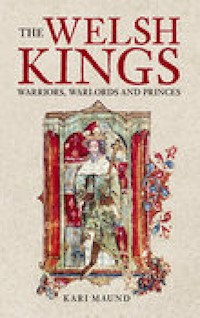
When Edward I's troops forced the destruction of Dafydd ap Gruffudd in 1283 they brought to an end the line of truly independent native rulers in Wales that had endured throughout recorded history. In the early middle ages Wales was composed of a variety of independent kingdoms with varying degrees of power, influence and stability, each ruled by proud and obdurate lineages. In this period a 'Kingdom of Wales' never existed, but the more powerful leaders, like Rhodri Mawr (the Great), Gruffudd ap Llywelyn and Llywelyn ap Gruffudd, sought to extend their rule over the entire country. The author produces revealing pictures of the leading Welsh kings and princes of the day and explores both their contribution to Welsh history and their impact on the wider world. They were, of necessity, warriors, living in a violent political world and requiring ruthless skills to even begin to rule in Wales. Yet they showed wider vision, political acumen and statesmanship, and were patrons of the arts and the church. The history of their contact with their neighbours, allies and rivals is examined - Anglo-Saxons, Irish, Vikings, and Anglo-Normans - thereby setting Welsh institutions within their wider historical context. This work revives the memory of the native leaders of the country from a time before the title 'Prince of Wales' became an honorary trinket in the gift of a foreign ruler. These men are restored to their rightful place amongst the past rulers of the island of Britain.
Das E-Book können Sie in Legimi-Apps oder einer beliebigen App lesen, die das folgende Format unterstützen:
Veröffentlichungsjahr: 2011
Ähnliche

















Contents
Title Page
Acknowledgements
List of Abbreviations
Introduction
1 From Vortigern to Merfyn Frych
2 From Rhodri Mawr to Hywel Dda
3 From Owain ap Hywel to Gruffudd ap Llywelyn
4 From Bleddyn ap Cynfyn to Owain ap Cadwgan
5 From Owain Gwynedd to Rhys ap Gruffudd
6 Llywelyn ap Iorwerth
7 Llywelyn ap Gruffudd
Notes
Bibliography
List of Illustrations
Plate Section
About the Author
Copyright
Acknowledgements
In writing this book I have received valuable advice, assistance and feedback from colleagues and friends. I should like to thank the National Library of Wales for permission to reproduce the picture of Mascen Wledig from N.L.W. MS 17520A, fo.3; the British Library, for permission to reproduce the picture of Gruffudd ap Llywelyn ap Iorwerth from London, British Library MS Royal 14.C.VII, f.13v; and the British Museum, for permission to reproduce the photograph of the Hywel Dda penny. Thanks are due, too, to Bill Zajac who generously allowed me to make use of photographs from his collection; to James Cooke, who took photographs for me of Cricieth Castle, and to Christine Linton. My mother, Irene Maund, provided me with the line drawings and watercolours, for which I am very grateful. Thanks are also due to my former colleagues, friends, and students in the School of History and Archaeology, Cardiff University, for their support. I am indebted to Professor David Dumville and Professor Simon Keynes, of the Department of Anglo-Saxon, Norse and Celtic, University of Cambridge, for many years of patient advice, assistance and guidance. I also wish to thank Jonathan Reeve of Tempus Publishing. My partner, Phil Nanson, has not only put up with the writing of this book in all its gory details, but accompanied me on many trips to historical sites and assisted patiently in the process of producing maps and genealogical charts: this book is for him.
List of Abbreviations
ABT
Achau Brenhinoedd a Thywysogyon Cymru.
AC
(A)
The A-text of the
Annales Cambriae
.
AC
(B)
The B-text of the
Annales Cambriae
.
AC
(C)
The C-text of the
Annales Cambriae
.
ANS
Anglo-Norman Studies
.
Arch. Camb.
Archaeologia Cambrensis
.
ASC
The Anglo-Saxon Chronicle
.
BBCS
Bulletin of the Board of Celtic Studies
.
BS
Brenhinedd y Saesson
.
ByT
(Pen. 20)
Brut y Tywysogyon
Peniarth MS 20 version.
ByT
(RB)
Brut y Tywysogyon
Red Book of Hergest version.
CMCS
Cambridge (Cambrian) Medieval Celtic Studies
.
ECMW
V.E. Nash-Williams,
The Early Christian Monuments of Wales
(Cardiff 1950).
HB
Historia Britonnum
.
HE
Bede,
Historia Ecclesiastica
.
HG
The genealogies in London, British Library, MS Harleian 3859.
HGK
Historia Grufud vab Kenan
.
JC 20
The genealogies in Oxford, Jesus College, MS 20.
MG
The genealogies in Aberystwyth, National Library of Wales, Mostyn MS 117.
PBA
Proceedings of the British Academy
.
THSC
Transactions of the Honourable Society of Cymmrodorion
.
WHR
Welsh History Review
.
Introduction
Wales in the middle ages is hard to define. At different times its borders varied, sometimes including areas now part of England, sometimes losing areas now considered Welsh, to rulers from Anglo-Saxon or Anglo-Norman England. The shape of the land was to a large extent the product of a long process of invasion, representing the territories retained by the native Britons after the invasion of Britain by the Angles, Saxons, Jutes, and other Germanic peoples in the late Roman and sub-Roman period. Even the words Wales and Welsh are not the products of native speech. They are terms coined by these Germanic neighbours: Anglo-Saxon Wealas and Wealisc, meaning foreigners. In earlier centuries, the Welsh wrote of themselves as Britones, Britons, remembering their origins as the dominant native people of the island of Britain, speaking a common tongue and possessing a common history and cultural heritage. From the seventh century another word, Cymry, from Old Welsh Combrogi, compatriots, came into use, and, from the twelfth century, would become the dominant native term.1 For all this, however, Wales was not a single, unified political entity, and even in periods when much of the country was ruled by a common overking, local and regional identities were strong. Throughout nearly all of the period covered by this book, Wales was made up of a number of separate kingdoms, each with their own royal dynasty, their own administration, and their own identity. The numbers of these kingdoms varied over time, with a tendency for smaller kingdoms to be absorbed into larger, more powerful units as the centuries passed, but unlike England or Scotland, Wales was never to achieve permanent political unity under a single native ruling house.
One result of this was that Wales had a very large number of native kings, princes and rulers: there were something of the order of ninety-seven in the eleventh century alone. Many of these rulers, especially those who lived in earlier centuries, are little more to us now than names, their histories either cloaked in layers of legend and myth, or lost entirely. There are few surviving written historical sources from medieval Wales, and much of what does survive is thin, particularly for the earlier period. These sources are not unbiased or objective, and have been subject to reworking and recasting in the interests of politically dominant families and institutions. As a result, our knowledge of some leaders is filtered through lenses of positive or negative propaganda. Some Welsh leaders impinged noticeably on affairs in England or Ireland, and as a result were recorded in English and Irish chronicles. These sources are valuable, but they are not always favourable to the Welsh, and one cannot now hope to recover details which they may have omitted or misrepresented. There are many questions still open about the characters, actions, and motivations of the men who ruled the kingdoms of Wales between the fall of the Roman Empire and the loss of Welsh independence to Edward I in 1283.
The purpose of this book is to provide an introduction to the kings and princes of the independent Welsh kingdoms. As said above, many of these rulers are now little more than names to us: the book will therefore focus in the main upon those figures whose careers are more fully documented, or who in some way played key roles in the evolution of Wales. It has drawn upon historical, archaeological and literary sources not only from native Wales but also from its neighbours. The period of Welsh independence – roughly from the early fifth century down to the end of the thirteenth century – was to be one of the most dynamic periods in the history of the British Isles. At its beginning, Britain was part of the wide empire of Rome, subject to a centralised administrative and military structure, and linked by trade, governance, religion and scholarship to much of Western Europe and the Mediterranean. Wales, as such, did not exist as a separate territory: it would come into being as a result of the invasions and colonisation in Britain by the Anglo-Saxons, who drove the Britons out of most of eastern, southern and central Britain into the west (modern Wales and Cornwall) and also the north (into what is now Cumbria and parts of southern Scotland). The development of the Anglo-Saxon kingdoms, and, later on, of a unified kingdom of England, presented new challenges and threats to the kings in Wales, who faced not simply enemies and invaders but also potential allies and opportunities to expand their influence out of Wales back into the wider British arena. The expansion throughout Europe from the later eighth down to the eleventh centuries of the Vikings also was to have its effects in Wales, particularly in south Wales, and was to play a role in reshaping Welsh political life: indeed, at least one king of Gwynedd had Viking blood. In 1066, the Anglo-Saxon kingdom of England was conquered by Duke William of Normandy, and with the arrival of the Normans came a new set of influences on and threats to Wales. The Normans were aggressive and expansionist towards their new neighbours, and would have a dramatic impact upon Welsh political geography. Yet at the same time Norman administrative and governmental practices were adopted and transformed by the native Welsh to their own advantage, allowing some Welsh leaders to strengthen considerably their range of powers and resources, and others to protect and retain their hereditary lands in the face of new legal concepts and officers. The rule over Gwynedd of Llywelyn ap Gruffudd (1246–1282) was very different in its nature, scope and form than the kingships enjoyed by the leaders who flourished in the fifth and sixth centuries.
Map 1: Kingdoms of early medieval Wales
Map 2: Districts of Wales
1
From Vortigern to Merfyn Frych The fifth century to c.825
Roman Wales is an artificial definition. The area now known as Wales did not exist in that form under Roman rule: it was simply part of Britain. The Romans first invaded western Britain in around AD 47 when the general Ostorius fought there against the Deceangli. Shortly afterwards, he fought another western people, the Silures, who were the allies of the powerful British leader, Caractacus. This war spread into the hill territory of north-east Wales, inhabited by the Ordovices, only ending with the defeat of Caractacus in AD 51. There were to be further conflicts in this area, especially against the Silures, until they were finally subdued in the 70s. By this time, the peoples of the south-west, the Deceangli and the Demetae, had submitted to Rome: the Ordovices rebelled in AD 79, but were soon brought into submission, and from this point all of modern Wales seems to have been under Roman rule.
The area fell into two zones, upland and lowland. The upland was controlled through a system of roads and forts at strategic locations. The lowland, and in particular south-east Wales, was governed from a local capital at Uenta Silurum, Caerwent, from whence taxes were collected, laws enforced, and public works undertaken. Roman villa-type sites have been found in south-east Wales, and the area may have been more extensively and lastingly influenced by the Romans than the rest of Wales.1 Although other parts of Wales were less thoroughly integrated into the Roman way of life, Rome was nevertheless to have a lasting legacy for Wales. In later centuries, late and sub-Roman leaders were remembered in Welsh tales, histories and genealogies. Welsh royal houses claimed descent from the Emperor Constantine III (and, through confusion of names, from his predecessor, Constantine the Great, who made Christianity the official religion of the Roman Empire) and from the usurping emperor of the west, Magnus Maximus, known in Welsh as Macsen Wledig. Latin words were borrowed into Welsh.2 Perhaps the most significant long-term effect was the introduction of Christianity. No details survive as to the conversion of Wales, but by the fifth and sixth centuries it seems to have been a largely – perhaps completely – Christian society, and thus it would remain.
Roman rule in Wales declined from the fourth or even the later third century. Written sources depict a growing threat from Irish raiders, and in certain places, like Cardiff and Holyhead Island, coastal forts were built or strengthened. Around the same time, there is evidence of an increase of activity at Welsh hill forts – the centres of native tribal culture and politics.3 This might indicate that Roman dominance was weakening, and native power-structures were beginning to reassert themselves. The Latin historian Ammianus Marcellinus recorded raids by Irish and by Picts (from what is now Scotland) in Britain in AD 360. By the later fourth century, the Roman Empire was under increasing pressure politically and militarily, and had decreasing resources to spend on its more remote provinces. Magnus Maximus, a Roman soldier of Spanish origin stationed in Britain, took advantage of the growing chaos, and, with the backing of much of the army in Britain, made himself emperor over Britain, Gaul and Spain between AD 383 and 388.4 To support his campaigns in Gaul and Spain, Magnus withdrew the soldiery from Britain. Britain remained in contact with the rest of the western Empire after the defeat and death of Magnus, but it seems likely that despite continued communication, many parts of Britain were by the end of the fourth century effectively self-governing. In some places, a Roman-style way of life centred on villas and towns may have continued; in others, the old structures of tribal chiefdoms centred on hill-forts and dependent on military prowess may have reasserted itself.
The traditional date for the end of Roman rule in Britain is AD 410. For much of the next two centuries, the history of Britain as a whole, let alone Wales, is uncertain, and based on later, mainly foreign, sources. It is possible to outline a chronology of events, although this outline is incomplete and uncertain. Writing in the sixth century, the Byzantine historian Procopius believed Britain to be inhabited by three peoples: Angles, Frisians and Britons, each subject to their own rulers and independent from each other. He wrote of ongoing migrations from Britain of native Britons into neighbouring Gaul, and particularly into Armorica (modern Brittany). Other writers also recorded barbarian invasions of Britain in this time, and political disruption.5 The first decade of the fifth century saw considerable upheavals, with a succession of emperors elected in Britain and subsequently overthrown. The most successful and famous of these was Constantine, who was elected in 407, and gathered together most of the army which remained in Britain, taking it with him into Gaul, where he enjoyed considerable success until 409. Zosimus, writing during the sixth century, using earlier records, recorded that c.408 Constantine’s general, Gerontius, allied with barbarian invaders and rebelled against the usurping emperor. At around the same time, Britain and part of Gaul rose against the surviving Roman officials and expelled them, subsequently establishing their own authorities.6 The sources are difficult to interpret, but it seems likely that in the early part of the fifth century, facing pressure from foreign invaders, the Britons increasingly took their own government and defence into their own hands. Constantine died in 411, and no subsequent Roman emperor made any attempt to regain Britain. The British writer Gildas, writing during the sixth century, paints a very bleak picture of this period. He did not set out to write history: his work, On the Ruin of Britain, is a sermon designed to educate and remonstrate with his contemporaries. He included no dates, and his few references to historical figures are difficult to interpret. We do not know exactly when he wrote, nor where, and it seems likely that he was selective in his use and interpretation of material.7 However, he is the sole native writer whose account survives from this early period, and his book had a lasting influence. Later Welsh writers, such as the author of the early ninth-century Historia Britonnum (HB) and the compilers of the Welsh Chronicles, as well as English writers such as Bede and the compilers of the Anglo-Saxon Chronicle, drew on Gildas to construct a history of Britain in the fifth and sixth centuries.
VORTIGERN, AMBROSIUS AND ARTHUR
Gildas described how, faced with increasingly dangerous raids from Picts and Scots, a certain proud tyrant and his council invited three ship-loads of Saxons to Britain, to become protectors of the Britons against the raiders. These mercenaries were given land in eastern Britain. After some time, complaining of ill-treatment and inadequate resources, the mercenaries turned on their employers and began to plunder and ravage on their own behalf.8 The major settlements were destroyed, and the invaders rapidly overran most of the island. Many Britons were killed, others fled overseas. Finally, some of the remainder united under the leadership of Ambrosius Aurelianus and inflicted a series of defeats upon the Saxons, culminating in a decisive siege at Badon Hill. After that victory, peace was restored for around half a century, enduring into Gildas’s own time, although, he cautions, already the Britons have returned to their old sinful ways, and are courting punishment.9 His account is couched in Biblical terms, so that the Saxons become the agents of a wrathful God, sent as a punishment upon the sinful Britons: it cannot be taken as accurate history.10 Yet his narrative would form the basis for the orthodox historiography of the Anglo-Saxon settlement eras in both early Wales and Anglo-Saxon England, and has continued to exercise an influence on perceptions of the settlement era down to this day.
Gildas did not name the proud tyrant, but by the time that the Anglo-Saxon monk, Bede, wrote his History of the English Church and People in the early part of the eighth century, the tyrant was said to have been Vortigern.11 It is not clear how Bede came by this name. It has been suggested that Gildas’s Latin phrase superbus tyrannus, proud tyrant, may reflect a translation of a British name or title, mor tigern, great king.12 Gildas’s story is unlikely to reflect an accurate historical tradition, but Vortigern has come to occupy a considerable role in the legendary history of early Britain. It cannot be stated with any certainty whether he existed or not: if he did exist, it certainly cannot be discovered whether there is any amount of truth in any of the stories which accrued to his name. The leaders of the Saxon mercenaries whom he supposedly invited into Britain acquired names, Hengist and Horsa.13 According to HB, Hengist tricked Vortigern into marrying Hengist’s daughter, and then used this tie to persuade Vortigern to make substantial grants of land to the Saxons, and permit greater numbers of them to enter Britain. Vortigern’s son Vortimer resisted this policy, and fought valiantly against the Saxons. But he died before he was able to achieve his goal, and his father’s pro-Saxon policy held sway. Hengist then persuaded Vortigern to summon a peace conference, and, once the British leaders were assembled, Hengist and his men fell on them and slew all of them apart from Vortigern himself, who was imprisoned, and only released after ceding large tracts of land.14 The weak judgement and sinful ways of Vortigern were not restricted to his dealings with the Saxons, according to HB. He conducted an incestuous relationship with his own daughter, incurring the wrath of St Germanus, a reforming bishop from Gaul.15 He listened to the advice of wizards and contemplated human sacrifice when planning a new fortress.16 After the treachery of Hengist, Vortigern fled first to Gwrtheyrnion and then to a fort on the River Teifi, whence he was followed by St Germanus, who sought to reform him. Vortigern did not listen, and was destroyed in a divine fire along with all his wives.17 This tale is not the sole account of the death of Vortigern: HB gives two more. According to one, he became a landless outcast, despised by all, and died alone. According to the other, he was swallowed up by the earth in punishment for his sins.18
The surviving tales about Vortigern are little more than legend, but he remains an important figure in early Welsh history.19 In later centuries, native Welsh royal dynasties – and in particular one major ruling house, the First Dynasty of Powys – claimed him as an ancestor, and one early kingdom, Gwrtheyrnion, has him as its eponym. At some point in the mid-ninth century, Cyngen, king of Powys, erected a monument in honour of his ancestors, and in particular of his grandfather Elise. It was inscribed with a description of Elise’s activities along with a genealogy of his line.20 At the time that the monument was erected, the ruling family of Powys faced aggression not only from the Anglo-Saxons on their eastern borders, but from their northern and western neighbours, the kings of Gwynedd. Cyngen would die an exile in Rome. The monument thus represents a statement of the ancestry and antiquity of this ruling house in its last years of dominance: Vortigern occupies a key position in the doctrine of their legitimacy which the pillar embodies, presented as the father and friend of saints, the honourable descendant of the Romans, and the successful master of a wide territory. This picture is at odds with the stories recounted in the HB. The latter text was written in Gwynedd, under the influence of the aggressive royal dynasty of that kingdom. Its negative portrayal of Vortigern reflects the ambitions and desires of the royal house of Gwynedd in the ninth century.21 Alongside its negative portrait of Vortigern, HB gives an unflattering account of another figure who featured as the ancestor of a ruling house of Powys, Cadell Ddrynllug (Cadell of the gleaming hilt).22 Cadell is depicted as a good and honest man, but of servile, rather than noble birth, and owing his promotion to the ranks of kingship to piety, and to the intercession of St Germanus, rather than to inheritance or military prowess (the approved routes to legitimate kingship in early Wales). This image of Cadell is less negative than that of Vortigern, but it too raises questions over the status of his descendants – they belong, by implication, to the servile class, and their claims to high lineage are problematised. The testimony of HB tells us more about the political agenda of Gwynedd in the early ninth century than about the realities of the fifth and sixth centuries. It is uncertain whether Vortigern and Cadell existed and ruled in central mid-Wales (or some part thereof); it is certain that by the eighth and ninth centuries they were claimed as ancestor figures – conveyors of legitimacy – by the kings who ruled the kingdom of Powys in that later age.23
Both Gildas and HB mention another sub-Roman British leader, Ambrosius. Even more than Vortigern, he is obscure. Gildas describes him as a Roman and a gentleman.24 To Gildas, the Romans represented the forces of civilisation and order, in contrast to the sinful and weak Britons, and the barbarian invaders. His description of Ambrosius may imply that Ambrosius came of a line which in the sixth century still had some pretence of Roman-style authority, but this cannot be proved. Gildas neither claims nor denies that Ambrosius was a contemporary of Vortigern and it should be remembered that we do not know the extent of the power and influence of any leaders in post-Roman Britain. By the time of the writing of HB, however, a connexion between Vortigern and Ambrosius was assumed. HB presents Ambrosius as the rival of Vortigern, and attributes Vortigern’s invitation to the Saxons as in part a response to fear of Ambrosius.25 Its account of Ambrosius is less elaborate and more confused than its account of Vortigern. It relates a tale of Ambrosius’s unusual birth and prophetic powers, and it seems that, by the early ninth century, the leader of late Roman-British resistance had become inextricably confused with another legendary figure, perhaps an antecedent of the Merlin Ambrosius of Arthurian myth. Alongside this, HB attributes to Ambrosius a kind of overlordship over the Britons after the death of Vortigern.26 This has lead to speculation about the existence in the sixth century of a concept of a British overkingship, perhaps based on the approval of a council, perhaps based on political ability, perhaps based on military prowess, and modelled on Roman administrative and governmental practice.27 Yet this theory rests on no more secure basis than HB, which possessed only barely more evidence than survives to us today – the idea of British overkings resisting the Saxons thus becomes simply early medieval Welsh legend. Traditionally, the name associated with resistance to Saxon invasion is Arthur. The earliest reference in an historical text to him is in HB, where he is described not as a king, but simply as the battle leader, dux bellorum, of the Britons.28 The bulk of the material relating to Arthur dates to the twelfth century and later, and is literary, rather than historical. Unlike Vortigern, who from an early period occupied a key role in the pedigree of the royal line of Powys, Arthur was not claimed as an ancestor figure (the same is true of Ambrosius). Genealogy in early Wales was used as much to justify claims to legitimate power and to reinforce lordship as it was to define kinship and descent. In early medieval Wales, Arthur was not drawn upon as a legitimating figure (although he occurs occasionally in poetry as a type of fine warrior, and in late eleventh/early twelfth century Saints’ Lives as a pattern of tribal leadership to be questioned and improved by the behaviour of the Saints).29 Arthur was a legendary hero, and not a forebear or a great king of antiquity, and the upsurge of interest in him during the twelfth century owed more to Anglo-Norman and French pressure upon the native Welsh polity, and to European literary initiatives than to any genuine remembrance of the sixth-century past.
The archaeological record suggests a rather more realistic picture of a network of kingdoms based on local power. In the area that would become Wales, these were probably centred on elite defended sites (sometimes Iron Age hill forts which had been reoccupied in the fourth or fifth centuries, sometimes in former Roman towns). At Coygan Camp, Dyfed, south Wales, high-status occupation of a native (as opposed to Roman) site is attested from the fourth century through to the sixth, showing a continuity of native political and social activity at elite level from the last century of Roman dominance through into the post-Roman age.30 With the end of Roman domination and the increase in pressure from overseas raiders, it seems likely that overlapping small kingdoms and chiefdoms grew up among the native Britons to provide centres of government and defence.
GILDAS’S FIVE KINGS
Gildas’s account supports the idea of the development of small local kingdoms. The proud tyrant belonged to the past; Ambrosius to the period of Gildas’s birth. In his own day, Gildas wrote of kings whom he considered little better than tyrants. He accused them of wide-ranging sins: extortion, adultery, incest, robbery, ill-governance, false justice, and impiety. He singled out five in particular: Constantine of Damnonia; Aurelius Caninus; Vortepor, tyrant of the Demetae; Cuneglasus; and Maglocunus.31 It cannot be proved that Gildas’s account was accurate or truthful; we cannot now know what he may have omitted or recast to serve his polemic purpose. We cannot establish with any certainty the nature of the powers possessed by these men or the extent of the territories they ruled.32 He gave territorial details for only two of them: Damnonia, (probably Dumnonia, now Devon and Cornwall), and the Demetae. The latter refers to one of the future kingdoms of Wales, Dyfed, whose name is derived from this old tribal name. Few details survive concerning Vortepor, but his name is recorded in the genealogy of the early kings of that kingdom.33 More importantly, the name Vortepor occurs in the inscriptions on a monumental stone from Castelldwyran near Carmarthen. One inscription, in Latin, reads memoria Voteporigis protictoris, to the memory of Vortepor the protector. A second inscription on the same stone, in Irish, reads simply Votecorigas, an Irish form of Vortepor. The stone has been dated to the mid-sixth century, and while the dating partly rests on the evidence in Gildas, the monument provides substantial supporting evidence for the existence of Vortepor and his kingship over the people of Dyfed. The nature of the inscription may also suggest that, despite Gildas’s negative portrait, Vortepor was better thought of in his own kingdom – or wished to leave such an impression to posterity. The use of the word protector is interesting, as it suggests a claim to an affiliation of some kind with Roman practice. It may be that Vortepor’s kingship sought to emulate Roman models of governance, as well as native ones.
The remaining three of Gildas’s kings are not given any specific geographic location. Nevertheless, it may be possible to make tentative identifications. Maglocunus is probably Maelgwn Gwynedd, to whose name a certain amount of tradition had accrued by the early ninth century. HB referred to him as Mailcunus magnus, Maelgwn the great.34 He is said to be the descendent of Cunedda, the founding figure of the first royal line of Gwynedd. Gildas’s depiction of him suggests a man of practical action and ruthless disposition, who made himself king by overthrowing his uncle, and showed himself as liberal to his followers as he was callous to his enemies. He was an educated man – Gildas writes of his monastic training and background – but he turned away from monastic life in order to pursue his kingship.35 The tone in which Gildas wrote is one of regret: his picture of Maelgwn suggests a man of great ability but few scruples. Maelgwn was claimed as an ancestor by almost all later kings and princes of Gwynedd, and, with Vortigern, stands as one of the dominant figures in the landscape of early Wales, although his career is now lost to us.
The identity and location of Aurelius Caninus and Cuneglasus are much harder to establish. Caninus may be a word-play on the Welsh name ‘Cynin’.36 This name occurs in the pedigree of the first dynasty of Powys.37 However, this can only be speculation – Cynin is not an uncommon name, and the name in the Powys pedigree could refer to another individual. Moreover, the pedigree, in its earliest surviving form, dates to the mid-tenth century, and has been subject to manipulation in favour of a different (and alien) ruling line. It is defective in its early sections, where there is evidence for several generations having been lost. Lloyd suggested that Aurelius Caninus may have been a descendent of Ambrosius Aurelianus, an argument which is no more provable than the thesis based on the pedigrees.38 We cannot say who Aurelius may have been, nor identify where he ruled. Cuneglasus is equally problematic. He has generally been accepted as Cynlas who appears in later pedigrees as a king of Rhos in north Wales,39 but this cannot be certain.40 Like the argument associating Aurelius Caninus with Powys, it depends on the witness of a pedigree which survives from a much later period and has been manipulated in the interests of a politically dominant royal line of a much later time. As with Aurelius Caninus, Cuneglasus is a mystery.
THE EARLY HISTORY OF THE WELSH KINGDOMS
Early medieval Wales was a land of many kingdoms. We lack detailed knowledge of many of these: most of the earliest kings remain no more than names in pedigrees. Nevertheless, it is possible to draw in outline something of the history of the early kingdoms, and in particular, of the kingdoms of Dyfed, Gwynedd and Powys.
Dyfed
The medieval kingdom of Dyfed in south-west Wales had its origin in the Roman tribal area of the Demetae, and was an apparently independent political entity by the middle of the sixth century. Gildas wrote of raids and incursions by the Irish in the late Roman and sub-Roman periods,41 and a variety of evidence – written, archaeological, monumental and linguistic – indicates a settled Irish presence in early Dyfed. A medieval Irish prose tale, The Expulsion of the Déisi, reads as follows:42
Eochaid, son of Artchorp, with his descendants, went over the sea into the land of Dyfed, and his sons and his grandsons died there. And from them is [descended] the race of Crimthann over there.
The text goes on to give the pedigree of the descendants of Eochaid, son of Artchorp, in Wales, including Gartbuir, an Irish spelling of Vortepor, who appears as the great-great-great grandson of Eochaid. The Déisi were a people from Mide in Ireland, who had been expelled from their lands. The tale relates how they migrated to Wales, where they imposed themselves as the ruling dynasty in the old tribal area of the Demetae. The final name in the pedigree is Tualador, representing Welsh Tewdwr or Tewdos.
The tale gives one reason for the Irish presence in Dyfed – the Déisi were fleeing from enemies in Ireland and seeking a new place to settle. However, a variety of other reasons also suggest themselves. HB refers to the Irish settled in west Wales,43 and surviving Welsh genealogies of the royal line of Dyfed also record a layer of Irish names. The Welsh records preserve the memory of Irish ancestry but show an adaptation to later political needs and desires – certain Irish names are omitted in favour of a territorial eponym, Dimet, and a number of Roman names. The earliest Welsh pedigrees were written down by the middle of the tenth century at the latest, and composed rather earlier: by this time, there was unlikely to be any vested interest in inventing an Irish connexion for the kings of Dyfed. Their author seems unaware of The Expulsion of the Déisi. What we possess, therefore, is two separate and independent traditions of the Irish origins of the early kings of Dyfed. The Welsh genealogies add an extra layer to the ancestry of these kings, continuing it back beyond the Irish layer to give a Roman dimension. This latter element owes far more to the needs of tenth-century Welsh politics than to reality. A claim to Roman descent legitimised and reinforced the authority of kings, making it appear they had an ancient right to rule. Pedigrees are not the easiest or most reliable of sources: they are subject to rewriting to reflect the changing political needs of later generations, to errors caused by scribal carelessness, and to deliberate omission where a former link has lost its value, meaning or interest. They contain no dates, nor can it be certain that everyone named within a pedigree was a king or a ruler – in later centuries, when we possess fuller chronicle evidence, it is clear that many kings were outside the main line of the dominant ruling houses, or did not belong to any known ruling house. They are the records of the successful leaders of the age in which they were composed, and for earlier ages they must be used with care. However, the weight of evidence in the pedigrees makes it likely that the first dynasty of Dyfed had an Irish origin. Other categories of evidence back this up. There is a corpus of inscribed stones found across south-west Wales and dateable to the fifth century onwards. These commemorate individuals of high status – the Vortepor stone referred to earlier is one such example. They are inscribed in Latin, using the Latin alphabet, but a number of them also have inscriptions in Irish, using a form of script native to early Ireland, ogom. The majority of ogom-inscribed stones lie in the Dyfed area, strongly suggesting an Irish presence there at an early date, perhaps concentrated among the elite classes of society.44 The practice of erecting memorial stones was not an Irish one, but seems rather to have been adopted in imitation of Rome. The use of Irish names and script on such memorials is further testimony of an assimilation between local Welsh and Irish cultures, with the incoming settlers following the practice of the more Romanized natives.
The incidence of ogom on inscribed stones and the occurrence of Irish names over several generations in the pedigrees of Dyfed suggests that the Irish royal dynasty retained a sense of its Irishness at least until the end of the sixth century. By the mid-tenth century at the latest, however, the Dyfed royal line had largely forgotten or elided its Irish origins. The pedigree of the royal line was recast to derive its ancestry – and its claim to legitimacy – from Magnus Maximus, the usurping emperor of Britain and Gaul. But the true origins of the family lay in Ireland.
Gwynedd
Under the Romans, the area that would become the kingdom of Gwynedd was the homeland of the Ordovices. It was a military zone, and the native population was relatively un-Romanized. As in Dyfed, Gwynedd was partially settled by Irish colonists in the late Roman period. The early Irish Cormac’s Glossary refers to a fort in Britain owned by the sons of Liatháin.45 This is probably a reference to the Irish tribe, Uí Liatháin, whose name may be preserved in the name Lln.46 Moreover, there is a scattering of memorial stones in north-west Wales whose inscriptions include names of Irish origin, such as Cunogusos, on a stone from Llanfaelog,47 and Maccvdecceti on a stone from Penrhos Llugwy,48 both considered to date from the sixth century. There is also a small number of stones with ogom inscriptions, including the Iaconus stone from Treflys in the Lln peninsula,49 and the Icori stone from Bryncir, Eifionydd,50 both also dated to the sixth century. Further ogom inscriptions exist from eastern Gwynedd, one on the stone of Prince Similius, from Clocaenog, Dyffryn Clwyd, dated to the late fifth century;51 and perhaps the stone reading Brohomagli Iatti from Pentrefoelas, Rhufoniog, dated to the mid-sixth century.52 This is a small corpus of evidence by comparison with the material for Dyfed, and it is necessary to conclude that the Irish formed only a minority element in Gwynedd.
Embedded in the HB is the foundation legend of Gwynedd, and of the ancestors of Maelgwn Gwynedd. It reads:
Cunedda, with his sons, who numbered eight, had come formerly from northern parts, that is the region called Manau of Gododdin, one hundred and forty six years before Maelgwn ruled, and they expelled the Irish, with very great destruction, from these regions, so that they never came back again to live there.53
Manau of Gododdin was a British kingdom in north Britain, in the region of the Anglo-Scottish border. This kingdom, and neighbouring north British kingdoms like Strathclyde and Elmet, formed the background to a considerable amount of later Welsh tradition surrounding the struggle of the Britons against the Saxons. North British ancestry would, like descent from Roman figures, become a badge of legitimacy and antiquity in Welsh pedigrees. As it stands, the foundation legend of Gwynedd shows the influence of ninth century aspirations and beliefs. It states that Cunedda and his sons drove the Irish not simply out of Gwynedd but out of all Wales, a statement at odds with the evidence in southern pedigrees for a continuous Irish presence in Dyfed. It may reflect on the ninth-century context of HB, compiled at a time when the rulers of Gwynedd advanced claims to primacy over all of Wales. It would have been in their interest to represent Cunedda as a pan-Welsh figure. Pedigrees add further detail to the Cunedda legend:
These are the names of the sons of Cunedda, who numbered nine. Tybion was the first-born, who died in the land called Manau of Gododdin and thus did not come with his father and aforesaid brothers. Meirion his son divided the possessions amongst his [Tybion’s] brothers: Oswael the second born, the third Rhufen, the fourth Dunod, the fifth Ceredig, the sixth Afloeg, the seventh Einion Yrth, the eighth Dogfael, the ninth Edern.54
The names of the sons of Cunedda became attached to territories within Gwynedd, although we cannot now discover whether the names were derived from the territories, or whether the territories were named from the tradition of the sons. By the tenth century, when the earliest extant pedigrees were recorded, the divisions of Gwynedd were held to originate in the holdings of the sons of Cunedda, giving an impression of antiquity to the unity of the kingdom in the hands of a single family.55 Either the legend had developed in the period since the composition of HB, or the pedigree recorded a variant version, as its account gave Cunedda nine – rather than eight – sons. We cannot determine which, if any, of the sons should be considered as the extra one. Tybion at first appears the logical candidate, as he is said to have died before his father moved south, but HB gives no names to the sons, and Ceredig is as least as likely as Tybion to be a later accretion. Ceredig is the eponym of the kingdom of Ceredigion, and the reputed ancestor of its royal line. There is no reliable evidence that Ceredigion was dominated from an early date by the royal line of Gwynedd. Rather, it was an independent kingdom, which by the ninth century had become a bone of contention between the kings of Gwynedd and of Dyfed. The affiliation of Ceredig to the line of Cunedda in the pedigree may be an attempt by a pro-Gwynedd writer in the ninth or tenth centuries to prove that Ceredigion belonged by right to the heirs and descendants of Cunedda. This raises another issue: we cannot be sure that Gwynedd itself had always been a unity. The fact that its sub-divisions bear the names of Cunedda’s sons makes it possible that at some point, perhaps the fifth or sixth centuries, these sub-divisions were themselves separate states, whose eponyms and ancestor figures became absorbed by the tradition of the dynasty of Gwynedd. In the case of Meirionydd, independence from the overkingship of Gwynedd may have persisted into the ninth century. Meirion is said in the pedigree to have been a grandson, and not a son, of Cunedda. The Cunedda legend might best be regarded as a manifesto as to how various petty kingdoms were absorbed into the control of a single royal line, that of Maelgwn Gwynedd,56 as well as an explanation for the relatively slight layer of Irish influence in Gwynedd. Dark has argued that this line may have had its heartland in Anglesey.57




