


Erhalten Sie Zugang zu diesem und mehr als 300000 Büchern ab EUR 5,99 monatlich.
- Herausgeber: The History Press
- Kategorie: Sachliteratur, Reportagen, Biografien
- Sprache: Englisch
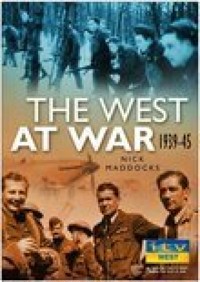
The West at War, due to accompany a major 6-part series for ITV1 West of England, produced by Testimony Films and to be broadcast across May/June 2005, commemorates the 60th anniversary of the end of World War II and features the stories of servicemen and women from Bristol and the South West.
Sie lesen das E-Book in den Legimi-Apps auf:
Seitenzahl: 273
Veröffentlichungsjahr: 2005
Das E-Book (TTS) können Sie hören im Abo „Legimi Premium” in Legimi-Apps auf:
Ähnliche



















THE WEST
at War1939–45
THE WEST
at War1939–45
Nick Maddocks
Dedicated to my nephew Stanley, in the hope that this book is the closest he ever comes to war.
This book is based upon the ITV West television series produced by Testimony Films.
First published in the United Kingdom in 2005 by
Sutton Publishing Limited
The History Press
The Mill, Brimscombe Port
Stroud, Gloucestershire, GL5 2QG
www.thehistorypress.co.uk
This ebook edition first published in 2013
All rights reserved
© Nick Maddocks, 2005, 2013
The right of Nick Maddocks to be identified as the Author of this work has been asserted in accordance with the Copyright, Designs and Patents Act 1988.
This ebook is copyright material and must not be copied, reproduced, transferred, distributed, leased, licensed or publicly performed or used in any way except as specifically permitted in writing by the publishers, as allowed under the terms and conditions under which it was purchased or as strictly permitted by applicable copyright law. Any unauthorised distribution or use of this text may be a direct infringement of the author’s and publisher’s rights, and those responsible may be liable in law accordingly.
EPUB ISBN 978 0 7509 5433 4
Original typesetting by The History Press
Contents
Acknowledgements
Introduction
1 Last Man, Last Round
The Glosters and the Battle of France
2 Dunkirk
The Glosters’ Great Escape
3 Fear Nothing
501 Squadron and the Battle of Britain
4 For Those in Peril
The Men of the Royal and Merchant Navies
5 D-Day to Victory
From France to Germany with the West Country’s Finest
6 Hell in the Jungle
Our Boys in Burma
Bibliography
Julian Fane
Bill Lacey
Joe Trinder
Frank Henn
Bill Stanton
Len Llewellyn
Bill Green
Keith Aldridge
Mary Lalonde
Maurice Ryan
John Salinas
David Wood
Ken Davenport
Geoff Young
Derek Horsford
Dennis Greenslade
Ted Davis
Acknowledgements
I would like to thank all the people who have helped with the writing of this book, and the making of the ITV West television series which it accompanies, in particular James Garrett from ITV West for his continuing support and belief in local programming. Thanks also to Ifty Khan, Lesley Ellett and Molly Watkin from ITV West for help and advice along the way.
Special thanks go to all at Testimony Films, especially to Steve Humphries for giving me the opportunity to produce such an important series, and to Clair Titley for her tireless commitment and enthusiasm. Thanks also to Daniel De Waal for his invaluable advice, to cameraman Michael Pharey for his skill and patience, to Mary Parsons and Lizi Cosslett for making Testimony Films such a great place to work and to Mike Humphries. Thank you also to Sally Humphries for the use of Rose Cottage, and to Bridget Blythe and all at Pink House Post Productions in Bristol.
I would of course like to thank all the veterans’ associations, societies, museums and individuals who helped us along the way. There are too many to list individually, but special thanks go to Major Claud Rebbeck and George Streatfield at the Soldiers of Gloucestershire Museum, to John Hamblett, to Bill Edwardes, Chairman of the 43rd Wessex Division Association, to David Watkins and Wing Commander Kenneth MacKenzie from 501 Squadron, and to Iain Arnold from the Hurricane Association. Thanks also to Norman Date of the Bristol branch of the Merchant Navy Association and to the many others from the local branches of the Merchant Navy, Royal Navy, Normandy Veterans and Burma Star Associations who very kindly put us in touch with their members. Many apologies to anyone I may have omitted.
Of course this book would have been impossible without the contributions of the veterans who gave up their time to share their stories with us, and many thanks go to those we filmed: Kenneth Lee, Joe Trinder, Frank Henn, Julian Fane, Bill Lacey, Len Llewellyn, Dennis Smith, Bill Green, Keith Aldridge, Jim Loftus, Mary Lalonde, Bill Stanton, Geoff and Margrit Young, Maurice Ryan, Dennis Greenslade, Leslie Blake, Bess Cummings, John Salinas, Jim Pratt, Ted Davis, Ken Davenport, Derek Horsford, Tom Packwood, David Wood, Doug Allen and Cyril Stephens. Unless otherwise stated, all photographs are the copyright of the interviewees/Testimony Films.
Thanks, of course, to all at Sutton Publishing for their belief in this book.
Finally a very special thank you to my family, Jill, Ivor and Kate Maddocks, and to Nemia Brooks, for encouragement and support along the way.
Introduction
The year 2005 marks the sixtieth anniversary of the end of the Second World War. During the five and a half years of bitter fighting that raged between 1939 and 1945, some 500,000 British and Commonwealth servicemen gave their lives while on active service, and many more were wounded or maimed. It is almost impossible to put a figure on the number of soldiers, sailors and airmen from the West of England who fought during the conflict, but in 2005 many thousands will gather in the cities, towns and villages of our region to pay their respects to friends and colleagues who made the ultimate sacrifice in the pursuit of freedom. This book, and the ITV West television series which it accompanies, were commissioned to commemorate this important anniversary, and to pay tribute to the courage, dignity and humour of the men and women from our region whose lives were forever touched by the events that began in Europe in the autumn of 1939.
Many books have focused on life on the home front during the Second World War, but a local study of front-line experience has been a comparatively neglected area. For over a year the production team at Testimony Films in Bristol collected first-hand accounts from many hundreds of veterans, and were provided with graphic and moving descriptions of action seen in all the major campaigns. We are most grateful to the countless local and national organisations, clubs and societies that helped to put us in touch with their members. It is sad to note that as the years take their toll, many of these organisations will close down following the sixtieth anniversary commemorations. Many of the veterans we contacted, however, were not part of any official organisation, preferring instead to put the past behind them in an attempt to forget the horrors of war. Some of them were, quite understandably, reluctant or even unwilling to share their memories with us, while others told their story for perhaps the first time. Quite often, these were among the most powerful testimonies we heard, and we were frequently humbled by the frank and often harrowing accounts we recorded.
Research began at the beginning of 2004, expertly guided by Series Producer Steve Humphries and since then researcher Clair Titley and I have personally met and spoken to local veterans with vastly differing wartime experiences – from those who escaped Dunkirk, flew in the Battle of Britain or sailed in the Battle of the Atlantic, to those who landed on the beaches of Normandy on D-Day or emerged victorious from the jungles of Burma. We have heard the most remarkable stories from submariners, airborne troops and spies; from tank commanders, French resistance operatives and prisoners of war. Indeed, from the outset we realised that our most difficult problem would be in deciding which stories we should include and which we would have to leave out.
Of course, it was impossible for us to provide a detailed history of the Second World War in just six short programmes and as a result several significant theatres of war have unfortunately been omitted, among them the vitally important victories in North Africa and Italy. However, we have been able to tell for the first time the little known roles played by some our region’s most illustrious fighting forces, the Gloucestershire Regiment’s heroic defence outside Dunkirk in 1940, and 501 (County of Gloucester) Hurricane Squadron’s success in the Battle of Britain among them. In fact, such was the importance and heroic nature of the Glosters’ actions during the Battle of France, we decided to dedicate two programmes, and two chapters of this book, to their incredible sacrifice. Given the current uncertainty with regard to the regiment’s future, we are honoured to pay proper respect to their past glories.
One important consideration we had to look at early on in our research was the obvious question of what do we mean by the West? The ITV West region itself has clear boundaries and reaches roughly from Gloucestershire in the north to Somerset in the south, and from Wiltshire in the east to Bristol in the west. However, we had to decide whether we should include just those people born and raised in our region or add those born elsewhere but living here now, or perhaps those who served with local units. Ultimately, we decided that as long as a potential interviewee fulfilled one of these three criteria, they would be eligible for consideration. In fact, this definition proved invaluable when researching the roles of the Royal and Merchant Navy, for although the West Country has a long and well-known maritime history, a large majority of the sailors we spoke to were born outside our region. Of course, the very nature of a life at sea means that sailors will often move around from port to port and frequently settle outside the area of their birth. As a result, Chapter Four includes the experiences of merchant seamen from London and Liverpool, who now live in the West Country, as well as testimony from a Royal Navy volunteer from Gloucestershire.
The chapters in the book are arranged chronologically, beginning with the Battle of France and ending with the conclusion of the war in the Far East. Each chapter begins with a brief introduction to provide a general overview to the personal testimony that follows, and the memories of the veterans are illustrated with many personal photographs and documents, which help bring their stories to life. We are very grateful to those we interviewed for trusting us with their precious memorabilia, and for allowing us to reproduce it here. It was very moving to see how many veterans kept photographs of friends they had lost in battle, and once again we are honoured to be able to include these also.
Due to time constraints, and for reasons beyond our control, not all the veterans we filmed were included in the television series. It is difficult to tell a complicated story in a 30-minute television slot and often the programmes had to be edited for the sake of simplicity. Thankfully, however, writing this book has enabled us to include some of the stories that had to be left out of the series, particularly in the case of the D-Day chapter, which we have extended to include the beach landings and the incredible story of the 43rd Wessex Division. In fact not long after research began, we had intended to dedicate one of the programmes to the Wessex Division, who fought continuously from June 1944 to the end of the war in Europe. However, so long and varied was their action that it became hard to know quite where to start! We hope that the inclusion of Geoff Young’s remarkable story in Chapter Five goes some way to redressing this.
Finally, I would like to pay special tribute to one particular veteran. Joe Trinder was born in the small village of Bibury in Gloucestershire and grew up in one of the picturesque terraced cottages in Arlington Row. When war broke out, Joe, along with many young men from Bibury, joined the territorials of the 5th Battalion of the Glosters. In 1940, he sailed to France with the British Expeditionary Force and his adventures fighting the Germans in the withdrawal to Dunkirk are movingly told in the first two chapters. After Dunkirk, Joe went back to France with the 43rd Wessex Division, before finally returning home to his wife in Bibury. Joe was one of the first veterans we filmed. His descriptions of everyday life in France were among the most eloquent we heard and it was a pleasure to listen as he recounted his experiences with passion and humour. Joe died in 2004 at the age of 93. We were all very sad to learn of his passing, but glad that we had had the opportunity to meet such a wonderful old gentleman and record his stories for future generations.
As the years pass by, fewer and fewer veterans will make their annual journey to cenotaphs around the region, and within decades the horrors of life on the front line during the Second World War will be beyond living memory. Perhaps through the testimony which follows, their stories will live on for years to come.
Nick Maddocks
January 2005
Joe Trinder, 1911–2004.
ONE
Last Man, Last Round
The Glosters and the Battle of France
When war broke out on 3 September 1939 two battalions of the Gloucestershire Regiment were selected to go to France with the British Expeditionary Force (BEF). The 2nd Battalion, based at Seaton Barracks in Plymouth, was made up of regular soldiers like Jim Loftus and Bill Lacey and because they were already trained for battle, they set sail for France in early October. Officers like Julian Fane whose training at the Royal Military Academy, Sandhurst, had been cut short by the outbreak of war joined the battalion in France. The 5th Battalion was formed from a combination of Territorial soldiers and recently conscripted ‘Belisha Boys’, the first militia men called up by Secretary of State Leslie Hore-Belisha. New recruits like Joe Trinder and Len Llewellyn served alongside trained soldiers including Bill Stanton and young officer Frank Henn, who were drafted in to bolster the strength of the battalion. Having undertaken a period of further training in England, the 5th Battalion sailed for France in January 1940.
The first few months in France marked the period known as the Phoney War. The Glosters passed the time training and digging trenches in the frozen fields, wondering if and when they would see action. The harsh conditions they faced were evocatively captured by a newsreel photographer when he filmed the 5th Battalion on exercise in the village of Thumeries at the end of January 1940. Both battalions were then posted in front of the Maginot Line, the supposedly impenetrable fortified defences built by the French to keep the Germans out, and it was here that many men had their first encounters with the German Army. One particularly fierce exchange occurred on 3 March in the town of Grindorff, where Sergeant Bill Adlam became the first TA soldier of the war to receive the Military Medal after he recovered a Bren gun while under fire.
On 10 May 1940 the Phoney War was brought to a swift conclusion as German forces began their lightning assault on the Low Countries: German Panzers and paratroopers began to sweep across Western Europe. In response the British Army was sent into Belgium, which had previously been out of bounds because of its neutrality, and on 14 May the Glosters made their way up to the plains of Waterloo, where they hoped to settle in for battle. Initially this choice of location brought some comfort to the men because the Glosters had acquitted themselves admirably against French forces on that famous battlefield during the Napoleonic Wars. But within hours, news arrived that the Germans had broken through the French ranks and the Glosters were forced to withdraw. It was a frustrating time for both battalions because the men were keen to stand and hold the line, but such was the speed of the German advance that they were in danger of being cut off. Six days and nights were spent in a constant cycle of withdrawing, stopping, digging in, then withdrawing again and at one point the 5th Battalion marched an incredible 95 miles in just 83 hours, a feat all the more admirable considering there was little in the way of food or rest. The difficulties were exacerbated by the constant threat of aerial bombardment from the dreaded Stuka dive-bombers and the fact that many roads were clogged with refugees. In the circumstances, it was perhaps not surprising that men like Len Llewellyn were separated from the rest of their battalion and forced to make their own way to the coast.
On 19 May the 5th Glosters were eventually able to hold a defensive position on the banks of the River Escault and it was here that gunner Bill Stanton was particularly successful in preventing the Germans from crossing in rubber boats. Just 4 miles away the 2nd Battalion was passing through the town of Tournai in a truck convoy when it became bogged down in heavy traffic. For the Luftwaffe it was too good an opportunity to miss, and Julian Fane, Jim Loftus and Bill Lacey all have vivid memories of the ensuing aerial bombardment which cost the lives of 194 men of the battalion. By 22 May German Panzer divisions had reached the outskirts of Boulogne and the decision was made to evacuate the BEF from Dunkirk. But if this plan was to be successful, selected divisions of the British Army would have to defend a perimeter around the French port to allow the exhausted troops time to escape. The Glosters were among those chosen for the role.
On 23 May, the 5th Battalion was instructed to hold the small villages of Arneke and Ledringhem, which lie some 10 miles south of Dunkirk. The following day, the depleted 2nd Battalion was ordered to take up positions in the strategically important hillside town of Cassel, which lies on the main road to Dunkirk and commands spectacular views all the way to the coast. Indeed Cassel had been used as a headquarters by Marshal Foch who commanded Allied forces during the First World War and was also the hill upon which the Grand Old Duke of York, of nursery rhyme fame, famously marched his 10,000 men in 1793.
In the days that followed, both Glosters battalions were subjected to fierce German attack from tanks, artillery, infantry and, of course, from the air, but their defence was nothing less than resolute. Their orders had been to hold the line at all costs and if that meant to the last man, last round, then so be it.
JULIAN FANE
I’d intended to go into the Army, so I went to Sandhurst and we were there when war was declared. They immediately cut short our course and so we completed only six months. But still, we were excited by the thought of war and quite frankly we couldn’t wait to join our regiments. We couldn’t think otherwise, that’s what we wanted to do. I went to the Glosters, the regiment of my selection, a very fine regiment who had a very interesting and excellent history and who actually had been commanded by my uncle. My father commanded the 12th Lancers, so it was a question of one or the other. I arrived in France near Lille, where I joined the 2nd Battalion at the age of 19 and was posted to B Company. The thing that impressed me about the 2nd Battalion was that there were a lot of long-service non-commissioned officers and sergeants, which was an enormous help to a 19-year-old 2nd lieutenant, and they more or less took charge of us, rather than us taking charge of them, in the initial stages of the war. I was always grateful for that. The immediate reaction that I had when I arrived in France was they were busy teaching us to dig trenches and build barbed-wire fences, which I rather thought was not the kind of training I had expected for a modern war. It seemed to be to be based on the old 1914–18 war. I also noticed that a lot of the tactical side seemed not to consider the possibility of a mechanised attack. We were still marching on our feet and using not very up-to-date weapons.
Julian Fane’s training at Sandhurst was cut short when war broke out in 1939.
We started moving on 14 May and made our way slowly in transport or on Shanks’s pony to end up on the plains of Waterloo. I thought to myself, ‘Well, this is a good start for a battle.’ Then we deployed and we waited. After that we were overwhelmed because the flanks were never secured, in my opinion. The French had trained to fight in the Maginot Line and I don’t think they were as prepared as we might be to fight in the open. People fell back on both sides of us and we really had what I would like to call a fighting withdrawal. Some people had the temerity to call it a retreat, but a retreat indicates a sort of disorderly arrangement, whereas our withdrawal was very closely co-ordinated. We were standing to fight all the time and preparing to hold a line. And it infuriated us because we were lacking in sleep and we were moving an awful lot. You’d dig a hole, a defensive line, and sometimes you’d get a bullet or two whistle in your direction, but there was no attack in front of you. You were then told to fall back to another line and you didn’t know what the hell was happening. All the troops were getting browned off. They didn’t want to keep going back. They wanted to get settled and have a fight. All the Glosters, including myself, felt very despondent and disappointed that we should be withdrawing so often. It’s not what we’d joined the Army to do.
On 19 May we were in a convoy of trucks leading out of Belgium when we came to the town of Tournai. The roads were clogged with refugees and cars and carts with mattresses on top, all fleeing down the same road that we were motoring down. The Germans then started bombing the convoy and about three trucks behind me they hit our ammunition truck. Things were exploding in every direction. My platoon was walking section by section down the road and I jumped into a ditch. The aeroplanes then started strafing the road, the refugees, everybody in sight. You could hear the bullets whistling over your head, and of course they killed innumerable people – women, children, babies, as well as soldiers. There’s nothing you can do except keep your head down and hope. That’s all you could do. Once it had finished you had to get up and survey the scene and rally the troops and get moving. There was no emotion other than fear. There was nothing else you could do.
We continued on for several days and arrived eventually at a place called Cassel. On entering the town we found that it had been very severely bombed, that there were many French corpses and lots of animals had been killed, lots of the horses used for towing guns. And so we had a horrible and unpleasant job of clearing all the mess up before we could deploy. Unfortunately, a lot of the people were still living in their houses and had to be kicked out, which was unsatisfactory, but there it was. We couldn’t hold the town without using the houses.
We actually had the order that we were to stay behind to cover Dunkirk and I thought to myself, ‘Last man, last round.’ I’d heard that before in my military history and I thought, ‘My goodness, I didn’t think this would happen to me so soon in my military career.’ But we didn’t have time to be worried. We got busy developing our defences and then of course we were attacked repeatedly by tanks, artillery and aircraft, so we had a very busy time and suffered quite a few casualties. Obviously we realised that our chances were negligible and that the Germans had completely outflanked us.
Our platoon was on the left, guarding an approach to Cassel on a sort of winding road, and at one stage a German despatch rider was sent up. As he arrived towards our position he was shot. We dragged him in to interrogate him and he had a piece of paper on him which purported to come from their artillery battery to say that they were withdrawing, which was obviously a trick. He had been shot in the head and was dying, so we took his helmet off. All his head had been blown apart and his brains fell out of his helmet.
Not far from me was a young officer and he was put into a position covering a rather open piece of ground. He was in a house which had been prepared for defence and he held out with his platoon for quite a long time, but eventually most of them were killed because they were shelled and attacked. So battles were going on one side of me and behind me in woodland. Obviously when the Germans started breaking into our own company positions and had to be repulsed we had no reserves to deploy, so we just had to hold where we could.
I was invited by the company commander to go and take out a tank, which was in the adjoining company’s backyard. So I got the man who held the PIAT anti-tank rifle and we made our way up through the trees in a sort of woodland area. We got very close, about 50 yards from the tank. He got his aim just right and I was lying next door to him. Suddenly, just as he was about to fire, a whole lot of mortar bombs landed just in front of us. He was wounded and I got him to the stretcher-bearers who were behind us. I dragged him a bit of the way and I put a field dressing on him. But I had to leave him. I think his liver was exposed and I don’t know whether he lived at all. The stretcher-bearers were very brave.
I’m not a poker player. I’m very bad at assessing risks and the odds, but obviously the chances of getting killed were quite great and we were all aware of the fact that, in the Glosters, our chances were diminishing very rapidly.
BILL LACEY
I was brought up by my grandparents in Ilfracombe and when my grandfather died I moved up to Bristol to join the rest of my family. I must have heard something about the Army, so I went along to the Colston Hall in Bristol to join up. In the April (1939) I was 18 and I joined up in August. I was very proud to be a Gloster.
Bill Lacey had his first encounter with the Germans near Waterloo.
We went over to France and then up in front of Waterloo. One night, I was standing up in front of where we were digging in and I heard somebody coming along. I thought it was one of our officers, checking up as to whether I was on guard, so I got my bayonet between my legs ready to challenge him, but when I looked up there was a German hat and God knows what. Automatically I just brought up the bayonet and there was a grunt and that was it. I think it must have gone right through his heart. It went straight through his chest anyhow. He was dead right away; that was it. And the awful part about it was, his weight on the bayonet pulled me over and I could have fallen on top of him.
Then I went down to where they was digging the trenches and I was babbling, trying to explain what had happened. I was incoherent. They carted him away and I was left there still on guard. I was cleaning the bayonet out – putting it in the ground and cleaning it out that way. Ever after, I always thought that the whole German Army was after me for it. I never expected to do that sort of thing. We’d only just moved up into position and this happened within two or three hours. It just didn’t seem real. It really upset me, but I wasn’t given time to think about it because the platoon left straight away and we did an 11-mile march before we stopped again and took up positions.
We was retreating all the while but funnily enough we didn’t feel defeated: that was the whole point. Every time we stopped and took up positions we found that the French had given way on our flank and the Germans was moving around on our rear, so we had to move back. But we were ready for them at any time, all the way. All the time this went on, right through Belgium, right back to Cassel. You had a lot of prams and carts in the road where the civilians were moving out. Then planes would come over and strafe us, but they didn’t care if there were refugees. They’d just machine gun the whole lot. We was getting no sleep and we was absolutely exhausted by the time we got to Tournai. We was sleeping on the march, walking automatically, and the next minute you would bump into the person in front because you didn’t realise they’d stopped. You just lost track of time and feeling. If it was a rest break, you’d be down on the ground right away, taking as much rest as you could. But once it came to getting up again, it was quite a struggle. You were bullied into getting up.
At Tournai there was quite a wide road. There we were on the trucks, just enjoying the first ride of the lot after marching all the way through Belgium and we had only gone a mile or so when the planes started coming over. Somebody said, ‘They’re ours,’ and the next minute we heard the bombs being dropped. Everybody bailed out of the trucks with their rifles. I got out, but I didn’t know where I was. There was a road going off to the left, so I went running there. I was just going to put myself under this wall but the planes were coming, so I threw myself under a truck instead. The next minute the wall collapsed and the bricks rolled up to me under the truck, so the gods were with me then. There wasn’t much left of the convoy, but they started shouting to us to get back on. There was bodies all over the place at the time. There were two Bren-gunners, still hanging on to their guns, and they were obviously dead. There were arms and legs in different places, and it was more like a rubbish heap, spread all over the place. There were stretcher-bearers working but they couldn’t cope because they were just picking up limbs. We weren’t allowed to help. They just wanted us back on the convoy. You feel hopeless. You feel guilty for leaving it there. The refugees suffered terribly because they were in the road and didn’t have chance to get away at all, but we just had to leave them. I didn’t think war would be like that. One of the worst things is when you feel some wet on you and you think to yourself you’ve got some blood there, or you’ve been hit or something, and what is it? Grey matter. That is really repulsive. It’s like the mark of Cain on you for the rest of your life. When you’ve got somebody’s organs spread on you, you don’t like it.




