


9,99 €
Mehr erfahren.
- Herausgeber: The O'Brien Press
- Kategorie: Sachliteratur, Reportagen, Biografien
- Sprache: Englisch
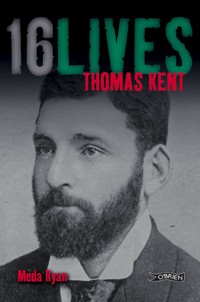
Born in 1865 into a farming family of Fenian tradition near Fermoy in Co. Cork, Thomas Kent became involved in the Land League in the 1880s and lived for a time in Boston, where he was active in Irish cultural organisations. In 1889, back in Ireland he joined the fight against injustices and evictions and was imprisoned several times for his part in orchestrating a boycotting campaign. Dedicated to freeing Ireland, Thomas and his brothers mobilised in Co. Cork at Easter 1916 and waited in vain for direct orders from Dublin headquarters. During a gunfight at their home – the only fighting to take place in Co. Cork – a policeman and Thomas's brother Richard were killed. Thomas was charged with 'taking part in an armed rebellion' and sentenced to death. He was executed by firing squad in Cork Barracks on 9 May 1916. Meda Ryan's biography shines light on a man who was 'Ireland's forgotten patriot' until a state funeral over ninety-nine years after his death, in September 2015.
Das E-Book können Sie in Legimi-Apps oder einer beliebigen App lesen, die das folgende Format unterstützen:
Veröffentlichungsjahr: 2016
Ähnliche















The 16LIVES Series
JAMES CONNOLLY Lorcan Collins
MICHAEL MALLIN Brian Hughes
JOSEPH PLUNKETT Honor O Brolchain
EDWARD DALY Helen Litton
SEÁN HEUSTON John Gibney
ROGER CASEMENT Angus Mitchell
SEÁN MACDIARMADA Brian Feeney
THOMAS CLARKE Helen Litton
ÉAMONN CEANNT Mary Gallagher
THOMAS MACDONAGH Shane Kenna
WILLIE PEARSE Róisín Ní Ghairbhí
CON COLBERT John O’Callaghan
JOHN MACBRIDE Donal Fallon
MICHAEL O’HANRAHAN Conor Kostick
THOMAS KENT Meda Ryan
PATRICK PEARSE Ruán O’Donnell
MEDA RYAN – AUTHOR OF16LIVES: THOMAS KENT
Meda Ryan, historian and author, is a native of West Cork and now lives in County Clare; she has participated in television and radio documentaries and has had articles published in a wide variety of history magazines and journals and national and local newspapers. Her published books include the controversial Tom Barry: IRA Freedom Fighter (Mercier Press) as well as The Day Michael Collins Was Shot (Poolbeg Press), Liam Lynch: The Real Chief (Mercier Press) and Michael Collins and the Women Who Spied for Ireland (Mercier Press).
LORCAN COLLINS – SERIES EDITOR
Lorcan Collins was born and raised in Dublin. A lifelong interest in Irish history led to the foundation of his hugely popular 1916 Rebellion Walking Tour in 1996. He co-authored The Easter Rising – A Guide to Dublin in 1916 (O’Brien Press, 2000) with Conor Kostick. He is the author of James Connolly in the 16 Lives series and 1916: The Rising Handbook. He is also a regular contributor to radio, television and historical journals. 16 Lives is Lorcan’s concept and he is co-editor of the series.
DR RUÁN O’DONNELL – SERIES EDITOR
Dr Ruán O’Donnell is a senior lecturer at the University of Limerick. A graduate of UCD and the Australian National University, O’Donnell has published extensively on Irish Republicanism. His titles include Robert Emmet and the Rising of 1803, The Impact of the1916 Rising (ed.), Special Category: The IRA in English Prisons, 1968–1978 and 1978–1985, and The O’Brien Pocket History of the Irish Famine. He is a director of the Irish Manuscripts Commission and a frequent contributor to the national and international media on the subject of Irish revolutionary history.
DEDICATION
To the memory of the patriotic Bawnard Kent brothers and their loyal mother, who helped to give us the Ireland we have today.
ACKNOWLEDGEMENTS
I am extremely grateful to Michael O’Brien, O’Brien Press for asking me to write the biography of Thomas Kent. I agreed instantly, though knowing little about him or his family. I did not realise the task ahead was a mammoth one. It required quite an amount of ‘digging’. Lorcan Collins, series editor, was an inspiration – always there to encourage me and keep going. I’m most grateful to Brendan O’Brien, editor, who was so helpful during the final stages as we worked together on the manuscript. Senior editor Helen Carr skilfully worked as liaison between the O’Brien Press team members including Nicola Reddy, Emma Byrne, Geraldine Feehily and Ruán O’Donnell, series editor – all were of great assistance during the final stages of this book.
Without Carol Ann McCarthy, a Kent descendant, this book could not have been written. Over the past number of years she was always at the other end of an email, and constantly supplied me with documentation on the Kents, sent me Fr Edmond Kent’s family tree and other records and provided me with contacts in the US. Mary Ellen Grogan, Lucy de Wolf, Eileen McGough, Marie Daly, John McColgan and Pierce Kent were also helpful with sources and genealogical search. Anne Kent’s handwritten notes were always welcome, as was the advice of Dr John Kehoe. A sincere word of gratitude is due to Thomas Kent’s nieces (William’s daughters), Kathleen, Prue and Eily Kent, for their recollections of family events and also Kent relatives Tom Kent, Anne Duane, Michael O’Riordan and Eamonn Walsh.
Séamus Lantry was most helpful with his research in Cork City Library and the Cork Examiner records and, with Eileen Lantry, provided much encouragement throughout. Sincere gratitude is due to Jack Lane for his help and advice; Brian Murphy in his unique way gave me every help and encouragement, as did Dómhnaill Mac Giolla Phoil, Mary Powell, Eily Hales McCarthy and Noel Sheehan. I am grateful to Fr Gerard Coleman for locating early school and other records and to Peggy Broderick for her insights into her family’s contacts with the neighbouring Kents. Joan Coughlan was always at the other end of the phone to help with place names, contacts and localities. A word of thanks is due to Tommy Lee for the Rice family records and to Jim Redmond, Jim Fitzgerald and Thomas Barry for supplying me with sources; also to Gerry White who was my main contact with Collins Barracks over the past few years.
I am most grateful to Margaret (Mags) O’Callaghan, Elizabeth (Liz) Desmond, Angela Davis and all the staff of Fermoy Library who were extremely helpful in obtaining relevant material. Thanks is due to Kieran Wyse, Cork County Library, who responded generously to my every query, as did Bernie Metcalfe and staff at the National Library of Ireland. The many staff members at the Public Records Office, Kew, London, were always courteous and helpful. Stella Cherry and Dan Breen of Cork Public Museum were generous with their time; so too were Timmy O’Connor and staff members of Cork City and County Archives, and also Kieran Burke and staff of Local Studies at Cork City Library. Peter Beirne and Clare County Library staff were always helpful, as were Marian Fogerty, Geraldine Moloney, Emma O’Connor and Library staff at Mary Immaculate College, Limerick. John Glendon, Malachy Moran and Robert Canning were helpful with RTE Sound Archives.
I would like to thank the following for responding to my queries: Nicola Miller, genealogist; Lily Seehan, the Avondhu; Doug Minihane, Cork Prison photographer; Maria Ryan, Ennis Tourist Office. Many who helped at various times during the work deserve gratitude: Tomás Ó Síothcháin, John Arnold, Sean Sherwin, James Ronan, Ann Cotter, Ned Rice, Richard Quirke, Tom Walsh, Kevin Barry, Ger Broderick, Thomas O’Neill, Sean Walsh, Dick Mackessy, Jim O’Connor, Bob Sebard, Jim McAnespie, Tim Horgan, Tony Duggan, Christy Roche, Bill Power, Margaret Neylon, Monica Reid, Ray Bateson, Peter McNamara and Michael O’Neill.
I am deeply grateful to family members, Gary, Ita and Zelda, for their assistance and patience as I struggled at times. My late husband Donal looked forward to seeing this book coming to fruition, but sadly such is not the case. My wider family and my friends were always supportive, and for this I am grateful. I am glad that at last Thomas Kent and the Kent family history are in the public domain, and I hope that the family will be happy with the result.
16LIVES Timeline
1845–51. The Great Hunger in Ireland. One million people die and over the next decades millions more emigrate.
1858, March 17. The Irish Republican Brotherhood, or Fenians, are formed with the express intention of overthrowing British rule in Ireland by whatever means necessary.
1867, February and March. Fenian Uprising.
1870, May. Home Rule movement founded by Isaac Butt, who had previously campaigned for amnesty for Fenian prisoners.
1879–81. The Land War. Violent agrarian agitation against English landlords.
1884, November 1. The Gaelic Athletic Association founded – immediately infiltrated by the Irish Republican Brotherhood (IRB).
1893, July 31. Gaelic League founded by Douglas Hyde and Eoin MacNeill. The Gaelic Revival, a period of Irish Nationalism, pride in the language, history, culture and sport.
1900, September.Cumann na nGaedheal (Irish Council) founded by Arthur Griffith.
1905–07.Cumann na nGaedheal, the Dungannon Clubs and the National Council are amalgamated to form Sinn Féin (We Ourselves).
1909, August. Countess Markievicz and Bulmer Hobson organise nationalist youths into Na Fianna Éireann (Warriors of Ireland) a kind of boy scout brigade.
1912, April. Asquith introduces the Third Home Rule Bill to the British Parliament. Passed by the Commons and rejected by the Lords, the Bill would have to become law due to the Parliament Act. Home Rule expected to be introduced for Ireland by autumn 1914.
1913, January. Sir Edward Carson and James Craig set up Ulster Volunteer Force (UVF) with the intention of defending Ulster against Home Rule.
1913. Jim Larkin, founder of the Irish Transport and General Workers’ Union (ITGWU) calls for a workers’ strike for better pay and conditions.
1913, August 31. Jim Larkin speaks at a banned rally on Sackville (O’Connell) Street; Bloody Sunday.
1913, November 23. James Connolly, Jack White and Jim Larkin establish the Irish Citizen Army (ICA) in order to protect strikers.
1913, November 25. The Irish Volunteers are founded in Dublin to ‘secure the rights and liberties common to all the people of Ireland’.
1914, March 20. Resignations of British officers force British government not to use British Army to enforce Home Rule, an event known as the ‘Curragh Mutiny’.
1914, April 2. In Dublin, Agnes O’Farrelly, Mary MacSwiney, Countess Constance Markievicz and others establish Cumann na mBan as a women’s volunteer force dedicated to establishing Irish freedom and assisting the Irish Volunteers.
1914, April 24. A shipment of 25,000 rifles and three million rounds of ammunition is landed at Larne for the UVF.
1914, July 26. Irish Volunteers unload a shipment of 900 rifles and 45,000 rounds of ammunition shipped from Germany aboard Erskine Childers’ yacht, the Asgard. British troops fire on crowd on Bachelor’s Walk, Dublin. Three citizens are killed.
1914, August 4. Britain declares war on Germany. Home Rule for Ireland shelved for the duration of the First World War.
1914, September 9. Meeting held at Gaelic League headquarters between IRB and other extreme republicans. Initial decision made to stage an uprising while Britain is at war.
1914, September. 170,000 leave the Volunteers and form the National Volunteers or Redmondites. Only 11,000 remain as the Irish Volunteers under Eoin MacNeill.
1915, May–September. Military Council of the IRB is formed.
1915, August 1. Pearse gives fiery oration at the funeral of Jeremiah O’Donovan Rossa.
1916, January 19–22. James Connolly joins the IRB Military Council, thus ensuring that the ICA shall be involved in the Rising. Rising date confirmed for Easter.
1916, April 20, 4.15pm.The Aud arrives at Tralee Bay, laden with 20,000 German rifles for the Rising. Captain Karl Spindler waits in vain for a signal from shore.
1916, April 21, 2.15am. Roger Casement and his two companions go ashore from U-19 and land on Banna Strand in Kerry. Casement is arrested at McKenna’s Fort.
6.30pm.The Aud is captured by the British navy and forced to sail towards Cork harbour.
1916, 22 April, 9.30am.The Aud is scuttled by her captain off Daunt Rock.
10pm. Eoin MacNeill as chief-of-staff of the Irish Volunteers issues the countermanding order in Dublin to try to stop the Rising.
1916, April 23, 9am, Easter Sunday. The Military Council of the Irish Republican Brotherhood (IRB) meets to discuss the situation, since MacNeill has placed an advertisement in a Sunday newspaper halting all Volunteer operations. The Rising is put on hold for twenty-four hours. Hundreds of copies of The Proclamation of the Irish Republic are printed in Liberty Hall.
1916, April 24, 12 noon, Easter Monday. The Rising begins in Dublin.
16LIVES - Series Introduction
This book is part of a series called 16 LIVES, conceived with the objective of recording for posterity the lives of the sixteen men who were executed after the 1916 Easter Rising. Who were these people and what drove them to commit themselves to violent revolution?
The rank and file as well as the leadership were all from diverse backgrounds. Some were privileged and some had no material wealth. Some were highly educated writers, poets or teachers and others had little formal schooling. Their common desire, to set Ireland on the road to national freedom, united them under the one banner of the army of the Irish Republic. They occupied key buildings in Dublin and around Ireland for one week before they were forced to surrender. The leaders were singled out for harsh treatment and all sixteen men were executed for their role in the Rising.
Meticulously researched yet written in an accessible fashion, the 16 LIVES biographies can be read as individual volumes but together they make a highly collectible series.
Lorcan Collins & Dr Ruán O’Donnell,16 Lives Series Editors
CONTENTS
Chapter 1: Ireland’s Forgotten Patriot
Chapter 2: The Moulding of a Patriot
Chapter 3: First Encounter with Land League
Chapter 4: Work and Pleasure in Boston
Chapter 5: Getting a Foothold in Publishing
Chapter 6: Return to the ‘Emerald Isle’
Chapter 7: ‘The Mitchelstown Massacre’ and Its Aftermath
Chapter 8: ‘The Leahy Blood Tax’
Chapter 9: The Kent Brothers Defy Balfour’s Act
Chapter 10: Promoting the Irish Language to Boston Readers
Chapter 11: Court Case under Coercion Act Begins
Chapter 12: The Prosecution Continues
Chapter 13: Coolagown Boycotting Conspiracy
Chapter 14: ‘God Save Ireland!’
Chapter 15: Decision-Making Time
Chapter 16: Eviction, Boycotting and Sentences
Chapter 17: ‘Extraordinary Charge of Conspiracy’
Chapter 18: The Coolagown Horn Blowers
Chapter 19: Support for Evicted Tenants
Chapter 20: Gratitude Born from Kindness
Chapter 21: Founding of Galtee Volunteers
Chapter 22: The Kents’ Sense of Justice and Freedom
Chapter 23: Volunteers Become More Active
Chapter 24: Arrested under the Defence of the Realm Act
Chapter 25: Plans for 1916 Rebellion
Chapter 26: Easter 1916 by Bride and Blackwater
Chapter 27: Trial of Brothers
Chapter 28: The Kent Brothers’ Fight for Irish Freedom
Chapter 29: ‘On the March to Liberty’
Appendix: Poems and Songs by Thomas Kent
Bibliography
Notes
Index
Chapter 1
Ireland’s Forgotten Patriot
Until his state funeral in September 2015, Thomas Kent of Bawnard House, Castlelyons was Ireland’s forgotten patriot – the least known of the sixteen men who died for Ireland after Easter 1916. He and Roger Casement were the only men executed outside Dublin.
In the late night hours of 8 May 1916, Thomas Kent sat alone and barefoot in a cell in Cork Detention Barracks. His death sentence had been confirmed by General Maxwell: he was to be shot at dawn. The hours ticked slowly. His only companion was the rosary beads given to him earlier that night by Fr John Sexton, chaplain to the Military Hospital, who had come to the dimly lit cell accompanied by a prison guard.
Thomas had been stripped of his clothes and thoroughly searched on the morning of 3 May, despite having already been searched in Fermoy Military Barracks, where he, his three brothers and his mother had been taken the previous morning after a shoot-out in defence of their home. A few coins and a short poem – all he possessed – were taken from his jacket pocket. After he had signed a record book he was allowed to dress. His temperance badge was still pinned on his lapel.
In the cold, dark morning his bare feet were sore: after capture he had been compelled to walk the five miles from his home to Fermoy barracks on the rough stone road, handcuffed behind a military cart. The soldiers would not allow him to put on his boots.
This intellectual man, who loved books and literature and took pleasure in writing poetry, prose and drama, was not given a pencil, paper or a book to read during the long days and nights of solitary confinement in Cell No. 17. Many of the officers wished to help but had to obey orders. Thomas knew that his brother Richard had been shot and severely wounded by British military outside his home; his badly wounded brother David was in some prison; his brother William had been brought to Cork Detention Barracks with him. It is believed that Thomas would have liked to write a last letter to reassure his mother that he was prepared to die for Irish freedom, but the General Officer Commanding forbade this request. His trial on 4 May, by field general court martial rather than a judge and jury, was a foregone conclusion. Though he entered a ‘not guilty’ plea, he was not allowed any witnesses and was found guilty. The sentence was death.
Two of Thomas’s comrades, Seamus Fitzgerald and Mick Leahy from Cobh, had been arrested in Cork on 3 May and were also in the detention barracks. Fitzgerald noticed as he signed the record book that ‘brave Tom Kent must have been the prisoner previously brought in, as it was under his signature that I appended mine … I was put in his adjoining cell, but … I was removed after a few minutes to Cell No. 27 on the opposite side.’
Fitzgerald, Leahy and those arrested in Cork city with them were kept in solitary confinement until Tuesday, 9 May with a daily ‘short exercise … in single file in the detention yard, all talk being forbidden,’ Fitzgerald wrote. ‘We never saw Tom Kent, as he was apparently kept under the closest supervision.’1
Thomas – known to his friends in the latter part of his life as Tom – was unaware also that his close friends and colleagues Terence MacSwiney, Tomás MacCurtain, Bill and Bob Hales and others had been arrested in the early hours of 3 May. Tom had been to the Hales brothers’ Knocknacurra home – a meeting place for Volunteers – and knew them well, especially Tom Hales (who had escaped on this occasion).
When the military banged at the Knocknacurra door at 2 a.m., those in the house were in bed. Bill jumped up, grabbed his gun and aimed it; MacSwiney tilted it before Bill pulled the trigger. ‘Look what happened the Kents!’ he snapped. ‘Like them, we can’t fight our way out!’ Bob and the Hyde brothers in the bedroom next door had also snatched their guns when MacSwiney burst in. ‘Hold your fire! The Kents!’ he shouted.2
During the night of 8/9 May, Fr Sexton returned to the cell and sat with Thomas; they talked and prayed. It is not known what they talked about, or how much information Thomas was given regarding the Rising by the priest or the prison officers (some of whom were kind to him).3
When the handcuffed Thomas was marched to the exercise yard at dawn on 9 May, he was unaware that officers and senor nursing staff in the mess room – men who had returned from the Western Front and nurses such as Head Nurse Eleanor Gordon, who had tended to severely wounded men in field camps in foreign lands – ate their early breakfast in an ‘eerie silence’ and ‘hushed stillness’.4 Fr Sexton was present at the execution and noted that at no time did Thomas show ‘the slightest sign of nervousness’.5
Thomas Kent had been charged with ‘taking part in a rebellion’. The Kent brothers and their eighty-one-year-old mother had defended their home. They took a stand, decided they wouldn’t surrender; in doing so they had participated in the Easter Rising. The family’s four-hour gun battle in the early hours of 2 May 1916 set an example for Cork County Volunteers and made them more determined to fight for their country’s independence.
Thomas and his family merited for their county of Cork the sobriquet ‘the Rebel County’.
Chapter 2
The Moulding of a Patriot
Accursed be the false worded tongue of the raider;
Accursed be the sons of the Gael who would aid her;
Let him who feels shame for his ancestor’s story
Begone from our pathway – let ours be the glory,
We’ll conquer or die, as our fathers of old
Have died for the land of the Green and the Gold.6
These are lines of a poem written by Thomas Rice Kent, Commandant of the East and North Cork, Galtee Battalion in the Cork Brigade, Irish Volunteers during Easter Week 1916. He wrote them while he and his brothers awaited orders from Dublin Headquarters as to what role they should take in the South of Ireland. They were in a ‘safe-outhouse’. The poem expresses the passion Thomas had for his native land, and gives an account of pent-up angst.
During the Land War, Irish people were fighting to overthrow tyrannical landlordism and for the ‘three Fs’ – fair rent, fixity of tenure and free sale. The Kent family of Bawnard House, Castlelyons, five miles outside Fermoy, was well known for the important part it played. In the late 1880s, five athletic young Kent brothers – Edmond, Thomas, David, William and Richard – with their curate Rev. Fr Jeremiah O’Dwyer and neighbours fought court cases and endured hard-labour imprisonment in an effort to defeat the authoritarian landlord and the Balfour Coercion Acts, and to have the rights of tenant farmers vindicated by Land Acts. Generally on their release, thousands of their fellow countrymen escorted them back to Bawnard House.7
The Kents could trace their Irish heritage back as far as the twelfth century. There were different branches of the Kents or Ceannts (Irish version). Anne Kent recorded that her uncle Eddie wrote, ‘We Kents have much more in common than the common surname … We are descended from the Celtic speaking people … who reached Ireland … What seemed to make for their success in the huge migration, as, in later life was a strong co-operative spirit which a uniform language did much to support and direct.’ Rev. Edmond Kent noted that he found in their descendants ‘a people of initiative, of perseverance and enterprise, modest in success, grateful for their blessings, generous and supportive of their neighbour, patient in adversity and suffering, a kindly, sympathetic people, slow to anger, though willing to make even heroic sacrifices in the cause of right, loyal to their country and faithful to their religion’.8
Thomas Kent’s ancestors settled in the Co. Cork area around 1550. ‘Some [Kent families] managed to keep their property, but the majority reverted to being tenant farmers on land they once owned. They bowed their heads and weathered the storms arising out of the Desmond Rebellion, the aftermath of the last Battle of Kinsale, the Confederate Wars and the Cromwellian confiscations.’9 They survived, just like the ancestors of another East Cork patriot and nationalist, Liam Lynch.
The Kent name has been around Castlelyons for many generations. A David Kent (Thomas’s great-grandfather) ‘and his sons by his first marriage obtained a tenancy of land in Ballyhampshire around 1770’. They paid their rent to Lord Barrymore for seventy-seven acres and seven perches. David Kent married twice. With his first wife he had sixteen children: little is known of that family. His second wife was Margaret Fitzgerald and it is from that family that Thomas descended.10
Thomas Rice Kent was born in Kilbarry House, Coole, Castleyons on 29 August 1865.11 He was the fourth of nine children born to David Kent and Mary Rice, and was baptised on 31 August 1865 in St Nicholas’ Catholic Church, Castlelyons.12 Like his brothers and sisters, he was given his mother’s surname as a middle name. So his full name (which he liked to use) was Thomas Rice Kent.
Thomas’s father David, born in the townland of Ballyhampsher (Ballyhampshire) on 8 December 1832, was the founder of the Bawnard branch of the Kents and the eldest of the nine children of James Kent and Ellen Verling. The family lived in the old Kent homestead in Ballyhampsher, Barrymore barony in the valley of the Bride River, Co. Cork. After their marriage, David’s parents James and Eileen had continued to live with James’s grandmother, Margaret, née Fitzgerald. (Margaret’s husband, David Kent Sr, had died in 1828 aged eighty-seven.)13 Sometime after the Famine, Margaret moved to Castlelyons village where she remained until her death in 1859, aged ninety. Her son, James (Thomas’s grandfather), visited his grandmother daily. She is buried in the family vault, which he had built in Castlelyons Parish Churchyard for the Kents and descendants.
David, Thomas’s father, on his marriage in 1858 left his home and went to live and farm at Kilbarry House, Coolagown – the marriage dowry of his bride. Mary, Thomas’s mother, was born in Ballinacarriga House near Kilworth in 1835. Her parents were evicted and succeeded in getting a house and lands in Kilally for which they paid rent. ‘The Rices had lived at Ballinacarriga House since 1340 when their castle at Buttevant was dismantled by the English. During the operation of the Penal Code, they had enjoyed the protection of the Geraldines.’ Their home welcomed travelling teachers: ‘a Mass-house in times of persecution … a resort of distinguished ecclesiastics and scholars … amongst them was Richard Rice father of Edmund Rice, founder of the Irish Christian Brothers’, who was an ancestor of Mary Rice.14
Mary Rice’s cousin Rev. Canon James Rice, Charleville, was ‘a close personal friend of Isaac Butt. At Canon Rice’s table, when he lived at Queenstown, the Home Rule movement is said to have been first mooted.’ Mary’s maternal ancestors the O’Noonans, ‘a powerful sept’, settled at Castleishon, near Buttevant.15
Mary was the eldest of six children (parents Edmond Rice and Eliza Noonan); she had two sisters, Ellen and Jane, and four brothers. Her eldest brother William became a priest in Cloyne diocese, and ultimately Cloyne archdeacon; Richard studied law and became Cork County Coroner; Edward and James farmed on rented land and became involved in nationalist campaigns, particularly the Land League.16 It was a fine farm of 193 acres.
Mary was ‘a tall slim woman of twenty-three when she married David Kent in 1858. His family background matched hers. They made a handsome pair – she, rather grave and very erect under her dark cloak and bonnet; he several inches taller, handsome and clean shaven, save for a Gladstonian fringe of beard.’17
The eldest of David Kent and Mary Rice’s nine children was James, born in 1859. Elizabeth (1) or Ellen (called after The Moulding of a Patriot her grand-aunt, Ellen McCarthy) was born in 1860 and died of unknown causes at the age of twelve.18 Edmond was born in 1862. Thomas, the fourth child, was born in 1865, David in 1867, John in 1869, Elizabeth (2) (Eliza) in 1870, William in 1873 and Richard in 1875. All nine were given the name of Rice after their mother, so they were known as the Rice-Kent family.19
The young Kent children were always occupied on Kilbarry farm. Edmond, Thomas and David entered Castlelyons School on the same day, according to the school records. This was normal in those times. Records show that Thomas was in first class in September 1871. Castlelyons School Register states that the number of children ‘reaching 6th class is small’. The cost was between three and four shillings per term: high for parents who had to secure money for farm and house rent and living.20
Daily they walked over two miles to school in all kinds of weather, often with scant clothing, and generally with well-worn shoes or barefoot as money was scarce. Their teacher was conscious that many of the pupils would have to emigrate, so they were taught to be always polite. One of their teachers often worked outside the National Board curriculum; his love of country, history, reading and mathematics shone through. All the children were well educated in reading and writing in both English and Irish, and in mathematics (sums). As they moved into the higher classes they also learned geography and history. Thomas was only seven when his sister Elizabeth (1) died. William and Richard entered Kilmagner School in 1878; Elizabeth moved from Castlelyons School to the nearer Kilmagner School.21
On the farm every hand was important: from an early age Thomas and his siblings fed the calves, fowl and pigs and helped with picking potatoes and all the other chores. The work was hard and dangerous. Like most farms at the time, there was no running water; the Kents drew water in barrels from the Bride River, a tributary of the Blackwater, with the help of horses. From a very young age the boys were trained in riding and handling horses and would accompany their father with cattle to the fairs. This meant rising around 4 a.m. and herding the cattle along the five miles of rough road to Fermoy, the twelve miles to Midleton or to one of the other towns around. Thomas noticed that generally his father, having tried to bargain, had to accept what the dealer offered as the money was badly needed.
Thomas and his brothers learned to swim in the Bride River, which was close to their Kilbarry home. Their father showed the young boys how to fish. They competed with the local boys in running, jumping and riding horses. Their mother nurtured them in a strong Christian ethos, whose language and discipline would direct them towards unswerving loyalty to family and country.22
Around 1875 Thomas left Castlelyons School for a period.23This may have been related to the health of his father, who died in 1876 at the age of forty-three. Thomas was only ten, David was eight, John was six, Elizabeth (Eliza) was five, William was three and Richard was barely a year old. This was an extremely difficult time for their mother Mary, as her eldest sons, James and Edmond, were only sixteen and fourteen. Mary decided to keep Thomas home from school at certain times such as fair days to help James and Edmond, although he always had a pull towards learning.
Thomas’s father David had been extremely hard-working and often went without much sleep in order to cater for his young family. His cause of death is unknown (no death records can be found). Apparently Thomas was distraught, as he was often his father’s companion in the fields, in the yard or going to fairs. Mary was a strong character and worked inside and outside the house to try to keep the bailiff from the door. She kept pigs and hens. Eggs were very important to feed her family and she sold the surplus at Castlelyons market. Growing all their vegetables and being self-sufficient was important. Paying the rent was a great strain.
Thomas left national school in 1880 at the age of fifteen.24 He was extremely intelligent, as were all the family. Later he went to St Coleman’s College, Fermoy for a period. His brothers David, Richard and William also attended St Coleman’s later. Like all the Kent family, Thomas was a fluent Irish speaker and wrote in both Irish and English, though he wrote much of his poetry in English. He was always ‘scribbling something’.25 His history teacher gave him a grounding in Irish history. He would later recall ‘learning of Ireland’s subjection by force of arms’ and that several attempts had been made to overthrow British rule in Ireland, with ‘emphasis on the Risings of 1798, 1803, 1848 and 1867’. He recollected the ‘interesting stories of history’ and the epic tales of ‘local feats achieved by the fathers and grandfathers’ of a number of his neighbours.26
Thomas’s mother’s family, the Rices, were all well educated despite the eviction of their parents shortly after their marriage. His uncle Richard Rice, Kilally House, Kilworth (son of Edmond), born March 1846, was educated in St Coleman’s College. He was extremely bright. Admitted a solicitor in 1871, he was elected Coroner by open voting of the county for East Riding in 1872, and later ‘received a personal letter from W.E. Gladstone and several public persons expressing appreciation of the able and impartial manner in which he throughout protracted and most perplexing inquiries had discharged his duty’.27
Thomas read any papers he could obtain. The story of the Irish Republican Brotherhood (IRB), founded in Dublin and New York on 17 March 1858, struck a chord. He knew that his cousin John Curtin Kent had joined the Fenians in Boston.
James Stephens had resisted pressure from America to summon a Rising to overthrow British rule in Ireland and to create an Irish Republic. He was replaced by Thomas J. Kelly, who took control of a military venture in 1867; this failed because of a combination of bad planning and betrayal. Kelly, from Galway, and Timothy Deasy, Clonakilty, were arrested. An attempt to rescue them in Manchester resulted in a police sergeant’s death. In a general roundup, sixty Irishmen were arrested. Five of them (William Allen, Michael Larkin, Michael O’Brien, Edward Condon and Thomas Maguire) were charged with complicity in the murder of Sergeant Brett and were found guilty and sentenced to death. Maguire was then given ‘free pardon’ and Condon’s sentence was commuted (because of uproar as to the lack of evidence).
The public execution on 23 November 1867 of Allen (who was from Bandon), Larkin (from the US) and O’Brien (from Lady’s Bridge – Thomas Kent’s area) caused outrage. The three became known as the Manchester Martyrs; an estimated 60,000 marched at their public funeral in Dublin. Edward Condon in his speech from the dock said he had nothing to regret or to retract: ‘I can only say: God Save Ireland.’ T.D. Sullivan composed a ballad with those lines which became the IRB marching song.28
A relative of Thomas’s, David Kent, fought with William Lomasney’s regiment in the American civil war. In 1866 a number of Irish-American officers decided to take their own action after James Stephens failed to order a general rising. The only fighting of any consequence was in County Cork and in Dublin. ‘In Cork there were two risings, one consisting of 70 men under Peter O’Neill Crowley of Ballymacoda, the other from Cork City led by William Francis Lomasney, Francis O’Brien and Michael O’Brien who was later executed at Manchester.’ Lomasney’s party, which included David Kent, attacked Ballyknockane Barracks near Mourneabbey. When the police resisted, shooting broke out. A local priest negotiated the surrender of the barracks to the Fenians.29
David Kent was arrested after an attack on the Martello Tower, Fota, Cork. He was charged with treason but released on condition that he would leave the country under police escort. Detective Tobin accompanied the prisoner to Queenstown.30
Another relative of Thomas’s was a Fenian: John McCarthy of Fermoy, a member of the O’Neill Crowley company, who was involved in an engagement at Kilclooney Wood in North Cork where O’Neill Crowley was mortally wounded.
In 1876–1890 Ireland experienced a series of agricultural depressions. The 1880s were further disturbed by the Land War. During this period, farmers and their families had much to endure. Mary decided to sell her interest in the Kilbarry farm to a Mr Leahy and to take a ‘lesser lease’ of a farm at Bawnard. The landlord was Samuel Perrott, whose father John Walter Perrott early in the nineteenth century had acquired a large tract of the original Barrymore Estate. It was to Bawnard House and farm that Mary Kent and her seven sons – James, Edmond, Thomas, David, John, William and Richard – and daughter Elizabeth came to live in a long, one-storey, poorly constructed house near the banks of the River Bride.31
Chapter 3
First Encounter with Land League
Thomas was two months short of his sixteenth birthday when he and his brother Edmond, in June 1881, attended a meeting held in Castlelyons under the auspices of the Land League. The Nation (25 June) under the heading ‘Land Agitation’ reported that ‘Great enthusiasm was manifested throughout … The Rev. T. Ferris, P.P., was moved to the chair amidst great applause.’ Edmond Kent, High Park – Thomas’s uncle – was already joint secretary of the Castle-lyons branch.32
The Land League, initially based on James Fintan Lalor’s suggestion of Tenants’ Protection Societies, was founded in Callan in 1849 by two Catholic curates, Fr O’Keeffe and Fr O’Shea. Their aim was to protect tenants from excessive landlords’ demands, secure a fair rent and prevent tenants from buying or renting land from which another person had been evicted. The Callan example spread countrywide, principally as tenants suffered hardships due to the 1845–1849 Famine. The landlords retaliated. By 1850 over 100,000 evictions had taken place countrywide. In August of that year at a meeting in Dublin, Charles Gavan Duffy and Frederick Lucas founded the Tenant League. Fr Thomas William Croke, a curate in Charleville, quite close to the Kent homestead, was a supporter of the league. (Fr Croke was later appointed Archbishop of Cashel.)
Lesen Sie weiter in der vollständigen Ausgabe!
Lesen Sie weiter in der vollständigen Ausgabe!
Lesen Sie weiter in der vollständigen Ausgabe!
Lesen Sie weiter in der vollständigen Ausgabe!
Lesen Sie weiter in der vollständigen Ausgabe!
Lesen Sie weiter in der vollständigen Ausgabe!
Lesen Sie weiter in der vollständigen Ausgabe!
Lesen Sie weiter in der vollständigen Ausgabe!
Lesen Sie weiter in der vollständigen Ausgabe!
Lesen Sie weiter in der vollständigen Ausgabe!
Lesen Sie weiter in der vollständigen Ausgabe!
Lesen Sie weiter in der vollständigen Ausgabe!
Lesen Sie weiter in der vollständigen Ausgabe!
Lesen Sie weiter in der vollständigen Ausgabe!
Lesen Sie weiter in der vollständigen Ausgabe!
Lesen Sie weiter in der vollständigen Ausgabe!
Lesen Sie weiter in der vollständigen Ausgabe!
Lesen Sie weiter in der vollständigen Ausgabe!
Lesen Sie weiter in der vollständigen Ausgabe!
Lesen Sie weiter in der vollständigen Ausgabe!
Lesen Sie weiter in der vollständigen Ausgabe!
Lesen Sie weiter in der vollständigen Ausgabe!
Lesen Sie weiter in der vollständigen Ausgabe!
Lesen Sie weiter in der vollständigen Ausgabe!
Lesen Sie weiter in der vollständigen Ausgabe!
Lesen Sie weiter in der vollständigen Ausgabe!
Lesen Sie weiter in der vollständigen Ausgabe!
Lesen Sie weiter in der vollständigen Ausgabe!
Lesen Sie weiter in der vollständigen Ausgabe!
Lesen Sie weiter in der vollständigen Ausgabe!
Lesen Sie weiter in der vollständigen Ausgabe!
Lesen Sie weiter in der vollständigen Ausgabe!




