


Erhalten Sie Zugang zu diesem und mehr als 300000 Büchern ab EUR 5,99 monatlich.
- Herausgeber: Ediciones Rialp, S.A.
- Kategorie: Sachliteratur, Reportagen, Biografien
- Sprache: Englisch
"We must dare to be diferent, to point to ideals other than those of this world, testifying to the beauty of generosity, service, purity, perseverance, forgiveness, fdelity to our personal vocation, prayer, the pursuit of justice and the common good, love for the poor, and social friendship" (Pope Francis, Christus vivit, 36). Are there young people like this nowadays? Te author includes eighteen accounts of the 21st century which say so. Boys and girls from all around the world who knew how to live and die with a generous heart.
Sie lesen das E-Book in den Legimi-Apps auf:
Seitenzahl: 207
Veröffentlichungsjahr: 2024
Das E-Book (TTS) können Sie hören im Abo „Legimi Premium” in Legimi-Apps auf:
Ähnliche
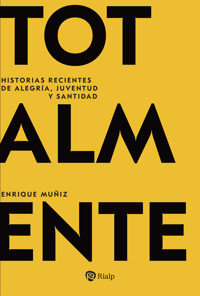

















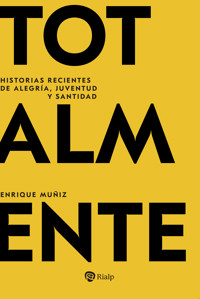
TOTALLY
recent stories of youth, joy and sanctity
Enrique Muñiz
EDICIONES RIALP
MADRID
© 2024 byEnrique Muñiz
© 2024 by EDICIONES RIALP, S. A.,
Manuel Uribe 13-15, 28033 Madrid
(www.rialp.com)
Composition: produccioneditorial.com
ISBN: 978-84-321-6928-1
CONTENTS
Introduction
1. Carlo Acutis
2. Carlotta Nobile
3. Chiara Corbella
4. Clare Crockett
5. Elena Calero Baamonde
6. Guido Schäffer
7. Ignacio Echeverría (Cheve)
8. Marcelo Câmara
9. María Requena
10. Michelle Duppong
11. Pedro Ballester
12. Belén de la Cruz
13. Rohan, Gianluca and Akash Rohan Kemu
14. Teresita Castillo de Diego
15. Vivian and Thérèse Vivian Uchechi Ogu
Navegación estructural
Cover
Title Page
Copyright Page
Contents
Start reading
INTRODUCTION
When I was a boy (in the distant 20th century) I was good at jokes. And I experienced more than once that when you tell a funny joke, you don’t get people imitating you, but people who spontaneously tell you their jokes so that you will tell them yourself, because it is assumed that you will do it more amusingly.
I say this not so much to lament what the entertainment world has lost with my disinterest in cultivating my own performing skills (which I can tell you would not have amounted to much) but to explain how this book came about.
After publishing a couple of books myself and helping to publish a few more about saints - in the most colloquial sense of the word - I have been approached by friends who have asked me to write about young saints. Short stories - “young people don’t read fat books”-, attractive, exemplary, about smiling boys and girls, if possible with Instagram and tiktok, who have found Christ while using the PlayStation, people with lots of friends, with tattoos, Eurovision fans....
I resisted the initial temptation to tell them to write it themselves, or find a good storyteller; but I left it for later and in the meantime another friend to whom I explained the matter encouraged me to remember our own youth and the good that reading the lives of saints did to us. And yet another added the urgent need for such books... so I took the plunge and gave it a try.
Pope Francis explains very well to young people that the legitimate desire to be like their peers is compatible with the wish to be different in whatever way becomes necessary: “It is true that we members of the Church do not have to be “weirdos”. Everyone must all feel our closeness as their brothers and sisters, like the Apostles, who “enjoyed the affection of all the people” (Acts 2:47; cf. 4:21.33; 5:13). But at the same time, we must dare to be different, to show other dreams that this world does not offer, to witness to the beauty of generosity, service, purity, fortitude, forgiveness, of fidelity to one’s own vocation, of prayer, of the struggle for justice and the common good, of love for the poor, of social friendship” (Christus Vivit, 36).
By the way, it is simply not true that young people don’t read big books; we could say it is a fake dogma. There are bestsellers of children’s and young people’s literature of hundreds of pages. What they don’t read are bad books. I don’t believe much in strict classifications of books by reader age, either, not least because adults are interested in good books aimed at children; but engaging in such considerations would not have helped me write this book (nor is it helping me finish this introduction): what I did was to look for information, to buy a few books about these young people with inspiring lives, spend a few hours looking at biographies available on YouTube, confirm that the result might be of interest and help readers, and here I am.
I would have liked this project to be an excuse to travel the world and collect first-hand information about people like this. If this book - or booklet - turns out to be interesting, maybe I will write a second part with those interviews that I have not done here. For now, I have limited myself to what is accessible from my desk, which is not little.
In order to choose the participants in this cast of young people with inspiring lives about whom I have collected information, I found it necessary to be serious in the selection so that they were all really young, something that led me to ask myself how old a young person is. I remembered that some time ago I was invited to leave the board of a youth association when turning 30, I looked for answers on the internet and found what I already suspected: there is no unanimity. In the museum of weights and measures in Paris, where the iridium-plated platinum metre is preserved unchanged and accurate, not a word is said about youth. The WHO states that youth is between the ages of 14 and 26; the CIS surveyed Spaniards a few years ago and most of them think that at around 27 you are no longer young. To me, human beings now seem young until they are 60 (and children at least until they are 30); and from 60 onwards they are not old but adults (old age begins around 90, and not in all cases). In short: the 18 protagonists of the 15 chapters of this book lived in the 21st century; but on the grounds that their average age is 25 years and six months, it has not bothered me to include a girl aged 10 and a woman aged 44 without giving too much explanation. Only one is married, but not because there is a majority who have opted for celibacy, but because they are very young - there are several formal engagements and also some who unsuccessfully look for their better half.
As I explain towards the end, seeing that I was missing examples from Africa and Asia, I searched and found them, but as they are stories for which less information is available, I abandoned the initial idea of dedicating a chapter to each one and grouped several together so that each chapter would be of similar length.
I would like to add that I have no intention whatsoever of anticipating the Church’s judgement on the sanctity of my protagonists. None of them has yet been canonised, there is one blessed, others are venerable... and for others the process of canonisation has not yet begun, and perhaps never will. I have chosen them because I found their lives inspiring. I must also say that I have copied many texts from other publications, and that I always try to cite the sources.
About the title of the book - Totally - I don’t have a lot to say, but I do have something to say. The first thing is to apologise for using an adverb in the title, which, contrary to what might be expected, does not accompany a verb, nor an adjective, nor another adverb, but rather the way young people use it. As a buzzword, it more or less means “I totally agree with what you just said”; but above all there is what the dictionary says about its meaning: “Entirely, completely”. Such are young people, such is their dedication to their ideals, such are their lives.
As they have all died when they were young, I have included their own or others’ considerations on the science of the Cross and the mystery of suffering, of which they are examples full of light. Throughout these pages, I often quote or simply recommend a text or a video. Christus vivit (the post-synodal apostolic exhortation that Pope Francis sent “to young people and the people of God” in 2019, following the “Synod of Bishops on young people, faith and vocational discernment” that took place in Rome in 2018) is highly recommended (and it is free); I end this introduction with an example from it:
The Lord “invites us to go fearlessly with the missionary message, wherever we are and whoever we are with, in the neighbourhood, in our study, in sport, on outings with friends, in volunteering or at work, it is always good and opportune to share the joy of the Gospel. This is how the Lord draws near to everyone. And he wants you, young people, to be his instruments for spreading light and hope, because he wants to count on your courage, freshness and enthusiasm” (Christus Vivit, 177).
1.Carlo AcutisThe 15 year old boy who reminded us to be original (and not photocopies)
It is really difficult not to have heard of this boy, beatified in Assisi on 10 October 2020. His life has been the subject of several documentaries and a number of books. The website of the Carlo Acutis Association - available in seven languages - contains a wealth of material on his life, his reputation for holiness, his devotion, news of his cause for canonisation, etc. It even offers access to a web-cam through which you can view his tomb in real time, in the parish church of Santa Maria Maggiore in Assisi.
The appearance of Carlo’s sacred remains in the urn in which they lie is impressive: in jeans, trainers and a tracksuit-like sweatshirt. Any kid can visually perceive that we are in front of one of our own better than with many brainy speeches. Without wishing to enter into polemics, or to ignore the history of the art with which saints have been represented in history, it must be said that Carlo’s tomb conveys more closeness than all the images that populate the niches of our churches, and that he does not even look like a dead person. He seems to be resting in his sleep like a prince.
It is understandable that in many places it is wrongly said that the body is preserved incorrupt, but this is not true. When it was transferred from the cemetery, it was explained that the body was in the normal state of decomposition typical of the five years that had elapsed since death, with the various parts still in their anatomical connection, and that it was treated with the conservation and integration techniques that are usually practised to present the bodies of the blessed and saints in a dignified manner for the veneration of the faithful. The face was reconstructed using a silicone mask. The result is that it is quite clear that Carlo is not a saint dressed as a young man, but a real young man with a reputation for sainthood, a millennial who has a lot to say to his peers and to a many old people who are convinced that young people, in general, are stupid.
The Congregation for the Causes of Saints has already published two editions of a book containing something like a catalogue of young saints and blesseds. I copy from the introduction a quotation (my translation): “It cannot be said that in the ancient, eastern world, young people were held in high esteem. The world ‘belonged’ to middle-aged people; indeed, it was ruled by older people. Even at the time of Jesus, Judaism did not know the heroic exaltation of youth. The people of Israel were convinced that a child was foolish and unreasonable, that he should be guided to improve his behaviour by coercive means. This is expressed in the wisdom of the Old Testament: “Foolishness is bound in the heart of a child, the rod of instruction will drive it away from him” (Pro 22:15); or again: “He who spares the rod hates his son, but he who loves him corrects him in time” (Pro 29:15; Sir 30:8,13). Jesus, however, does not allow himself to be conditioned by his environment: he surrounds himself with young disciples, with women, blesses children and involves them in the debate on true greatness as models to be admired (Mk 9:34-35; 10:13-16)”.
Although we adults tend to think otherwise, young people are not less clever than us. They are simply young. George Bernard Shaw used to say that youth is a disease that is cured with age. Certainly, physical youth passes with the years, but it is not a disease: and it is a good thing that the desires, the projects, and the will to live should accompany us all as we become adults, and even old. We have a lot to learn from the young.
But I have jumped very quickly to the grave and the importance of keeping a young spirit (note: there are not only old-old people, there are also young-old people). First of all, let’s review the highlights of Carlo’s life:
He was born on 3 May 1991 in London into an Italian family, originally from Lombardy. His parents, Andrea Acutis and Antonia Salzano, were in London for professional reasons at the time of his birth. After Carlo’s birth, the Acutis family returned to Italy. In Milan he attended primary and secondary school with the Marcelline Sisters, then went to the Liceo Classico Leone XIII, run by the Jesuits.
His parents, who had Carlo baptised in London shortly after his birth in the church of Our Lady of Dolours, were not very practising at the time. Most directly involved in Carlo’s early education was a nanny, called Beata, who taught him his first prayers and devotions. During family trips he would ask his parents to visit the shrines in the region. From childhood he had a special devotion to the Eucharist and to the Virgin Mary, whom he later called “the only woman in my life”. He became interested in the history of the apparitions of Our Lady of Lourdes and Our Lady of Fatima, and also studied the lives of the saints, including Aloysius Gonzaga and Tarcisius, Francis of Assisi, Anthony of Padua, Dominic Savio and the three Fatima shepherds: Francisco Marto, Jacinta Marto and Lucia dos Santos. His mother attended theology classes in order to answer Carlo’s questions.
At the age of seven, Carlo expressed his desire to receive the Eucharist, which he called “my highway to Heaven”. His first communion ceremony took place in the Ambrosian Monastery of Perego on 16 June 1998. From then until his death, Carlo made a point of going to Mass every day, often accompanied, so that this habit of his caught on among family and friends. On one occasion he said: “If we go to the Eucharist every day, we go straight to Paradise”. He also prayed the rosary every day, went to confession once a week and took part in catechism classes for the children of his parish.
He also spent his free time visiting the elderly and saved money to give to the needy, helped the homeless, volunteered in soup kitchens and helped as a catechist. He often said: “Happiness is looking at God. Sadness is looking at yourself”.
He showed an interest in information and communication technologies and, as a computer enthusiast, after two years of research and travel, in which his parents also participated, he put together a virtual exhibition on Eucharistic miracles in the world. His work included a total of 136 Eucharistic miracles recognised by the Catholic Church, with photographs and descriptions. The exhibition was launched on a website; later, physical versions were also prepared on printed panels, which have been disseminated throughout the five continents in more than twenty languages. Because of the enormous spread of these materials, he has been thought of as a possible patron saint of the internet.
I said above that we have much to learn from young people. Also from boys and girls, whom the Church does not hesitate to present to us as an example. We are in danger of considering that Carlo’s biography, or that of other young people like those who awakened his interest in holiness early on, contain too many exaggerations that are the fruit of their immaturity rather than of their supernatural maturity and the coherence with which they embraced the consequences of faith without the prejudices of experience and the fears of maturity. A young man who decides to live a clean life and gives himself to the service of the most needy! A child who goes to mass and prays the rosary every day! Even more: An influencer who uses his computer skills to collect data on the miracle of the Eucharist, instead of uploading selfies of his travels or advertising cosmetics on social networks! And with a smile, too! That is the strength of Carlo’s life, the fruit of the action of grace in his soul.
However, not all his hobbies were related to his intense piety. His spirit of service and his optimism also found expression in his tastes and hobbies: he played the saxophone, he loved video games, he captured Pokémon, he loved sweets and pizzas… He was a sporty, healthy and rather tall boy: he was six feet tall at the age of fifteen.
On Monday, 2 October 2006, he felt dizzy. A good number of his friends had the flu those days. Maybe it was the mumps... The cause of his discomfort was quickly diagnosed: Acute myeloid leukaemia. When he entered the hospital, he told his mother: “I’m not getting out of here”. Later, he also told his parents: “I offer to the Lord the sufferings I will have to endure for the Pope and for the Catholic Church, so that I will not have to be in Purgatory and can go straight to Heaven”. At a moment when, already in the hospital bed, his mother was dozing beside him, the nurse asked him how he was feeling with these pains, and he replied: “Fine. There are people who suffer much more than I do. Don’t wake my mother, she is tired and would worry more”. He asked for the anointing of the sick and three days after his diagnosis, on 12 October 2006, he died in the San Gerardo hospital in Monza, Italy.
The day of his funeral several unexpected people attended. According to his mother, they were people she did not know, homeless people, immigrants, beggars and children. People who told her about Carlo and his social work, about what he had done for them, which she knew nothing about.
There are over two hundred sites and blogs talking about him in different languages and there are stories of conversions inspired by him that happened after his death. His parents received letters and prayer requests from all over the world, and much of this material was gathered during the diocesan phase of his beatification.
The process of beatification was initiated in the archdiocese of Milan on 13 May 2013. On 24 November 2016, the diocesan investigation was sent to Rome to be studied by the Congregation for the Causes of Saints. Following the positive report of the various commissions, on 5 July 2018, in recognition of his heroic virtues, Pope Francis declared him Venerable. His mother said: “His day revolved around Jesus, who was at the centre. People who allow themselves to be transformed by Jesus and have this strong friendship with God challenge others, they radiate the image of God”.
On 21 February 2020, after analysis by a commission of doctors and the Congregation for the Causes of Saints, Pope Francis approved a miracle attributed to his intercession, which allowed his beatification. This miracle is the unexplained healing of a child in Brazil, Matheus, who suffered from a congenital malformation called annular pancreas, which prevented him from eating normally, as he immediately vomited everything he ate. Luciana Vianna, his mother, heard that a relic of Carlo was to be brought to her parish and, encouraged by the priest, she began to turn to his intercession to ask for Matheus’ cure.
On 12 October 2010, she went with the child to the chapel of Our Lady Aparecida in Campo Grande, in the Brazilian state of Mato Grosso South. After mass, the child’s grandfather carried him in his arms to venerate Carlo’s relic. It had been explained to the child that the petition was made in the heart, but he asked aloud to “stop vomiting”. When Luciana asked her son what he had asked for, Matheus surprised her by replying that he was already cured thanks to Carlo Acutis. At home, the boy asked to eat and asked his brother what was the best food he had ever tasted. They both chose rice, beans, steak and chips. A few weeks later, Matheus’ healing was documented by doctors.
On Saturday 10 October 2020 Carlo was beatified in Assisi. The ceremony, held in the Basilica of St. Francis in Assisi, was performed by Cardinal Agostino Vallini, Pope Francis’ delegate. An urn containing the heart of the new Blessed was presented as a relic. I quote three paragraphs from the homily given at the ceremony (the translation from Italian is by ACIPRENSA):
He was a normal young man, simple, spontaneous, friendly (just look at his photograph), he loved nature and animals, played football, had many friends his own age, was attracted by modern means of social communication, passionate about computers and self-taught, he built programmes, as Pope Francis has said “to transmit the Gospel, to communicate values and beauty”. He had the gift of attraction and was perceived as an example.
To communicate this spiritual need he used all means, including modern social media, which he knew how to use very well, in particular the internet, which he considered a gift from God and an important tool to meet people and spread Christian values. His way of thinking made him say that the net is not only a means of escape, but a space for dialogue, knowledge, exchange, mutual respect, to be used responsibly, without becoming slaves to it and rejecting digital bullying, in the often criticised virtual world it is necessary to know how to distinguish good from evil. In this positive perspective, he encouraged others to use the media as means at the service of the Gospel, to reach as many people as possible and to let them know the beauty of friendship with the Lord.
He was a witness to the fact that faith does not take us away from life, but immerses us deeply in it, showing us the concrete way to live the joy of the Gospel. It is up to us to follow it, drawn by the fascinating experience of Blessed Carlo, so that our lives may shine with light and hope.
Blessed Carlo Acutis, pray for us.
2.Carlotta NobileBrilliant violinist who died at the age of 24. Shortly before she said: “Lord, I thank you”.
Carlotta Nobile photographed by Manuela Morgia in 2009.
I spent Holy Week 2013 in Rome with a group of young people from Alcobendas. I have a few photos of those days and very vivid memories of Francis’ first Holy Week as Pope: the closeness of his examples, the simplicity of his teachings, even the meaning of gestures such as washing the feet of inmates in a prison for minors on Holy Thursday. In my notes from those days there is the recommendation to the shepherds to have the smell of the sheep, to remember the personal encounter with Jesus in moments of fear or confusion, not to put their heart in material things - the shroud has no pockets - and, above all, the triptych Joy, Cross, Youth around which he developed the beautiful homily of Palm Sunday.
World Youth Day was being celebrated on that day, as on every Palm Sunday in Rome, and a group of Brazilians were holding the so-called Youth or WYD Cross during the Mass, a simple (and rather large) wooden cross that has been travelling the world since 1984 and that at that moment was in Rome on its way to Brazil for the WYD that was to be held that summer in Rio de Janeiro.
Carlotta Nobile also heard the homily. It would be more accurate to say that she was thunderstruck by the homily: hearing how the Pope invited young people to carry the Cross with joy opened her heart to an understanding of the meaning of the cancer she had been fighting for a year and a half, and from which she would die four months later.
But let’s go back a few years. To do so, I recommend the material about her on her website, especially the video in which those around her (her parents, her brother, and some of the teachers, priests and friends), speak about her.




