


Erhalten Sie Zugang zu diesem und mehr als 300000 Büchern ab EUR 5,99 monatlich.
- Herausgeber: epubli
- Kategorie: Sachliteratur, Reportagen, Biografien
- Sprache: Englisch
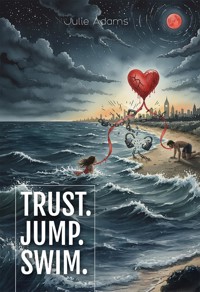
For years, she held together a life that had long since fallen apart. Wife. Mother. Functioning shell. Until a single moment changed everything - an inner awakening that forced her to look. Into her past. Into her wounds. Into what she had lost. And into what she still longed to find. On her journey through spirituality, astrology, manifestation, and the inexplicably deep connection to a man she never met, she begins to reweave the threads of her life. Between signs, synchronicities, and harsh reality, she fights her way out of the darkness - step by step, decision by decision. This is not a fairy tale. It is a personal account of courage, pain, awakening, and self-empowerment. About the end of a marriage, the beginning of a new life, and the unwavering hope that love - true love - is always waiting where we finally become ourselves. A book for all those who feel trapped, who hope for a sign, or who quietly suspect that their heart has known the truth longer than their mind.
Sie lesen das E-Book in den Legimi-Apps auf:
Seitenzahl: 110
Veröffentlichungsjahr: 2025
Das E-Book (TTS) können Sie hören im Abo „Legimi Premium” in Legimi-Apps auf:
Ähnliche



















Table of contents
The night that split my life in two
A childhood built on silence
Learning to disappear
The first escape
The house I grew up in (and the one I wanted to build)
The day the world tilted
The fall
The aftermath
The mother I was left with
The weight I carried that wasn’t mine
The fading intimacy
The lesson of letting go
Quiet whispers of another life
When the universe starts speaking
The concert
2025 will be my year
Trying to find answers in tarot & books
Learning about signs & synchronicities
Learning to trust the process & surrender
Learning about Carl Gustav Jung
Shadow work & the return of ghosts
Healing my visibility wound: Scared to be criticised
Healing my visibility wound: Scared to not fit in
Healing my visibility wound: Scared to articulate my needs
Healing my visibility wound: Scared to be in the spotlight
Healing my visibility wound: Scared to be myself
Healing my visibility wound: Scared to talk to strangers
Healing my visibility wound: Scared to end up alone
Healing my visibility wound: The people-pleasing
Healing my visibility wound: The control-freak
Healing my nervous system: EFT-tapping
Healing physically
Re-discovering myself
Twin Flames The connection that changed everything
Manifesting twin flame union
Astrology, synastry and the maps of fate
The breaking point
Uncomfortable conversation
London calling
After the darkness
TRUST. JUMP. SWIM
by Julie Adams
1st edition
Text: © Copyright by Julie Adams
Coverdesign: © Copyright by CB Design & Layout
Publisher:
CB Design & Layout
Fliederweg 7 · 23858 Wesenberg
Production: epubli – a service of neopubli GmbH, Berlin
Contact address according to EU product safety regulations:
PROLOGUE
The night that split my life in two
Darkness. Anticipation. My heart pounding in my throat.
And then… the first chords. A burst of light. And I’m gone.
When he steps onto the stage, something inside me snaps open.
Not gently. Not politely.
It’s like the world tilts for a second. He’s real. Not an idea. Not a fantasy I quietly tucked away. Real - and suddenly the only thing my senses respond to.
There are thousands of people around me, singing, screaming, reaching for him. But for me? Everything else blurs out.
I feel like I’m in one of those movie scenes where sound drops, the crowd dissolves, and only one person stays in focus.
Him. Liam.
Ninety minutes pass like seconds, and when the last chords fade, something inside me panics:
No. Not yet. Not over.
But the lights in the venue flip on without mercy, the crowd surges toward the exits, and I let myself be carried out into the cold November night, stunned and hollow.
On the train to the station, I’m just a body moving through the motions. My mind is still trapped in that hall, in that moment, with him. I swallow down the tears. No one asks what’s wrong. No one sees anything.
Only when I slide into my cold car and close the door behind me do I break.And I break hard.
I sit there sobbing, breathless, overwhelmed, knowing with terrifying clarity: Something just happened. Something that won’t let me go. Something that will change everything.
But then the reality I’ve built for twenty years calls me back.I have to go “home”.
Lie next to the man who shares my house, but not my soul. The man who would never understand why I return from a concert shaking.Why my heart is still racing when I slip under the covers beside him.
Act 2
The sleeping years
CHAPTER 1
A childhood built on silence
I was born in 1981 as my parents’ only child. My mother was a trained wholesale and export clerk, but she hadn’t enjoyed her job for some time, and when she became pregnant with me at the end of 1980, it was a welcome excuse to give up her job. She stayed home while my father enlisted in the German Armed Forces so he could study.
The pregnancy became complicated towards the end, so my mother had to spend the last few months before giving birth bedridden in the hospital. Despite this, I was born three weeks premature, which was apparently still a medically challenging procedure back then. I barely made it through the first night. That seems to be when I first demonstrated my “fighting spirit.”
Accordingly, the decision was quickly made that I would have no siblings.
My father went to work and climbed the career ladder. My mother stayed home with me and, like many women at the time, took care of the house and garden. To the outside world, we led the perfect family life. We flew to Mallorca, Gran Canaria, or Tenerife for the summer holidays. I have no personal memories of these trips, only of photos or holiday videos my father made. It was only recently that I stumbled across the term “dissociative amnesia.” And I realized that it’s not normal to only remember a minimal number of things from my own knowledge.
One of my few conscious childhood memories is of the day of my school entry medical examination. I must have been about six years old. We children had to prove our “fitness” for school, drawing pictures, etc. - and this included (unthinkable from today’s perspective!) a physical examination by the headmaster at the time. I still remember having to undress down to my underwear and stand in front of him. He looked me over and said, “Well, you like a piece of chocolate now and then, don’t you?”
As far as I can remember, that was the first time anyone judged me based on my body. Yes, I was never a thin child. At least, looking at photos, I definitely wasn’t thin from about the age of four. And at home, there were always sweets without anyone batting an eye.
My mother was overweight herself. But until then, it had never really bothered me; that’s just how I was. Only that comment from the headmaster is burned into my memory because it hurt me so much. A key memory that stays with me to this day.
Looking back, elementary school was the best part of my school years, even though my homeroom teacher also put me down in PE and called me a “lame old lady” because I was never athletic. When it was time for gymnastics, I often burst into tears just at the sight of a vaulting box, a horizontal bar, or uneven bars, because I knew: I can’t do it. I’ll run into it, I’ll fall, and then everyone will laugh at me.
I had several friends I met up with in the afternoons to play outside or with our Barbie dolls. I have practically no memory of playing games with my parents; at most, my father would occasionally play a card game with me when he wasn’t at work. But most of the time? I was alone in my room, playing, drawing, listening to audiobooks that I could still recite today.
When I watch videos from my time in elementary school, I shake my head from today’s parental perspective because I was often loud and cheeky, and my parents didn’t say anything, just kept filming. As a child, you don’t reflect on that yourself. But now I wonder why they a) didn’t notice my behaviour (because it was a clear cry for attention) and b) why they didn’t put a clear stop to it at some point.
At around 11 years old, I started fifth grade at a secondary school, a so-called two-year orientation program designed to help determine which type of secondary school I was suited for. That’s when I first developed a crush on a boy who lived on our street; Ralf.
Ralf took the same bus to school. Eventually, I even had a timetable in my room so I knew when he wasn’t on the same bus, allowing me to stand by the window and watch him walk home. I never dared to talk to him and only admired him from afar. But one day, I made the mistake of telling my secret to a classmate who also took our bus - and, of course, he had nothing better to do than shout across the entire bus, “Hey Ralf, she thinks you’re cute!”
I could have died of embarrassment. The whole bus laughed, and Ralf joined in. The days that followed were a complete ordeal.
After it became clear that nothing would come of it between us, the next crush came along a year later, but after I mustered up all my courage and asked him if we wanted to go to the movies together sometime, and he laughed at me. I was devastated and frustrated.
During the two years in middle school, I only had two or three really good friends with whom I met up now and then. My grades were good, so I received a recommendation for high school.
So when I started at the Gymnasium (grammar school) in the next biggest town in the summer of 1994, it was like being thrown in at the deep end. My former friends were going to the Hauptschule (lower secondary school) or Realschule (intermediate secondary school), and the friendships faded away.
I had grown up in a village of 2,000 people, gone to school in the neighbouring town - and now suddenly I was in the “big city” (with almost 34,000 inhabitants). For me, a country bumpkin, it was a huge step that overwhelmed me, since no one had prepared me for it. Looking back, I was the “sheltered only child” who was never trusted with anything and had everything done for me. I was completely dependent. I wore whatever my mother bought and laid out for me, regardless of what it looked like. And her own style wasn’t exactly fashionable.
Around this time, my parents’ marriage started to go into crisis. My father had changed jobs and was now working further away in a management position. This meant that he left home early and came back late. My mother increasingly felt alone with everything and lacked recognition.
She tried to become self-employed selling flower care products, but this only lasted a short time. She couldn’t return to her original profession because computers had become ubiquitous, and despite taking various courses, she was completely at odds with them.
My father, who dealt with them daily at work, couldn’t understand this. He even laughed at her sometimes when she still didn’t understand something after the third explanation, something that was child’s play for him. Naturally, at some point, you just give up and stop asking questions.
Looking back, my mother must have increasingly felt inadequate over the years. When she was born as the third daughter, and her father’s first reaction after her birth was a disappointed “Another girl!”, it already foreshadowed how her upbringing would unfold. She was never what her father had hoped for.
And when she couldn’t manage to get back into the workforce, she was disappointed in herself, thinking she was “too stupid,” while my father had a well-paid job and recognition outside of work.
She sought refuge in excessive housework, compulsive, meticulous cleaning every day, and later in buying masses of clothing as a substitute for recognition and affection. And yes - food was her comfort, too.
I didn’t understand it at 13; I just noticed that the atmosphere was getting progressively worse. And this was at a time when I was right in the middle of puberty and had to adjust to a new school where the academic level was significantly higher.
I was alone - and I felt it.
CHAPTER 2
Learning to disappear
Around that time, I discovered the Kelly Family. Yes, some readers might roll their eyes now, but there were a lot of us back then. And the music, the community of fans, gave me a sense of belonging and support I hadn’t known before. Like-minded people. Something that brought me joy. I spent all my pocket money on every scrap of BRAVO, Hit, Popcorn, and all the other magazines, meticulously collecting everything.
I saved up for a keyboard and a guitar and taught myself to play both.
During this time, my love of writing also developed. I wrote poems and short stories, sometimes together with my school friend Birte, with whom I was in the same class.
It felt only natural to dress accordingly. Loose blouses, long skirts, long hair. It was a statement for me - but one that also made me a target. Birte was a fan too, but not as obsessively as I was. And when the bullying started, I was the main target.
It began with whispering and laughter. Then chewed, damp paper balls were blown into my hair from behind using small blowpipes. My backpack was rummaged through during breaks. I was given nasty poems and notes that mocked my weight (which had been steadily increasing since elementary school) and my appearance.
This caused me to withdraw more and more at home. My room was my safe place, my guitar, my diary, and music my refuge.




