


Erhalten Sie Zugang zu diesem und mehr als 300000 Büchern ab EUR 5,99 monatlich.
- Herausgeber: THP Ireland
- Kategorie: Sachliteratur, Reportagen, Biografien
- Sprache: Englisch
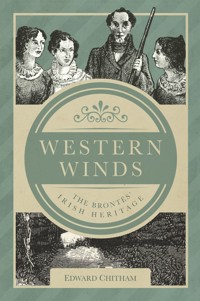
The Irish heritage of the Brontë family has long been overlooked, partly because both Charlotte and her father Patrick did their very best to ensure that this was the case and partly because there was a strong understanding at the end of the nineteenth century that the Brontës were Yorkshire regional novelists. Yet their ideas and attitudes, and perhaps even their storylines, can be traced to Ireland. This book, which develops ideas originally published in The Brontës' Irish Heritage in 1986, sets the record straight. By re-evaluating the sources available, it traces Patrick's Irish ancestry and shows how it prevented him from achieving his ambitions; it shows how that heritage influenced his children's writings, particularly Emily; and it sheds further light on the genesis of Wuthering Heights.
Sie lesen das E-Book in den Legimi-Apps auf:
Seitenzahl: 422
Veröffentlichungsjahr: 2015
Das E-Book (TTS) können Sie hören im Abo „Legimi Premium” in Legimi-Apps auf:
Ähnliche
















ACKNOWLEDGEMENTS
During the 1980s Alex Flanigan of Belfast supplied me with a great deal of researched material, some of which I used in The Brontës’ Irish Background (published 1986), but some of which I was not then able to use. I owe a great debt of gratitude to his most generous contributions. The Brontë Society (Irish Section) made it possible for me to visit many of the sites associated with Patrick and his forebears. Thanks are due here especially to Mervyn Patton of Portadown. Helena Haffield enabled me to pay another visit to County Down and reassess Patrick’s birthplace and Drumballyroney church. I am particularly grateful to Frank Watters of Poyntzpass who left no stone unturned to try to discover the notes made by John McAllister concerning Hugh Prunty’s account of his life. Thanks are also due to Bryan Hooks (Banbridge Chronicle), Dr William Roulston of the Ulster Historical Foundation, C.E.F. Trench of Slane for material on Ardagh, Henry McMaster of Holywood, County Down, and Amber Adams of Calgary, Alberta, Canada, for general encouragement and help.
A host of earlier writers on Brontë issues have provided clues to be followed up. In the internet age, thanks are also due to volunteers and institutions which provide useful background material, including the Public Record Office of Northern Ireland (PRONI), the National Archives of Ireland, Fermanagh Genweb, John Hayes, and Ros Davies of County Down.
Internet contributors often use secondary sources or transcripts, which I have tried to check from primary sources where possible. My other sources are listed in the bibliography.
I cannot close this list without a word of posthumous thanks to Dr William Wright, a native of the Brontë ‘homeland’ in County Down, whose evidence on the family background is priceless, though sometimes overlaid with some romantic exaggeration. Whatever his faults, he rescued this important perspective from total oblivion. Without his account we would know little of this vital story and Brontë studies would be much the poorer.
CONTENTS
Title
Acknowledgements
Preliminary Note on Spelling
Introduction
Part 1 Pruntys in Ireland
1. South Down in the Late Eighteenth Century
2. William Wright, Presbyterian
3. Publication and Controversy
4. The Family History According to Wright
5. Searching the Erne District of Fermanagh
6. The Boyne Valley
7. A Fight Leading to a Flight
8. Astonishing Support for the Boyne Valley Narrative
9. Hugh Prunty Meets the McClorys
10. Hired out to Presbyterians
11. Return to Imdel
12. Patrick Prunty and his Early Upbringing
13. Glascar and Presbyterianism
14. The Prunty Family in 1798
15. Thomas Tighe Employs Patrick
16. The Brontës in Ireland
17. After Patrick went to England
18. Unconventional Features of the Irish Brontës
19. The Religious Position of the Irish Brontës
20. Patrick Brontë’s Cultural Inheritance
21. The Brontës and David McKee
Part 2 Pruntys in Yorkshire
22. Patrick Brontë Abandons his Irish Harp
23. Patrick Gives an Edited Account to Mrs Gaskell
24. Charlotte, Emily, Anne and the Irish Language
25. Charlotte’s Juvenilia
26. The Uncles Visit England
27. Patrick: His Irishness in England
28. Moore as well as Wellington as ‘Respectable Irish’
29. Charlotte, Jane Eyre and David McKee
30. Gondal Princes and Revolutionaries
31. Queen Mab and the Western Wind
32. Shirley, Charlotte and Irish Curates
33. Branwell and Anne
34. The McAllisters, William Wright, Emily Brontë and Wuthering Heights
35. Objections and Questions
Appendix 1 – Hugh Prunty and Irish Storytelling
Appendix 2 – The Walshes, Cattle Exports, Liverpool and Slavery
Appendix 3 – Small Additional Details?
Bibliography
Copyright
PRELIMINARY NOTE ON SPELLING
The spelling of Irish names when anglicised took years to be standardised, and even now spelling is not always consistent. The Brontë family in England used accents, a dieresis or no mark at all. Patrick’s surname was written Branty when he arrived in Cambridge. In the 1986 predecessor to this work I used the form Brunty for the family name before Patrick standardised on Brontë, but I feel now that Prunty is a more likely form for most of Hugh’s life. I am following the principal of writing ‘Prunty’ until Brunty or Brontë seem more appropriate; this is confusing, but there seems no rational alternative. The townland in which he was born is often written Emdale, but older maps prefer Imdel, and this is the version I shall use; there are arguments for both. Patrick’s mother was called ‘Ayles’, pronounced as a dissyllable, by her friends. I prefer Irish Eilís, partly because this seems to show where Emily got her pseudonym, but also because it links the name with the common name Elizabeth. Patrick’s sister was named ‘Alice’, another approximation. In a partly pre-literate society, sounds matter more than ink marks on paper.
The situation is no better for words in the Irish (Gaeilge) language. I shall use ‘Irish’ to mean the native language. While on the sometimes fraught subject of terminology, I will mention that ‘Ulster’ will mean the traditional province, part of which is now in the Republic and part in the United Kingdom. This is because in the eighteenth and nineteenth centuries the name would have been so understood. Words in Irish will be spelt as they appear in documents, which can mean that they are differently spelt on different occasions.
Even anglicised words may sometimes cause trouble: the McAllister family are sometimes McAllister, sometimes McAlister and sometimes McCallister. All I can hope is to be consistent except when quoting.
INTRODUCTION
Has it ever been sufficiently recognised that Charlotte Brontë is first and foremost an Irishwoman … ?’ asked Mrs Humphry Ward in 1899, writing a preface to Jane Eyre in the Haworth edition of the Brontë works. The answer is certainly, ‘No’. However, the reading public are not to blame for this, though Mrs Ward’s point remains true for many critics and biographers. Even they are not to be held totally responsible, since both Charlotte and her father, Patrick, did their very best to ensure that this would be the case. The purpose of this book and its 1986 predecessor is to redress the balance somewhat, though this may appear a little disrespectful to Charlotte and her father. Not so, however, to Emily Brontë, whose major work, Wuthering Heights, and her poems mark her out as an extremely unusual spirit, who observed Yorkshire without becoming integrated there. When one of her Irish uncles visited Haworth, the youngest sister, Anne, said she would like to come ‘home’ with him to Ireland.
Discovering the Irish background is not easy. As well as penetrating the reserve of Charlotte and Patrick, we shall need to rely for a consistent narrative on an author who sometimes romanticised and didn’t quote precisely all his sources: Dr William Wright. Nevertheless, we shall find him most unwarrantably attacked for fleshing out his account imaginatively. He is a priceless witness, despite flaws.
At the end of the nineteenth century there was, unfortunately, a determined effort to keep the Brontës as Yorkshire regional novelists, as indeed in part they were; but not wholly. Some of their ideas and attitudes, and perhaps even storylines, can be traced to eighteenth- and nineteenth-century Ireland.
The question that will be explored in this book is what exactly was the Brontë heritage from Ireland? Can we know anything for certain about the sisters’ grandparents? Do we have information about their uncles and aunts? What kind of milieu was that in which Patrick grew up in the County Down of the late eighteenth century? Was Patrick’s father really a ‘peasant’?
How much did the Brontë sisters and Branwell know about their family past? How did Patrick come to be a clergyman in the Church of England? Is it possible to probe even further back and discover an ancestry that Patrick himself in his terse remarks to the biographer Mrs Gaskell hints at? It will be suggested that Patrick was an extraordinary, forceful person (he honourably called himself an ‘eccentrick’), who inherited his character from both parents, but in particular from his own father, Hugh. His power was in turn inherited by his daughters and his eccentricity by at least one of them. Though of course they also inherited characteristics from their Cornish mother, the basis of their fire and single-mindedness was transmitted – in part perhaps even genetically – from the paternal line. So may have been the artistic and verbal versatility, but mercurial temperament, of brother Branwell.
This exploration, then, is only partly literary. By trying to understand the social as well as the cultural background of the Irish Brontës, we may be able to come closer to the influences which, though living in Yorkshire, the younger generation felt intensely. We can see them in somewhat the same light as to-day’s immigrants from the Asian sub-continent, torn between the assumptions of their parental heritage and the world they now live in. Patrick Brontë strove to be English, but never rid himself of an Irishness which was palpable; this is perhaps one reason why he didn’t fulfil his full potential. He wanted to be active in politics, but to do so meant rejecting those parts of his own background. His energy demanded outlets, but his status as ‘perpetual curate’ militated against his ambition. His hopes were only fulfilled by his daughters. This book will try to explain why some of these things were so.
The reconstruction of this Irish milieu of the eighteenth and nineteenth centuries is not easy, but it is fascinating. Irish readers will need to be a little patient while their history is explored for the benefit of readers from other backgrounds. There may be a temptation to remark, ‘Of course we know that!’, but readers from England and beyond may not. Those who know the Brontë works may love their authors with a passion or may be objectively evaluating their work. In either case the Irish background requires illumination. Patrick Brontë seems to have decided that it was useless to try to explain his early life (about a quarter of his whole life span, in fact) to his adopted countrymen, and so suppressed almost all his story. But if in the twenty-first century we want to understand the minds of the family members, we must unveil what he and Charlotte wanted to leave veiled.
1
SOUTH DOWN IN THE LATE EIGHTEENTH CENTURY
In order to understand Patrick Brontë’s character and his later attitudes, it is useful to begin with the historical, cultural and social background of the area where he grew up. The obstacles are formidable. Not only did many historic records perish in the Four Courts fire of 1922, but records were sparse in the first place. It is often supposed that the early registers of Drumballyroney church were lost, but it is not certain there were any.1 From time to time the government sought to discover the social and religious make-up of various Irish districts, but these enquiries were not consistent. The native Irish Catholic population was not frequently noticed except statistically.
The following records do survive:
Drumballyroney church registers after 1779
Names of ‘freeholders’ from about 1780
Glascar Presbyterian Church registers from 1780
A list of growers of flax who qualified for spinning wheel subsidies in 1796
Accounts of the Battle of Ballynahinch in 1798
Apart from these, we have to rely, with caution, on documents produced in the early part of the nineteenth century. Among these are the early Ordnance Survey maps and Ordnance Survey ‘Memoirs’. These give a good account of the situation in the 1830s and sometimes note historic details gathered from the local population. Two other important sources, which need to be used with care but can contribute a good deal, are the ‘Tithe Applotment’ (in the case of the Brontë area dating from 1827/8) and the much later but exhaustive Griffith’s ‘Valuation’, which was based on the newly produced accurate maps of the Ordnance Survey.
One of the difficulties we need to overcome is the matter of names. Ireland was divided into counties, but also ‘baronies’, parishes and townlands. The concept of ‘manors’ was also introduced, with manor courts and dues, but the boundaries of these manors do not coincide with parishes. Parishes were based on Church of Ireland churches, but the Church of Ireland, though influential in the life of Patrick Brontë, was not much of a reality in the lives of the population. It had power, but in some places few adherents. Patrick was born in the townland of Imdel, parish of Drumballyroney, near the boundary with Aghaderg parish, townland of Ballynaskeagh, and divided from it by a brook. To make matters more confusing, the family moved from one to the other. A further issue comes in the closeness of Annaclone parish (variously spelt), which borders Ballynaskeagh and Lisnacreevy to the north.
In Pender’s ‘census’ of Ireland in 1659, there were no Scots in ‘Glascermore’, Ballynaskeagh or Imdel townlands, but in Derrydrummuck Scots and English outweighed native Irish 23:13.2 We have no figures at all for the late eighteenth century, but the Ordnance Survey Memoirs of the 1830s consider that there are roughly equal numbers of Catholics and Presbyterians in Aghaderg parish.
Much of the land in the Brontë area had been owned by the Magennis family until 1615. (Quite surprisingly, we shall see in an appendix that some of them remained into the nineteenth century, near Hilltown.) In the eighteenth century large tracts were still in the hands of major landowners, who let it to quite substantial tenants; they in turn sub-let. The major landowners were often Church of Ireland, as were some of the lower tenants, but the majority of the lower tenants were Presbyterian. However, some Catholics were on this rung of the social ladder. Agriculture was far and away the most frequent source of subsistence, but linen production was also very important, the spinners initially spinning with wheels that had to be turned by hand. Some farms were very small as holdings could be divided on a parent’s death. Landlords in the Prunty area do not seem to have been especially oppressive but they would of course have directed affairs in their own interest. For example, the Hill family (later the Marquises of Downshire) planted a new village in Clonduff parish in the late 1760s, named Hilltown, which will later become a part of the Brontë story. Into this town they introduced Catholic spinners to stimulate the flax trade.
The population was far from homogeneous. There had been a little intermarriage and some conversions from one branch of Christianity to another, but on the whole the Scots remained Presbyterian, the native Irish remained Catholic, and the English remained Church of Ireland. Socially, the boundaries were blurred, but there could be violent clashes between one group and another.
This matter looms large in the Brontë story. William Wright instanced the infamous brawl at Dolly’s Brae near Rathfriland in 1849. From a Westminster point of view, they were all Irish and everyone except some of the Church of Ireland members seems to have felt disadvantaged. Patrick Brontë (still ‘Prunty’) began life in this disadvantaged group.
Part of South Down, based on the 1899 OS plan, with authorial additions.
Towns were important as markets. Banbridge was a trading point, with its linen market, post office, and bridge over the River Bann. Here Patrick Prunty brought his finished linen webs to Clibborns’ factory. Rathfriland (often ‘Rathfryland’ in earlier documents) was another nearby market town, and a meeting place of roads. Further off, and a likely place to find employment, was Newry. There was little possibility of transport other than by walking, and it seems most probable that when Patrick went to Banbridge he would have walked there (though we have no evidence). Many years later he said he had been accustomed to walk 40 miles in a day. Horses enter the Prunty story at the time of Patrick’s father Hugh’s marriage, perhaps indicating that the McClorys, into whose orbit Hugh introduced himself, were rather above the lowest status. We shall later find Patrick in possession of a few books, but it is impossible to say where he acquired them. We know he borrowed some from the Presbyterian Samuel Barber, whose influence on Patrick we shall look at later. Even now Imdel is sometimes thought of as ‘remote’; we have to see it in the 1780s as a backwater. We have no direct evidence as to the leisure activities of the population in the eighteenth century, but will try to make informed guesses at a later stage. An account of the diversions of the people in North Down dating from 1752 mentions dancing ‘in the village, or in farmhouses, where, in imitation of their superiors, they keep up the revel from eight or nine in the evening until daybreak’.3
The name ‘Imdel’ is ancient and unusual. It has now been influenced by the English ‘dale’, but records up to the beginning of the nineteenth century, and particularly the very early versions, show an initial I. A discussion of the name can be found in Place Names of NorthernIreland, Vol. VI. Most of the Imdel population lived in single-storey houses. These could be quite substantial, being built of stone, but there may have been some less firm houses which were partly or wholly made of mud. As elsewhere in Ireland, they were isolated, not in villages but strung along lanes or in fields. They had two or four rooms. Heat was obtained by burning peat from bogs, a habit which Patrick kept up in Haworth. Food was mainly potatoes with stirabout and milk, with some bacon when the pig was ready. All groups seem to have drunk whiskey freely, a point which needs to be kept in mind when we assess the truth of the allegations that Patrick drank it at Haworth.
Notes
Where full titles are not given here they will be found in the bibliography.
1. In his testimonial of 30 December 1805, Thomas Tighe stated ‘no Register was kept of Baptisms in this Parish for time immemorial until after Sept 1778’.
2. Pender’s ‘census’, pp. 73-5.
3. Stevenson, p. 277.
2
WILLIAM WRIGHT, PRESBYTERIAN
As has been said, we would know little about the Irish background of the Brontës if it had not been for William Wright’s The Brontës in Ireland. Wright was born and lived his early life in the ‘Brontë Homeland’. He knew some of the Brontë family personally and had seen others; for example, he mentions seeing a later generation mending roads, with ‘Brontë’ painted on their carts. He was close to the Presbyterians in whose school Patrick taught and he talked with some of Patrick’s pupils. However, Wright was a romanticiser, and embroidered his story with imaginative detail which cannot be substantiated, as he had been taught by his tutor, William McAllister. This does not invalidate his main very precious evidence about the life of Patrick’s father Hugh and the Prunty brothers and sisters. Elsie Harrison is most misleading when she writes, ‘One Brontë enthusiast, named Wright, did indeed go to Ireland to rake over the ashes of the Brontë legend, but he turned up so confused a medley that, to the historian, his work seemed worthless’.1 Wright had no need to go to Ireland; he lived there for many years in the same area as the Brontës. Clement Shorter also suggested that Wright’s information came from his ‘many visits’ to County Down, and adds that Wright ‘probably’ made his researches with the Brontë novels in mind.2 It is hard to understand why Harrison and other commentators such as Angus MacKay and J.D. Ramsden who attacked Wright did not check out his background. There are indeed problems with Wright’s work, but these attacks strike one as being biased and ill-informed.
William Wright was born on 15 January 1837 at Finard or Finnards, about 3½ miles (two intervening townlands) from Patrick Brontë’s birthplace. His later relative, Uel Wright, gives details of his descent and life in his 1986 lecture to the Presbyterian Historical Society.3 The Wrights were emigrants from Scotland in the seventeenth century, among others who settled in the neighbourhood of Finard. Uel Wright quotes William as saying ‘No people on earth slaved so hard as the Irish tenant farmers. They worked early and late. Their wives and daughters and little children rose with the sun and laboured the live-long day’. Wright was still a child when the Irish famine broke out and did not forget it; we shall see later that it affected even the relatively well positioned Brontës. Wright started school at Ballykeel local school in the next townland and parish of Drumgath, and was a quick and voracious reader. It is thought that he attended the Belfast Royal Academical Institution, though so far no record has surfaced. Before this he was tutored by Revd William McAllister and Revd William McCracken, both of whom are important in providing evidence about the Brontë background. Wright went on to Queen’s College and, after obtaining his BA, to Belfast Presbyterian College. Licensed by the Belfast Presbytery, he was directed to Damascus and spent ten years as a missionary in the Middle East. One thing he learned there was that oral evidence of past times is not necessarily invalid. His surviving letters show a forceful, perhaps authoritarian, character. His hand was firm and his phrasing polite but determined. As has been said, he did embroider his material, but not misrepresent it. Of course he did not employ modern historical methods to check his facts, but he did not invent.
Wright was involved in translating some Hittite inscriptions, and in 1882 he was suggested for an honorary Doctorate of Divinity at Glasgow University. His sponsor was James Robertson, Professor of Oriental Languages there. Robertson quoted Professor E.H. Palmer of Cambridge regarding Wright’s quick mastery of Arabic, and his facility in preaching. He had constantly been cited for his aid by the Palestine Exploration Fund. Samuel Davidson had written, ‘If I was asked to recommend any English scholar to the attention of the Senators of your University, I should at once mention Mr Wright as one on whom the degree of D.D. might worthily be conferred.’ He is also said to have used ‘ingenious arguments’ and to have been ‘fearless and searching’ in the cause of Bible publication.4 Early in his book, Wright said, ‘When I was a child I came into contact with the Irish Brontës, and even then I was startled by their genius, before any literary work had made their name famous in England’. Could this be true?
My insistence on probing the character and antecedents of Wright might seem fussy, if it were not for the fact that in 2015 there are still sceptics about his information. It needs to be stressed that he provides much detail that is simply unavailable elsewhere, some of which can be confirmed from documents but a good deal of which cannot. Andrew MacKay accused Wright of partisanship, referring to the prominence given to the theory of Tenant Right in his book. Wright did present Hugh Prunty as a reformer but not a revolutionary. We shall discuss whether this could be accurate in view of the attitudes and actions of some of the family and Hugh’s known associates. Missionary zeal is part of the make-up of nineteenth-century Presbyterianism, and this shows itself in Wright’s determination to inform the world about Brontë origins, and to gain for Ulster and Ireland credit for nurturing the Brontë genius.
The next stage in our hunt for Brontë antecedents is to try to trace those who informed Wright and interested him in the Brontës in the first place. Wright’s father was a farmer in the townland of Finnards, part of the large parish of Newry. It is likely, but not certain, that the family worshipped at Ryans Presbyterian Church, a record of which existed from 1826, but which was rebuilt in 1840. Wright’s father seems to have been prosperous enough to employ a nurse, whom Wright describes as ‘a close relative of Kaly Nesbit’; she had lived ‘within a quarter of a mile’ of the Pruntys (Wright anachronistically called them ‘Brontës’ throughout). We can suppose this nurse looked after William when he was 3 or 4. ‘Kaly Nesbit’ can be identified as Caleb Nesbit, who married a woman named Jane McKee on 13 July 1802 at Rathfriland. The Nesbits had a large holding in Imdel townland, their farm being in the same lane as the corn kiln where Patrick was born. It stretched to a point almost opposite the kiln. A girl, Margaret Nesbit, was born to Caleb and baptised at Glascar Presbyterian church on 22 May 1803; she is surely Wright’s nurse. Wright had substantiated his point: his nurse was brought up across the fields from the old Prunty home, though they had moved a small distance away by the time she was born. Miss Nesbit gave Wright ‘much Brontë lore’, but he does not specify what she told him. For a small child, she will perhaps have tempered Hugh Prunty’s stories. The point is, however, that Hugh and his exploits are shown to be well known in the locality and worth telling.5
Another of Wright’s acquaintances while he still lived at Finnards was the Revd William McAllister (various spellings of the surname). He was the minister at Ryans from 1851. This was McAllister’s second appointment after twenty-four years at Clarkesbridge, but he was coming home, since he had been born at Derrydrummuck, the next townland to Glascar, and baptised at Glascar Presbyterian church on 5 July 1801. When Wright was fourteen his parents appointed McAllister as his tutor. It is especially important to examine the McAllister family, since they provide some of the most detailed accounts of Hugh Prunty’s stories. Fortunately, a study of the family in the Glascar area was carried out by Mr Henry McMaster of Holywood, County Down, one of William’s descendants, who kindly sent me details of his genealogical research.6
William was the second son and third child of Samuel McAllister who died in 1849, his will being proved by William and his older brother, Samuel, who was of ‘Derrydrummuck’ and had presumably inherited the mill. According to McMaster’s evidence, the elder Samuel (died 1849) mentioned here, had a brother Joseph, who had eight known children, the youngest of whom was John, baptised at Glascar in 1798. However, Glascar registers seem to give a Samuel as his father. Joseph’s eldest son, Hugh, was ordained and became minister at Loughbrickland in 1804. Both John and Joseph would therefore have been cousins of William, Wright’s teacher at Finnards. I am glad to update the information given in my earlier book. Tracing the McAllisters is, however, fraught with difficulties because of the constant recurrence of Christian names.
William McAllister gained a splendid reputation. He was said to be ‘a little dark man of indomitable energy and a tender heart … original and good humoured and jovial … pious without being straight-laced or sanctimonious’. He was educated at the Royal Belfast Academical Institution, obtaining the Institution’s General Certificate in 1824. At Ryans he was a lively controversialist, being greatly opposed to the disestablishment of the Church of Ireland. He had a lively wit; on one occasion he was seen filling a tobacco pipe by a brother minister who said, ‘Mr McAllister, that tobacco is the devil’s weed’. ‘Then the sooner we set fire to it the better’ was the reply, and William lit the pipe. One feels he would have been a lively and interesting teacher for William Wright, whom he clearly inspired with enthusiasm. His birth in 1801 may have been too late for him to hear Hugh Prunty first hand, but his father, Samuel, was an accurate source of information.
Wright mentioned as one of his sources the brothers Todd; James and John. The Todd family proliferated in Ballynaskeagh and Glascar. They had large holdings in both townlands and their Ballynaskeagh farm lay opposite that of the Nesbits. The family were Presbyterians, attending Glascar church. They had been in the parish of Aghaderg at least since 1745, when a deed provides evidence of their landholding in Ballynaskeagh. Wright did not say which of his details came from the Todds, though he mentioned them as customers of Mount Pleasant limekilns at Ballymascanlan, a parish which we shall explore as part of Hugh Prunty’s life story. We can take it as certain that they heard him narrating in the kiln cottage in the 1780s.
Another informant was Hugh Norton, who was a member of Glascar congregation, born about 1803. His daughter Jane is recorded as marrying on 12 January 1856, though it is not certain that she was baptised at Glascar, since there is no record of it. His other children were baptised there in the 1830s. Hugh occupied a small house near the sluice, on land held by the later minister of the church, David McKee. He also had a part to play in describing the Prunty/Brontë family, but he did not meet Hugh and his testimony mainly concerns the younger generation.
Another informant who knew about the character of the young Patrick was William John McCracken, a contemporary of Wright’s, who was baptised at Glascar in 1836. We shall need to consult his memories at a later stage, when we consider the early life of Patrick. So far we have been concentrating on explaining the sources of Wright’s information about the life and narratives of Hugh Prunty.
Much is made in The Brontës in Ireland of information given to Wright by Revd David McKee, minister of First Annaghlone Presbyterian church, who lived and held land at Ballynaskeagh. He was another energetic resident, who impressed his neighbours and many others with his character. He was sympathetic to the cause of the 1798 uprising, and was living at the time near Ballynahinch, the site of a well-known battle, at which we shall also find a member of the Prunty family. The Revd W. Dobbin wrote of him:
David McKee was the friend of liberty, the stern foe of oppression and injustice. He believed that God made the earth for the children of men, and not exclusively for feudal absolutism. His sympathies were accordingly with the people. We find him visiting the insurgent camp the night before the Ballynahinch fight, and looking with interest on the stern men who were ready to risk their lives for what they considered to be the welfare of their native land …7
McKee arrived in Ballynaskeagh in 1804. It is not certain that he knew Hugh or Patrick Prunty personally, and Wright did not allege this. He farmed as well as held his post at Annaghlone, saying to one of his neighbours, ‘If you would thrash a little and dig a little it would do you good’. He was on good terms with the local Catholic priest. He was a subscriber to the novels of Sir Walter Scott as they came out. Very aware of the Classical tradition, he produced vigorous oral versions of Homer’s Iliad and taught a Classical curriculum to pupils at his manse across the fields from the Prunty residences. We can be quite sure Wright reported him accurately, as he married McKee’s daughter Annie. Patrick’s brothers would visit him at times, and certainly consulted him about a copy of Jane Eyre sent to them from Haworth. After her husband’s death, Mrs McKee emigrated to New Zealand, but Wright was in touch with his mother-in-law when he wrote The Brontës in Ireland, and we shall examine a letter which she sent confirming her late husband’s knowledge of the Brontës and of Hugh Prunty’s ‘yarns’.
As we shall see, criticism of Wright’s work began almost as soon as it was published. It was not only that critics wished to relocate Charlotte in particular to England, as she herself would have wished, but also that they discerned what they saw as a political bias in the sections where Wright discussed Hugh Prunty’s alleged political philosophy. This political view also surfaced in his accounts of the Harshaws and their relations with the Martin family, and perhaps also Samuel Barber. J.D. Ramsden, for example, dislikes Presbyterianism itself as anti-establishment and therefore deals with it in the context of bitter controversy over the issue of Home Rule. Later commentators had no idea how closely Wright was bound up with the ‘Brontë Homeland’ and didn’t wish to find out. They followed the lead of Patrick and Charlotte in disregarding the Irish connection, regarding it as toxic. More recently Banbridge Council and other Northern Irish authorities have advertised this connection, but unfortunately sources of evidence were lost in the early days, perhaps sometimes due to the local feeling that any interviews given would be misconstrued.
But Wright’s book cannot be sidelined. He had faults which undermine his narrative. One is his insistence in the first edition that the name of the family was always ‘Brontë’. In later editions he retreated from this but not very firmly. Another error was to believe too literally Patrick’s assertion that Hugh had come from ‘the south’. Again, Wright realised too late that as a little boy Hugh had probably had a home in the north. He relied quite properly on his informants at Glascar, Ballynaskeagh and elsewhere near the Pruntys’ home, but didn’t search enough for dates to enable us to check his work. During his research in the Boyne Valley, undertaken about 1860, he seems to have confined his survey too tightly to the banks of the river.
All these points are to be taken into consideration, and they are unfortunate. But they do not undermine Wright’s extremely valuable work, which has never been given the credit it deserves.
Notes
Where full titles are not given here they will be found in the bibliography.
1. Harrison, The Clue to the Brontës, pp. 2-3.
2. Shorter, pp. 157-8.
3. S.D. Wright (‘Uel’) [1986].
4. Chitham, pp. 7-8.
5. It is unfortunate that Wright did not give precise details about what his nurse told him, since she may perhaps have repeated some of the Irish hero legends.
6. Henry McMaster to author, 14 July 1992.
7. Revd W. Dobbin in the sermon given in Second Annaghlone after McKee’s death in January 1867.
3
PUBLICATION AND CONTROVERSY
Wright was living in Norwood as he completed his work on the Irish Brontës. He first published an account in McClure’s Magazine for 1893, then turned it into book form. It is not clear how often he visited Ireland but he did return to Ballynaskeagh in 1870-1 to visit his father-in-law at the manse.1 By this time he would have known about the fame of the Brontë sisters, and would surely have recognised that he had unusual qualifications for adding to the story of their background. It is odd that he didn’t collect more material at this time, but it may be that some of the details he gave in his book actually came from that visit. Wright’s wife, Annie McKee, died in 1877, leaving him with five children, by which time the family lived in London. He married again, and seems to have spent much time attending to business connected with the Presbyterian Church. We do not know what stimulated him to begin writing down his account of the Brontës, but he made contact with several clergyman in County Down, and they seem to have been the suppliers of information during the 1880s. In particular he acknowledged the help of Revd H.W. Lett, rector of Aghaderg, and Revd J.B. Lusk, minister at Glascar. Wright claimed that he had written down Brontë details in his youth. There is no reason to dispute this, but we do not know how far he still had access to these writings when he came to write more formally about the family.
The Revd John Brown Lusk was ordained in 1889 and was minister at Glascar for fifty years. His memorial tablet in the church records his humorous talk, his charity and loving kindness. He was able to talk confidingly to many of the residents of Glascar, Ballynaskeagh and Imdel. He confirmed much of what Wright had to say, though he was a little hampered by the reserve of the Brontë descendants, perhaps including Alice Brontë herself, the only one of Patrick’s siblings still alive when Wright was finalising his book. The fame of Charlotte and the other sisters exercised an influence on the picture they wished to paint of the Brontë family in the late eighteenth and early nineteenth centuries, though these were very different ages. There was no such reserve in other residents. Lusk made notes which have been lost, but much of their substance passed into Wright’s account and subsequent minor contributions.
An important addition to their publication was made in 1918, when an anonymous writer calling himself ‘Shebna the Scribe’ wrote to the Irish Churchman and this letter was reprinted in the Banbridge Chronicle, adding to Lusk’s previous comments.2 ‘Shebna’s’ letter is addressed from Slieve Croob, the high hill north of Castlewellan, overlooking the plain where the Brontës lived. ‘Shebna’ wished to modify the poor view of Wright’s book which had by then become prevalent, following the interventions of MacKay, Ramsden, Horsfall Turner and others, including Sir Robertson Nicoll, who dismissed Wright’s account as ‘legendary’. ‘Shebna’ was still in contact with Lusk, who summarised matters by saying ‘I have no doubt that old Hugh … told the story of his life and family history – if not with the completeness which Dr Wright has given – at any rate in its main features’. ‘Shebna’ was a pseudonym for the Revd William Shaw Kerr, a committed Unionist, who was incumbent at Seapatrick (Banbridge) from 1915 to 1932. Elements of his evidence will be given, with acknowledgement, in this book. There is no doubt that both Lett and Lusk worked hard at a matter that interested them, but Alice was the only Brontë sibling left, and even she died on 15 January 1891, aged 95. It also has to be remembered that she was more than fifteen years Patrick’s junior, and could not have known first-hand about his early experiences. She had not been alive during the days when he had lived in the ‘Brontë kiln’ and heard his father’s lively presentations of his life story.
Alice’s evidence told to Lusk, and recorded in note form in his lost notebook went as follows:
Her father [was] from Drogheda. Stout, not very tall. [Her brothers] Welsh and Hugh [were] great fighters. Neighbours drew them into quarrels.
Her father[’s?] slave, followed making ditches. [Her father] Hugh built all the house. Patrick born in Emdale. The rest in Lisnacreevy. Alice born in Ballynaskeagh. One sister died[;] a day’s illness.
Father very fond of family. Mad about his ‘own childer’. Wrought to the last for them. Mother died after father. Counted very purty [pretty]. Minister of Magnally [sic] said when they were going out Prettiest couple ever married.
Father had but one girl.
Father sandy haired. Mother fair haired. At her best before her father died.
Patrick kept school at Glasker Hill. In Meeting House she thinks. (Alice at a wee sod school house. School master has to get meat and lodgings in the houses).
In very young days went to Drumballyroney Church. All christened & all buried there.
Patrick taught school in old John Rogers[’] time. Andy Harshaw taught in Ballynafern. Jamie [one of Hugh’s sons] saw Charlotte [Brontë] said she was terrible sharp and inquisitive. ‘That she was for nothing but ornamenting a parlour.’ Charlotte asked about the Knock Hill and Lough Neagh. (Patrick tallest[;] Hughy & Welsh nearly the same height.)
Ann [Brontë], the youngest, wanted to come home with Jamie. Jamie thought it queer that she called Ireland home. Charlotte fainted in the theatre. Terrible troubled with a sore head.
Alice lived in Ballynaskeagh till they were all dead & left her (marching Lisnacreevy: only river between her house and Lisna).
Mother’s maiden name Alice McClory[;] born about Ballynaskeagh. An uncle (of her father) took her father when he was 8 years old to make him his heir. But after he went his wife had a child then her father ‘left’ and never saw them or his mother again. His sister however came to see him. ‘Tarrible purty she was.’ Shop keeper in Rathfriland courted her but she would not have him.
Miss Gregg from Lisburn (a gentlewoman) came to see Miss Alice Brontë and wanted to push on her nephew Nelus. ‘Wanted him for a man.’
Brothers had a great fight with the bully of Warrenpoint; Bab Wilson raised fight. Welsh took his part. Hughey away and when he came back he vauntered any man (Barney Ker the bully. Mother’s name Ker in Warrenpoint).
Hughey very stout hearted. Rose up at 12 or 1 o’clock to haunted place. Took gun or sword in one hand & the Bible.
(First published in Christopher Heywood’s ‘A Brontë Narrative: Hugh Brontë’s Tale of Welsh’, DurhamUniversity Journal, July 1995)
All this evidence is of course priceless, but some of it is only fleshed out in the stories Hugh told in the corn kiln or perhaps at other later gatherings where Alice was not present. No one else of Alice’s generation survived to be interviewed, and other traditions replace ‘eight’ by ‘six’. Fixing Hugh’s date of birth is in any case problematic. There is a reference in the article by Christopher Heywood to an alleged note by Colin Johnston Robb (now lost) which refers to a record of him in an 1821 census. This census for Ballynaskeagh was destroyed in the 1922 fire at the Public Records Office in Dublin, but there are some indications that Johnston Robb had seen a copy before this, giving Hugh’s age as 71. This is a not unlikely date, and I am prepared to accept it.3 We can be fairly certain therefore that he was born in 1750. Alice is not recorded as having said much about her other siblings, though this may be due to her evidence having disappeared. Her brothers, apart from Patrick, were William, Hugh, James and Walsh or Welsh, and the sisters Jane, Mary, Rose, Sarah and Alice.
Before examining testimony which became public after Wright’s book was published, we need to look at two attacks which were made on it. These were by Angus MacKay and J.D. Ramsden.
Angus MacKay was an important contributor to the Westminster Review, a paper which had begun as an anti-Whig radical medium, but was perhaps losing the radical stance by this time.
We do, however, have to remember the political situation in Ireland and the rest of the United Kingdom in the 1890s. In the General Election of 1892 Gladstone’s Home Rulers, 274 British and 81 Irish were elected, against 269 Conservatives and 46 Liberal Unionists. MacKay and Ramsden, both anti-Home Rule, found very distasteful attitudes in Wright’s book and this coloured their opinions of the rest of Wright’s work, meaning that neither would examine the book dispassionately.
MacKay began his attack in a Westminster Review article, ‘A Crop of Brontë Myths’. His attack was fierce and generalised: ‘Surely nothing but the improbabilities are necessary to expose the falsity of this so-called history’ (p. 427); ‘To read Wright’s book is like being in a dream, nothing surprises’ (p. 429). These comments and others are supported by chronological calculations which are hazardous. To some extent Wright had only himself to blame because of his wish to fill out imaginatively some of the material he gathered, but MacKay was a partisan critic who saw a Presbyterian background as hostile to the establishment of the Church of England and Ireland (which indeed it often was) and widened his disfavour to include Wright’s romanticised but essentially truthful account. MacKay later wrote an enlarged critique in The Brontës: Fact and Fiction.
J.D. Ramsden is a slightly different critic, since he actually went to County Down to explore. He crossed the Irish Sea in a stormy passage and made his way to Loughbrickland, then along what is now the B3 to Ballynaskeagh and Imdel. He talked to a Patrick McClory in Loughbrickland, who claimed some kinship with the McClorys of Ballynaskeagh but added nothing to the Brontë story. Entering Ballynaskeagh, Wright discovered two sisters related to the Brontës, one of whom, though he did not name her, was presumably Maggie Shannon, a grandniece of Patrick brothers. Ramsden saw similarities to the Brontë sisters in her looks. In Imdel he explored the surroundings of the Brontës and heard stories of the brothers and their exploits. He found a resident to tell him that Wright’s account was ‘nearly all lies’. The story of Hugh’s upbringing by ‘Welsh’, and his escape, which we shall soon examine in detail, was dismissed as ‘[P]ure assumption, repudiated with indignation by the surviving race and other reliable authorities’.4 Ramsden did not give any names. His view was echoed by later commentators and has persisted. In Chapter VI he widened the attack, moving to Hugh Prunty’s alleged tenant-right sympathies. A specimen of his rhetoric will give a flavour of his own stance:
[Wright] introduces his extreme Nationalist views about the Land Question, and from these extreme and imaginative cases, holds up all the Irish landlords, without a single exception, as being fac-similes of this chapter, [Wright’s Chapter 4] which is nothing else than a bit of a novel, written for the express purpose of vomiting forth his own low ideas concerning the Irish protestant land-proprietor.
Wright did not do this. He praised the Sharman Crawford Estate particularly, but did not anywhere suggest that all landlords ‘without exception’ behaved like ‘Welsh’ and the absentee landlord he served. We shall see later that the Prunty/Brontë family lived mainly on Sharman Crawford land.
Maggie Shannon agreed that Hugh had been living in Drogheda with his sister and ‘an uncle, a brother of their mother’s, both parents being dead’. She also said that Hugh ‘afterwards came down to the neighbourhood of Hilltown to some relatives of his mother’.5 Her evidence is important, and needs thought. Drogheda is an important town, but the word can also include the nearby territory of the Earl of Drogheda, which stretched along the Boyne Valley to the west of the city. There is nothing inconsistent between Maggie Shannon’s ‘Drogheda’ and Wright’s Boyne Valley. She was the only witness to mention Hilltown, a clue that needs to be followed up. She stated that the ‘uncle’ [i.e ‘Welsh’] who brought Hugh up was his ‘mother’s brother’. This also needs analysis, since it seems to clash with Wright’s account.
Maggie Shannon had clearly heard a good deal about Hugh Prunty. A silver pencil case, which seems to have been given to Walsh by Patrick, was exhibited to Ramsden, and Wright recorded having seen it or one given to another brother. Presumably it was this souvenir which had caused Maggie to ask about Hugh’s story: a family heirloom. It was seen as evidence of the visit of Hugh, Patrick’s brother, to England. The precise date of this visit is hard to pin down.
Confirmation of it came from an older relative, Rose Ann Heslip, whose family had moved to Yorkshire. She had been born in 1821, the product of an alleged ‘runaway marriage’ between Simon Collins and Sarah Brunty (one of Patrick’s sisters), and remembered that her Uncle Hugh had visited England when she was working for him.6 She did not give a date, but confused the matter by saying it was when Hugh was ‘a boy’. Since he was born in 1781 this disagrees with her statement that she was working for him at the time. We cannot unravel the matter, but linking it with Maggie Shannon’s statement, we might put 1827-37 as likely parameters for the visit; the matter will be addressed again in Part II. She said Hugh had gone to help with corn-threshing and been shown Robin Hood’s grave and tried on his helmet. He had also been to London and seen the queen. Which ‘queen’ was meant? The queen in 1837 is likely to have meant Queen Victoria, so we might put the visit mentioned by these two women as happening after 1837 when Victoria came to the throne. Both women gave more details about the family in the nineteenth century, which we shall examine later. Neither had heard the story of Welsh the ‘wicked uncle’.
An article on Rose Anne Heslip was published by Imelda Marsden in Brontë Studies in 2010.7 This was useful in two ways: it brought together magazine interviews with Rose Ann from the 1890s, and added material which had not been previously known. Her own mother, Sarah, had married ‘early in life’, having had seven children before Rose Ann, all of whom died young. The likely date for Sarah’s marriage is about 1802, when she would have been 19. Four of these early-dying children were named after Brontë aunts (Patrick’s sisters), but not in order of age, Alice being the first named. Rose Ann was the fifth to be so named, after Rose Brontë, of whom very little is known. Strangely, Rose Ann Heslip did not mention anything about her mother being Rose’s twin. Rose Ann Heslip had lived with the other Brontës at or near Ballynaskeagh until about 1838. It was known in the family that Patrick had been the ambitious one, keen to get away from Ulster.
There were other small points added by Rose Ann and mentioned in local or national media at the time. Patrick had sent money each year to the family in Ballynaskeagh; we need not doubt this, as Rose Ann would have been old enough to remember these sums arriving. She also remembered stories being told about an ‘aunt’ of old Hugh Prunty coming to visit in County Down, bringing with her a young daughter. A Rathfriland (Rose Ann, said ‘local’, while Wright named the town) trader fell in love with her, but she declined his offer. There was no question of a second visit to England by Hugh, though Rose Ann added that he became ill during, rather than after his visit. She repeated to two reporters that Charlotte also had sent ‘a present’ to the Ballynaskeagh Brontës. This nowhere appears in Charlotte’s correspondence.




